
CLARKESVILLE, Ga. — As Clarkesville pursues funding that could reshape its downtown and expand city programs, leaders are also confronting mounting pressures, from drought conditions to the rising cost of basic services.
GTIB grant
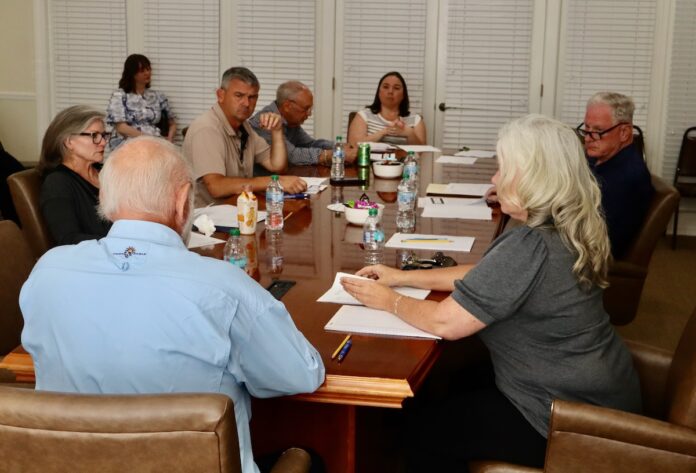
During a city council work session Monday night, Clarkesville Grant coordinator Sara Burke updated council members on several key funding opportunities, including a Georgia Transportation Infrastructure Bank (GTIB) grant for improvements around Clarkesville Square.
Burke said additional follow-up from state representatives is an encouraging sign.
“We had an extra meeting with some representatives from them, and they wanted some more information,” Burke said. “That’s a very good sign.”
She said the city was asked to remove landscaping costs from the proposal because those expenses are not eligible under the grant. Staff is working to revise cost estimates and provide additional details ahead of another meeting scheduled next week.
Burke also clarified the city’s ranking on a Department of Natural Resources grant application, noting Clarkesville placed 23rd out of 29 applicants. A meeting is planned in May to review scoring and identify ways to strengthen future submissions.
Public arts grant
The city is also applying for a $20,000 Georgia Council for the Arts grant to support public art projects such as murals or sculptures. Burke said the grant allows flexibility in how funds are used if awarded.
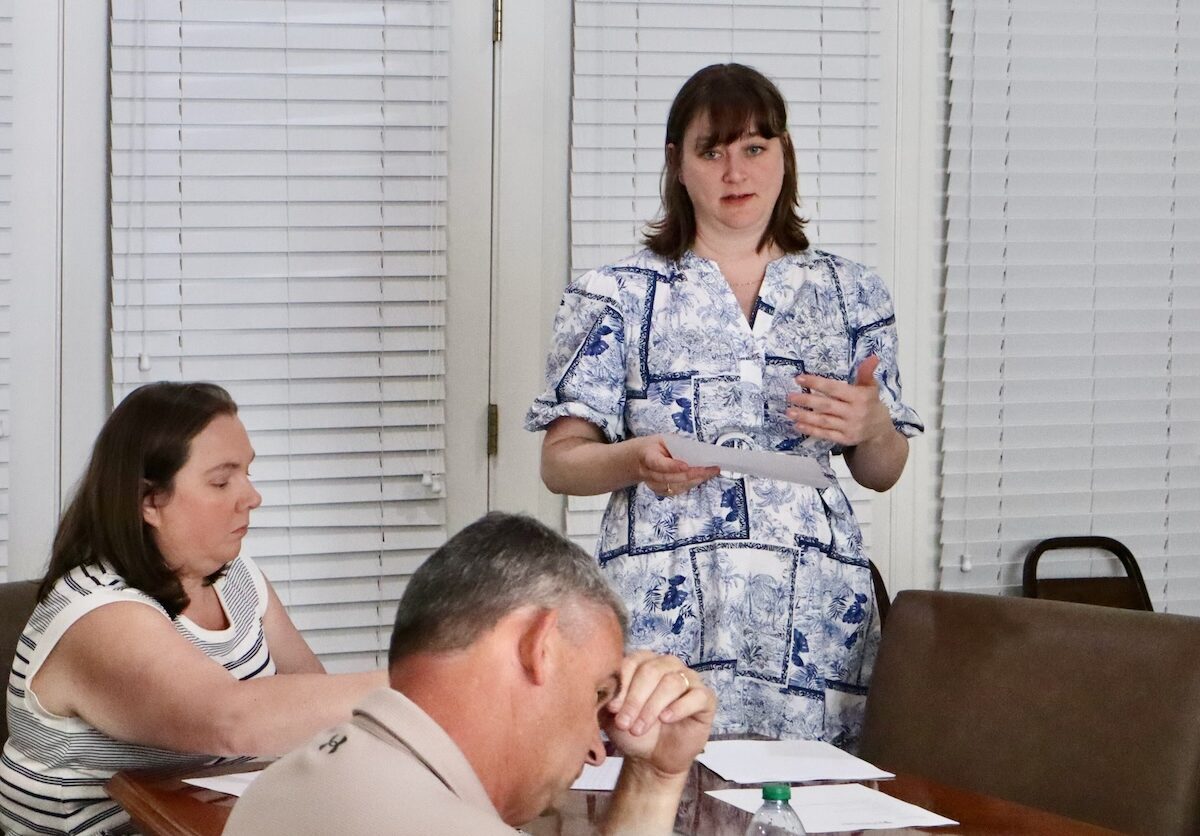
“They let us decide,” Burke said.
Councilwoman Angela Kiker asked whether locations or types of artwork had to be identified in advance. Burke said no final decisions are required at the application stage and that the council would determine how to allocate funds if the city is selected.
“It can all go to one muralist, or we can split it between a muralist and a sculptor,” Burke said.
She said several local artists have been contacted, and potential locations have been identified, but nothing has been finalized.
“Right now, it’s just, let’s see if we can get it, and then we decide,” she said.
Looking ahead, Burke said she is developing a framework for a federal Department of Justice grant focused on body-worn cameras, noting smaller cities can face challenges competing for funding but can emphasize proactive needs.
Level 1 drought response
During the April 27 meeting, council members also received an update on drought conditions, with Mayor Franklin Brown saying the area is currently under a Level 1 drought designation.
Interim City Manager Julie Poole said that level focuses on public outreach and conservation awareness.
“Basically for us, what a level one means is that we have to start a campaign to encourage people to conserve their water and to give those tips,” Poole said.
She said the city plans to share conservation information through social media and potentially include messaging with water bills.
Employee benefits
Council members also discussed a potential Employee Assistance Program offered through the Georgia Municipal Employees Benefit System.
Poole said the program would provide confidential services to employees and volunteer first responders, including counseling, crisis intervention, financial and legal guidance, and work-life support.
“It sounds like a really great program,” Poole said.
She said the cost would be about $1.85 per employee per month, totaling roughly $600 to $800 annually, and noted the city could absorb the cost within its current budget if needed.
“It’s hard not to take advantage of that,” she said.
Poole said she plans to move forward with the program with council support, adding it could benefit public safety personnel and aid in employee recruitment and retention.
In other business, Poole said the application period for the city’s open city manager position will close April 30. She said she plans to narrow the applicant pool and begin interviews in mid-May.
Debris pickup
During the public comment portion of the meeting, Councilman Brad Coppedge raised concerns about the city’s debris pickup program, calling for a reevaluation of the long-standing service.
Coppedge said the program has become a strain on city resources and contractor time, noting crews have recently collected routine yard waste unrelated to storm damage.
“It’s a huge drain on his team,” Coppedge said, referencing city contractor ESG Operations.
He suggested the city reconsider the service, arguing many residents could rely on private landscaping providers.
“I’m making a recommendation that we reevaluate that program,” he said.
Councilman Don Nix disagreed, saying the service remains important for residents who do not have access to landscaping services.
“A lot of people in town don’t have landscape services,” Nix said. “There are a lot of trees in this town … and a lot of the people can’t call a landscape company.”
Nix said debris pickup is a valued service for residents.
“One thing that most people appreciate is getting their stuff picked up on the side of the road,” he said. “I know it’s a burden, but I feel like we need to find a way to continue.”
Mayor Brown asked ESG Project Manager Joe Deputy to prepare a presentation outlining staffing levels and service capacity to help guide future decisions.
Portable stage
Council members also discussed the city’s bicentennial trailer, which is currently stored at the police department and not in active use.
Main Street Director Rosie Cantrell said Deputy recommended selling the trailer and using the proceeds to purchase a portable stage, citing the time and cost associated with assembling existing wooden stages.
Councilman Brad Coppedge supported the idea, noting it can take multiple workers about two hours to set up a stage for events.
“Having something where you can have a mobile unit and just take it over somewhere locally and just drop it off makes a lot of sense,” Coppedge said.
Cantrell said a portable stage would improve efficiency and safety for city events.
Mayor Brown asked staff to gather pricing and explore available resources before bringing the item back for further consideration.
The council took no formal action during the work session.
Don’t miss what everyone in town is talking about.
Join 4,000+ locals and choose our free newsletter covering news, events and the stories shaping our region.