
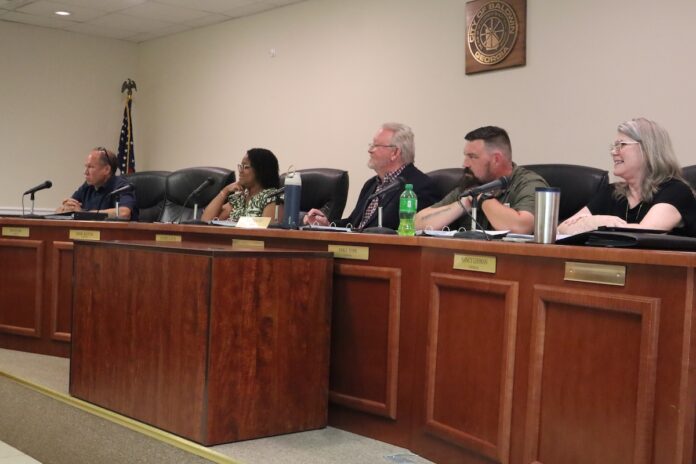
BALDWIN, Ga. — The Baldwin City Council will wait until Sept. 15 to vote on Cook Construction’s proposed annexation and rezoning after hearing sharply divided arguments Tuesday night over the future of nearly 66 acres along Ga. 365.
The council held separate public hearings on Cook’s requests to annex approximately 45 acres from unincorporated Habersham County and rezone the combined 65.92-acre site for Highway Business use.
Cook representatives argued the project would bring needed retail, restaurants, services and jobs to the area. Opponents warned that the development could worsen traffic, strain infrastructure and leave residents responsible for future costs.
The discussion also included an emotional appearance by Martha Stuckey, a longtime property owner whose land had been at the center of questions surrounding the annexation.
Cook says property is best suited for commercial development
Alice Price, speaking on behalf of Cook Construction and Real Estate, said the company believes commercial development is the best use for the property.
The proposed annexation includes 45 acres currently in unincorporated Habersham County. Another portion of the approximately 66-acre site is already inside Baldwin and would be rezoned Highway Business.
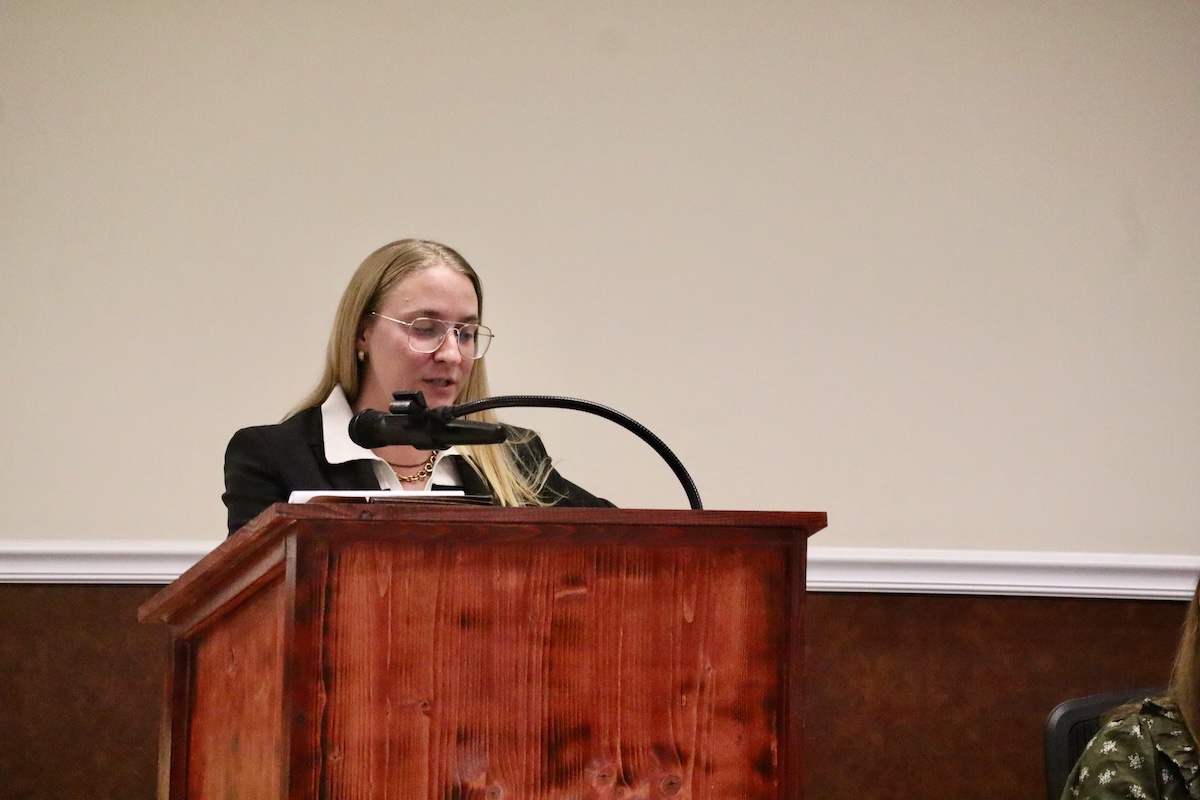
Price noted that Habersham County’s recently adopted Unified Development Ordinance changed the county zoning on the property to Suburban Residential, which allows single-family homes, townhouses, duplexes and multifamily development.
Cook believes the property is better suited for commercial development, she said.
“This project is intended to be a retail restaurant goods and services development for the people of Habersham County, for the people of Baldwin, to meet and address goods and services that the community will benefit from,” Price said.
She said Baldwin’s comprehensive plan identifies the Ga. 365 corridor for commercial development and argued the proposal could bring businesses and services residents currently travel outside the county to find.
Price also addressed concerns about traffic, presenting data from a 10-year period ending Dec. 31, 2024. She said there were 407 reported crashes in the area during that period, or about 40 annually, with nearly 68% involving no injuries.
According to Price, more than 74% of the crashes were rear-end collisions, and many involved distracted driving or following too closely.
Cook believes a commercial development could improve the corridor through engineered access points, turn lanes, increased visibility and improvements required during the Georgia Department of Transportation permitting process, she said.
“The overall goal of the project is to create a benefit for the city of Baldwin, to provide goods and services that the area needs, that the residents want,” Price said.
She also pointed to a new Georgia Department of Community Affairs designation covering the property that could provide tax incentives for qualifying businesses creating new full-time jobs.
Stuckey says Cook treated her fairly
One of the most closely watched moments of the evening came when Cook attorney Vince Fitzgerald announced the company had closed on Martha Stuckey’s property the previous day.
Stuckey’s land had become a focal point of previous public discussions about the development.
Fitzgerald said he did not want to speak for Stuckey and invited her to address the council herself.
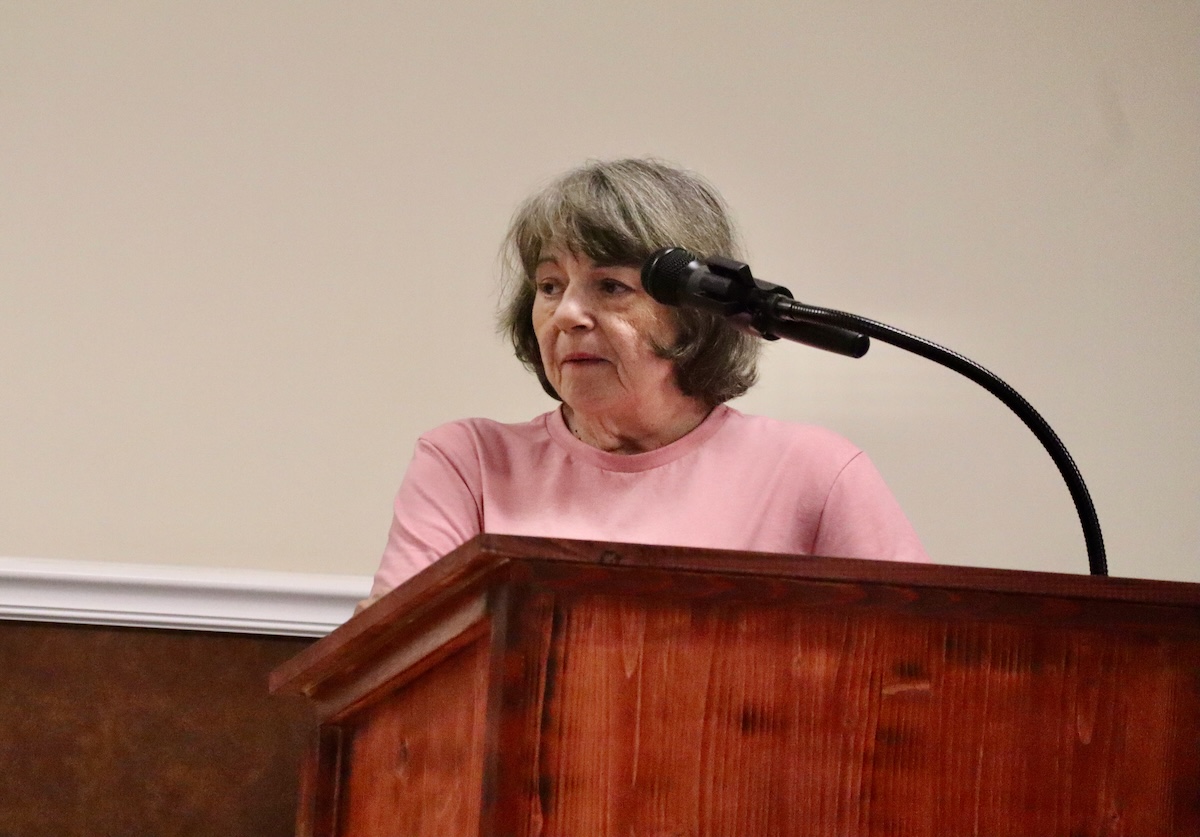
Stuckey, who said she has lived on the property for 50 years, told the council Cook had treated her well throughout the process.
“I just want to let everyone know that they’ve treated me really well, and they’ve been good to me,” Stuckey said.
She said health problems and anxiety had contributed to delays in completing the transaction but said Cook had been patient with her.
“I was scared I wouldn’t be OK,” she said. “But, you know, I mean, we haven’t had any problems other than my illness. … They’re good people, very good people.”
Stuckey said she had known development was eventually coming to the area.
“I’ve known for — I’ve been on that land for 50 years, and I knew this was coming,” she said. “I knew it was coming.”
Fitzgerald said previous concerns about Stuckey’s situation had distorted the circumstances surrounding the property transaction.
“When people constantly attack your character, it’s hard not to be defensive, but it’s usually not productive,” he said.
Supporters call for jobs, businesses
Several speakers urged the council to approve the development.
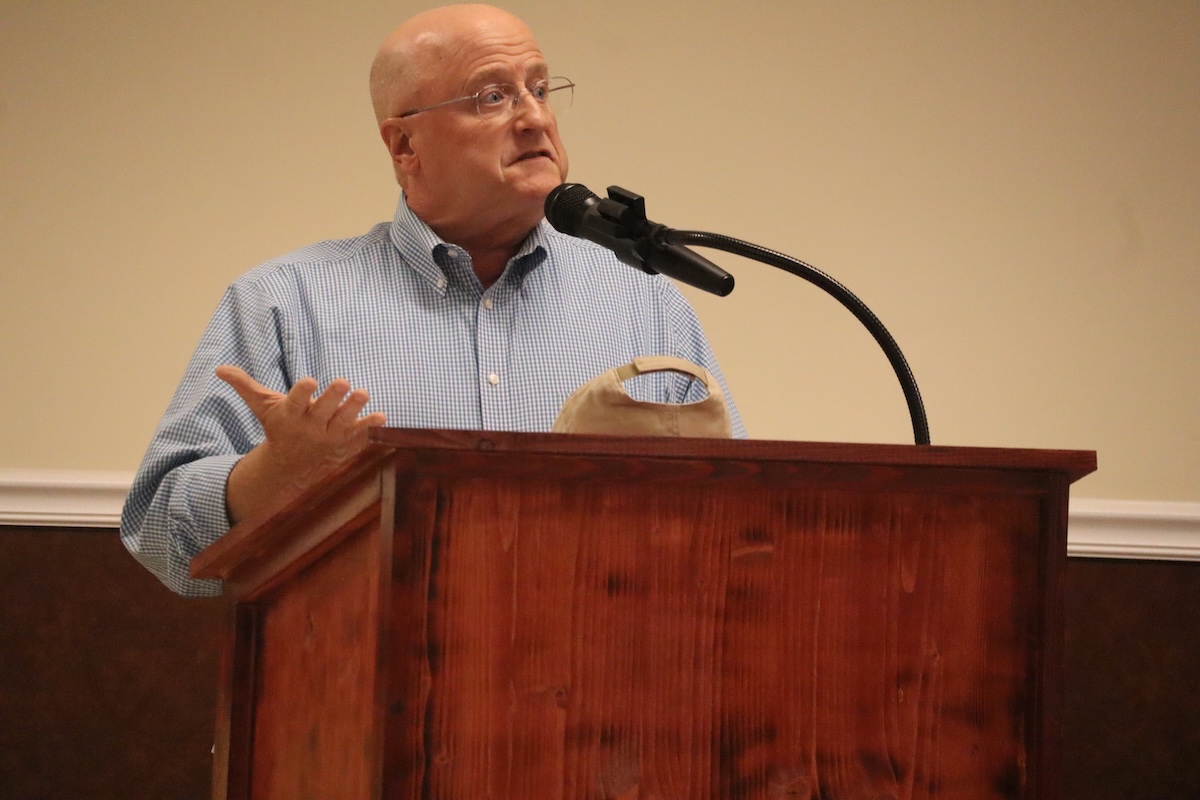
Terry Williams, whose family owns property near the proposed development and along Industrial Boulevard, acknowledged he had a potential financial interest in growth in the area but said he wanted to see what he described as “good growth.”
Williams said the Ga. 365 corridor was the appropriate place for commercial development.
“I want to see good growth,” he said. “I could put a bunch of house trailers and stack houses in there, and that’s not what I want to see when I go up and down 365.”
He argued that commercial businesses would provide jobs, services and tax revenue while allowing residents to spend money locally instead of traveling to Gainesville.
“Why do we want to give Gainesville all our money?” Williams asked.
Williams said he frequently sees Habersham County license plates in restaurant parking lots in Gainesville and questioned why the area should not work to attract those businesses closer to home.
“We got the tax base or could have the tax base,” he said. “Everybody complains about our property tax being bad on our houses. It’s because we don’t have any businesses here that are contributing to the tax base with sales tax and with property tax.”
Heather Griffin also spoke in favor of the rezoning, saying the area needs additional services and opportunities.
She said concerns about keeping the area rural should also recognize the rights of property owners.
“I don’t know if anybody’s owned 36 acres or 40 acres or 50 acres,” Griffin said. “It’s expensive. It’s a lot of upkeep. The taxes are a lot.”
Griffin also defended the proposed senior living component, saying there is a need for facilities that allow residents to move through different levels of care.
Former councilwoman reluctantly favors commercial option
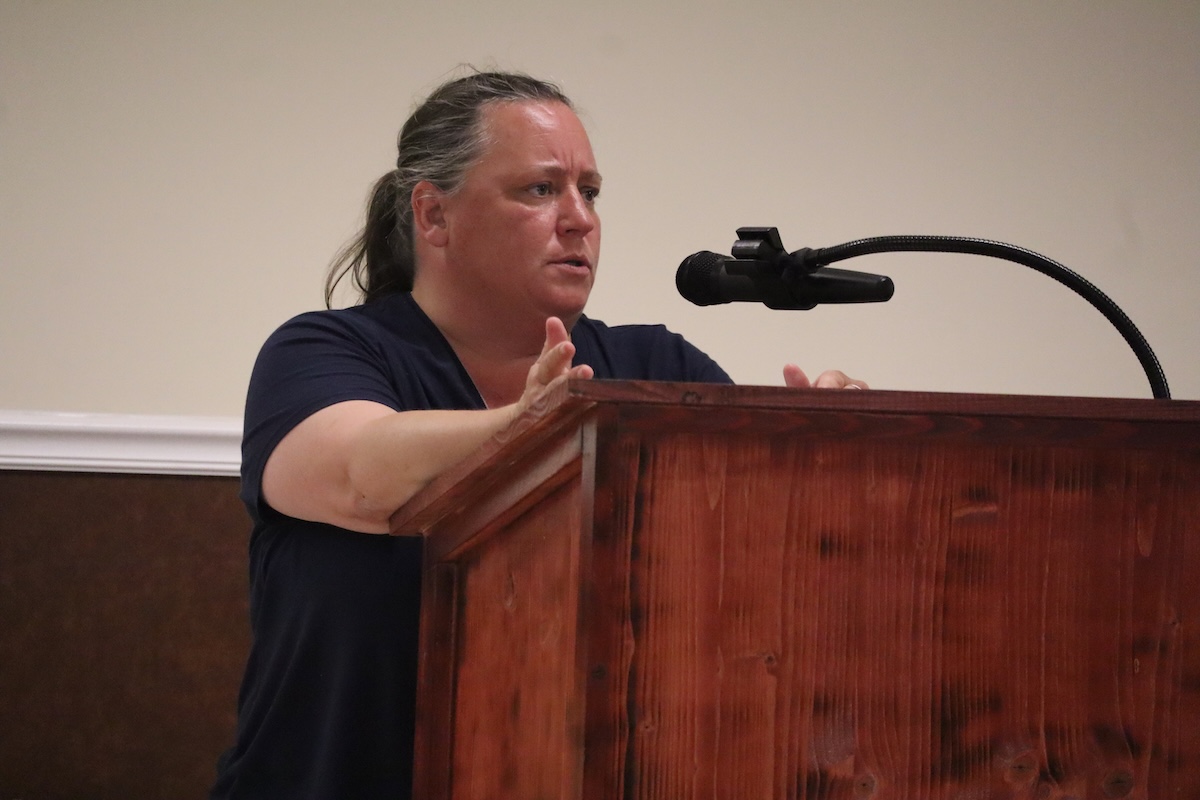
Former Baldwin Councilwoman Alice Venter spoke against the proposal but ultimately described the commercial development as preferable to what could otherwise be built on the property under Habersham County’s current Suburban Residential zoning.
Venter criticized Cook’s handling of the project and raised questions about the company’s previous negotiations with Stuckey. However, she acknowledged that Cook now owns the property and could pursue residential development if Baldwin rejects the annexation and rezoning.
“If the city does not annex and zone to business, Cook has stated his intention of not only putting residential in as it’s currently zoned with suburban residential,” Venter said.
She warned that the county zoning could allow duplexes and other multifamily housing.
“The commercial development is going to be a heck of a lot better than 200 duplexes,” she said. “But … the commercial is the lesser of the two evils.”
Venter also raised concerns about Baldwin’s aging infrastructure, particularly the city’s wastewater system and infiltration and inflow problems during heavy rain events.
“The sewer is a problem,” she said. “It’s not what he’s going to put in, because that’s going to be new. … But it’s what is already the problem.”
Opponents raise traffic and financial concerns
Other speakers remained firmly opposed to the development.
Greta Waters said she was not against growth but questioned whether the infrastructure surrounding the property could handle a major commercial project.
Her primary concern, she said, was traffic at the Ga. 365 and Duncan Bridge Road intersection.
“This morning we had a rollover there,” Waters said. “Traffic had to be rerouted.”
She also questioned whether the development and city infrastructure would be adequately monitored and inspected.
“It just needs to be done right,” Waters said.
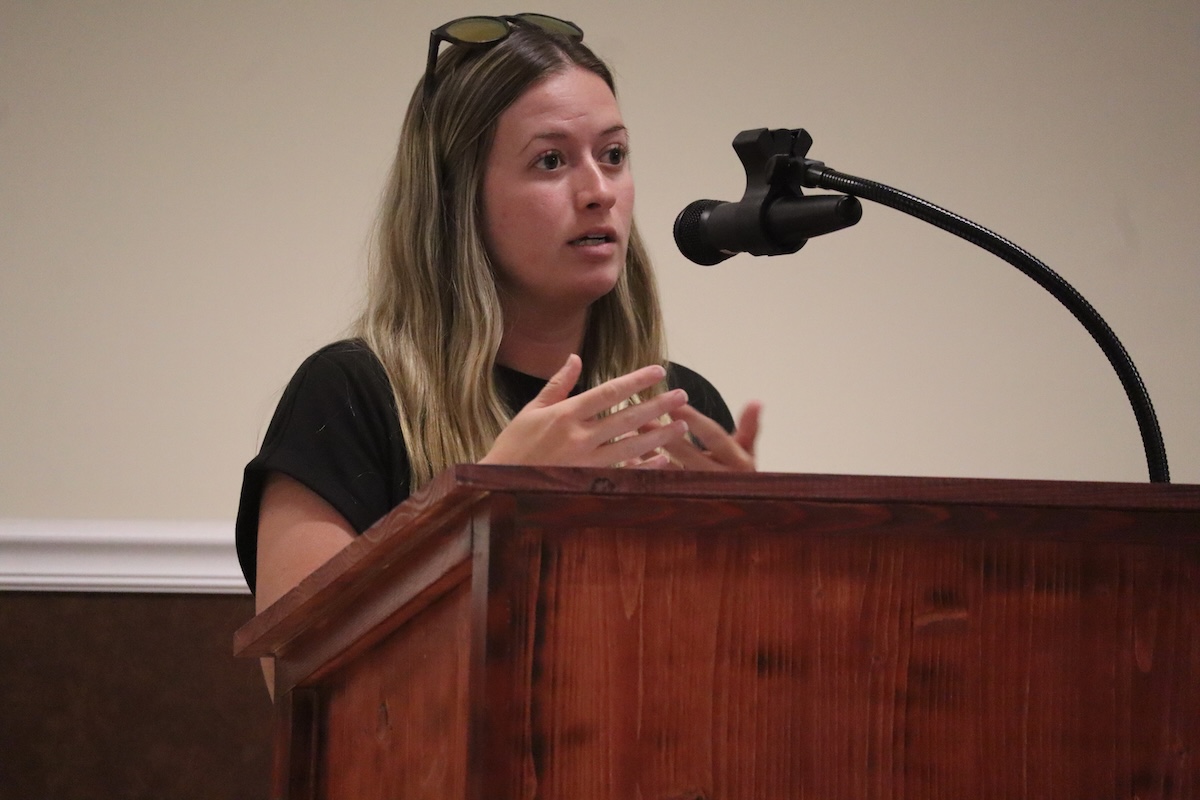
Sydney Blackburn, who spoke during the rezoning hearing, raised concerns about traffic projections, workforce needs and the long-term cost of providing services to the development.
She questioned a traffic study presented by Cook that cited 407 crashes over a 10-year period, noting that Habersham County officials have previously cited approximately 200 crashes in a single year near the intersection.
Blackburn also referenced estimates that the development could generate thousands of additional daily vehicle trips.
“When I hear additional vehicle trips, I don’t just hear traffic statistics,” she said. “I see my students.”
Blackburn, a teacher at the Habersham Ninth Grade Academy, said she thinks about teenagers learning to drive on the corridor, school buses, emergency responders and families traveling through the area.
“These are real people to me,” she said. “They’re real people to all of us.”
She also questioned Cook’s projections regarding jobs and revenue, asking whether the city had independent information showing the anticipated tax revenue would offset the costs of providing police, fire, infrastructure and other services.
“Can you guarantee that they won’t?” Blackburn asked, referring to potential increases in costs for residents. “Can you show the residents of Baldwin an independent analysis demonstrating that the revenue generated by this development will cover the additional services and infrastructure it requires?”
Ashley Long also urged the council to slow down.
“Have you personally asked Baldwin citizens what they want?” she asked council members.
Long questioned whether the city had adequately sought input from residents who were not attending the meeting.
“There’s no need to rush a decision of this magnitude,” she said.
Council delays vote
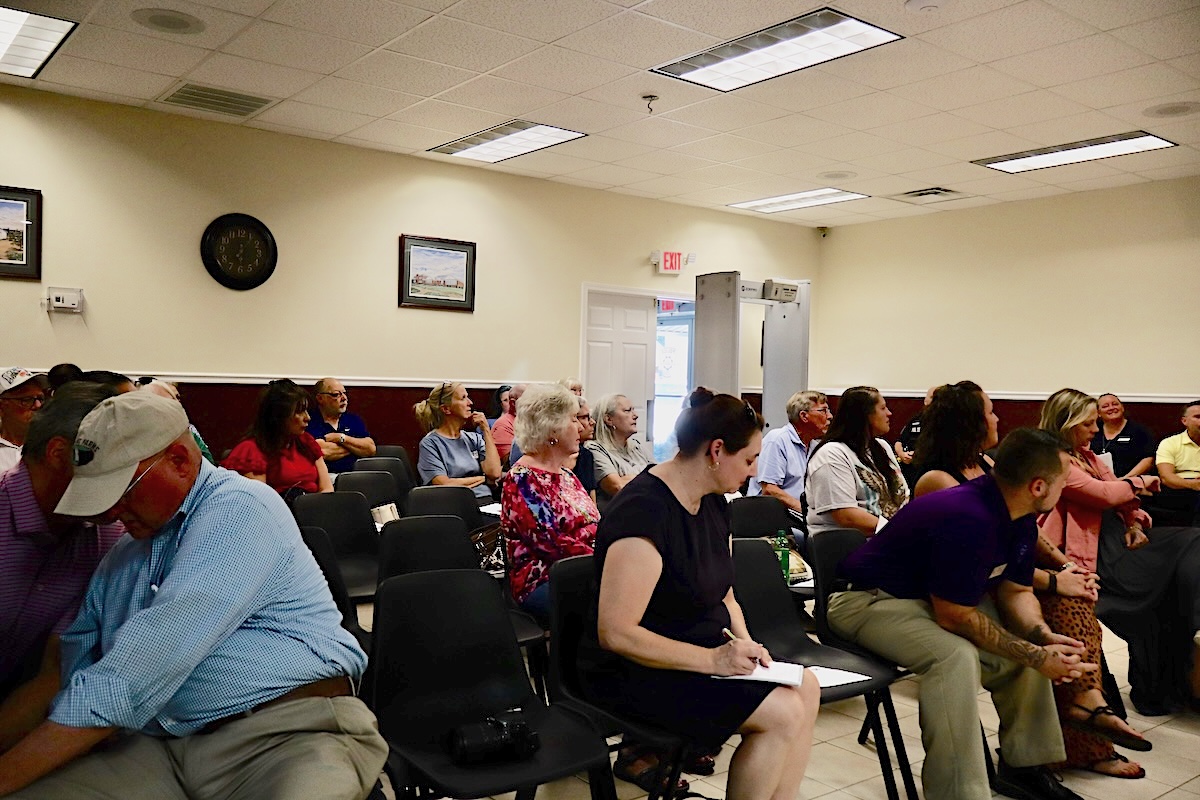
At the conclusion of the public hearings, Mayor Doug Faust announced the council would not vote on the annexation or rezoning Tuesday night.
Instead, the council expects to take up the matter at its Sept. 15 meeting. There will be no additional public hearing.
Faust acknowledged the difficulty of the decision and said the council must consider both the potential economic opportunity and the risks associated with the development.
“Our plan does show commercial development here,” Faust said. “We already have zoning there that supports commercial development.”
He said the Ga. 365 corridor is a location where commercial development could have less impact on Baldwin’s traditional neighborhoods than development in the center of the city.
But Faust also acknowledged the city’s infrastructure challenges.
“Our infrastructure is challenged,” he said. “This does give us another way to look at that infrastructure and seek ways to have that infrastructure repaired.”
Faust said Baldwin cannot continue postponing long-term infrastructure needs.
“We cannot continue to let 20 years of not fixing the sewer, not fixing the water plant, not planning for the future,” he said.
The mayor said commercial development could help diversify Baldwin’s tax base but emphasized that the council must carefully weigh the consequences.
“It does represent an economic opportunity,” Faust said. “It does come with economic risks, and we have to consider all those different things.”
Following the meeting, Faust told Now Georgia he expects the council to vote Sept. 15.
“We expect that,” Faust said. “We get some additional documentation to make sure that everything’s in line before we can do that. But yes, we expect that.”
Don’t miss what everyone in town is talking about.
Join 4,000+ locals and choose our free newsletter covering news, events and the stories shaping our region.