

(GPB) — Today, Caroline Nickel has such a sharp mind at 82 years old that she still does long-term substitute teaching in Monroe County schools.
But, a little more than a decade ago, she imagined herself in a nursing home with dementia.
After watching Alive Inside, a 2014 documentary about music, memory and the power of music therapy, Nickel brought an idea to the Centenary United Methodist Church in Macon.
She introduced the then-recent film to Yvonne Stuart, who had been helping to arrange for lectures, host art and cooking classes, and find engaging activities for Macon residents.
“We decided to have the bright idea that we would like to do this for the small nursing home, Blair [House Senior Living Community], that was near the church,” Nickel said.
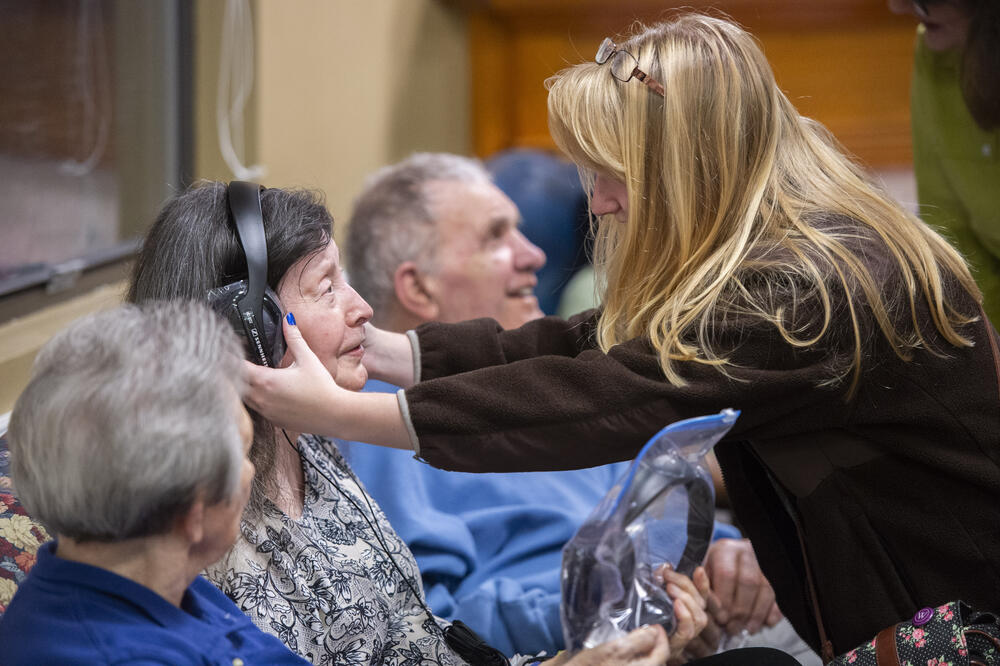
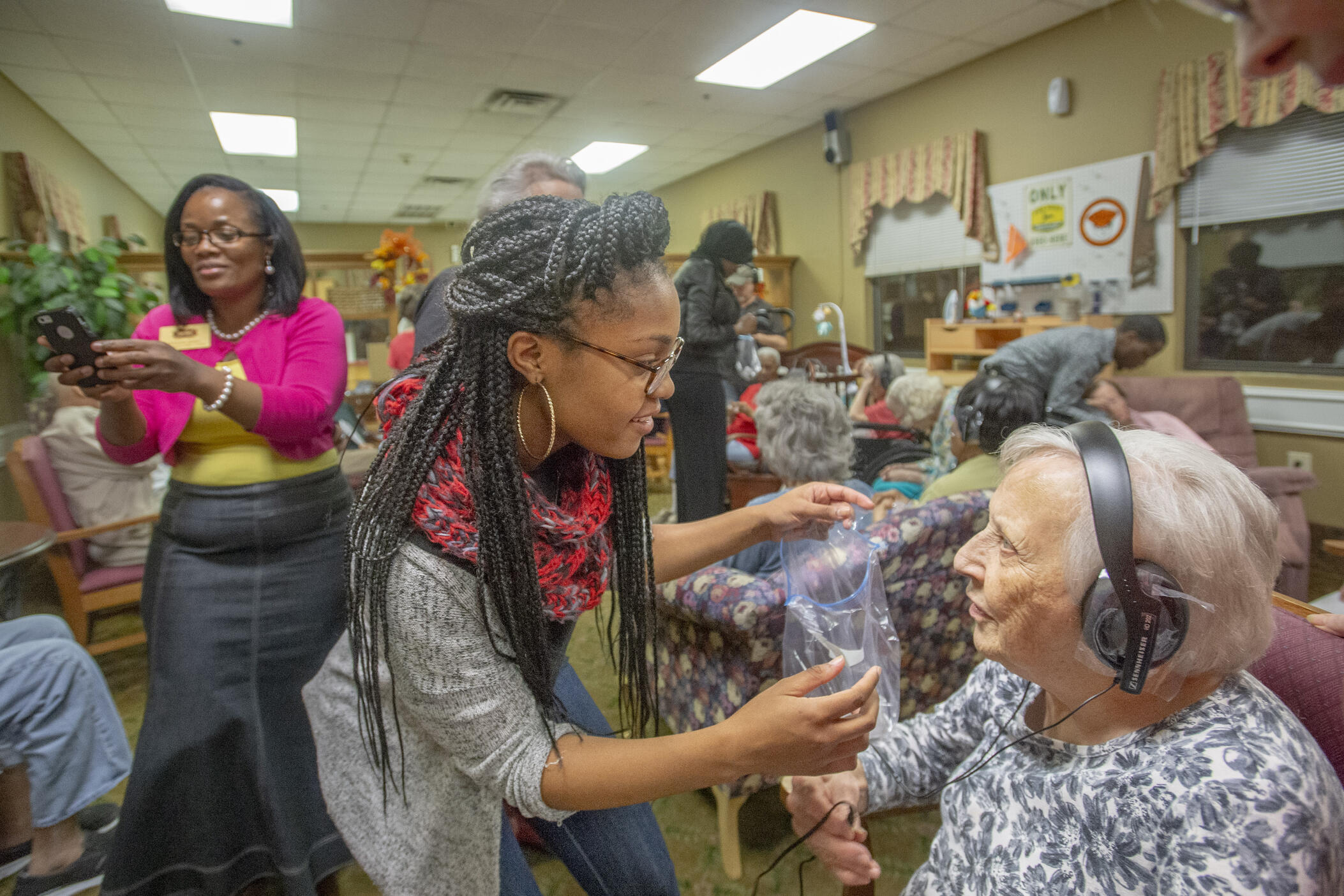
The pitch to bring iPods loaded with their favorite music to the residents in the memory care unit went over well.
The church leadership thought it sounded great, Nickel said, so she presented it to the congregation in 2015.
With support from Centenary and the wider Macon community, Nickel and Stuart raised more than $6,000. People donated iPods, iTunes gift cards and grant money.
An assistant pastor taught at Wesleyan College and offered to help enlist students to load music onto iPods for residents, and to work out the playlists, all Nickel had to do was ask families for lists of songs, she said, laughing.
One man, Rufus Jones, had played with musicians Otis Redding and James Brown before dementia left him languishing. But when he heard the music? “He just … comes alive, you know?” Nickel said.
Jones cried when the 20 songs on his iPod shuffled through soul and rhythm & blues, reminding him of music he once made. He smiled and spoke about his days as a musician. He was very happy, she said.
At 72, Nickel considered herself there, in Jones’s place, mentally, emotionally and physically.
“It’s not hard to imagine that it’s going to be me or my husband, who is actually seven years older than I,” she said. “I would want my family to be mindful of this research and this opportunity.”
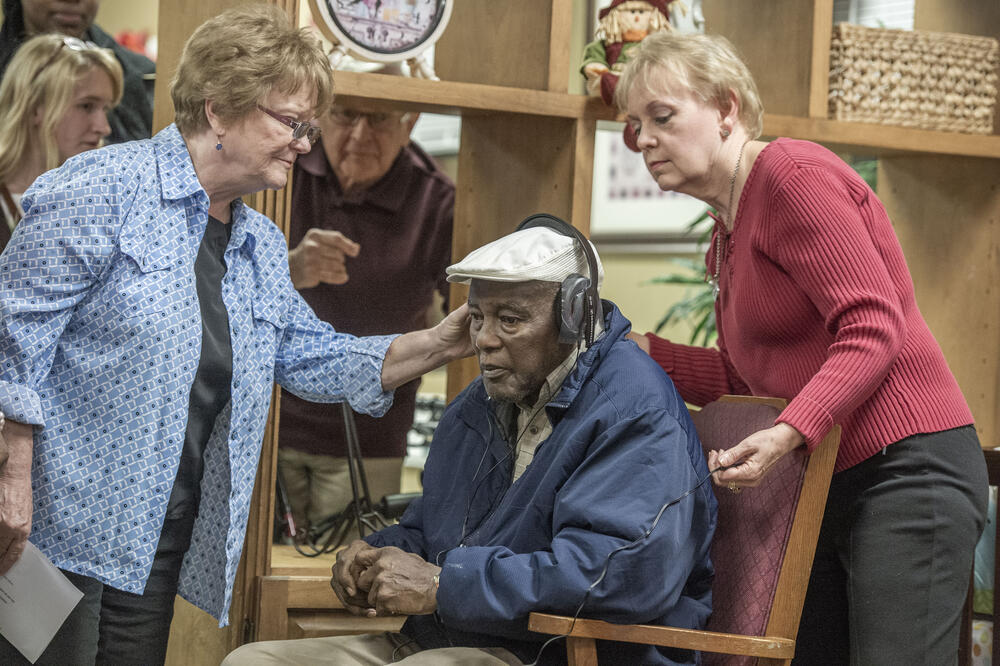
The women received enthusiastic feedback on their Music and Memory program from the congregation and from people outside of our church who participated in the research, Nickel said.
The 40 memory care patients given iPods reacted most to the music from their youth, which is something Nickel wants her family and friends to know.
“For my playlist, I need ’50s and ’60s rock and roll,” Nickel said. “That’s my time.”
She added folk and protest music to her list. “Also, a little bit of religious music — you know, I grew up in the church — and then I do like classical music.”
The science of song
Many studies since the small community project in Macon have confirmed links between music and memory, and scientists understand that music engages a diverse network of brain regions and circuits, including sensory-motor processing, cognitive, memory and emotional components. Listening to one’s preferred music can grant easier access to these brain functions, according to a 2023 study published by the Journal of Brain, Behavior, and Immunity Health.
Songs can even serve as painkillers, as a 2014 study published by the Journal of Pain shows. Volunteer participants under controlled conditions reported lower pain rating scores while listening to their favorite songs. The all-woman study included subjective pain scores related to the menstrual cycle and more objective scores when exposed to noxious heat (above 113 degrees).
That’s why Dr. Monica Parker wants to study music as medication.
Parker, a neurologist, leads the “Music as Medicine” Research Collaboration at Emory University’s Goizueta Brain Health Institute. She also chairs the Alzheimer’s Foundation of America’s Medical, Scientific, and Memory Screening Advisory Board.
The work is part of the NeuroArts National Initiative, through which a growing body of research-based knowledge about how the brain and body respond to the experience of art and how the body stores that response as memory.
In the 2024 pilot program, Parker’s research team provided free tickets to Atlanta Symphony Orchestra performances to more than 300 people, including the center’s participants who were living with cognitive impairment and their caregivers.
“And they had such a great experience, we decided we would try to see how this might help persons living with dementia,” Parker said.
Now, the research team wants to further study live music’s impact on joy, connection, behavior and mood.
Emotionally painful parts of Alzheimer’s
An estimated 188,000 people across the state are living with Alzheimer’s disease and, as Georgia’s population ages, this number is expected to grow significantly over the next decade, according to the state Department of Public Health.
In addition to memory loss and other cognitive symptoms, about half (44.6%) of people living with Alzheimer’s disease show signs of developing agitation, which may include behaviors such as pacing, repetitious movements, and general restlessness, or may manifest as physically or verbally aggressive behaviors, according to the Alliance for Aging Research, which conducted a national survey of 1,000 adults and 1,000 unpaid and family caregivers of people with Alzheimer’s disease.
Agitation is one of the most distressing behavioral and psychological symptoms of dementia, and treatment involves the entire person, and an individualized plan to address agitation is needed because of the wide-ranging potential negative impacts.
“There is research that shows that music improves mood, improves behavior, and allows people with cognitive impairment to maintain their ability to independently do their activities of daily living,” Parker said. “What is missing is greater study and quantification of what kind of music, what music, what dose is appropriate.”
What will the research measure?
Prior studies suggest music and arts engagement may improve memory and language skills and help ease agitation — one of the most challenging symptoms families face — offering a low-cost, non-pharmacological approach to care.
Familiar music can stimulate memory recall and positive emotions, because the brain regions associated with musical response are often among the last to deteriorate. Studies suggest that listening to music may decrease cortisol levels, helping to ease anxiety and promote relaxation.
Parker’s research team is using the National Institutes of Health’s musical intervention toolkit to design a program for persons living with cognitive impairment and their caregivers.
Researchers will evaluate measurable outcomes such as joy, emotional resilience, respite for caregivers, and changes in mood and behavior, as well as explore how familiar music may stimulate memory recall, reduce stress, and strengthen emotional connection — areas of increasing interest as rates of Alzheimer’s and related dementias continue to rise.
The study is awaiting the approval of the University’s Institutional Review Board to ensure privacy and ethics compliance.
The 2026-2027 Atlanta Symphony Orchestra season begins Oct. 4, 2026.
This story was made possible in part by the Aging Beat workshop, convened by the Craig Newmark Graduate School of Journalism at CUNY.
Don’t miss what everyone in town is talking about.
Join 4,000+ locals and choose our free newsletter covering news, events and the stories shaping our region.