
(GPB News) — Deaths from flu in Georgia — 243 since the season started in October — are the highest they’ve been in five years, according to data released Friday from the Georgia Department of Public Health.
The deaths include five children. At this point in the season last year, 95 people had died, with 50 deaths at this point during the 2023-24 season.
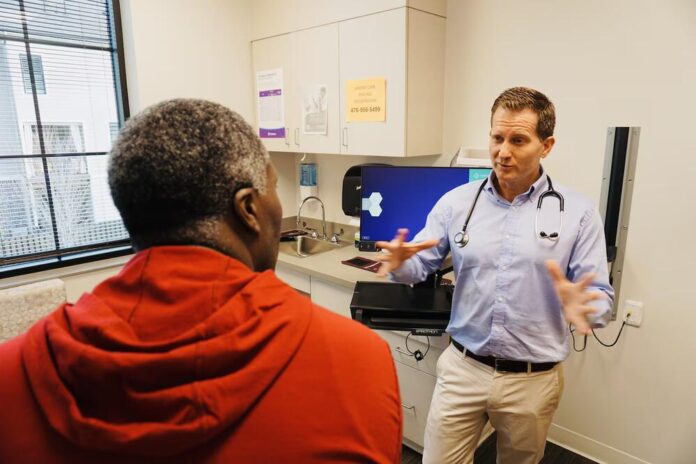
Meanwhile, respiratory syncytial virus and human metapneumovirus, a lesser-known respiratory illness, have also been on the rise, said Dr. Andrew Thornton, a doctor with Wellstar in Cobb County. Those two conditions, while typically mild, can be more serious in children and the elderly. Covid rates remain low.
Here’s a look at what’s happening.
Flu rates, death toll still climbing
The death toll for flu since last fall hit 243 this week. Flu can be severe in any year, Thornton said, but the higher death toll could be related to the circulation of a new strain of flu this year.
“It’s possible that this became more severe in some patients and, sadly, led to unexpected death. Influenza can be a bit unpredictable, and it does depend on medical conditions and the immune system of the particular patient, and often the age of the patient,” Thornton said, adding that young children and older adults are often at higher risk.
“I don’t know that we know for sure why certain patients might die from the flu, but that is one of the reasons why we want to vaccinate for it, because it can be unpredictable, it can be severe,” Thornton said.
Nationally, 85% of the 101 reported influenza-associated pediatric deaths from this season were in unvaccinated patients, according to the Centers for Disease Control and Prevention.
Flu will continue to circulate through the spring, Thornton said, so it’s not too late to get a vaccine.
“We are still seeing plenty of flu cases, and we don’t know for sure that we’re not going to get any more spikes during the spring, so I would definitely still recommend it if a patient has not been vaccinated,” Thornton said.
Still, positivity rates are lower than earlier in winter. The positivity rate for tests conducted at select Georgia labs was 16.8% for the week ending March 7. While at the start of the season, most cases were Flu Type A, there has been a slight increase in the rate of Flu B cases, starting in late January, according to DPH data.
COVID rates have remained relatively low this winter, Thornton said. CDC data show low wastewater levels, and hospitalization and emergency room visit rates are lower this year than the same time last year in Georgia.
“We’ve seen less COVID this winter compared to last winter, as well as less hospitalizations, emergency room visits, and death compared to last year, which are obviously great trends for this disease,” he said.
RSV and HMPV rates higher than last year
Respiratory syncytial virus usually causes mild, cold-like symptoms but can be more serious in young children and older adults, according to the CDC.
“We are seeing a later rise in RSV this year compared to most recent years,” Thornton said. “RSV seems to be increasing right now, as opposed to last year, it was decreasing at this point in the year.”
At the same time last year, 1.6% of PCR tests for RSV were positive, while this year that rate is 8.3%, according to DPH data. Georgia wastewater data from the CDC also shows moderate levels of RSV. Hospitalization rates for RSV are also higher than at the same time last year, according to the CDC.
While RSV is typically mild, it can be serious in young people and older adults, especially those with risk factors like lung and heart diseases, a compromised immune system, or residence in a nursing home.
“We really, really pay attention to those younger kids with RSV, and that’s where we are still seeing elevated emergency room visits and hospitalizations in those younger patients.”
There aren’t anti-viral drugs to treat RSV for less severe cases, though there is a treatment that is used in hospitalized patients, Thornton said. Outpatient treatment focuses on managing symptoms. But there are steps parents and older adults can take to protect themselves.
Pregnant women can get an RSV vaccine that passes antibodies on to their infants. There’s also a vaccine for infants whose mothers did not get the shot during pregnancy.
The CDC also recommends that all adults over age 75 get a RSV vaccine and those with risk factors for serious illness who are over 50 get an RSV vaccine.
Another lesser-known virus is also on the rise, Thornton said: human metapneumovirus. The disease is also usually mild and causes cold-like symptoms like cough, fever, nasal congestion, and shortness of breath, according to the CDC.
HMPV tests from selected clinical laboratories in Georgia had a positive rate of 6.4% for the week ending March 7, while at the same time last year the positivity rate was 3%, according to DPH data.
Wastewater levels are also high, having climbed over the past three months, according to Georgia data from WastewaterSCAN.
Thornton said the virus belongs to the same family as RSV and is not related to pneumonia, but both viruses can cause pneumonia in more serious cases. There is no vaccine for it.
HMPV peaked in April nationally last year, Thornton said, and he expects this year’s pattern to be similar to last year.
“In general, a human metapneumovirus will often be more severe than the more mild viruses like rhinovirus,” Thornton said and will be more likely to cause a fever or a severe cough. “It also has a lot to do with the patient and their current medical conditions and immune status.”
Rebecca Grapevine is a reporter covering public health in Atlanta for Healthbeat. Contact Rebecca at [email protected]. This story comes to GPB through a reporting partnership with Healthbeat.
Don’t miss what everyone in town is talking about.
Join 4,000+ locals and choose our free newsletter covering news, events and the stories shaping our region.