

A garbled cacophony rings through my headphones; Occasionally, I can make out a word or two—some fellow is talking about his “automobile,” I think. Then, a little later, I catch something about “Germany.” After that, there are loud sirens, and then the excruciatingly loud sound of a slamming door. But most of what comes through to my ears is just unceasing, indecipherable noise. Confusion reigns.
I’m in a small room in Apostolics of Rabun Church in Clayton, but I might as well be in the Land of Oz; I can’t really identify most of my surroundings.
More bad news: I can’t really see or feel anything either. Weird, obscuring spectacles on my eyes block my peripheral vision entirely, and even much of what’s right in front of me; a yellow film and obstacles on the lenses make everything fuzzy, at best. I have to push my face up against the wall to make out the large letters on a children’s map of the world.
My hands are adorned with thick gloves that hinder my ability to pick anything up; they also prevent me from identifying the texture of anything I touch.
And, for good measure, spiked pads in my shoes render every step mildly uncomfortable, encouraging a shuffled step instead of regular footfalls.
Fortunately, a trained guardian is watching me from across the room to make sure I don’t do anything foolish or hurt myself, despite my imposed handicaps.
Bringing dementia home
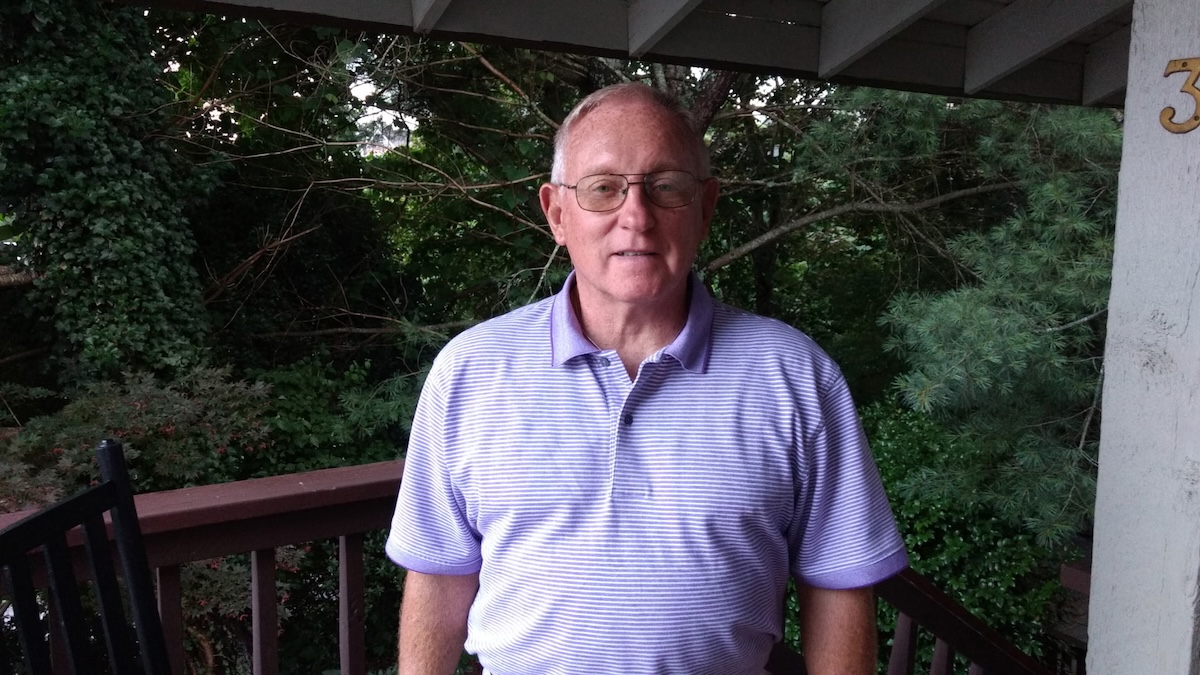
Ronnie Ogletree, a Clayton-based activist for the elderly, brought the care team from Appalachian Dementia Care, based in Blairsville, to town. On April 7th, 18 people participated in the experience over the course of the day. There will be room for 36 next time, promises Lynn Cochran, the social worker and geriatric expert who runs the program and trains the personnel.
The point of the exercise? For many elderly people, as they lose the acuity of their senses, their awareness, and their cognition, each of their senses suffers diminution. What “dementia tour” visitors go through is a simulation of the day-to-day experience that some of the people they care for must involuntarily endure. The program offers caretakers for elderly people suffering with dementia an opportunity to understand the immense challenges of simply hearing, seeing, touching, and moving through the world around them, and thus, they came up with the best way they could to imitate the dementia experience.
The VDT operates with partial funding from the federal Department of Health and Human Services through Medicare, Cochran says. Other elements of her agency’s services attend more directly to the needs of the elderly; depending on their circumstances, some Georgians attending to elderly relatives will qualify for up to 80 hours of “respite” care per month, so they can take time out for work, errands, or just needed leisure time—without worrying about leaving their loved ones on their own.
Appalachian Dementia Care also offers hospice care when a patient’s condition demands it.
‘This terrible disease’
Ogletree, age 74, started his own area non-profit—Appalachian Aging Resource Network–in Rabun County some seven years ago, hoping to call attention to the unmet needs of the elderly and the people who take care of them. When he heard about the dementia tour, he knew people would respond positively, and that it would help them understand the profound (and often inscrutable) needs of people suffering with dementia and other disabilities typical of the elderly.
“I want people who go through the tour to be able to come away with what a person with this terrible disease goes through every day,” Ogletree said.
A veteran Athens-area firefighter of 33 years, Ogletree got involved with the Athens Senior Resource Network, where he became president. “When my time ran out,” he added, he and a friend started the Elder Care Planning Council of Northeast Georgia, and that led him to launch AARN when he moved to Rabun.
“I began to see the statistics on the aging population suffering with dementia, and I wanted to put the Virtual Dementia Tour out to people, especially to public safety officers, as they are the first on the scene of accidents, fires, missing persons and other incidents” that often involve the elderly.
Ogletree teamed up with another group, Second Wind Dreams, based in Roswell, to make the program more widely available.
Cops and firefighters must understand
“I experienced people with dementia when I was in the fire service,” Ogletree says, “and this why I would like to build a support system for public safety and others as well.”
“I just heard of a man with dementia who went to a car dealership, and no one recognized his condition. They sold him a $70,000 vehicle, and the family is fighting this battle now” to attempt to return the vehicle.
“With the aging population growing by so much there will be other stories as well,’ Ogletree says. “The government is not gearing up for what is called the ‘Silver Tsunami’ of baby boomers reaching the age when dementia is common.”
The stark crisis of dementia first touched Ogletree’s own life when he was in his ‘30s, he said.
“Back then, nobody knew about dementia,” he said. “It wasn’t spoken about.” But his mother, Jamie Lee, then in her ‘80s, began to be unable to recognize her own children, her son says.
Her kids weren’t her kids
“She sometimes couldn’t remember who we were, or what we were doing there with her,” he said.
Mrs. Ogletree had been a textile mill worker, then a homemaker in rural Madison County, he said, but soon her memories were lost to her.
She eventually died in assisted living, and Ogletree’s father, a mechanic, soon after—but of a broken heart, not of dementia.
“He was only beginning to show signs,” Ogletree says.
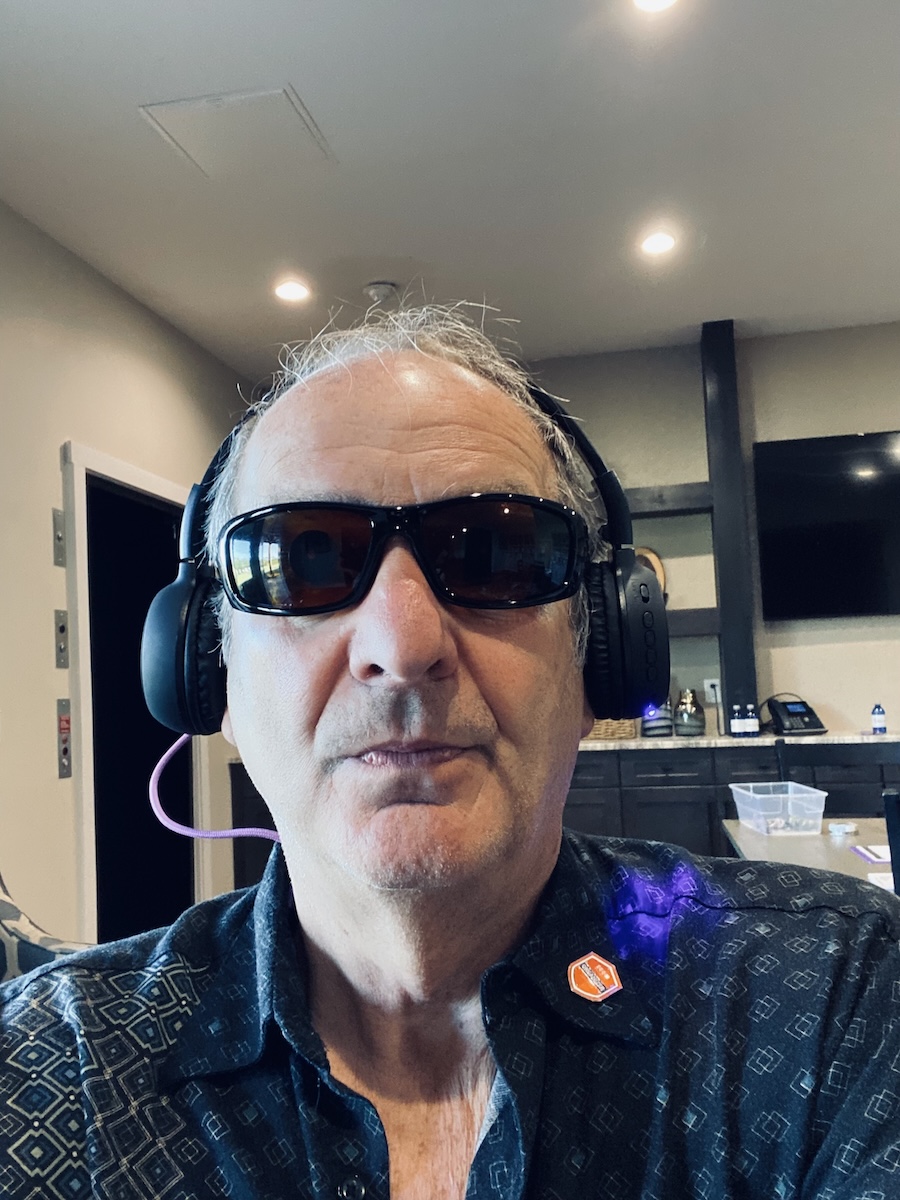
Steven Webster, a Rabun County entrepreneur, went through the VDT and said of the experience, “In a word, it was frustrating. Simple tasks were difficult — walking, for example. All my senses were dulled, yet simultaneously it was distracting, as unknown noises and lights frustrated comprehension — and action.”
He said the “virtual tour” can’t quite replicate real mental confusion — “what we might call the ‘fog of life.’ I had enough sense, after a while, to sit quietly, rather than explore…. The whole world seemed shut off, distant, and almost incomprehensible.”
Webster said that in his first marriage, two close relatives were diagnosed with dementia. “My mother-in-law came to live with my wife and me, after she begged my wife to rescue her from relatives she believed were trying to harm her.” She had indeed been cheated by relatives of her own family’s farmland.
“She had no home, no assets, and failing health,” Webster said. “We fought for a year to get her land returned to her.” He thinks none of that might have happened if not for the dementia that made the elderly woman vulnerable.
Failing the test
At the conclusion of my own 10-minute tour, the guard turns in my scorecard on how I acted and behaved during my time in the VDT room.
My grades wouldn’t quite have made the Dean’s list. “Standing still, circling, some pacing,” reported my observer. She reports “strange behavior” on my part, including nervous laughter, wandering, and repetitive behavior.”
I imagine, with a shiver, what it would be like if the goggles, headphones, and gloves never came off.
People interested in arranging the Virtual Dementia Tour experience for their own communities or organizations are invited to email Ronnie Ogletree at [email protected].
Don’t miss what everyone in town is talking about.
Join 4,000+ locals and choose our free newsletter covering news, events and the stories shaping our region.