
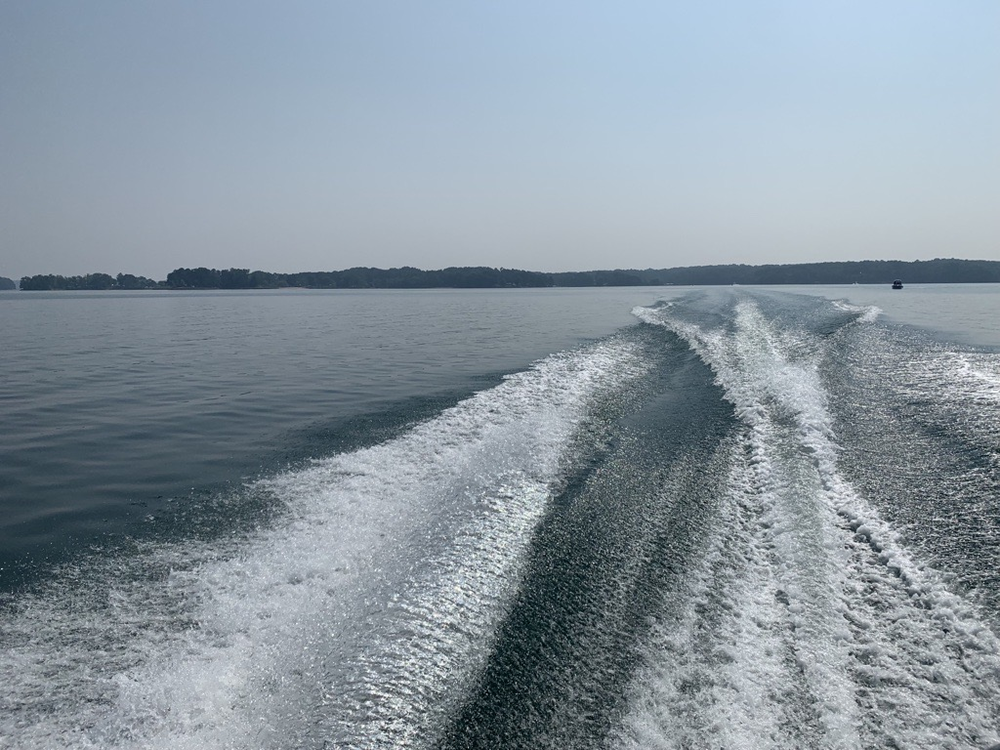
As the drought across Georgia continues to worsen and the weather heats up, outdoor recreation will begin to be impacted due to dry ground and low lake levels.
Camping and dry ground
Unfortunately the dry weather is also going to impact summertime camping, at least in the short term. The US Forest Service placed the Chattahoochee National Forest under level 1 campfire restrictions on April 17 until further notice. This means you are not allowed to build, maintain, attend, or use a campfire except within the provided metal rings in developed sites. Human activity starts approximately 87% of wildfires, and these measures are in place to limit the potential.
On Wednesday, the Forestry Commission issued the first mandatory burn ban in state history for the southern half of the state. This ban prohibits all outdoor burning of any kind, and is in place from Harris County over to Columbia County and points south to the Florida line. There are currently several large wildfires burning across South Georgia, including the Clinch Fire that has burned over 16,000 acres and is less than 10% contained.
Elsewhere in the state, keep a close eye on any local burn bans that are put into place by local municipalities. It is highly recommended to just avoid outdoor burning all together even across the northern half of the state until the drought improves.
Low lake levels across the state
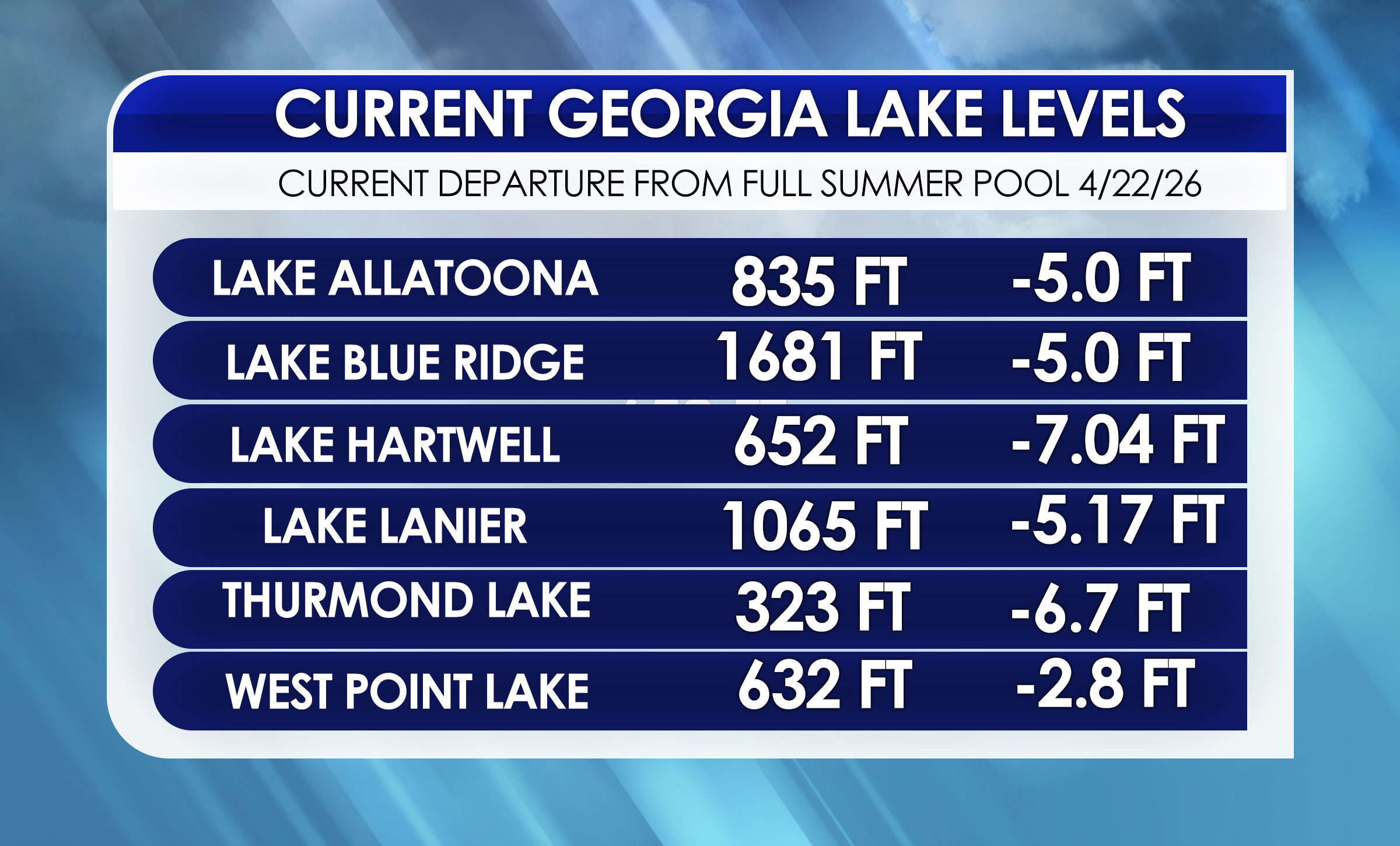
As of April 22, most of the lakes monitored by the Army Corps of Engineers were reporting below full summer pool. In many cases, this is by a sizeable number. Lake Hartwell reports the largest deficit at 7.04ft below full pool and Lake Thurmond is 6.7ft under. Elsewhere Lake Lanier is 5.17ft under and West Point Lake is 2.82ft under. This is nowhere near the levels reported during the record setting 2008 drought, but with upcoming rainfall remaining well below what we would need to see drought improvement and trees/plants taking in more water, those numbers will continue to go down.
 With the warmer weather moving in boating season is getting into full swing. These low lake levels can create extra hazards when you are out on the lake, so it is imperative to pay close attention to your surroundings. None of the large lakes in Georgia are natural and they all have many underwater obstacles that can quickly become problems. The Army Corps of Engineers recommends the following:
- Take a boater safety course
- Be aware of your surroundings at all times, especially when near the shoreline. Trees and shoals that are normally well underwater can be right at the surface during low water levels.
- Do not drink and drive (neither your car or your boat)
- Check the weather forecast before heading out
- Always wear and carry life jackets
- Wear your seatbelts- if you accidentally hit an underwater obstacle the last thing you want is to be thrown from the boat
Camping and dry ground
Unfortunately the dry weather is also going to impact summertime camping, at least in the short term. The US Forest Service placed the Chattahoochee National Forest under level 1 campfire restrictions on April 17 until further notice. This means you are not allowed to build, maintain, attend, or use a campfire except within the provided metal rings in developed sites. Human activity starts approximately 87% of wildfires, and these measures are in place to limit the potential.
On Wednesday, the Forestry Commission issued the first mandatory burn ban in state history for the southern half of the state. This ban prohibits all outdoor burning of any kind, and is in place from Harris County over to Columbia County and points south to the Florida line. There are currently several large wildfires burning across South Georgia, including the Clinch Fire that has burned over 16,000 acres and is less than 10% contained.
Elsewhere in the state, keep a close eye on any local burn bans that are put into place by local municipalities. It is highly recommended to just avoid outdoor burning all together even across the northern half of the state until the drought improves.
Don’t miss what everyone in town is talking about.
Join 4,000+ locals and choose our free newsletter covering news, events and the stories shaping our region.