

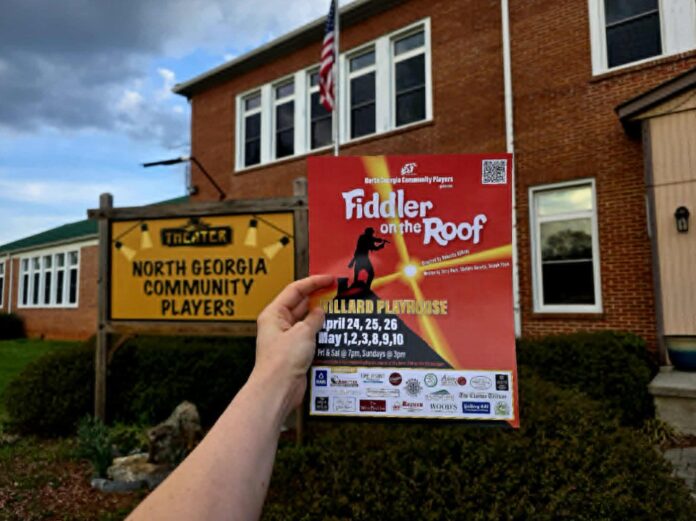
DILLARD, Ga. – In an era that often prefers novelty to reflection, Fiddler on the Roof arrives in Dillard with unusual clarity of purpose. The North Georgia Community Players production does not attempt to modernize the musical through reinterpretation or conceptual novelty; instead, it allows the material to speak with the force it has always possessed.
First staged in 1964 and adapted from the stories of Sholem Aleichem, the musical follows
Tevye, a Jewish milkman in Imperial Russia, as his daughters challenge the arranged marriages that have long structured family and community life. Their choices shake the foundations of a social order engraved in stone nearly as old and unyielding as the tablets upon which Moses received the Ten Commandments.
Atha Thomas plays Tevye with analytical restraint, allowing humor to emerge through emphasis rather than exaggeration, the difference between italics and bold print. His conversations with God carry a moving and often amusing familiarity that never relinquishes reverence, reflecting a man who questions without ever abandoning belief.
Thomas resists the temptation to treat Tevye as comic relief and instead portrays him as a
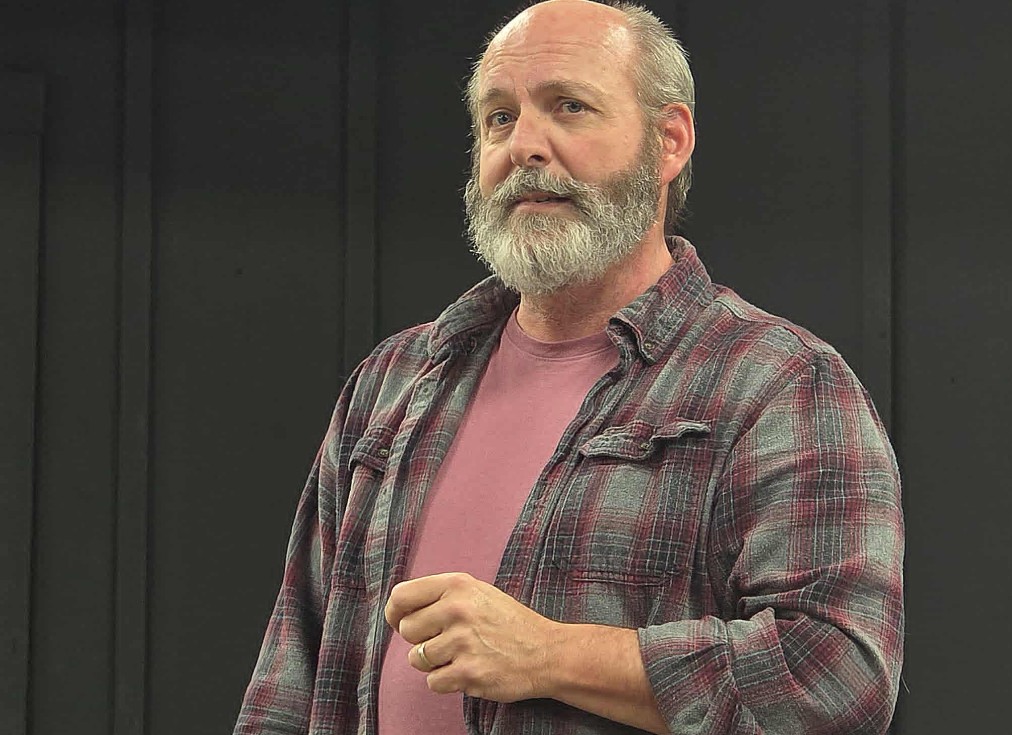
man engaged in serious moral reasoning, negotiating faith in real time while the conditions of his world shift around him. His performance highlights the tension between devotion and doubt, allowing humor to function as a form of resilience.
Joy Ruhe’s Golda provides an effective counterweight to Tevye’s philosophical searching. Ruhe portrays a woman as direct and simple and nourishing as the unleavened bread she serves on the Sabbath. In the well-known duet “Do You Love Me?”, the question feels less romantic than practical, and the answer reveals a lifetime of partnership shaped by labor, sacrifice, and mutual dependence. Ruhe gradually introduces warmth into Golda’s performance, revealing the dynamism of a character often mistaken as simple. The result conveys a sentiment without overt sentimentality that has long defined farm life across generations.
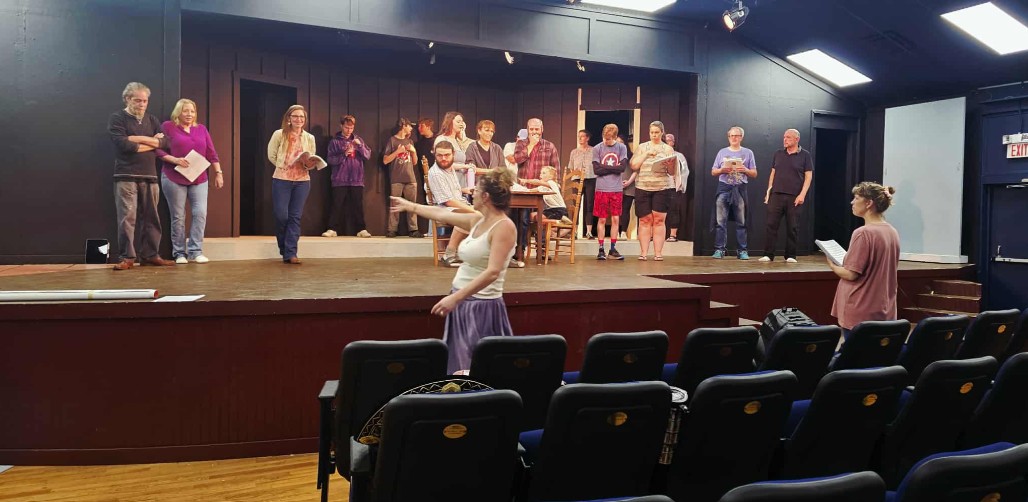
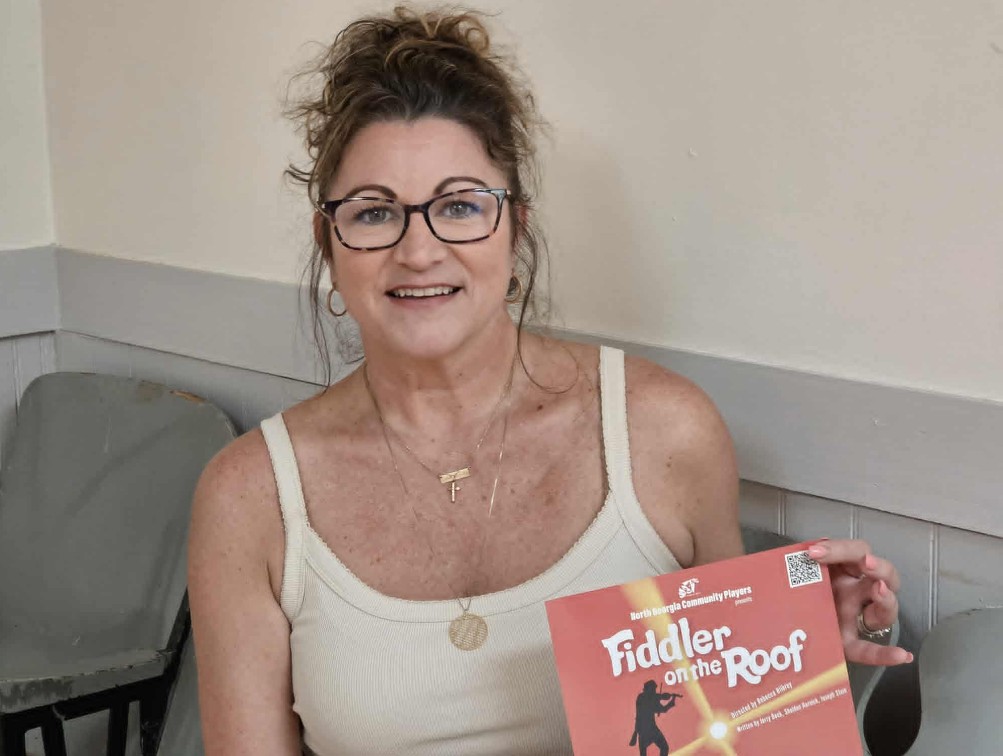
Director Rebecca Bilbrey demonstrates notable skill in staging a large musical within an intimate performance space. The production embraces the constraints of the venue and transforms them into opportunities for layered staging. Ensemble scenes feel full without appearing crowded, and the opening number, “Tradition,” establishes the communal framework that sustains the narrative. Bilbrey approaches the cultural and religious elements of the play with care, consulting research and collaborators to ensure gestures, pronunciations, and symbolic moments reflect authenticity.
The Appalachian setting of the production creates unexpected resonance with the world of
Anatevka. Themes of economic hardship, family loyalty, and inherited expectation remain
recognizable to contemporary audiences who understand the pressures of maintaining
continuity in changing conditions. Each daughter’s marriage introduces a progressively greater departure from tradition, illustrating how gradual change can ultimately reshape a community’s identity.
Joshua Peck’s portrayal of Lazar Wolf contributes measured humor grounded in cultural
awareness. Peck, as the singular Jewish cast member, brings in depth knowledge of Jewish
tradition to the role, ensuring that moments of comedy arise from character rather than
stereotype. His performance supports the production’s broader commitment to authenticity and treating humor as an extension of lived experience rather than a theatrical device.
The ensemble and principal cast deliver musical moments that encompass deep melancholy, camaraderie, whimsy, abiding love, and a hard-won sense of triumph, guiding the audience through an emotional slingshot. Their voices carry a tonal gravity that produces a quiet stillness in the audience, particularly in the choral passages that frame the community’s joys and sorrows in songs like ‘Sunrise, Sunset.’
Moreover, several of the harmonies evoke both reverence and unease, allowing the music to communicate the precariousness of the character’s hard choices and the sometimes brutal consequences of their actions. These moments do not simply accompany the narrative; they deepen it, prompting the audience to experience the emotional weight of displacement, faith, and continuity in a way that lingers well beyond the final note.
This Fiddler on the Roof succeeds because it understands that tradition does not resist change indefinitely; it absorbs pressure until continuity itself becomes uncertain. The North Georgia Community Players present the musical with clear-eyed conviction, demonstrating how a story grounded in the Pale of Settlement at the turn of the 20th century continues to illuminate broader questions about identity, belonging, and adaptation.
The North Georgia Community Players production of Fiddler on the Roof will show April 24- 26; May 1-3, and May 8-10 at the Dillard Playhouse. Tickets are $32.50 for adults and $17.50 for children and may be purchased online.
Story written by Carly McCurry at The Cute North Georgian magazine.