
Publisher’s Note: This is the latest in an ongoing series of articles on Flock camera use in Northeast Georgia. The data presented has been obtained through Open Records Requests filed under Georgia’s Open Records law.
CLAYTON, Ga. — Rabun County Sheriff’s Office deputies made more than 3,200 searches of Flock Safety’s automated license plate reader system during the first seven months of 2026, while the county’s cameras recorded more than 4.4 million vehicle reads year to date, according to records obtained by Now Georgia.
The numbers highlight an important distinction in how the system works.
A “vehicle read” is created automatically when a Flock camera captures a passing vehicle. A search occurs when an authorized user enters the system to look for a license plate, vehicle, or other investigative information.
That means the 4,465,227 year-to-date vehicle reads reported by Flock do not represent 4.4 million searches by deputies. They also do not necessarily represent 4.4 million different vehicles.
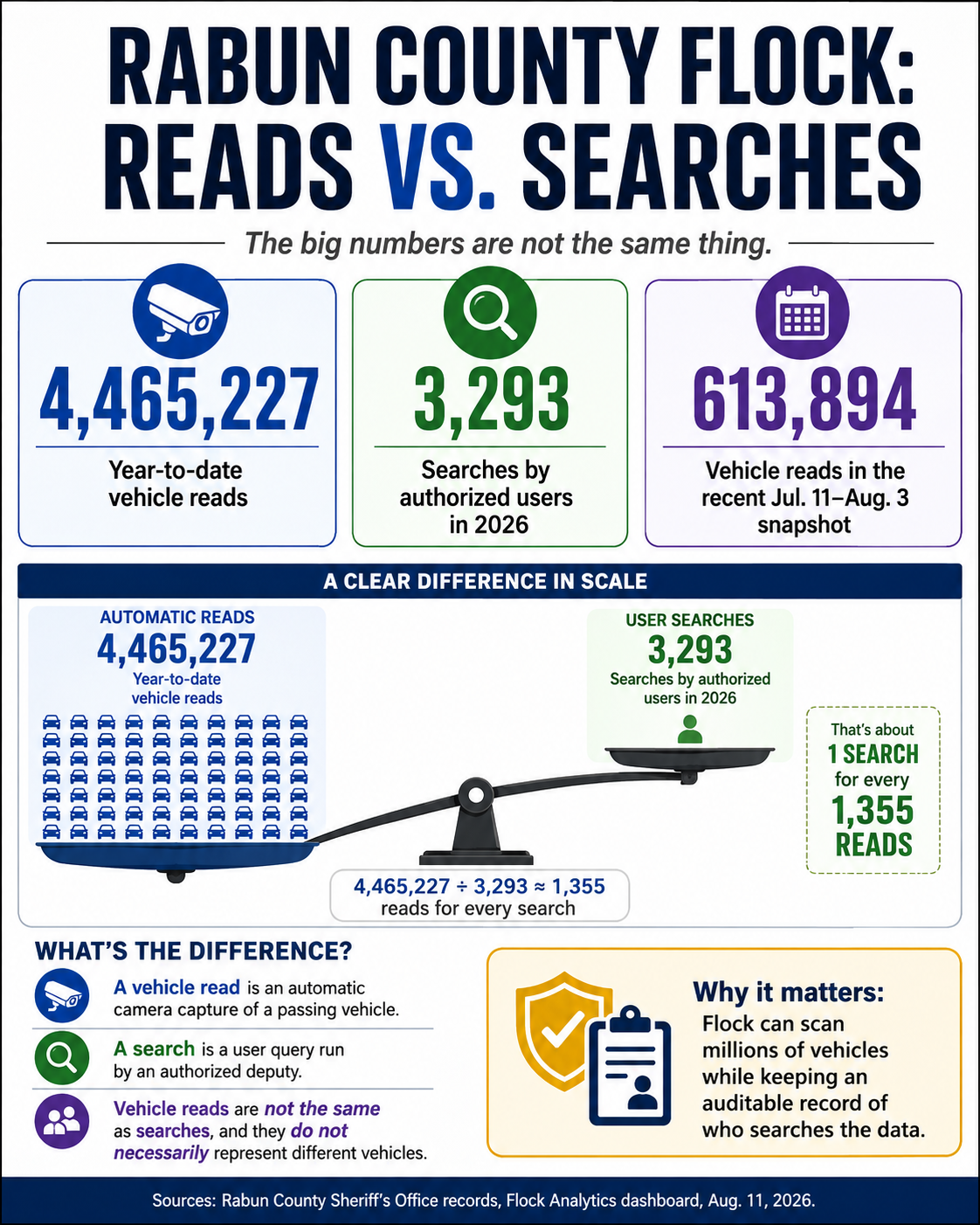
Rabun’s offense-usage report, dated Aug. 11, lists 3,293 searches in 2026. Drugs and narcotics accounted for 1,675 searches, or 50.9% of the total. Traffic infractions were second with 534 searches, followed by wanted-person investigations with 184 and larceny or theft investigations with 140.
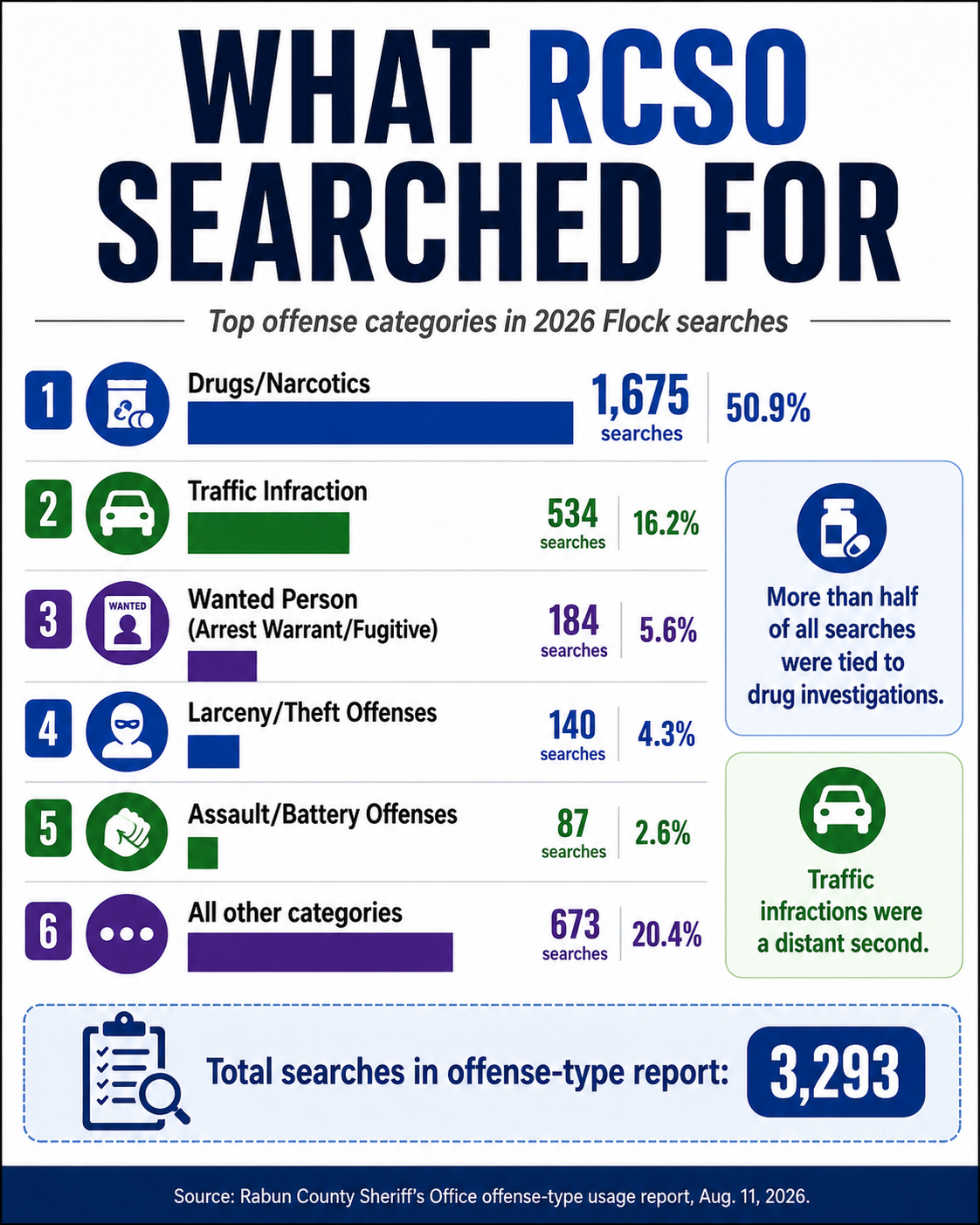
Monthly audit files provided to Now Georgia cover Jan. 1 through July 31 and contain 3,269 unique search records after removing nine duplicate IDs that appeared in overlapping exports.
During that same seven-month period, audit records reviewed by Now Georgia from the Habersham County Sheriff’s Office show 1,795 Flock searches. That means Rabun recorded about 82% more Flock searches than Habersham during the same period.
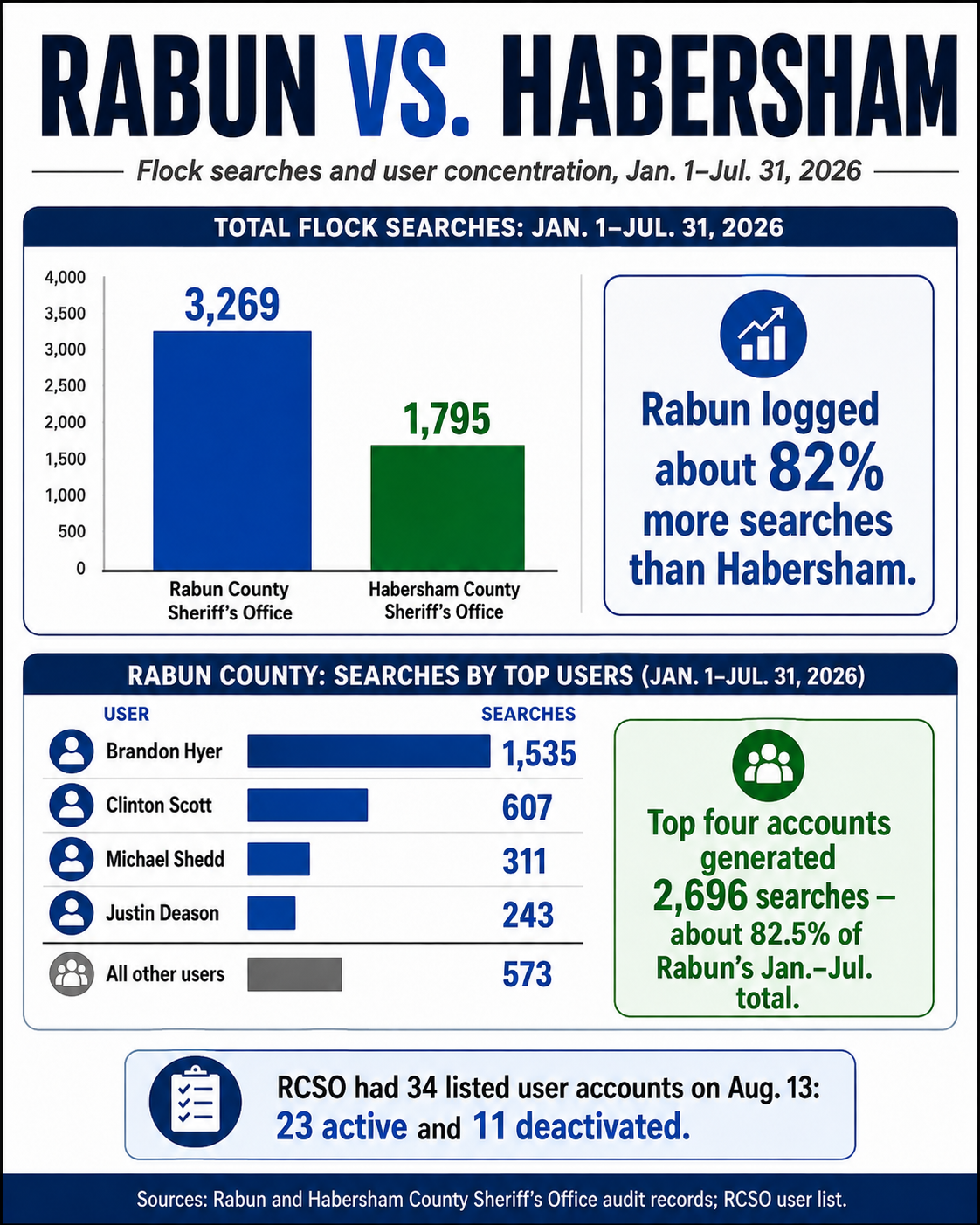
The Rabun records also show system use was concentrated among a relatively small number of users. One sergeant alone conducted 1,535 searches, or about 47% of the total searches through July. Three other deputies recorded 607, 311, and 243 searches, respectively. Together, those four accounts generated roughly 82% of the searches contained in the audit files.
Flock’s user report listed 34 Rabun County accounts as of Aug. 13, including 23 active and 11 deactivated accounts. A separate Flock dashboard reported that 38.24% of users had accessed FlockOS during the previous 30 days.
Agency policies governing Flock use
Rabun County Sheriff Mark Gerrells’ ALPR policy took effect March 12. It requires users to be trained and limits system use to legitimate law enforcement purposes. The policy specifically prohibits using ALPR systems to harass, intimidate, or unlawfully monitor the public. The policy also requires deputies to independently confirm an alert through NCIC, GCIC, or Rabun County Dispatch before taking enforcement action. Deputies cannot take enforcement action based solely on a Flock alert.
For accountability, the Rabun policy says all system access is logged and “subject to audit.”
It assigns an ALPR coordinator to manage access, training, compliance, and complaints or suspected misuse. The policy does not specify how often audits must occur or establish a fixed local retention period. Instead, it directs that retention comply with state law and the sheriff’s office records schedule.
That differs from Habersham County’s Flock policy in several ways.
HCSO’s policy expressly prohibits personal, political, and general-surveillance use; requires the LPR administrator to conduct periodic audits; limits routine retained data to 31 days; and includes a disciplinary section allowing punishment up to termination. It also requires a valid case number for manual hot-list entries.
Habersham audit uncovered alleged misuse
Those audit provisions became more than paperwork in Habersham. Sheriff Robin Krockum has said a proactive internal audit uncovered former Deputy Christian Brewer’s alleged personal use of retained Flock data. Brewer was fired and arrested July 31 on charges that include misuse of license plate data. His case remains an allegation unless and until proven in court.
Nothing in the Rabun records reviewed by Now Georgia establishes similar misuse. The audit files identify the user, date, search type, and stated investigative reason, while the released records redact plate information and other search details.
The comparison does, however, show why audit logs matter.
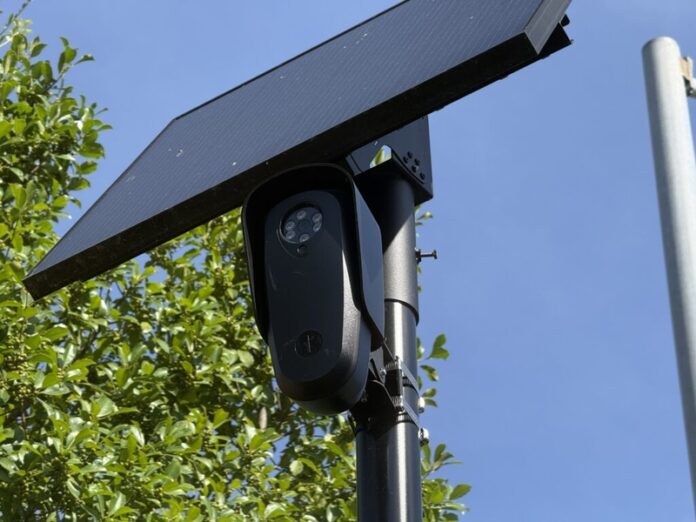
Flock systems can scan millions of vehicles while letting authorized users search historical location data. The technology can help find stolen vehicles, wanted suspects, and missing people, but the same search history also gives sheriffs a record of who used the system, when they used it, and why.
RELATED
- Georgia saw the license plate reader problem coming
- Local Flock audit finds Stephens County policy violation; Hall County cites “technical difficulties
- Flock announces changes amid backlash
- What the Flock? Why Flock cameras are rewriting the rules of public surveillance
-
Franklin County family credits Flock with helping find missing grandmother
Don’t miss what everyone in town is talking about.
Join 4,000+ locals and choose our free newsletter covering news, events and the stories shaping our region.