
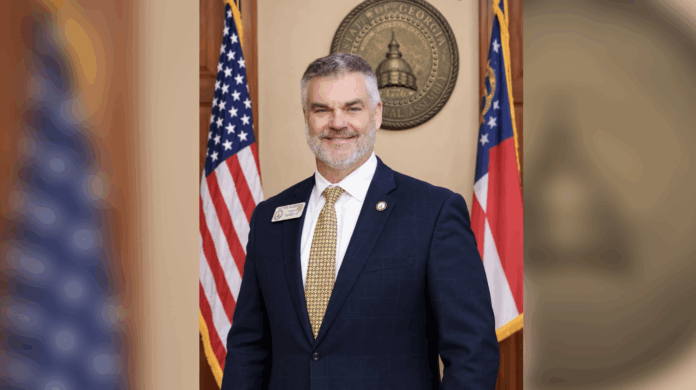
NOTE TO READERS: This op-ed is a guest column from Georgia District 10 State Rep. Victor Anderson (R-Cornelia). Now Georgia provides a platform for diverse viewpoints to encourage civic discourse. The views expressed here belong entirely to the author. We welcome community responses and opposing viewpoints through Letters to the Editor.
For many homeowners in Northeast Georgia, one of the most noticeable increases in the cost of living has arrived in the mailbox in the form of a property tax bill.
Georgia has spent considerable time over the past several years looking for ways to provide property tax relief. But there is another side to that discussion: counties, cities and school systems still have to pay for law enforcement, fire protection, roads, emergency services, water and sewer infrastructure, schools and other essential services.
Reducing the burden on taxpayers while maintaining those services is not as simple as changing one number on a tax bill. If we reduce one source of local revenue, we also have to understand what replaces it—or determine what government can realistically do without.
That is one reason I am serving on the House Blue-Ribbon Study Committee on Local Government Taxation, Funding, and Budgeting. Our committee is meeting during the interim to take a broader look at how local governments are funded and how decisions made at the state level ultimately affect local taxpayers.
It is particularly important that rural Georgia have a voice in that discussion.
Habersham and Rabun counties are very different from metro Atlanta. Our communities have fewer taxpayers across which to spread the cost of government, yet we still need sheriff’s deputies, ambulances, fire protection, roads, courts and other essential services.
At the same time, many residents—particularly retirees and families who have owned their homes for decades—have seen property values increase significantly. A higher property value may look good on paper, but it doesn’t necessarily mean a homeowner has more money available to pay a higher tax bill.
Local governments are also dealing with higher costs. Fuel, equipment, construction, insurance and employee compensation all cost more than they did just a few years ago.
The challenge is finding the appropriate balance.
As chairman of the House Governmental Affairs Committee, I regularly deal with legislation affecting counties, cities and other units of government. One lesson from that work is that state government needs to be careful about imposing requirements on local governments without considering who ultimately pays for them.
There is no such thing as government money. There is only taxpayers’ money.
That principle also applies when we consider tax relief. Moving a cost from one taxpayer to another may change who receives the bill, but it doesn’t necessarily reduce the underlying cost.
As our Blue-Ribbon Study Committee continues its work, there are some fundamental questions we need to ask. Are there services that can be delivered more efficiently? Are state requirements unnecessarily increasing local costs? Is our local tax structure keeping pace with the way communities are changing? And how do we protect homeowners while ensuring local governments can continue providing essential services?
Those discussions will help shape recommendations for the General Assembly.
There will not be one solution that fits every community in Georgia. What works in Atlanta may not work in Clarkesville, Clayton, Cornelia or Demorest.
But we can begin with a straightforward goal: taxpayers deserve a system that is understandable, responsible and fair, while local governments need the ability to provide the basic services their citizens expect.
Finding that balance will be an important part of our work in the months ahead.
Don’t miss what everyone in town is talking about.
Join 4,000+ locals and choose our free newsletter covering news, events and the stories shaping our region.