

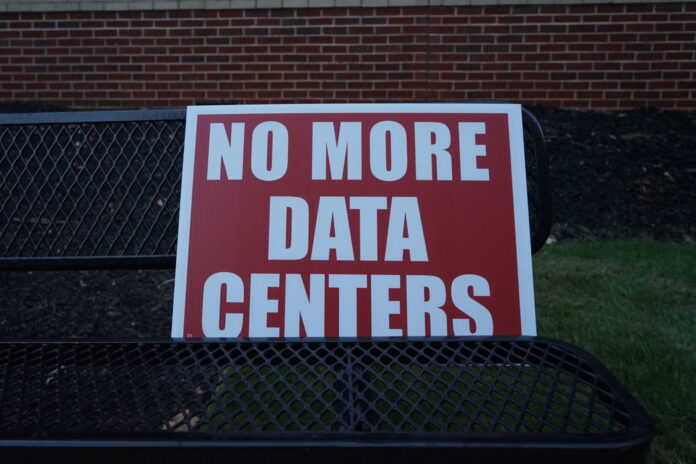
This year, Georgia taxpayers will spend an estimated $2.4 billion in tax breaks to subsidize construction of data centers in our state.
I have several problems with that. You might too.
First, and most obviously, that $2.4 billion could buy a lot of health insurance, or keep rural hospitals operating. It could pay a lot of teacher salaries. But leadership in this state has decided those are not good uses for the money. Instead, they’ve decided it is better used to fatten the bank accounts and stock portfolios of people who are already some of the richest on the planet.
Because really, that’s all state officials are doing. Even if you believe that data centers are necessary – and there’s a decent argument to that effect – billions of dollars of state tax subsidies remain a ridiculous waste of money. The usual justification for such subsidies is to encourage needed economic development projects that otherwise would not occur, and that is simply not the case here.
To the contrary, this year the artificial intelligence industry is expected to draw $2.5 trillion in new private investment globally. The worry isn’t that the AI industry can’t attract enough investment, it’s that it is drawing too much investment, too quickly, to the point that many experts warn that the sector is creating a financial bubble that may soon burst.
In short, we are subsidizing and incentivizing projects that almost certainly would have been built in Georgia anyway.
Second problem: We are using public money to subsidize something that the public does not seem to want. Nationally, poll after poll finds that more than 70% of Americans would oppose construction of data centers in their community. Here in Georgia, an Atlanta Journal-Constitution poll of primary voters back in April found that 53% of Republicans and 75% of Democrats would oppose data centers near them. Those numbers have probably grown since then.
Why? Data centers require huge quantities of water to cool servers. They require huge amounts of electricity, straining power plants and grids and potentially raising energy costs. They are noisy, and once operational they don’t generate many jobs. It is not irrational to wonder whether their drawbacks outweigh their benefit, particularly to communities forced to host them.
That leads us to the third problem. In their headlong rush to cash in on the AI boom, data center proponents often have neither the time nor the patience for working with and reassuring communities about its impact. Instead, they attempt to get their way through brute force, deception, political power and money.
Take recent events in Effingham County, near Savannah, where a huge new data center was announced in late July. At full build-out, the facility will cover 1,400 acres and require 3.2 gigawatts of electricity, enough to serve 3 million homes.
That’s a project of immense public impact. Yet there had been no public input or even knowledge about the project before it was announced as a finalized deal. That happened by design, not accident. According to The Current, the CEO of the Effingham County development authority had signed a non-disclosure agreement with OpenAI, the company building the plant. In April, he even publicly denied that negotiations for a data center were underway, actively misleading the people he is supposed to represent.
In late July, the county development board quietly approved the final deal in a hastily called meeting without proper public notice. Nobody in the community was in attendance. The local weekly newspaper had been told a deal was coming, but it agreed to embargo the news, withholding it from its readers and denying them the chance to weigh in, until after the deal had been approved. That’s a terrible journalistic decision.
That is not operating in good faith. It is a way of doing business that heightens rather than mitigates fear and suspicion. And the problem is, similar stories are playing out all over the country.
Outside Memphis, for example, Elon Musk is building another massive data center project and has installed dozens of natural gas generators to supply the needed electricity. However, he has done so without the legally required air quality permits and pollution-control systems, producing thousands of tons of unregulated pollutants.
And when local groups sought to sue Musk’s company for violating the federal Clean Air Act, the Trump administration declared the facility essential to national security, claiming that status meant Musk could ignore federal law and was immune to lawsuits.
Such high-handed action may work in the short term, but it will inevitably produce a backlash. It has done exactly that, which leads to my fourth and most important point:
AI is already a spooky technology to many people, including people intimately involved in its development. They warn of its impact on jobs and communities, of its propensity to “hallucinate,” to tell users what they want to hear, and in some cases to set its own agenda, independent of its human creators.
The companies and people championing the promise of AI reassure us that they will keep the public interest in mind, that they will be responsible and conscientious in implementing this powerful technology and will not blow through safeguards in a mad rush for profits. Yet these are the same people now bulldozing through environmental laws, compelling elected officials to keep secrets from their own constituents and ignoring community input in their gold rush to build AI data centers.
So color me skeptical.
Don’t miss what everyone in town is talking about.
Join 4,000+ locals and choose our free newsletter covering news, events and the stories shaping our region.