

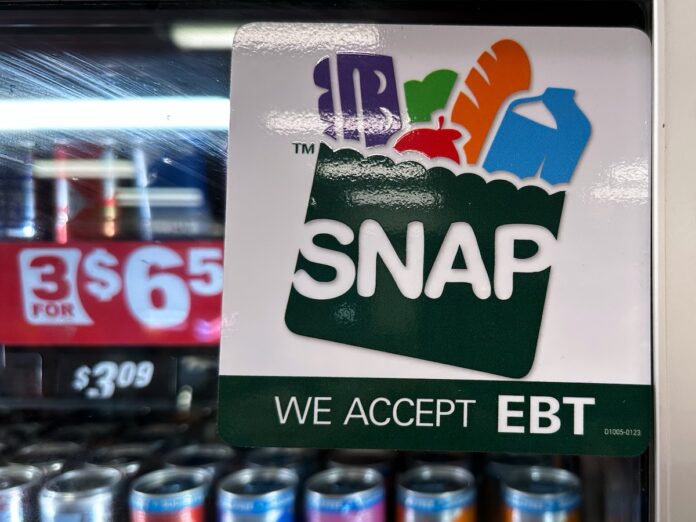
Georgia is among half a dozen states that have been granted an extra year before having to help pay for Supplemental Nutrition Assistance Program (SNAP) benefits under a new federal law, after posting one of the nation’s highest payment error rates.
The U.S. Department of Agriculture released new data Wednesday showing Georgia’s SNAP payment error rate exceeded 13.34% during the 2025 fiscal year. Under a tax-and-spending law signed by President Donald Trump, that qualifies the state for a one-year delay before new cost-sharing requirements take effect.
Georgia joins Alaska, Delaware, Illinois, New Mexico, Oregon and the District of Columbia in receiving the extension. States that post similarly high error rates in 2026 could also qualify for a delay until 2030.
Sliding scale penalties
Beginning in October 2027, states with SNAP payment error rates of 6% or higher will be required to pay a share of the program’s benefit costs for the first time. States with error rates below 6% will pay nothing, while those with higher error rates will cover between 5% and 15% of benefit costs on a sliding scale.
The payment error rate measures benefits that were issued either above or below the correct amount, largely because of administrative mistakes or errors in determining eligibility. It does not measure fraud.
Increased costs and work requirements
The new cost-sharing requirement is one of the biggest changes to SNAP included in Trump’s tax-and-spending package. The law also increases the share of administrative costs states must cover, from 50% to 75% beginning this October, and expands work requirements for many adult recipients.
Supporters say the changes will improve accountability and reduce federal spending.
“These payment error rates are further proof that state accountability is severely lacking in SNAP,” Agriculture Secretary Brooke Rollins said.
Critics argue the changes could strain state budgets and force difficult decisions about funding other public services or limiting access to food assistance.
The Supplemental Nutrition Assistance Program, commonly known as food stamps, provides monthly food assistance to more than 37 million Americans. Preliminary USDA figures show enrollment has fallen by nearly 5 million people — more than 11% — over the past year.
Based on original reporting by AP
Don’t miss what everyone in town is talking about.
Join 4,000+ locals and choose our free newsletter covering news, events and the stories shaping our region.