
Columbus FBI agents tipped off that prison inmates were impersonating police officers in a phone scam led to additional sentences according to a release by the U.S. Attorney’s Office for the Middle District Court of Georgia.
The two Georgia inmates who orchestrated a phone scheme from behind bars, extorting at least 119 citizens by demanding payment for supposed missed jury‑duty fines, were sentenced to federal prison following an investigation conducted by the FBI.
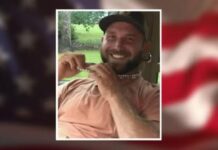
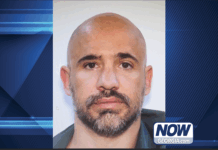
Lance Riddle, aka “C-Port,” was sentenced to serve a total of 200 months in prison, followed by three years of supervised release, to run consecutively to any state sentence. Co-defendant Joey Amour Jackson, aka “Apes—,” was sentenced to serve a total of 120 months in prison, followed by three years of supervised release, to run consecutively to any state sentence. The Court will determine restitution for both defendants in 90 days. Senior U.S. District Judge W. Louis Sands presided over the sentencing hearings on October 14. Jackson and Riddle were found guilty of one count of conspiracy to commit wire fraud and one count of conspiracy to commit money laundering on January 9, after a five-day trial that began on January 5. There is no parole in the federal system.
“Even from prison, the defendants preyed on citizens through threats and deceit, scams that too many Americans are confronted with today,” said U.S. Attorney William R. ‘Will’ Keyes. “Our office and our law enforcement partners remain firmly committed to protecting the public and ensuring that those who commit fraud face full accountability.”
“Not even prison cells prevented these criminals from harming dozens of innocent people. Hopefully, this sentence will bring some level of comfort to the victims and prevent others from falling for similar scams,” said Marlo Graham, Special Agent in Charge of FBI Atlanta. “The FBI will continue to work with our law enforcement partners in not only addressing these types of inmate-based crimes but also in preventing inmates’ access to contraband cell phones that provide the means to do so much harm to the unsuspecting public.”
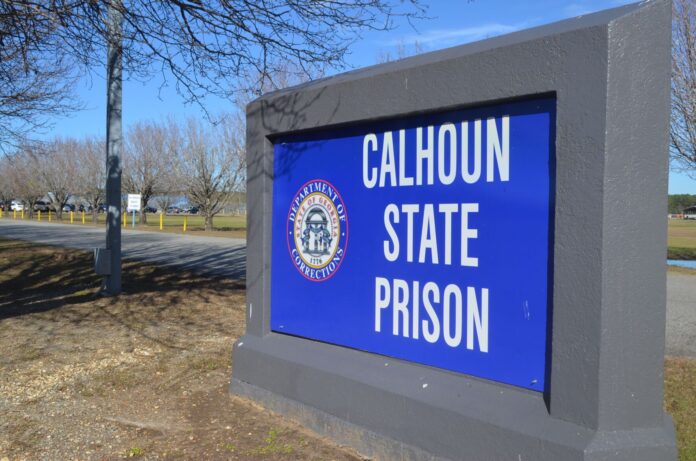
According to court documents and statements referenced at trial, FBI agents in Columbus, Georgia, received information from law enforcement agencies across the U.S. about wire fraud by Georgia inmates, including local law enforcement in Colorado, Florida, Virginia, Nevada, California, and Ohio. Agents discovered that inmates at Calhoun State Prison, including Jackson and Riddle, were using contraband cellular telephones and advanced electronic techniques such as Voice Over Internet Protocol (VOIP) to contact victims from a number that mirrored the numbers of their local police departments.
The victims were told they had one or more warrants for their arrest due to missing jury duty. The defendants, posing as police officers, informed the victims that the warrants would be cleared through payment of a bond over the phone and, if not paid, the victims would immediately be arrested. The victims were also informed they were under a “gag” order and couldn’t speak about their warrants until the bond was paid, or they would be immediately arrested. The victims were almost always instructed to buy gift cards and read the numbers off the back of the cards to the defendants, although they sometimes made wire transfers. After paying the bond, victims were instructed to drive to their local police department to verify their signature on the bond.
Some victims were told that, because of supposed heightened courthouse security, they needed to go to a local Target store, enter a restroom, undress, and record themselves performing a self-conducted cavity search before verifying their signature. Some victims subsequently received lewd and sexually explicit messages, including violent threats. The scheme primarily targeted female professionals with prominent online profiles, though a small number of male victims were also identified.
The inmates impersonated both fictitious individuals and real law enforcement officers from the victims’ local jurisdictions. They worked with co-conspirators outside prison who managed the group’s financial accounts. The stolen proceeds were used to pay off personal debts such as house and vehicle loans, as well as to purchase drugs. The scheme resulted in more than $464,920 in documented losses from 119 victims nationwide, though the true number of victims is likely much higher as many cases go unreported, are not fully investigated, or are concealed by victims who are too embarrassed to come forward.
The case was investigated by the FBI Atlanta’s Columbus Resident Agency and prosecuted by Criminal Chief Leah McEwen.
Don’t miss what everyone in town is talking about.
Join 4,000+ locals and choose our free newsletter covering news, events and the stories shaping our region.