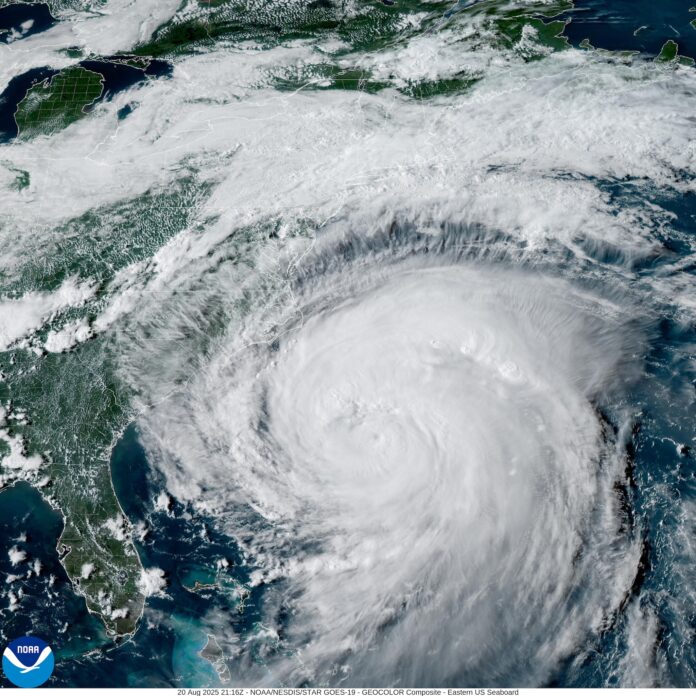
ATLANTA — Hurricane season begins June 1, and federal forecasters say the 2026 Atlantic season is expected to be less active than usual. Still, weather experts warn that even one storm can bring devastating impacts to Georgia and the Southeast.
The National Oceanic and Atmospheric Administration is forecasting between eight and 14 named storms in the Atlantic this year, according to NOAA Administrator Neil Jacobs. That is about five fewer storms than projected last year.
During an interview with Georgia Public Broadcasting, GPB Environment and Climate Reporter Jillian Magtoto said the expected development of El Niño is the main reason forecasters anticipate a quieter Atlantic season.
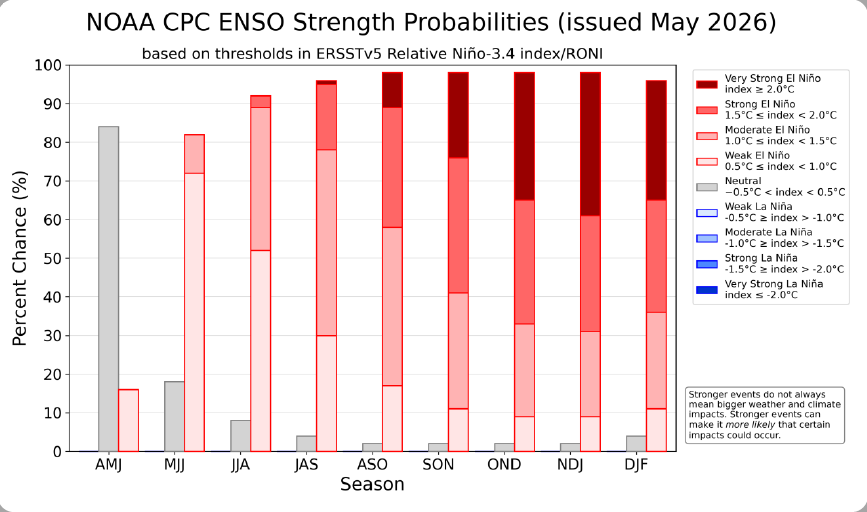
“The primary driver is the growing likelihood of an El Niño happening, which is a Pacific Ocean warming event beginning in the spring,” Magtoto said. “This year, the Pacific Ocean has already risen to near record high temperatures. So NOAA is predicting not only a 98% chance of an El Niño, but also an 80% chance of a moderate to strong El Niño.”
Magtoto explained that El Niño affects hurricane development by creating “vertical wind shear,” which changes wind speed and direction higher in the atmosphere.
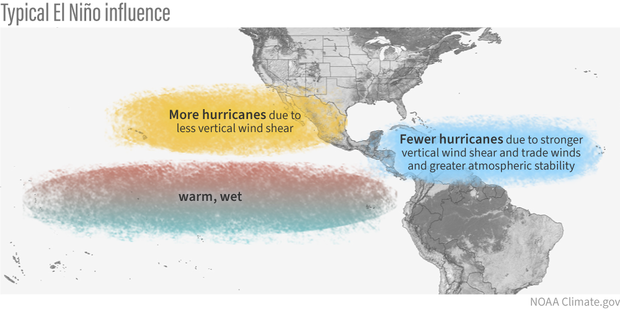
“But hurricanes need calm air to form,” she said. “So scattered storms crossing the Atlantic will likely have a harder time becoming more organized systems. That’s why we’ll see fewer named storms on the East Coast.”
While the Atlantic could see fewer storms, Magtoto said the Pacific Ocean is expected to experience an above-average storm season.
The last major El Niño event occurred in 2015, with a weaker one from mid 2023 through early 2024. Magtoto noted that year produced “the most intense tropical cyclone on record in the Pacific.” In the Atlantic, there were 12 named storms, including three hurricanes, and none made landfall on the East Coast.
Despite the calmer forecast, NOAA officials stressed that residents should not let their guard down.
“Unfortunately, no,” Magtoto said when asked whether people could relax their preparations this year. “Helene was a category 2 hurricane when it hit Georgia, and it claimed about 200 lives across the Southeast.”
NOAA predicts as many as three hurricanes this season could strengthen into at least Category 3 storms.
Officials also warned that tropical systems do not have to reach hurricane strength to cause major flooding, tornadoes and severe weather.
Magtoto said NOAA is encouraging residents to prepare now by stocking up on medicine, food and backup power supplies before storms threaten the region. Officials are also urging people to learn local evacuation routes ahead of time.
“While NOAA wasn’t able to provide any particular information on how storms will track, everyone should be preparing now as the season arrives in just days,” Magtoto said.
In addition to the relative decrease in hurricanes on average, an El Nino generally results in a wetter pattern across the southern United States. This can complicate flooding issues with any storms that do develop, with wetter antecedent conditions likely across the southeast. 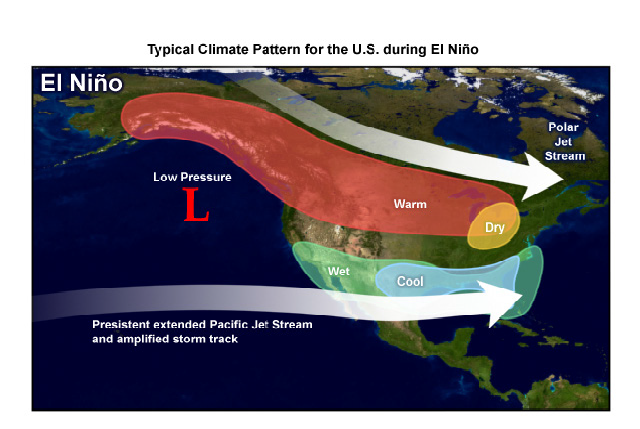
This year’s El Nino has potential to become one of the strongest on record, with the CPC forecasting around a 40% chance of a very strong Nino by late this year. The 2015/2016 set the previous record with an ONI (Oceanic Nino Index) of 2.6ºC above average, a number that could be tied or beaten with the current cycle.
More hurricane preparedness information is available at hurricanes.gov.