

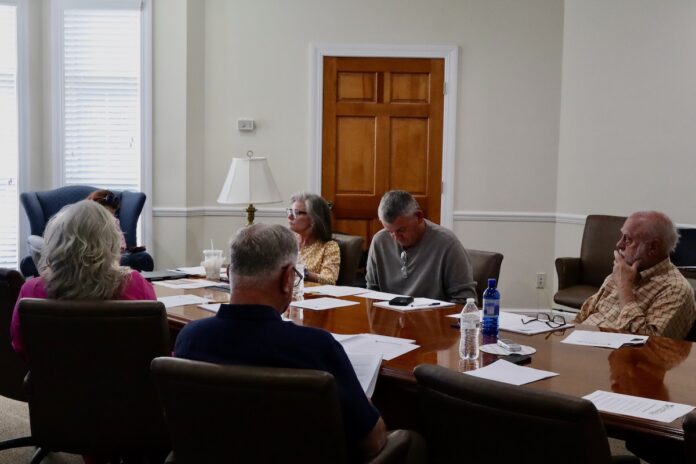
CLARKESVILLE — Clarkesville’s city council is weighing whether to add staff or contract out yard debris pickup services as they evaluate growing strain on public works operations tied to a longstanding courtesy program.
During its work session meeting Tuesday, council members discussed Clarkesville’s yard debris pickup and right-of-way maintenance program, which is currently performed through ESG, the city’s public works contractor. The program, originally created years ago when staffing levels were higher, has become a point of concern as employees are pulled from other core services.
Councilman Brad Coppedge said the system was designed during a period when the city had significantly more personnel.
“Part of the effort that we put in … was we have programs periodically that were created years ago, back when we had our 21 plus employees,” Coppedge said. “We need to better understand what type, when we have programs like this, which is a courtesy program, what type of pressure are we putting on the system to complete all the other core services?”
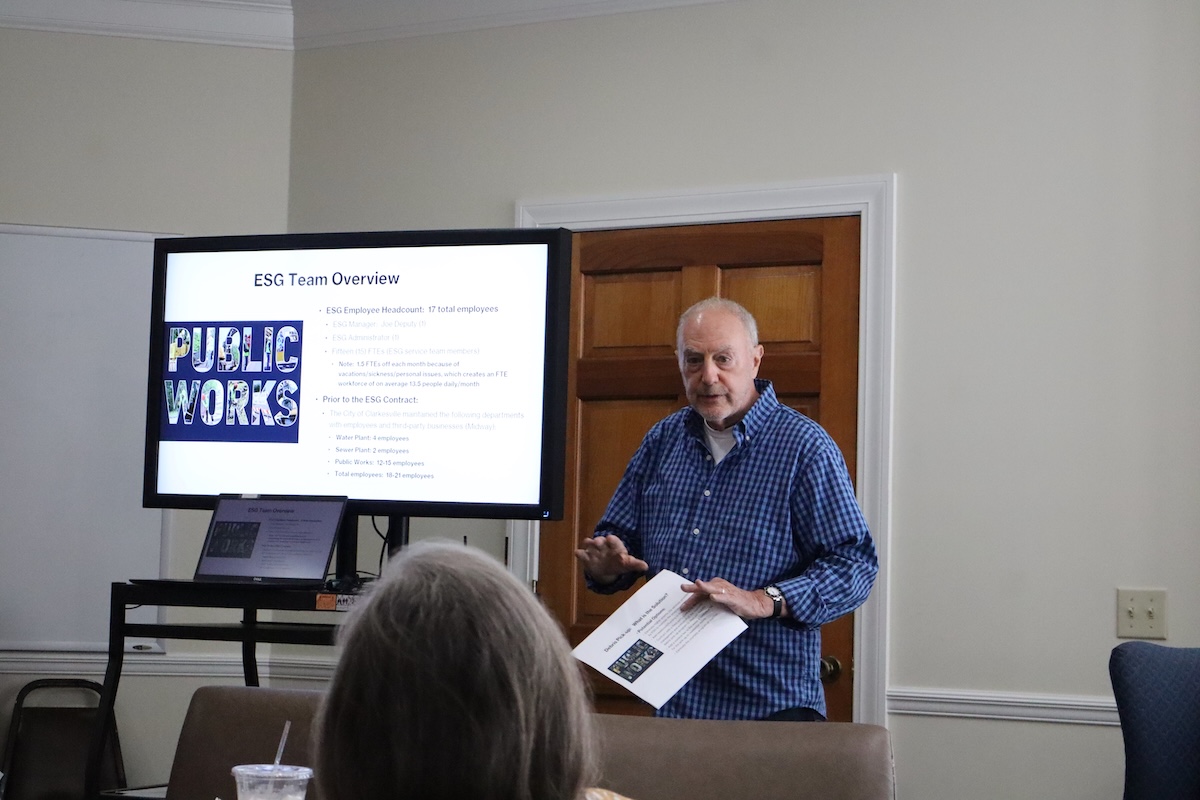
Coppedge said the city currently has about 15 full-time employees in the ESG structure, which he said equates to roughly 13.5 after accounting for leave and absences. He said that staffing level is stretched across water and wastewater operations, sanitation, meter reading and lockouts, city property maintenance, equipment repairs, and daily work orders.
He said only a small percentage of utility customers use the yard debris pickup program, but it consumes a disproportionate amount of staff time.
“We have 2,000 people on our billing … 60 to 80 people” use the program, Coppedge said, adding that some residents continue to place out debris piles with the expectation they will eventually be collected.
Coppedge also raised concerns about cost and equipment needs if the city were to expand in-house service.
“We need to do that extended look to see what other costs are associated with that, as opposed to contract out,” he said.
ESG Project Manager Joe Deputy told council members the program is also constrained by aging equipment and safety concerns. He said crews are currently using a dump truck body and chipper that are more than two decades old and not well suited for modern debris removal needs.
“We’re also doing this job … every bit of it’s done in the street with zero traffic control,” Deputy said. “We don’t have the personnel for flagging.”
Deputy said crews often work without adequate traffic control in roadway conditions he described as unsafe, particularly in areas with limited visibility. He said debris pickup can take significant time at individual locations, limiting overall productivity.
“At some point, we got to rein it in,” Deputy said. “If we want to keep it, then we’ve got to enforce the rules that we’re setting in front of it.”
Deputy said the city would likely need to add at least two full-time employees and acquire more specialized equipment if it continues performing the work in-house.
Interim City Manager Julie Poole noted that existing regulations governing yard debris placement are not consistently enforced and suggested the city could begin enforcing them more strictly. She also said another option would be to impose a fee for pickups that fall outside of guidelines.
“We’re going to have a service come and get it, and we’re going to bill that to you,” Poole said.
Councilman Don Nix said the city must also consider storm-related debris and special circumstances, noting that many communities provide government-led cleanup following major weather events.
He said Clarkesville’s current system is largely complaint-driven rather than a regularly scheduled service and said residents often continue adding to debris piles when pickup timing is unclear.
“People that are counting on it to be picked up, they do keep piling it,” Nix said.
Nix also suggested a hybrid approach that includes regular city service, stricter enforcement of guidelines and the use of contractors for larger storm events. He also raised concerns about accessibility for older residents who may not be able to prepare debris under stricter rules.
Mayor Franklin Brown asked staff to evaluate the cost of adding two full-time employees versus contracting out the service under different service schedules.
“Let’s evaluate what our cost would be to add two people to, and let’s also see what a contractor cost would be for two days, two weeks, four days a month, or some combination,” Brown said.
Deputy estimated two additional employees would be needed if the city continues the program in-house, but he said contracting the work could be more cost-efficient given equipment and safety constraints.
Coppedge urged a broader cost analysis that includes equipment purchase and maintenance, not just salary expenses.
Mayor Brown directed staff to return with cost comparisons for both staffing and contracting options by the council’s next regular meeting June 1.
Don’t miss what everyone in town is talking about.
Join 4,000+ locals and choose our free newsletter covering news, events and the stories shaping our region.