
Drought conditions are still widespread across much of Georgia despite the recent rains. While some areas of the state have been removed from the designation, most still remain in at least a D0, or abnormally dry, drought.
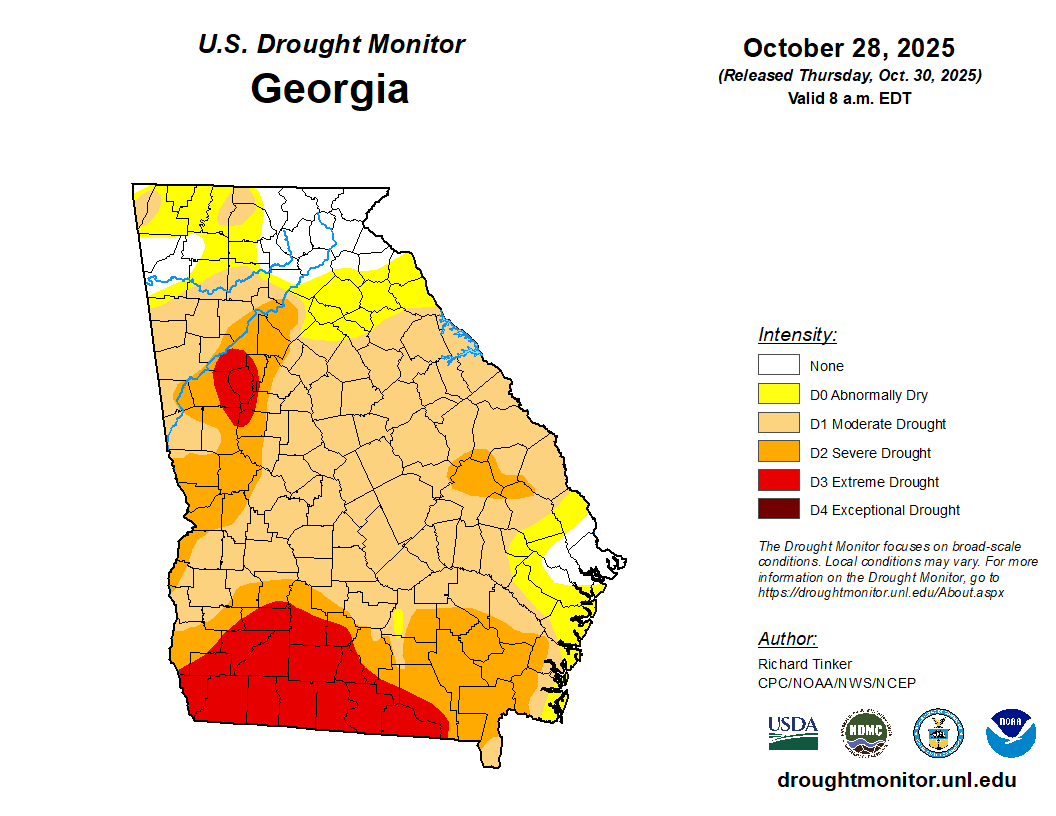 Compared to last week, the total area of the state currently under drought conditions dropped from 97% to 91%. Most of the improvement came over Northeast Georgia where as much as 4″ of rain fell over the past week. Most of this area was just in a D0, or abnormally dry, condition which made drought erasure much easier. Further south towards the Atlanta Metro a D2, severe, and D3, extreme, drought area continues to persist. Fayette and surrounding counties are currently the hardest hit in the northern part of the state. These counties remain in an extreme drought. Analysis from the NWS does show that this arear received a decent amount of rain, around 2-3″, but not enough to erase the drought. Further south towards Columbus rainfall totals were much lighter, and the extreme drought areas of south Georgia have barely received any at all.
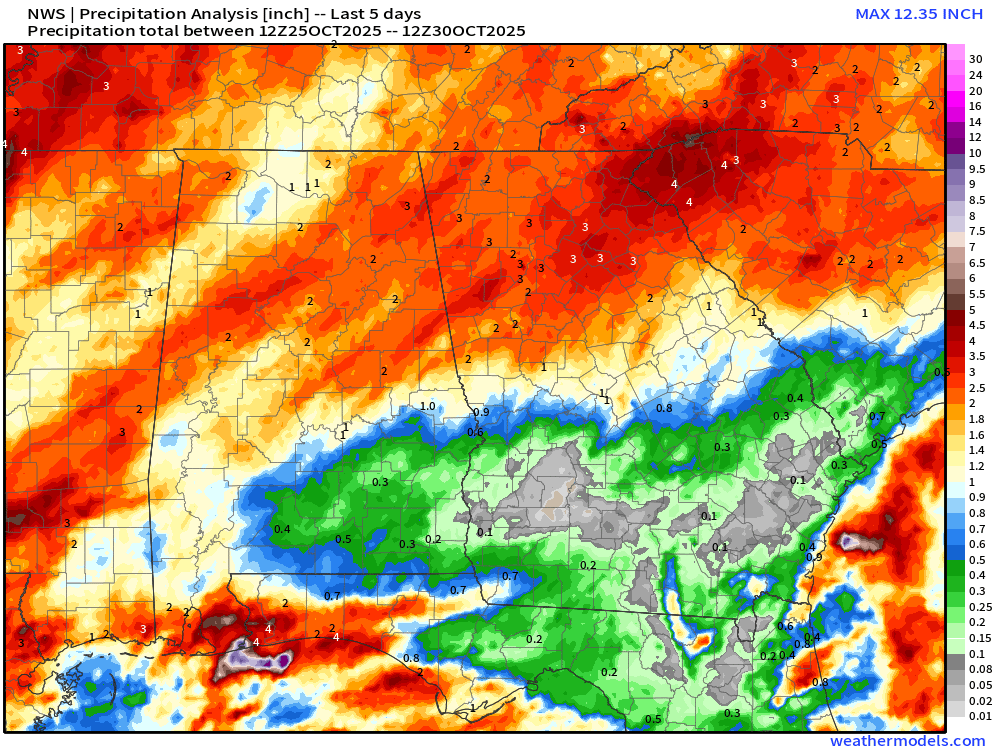
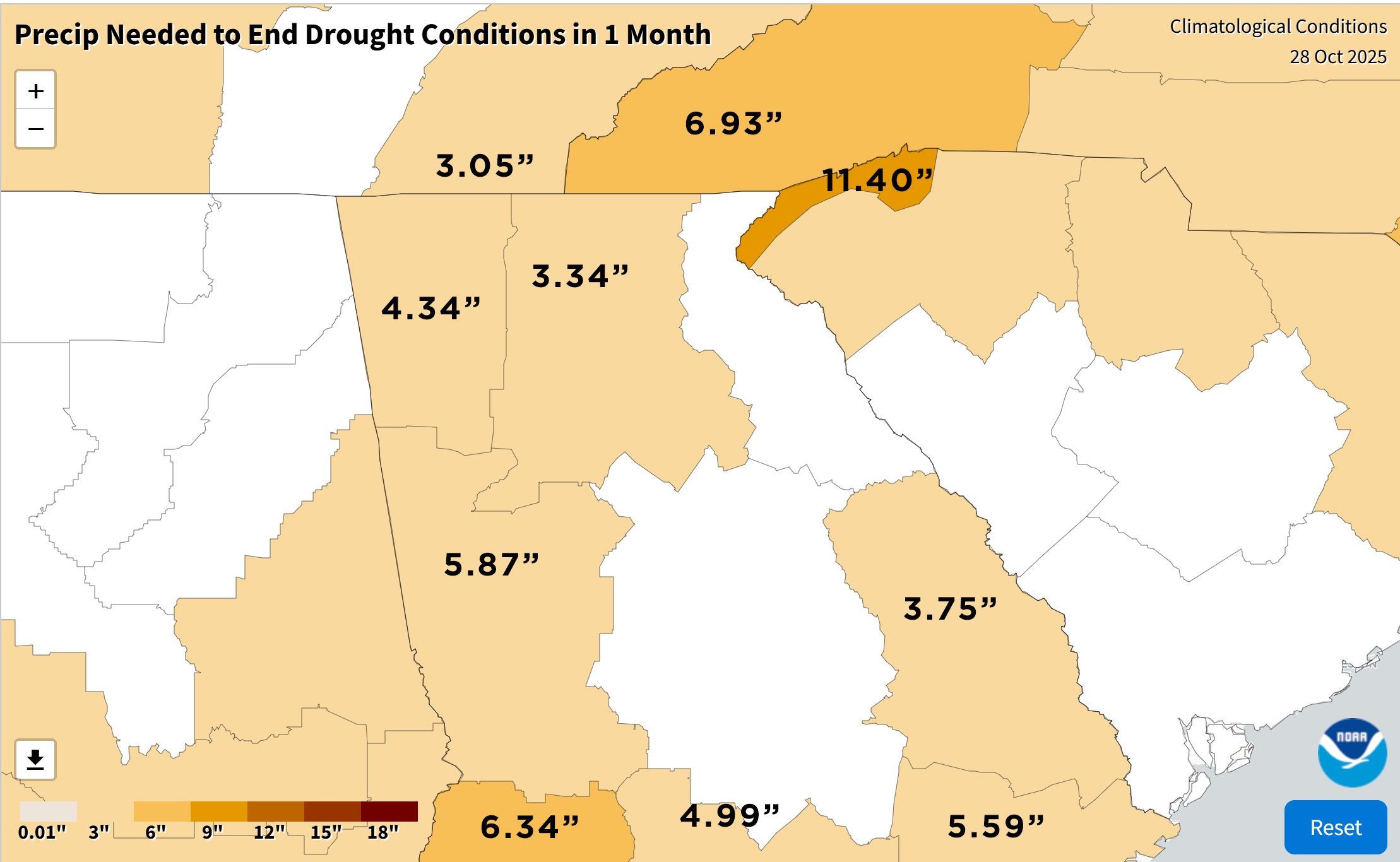
Rainfall deficits vary quite a bit across the state thanks to the somewhat patchy areas of higher totals, especially in the I-20 corridor. However, NOAA puts out a graphic each day that analyzes approximately how much rain is needed to erase the drought. These are done by climatological area and thus can vary quite a bit, but it is a good average and a good place to start. This does take into account some of the recent rains with the latest analysis released on 10/28. It is worth noting that they also define drought a bit differently than the drought monitor forecasters.
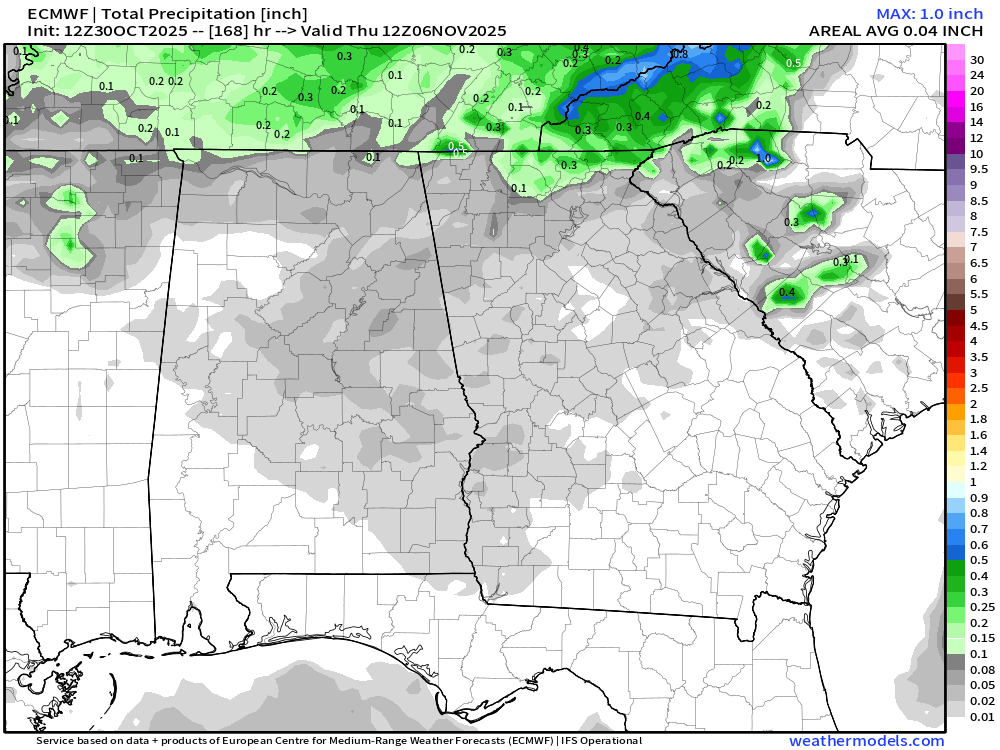
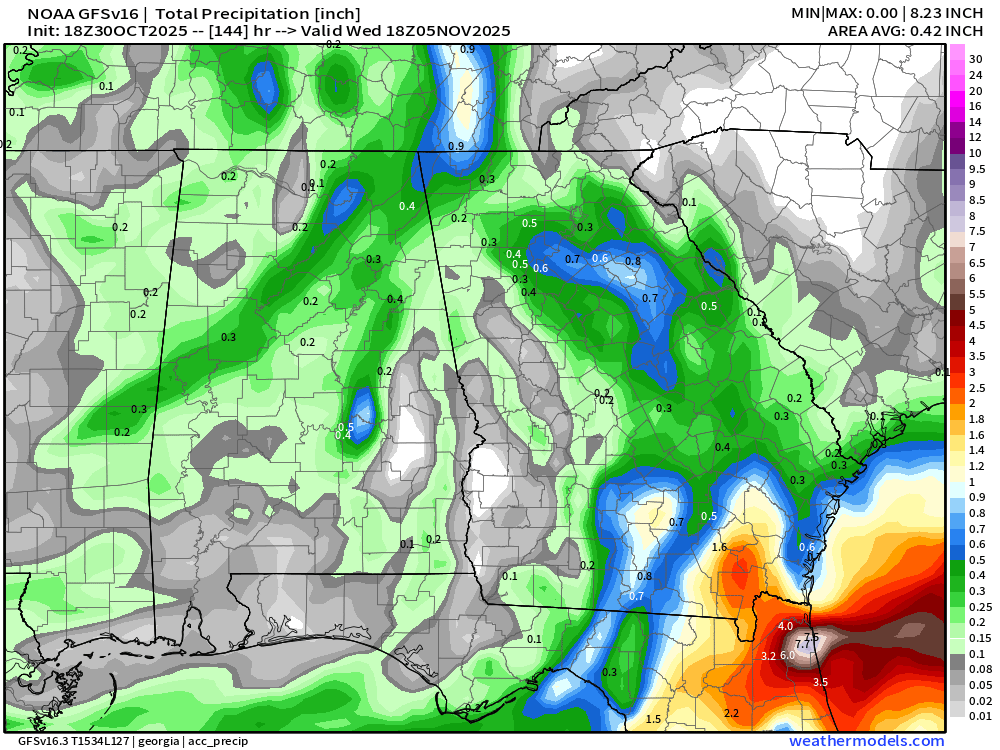
Unfortunately, it doesn’t appear this wet pattern is going to persist with a mostly dry 7 days coming up. You can see both the major global models below which show little to no relief in the areas with the worst current drought conditions. All of this rain comes from a storm system on Sunday/Sunday night. You can see the GFS is a bit more optimistic, but still has totals less than 1″ for most of the state.
With drought conditions persisting, wildfire risk will continue to be a focus as we move into late fall. Low humidity and wind are common this time of year, which can lead to very high fire danger.
Stick with Now Habersham for the latest on the drought.