
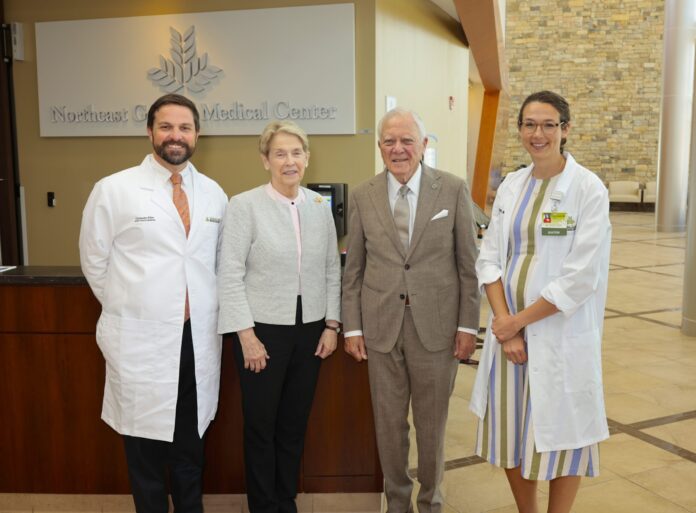
DEMOREST, Ga. — In a rare example of government doing what it’s supposed to do, a program that funds doctors focused on serving rural Georgia was celebrated Friday at North Georgia Health System’s hospital in Demorest.
Two doctors who benefited from the state-funded Nathan Deal Scholarships at Mercer University Medical School spoke during a lunch gathering with hospital administrators and former governor Nathan Deal, now a Habersham County resident. They described how the scholarships helped make their dreams of serving Georgia’s rural patients possible.
Dr. Amy Howard, an obstetrician/gynecologist at Northeast Georgia Medical Center Habersham and at an office nearby on Austin Drive in Demorest, grew up in South Dakota, but settled on Mercer and Georgia as home. She is one of the first “Nathan Deal” doctors to come to Habersham to serve in an area short on specialists of her type.
Dr. Christopher Kiker, a native of Bremen, in West Georgia near the Alabama border, is also among the first Deal scholarship recipients at Mercer. He runs his family practice in Toccoa as part of the NGHS system.
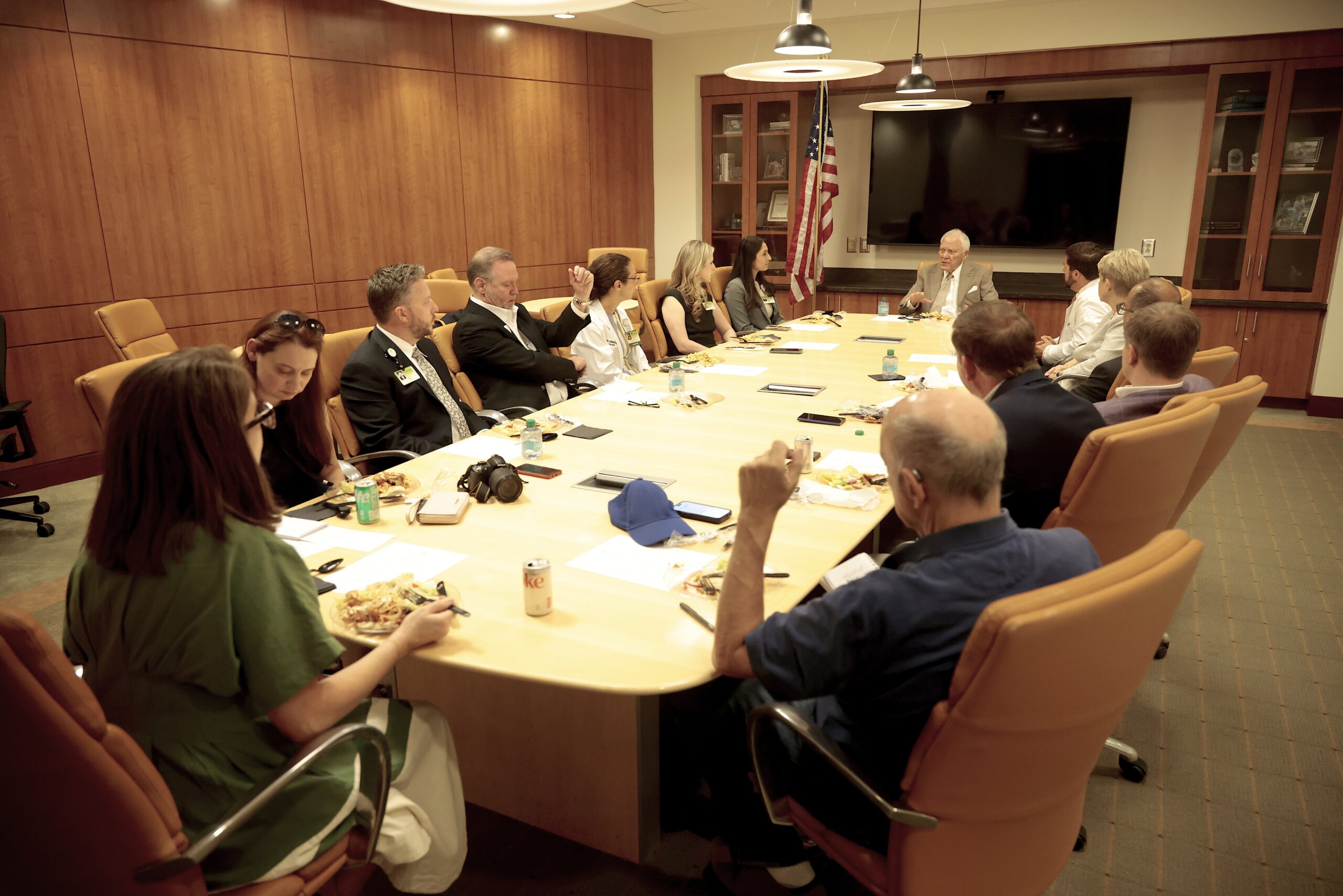
Hospital brass gathers with doctors
The two physicians, their medical school dean, Dr. Jean Sumner, and senior NGHS administrators discussed the Deal scholarships history and successes over lunch Friday, Sept. 4, and talked about their continuing intentions to expand and improve medical opportunities in underserved parts of the state.
Former Gov. Deal, 84, said he himself recently benefited from the quality of care at Northeast Georgia Medical Center Habersham. Deal suffered a bout of sepsis he called a “near-death experience” after a medical procedure performed elsewhere. He spent three days at NGMC Habersham, where he said he received “excellent, wonderful medical and nursing care.”
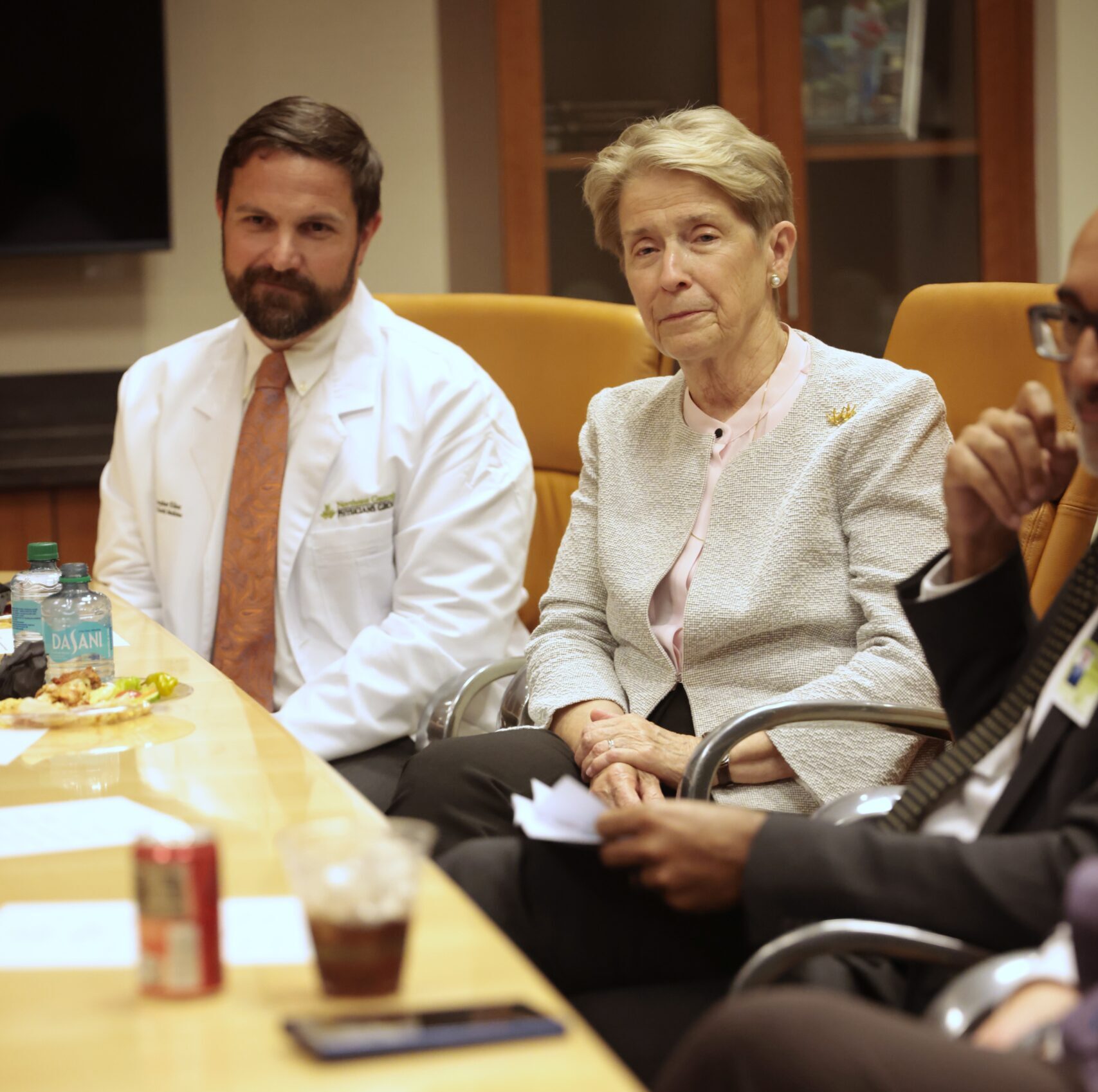
Deal and Sumner had previous knowledge of each other, they acknowledged. The dean’s father, also a physician, was the Deal family’s doctor in Summerville, Georgia, where Deal was raised. The two exchanged memories for a time at the informal luncheon.
According to Mercer University, the Nathan Deal Scholars Program was established in 2017 to recognize outstanding medical students who “exemplify the highest values of the medical profession and are leaders in their commitment to Mercer’s mission. Upon completion of residency, Nathan Deal Scholars are committed to four years of continuous, full-time medical practice in a medically underserved rural Georgia county.”
A $70 million windfall
Deal recounted Friday that the program began when, early in his tenure as governor in 2011, the state learned via an audit that the federal government had underpaid its commitment to the state’s Medicaid fund, and a missing $70 million arrived in state coffers all at once.
Deal’s team discussed how best to use the unexpected windfall, and agreed that addressing healthcare needs, particularly in underserved rural areas of the state, was the best course. The state government offered half the amount to Mercer University, which accepted the money, and put it to work in an investment to pay for up to 85 to 100 percent of medical students’ tuition.
Mercer’s main campus is in Macon, with other campuses in Savannah and Columbus.
The other $35 million went to Morehouse School of Medicine in Atlanta, which used it for general purposes.
Deal’s name on the prize
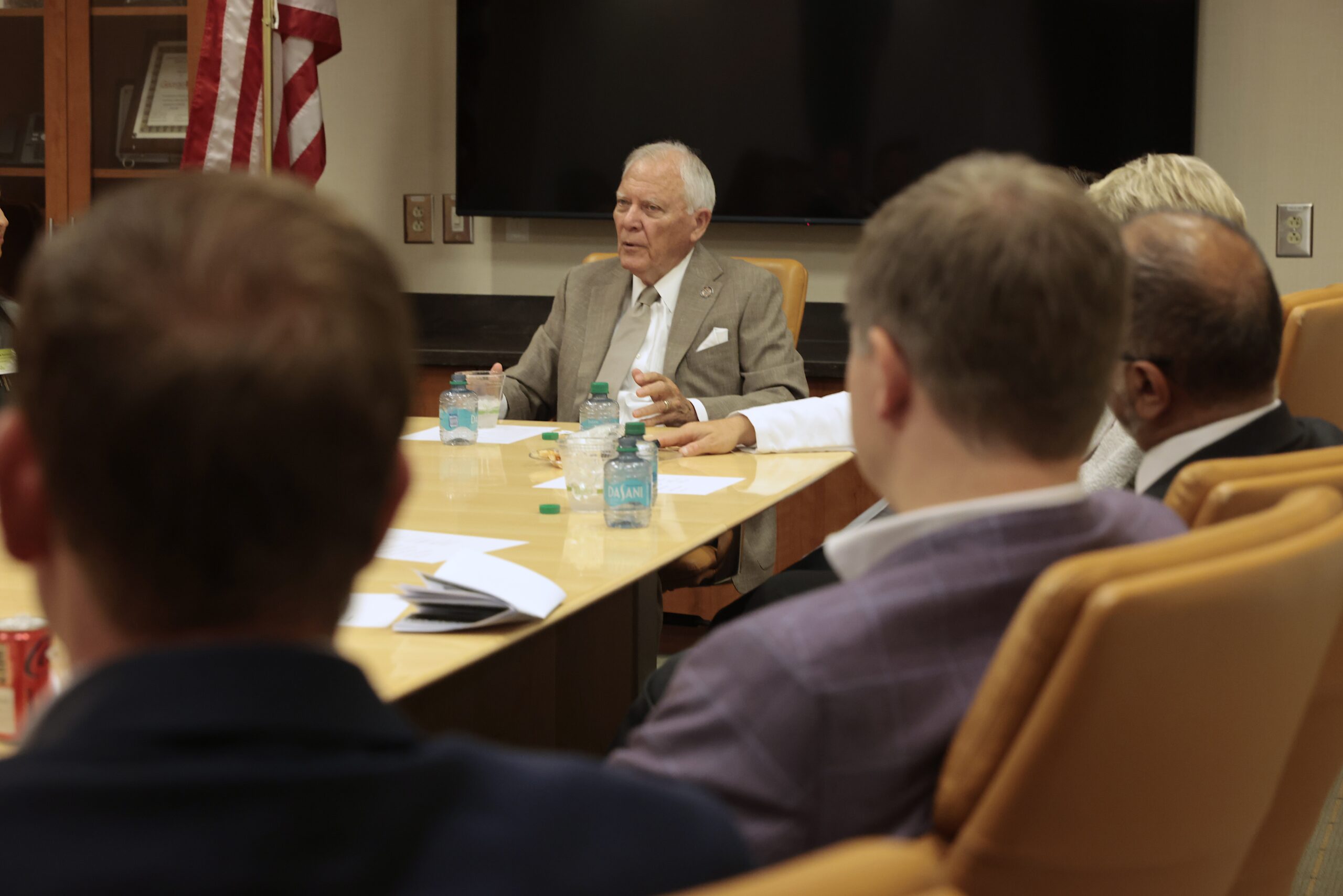
Deal extolled Mercer’s use of the money, which the Medical School decided to name after him because of his initiative in arranging the scholarships.
“Mercer has done a great job in providing rural medical care,” Deal said. “This hospital did not have a great reputation” before the NGHS took it over in 2023, he said, noting that one of the Georgia State Police officers who protected him during his governorship said he had a standing order to bring him to NGMC in Gainesville, though he lived closer to Habersham.
“That’s all changed,” Deal stressed, and the hospital administrators agreed, noting that a hospital census of 5 or 10 was common before the NGHS came in. Most of the hospital’s 134 beds are typically occupied now, they said.
Georgia’s maternal mortality high
Dr. Howard, who grew up in Sioux Falls, S.D., said she was drawn to the needs of rural areas, particularly in her area of practice.
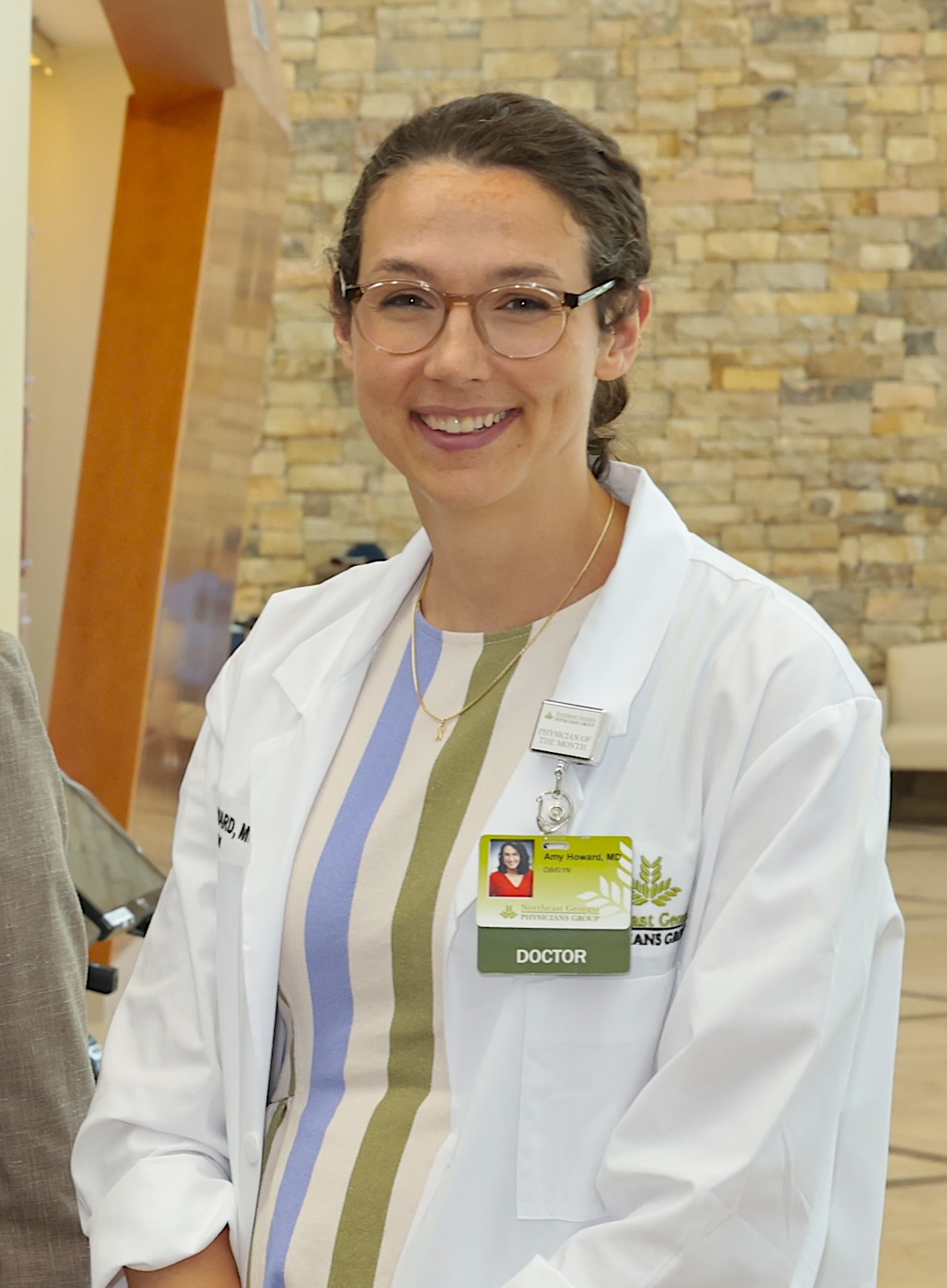
“I know that I’m needed here,” Howard said, noting the state’s high maternal mortality rates. According to one statistic, between 30 and 38 women die in or near childbirth out of every 100,000, one of the nation’s highest rates.
Kiker said he always wanted to serve in a small town, like Bremen—population about 4,000 in his youth, about 7,000 now—and was thrilled to study at Mercer both as an undergraduate and in medical school, with his faith and belief in serving rural areas driving his ambition.
He grew up admiring the town doctor and was eager to follow in his footsteps.
“We have a strong connection with a God who controls a lot of things that we can’t,” said Kiker, who added that he was the first in his family to attend college.
South Georgia shrinking, hurting
Deal said that southern Georgia has a continuing physician shortage even more profound than that in the north, with a shrinking population in many rural counties that depresses the need for medical facilities to grow there, even though those who remain may have to drive hours to see certain specialists.
“There is still some real strong need there,” he said, adding he hopes Mercer keeps those areas in mind.
With North Georgia’s population growing, Deal said, it makes sense to apportion more medical resources to the area to meet the growing need.
At the same time, joked the Habersham resident, “I get blamed for the traffic we have around here.”
Don’t miss what everyone in town is talking about.
Join 4,000+ locals and choose our free newsletter covering news, events and the stories shaping our region.