Home Blog Page 916

U.S. House votes down border bill favored by conservatives

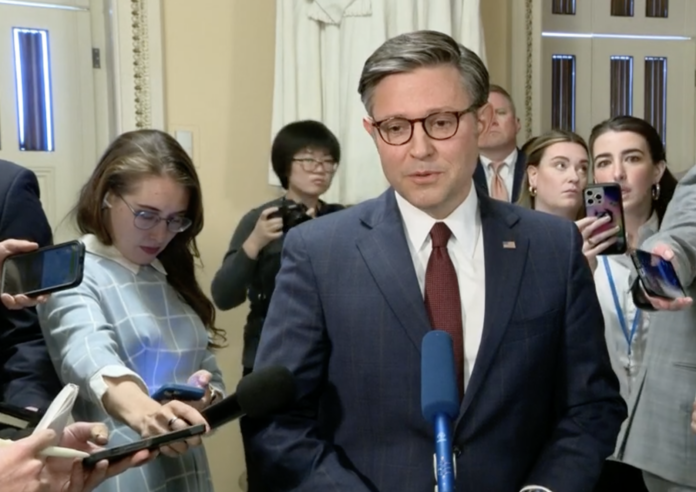
House Speaker Mike Johnson speaks with reporters on April 20, 2024. Johnson brought a Republican border security bill to a floor vote Saturday to appease conservative members of his conference, but the bill was defeated. (liveastream image C-Span)

WASHINGTON (States Newsroom) — The U.S. House Saturday failed to pass a border security bill that Republican leadership intended as an incentive for conservatives to support a foreign aid package for Ukraine, Israel and Taiwan.

The border bill, turned down on a 215-199 vote, was brought to the floor under a fast-track procedure known as suspension of the rules that requires a two-thirds majority for passage. The conservatives it was meant to appeal to slammed it as a “show vote.”

Five Democrats, Donald G. Davis of North Carolina, Jared Golden of Maine, Vicente Gonzalez of Texas, Mary Peltola of Alaska and Marie Gluesenkamp Perez of Washington, voted with all Republicans present in favor of the bill.

The border security bill – nearly identical to legislation House Republicans passed last year – was an attempt by House Speaker Mike Johnson of Louisiana to quell growing hard-right dissatisfaction prompted by his support for the $95 billion foreign aid package expected to pass Saturday with the help of Democrats.

The measure is separate and not part of a package of three supplemental funding bills containing aid for Ukraine, Israel and Taiwan as well as another so-called sidecar bill dealing with TikTok. The Senate will be able to clear the foeign aid package and ignore the border security bill that closely resembles another House-passed border bill the Senate has not acted on.

Rather than quell their unrest, Johnson’s move produced only more ire from hard-right members. Three Republicans – Marjorie Taylor Greene of Rome, Georgia, Thomas Massie of Kentucky and Paul Gosar of Arizona – are already backing a move to oust Johnson through a motion to vacate.

During Friday’s floor debate, Democrats argued that the bill, H.R. 3602, was a rehash of H.R. 2, a bill House Republicans passed last year that would reinstate Trump-era immigration policies such as the construction of the border wall. Both bills would also require asylum seekers to remain in Mexico.

Border bill return

Republicans were largely in favor of the border bill, but several referred to the vote as a “sham” and admitted the bill would not pass in the Senate, which Democrats control.

“House Republicans are trying again to make our Democrat colleagues and President Biden take this border crisis seriously,” Alabama’s Barry Moore said.

The top Democrat on the House Judiciary Committee, Jerry Nadler of New York, said the bill was a “foolhardy attempt to pass for a second time one of the most draconian immigration bills this Congress has ever seen. This rehashing of H.R. 2 is a joke.”

“Republicans have proven that they want the issue more than they want solutions,” he said. “So here we are, again, taking a virtually same draconian bill as before, knowing that if it actually passes the House it will surely go nowhere in the Senate.”

Nadler argued if Republicans were serious about addressing immigration at the southern border, they would have supported the bipartisan border bill in the Senate, instead of rejecting it.

Three senators – Oklahoma Republican James Lankford, Connecticut Democrat Chris Murphy and Arizona independent Kyrsten Sinema – spent months crafting a bill that would overhaul immigration policy at the request of Senate Republicans who insisted border security provisions should be included in the foreign aid package.

But congressional Republicans walked away from it early this year at the urging of GOP presumptive presidential nominee Donald Trump, who was not supportive of the bill because he is centering his reelection campaign on immigration.

The chair of the House Judiciary Committee, Rep. Jim Jordan of Ohio, argued that the bill “isn’t quite H.R. 2.”

The bill is nearly identical to H.R. 2, but removes the mandate for employers to verify a worker’s immigration status and employment eligibility, and includes about $9 billion in grant programs for border states.

“Let’s take a step in the direction of fixing it and pass this legislation,” Jordan said of the southern border.

A ‘sham’

Washington state Democrat and chair of the Progressive Congressional Caucus Pramila Jayapal said the bill was pointless.

“The majority could barely pass this legislation last year,” she said, referring to the party-line vote in 2023. “And now it’s going to magically pass it in the House with a two-thirds majority? Give me a break. This bill is going nowhere, so let’s just be clear about that.”

Texas Republican Chip Roy agreed that the bill would not become law, and expressed his frustration that the GOP would not try to leverage foreign aid money for it.

“Republicans continue to campaign on securing the border and then refuse to use any leverage to actually secure the border,” Roy said. “We should get it signed into law but the only way to force Democrats to do it is to use leverage.”

Arizona Republican Rep. Andy Biggs also agreed with Roy and Democrats that “this is a show vote.”

Pennsylvania’s GOP Rep. Scott Perry echoed similar remarks, but said he would still vote for the bill even though it’s “designed to fail.”

“But I want everybody to know it’s a sham,” Perry said.
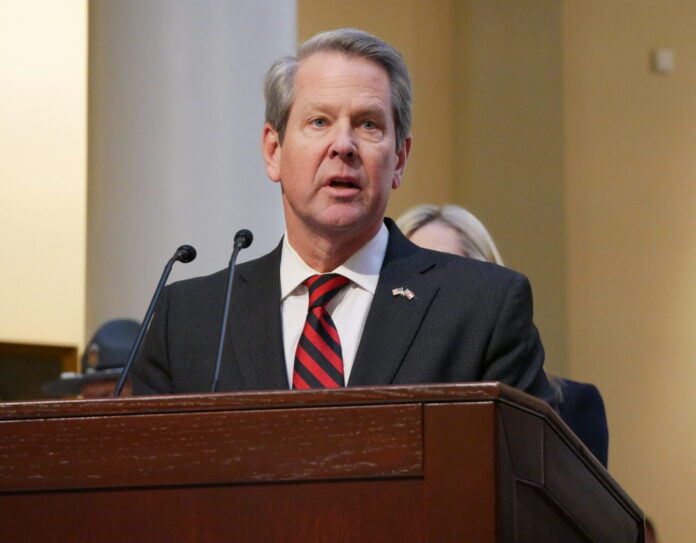
Kemp signs bill easing limits on health care facilities; still opposed to Medicaid expansion

FILE PHOTO - Gov. Brian Kemp restated his opposition to fully expanding Medicaid this week. (Jill Nolin/Georgia Recorder)

(Georgia Recorder) — The governor signed into law a high-profile health care measure Friday that is seen as a potential pathway to passing full Medicaid expansion next year – but not before casting fresh doubts on whether another year will change his mind.

Gov. Brian Kemp restated his opposition to fully expanding the public insurance program in strong comments made at an event Thursday that was hosted by the Atlanta Journal-Constitution.

“I’m in the ‘no’ camp,” Kemp said. “I am supportive of what we did. We need some more time to continue to implement and get people to sign up on Pathways.”

The governor’s program, Pathways to Coverage, launched last July and partially expanded coverage for some low-income Georgians who complete 80 hours of work, school or other qualifying activity each month.

That program has covered less than 4,000 people out of the 350,000 Georgians who could be eligible, but the governor has blamed the slow start on delays resulting from attempts by the Biden administration to block the program. The state has sued the federal government for more time to ramp up the program, which is otherwise set to expire next fall.

RELATED COMMENTARY: Cynicism of Georgia GOP leaders robs poor of access to doctor

The bill signed by the governor Friday is mostly focused on the state’s certificate-of-need rules, which control how many health care services are allowed in any given area of the state. But the bill also creates a commission that will look at health care issues affecting low-income and uninsured Georgians.

The nine-member panel will be led by a health policy expert who is appointed by Kemp and must be in place by this July. It is tasked with submitting a report by the end of the year and ahead of next year’s session, which starts in January.

In remarks Friday at a bill signing ceremony in Athens, Kemp touted an increase in the amount of state dollars going to the state’s rural hospital tax credit program, lifting a cap from $75 million to $100 million, and changes that will ease the state’s regulations on new or expanded health care facilities.

“Now Georgians will have greater access to several important areas of health care, including psychiatric and substance abuse inpatient programs, basic prenatal services, birthing centers, general acute hospitals, and much more,” Kemp said.

The bill had been closely watched during this year’s legislative session as a potential opportunity to fully expand Medicaid. Separately, a state Senate committee held a hearing on a proposal calling for an Arkansas-style model of Medicaid expansion, which uses federal dollars to purchase private insurance for those eligible. That bill narrowly failed in committee in the final days of the 2024 session.

“We were fine with the Legislature having a conversation about that,” Kemp said at the AJC event Thursday. “That’s certainly up to them. I was respectful of that. But when they start talking about going to the floor and going to a vote, they need to be having a fiscal note.”

The governor, who is in the middle of his last term, also argued that full Medicaid expansion would steer people away from private health insurance, which pays a higher reimbursement rate to providers.

But the pressure to change course will likely continue to mount, especially if enrollment in Pathways continues to lag. Georgia is one of 10 states that have not fully expanded Medicaid under the Affordable Care Act.

“I’m in the yes camp,” state Rep. Scott Holcomb, an Atlanta Democrat, said on social media Friday. “Georgia has the 2nd highest rate of uninsured in the country. We have vulnerable hospitals that serve populations w/out insurance. Georgia Pathways is not working & costs MUCH MORE than full expansion. It’s absurd not to consider.”

Some advocates said they saw the governor’s comments as being consistent with his earlier statements.

“We hope that the study commission established in HB 1339 will shine the light on the need to close Georgia’s healthcare coverage gap and that we’ll see a change of heart,” Natalie Crawford, executive director of Georgia First, which is a bipartisan group that formed in 2022.

Attention will now turn to the new commission.

“We are excited about the creation of the Comprehensive Health Coverage Commission to explore Medicaid expansion and how best to expand health coverage to the many uninsured Georgians,” said Monty Veazey, president and CEO of the Georgia Alliance of Community Hospitals.

“This could herald a new era for Georgia health care and help hospitals – especially rural hospitals – continue to serve their patients and improve their outcomes.”

Piedmont University prepares for mass casualty drill

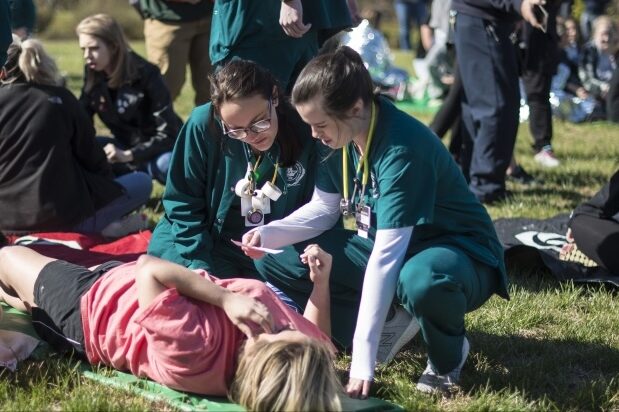
Drills like this one held in March 2021 help Piedmont students, staff, and emergency personnel practice their response in the event of an emergency. (Hadley Cottingham/NowHabersham.com)

Piedmont University staff, students, and state and local public safety officials are preparing for a major mass casualty drill next week. The university will host the drill on Wednesday, April 24, as part of its ongoing efforts to prepare for potential emergencies. The drill, which is expected to involve multiple simulated incidents, will take place on the main Piedmont campus in Demorest.

According to a news release issued by the school, the drill will give emergency responders and university personnel a chance to practice and refine their protocols. Piedmont nursing students will learn how to respond to a variety of simulated injuries and conditions.

“This initiative reflects Piedmont’s dedication to fostering a secure environment for students, faculty, and staff,” Piedmont University states in a press release. By simulating real-life emergencies, the university seeks to enhance the coordination and effectiveness of its emergency response teams.

Road closures

During the exercise, there will be an increased presence of law enforcement and emergency responders on campus.

Massachusetts Boulevard and Demorest Lake Road will be closed on Wednesday, April 24, until after the exercise.

The university says there may be brief traffic disruptions on and near campus, but major roads will only be impacted momentarily.

Student/community collaboration

Many students will be involved in staging the exercise. In addition to nursing, forensic students will conduct crime scene investigations, and theater students will create makeup and special effects for the ‘wounded.’

Psychology students will provide mental health support, while mass communication students will conduct interviews and document the event.

Criminal justice students will assess the scene, and education students will practice lock-down drills.

The university anticipates over 200 students participating, plus numerous faculty and staff.

Many outside agencies will assist the Piedmont University Police Department during the exercise, including Georgia Emergency Management/Homeland Security, Georgia State Patrol, Habersham County E-911/EMA, Habersham County Emergency Services, Habersham County Sheriff’s Office, the Demorest and Cornelia fire departments, Demorest Police Department, Air Life Georgia 2, Northeast Georgia Health System, Stephens County Hospital, and Stephens County EMS.

HCHS varsity boys soccer blanks Douglas Co, will host No. 5 ranked Sprayberry in Sweet Sixteen

Habersham Central High School senior Xavier Lopez (11) watches his shot head toward goal after knocking it past the Douglas County High School keeper Friday, April 19 in Mt. Airy. (Zack Myers/NowHabersham.com)

For the second night in a row, a Habersham Central High School soccer team has booked their ticket to the Sweet Sixteen, this time it’s the boys moving on after a 5-0 win over Douglas County High School on Friday night in Mt. Airy.

As the No. 1 seed, the Raiders (13-3) will continue to host next week, welcoming Sprayberry High School (12-2-1) to Raider Stadium after the Yellow Jackets knocked off Etowah High School, 2-1, in their first round matchup.

The Raiders jumped out to a quick lead, notching their first goal in the second minute of play. Senior Juan Lara popped a nice chip pass over the top of the defense, connecting with Xavier Lopez. Lopez took a couple of dribbles before pushing the ball past the keeper to the far side of goal.

The two were involved in the run of play 22 minutes later as Lara took a shot on goal, which the keeper parried away. Following up on the shot, Lopez stepped up to the ball around 15 yards out and put enough pace on his shot to find its way into the net after deflecting off the keeper.

The dagger moment, which would typically come later in the contest, occurred just before the halftime horn in the Raiders’ favor.

The Tigers (7-9-1) drew a foul and took a free kick, directing a shot on goal instead of opting for a set piece attempt.

The low rocket was strongly knocked away by HCHS junior keeper Everett Rudeseal, who dove to his left and got a mitt to the oncoming shot.

The Raiders took a 2-0 lead into the break and would continue to get opportunities to extend their lead in the second half despite Douglas County putting nine, and sometimes 10, men behind the ball.

“We knew what they would try to do. We prepared all week to try to attack that in a certain way and, honestly, in the first half, we weren’t doing those things,” HCHS Head Coach Ric Wallace said. “We weren’t patient enough, we weren’t willing to play a ball to shift them and then open up the space to get in behind them.”

Wallace said throughout the first half he pulled a few of his guys and “got after them” for not following the game plan they’d worked on all week coming into the contest. Then, at halftime, he got into the whole team to make sure everybody was on the same page.

“Yeah, we were winning 2-0, but we weren’t executing the game plan. That was frustrating,” Wallace said. “In the second half, we executed it much better. (Douglas County), at 2-0, 3-0, still had 10, 11 guys behind the ball.

“We started finding gaps because we’d play in and move and get the third guy behind them,” he continued. “That was really what they did in the second half was start executing what we worked on.”

Junior Diego Gonzalez took a solo-effort run through the right side 10 minutes, 17 seconds into the second period, eventually slotting the ball past the keeper’s right side. The ball bounced and deflected off the left post and into the back of the net.

Just one second past the 14-minute mark into the second half, Lara would stand over a free kick 20 yards from the goal. With a wall of four men, the Tigers looked poised to keep the ball out of the net.

Habersham Central High School senior Juan Lara (10) steps up to strike a free kick against Douglas County High School in the first round of the state playoffs Friday, April 19 in Mt. Airy. (Zack Myers/NowHabersham.com)

“That free kick was big from Juan,” Wallace said. “We talked about it last week, how he’s ready for that moment. He wants those moments and he’s executing them. That’s the key.”

Lara stepped up with his left foot, drove the ball over the wall, froze the keeper and found the top left corner of the net. The goal put the game well out of reach, changing the overall demeanor of the visiting squad that could already be heard exchanging words with each other.

Not to be left out, Tucker Bohannon, who has been a workhorse down the right flank all season for the Raiders, cashed in on his opportunity to get on the scoresheet. The senior carried the ball near the edge of the 6-yard box and unleashed a shot that, due to its pace, would deflect off the keeper’s gloves and into the side netting.

Habersham Central High School senior Tucker Bohannon puts his hands together in the shape of a heart toward the home crowd after defeating Douglas County High School in the first round of the soccer state playoffs Friday, April 19 in Mt. Airy. (Zack Myers/NowHabersham.com)

With the 5-0 victory, the Raiders continue to make a push toward their ultimate goal and they’re getting support as they learn to settle in and navigate the playoffs. Hosting the games is huge in that process.

“One of their goals is to make a run (in the playoffs) and it helps to be right here (in Raider Stadium),” Wallace said. “Look at the crowd tonight for a Friday soccer game in Habersham. It was fantastic. I don’t think we were particularly great in the first half. Part of that’s learning to deal with playoff soccer where everybody is battling for their lives and they’re going to put that extra effort in. I thought the second half response was much better.”

Now the focus turns to Sprayberry coming in next week. The Yellow Jackets represent Region 7 as the area’s No. 2 seed. The squad is ranked No. 5 in the state and No. 13 nationally, according to MaxPreps.

“Sprayberry’s had a fantastic season. They’re ranked Top 5 in the state right now. You’d imagine they’d be a handful for anybody,” Wallace said. “You know, you’re getting that Region 6 (Etowah), Region 7 winner. Those are two of the strongest regions in the state soccer-wise, so you know this next one, we’re going to have to be much better than we were tonight.”

Wallace said his crew is ahead of schedule when it comes to training for the playoff schedule because they were able to take a week during spring break to prepare for North Forsyth. Now, that’ll be a weekly occurrence as long as the Raiders keep winning.

As for motivation, the head coach said he doesn’t think there’s too much to say. The players either get up for the game and rise to the occasion or they’re looking at the end of the season. From here out, nothing will come easy.

“The reality is (the Sweet Sixteen) is where you’re going to see top teams. (The team) knows they’re going to have to bring it,” Wallace said. “That’s what you want. You want to show you can play with those guys.”

Game time for Friday’s game against Sprayberry has not yet been determined.

Rural counties rely on prisons to provide firefighters who work for free

Firefighters from the Dodge State Prison fire department during a training demonstration. The fire department regularly aids local volunteer departments and has helped fight wildfires around the Okefenokee Swamp. (Grant Blankenship/GPB)

If you call 911 in rural Georgia, the nearest emergency responders might come from the local prison.

In 1963, the Georgia Department of Corrections began a program to train incarcerated people as firefighters to support not only their prisons, but also the surrounding communities. Over time, the program has grown dramatically. Today, prison fire teams from 19 Georgia state prisons, including a women’s prison, and six county prisons are trained in firefighting and emergency medical response.

The crews respond to motor vehicle accidents, structure fires, brush fires, hazardous materials incidents and search and rescue efforts, among other emergencies – all without being paid a salary. Jackson County describes incarcerated firefighters as responding to “every structural fire in Jackson County, where they serve as manpower support to every Fire Department on scene.”

Georgia is not alone in this practice. Prison systems in Alabama, CaliforniaIndiana, Mississippi, New Mexico and Wyoming, along with the Federal Bureau of Prisons, have deployed incarcerated firefighters to respond to local emergencies.

But while these programs fill a vital service in many rural areas, they aren’t universally loved. They have been accused of both exploiting incarcerated people and taking jobs away from professional firefighters.

The era of rural decline and mass incarceration

I study connections between disasters and mass incarceration and spend a lot of time talking with prison officials, disaster response teams and inmates. My research has found that incarcerated people have become increasingly embedded in local emergency response efforts as EMTs and firefighters. There are two primary reasons: the vulnerability of rural communities and vulnerability of the incarcerated workers.

Many rural communities have been struggling for years to provide adequate emergency services. As they lose population, their tax bases dwindle. Volunteer fire departments have also been harder to staff as increasing demands in the workplace and on families have left less time for volunteering.

At the same time rural communities were declining, the 1980s to early 2000s saw an explosion in prison constructionTough-on-crime policies led to an increase in the rate of incarceration, even as research suggested incarceration had a minimal-at-best relationship to crime rates.

Prisons were marketed as a way to stabilize rural communities devastated by declines in manufacturing and resource-dependent industries such as mining. They remain a staple of many fragile rural economies today.

The rise of prison emergency services

Prison fire departments initially started to train prison staff and incarcerated people to protect prisons from fires, knowing there might be little or no outside support in their rural locations. Occasionally, prison fire brigades responded to local emergencies or disasters if the local fire department needed help. But that has changed in many communities.

Today, Georgia’s program has about 200 participants each year. Those who qualify receive training to become certified as firefighters and EMTs and live in the prison firehouse rather than in cells. But while some states, including California, pay a small wage to inmate fire crews, Georgia’s aren’t paid a salary.

Officials in rural communities told me they relied on the prisons’ services because their own emergency crews were understaffed. Without enough personnel, not only were the communities vulnerable, but any paid or volunteer firefighters were also vulnerable because they would be responding without the support needed to safely handle emergencies.

However, while the program may provide much-needed stability to many communities, it has also faced backlash in some areas of Georgia. When Camden County considered supplementing the local fire department with incarcerated firefighters in 2011, members of the department raised fears about the safety of the community.

Officials I spoke with suggested there had been some resentment from more urban areas that see the program as a way to avoid paying for career firefighters and from local volunteers who feel like they’re being replaced by the incarcerated firefighters.

Missing link: Job prospects after prison

The Georgia program also raises questions about the vulnerability of incarcerated firefighters.

Incarcerated people who participate in the program must sign a waiver that releases the Georgia Department of Corrections from liability should they be injured while working as a firefighter. They also are not eligible to receive workers’ compensation benefits.

Those rules increase the risks for incarcerated firefighters. Several have been injured while responding to fires and other local emergencies in Georgia and other states.

At least one incarcerated firefighter has died in Georgia. William A. Satterfield died in 1984 responding to a fire call with the prison fire team. In May 2013, the Georgia Board of Public Safety voted to acknowledge the death and service of Satterfield in a Public Safety Memorial. Two firefighters from Georgia’s Dooly State Prison were injured in 2016 in a vehicle crash while responding to a fire call.

An incarcerated firefighter in Mississippi, Michael Davenport, died while fighting a structure fire in 2006. According to court documents from a subsequent lawsuit, Davenport did not receive full firefighter training, but there were no laws requiring such training at the time.

It is unknown how often these injuries occur or how working as a firefighter affects the health of incarcerated people after they are released.

Prison officials have told me that incarcerated men and women benefit from the program because it provides job training.

Yet, incarcerated firefighters face significant barriers to finding jobs in fire and emergency services upon release. Current Georgia law does not allow participants in the program to apply for a civilian position with a fire department until five years after their conviction date.

Several fire officials told me that they wished they could hire the incarcerated firefighters they had worked with. But if they had the funds to hire more full-time firefighters, they wouldn’t have been working with the program in the first place.

States can take steps to help

Some states have worked to create policies that support formerly incarcerated firefighters. In 2020, California passed a law that would allow incarcerated firefighters to apply to have their criminal records expunged, making them eligible to apply for jobs as EMTs.

I believe incarcerated firefighters and fire crews in Georgia and other states would benefit from similar policies to allow them to find jobs upon release. The state and many others would also benefit from working to address the extreme vulnerability that rural fire departments are facing as they struggle to protect their communities with limited outside support.

This commentary was first published by The Conversation.

The Ministry of Ungentlemanly Warfare

The Ministry of Ungentlemanly Warfare is based on a true story that happened during World War II, and its events have been declassified since 2016. Now, it’s been adapted into a movie that’s thrilling and funny and acted with a lot of camaraderie in small increments.

However, considering this was directed and co-written by Guy Ritchie and produced by Jerry Bruckheimer, it’s not quite the exaggerated hoot that some audiences may anticipate, but it still gets the job done.

As mentioned, the movie takes place during World War II, and it centers around Operation Postmaster – or should we say, a highly fictionalized version of the events. Henry Cavill stars as Gus March-Phillips, a rebel who finds a cause when he’s recruited by the British government to lead a team of men behind enemy lines to sabotage the Nazis.

England is losing in their efforts, and so, along with Cavill’s team, which also includes Alan Ritchson and Henry Golding as his fellow renegades, they battle at sea and on land. They combat the Nazis with ridiculous action sequences and expected one-liners. Anytime any combination of actors is on screen, their chemistry works.

Eiza Gonzalez and Babs Olusanmokun costar as a couple of counter-espionage agents who manage to infiltrate one of the Nazis’ locations. Their storyline would’ve worked better as a separate movie.

The movie is advertised as a nonstop, effects-loaded action movie, and when the action takes over, it’s admittedly fun. However, at other times, the movie is content with being straightforward with its war strategy which we’ve seen in a dozen or so war movies.

Ritchie knows how to deliver hyper-stylized action that can be trashy and ludicrously entertaining, such as Lock, Stock, and Two Smoking Barrels. However, with this film, he should’ve gone all the way with something intended to be supercharged. Instead, he shows a fair amount of restraint, and I don’t know whether to praise or bash him for it.

The movie does have some good humor that matches the violence, and you can sense that Cavill and the others deliver their work with gusto and natural ease.

The Ministry of Ungentlemanly Warfare might not appeal to history buffs or action lovers who expected accuracy or heart-pounding thrills, but it’s effective enough to recommend.

Grade: B

(Rated R for strong violence throughout and some language.)

TMU’s Myesha Hall secures Olympic team trials spot

Truett McConnell University's Myesha Hall will compete at the 2024 Olympic Team Trials in Eugene, Oregon, this July. (TMU photo)

Truett McConnell University standout athlete Myesha Hall has reaffirmed her exceptional ability in track and field. At the recent NAIA competition, Hall clinched first place in the women’s long jump with a record-setting leap of 6.29 meters (20 feet and 7.64 inches). Additionally, she earned a respectable third place in the women’s triple jump with a mark of 11.80 meters (38 feet and 8.57 inches).

Her achievements have secured her a spot at the 2024 Olympic Team Trials in Eugene, Oregon, this July, securing her position as a NAIA competitor. Furthermore, Hall has been named the NAIA Women’s Field Athlete of the Week.

Joe Imhoff, TMU’s Head Track and Field Coach praised Hall’s performance saying: “Myesha has consistently showcased her dedication and skill throughout her time here at TMU. From capturing the national title in her freshman year to becoming an All-American in two events, she has continued to excel and inspire. Her qualification for the Olympic Trials is a well-deserved achievement in her illustrious collegiate career.”

Hall shared her thoughts on her accomplishments, expressing gratitude and excitement. She said, “First and foremost, all glory to God!  Qualifying for the Olympic trials is a significant milestone, and I am eager to continue improving and achieving. I would also like to extend my heartfelt thanks to my coaches, who have supported and believed in me every step of the way.”

A press statement from the school states that Truett McConnell University is proud to support Myesha Hall and other student-athletes who exemplify the university’s commitment to excellence in both academics and athletics.

Local lawmakers update realtors on new squatting and land fraud bills

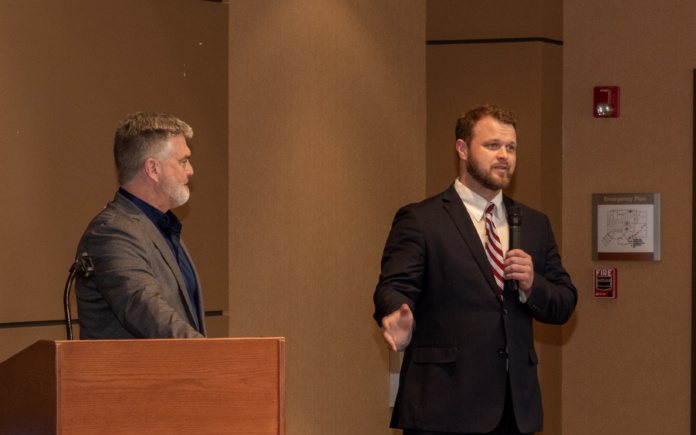
Rep. Victor Anderson and Senator Bo Hatchett address the Georgia Mountains & Lakes Realtors Association. (Nora Almazan/Now Habersham)

The Georgia Mountains and Lakes Realtors Association hosts five to six events each calendar year for its members. The events are held to bring a sense of community to local realtors, and guest speakers are invited to discuss happenings in the area and the state of Georgia to give members perspective and vital information for the industry.

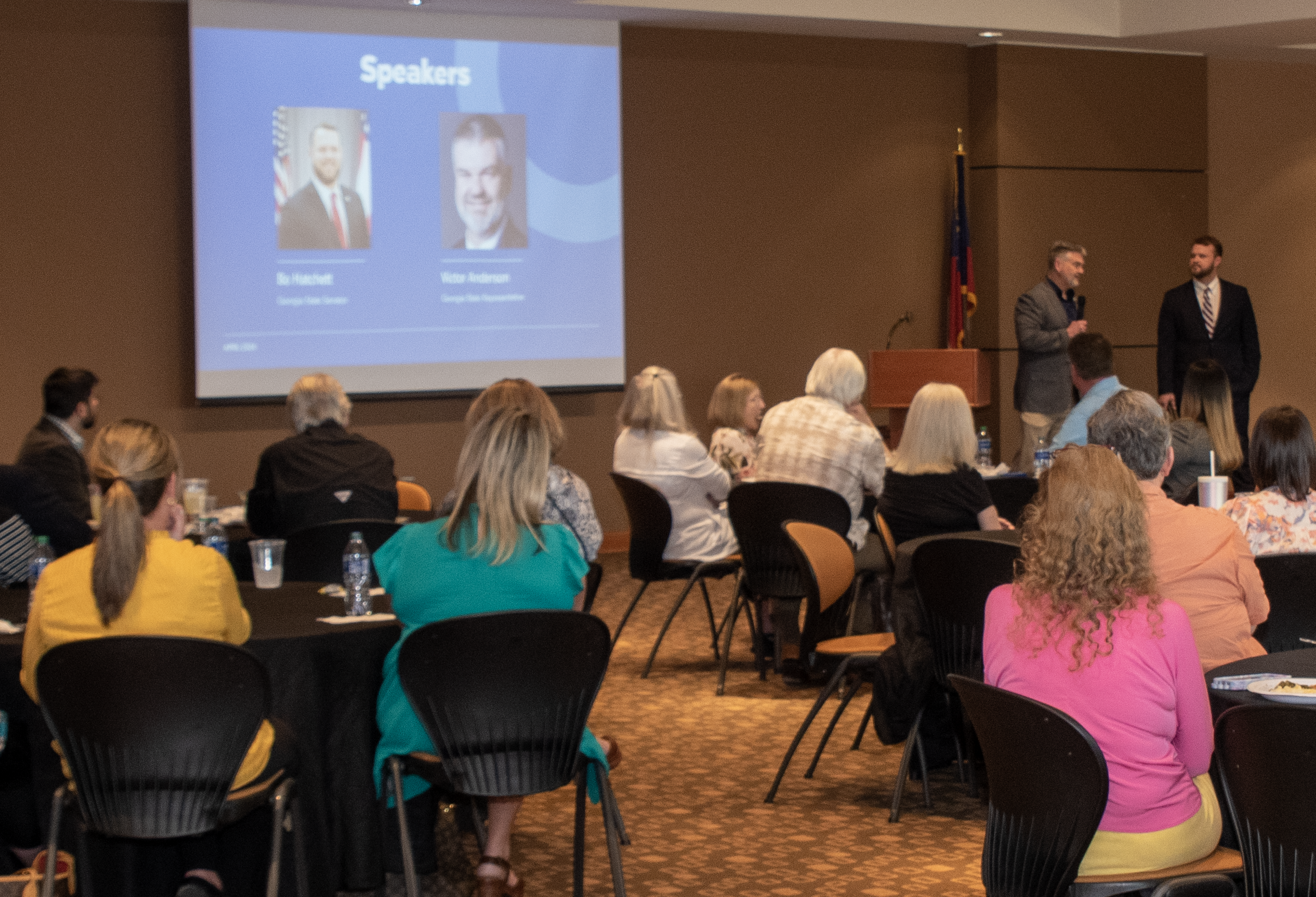
Wednesday, April 17, the organization held a luncheon at HEMC in Clarkesville, for its members to hear speakers Georgia Representative Victor Anderson and State Senator Bo Hatchett discuss the recent legislative session.

Issues facing property owners

Hatchett and Anderson talked about several issues that realtors face such as squatters and fraudulent land transactions. Both have been problems for realtors and property owners over the last few years.

The Georgia Mountains & Lakes Realtors Association held an event with speakers Rep. Victor Anderson and Senator Bo Hatchett. (Nora Almazan/Now Habersham)

HB 1017, gives Georgia property owners and the courts clarity to address the issue of squatters occupying properties illegally. “All across Georgia, squatters have become a huge problem for property owners and tenants by illegally taking over properties, and in several cases, damaging the properties or causing havoc in neighborhoods,” Roger Glen President of Georgia Mountains & Lakes Realtors Association and Realtor at Poss Realty explained.

Fraudulent transactions are occurring where people have their property stolen from them through fraud. Hatchett and Anderson spoke about the issue and the Bills set to be signed on July 1 by Governor Kemp. Anderson and Hatchett have talked with Georgians who have been exposed to such fraudulent activities. It costs a great deal of money for the owners who have been cheated.

Gratitude

Many realtors at the meeting were thrilled about the passing of the two bills and stated it was a major win for property owners. Karen Thomas of Headwaters Realty said, “We are so thankful that our representatives are willing to listen and support our initiative in private property rights.”

Anderson spoke to the audience of realtors, “This nation or really any thriving nation if you look at the economy, you are going to see a direct reflection of what’s happening in construction and housing markets. What you are doing is driving our economy. So, thank you for what you do.” He added that housing and construction are the two number one indicators of the health of economies.

Hatchett said, “Those two bills came about because constituents reached out to their Legislators with the problem, and they brought it down to Atlanta so we could solve the problem. Whether it’s related to your industry or trade or whether it is something personal, please reach out. If we don’t hear from you, it is hard to know the pulse of the community or the pulse of the issue that people are facing.”

Glen expressed his appreciation for Anderson and Hatchett and how well they work together for the constituents of Northeast Georgia.


Habersham County Airport to close runway for resurfacing

Habersham County Airport to close runway for resurfacing. (Rob Moore/Habersham County)

The runway at the Habersham County Airport will close for three weeks starting Monday, April 29 to allow for work needed to maintain the runway.

It is set to close to allow crews to perform much-needed resurfacing of the runway.

The closure will be in effect from April 29 to May 19.

For more information, contact the Habersham County Airport FBO at (706) 839-0247.


Livin’ the Dream: Keri McCoy’s purpose is her dream

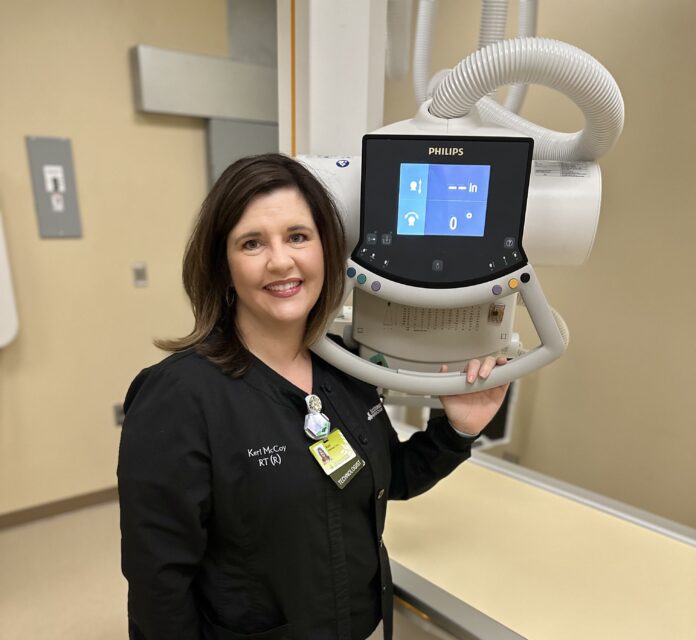
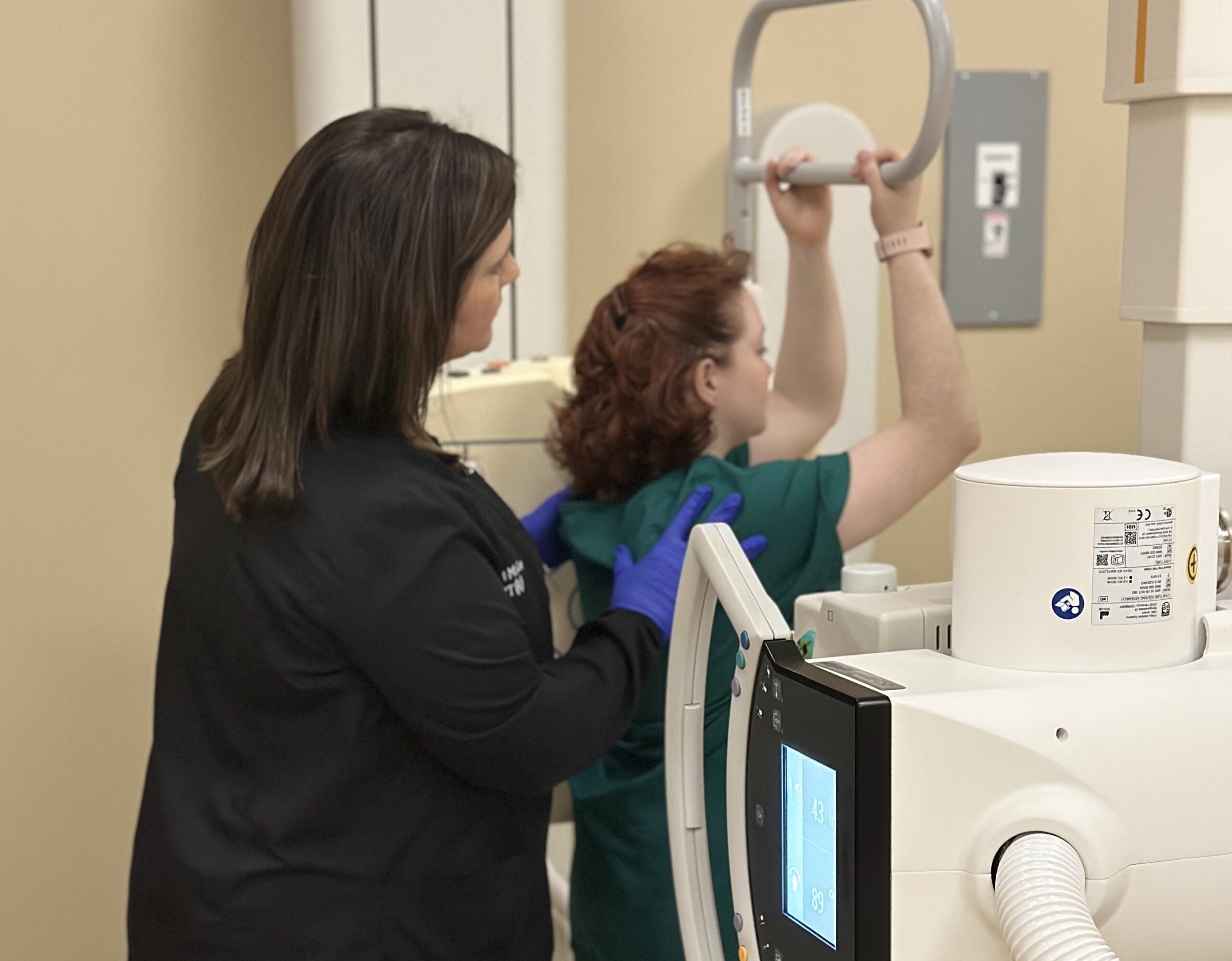
Keri McCoy went back to school at the age of 41 to have her dream of being a Radiologic Technologist come true. (Nora Almazan/Now Haberhsm)

Her mother is a two-time breast cancer survivor. She carries the BRCA2+ gene which put her at an 87% chance of developing Breast Cancer in her lifetime. The yearly mammograms and MRIs since her early 20s actually led her to where she is today. Keri McCoy, a Radiologic Technologist, works in the Northeast Georgia Physicians Group for their Orthopedic and Sports Medicine Gainesville Practice.

“I felt like my compassion, empathy, and smile could be a bright spot in someone’s day who was facing uncertainty with their exam and diagnosis,” McCoy explained. “Since I knew the unsettling feeling of what this exam could become.”

McCoy had a double mastectomy in July of 2023.

Background

She has called Habersham County home since 2002. She is originally from Rabun County. “I have been married to my high school crush for 20+ years and we have an amazing daughter who is graduating high school this spring and heading to college this fall.”

A lover of school, McCoy was excited to start school later in life but it was also scary. “I was a full-time wife and mother, unlike the first time I completed my Bachelor’s Degree in Art Administration from Piedmont in my early adulthood.”

She quit her full-time job to start the program at Lanier Tech and become a Radiologic Technologist. It is a highly competitive program that only takes the top 20 applicants each year. McCoy said she and her family lived on faith and total dependence on God to provide during the 18-month period it took to complete this program.

Her experience

“People think x-rays are simply a ‘point & click’ type of job. You just aim and push a button. That couldn’t be further from the truth,” McCoy added. In the program, it is a requirement to learn the physics of how XR is produced, learn all the bones in the body, and how to position the body correctly to get the desired results for a diagnosis plus much more. There is also a National Registry exam which must be passed.

McCoy and co-worker demonstrate the technique. No HIPAA laws were violated in this picture. (Nora Almazan/Now Habersham)

McCoy started the program in August 2018 and graduated in December of 2019. This put her starting her career right as COVID came on the scene. She had to finish three prerequisite courses before starting the program at the age of 41.

“There were times when I experienced self-doubt – especially while learning physics and when we had to learn how to start IVs as part of our competencies,” McCoy said.

She calls it a “one day at a time” season in her life. Her classmates were an encouragement to her because they were all on the journey together and understood the stress and pressure associated with this program.

Her purpose

“I love the people I work with the most. I am blessed to work with a wonderful group of Providers (Doctors & PA-C’s) and staff.”

McCoy said she enjoys the camaraderie with her teammates. They provide emotional support to one another and enjoy good laughs together.

“When people ask me if I am passionate about what I do, I like to respond, ‘X-ray is not my passion, people are,'” McCoy said with a smile. “When I decided to go back to school at 41, I never stopped to think how we would pay for schooling, and I certainly didn’t know I’d have to quit my job!”

McCoy believes that God opened every door for her. She is living the dream because her purpose is to use her own experiences and struggles to help others.


Georgia Power-Fieldale partner on solar farm in Baldwin

Representatives from Georgia Power and Fieldale Farms Corporation "broke ground" Wednesday afternoon for a solar farm project in Baldwin. (Jerry Neace/NowHabersham.com)

Executives of Georgia Power and Fieldale Farms Corporation held a groundbreaking ceremony on Wednesday afternoon for a new solar farm in Baldwin.

The location of the solar farm will be on the corner of Duncan Bridge Road and Gainesville Highway,

According to Fieldale Farms Marketing Manager Terri Limback, “As part of Fieldale’s ongoing sustainability efforts, this 6-acre solar farm will produce carbon-free, renewable energy to be used by the Fieldale Corporate Complex and will offset approximately 1,780,000 pounds of CO2e every year.”

Georgia Power Region Director Tony Ferguson explained during the ceremony that the solar farm will be a 1.5 megawatt array. It will produce approximately 184,000 kilowatt hours of electricity per month.

Fieldale Farms Corporation President Tom Hensley spoke during the ceremony and thanked Georgia Power for partnering with them on the solar project. “We’ve looked at solar for 15 or 20 years.” He explained to those in attendance that this project is part of the corporation’s sustainability plan. Hensley adds, “This is an example of what we can do for the future.”

According to the Energy Information Administration, an average home uses approximately 900 kilowatt hours of electricity per month. The solar array could provide enough electricity to power approximately 204 American homes each month.

Habersham BOE may see $5.6 million increase in FY 2025 budget

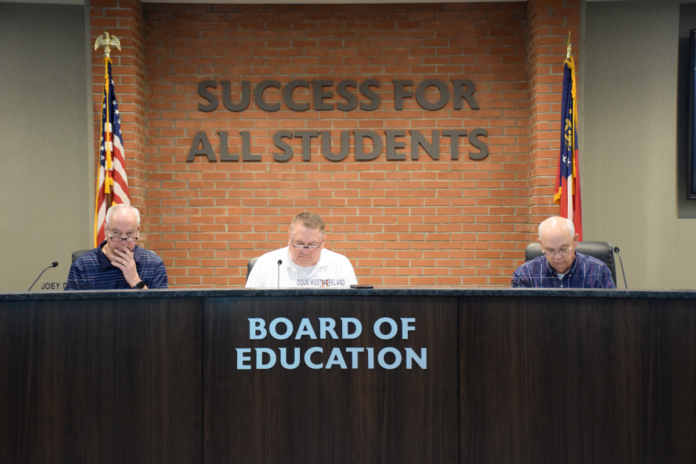
Habersham County Board of Education during their April work session. (Jerry Neace/NowHabersham.com)

The Habersham County Board of Education received news during their work session last week that they may see a $5.6 million increase in expenses next school year.

The Habersham County School District Finance Director Staci Newsome gave a budget update during the work session announcing the increases. She stated, “We don’t have anything official but we’re going to go through what we do know at this point.”

Grant funding ends

Newsome explained to the board members that a revenue shortfall will result in the conclusion of the ESSR III ARP Federal Grant. The Elementary & Secondary School Emergency Relief fund through the American Rescue Plan Act was implemented in 2021 and will discontinue on September 30, 2024. The school district received $11,489,367 over the last three school years.

The loss of the federal grant will move 35 paid positions to the general fund resulting in an expense to the budget of $2,348,575 that the federal funds covered over the last three years.

Newsome informed the board members that the district will see other increases to expenses for the upcoming school year.

Health insurance increases

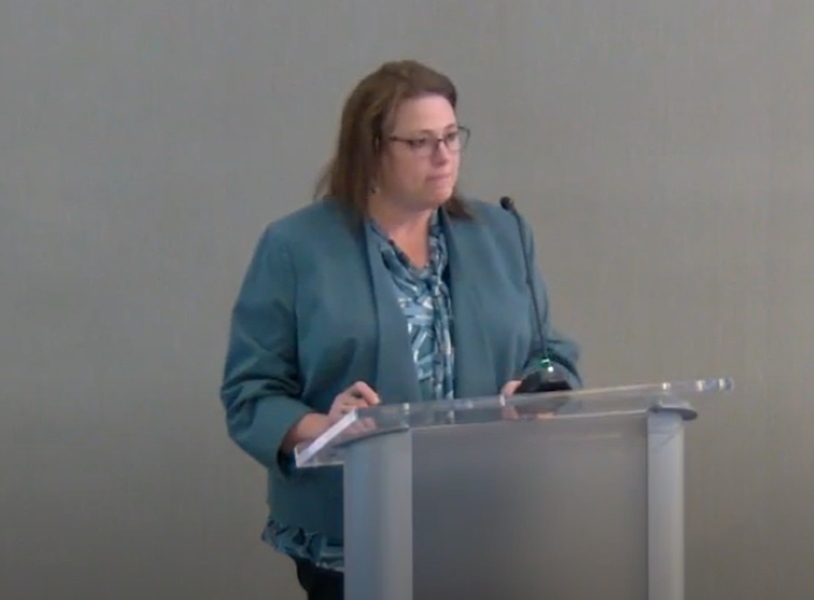
Habersham County Board of Education Chief Financial Officer Staci Newsome. (Habersham County Board of Education Livestream)

Health insurance expenditures will increase by $2.494,440 for the upcoming year. Newsome explained to the board members that for certified employees that increase will be $180 per month per employee.

The significant increase was for classified employees. Health insurance increased for those employees by $565 per month per employee. She did state that the number may decrease as state legislators and the Governor’s Office review the proposal at the state level.

Pay increases

The state included in the budget for the school year 2024-2025 a pay increase of $2,500 for certified teachers and staff. The cost to the school district to implement the state mandated raises will be $283,933.

The state also included in the budget a 4.1% pay increase for classified employees, such as bus drivers, nurses, and school nutrition staff. The cost to the school district to implement the state mandated raises will be $496,984.

Newsome reminded the board members that the school district would get better numbers over the coming days as the state reviews their budget and when the Governor signs it.

She gave the board members some facts about the school district during the work session. The school district has 7,190 students and 1,230 staff members. Newsome informed the board members that 91% of the budget is for providing salaries and benefits to staff. The other 9% is for operations.

After the presentation, Habersham County School Board Chairman Doug Westmoreland opened the floor for a public hearing to receive comments about the budget presentation. No one from the public spoke during the public hearing.

The school district does not know at this time how much revenue they will receive from the state until the Governor signs the budget. It also has not received the county’s tax digest to determine how much property tax will be needed to cover new expenses.

Newsome states that the Community Eligibility Provision (CEP) free lunch program, which will be implemented next school year, will not impact the general fund.

The next public hearing for the school district’s budget will be during the Habersham County Board of Education’s work session at 4:30 p.m. on Thursday, May 9. The meeting will be held at 144 Holcomb Street in Clarkesville.