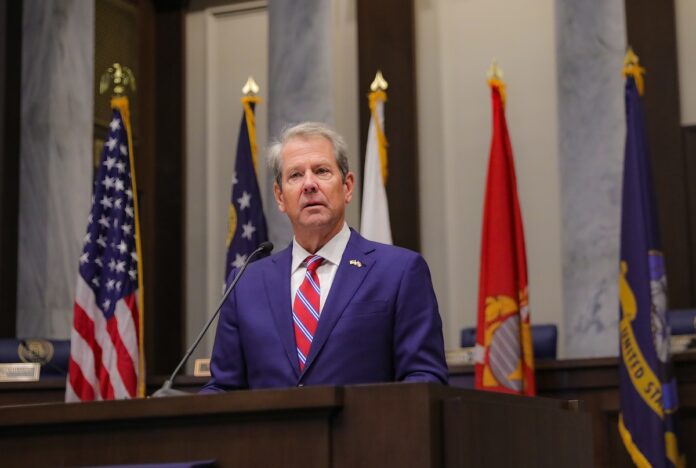
ATLANTA – Governor Brian Kemp announced Monday that all 1,100 sworn officers with the Georgia Department of Public Safety (DPS) will receive training to assist in identifying and apprehending criminal illegal immigrants.
The training is part of the 287(g) Program, which was created under the Illegal Immigration Reform and Immigrant Responsibility Act. Under this program, U.S. Immigration and Customs Enforcement (ICE) may choose to deputize state and local officers to perform specific immigration enforcement functions.
“Illegal immigration and criminal activity have no place in Georgia,” said Governor Kemp. “This commonsense initiative provides our dedicated law enforcement officers with the tools they need to better protect Georgians and maintain public safety. We are fortunate to have an administration in the White House that understands the seriousness of this issue and supports the work of our state’s officers in addressing it.”
DPS Commissioner Billy Hitchens has formally requested all DPS officers to participate in the program. This will expand Georgia’s existing partnership with ICE, which currently includes the Georgia Department of Corrections (GDC).
The governor’s office says the GDC’s collaboration with ICE has proven to be effective. There are currently 1,730 ICE detainers lodged against GDC inmates. ICE recently requested additional corrections officers for deportation duties.
“Safety is our top priority, and this partnership with ICE provides additional tools and resources for our officers to keep Georgia’s communities safe,” said Colonel Billy Hitchens, DPS Commissioner. “Through training and improved communication with ICE, we’re enhancing our ability to identify individuals who pose a threat to public safety and ensuring they are held accountable.”
The new agreement allows DPS officers to work more closely with ICE through their day-to-day interactions, including traffic stops, crash investigations, and commercial vehicle inspections. Kemp’s office says participating officers will receive training from ICE at no cost to the state.
The 287(g) Program was established as part of the Illegal Immigration Reform and Immigrant Responsibility Act of 1996.
The Habersham Community Theatre’s newest production, The Secret Garden, is a heartwarming tale that you and your family won’t want to miss.
A musical based on Frances Hodgson Burnett’s beloved 1911 novel captivates audiences with its heartfelt story of grief, renewal, and personal growth. With a beautiful score by composer Lucy Simon and a book and lyrics by Marsha Norman, the musical adaptation premiered in 1991 on Broadway, bringing a new dimension to the classic tale. Its themes of family, loss, and the power of nature resonate deeply with audiences and continue to leave a lasting impression.
A journey of healing
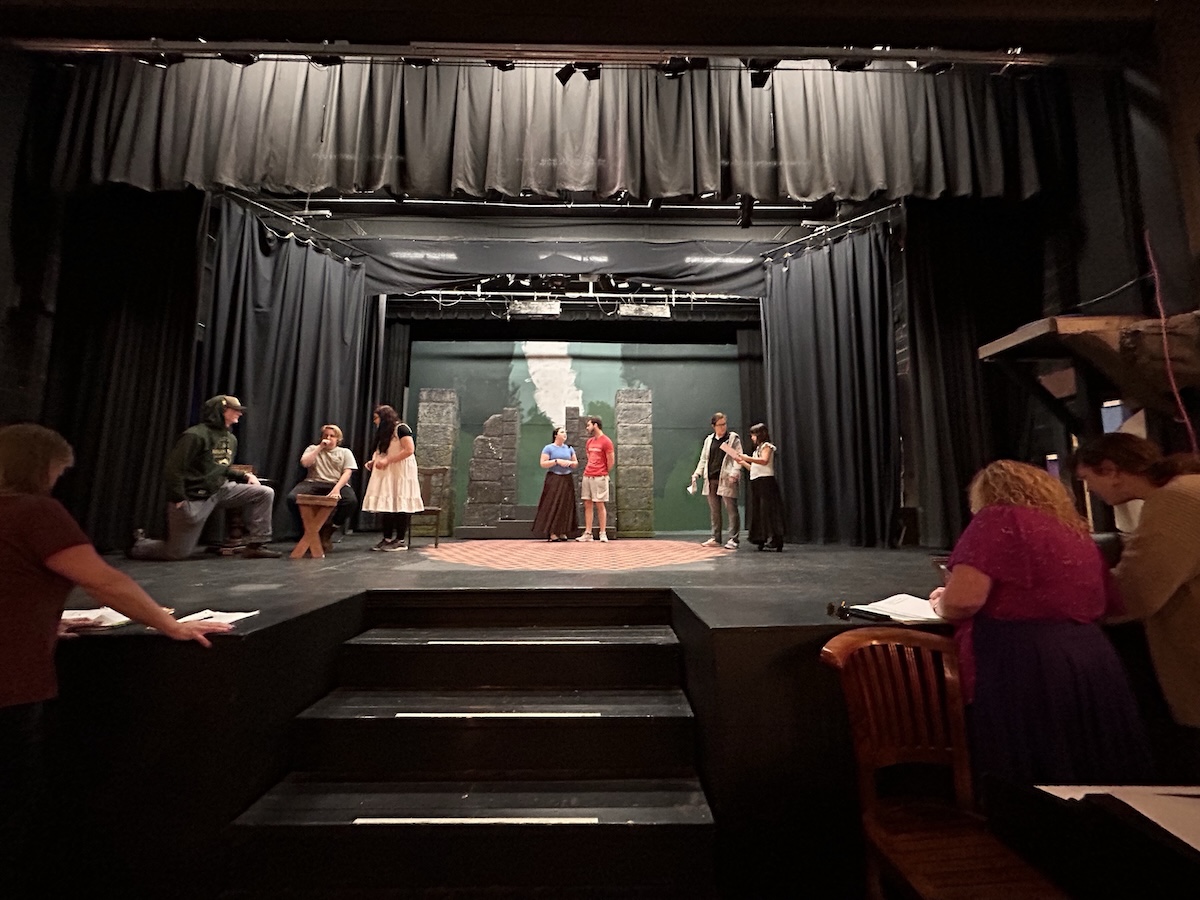
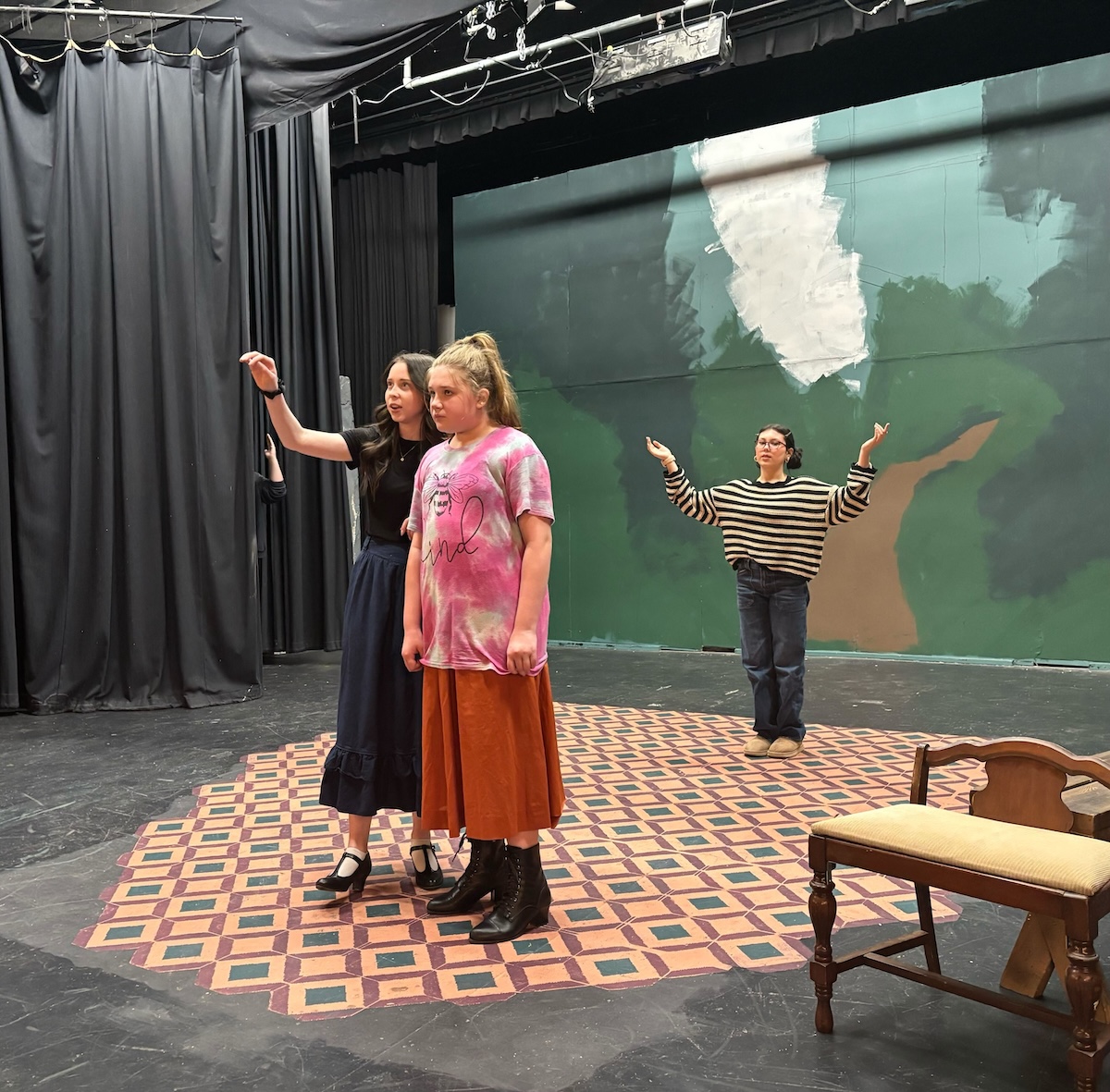
Rehearsals continue for The Secret Garden at Habersham Community Theatre in Clarkesville GA. (Daniel Purcell/NowHabersham.com)
At the heart of The Secret Garden is the journey of Mary Lennox (played by Emma Johnson and Charlotte York), a young orphaned girl who, after the death of her parents, is sent to live with her reclusive uncle, Archibald Craven (Zachary Smagur), in a remote English estate. The mansion, which is surrounded by an overgrown, neglected garden, is a place filled with sorrow, secrets, and unresolved grief. The story weaves together the emotional journeys of several key characters, including Mary, her emotionally distant uncle, the spirit of his late wife, Lily (LeAnne Challenger), the isolated and sickly Colin (Hudson Garrett), and the garden itself, which symbolizes both the healing and the sadness that each of them must face.
When Mary arrives at Misselthwaite Manor, she is spoiled, rude, and withdrawn. However, as she discovers the secret garden, which has been locked away for years, she begins a transformative journey. Guided by the ghostly presence of Lily and aided by new friends like Dickon (Jonas Corbin), a kindhearted young boy with a deep connection to nature, and Martha (Dacey Gates), Mary slowly learns to open her heart and find healing. In the process, she helps not only herself but also the people around her, especially her uncle, Archibald Craven, who must confront his own grief and guilt over the death of his wife.
The characters’ emotional growth is beautifully mirrored by the garden’s restoration, which transforms it from a dark, dead space to one filled with vibrant life. This powerful metaphor for renewal is central to the musical’s message that love, care, and time can heal even the deepest wounds.
The Secret Garden opens Wednesday, April 2, through 5 at 7:30 p.m., Sunday, April 6 at 2 p.m., April 9 through 12 at 7:30 p.m., and Sunday, April 13 at 2 p.m. (Daniel Purcell/NowHabersham.com)
The unique cast
The unique blend of the cast, directed by Susan Watson, brings the story to life and draws the audience into the musical’s deeply rooted themes of loss, grief, recovery, and healing. The journey is relatable and will draw out emotions that impact anyone who has ever felt the heartbreak of losing someone they love. In the garden, hope and resilience are found and recognized. Along with the characters, the audience experiences the evolution from grief to healing, isolation to connection, and darkness to light.
The production opens Wednesday, April 2, through 5 at 7:30 p.m., Sunday, April 6 at 2 p.m., April 9 through 12 at 7:30 p.m., and Sunday, April 13 at 2 p.m. Tickets are available to purchase online. You can also call 706-839-1315. For more information, visit Habersham Community Theater.
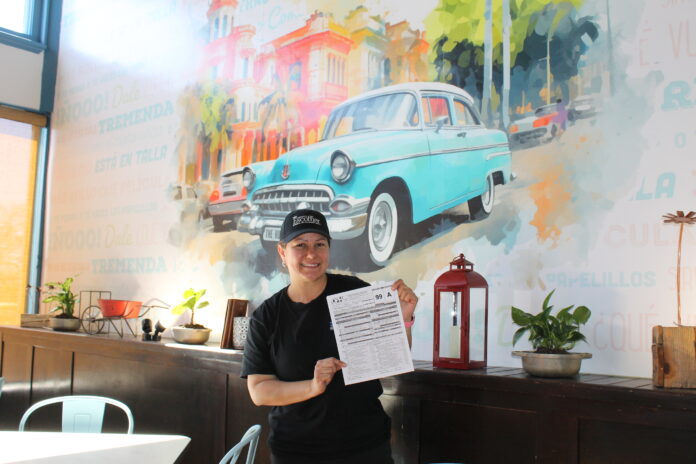
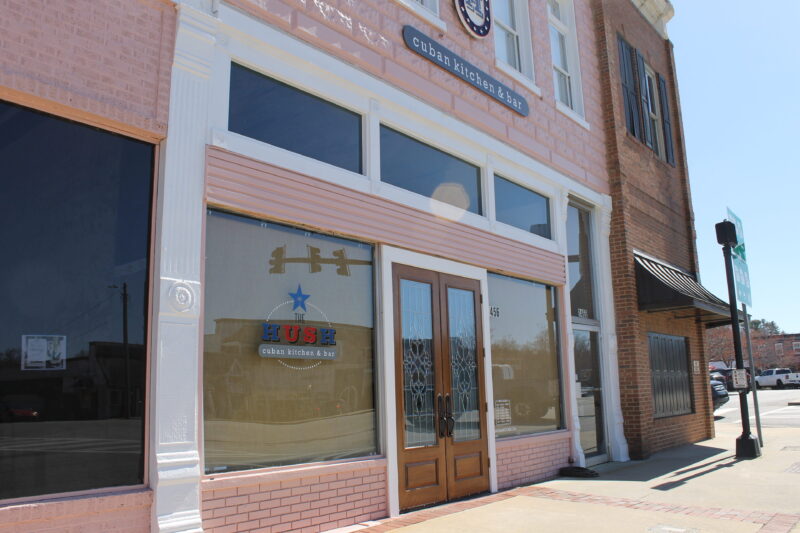
The Hush co-owner Alicia Sosa holds up health inspection certificate after announcing the restaurant will open Wednesday, March 19 (Brian Wellmeier/Now Habersham)
A new Cuban restaurant will open in Clarkesville this week.
After passing a health inspection Monday, The Hush will officially open on Washington Street along Clarkesville’s downtown square on Wednesday, March 19.
The Hush is located on Washington Street on the square in downtown Clarkesville. (Brian Wellmeier/Now Habersham)
After starting the first location of The Hush in Clayton in 2019, owners Alberto Rodriguez and Alicia Sosa said they’re eager to bring their unique taste of Cuban cuisine to Habersham County.
For now, the restaurant will be open from 11:30 a.m.-8 p.m. Monday, Wednesday, Thursday, Friday and Saturday, and for brunch on Sunday from 10 a.m.-3 p.m.
“We’re so excited,” Sosa said. “We’re nervous, but we’re so excited about it. We can’t wait to open. We’re excited to meet everyone here.”
Employees put final touches on interior of The Hush (Brian Wellmeier/Now Habersham)
(Brian Wellmeier/NowHabersham.com)
Meet the owners
In 2019, Rodriguez and Sosa opened The Hush in Clayton with a vision. Together, combining their unique skill sets – his in culinary arts and hers in business – have since filled a void for Latin American-style dishes in Rabun County.
Rodriguez brings an impressive 28 years of experience as a five-star chef. Throughout his career, he’s worked at prestigious restaurants across the southeast U.S. – including stints at the Hard Rock Cafe in Hollywood and the Seminole Casino in Coconut Creek (Florida), as well as executive sous chef roles at notable venues like Highlands Country Club in North Carolina.
All of it, combined, serves as a wealth of knowledge that shaped his expertise and sharpened his culinary craft.
Alberto Rodriguez and Alicia Sosa, posing for a photo on the square, plan to bring new Cuban restaurant to Clarkesville (Brian Wellmeier/Now Habersham)
Sosa, who Rodriguez described as “the brains” of their success, has spent years building her business acumen, particularly through management positions that have sharpened her ability to run The Hush’s operations. Her entrepreneurial eye was pivotal in navigating the challenges of maintaining a newly-opened restaurant amid the COVID-19 pandemic.
As a chef, Rodriguez’s career includes prestigious roles as Chef de Cuisine at NYY Steakhouse, where it was named Best North Broward Restaurant by SouthFlorida.com. He has also worked in top locations across Puerto Rico, Nevis, St. Croix, and the U.S., including high-end resorts like Fontainebleau Miami Beach.
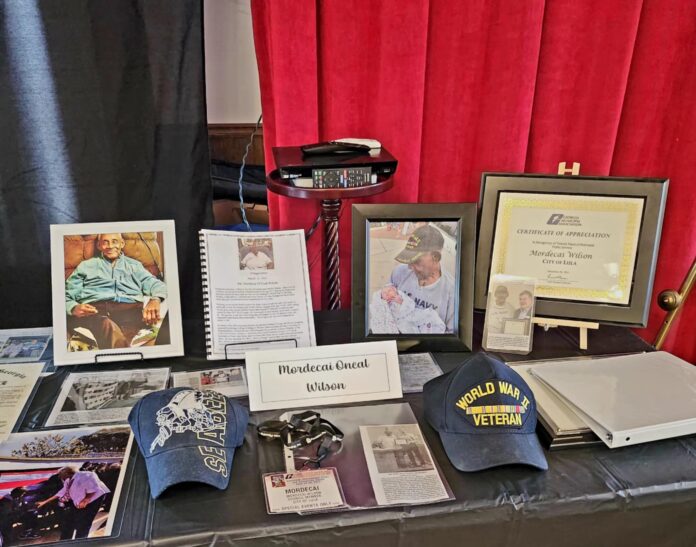
A collection of items is lay out at Lula Train Depot Saturday, March 15, in honor of Mordecai Wilson (Debbie Hubbard Smith/Lula Ladies)
Mordecai Wilson, a World War II veteran, long-time councilman in Lula, and a beloved figure in his community, would have turned 100 years old on Saturday, March 15.
Wilson passed away on Christmas Eve at Northeast Georgia Medical Center in Gainesville at the age of 99.
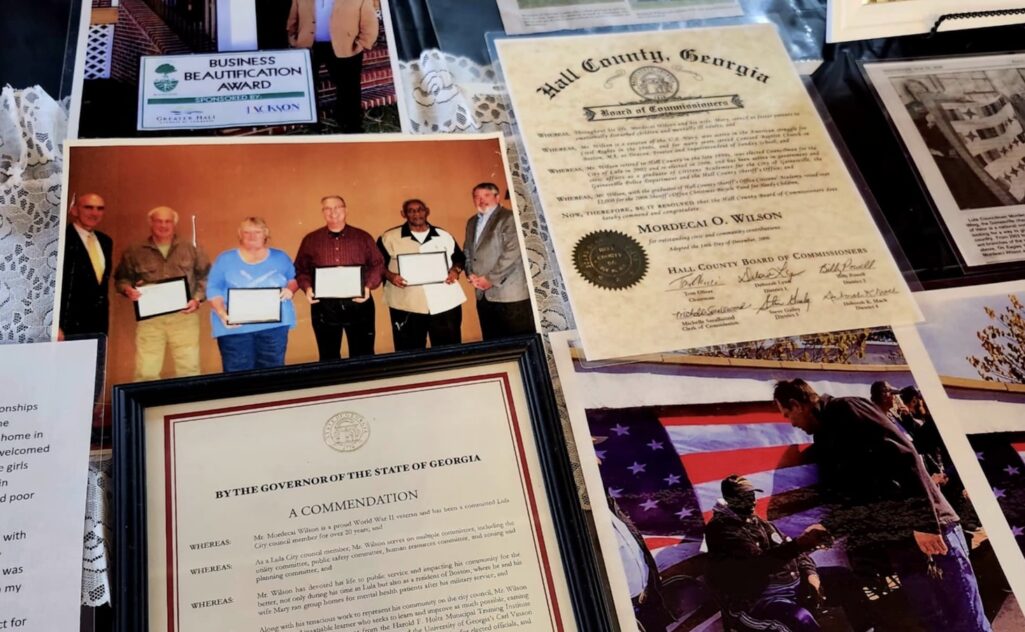
Elected to the Lula City Council in 2000, Wilson remained an active participant in council meetings even after he left office in 2021. In a time designated for Wilson at the end of every meeting, Wilson read “Mordecai’s Moment” – a written statement he’d recite aloud that summed up the state of the city and his thoughts on its future.
A true testament to his dedication, Wilson attended more than 180 Georgia Municipal Association classes (all available courses except one) over the years, and throughout his life, he earned recognition from national figures – including former President George H.W. Bush – for his contributions to society.
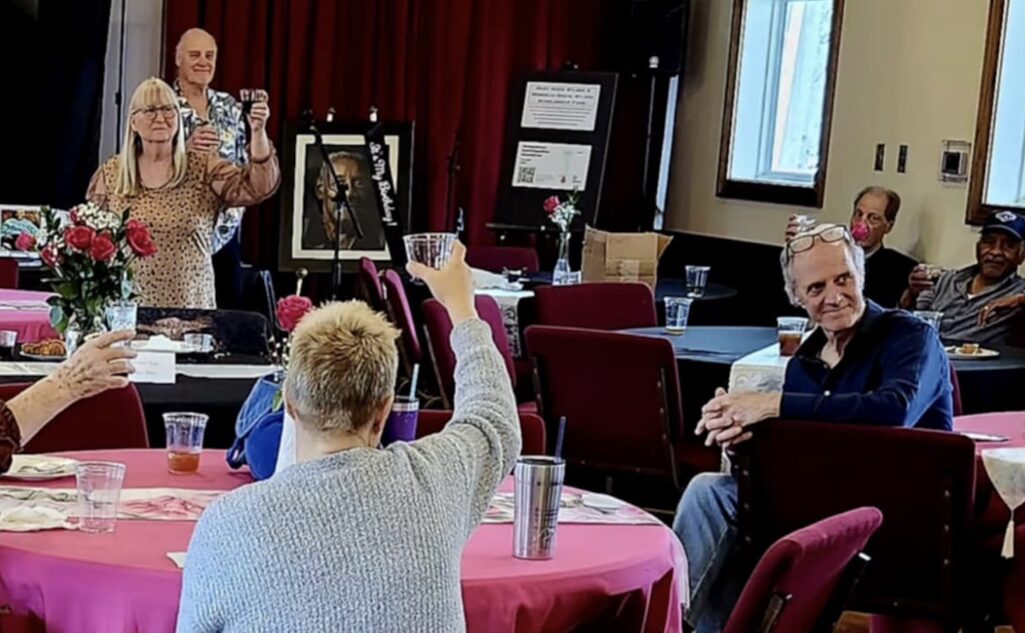
On Saturday, on what would’ve been his 100th birthday, more than 50 Lula residents and others whose lives were touched by Mordecai and his wife, Mary, gathered at the Lula Train Depot to pay tribute to the couple.
Before moving to Lula in the mid-90s, Wilson served in the Pacific during WWII before he and Mary, who married in Boston, opened two group homes for children in need and fostered over 30 children in the Boston area. Mordecai worked as a truck driver through the 1960s, then later as a security guard at a women’s college, before focusing full-time on fostering children with Mary at the group homes.
Accolades and honors of Mordecai Wilson (Debbie Hubbard Smith/Lula Ladies)
Mary Wilson died in 2014.
Ceremony
Those who attend Mordecai and Mary Wilson’s tribute ceremony Saturday, March 15 offer a toast of Mordecai’s favorite drink – grape Fanta (Debbie Hubbard Smith/Lula Ladies)
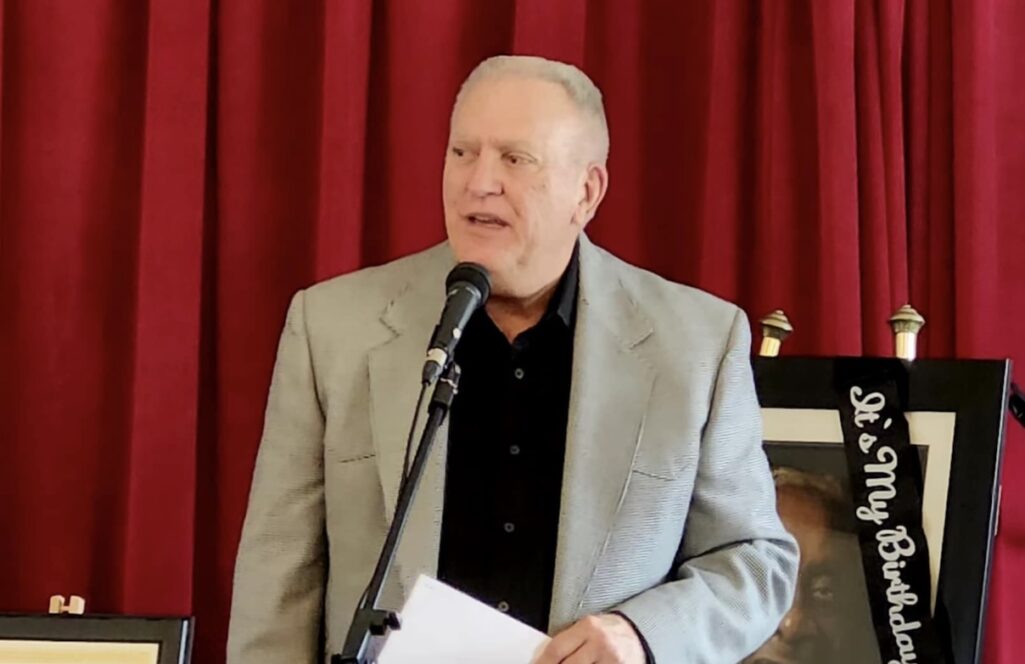
At the Lula Depot, a table and two chairs were set aside in the center of the room to honor Mary and Mordecai. Former Lula Mayor Jim Grier announced the establishment of a new scholarship fund in their name.
The Mary Moon Wilson and Mordecai O’Neil Wilson Scholarship Fund, created through a collective effort, has already raised around $2,500 and will support first-generation high school students pursuing a college education, according to Grier.
“Mordecai always thought it was important – if someone’s parents didn’t go to college – that they still had the opportunity to go to college,” Grier said. “That’s why we’re going to focus on someone who would be the first generation in their family to go to college.”
Grier first met the Wilsons in 2002 while volunteering with Lula’s Downtown Development Authority. Mordecai, then a councilman, reached out to Grier to ensure the city’s development was on track. Their paths crossed more frequently in the years that followed, and their friendship grew stronger when Grier became mayor in 2018.
Former Lula Mayor Jim Grier announces scholarship fund in Mary and Mordecai Wilson’s name (Debbie Hubbard Smith/Lula Ladies)
“It was a great friendship that developed,” Grier said. “He was so intelligent. He could talk to you about anything. You really went in-depth with him with things. I’ve said he lived in tumultuous times. But he was never bitter. He was always very loving and outgoing to everybody, no matter how they reacted to him…Mordecai was the epitome of caring for the community, and Mary was the same way. Mordecai always said: ‘Anything he was – it was because of Mary.’”
Mary and Mordecai’s three foster sons—Spike, John, and Paul Haible—traveled from various parts of the U.S. to attend the ceremony. Each of the men shared memories of Mordecai, describing him as a loving father figure whose life was shaped by Mary’s guidance.
“I always say: ‘Mary looked really great in a dress, but she always wore the pants,’” Spike said.
Mary first became a maternal figure to them when she worked with their mother in Lexington, Massachusetts, in 1959. When their mother fell ill, Mary stepped in and maintained order in the home.
“She was lovely, but firm, I would say,” Spike said. “When she set down the rules, those were the rules. And we all got along beautifully. When Mary dropped the hammer, the hammer was dropped.”
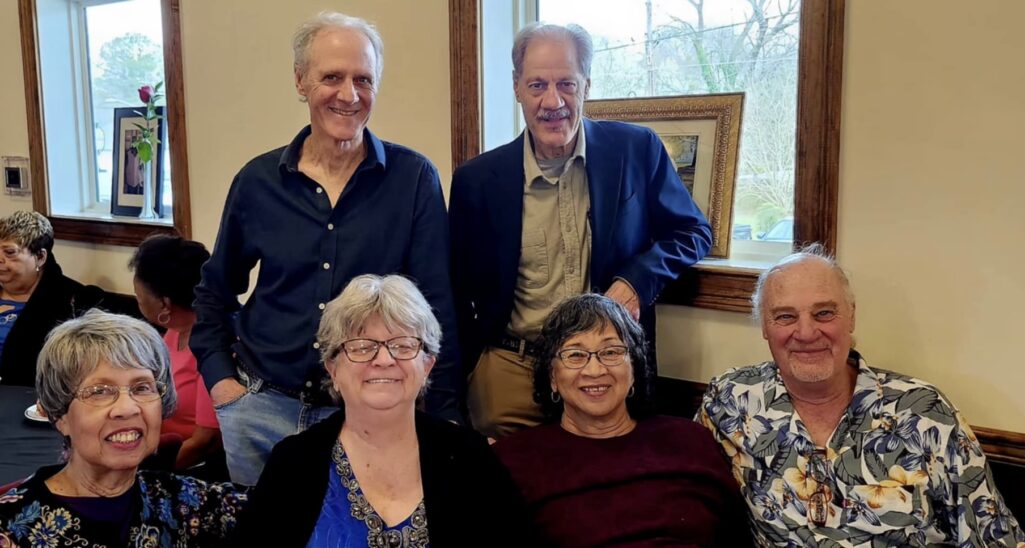
Those close to Mordecai Wilson, including his three foster sons, pose for photo on March 15 (Debbie Hubbard Smith/Lula Ladies)
Lorraine White Smith, Mordecai’s grandniece, also spoke about the impact both Mary and Mordecai had on her life and others. Mary, she said, was her mentor.
“When I lived in Boston, they helped me get through school,” said Smith, now 81-years-old. “All the things I learned was through Mary – because I was a female, and Black, and I had to make a way back in the ‘60s. I just thank God that I’m here to tell you…just be thankful that: When you’ve had the chance to have met Mordecai and Mary, you can say you met a hero and a highness.”
Georgians have access to a public library in every county in the state, adding up to more than 400 public library branches. In 2024, Georgia’s library cardholders borrowed more than 11.7 million items from their local public libraries, an increase of 407,500 items borrowed compared to the year before. This is made possible by library workers who ensure materials are accessible, maintain various collections, assist patrons, and handle the behind-the-scenes work to keep the checkout systems running smoothly. Despite this, these crucial professionals now face unwarranted threat of criminal prosecution because of what’s happening at the Georgia Legislature. Senate Bill 74 would strip library workers at all public libraries (i.e., county, university, K-12, and community libraries) of protection from criminal prosecution if they “knowingly” distribute material that is deemed “harmful to minors.” This phrase is defined in Georgia Code § 16-12-102 based loosely on the U.S. Supreme Court’s “obscenity” definition.
The legislation’s practical effect would be to criminalize library workers for simply doing their job.
For example, for library workers to avoid prosecution under SB 74, they would have to be familiar with the complete content of the hundreds of thousands of titles contained in their library collections and make a good faith effort to keep media containing any portion that could be deemed “harmful” out of the hands of any person under 18. It is not feasible for library workers to maintain such encyclopedic knowledge of their collections, nor for them to determine what is “harmful” for each minor library patron they encounter.
As any parent can tell you, what is “harmful” for a kindergartener may be entirely suitable for a high school junior, yet SB 74 takes no account of these age distinctions. Moreover, with the availability of library reading rooms and the advent of self-checkout machines, library workers are not going to be privy to the materials that each person under the age of 18 is browsing or checking out. In the words of one career librarian in the state, “Making an assurance that minors would never have any contact with objectionable material would be nearly impossible without keeping anyone under the age of 18 away from all library resources.”
This would have a chilling effect on what materials libraries carry in their collections and result in unanticipated restrictions on young people using libraries.
Georgia’s library workers already give a great deal of thought to age-appropriate content. There are existing selection processes that require that materials added to library collections meet certain criteria for quality, relevance, and value. Whether a book is scientific, literary, historical, or religious, it goes through a vetting process by professional library workers, who consider factors like author credibility, readership interest, and educational merit.
Even if a book is considered controversial, its presence in a library suggests it has been determined by library professionals to merit inclusion in the collection for public access, discussion, or preservation. Criminalizing library workers for enabling patrons to check out books disregards the professional judgement exercised by trained library workers in assembling their collections and thwarts the fundamental role libraries play in people’s access to information.
The legislation echoes the past. Georgia has a long history of attempting to use state power to restrict access to information under the pretense of protecting the public. In December 1829, Georgia passed anti-literacy laws, criminalizing teachers for educating enslaved Black people. Later, segregated librarieslimited access to information for Black and White readers. The legislation is a modern-day restriction of access to knowledge based on a government-imposed definition of “harmful” materials influenced by the government’s disfavor of certain topics or viewpoints.
Other states that have passed bills similar to SB 74 have faced and lost costly legal battles. In Arkansas, for instance, in July 2023 a federal judge temporarily blocked provisions that could imprison library workers for providing “harmful” materials to minors. Then, in December 2024, a federal judge ruled those provisions unconstitutional, permanently blocking the implementation of certain provisions. If SB 74 passes, Georgia taxpayers could end up footing the bill for inevitable legal challenges — court battles the state is likely to lose.
Managing which materials young people access from their public libraries is best and most appropriately handled by parents and their kids making their own family- and age-specific decisions, not the government.
With more than 11 million checkouts in 2024—a surge compared to 2023—Georgians have made it clear: Public libraries are a needed resource for diverse and valuable information. By making it possible to criminally prosecute library workers, SB 74 threatens to chill access by reducing both the variety of materials on the shelves and the ability of young people to access it.
Library workers need your support. Call or email your local legislator and demand they oppose SB 74. Donate, volunteer, or simply visit your local library—because library workers deserve protection, not prosecution.
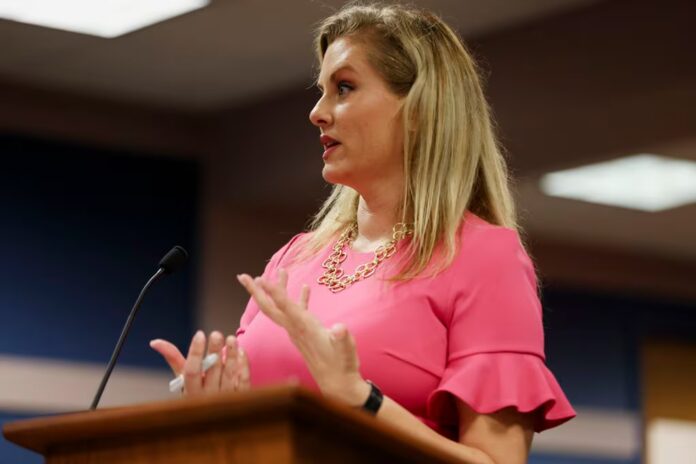
FILE - Ashleigh Merchant, attorney for Michael Roman, speaks during a hearing in the case of State of Georgia v. Donald John Trump in Atlanta, Monday, Feb. 12, 2024. (Alyssa Pointer/Pool Photo via AP)
(Georgia Recorder) — Fulton County District Attorney Fani Willis has been ordered to turn over documents and pay $54,000 in attorneys fees in the 2020 election interference case after a judge ruled that she violated state open records laws.
Fulton Superior Court Judge Rachel Krause ruled Friday in favor of defense attorney Ashleigh Merchant after finding that Willis and Fulton officials acted in a “hostile” and “substantially groundless” manner while not complying with the Open Records Act to turn over public records.
Krause wrote that after listening to testimony and reviewing evidence presented during a court hearing, Fulton officials failed to make any meaningful effort to search for documents requested by Merchant and did not respond to her initial request within three business days.
The judge ordered Willis’s office to provide Merchant with the requested documents within 30 days, including relevant employee emails and communication between the D.A. and purchasing office about payments to outside legal counsel. In addition, Willis must submit a copy of the non-disclosure agreement that employees must sign, as well as turn over a list of the attorneys hired by Willis since 2021, the order says.
Krause wrote that Fulton County records custodian Dexter Bond testified that he intentionally treated Merchant’s request differently than other open records filings, which included not communicating with the Marietta attorney by phone.
Merchant filed the lawsuit in Fulton County court after not receiving documents from the prosecutor’s office while she represented Michael Roman, one of 18 co-defendants indicted along with Republican President Donald Trump who were accused of illegally conspiring to overturn the 2020 presidential election in Georgia.
Merchant requested records from Willis after uncovering evidence of a romantic affair between Willis and special prosecutor Nathan Wade, a lawyer she hired to lead the election investigation.
The Georgia Court of Appeals eventually disqualified Willis from the election case as a consequence of prosecutorial misconduct after Merchant filed a motion in January 2023 that undermined the Willis investigation of Trump and the remaining 15 co-defendants. Four of the people originally indicted plead guilty.
Merchant testified at a March 2024 Senate Special Committee on Investigations that she began gathering information about Wade’s contract with the D.A.’s office and other details surrounding his November 2021 appointment by Willis.
Willis is requesting that the Georgia Supreme Court consider her challenge after the state’s appellate court disqualified her from prosecuting the Trump case.
Willis also continues to try to block the Senate investigative committee subpoenas requesting her to testify and turn over a trove of documents.
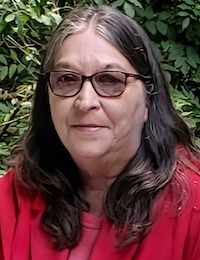
Myra J. Osborn, beloved daughter, sister, and aunt, went home to be with the Lord on Sunday, March 16, 2025, at the age of 60. She was born on March 30, 1964, in Jacksonville, Florida, and spent her life spreading joy and kindness to everyone she encountered.
Myra was a seamstress for a number of years and also worked with Habersham County School System. Her diligence and commitment to excellence were evident in every task she undertook, and she was valued and respected by her colleagues.
Myra was of the Baptist faith, finding strength and comfort in her beliefs. She embraced the world around her with a zest for life, reveling in the simple pleasures. Myra had a profound love for music that filled her heart with joy. She cherished moments spent fishing, exploring the great outdoors, camping, and traveling. Her affection for her cats was a testament to her nurturing spirit and her ability to find companionship in the creatures she loved.
Myra is survived by her mother, Janice Lewallen Hurt; her sisters and brother-in-law, Elaine Hurt Higgins and Wayne and Cathy Hurt Lawson; her nieces and nephews, Jamey Ayers, Mandy Gunn and Stacy, Ashley James and Dylan, Stephanie LaBruyere and Daron, Nicole Ramirez, and Brandi Hurt; and numerous great-nieces and nephews. She will be missed dearly by her aunt and uncle, Willie Mae and Swayne Crocker.
She was preceded in death by her father, James William Hurt; her husband, Terry Osborn; her brother, Johnny Hurt; and her brother-in-law, Kim Lawson.
Myra J. Osborn’s warmth, compassion, and joyful spirit will be remembered fondly by all who knew her. Her legacy will live on in the hearts of her family and friends, a gentle reminder of the joy she brought to their lives.
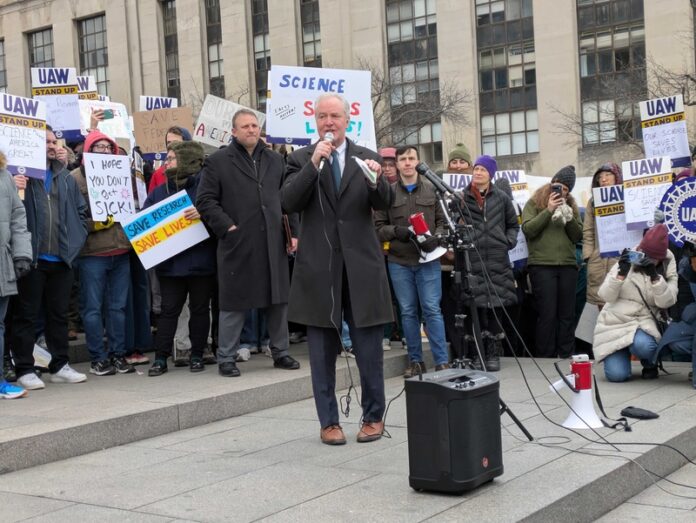
Democratic U.S. Sen. Chris Van Hollen of Maryland speaks at a rally in support of federal workers outside the U.S. Department of Health and Human Services in Washington, D.C., on Wednesday, Feb. 19, 2025. (Ashley Murray/States Newsroom)
WASHINGTON (States Newsroom) — A federal appeals court on Monday denied the Trump administration’s emergency effort to block the reinstatement of federal employees at six government agencies.
The U.S. Court of Appeals for the 9th Circuit rejected the government’s request to stay a Northern California district court’s March 13 ruling ordering the departments of Agriculture, Defense, Energy, Interior, Treasury and Veterans Affairs to reinstate thousands of probationary positions.
The newly hired or promoted employees were fired as part of an agenda to slash federal jobs carried out by President Donald Trump and billionaire White House adviser Elon Musk.
“Given that the district court found that the employees were wrongfully terminated and ordered an immediate return to the status quo ante, an administrative stay of the district court’s order would not preserve the status quo. It would do just the opposite — it would disrupt the status quo and turn it on its head,” according to the 9th Circuit order.
Judge Barry G. Silverman, a late 1990s President Bill Clinton appointee, and Judge Ana de Alba, appointed by President Joe Biden in 2023, issued the order, while Judge Bridget S. Bade, a 2019 Trump appointee, delivered a partial dissent.
The government’s response to the emergency motion is due by Tuesday. Further briefs are due throughout April and May. An appeals hearing has not yet been scheduled.
District judge ruling on firings
The Trump administration appealed the lower court’s decision just hours after Judge William Alsup’s extension of his emergency order directing the agencies to reinstate the positions.
Alsup also set Thursday as a deadline for a list of all terminated employees and an explanation of what federal agencies have done to comply with his order.
The White House decried the decision, saying ”a single judge is attempting to unconstitutionally seize the power of hiring and firing from the Executive Branch,” according to a statement Thursday from press secretary Karoline Leavitt.
Unions representing masses of federal employees sued Trump’s Office of Personnel Management and its acting director Charles Ezell in February over the agency’s unilateral directive across the agencies to fire tens of thousands of workers.
The affected agencies within the six departments included the Environmental Protection Agency, the Federal Aviation Administration, the National Institutes of Health and the Federal Emergency Management Agency, among several others.
On the same day as the decision out of California, a federal judge in Maryland issueda temporary restraining order mandating 20 federal agencies reinstate fired employees by Monday.
Chainsaw at CPAC
Musk, a senior White House adviser and top donor to Trump’s reelection, is the face of Trump’s workforce downsizing and has not shied away from sharing his plans on his social media platform, X.
He even wielded a chainsaw on stage in February at the Conservative Political Action Conference outside Washington, D.C., and yelled to the audience “This is the chainsaw for bureaucracy.” The chainsaw was gifted to him by Argentina’s strongman President Javier Milei.
The White House has claimed in a court filing in a separate case that Musk has no decision-making power.
Kenneth “Sonny” Harvey Harrison, 85, of Tiger, Georgia, passed away peacefully. He is survived by his loving wife, Sara Jean Welch Harrison, and two sons, Mark Harrison and Sean Harrison.
Sonny was preceded in death by his parents, Harvey Frank Harrison and Gussie Ivester Harrison; his brother, Kendall Clark “Skeet” Harrison; and his sister, Pat Harrison Galloway.
Sonny was a devoted family man, a proud owner and operator of Harrison Welding for over 50 years, and a retired plant operator and engineer with Georgia Power. He was passionate about his work and took great pride in his craft. Throughout his life, Sonny enjoyed hunting, fishing, and working, with a particular love for making moonshine.
Above all, Sonny had a kind, generous heart. He quietly helped those in need, always preferring to do so without recognition or fanfare. He was content knowing his acts of kindness made a difference, and he never sought anything in return. Sonny’s love for his family and community was immeasurable, and he will be remembered for his big heart, his hardworking nature, and his unwavering dedication to those he loved.
The family will receive friends on Tuesday, March 18, 2025, at Beck Funeral Home from 6:00 PM until 8:00 PM. A funeral service will be held on Wednesday, March 19, 2025, at 11:00 AM in the chapel of Beck Funeral Home with Rev. Joe McCrackin officiating. Burial will follow in the Welch Family Cemetery.
Beck Funeral Home in Clayton, Georgia, is honored to serve the family of Sonny Harrison.
Beck Funeral Home in Clayton, Georgia, is in charge of the arrangements. If there are any questions, please call 706-782-9599. An online Memorial Register Book is available at www.beckfuneralhome.com.
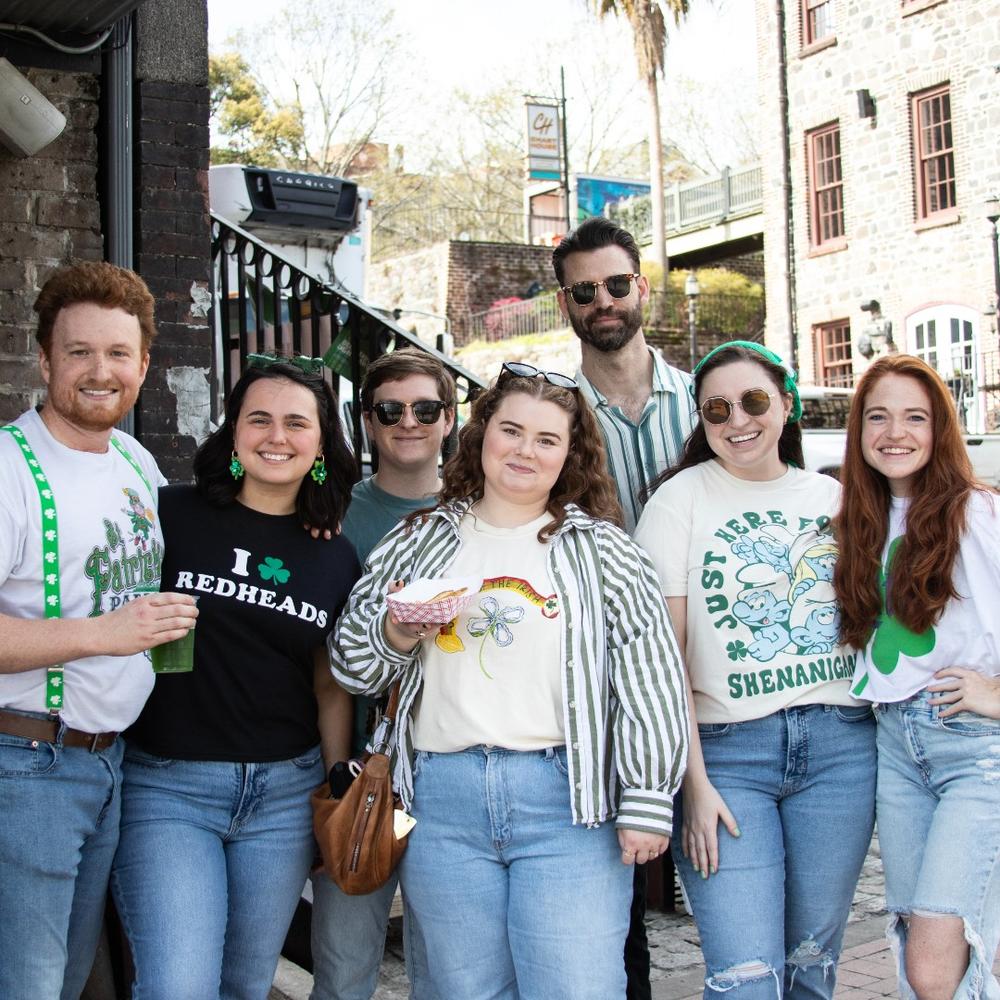
Man dressed up at the Savannah St. Patrick's Day parade. (Casey Jones Photography/Facebook)
The city of Savannah held its 201st annual St. Patrick’s Day parade, one of the largest parades honoring the holiday in the country.
The parade not only washes the city in green but highlights the deep Irish heritage in the state of Georgia.
Based on Census data, more people claim Irish ancestry in Georgia than any other except English ancestry, according to Visit Savannah.
Also per Visit Savannah, the parade, held every March 17, allows thousands of Savannah natives and visitors to gather to crowd the streets from the early morning “dressed in their finest Kelly green to watch a parade take its sweet, festive time winding through most of Savannah’s downtown squares.”
The day begins with an 8 a.m. Mass at the Cathedral of St. John the Baptist ahead of the start of the parade at 10:15 a.m. at the intersection of Gwinnett and Abercorn streets.
The parade features dancers, floats, marching bands and more.
St. Patrick's Day in Savannah • March 17, 2025
1 of 5
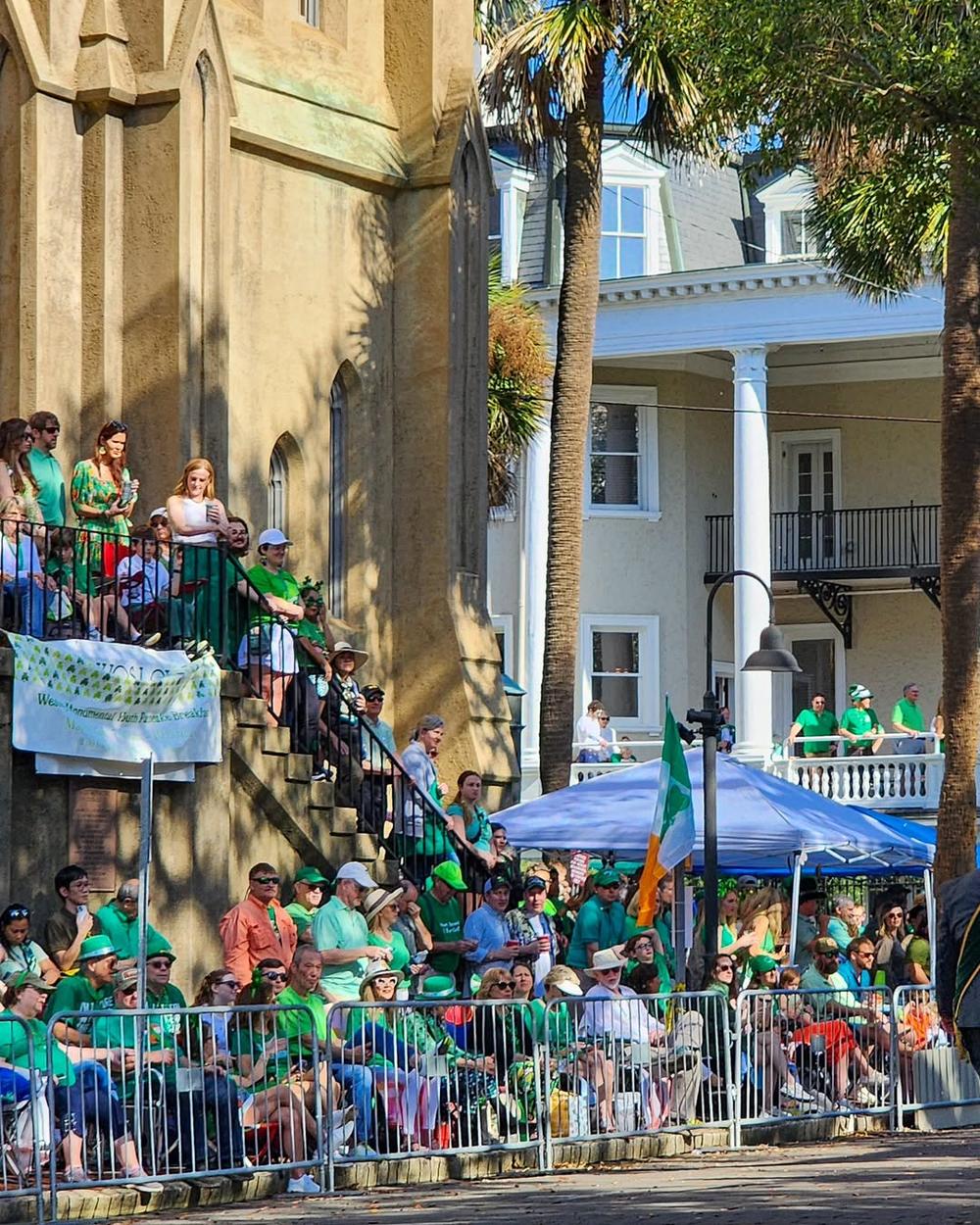
Guests in attendance of the 201st Savannah St. Patrick's Day Parade on March 17, 2025. (City of Savannah Government/Facebook
Savannah's Cathedral of St. John the Baptist is featured in the background of the 2025 St. Patrick's Day parade. (The Original Crab Shack)
People gathered in a crowd to watch the 201st Savannah St. Patrick's Day parade on March 17, 2025. (Downtown Savannah Livin/Facebook)
The Barabbas and The Tribe from the Bahamas joined Savannah's local business, The Original Crab Shack, for a dance performance during the parade. (The Original Crab Shack)
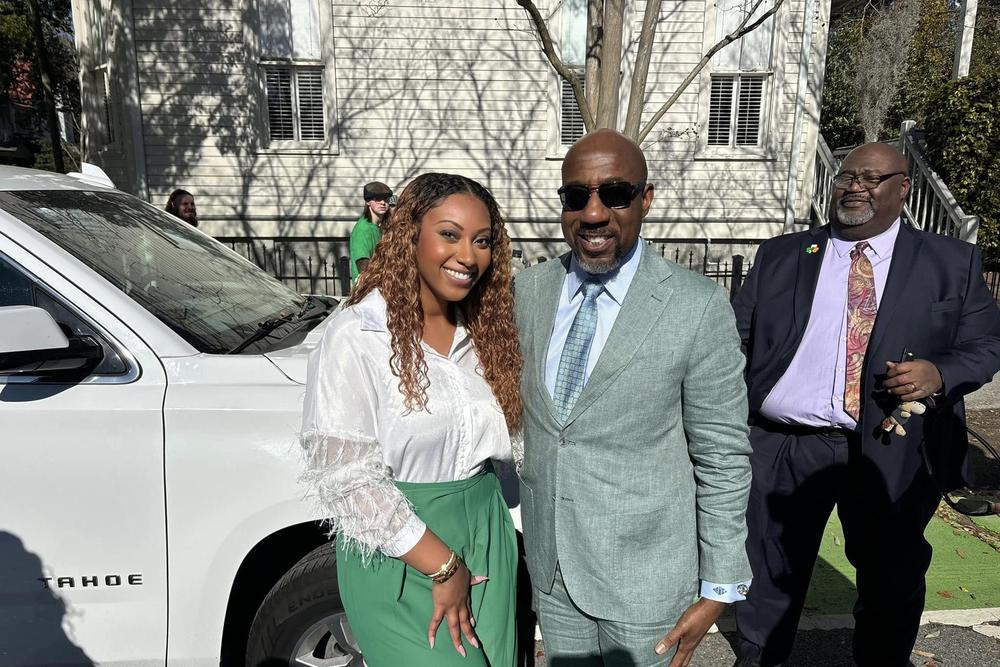
Georgia U.S. Sen. Raphael Warnock, who's from Savannah, is pictured with a Chatham County Sheriff’s Office employee at the Savannah St. Patrick's Day parade on March 17, 2025. (Brianna Jones/Facebook)
In Northeast Georgia, the city of Winder was forced to cancel its St. Patrick’s Day celebration Dublin on Jackson on Saturday, March 15, due to the weather.
This article comes to Now Habersham in partnership with GPB News
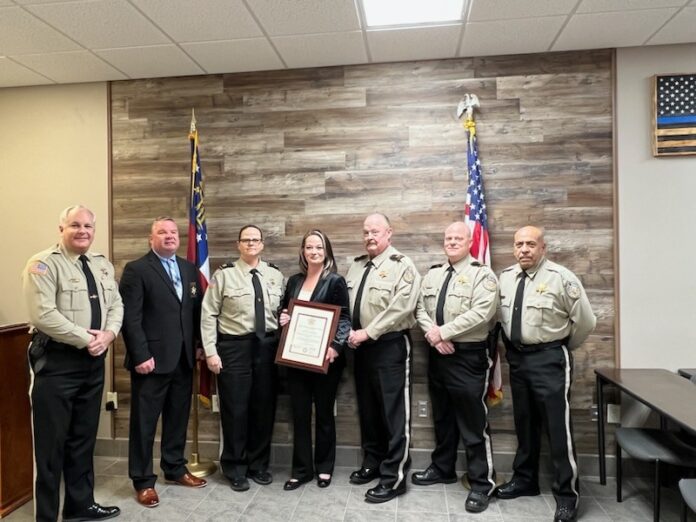
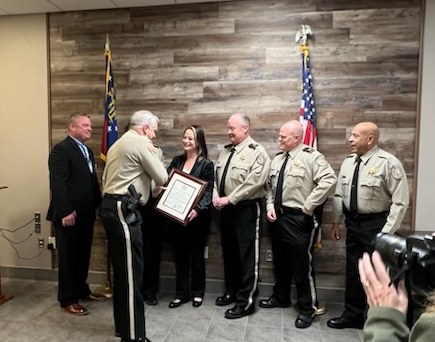
The rigorous program evaluates policies, procedures and practices to see that agencies meet top-tier standards in law enforcement operations, jail management, sex offender registration, courthouse security and administrative procedures.
(White County Sheriff’s Office/Facebook)
“This accreditation was a big milestone for White County Sheriff’s Office, and I am very proud of the men and women of this office who proudly rose to the challenge and worked so hard to achieve it,” White County Sheriff Rick Kelley said. “They spent several months reviewing and updating our policy and procedures to meet the high standards set forth for this accreditation.”
Officials say the accreditation serves as a testament of the White County Sheriff’s Office’s ongoing efforts to uphold high standards in public safety and law enforcement.
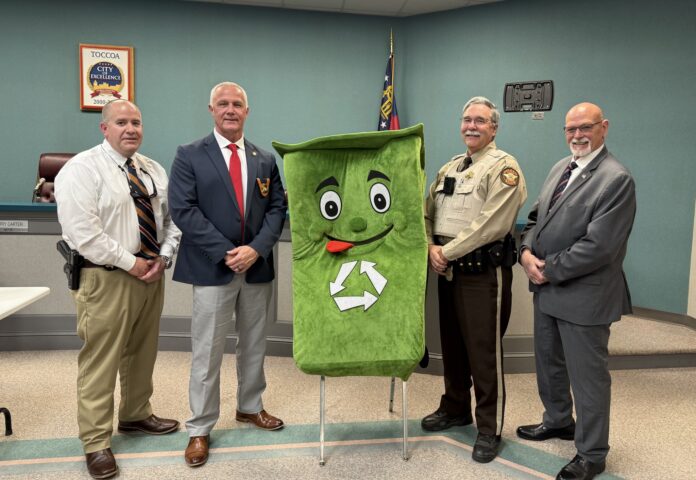
The Stephens County Sheriff’s Office has reported recent success in its initiative to counter litter and illegal dumping to keep the county clean.
At a Keep Toccoa-Stephens County Beautiful meeting on Thursday, March 13, deputy Edward Bush of the Stephens County Sheriff’s Office shared a series of updates on the work of the Inmate Litter Detail – a dedicated team focused on cleaning up the county’s roadways.
Known as the “Litter Critter Crew,” the team spends three to four days each week picking up trash along county roads.
In just the first two months of the year, the litter detail collected 244 bags of trash, and throughout 2024, they collected a total of 2,380 bags of trash.
The crew also removed several large items illegally dumped along the roads, including six recliners, 11 mattresses, six box springs, three couches, one loveseat, one futon, seven televisions, 21 tires, one jacuzzi and one deep freezer.
Bush noted that the number of bags collected has significantly decreased since the initiative began in 2023, reflecting what they consider the success of the ongoing efforts. Still, he continues to encourage residents to be mindful of their trash and help maintain a clean environment.
Citizens are urged to report any large items or illegal dumping they encounter on the roads. To report such incidents, please contact the non-emergency dispatch line at (706) 779-3911.
In collaboration with the Stephens County Marshals Office and the Georgia Department of Natural Resources, the sheriff’s office is working to restore a clean and beautiful community, according to officials.
Bush expressed his appreciation for community members who prioritize beautification efforts and encouraged others to get involved by safely picking up trash, recycling at local sites and volunteering with organizations like Keep Toccoa-Stephens County Beautiful.










Library workers deserve protection, not prosecution
Georgians have access to a public library in every county in the state, adding up to more than 400 public library branches. In 2024, Georgia’s library cardholders borrowed more than 11.7 million items from their local public libraries, an increase of 407,500 items borrowed compared to the year before. This is made possible by library workers who ensure materials are accessible, maintain various collections, assist patrons, and handle the behind-the-scenes work to keep the checkout systems running smoothly. Despite this, these crucial professionals now face unwarranted threat of criminal prosecution because of what’s happening at the Georgia Legislature. Senate Bill 74 would strip library workers at all public libraries (i.e., county, university, K-12, and community libraries) of protection from criminal prosecution if they “knowingly” distribute material that is deemed “harmful to minors.” This phrase is defined in Georgia Code § 16-12-102 based loosely on the U.S. Supreme Court’s “obscenity” definition.
The legislation’s practical effect would be to criminalize library workers for simply doing their job.
For example, for library workers to avoid prosecution under SB 74, they would have to be familiar with the complete content of the hundreds of thousands of titles contained in their library collections and make a good faith effort to keep media containing any portion that could be deemed “harmful” out of the hands of any person under 18. It is not feasible for library workers to maintain such encyclopedic knowledge of their collections, nor for them to determine what is “harmful” for each minor library patron they encounter.
As any parent can tell you, what is “harmful” for a kindergartener may be entirely suitable for a high school junior, yet SB 74 takes no account of these age distinctions. Moreover, with the availability of library reading rooms and the advent of self-checkout machines, library workers are not going to be privy to the materials that each person under the age of 18 is browsing or checking out. In the words of one career librarian in the state, “Making an assurance that minors would never have any contact with objectionable material would be nearly impossible without keeping anyone under the age of 18 away from all library resources.”
This would have a chilling effect on what materials libraries carry in their collections and result in unanticipated restrictions on young people using libraries.
Georgia’s library workers already give a great deal of thought to age-appropriate content. There are existing selection processes that require that materials added to library collections meet certain criteria for quality, relevance, and value. Whether a book is scientific, literary, historical, or religious, it goes through a vetting process by professional library workers, who consider factors like author credibility, readership interest, and educational merit.
Even if a book is considered controversial, its presence in a library suggests it has been determined by library professionals to merit inclusion in the collection for public access, discussion, or preservation. Criminalizing library workers for enabling patrons to check out books disregards the professional judgement exercised by trained library workers in assembling their collections and thwarts the fundamental role libraries play in people’s access to information.
The legislation echoes the past. Georgia has a long history of attempting to use state power to restrict access to information under the pretense of protecting the public. In December 1829, Georgia passed anti-literacy laws, criminalizing teachers for educating enslaved Black people. Later, segregated librarieslimited access to information for Black and White readers. The legislation is a modern-day restriction of access to knowledge based on a government-imposed definition of “harmful” materials influenced by the government’s disfavor of certain topics or viewpoints.
Other states that have passed bills similar to SB 74 have faced and lost costly legal battles. In Arkansas, for instance, in July 2023 a federal judge temporarily blocked provisions that could imprison library workers for providing “harmful” materials to minors. Then, in December 2024, a federal judge ruled those provisions unconstitutional, permanently blocking the implementation of certain provisions. If SB 74 passes, Georgia taxpayers could end up footing the bill for inevitable legal challenges — court battles the state is likely to lose.
Managing which materials young people access from their public libraries is best and most appropriately handled by parents and their kids making their own family- and age-specific decisions, not the government.
With more than 11 million checkouts in 2024—a surge compared to 2023—Georgians have made it clear: Public libraries are a needed resource for diverse and valuable information. By making it possible to criminally prosecute library workers, SB 74 threatens to chill access by reducing both the variety of materials on the shelves and the ability of young people to access it.
Library workers need your support. Call or email your local legislator and demand they oppose SB 74. Donate, volunteer, or simply visit your local library—because library workers deserve protection, not prosecution.