Home Blog Page 539

Human trafficking emerges as new front in Georgia legislative tension over lawsuit limits

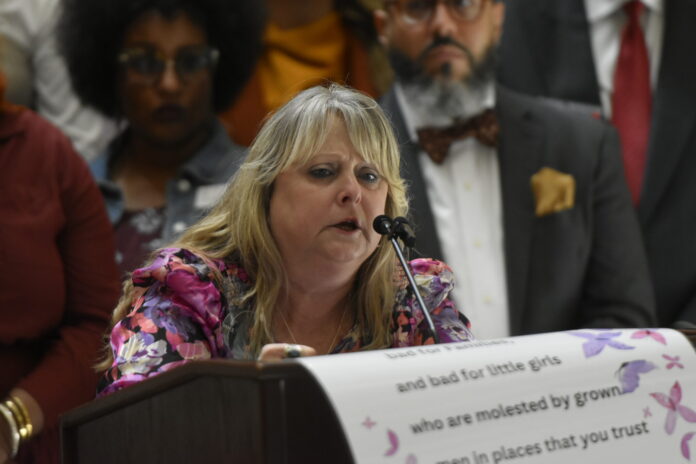
When Georgia Gov. Brian Kemp signed a trio of bills aimed at increasing protections for sexual abuse and human trafficking survivors into law last April, Susan Cobb was at his side. Now she opposes the governor’s push to limit tort liability because she says her late daughter’s sex abuser would have been shielded from court damages. (Ross Williams/Georgia Recorder)

ATLANTA (Georgia Recorder) — Ask Susan Cobb and she’ll tell you: She never had plans to become an activist.

A registered nurse, she led a relatively normal life, raising her two children in Hartwell, Georgia, with her husband, Wayne. During her days as a nursing student at Brenau University, she said, “we often talked about how someone in our class would be an activist.”

“I never envisioned that I would be in that position,” she added. “But I never envisioned losing my daughter.”

A talented gymnast who dreamed of someday making the Olympic team, Cobb’s daughter Jennifer began attending a gymnastics program through their local YMCA in Hartwell at age 11.

“Jennifer had a beautiful heart, and she loved equally,” Cobb said. “She cared about humanity. She loved animals, and she was a giver.”

But by the time she was 12, Cobb says, Jennifer had become the victim of grooming by one of her coaches, who was 17 years older than her. After years of abuse, she came forward to report him, prompting the family to file criminal and civil charges against him, as well as a civil suit against the YMCA.

Though the Cobb family eventually reached a settlement with the YMCA for $2 million, both of their cases against the coach are still pending. Jennifer never got to see justice served. She was found dead in 2021 in what is believed to be a suicide.

“I promised when she died that I would fight for the justice she was denied in life, that I would fight for that in her death, and I would also fight for other victims,” Cobb said. “And that is the reason I’m here now, is for other victims.”

When Georgia Gov. Brian Kemp signed a trio of bills aimed at increasing protections for sexual abuse and human trafficking survivors into law last April, Cobb was one of many survivors and advocates who stood by his side. She held First Lady Marty Kemp’s hand while watching Kemp sign House Bill 993, which created a new felony offense for grooming a minor. But this year, as discourse over legislation that would overhaul Georgia’s civil litigation landscape intensifies, she has found herself in opposition to the governor, joining a growing number of activists and advocates who are speaking out against his top legislative priority: Senate Bill 68.

Survivors sound alarm on SB 68

Kemp has said early and often this year that legislation bringing sweeping changes to Georgia’s civil litigation landscape — referred to by supporters as “tort reform” — is his top legislative priority of 2025. He has repeatedly argued that sweeping policy changes are needed to bring down insurance costs for businesses throughout the state and has been steadily ramping up pressure on lawmakers to deliver “meaningful, impactful” changes by the end of the 2025 session under the threat of calling them back to the Capitol later this year to get the legislation passed.

Proponents of SB 68 say it is aimed at creating more balance between plaintiffs and defendants in Georgia’s court system, often citing an American Tort Reform Foundation ranking which listed Georgia as one of the top five “judicial hellholes” in the country in 2024.

But as the bill nears a vote in the House Subcommittee of Rules on Lawsuit Reform, survivors of human trafficking, advocates for sexual assault survivors and the trial lawyers who represent them have been sounding the alarm about aspects of the bill they say could prevent nearly all victims from receiving justice through the civil system.

Section 6 of the bill, which would limit lawsuits against business owners for accidents that occur on their property, alters the current standards that require business owners to keep their customers safe. During hours of testimony at a House Rules subcommittee meeting last week, trial lawyers argued that allowing the bill to pass into law would effectively gut their ability to pursue damages for many sexual assault survivors.

“With the bill as currently written, there will never be another survivor who files a case in Georgia courts,” said Jonathan Tonge, an attorney who specializes in human trafficking cases. “It would be malpractice to do that.”

Part of the reason opponents argue the language would be detrimental is because it’s very common for premises liability cases to be filed for reasons that go beyond just the physical condition of a property and can pertain to issues like negligent behavior of employees or management. When the Cobb family filed their lawsuit, their claim was not that the physical conditions of the YMCA were unsafe but rather that the business had failed to uphold its own policies around reporting misconduct, allowing the coach’s abuse of Jennifer to go unchecked long after employees became aware of his behavior.

“No one called the police,” Cobb said. “Reports were made that he was seen kissing her in the gym, her getting in his car, getting out of his car, being caught in the bathroom together, all these numerous, numerous, numerous, numerous times that he physically molested, sodomized, raped her. We were never told. We were never given the chance to pull her out and keep her safe.”

She also rebuked claims from supporters of SB 68 that victims and trial lawyers were regularly filing baseless lawsuits in pursuit of financial gain.

“It was never about the money for us,” Cobb said, explaining that the funds from the YMCA settlement will be put towards a foundation that bears Jennifer’s name. “I don’t want one dime of that money because it will not bring her back. I don’t want that money for me. I want it to help others.”

Survivors of human trafficking also spoke out against the legislation, urging lawmakers to consider the impact that SB 68’s wording would have on the hotels and motels that turned a blind eye to trafficking survivors’ exploitation. Michal Roseberry, a trafficking survivor and activist, shared her story in front of the committee, explaining how hotel employees actively ignored the abuse she endured at the hands of her pimp.

“My traffickers weren’t just the men who controlled me; they were the people who allowed it to happen,” she said. “My trafficker was the man in the hotel lobby who watched me be abused and did nothing. My trafficker was the maid who emptied trash cans filled with used condoms and cleaned bloodstained sheets and stayed silent. My traffickers were the hotel managers and owners who saw bruised and terrified girls day after day, who watched hundreds of men come and go, who witnessed us trying to run away in the parking lot, only to be dragged back by our hair, screaming, and still they did nothing. My trafficker was the hotel itself.”

Chanda Santana, the founder of DIVAS Who Win Freedom Center and the mother of a trafficking survivor, echoed Roseberry’s sentiments.

“Let’s be clear: motels are not innocent bystanders in this crisis,” she said. “They are not helpless victims of crime. They are active participants, profiteers of pain, who have allowed traffickers to run their operations freely, unchecked and in some cases with full knowledge and even collaboration. If we pass this bill without an exception to hold hotels accountable, we are giving them a pass to continue cashing in on our children’s suffering.”

Advocates for sexual assault survivors also urged lawmakers to reconsider another provision that would allow defendants to bifurcate or trifurcate trials — that is, split them up into multiple phases so that injury and damages can be determined separately.

“SB 68’s requirement for multiple trial phases will force them to relive their trauma repeatedly, first to prove liability, then to argue for damages, and potentially again for punitive measures,” said Michelle Maggard, a therapist who works with survivors of sexual assault. “Each time they testify, they are forced to reopen wounds they are trying desperately to heal. From a clinical perspective, this process is deeply, deeply harmful.”

Trial lawyers have also offered amendments to the bill they say would ensure their clients can still seek justice through the civil court system.

Under current Georgia law, “sex trafficking survivors are to be protected by business owners exercising ordinary care to keep the place safe and not creating what’s called a nuisance,” said Kara Phillips, a personal injury lawyer at the Atlanta firm Deitch & Rogers. “SB 68 eliminates that. So an easy fix is to simply add in a carve-out for all survivors of any kind of sexual abuse, assault, rape, sodomy and trafficking.”

But lawmakers have yet to address criticisms of the bill, adjourning from their most recent hearing without voting on the bill. Senate President Pro Tem John F. Kennedy, a Macon Republican who is the bill’s sponsor, also repeatedly rebuffed attempts to amend the measure after concerns about human trafficking victims were raised during a hearing in the Senate Judiciary Committee.

Kemp weighs in on SB 68

As criticism for SB 68 has grown, Kemp has continued to boast support for the bill as it is currently written. At a bill signing ceremony for the amended 2025 budget on March 6, Kemp addressed the emerging opposition to SB 68.

“It’s only now that the bill moved out of the Senate that desperation has set in for those that are opposing the bill,” he told reporters. “And quite honestly, they are stretching the truth. I can tell you that as a husband to that lady right there, as a father of three daughters, this bill, in its current form, or a bill that I will sign, is not going to keep anyone, anyone in the state, from receiving the justice that they deserve.”

He also sent a letter to the chair of the Subcommittee of Rules on Lawsuit Reform, urging the panel to be cautious of testimony that “flagrantly mischaracterized” the impact of SB 68.

“It is my hope that our work together will continue to be guided by thoughtful deliberation, free from emotional exploitation and mindful of the financial motivations present on both sides of this important debate,” he wrote.

For Susan Cobb, his response to survivors’ concerns about the bill has been a tough pill to swallow.

“It hurts,” Cobb said. “I would not do anything if I didn’t believe in it and researched it. You know, I have a master’s degree in education. You couldn’t just ask me to come up here and advocate or something if I hadn’t researched it, understood it, and supported it.”

But despite Kemp’s initial response to the criticism against SB 68, Cobb is hopeful that he will not sign a law that would harm Georgia residents.

“I believe he cares about the citizens of Georgia,” she said. “I believe his wife cares about the citizens of Georgia. I believe that with all my heart.”

But she added, “I am just begging from the depths of my heart to please amend this bill.”

Foundation raises funds for students in Northeast Georgia

Classic Center Athens GA (Classic Center)

The Classic Center Cultural Foundation, a nonprofit organization under The Classic Center Authority, has been a cornerstone of community support for nearly 25 years, providing scholarships and grants that total over $60,000 annually. Since its beginnings on April 21, 2001, the Foundation has flourished through its annual fundraising events, scholarship awards, and its role as a vibrant social hub for the community, offering exceptional hospitality and enhancing entertainment experiences at The Classic Center. In addition to these efforts, the Foundation has also supported local arts and provided members with exclusive trips to New York City and other international destinations.

A variety of annual events

The Classic Center Cultural Foundation hosts a variety of annual events open to the community, all designed to raise funds for local scholarships in performing arts, visual arts, and hospitality education. These events include:

The Classic Center Cultural Foundation Golf Tournament – Scheduled for March 24, 2025.
Athens Beer Fest – Set for April 6, 2025.
Breakfast with Santa
Athens Wine Weekend

Each of these events plays a vital role in providing scholarships to students pursuing careers in the arts and hospitality, helping them fulfill their educational dreams and contribute to the cultural and economic growth of the community.

Scholarships awarded

The Classic Center Cultural Foundation awards performing arts scholarships, visual arts scholarships, to area students based on an application process. These scholarships are open to 9th through 12th-grade high school students living in the Northeast Georgia region.

Through the Paul T. Martin Hospitality Education Fund scholarships are provided up to $25,000 to individuals interested in pursuing a career in hospitality, event, music, or the sports management industry.  Applications for the Paul T. Martin Hospitality Education Fund are open to anyone currently enrolled in a hospitality, event, music, or sports management degree program at the University of Georgia or Athens Technical College. In addition, graduating seniors of the Athens Community Career Academy are also encouraged to apply.

How to donate

Whether you’re looking to elevate your experience at The Classic Center’s entertainment events, make a meaningful contribution to the arts in Athens, support the development of the hospitality workforce, or participate in one of the Foundation’s annual fundraising events, The Classic Center Cultural Foundation offers the perfect opportunity to bring the community together, celebrate, and showcase the best of Athens.

For more information about The Classic Center Cultural Foundation’s events or to find out how you can get involved, visit ClassicCenter.com.

Family disputes authorities on deaths of twin brothers found on Bell Mountain

Qaadir Malik Lewis and Naazir Rahim Lewis (Nechelle Dess Woods/Facebook)

Authorities say they’re closer to determining an official cause of death for two twin brothers who were found dead on Bell Mountain in Towns County earlier this month, but the family has rejected their findings so far.

According to the GBI, a medical examiner has completed the autopsies, though an official ruling and results are “pending additional forensic tests.”

But now, family members of the brothers are disputing the preliminary determinations made by authorities, stating the factors just don’t add up.

The bodies of 19-year-old twins Qaadir Malik Lewis and Naazir Rahim Lewis, both of Lawrenceville, were discovered by hikers on the morning of Saturday, March 8 at the top of the mountain, according to GBI.

Both men were found with gunshot wounds, the GBI said, and while autopsies are still pending, investigators said the preliminary investigation suggests the deaths were a murder-suicide.

“It is very odd to us,” Rahim Brawner, an uncle to the brothers, told Now Habersham. “We absolutely do not believe what they’re saying – that it was a murder-suicide with two twin brothers who are always together. It’s just unbelievable. That’s just something they would not do. (Authorities) were so quick to say it was a murder-suicide – the same day it happened – without a thorough investigation or anything like that. This needs to be investigated thoroughly.”

The brothers were scheduled to fly out to Boston to see family on Friday, March 7, though they were found dead at the top of Bell Mountain on Saturday, March 8, according to GBI.

Brawner went on to say the brothers, both of whom attended technical school at two Gwinnett colleges, have never been to North Georgia – making Bell Mountain an unusual place for them to be found. Bell Mountain is nearly 90 miles away from Lawrenceville.

Brawner also said he has questions of whether there were surveillance cameras in the area of Bell Mountain to capture footage of the brothers, or if areas of the mountain were enclosed at the time the brothers were supposedly making their way up there.

“They never mentioned anything about going to North Georgia,” Brawner said. “I couldn’t even imagine why they’d even be up there…they were supposed to fly out to Boston Friday morning, so a lot of this stuff doesn’t make sense.

According to Brawner, the last person to see the brothers together was their step-mother, who he said is just as distraught as the rest of the family. Now, Brawner and other family members are demanding answers.

“They’re actually more protective of each other,” Brawner said. “They’ve always been protective of each other, so this is highly unlikely.”

The Towns County 911 Center received the call about the brothers around 11:05 a.m. on March 8. Soon after, the GBI was called in to assist the Towns County Sheriff’s Office with the investigation.

Bell Mountain, a popular tourist site near the Georgia-North Carolina border, overlooks the town of Hiawassee and Lake Chatuge.

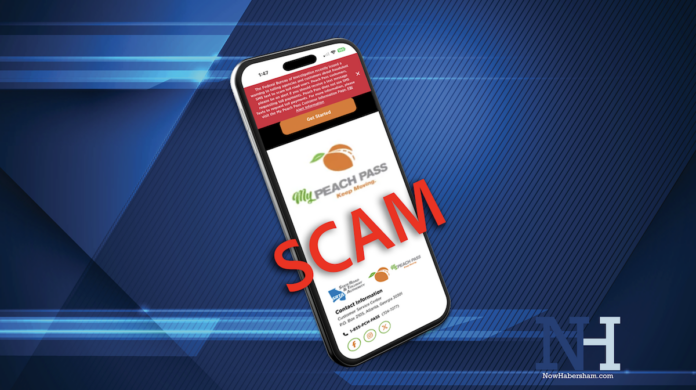
Gotten a text about Peach Pass lately? It’s probably a scam

(NowHabersham.com)

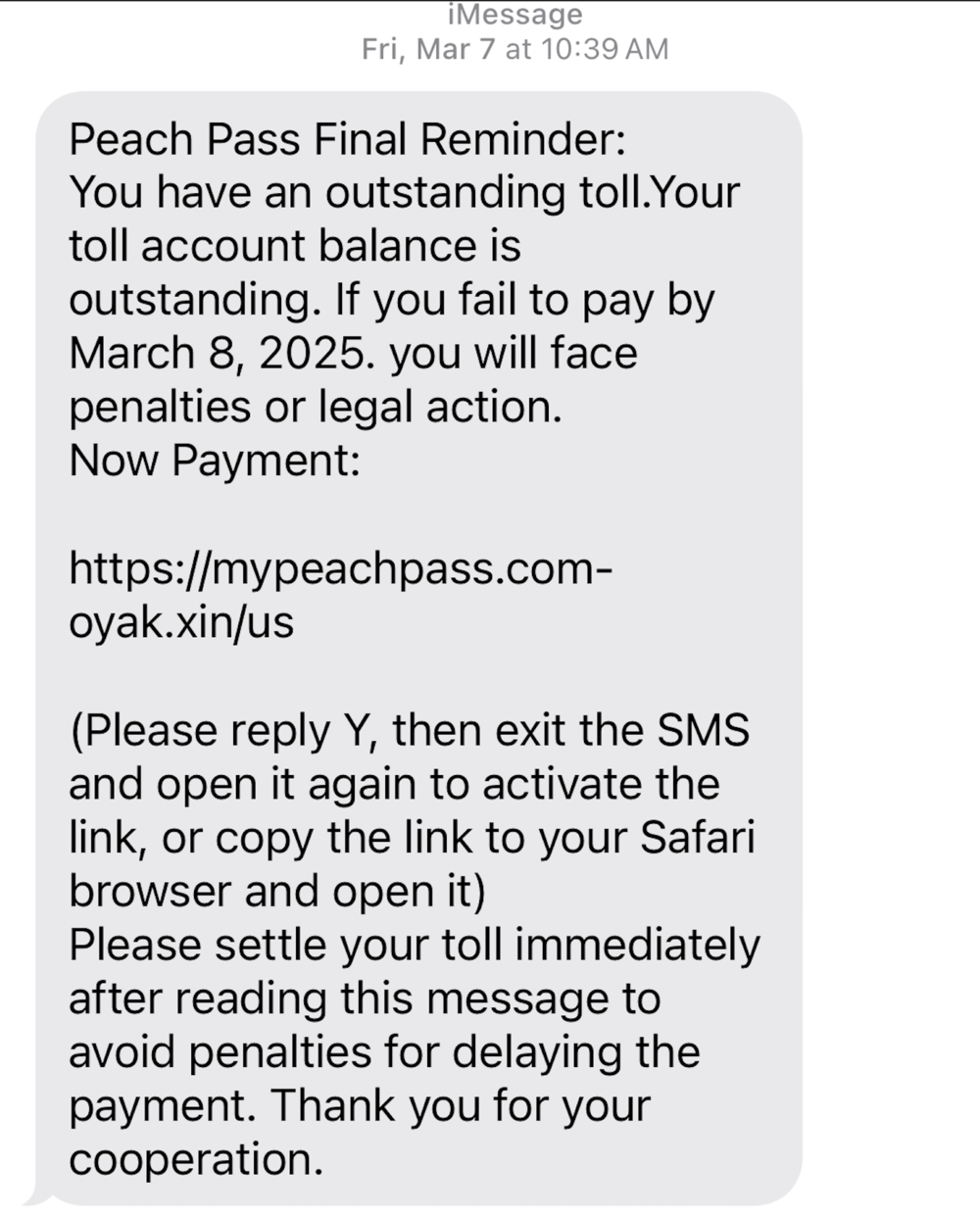
There’s a highway toll scam circulating you need to be aware of. Cellphone users have reported receiving messages telling them they owe a highway toll balance when they don’t.

The FBI said that during the first two weeks of March, its Internet Crime Complaint Center received 1,573 complaints about the Peach Pass scam.

Those complaints about the annoying text messages — telling people that they owe a highway toll balance when they don’t — totaled more than the agency received in the previous 14 months.

(Source: GPB News)

The texts were more than annoying—they were criminal. The FBI said people falling for the scam have reported losses totaling $3,643, although the actual number is believed to be much higher.

Many people getting these messages don’t have a Peach Pass or even live in Georgia.

A notice on the Peach Pass app alerts users that Peach Pass does not use SMS Texts to request toll payments.

(Source: Peach Pass app)

Peach Pass, the electronic toll system managed by the State Road and Tollway Authority, has issued many statements telling people that they will never send text messages about toll violations — and urging people not to click on any links in such messages.

If you choose to file a complaint with the FBI’s Internet Crime Complaint Center, or IC3 — that’s at IC3.gov — be sure to include the phone number that originated the text message and the website listed within it.

This article comes to Now Habersham in partnership with GPB News

Habersham Sheriff’s Office to put on community car show

Car enthusiasts and community members looking to support a meaningful cause will have that opportunity on Saturday, April 5, at the Habersham County Fairgrounds near Clarkesville.

The Habersham County Sheriff’s Office is launching its first-ever Shop with a Hero Car & Bike Show, a fundraiser aimed at providing Christmas gifts for local children who might otherwise go without.

The show welcomes all types of vehicles, including imports, muscle cars, classics, antiques, rat rods, trucks, vans, project cars, specialty vehicles, race cars, tractors, golf carts, motorcycles and even bicycles – essentially, anything with wheels, officials said. 

Vehicle entry is $25 per participant, while spectators are encouraged to donate as their entry fee.

“We are asking folks who attend to make a donation or to donate a new stuffed animal for entry to the show,” said Lt. Aaron Autry of the Habersham County Sheriff’s Office Community Relations Division. “We don’t want anyone to feel like they can’t attend, but we ask everyone who is able to give what they can, remembering it’s going to help the children and youth of Habersham County this Christmas season.”

The Shop with a Hero Car & Bike Show will run from 10 a.m. to 3 p.m. at 4235 Toccoa Highway, Clarkesville. Proceeds from the event, along with additional donations, will determine how many children can participate in this year’s Shop with a Hero initiative.

For more details or to support the cause, contact Autry at (706) 809-1293.

Piedmont University theater closes season with Steel Magnolias

(Photo courtesy Piedmont University Theatre Dept./Facebook)

The Piedmont University Theatre Department will conclude its 2024-25 Mainstage Season with a production of Steel Magnolias, running April 10-13 at the Swanson Center Mainstage Theater in Demorest.

Set in a small-town Louisiana beauty salon, Steel Magnolias follows six Southern women as they navigate life’s joys and challenges with humor, heart and unwavering support for one another.

The play centers around Truvy’s salon, where town matriarchs gather to swap stories, share gossip, and lean on each other through life’s trials. At the heart of the story is Shelby Eatenton, a spirited young bride whose battle with diabetes impacts everyone around her. Through laughter and tears, the women prove the power of friendship in the face of adversity.

Director John Spiegel emphasizes the play’s emotional depth and the strength of female friendships. “While some of the events in the play are tragic, the most important moments are the ones where the women lift each other up,” Spiegel said. “Being there for each other through thick and thin is their strength. We would all be lucky to have such strong women in our lives.”

The cast features:

  • Nealy Webster as Shelby Eatenton
  • Mackenzie Cain as M’Lynn Eatenton
  • Dakota Rose Chen as Truvy Jones
  • Shelby Armentrout as Clairee Belcher
  • Sara Bjerke as Annelle Dupuy-DeSoto
  • Haylie Collins as Ouiser Boudreaux

Senior Gabriel Richman serves as stage manager for the production.

Performances will be held at 7:30 p.m. on April 10-12, with a 2:00 p.m. matinee on April 13. General admission tickets are $10 for adults and $5 for seniors and students. Piedmont University faculty, staff, and students may attend for free. Tickets can be purchased online at piedmont.edu/tickets or by calling the box office at 706-778-8500 ext. 1355.

GDOT awards NTP for $111 million road project in Union County

The Georgia Department of Transportation (GDOT) has officially issued a Notice To Proceed (NTP) to AIS Infrastructure, LLC for a significant roadway improvement project in Union County.

This project involves the widening and reconstruction of over four miles of US 76/GA 515/GA 2, extending from west of GA 11 to east of Earl Shelton Road.

A key component of this project is a trout stream restoration along US 76, aimed at environmental preservation and sustainability in the area.

(Georgia Department of Transportation)

The total budget for this infrastructure investment is $110,976,976. The project has an anticipated completion date set for Fall 2027.

Construction timelines are subject to change based on weather conditions and material availability. GDOT and AIS Infrastructure, LLC are committed to ensuring minimal disruption while improving roadway safety and efficiency for local and through traffic.

For updates on this project, follow GDOTNE on social media for the latest construction alerts.

Nighthawks’ historic season ends in regional final

(UNG Athletics)

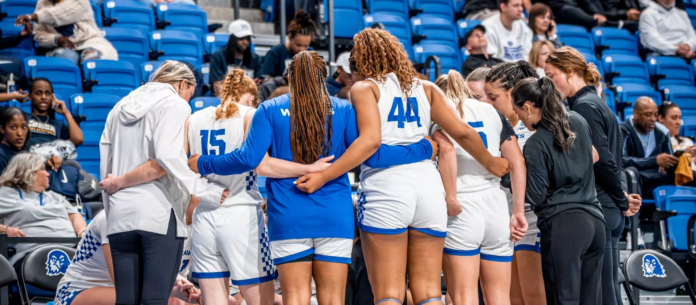
DAHLONEGA – The No. 6 University of North Georgia women’s basketball team saw its season come to an end Monday in a 64-54 defeat to the No. 21 Coker Cobras in the 2025 NCAA Division II Southeast Regional Championship. The heartbreaking end to a historic season can’t overshadow the accomplishments of the Nighthawks.

The loss ends UNG’s hopes of a National Championship, but it can’t overshadow the team’s achievements. This season, the Nighthawks set several program firsts in the DII era (2005), including going undefeated on the road, shooting 36.6 percent from three-point range and averaging 18.1 assists per game.

The Nighthawks came into this season with a rich history of success, having won nine conference regular-season and tournament championships. This year’s team did something no other had done: win 91.2% of its games.

Head Buffie Burson, the winningest coach in conference history, took pride in how selfless his team was and how they played for one another. “They could play with a chip on their shoulder, but they played for each other, and that was truly amazing because I don’t think every team can ever say that,” Burson said. “They were selfless and you saw how many people we put on the floor that could score the ball.”

In the championship game, Coker’s physical brand of basketball stifled UNG’s offense, as the Nighthawks were held to just three made three-pointers. Senior forward Ansley Hall and sophomore forward Kendall Emener led UNG with 14 points each.

Despite the loss, two Nighthawks were honored for their performances over the course of the tournament. Graduate guard Caroline Martin and graduate forward Emily Trushel were named to the 205 NCAA Southeast Regional All-Tournament Team.

This season marks the fifth 30-win season in program history and the third time UNG has earned the top seed and hosting rights in the NCAA Southeast Regional. The end of the season is a bittersweet moment, but the Nighthawks can take pride in their accomplishments and the legacy they’ve left behind.

Judge tells Trump administration to explain deportation of Venezuelans to El Salvador

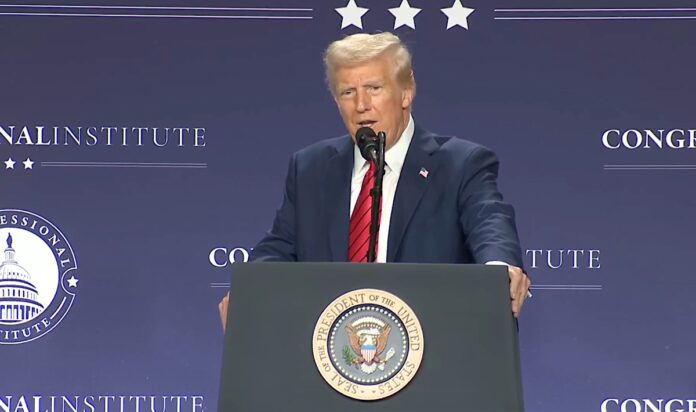
President Donald Trump (The White House/Facebook)

WASHINGTON (States Newsroom) – A federal judge Monday told the U.S. government to prepare to provide answers into allegations by civil rights groups that the Trump administration defied the court’s restraining order that barred use of an 18th-century wartime law to deport immigrants.

The American Civil Liberties Union wrote in court briefings that the government violated a court order by not turning around deportation flights headed to Honduras and El Salvador late Saturday, despite a restraining order in place hours prior to the flights’ landing. A hearing is set for early Monday evening.

President Donald Trump on Sunday afternoon posted a highly produced, dramatized video showing what appeared to be the deported migrants in uniform garb, chained, with their hair and beards forcibly shaved by armed prison guards in El Salvador. The men in the video were shoved into maximum security cells in the huge El Salvador prison known as the Centro de Confinamiento del Terrorismo.

“Beyond the concerns raised by the government’s own letter, there has been significant media reporting that Defendants may have defied the Court’s Order,” the ACLU wrote, referring to the Trump administration.

The Trump administration has already appealed to the U.S. Court of Appeals.

“The district court has enjoined the President from using his statutory and constitutional authority to address what he has identified as an invasion or predatory incursion by a group undertaking hostile actions and conducting irregular warfare,” the Trump administration wrote in its Sunday appeal.

The Trump administration is also appealing the lower court’s decision to allow a class action suit to include anyone who is subjected to the proclamation the president issued over the weekend. The ACLU originally brought the suit with five men who are Venezuelan and were threatened “with imminent removal under” the Alien Enemies Act.

White House press secretary Karoline Leavitt said during a Monday press briefing that the Trump administration is confident they are “going to win in court.”

She added that the U.S. paid El Salvador $6 million to detain the 261 men who were deported to the country.

The high-profile dispute is likely to head to the U.S. Supreme Court.

Saturday’s events

The administration had said in a presidential proclamation published Saturday it would be using the Alien Enemies Act of 1798, last invoked during World War II, to detain and remove anyone 14 or older who is a suspected member of the Venezuelan gang, the Tren de Aragua.

In the proclamation, President Donald Trump said he will detain and deport anyone 14 and older who is a suspected member of the Tren de Aragua. There is a carve out for naturalized citizens and lawful permanent residents, or green card holders. 

“Evidence irrefutably demonstrates that (Tren de Aragua) has invaded the United States and continues to invade, attempt to invade, and threaten to invade the country; perpetrated irregular warfare within the country; and used drug trafficking as a weapon against our citizens,” according to the Trump proclamation. “As President of the United States and Commander in Chief, it is my solemn duty to protect the American people from the devastating effects of this invasion.”

To block that use of the Alien Enemies Act, the ACLU and other civil rights groups filed an emergency request before U.S. Judge James Emanuel Boasberg in the District of Columbia, and a hearing was held at 5 p.m. Eastern on Saturday. Boasberg was nominated by former President Barack Obama in 2011.

Flight records, and court briefings, show that two U.S. Immigration Customs and Enforcement flights departed from Texas Saturday – one at 5:45 p.m. Eastern for El Salvador and one at 5:26 p.m. Eastern for Honduras.

Roughly an hour later, Boasberg issued a temporary restraining order and, in his order, told the government to turn around any deportation flights that were currently in the air.

“[A]ny plane containing these folks that is going to take off or is in the air needs to be returned to the United States, but those people need to be returned to the United States,” Boasberg said, according to the court’s transcript. “However that’s accomplished, whether turning around a plane or not embarking anyone on the plane or those people covered by this on the plane, I leave to you. But this is something that you need to make sure is complied with immediately.”

Both flights landed after the orders were given by Boasberg, ACLU argues in its court records.

A third Saturday flight left from Texas to Honduras at 7:37 p.m. Eastern, according to flight records and court briefings.

In filings to the appeals court, the Trump administration argued that the district court did not have the jurisdiction to issue the temporary restraining order and that the president has the authority to use the Alien Enemies Act.

On Sunday, the president of El Salvador, Nayib Bukele, on social media, reposted a news story about the deportation flights that had continued despite a court order.

He responded, “Oopsie… Too late.” U.S. Secretary of State Marco Rubio reposted the response from El Salvador’s president from his personal account.

Rubio has traveled to El Salvador and met with Bukele to talk about accepting deportations of nationals from other countries. In those meetings, Bukele agreed to accept “members of the Venezuelan Tren de Aragua gang” and place them in jail, according to State Department records. 

Due process concerns

U.S. immigration law already gives the authority to investigate, arrest and remove immigrants who are engaging in criminal activity or harm in the country, and the wartime authority to go after the Tren de Aragua is not needed, said Katherine Yon Ebright, counsel in the Brennan Center’s Liberty and National Security Program.

She said Trump invoking the wartime authority is not about “going after people who are provably committing crimes or harming American communities.”

“It’s about going after Venezuelans without due process because this law gives the president the power to say that … they’re dangerous, and just remove them without proving anything to an independent adjudicator, without any evidence that actually underlies that determination,” she said.

Immigrants subject to the Alien Enemies Act would not have access to an immigration judge or court hearing under the law.

Saturday’s proclamation is similar to an executive order the president signed on Inauguration Day, titled Designating Cartels and Other Organizations as Foreign Terrorist Organizations and Specially Designated Global Terrorists.

He previewed in his inauguration speech his intentions to designate cartels as foreign terrorist groups in order to use the Alien Enemies Act.

“By invoking the Alien Enemies Act of 1798, I will direct our government to use the full and immense power of federal and state law enforcement to eliminate the presence of all foreign gangs and criminal networks bringing devastating crime to U.S. soil, including our cities and inner cities,” Trump said during his address.

In order for the Alien Enemies Act to be invoked, an invasion by a foreign government must occur, and in the executive order relating to the cartels, the Trump administration argues that they are a foreign entity. The cartels that the Trump administration singles out in the order are the MS-13 gang and the Tren de Aragua.

U.S. Department of Homeland Security Secretary Kristi Noem has already revoked protections granted to roughly half a million Venezuelans under the Biden administration. In early February, she declined to renew Temporary Protected Status for 350,000 Venezuelans that are set to expire April 2. In her reasoning, she cited gang activity.

Ebright noted that the last time the act was invoked, during World War II, many of the Japanese, Italian and German immigrants who were detained had some form of legal status.

“I would put money on it that this proclamation is going to cover people who are lawfully present,” she said.

Historical use of Alien Enemies Act

The last time the Alien Enemies Act was invoked was after Japan attacked Pearl Harbor in 1941.

But even after World War II ended in 1945, the Alien Enemies Act was still in place for several years, along with the continuation of internment camps, because Congress and the president had not formally terminated the declaration of war, Ebright said.

She said that the U.S. Supreme Court upheld then-President Harry Truman’s extended use of the Alien Enemies Act three years after World War II on the grounds that “it would be too political for the courts to intercede and say that this wartime authority had lapsed.”

“That is something that makes talking about the Alien Enemies Act and the potential for abuse very important, but it doesn’t mean that the courts truly are powerless to step in and prevent a clear abuse of the authority right,” she said.

Ebright said there’s a distinction between the Pearl Harbor attack during World War II and present day.

“Today, you don’t have anything remotely close to a wartime context,” she said. “Judges have eyes, they can see that there has not been a second Pearl Harbor perpetrated by a gang.”

Raffensperger warns of public cemetery scams

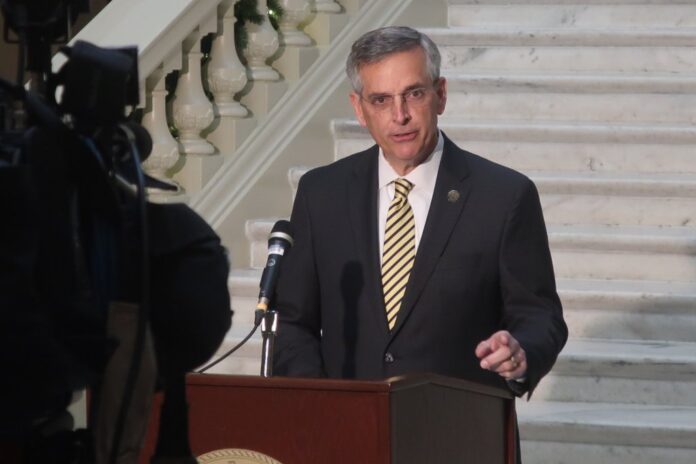
Georgia Secretary of State Brad Raffensperger (Stanley Dunlap/Georgia Recorder)

Georgia Secretary of State Brad Raffensperger is urging the public to remain vigilant when selecting perpetual care and memorialization services following discovery of scam that targeted a grieving widow.

In January, a Georgia resident reported that their elderly mother was deceived by an imposter posing as a representative of the Veterans Affairs (VA) cemetery where her late husband was set to be buried. The scammer falsely claimed she needed to purchase an insurance policy to cover her during the burial process.

When the widow hesitated, the fraudster used high-pressure tactics, insisting that immediate payment was required to prevent the burial from being rescheduled or canceled. The victim initially attempted to send money via Zelle, but the transaction was flagged and blocked due to fraud detection. The scammer then directed her to send $1,200 via PayPal, which she unfortunately did.

Upon discovering the fraudulent transaction, the woman’s child contacted the Secretary of State’s office, prompting an immediate investigation. Authorities alerted the cemetery and a local funeral home, which confirmed that scams targeting grieving families are alarmingly common. The case has since been escalated to multiple law enforcement agencies for further action.

Warning Signs of Memorial Scams

The Secretary of State’s office warns that common signs of fraud include:

  • Bogus fees and upselling: Scammers may demand payment for services that should be free, such as burials in VA national cemeteries, which include a gravesite, perpetual care, and a government-provided headstone at no cost to eligible families.
  • High-pressure tactics: Fraudsters may insist on immediate payment for unfamiliar services.
  • False claims of unpaid debts: Scammers may claim the deceased owed money, pressuring families to pay without verifiable proof.
  • Unsolicited offers of help: Be cautious of unknown individuals claiming to advocate for your loved one’s memorial benefits.

How to Protect Yourself

To avoid falling victim to similar scams, the Secretary of State’s office advises:

  • Research funeral homes and cemeteries before committing to services, checking for disciplinary actions.
  • Engage directly with verified representatives to confirm plans and benefits.
  • Ensure family members are informed about end-of-life decisions and document them properly.
  • Never sign blank documents or agreements without fully reviewing all charges and fees.

For those who suspect fraud, the Secretary of State’s office encourages immediate reporting to authorities.

Structure fire in Commerce claims family pets, no injuries reported

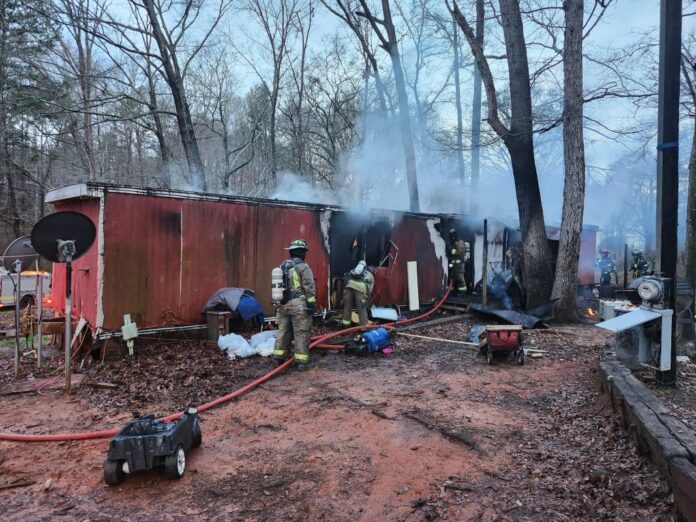
A single family home in Commerce was destroyed by fire Sunday morning, March 16. (Banks County Fire and Emergency Services)

Banks County Fire and Emergency Services responded to a reported structure fire Sunday, March 16. Emergency personnel were dispatched to 113 Barns Road in Commerce at approximately 7:28 a.m., according to Banks County Fire Chief Steve Nichols. Firefighters arrived to find a single-family home fully involved in flames.

Fire personnel worked quickly to bring the fire under control, and fortunately, the occupants of the home were present at the time of the incident but were unharmed.

However, several family pets tragically perished due to the fire’s intense conditions. The cause of the fire is currently under investigation by the Banks County Fire Department. While the exact origin remains undetermined, officials have not ruled out the possibility of an accidental fire caused by an electrical problem.

The Jackson County CI Fire Department assisted in firefighting operations, and the American Red Cross was called in to provide support to the affected family.

The incident was officially terminated at 8:56 a.m. Authorities continue to investigate the cause of the fire.

Legal experts quash Trump argument that Biden pardons signed with Autopen are ‘void’

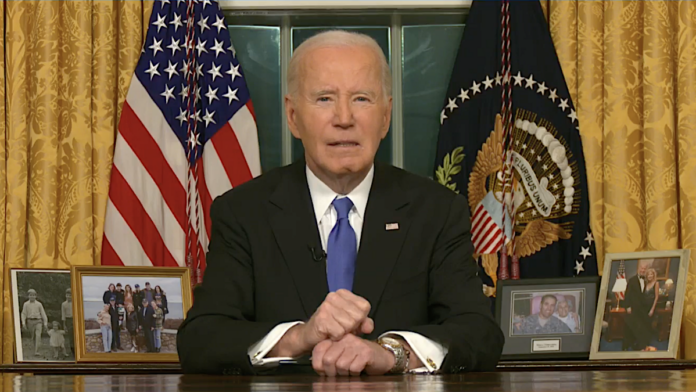
President Joe Biden delivers his farewell address to the nation from the Oval Office of the White House on Jan. 15, 2025, in Washington, D.C. (livestream image)

WASHINGTON (States Newsroom) — President Donald Trump claimed in a social media post late Sunday night that former President Joe Biden’s eleventh-hour pardons for numerous officials are no longer valid — a power not granted to Trump in the Constitution.

Trump wrote on his platform Truth Social that Biden’s sweeping preemptive pardons are “are hereby declared VOID, VACANT, AND OF NO FURTHER FORCE OR EFFECT, because of the fact that they were done by Autopen.”

Without citing any evidence, Trump also alleged Biden “did not know anything about” the pardons.

Just hours before leaving office, Biden pardoned lawmakers who investigated the Jan. 6, 2021 attack on the U.S. Capitol, as well as former high-ranking health official Dr. Anthony Fauci, who steered the United States through the COVID-19 pandemic and retired Gen. Mark Milley, former chair of the Joint Chiefs of Staff.

Biden also pardoned several members of his own family just before his term expired. The White House released Biden’s statements regarding his Jan. 20 pardons.

Autopen used before

The Autopen is a device that replicates signatures and was used by former President Barack Obama in 2011 to sign an extension of the Patriot Act.

Experts say the debate over the use of the Autopen was settled in a 2005 opinion from the White House Office of Legal Counsel that stated a president may direct a subordinate to affix his or her signature to a bill using the mechanism.

David Super, who focuses on constitutional and administrative law at Georgetown University, said Trump’s Autopen argument is “absurd.”

“But even if it wasn’t, the Constitution does not require signatures for pardons. It simply says the president has the power to pardon,” Super said.

“So if President Biden wanted to simply verbally tell someone they’re pardoned, he could do that. It wouldn’t have to be in writing at all. Administratively, of course, we want things in writing. It makes things a lot simpler, but there’s no constitutional requirement,” he said.

The right-wing Heritage Foundation posted a graphic on the social media platform X on March 10 and 11, claiming the foundation’s “Project Oversight” uncovered the exact same signature on a number of Biden’s pardons.

Fox News also claimed on March 9 that Biden’s exact same signature was found by Heritage on numerous documents from 2022 and 2024 that were published in the Federal Register.

The National Archives said in a statement that all signatures on official documents published in the Federal Register come from “one graphic file,” according to Snopes.

Press secretary defends ‘raising the point’

Kermit Roosevelt, constitutional law expert at the University of Pennsylvania, said the Autopen argument is a “red herring.” Trump’s other suggestion, that  Biden didn’t know about the pardons, would essentially make them invalid.

“If the president doesn’t know that something was done, then it’s not a valid official act,” Roosevelt said. “But I highly doubt that that happened. I know of no reason to think that that did happen.”

“I mean, it is sort of characteristic of Trump to make insinuations and raise questions without any evidence, and then the White House says he’s just asking questions,” Roosevelt said. “I don’t think that’s a great way to govern.”

White House press secretary Karoline Leavitt told reporters Monday that Trump was “raising the point that did the president even know about these pardons? Was his legal signature used without his consent or knowledge?”

“I think it’s a question that everybody in this room should be looking into,” Leavitt said, citing the New York Post as a source.

The White House did not immediately respond to a question about the Trump administration’s use of the Autopen.

Jennifer Shutt contributed to this report.