
Home Blog Page 4

U.S. Senate passes bill with Warnock-backed provision limiting the number of investor-owned homes

The Senate overwhelmingly passed a bipartisan bill that included a Warnock-backed provision limiting institutional investors to 350 single-family homes to address housing affordability. (Ross Williams/Georgia Recorder)

WASHINGTON, D.C. (States Newsroom) — The U.S. Senate passed a bill Thursday with a provision backed by U.S. Sen. Raphael Warnock that would ban large corporations from owning too many homes.

The legislation, sponsored by Massachusetts Democrat Sen. Elizabeth Warren and South Carolina Republican Sen. Tim Scott, passed the Senate on an 89-10 vote, an overwhelming show of bipartisanship on a proposal aimed at tackling recent concerns over affordability. The bill included a provision limiting the number of single-family homes an institutional investor can own to 350 homes.

Warnock said in a press call Wednesday before the bill’s passage that “Atlanta is ground zero for private equity’s domination of the housing market.” A 2024 U.S. Government Accountability Office report placed Atlanta as one of the top markets for homes owned by private equity firms, with 25% of single-family homes owned by a private equity firm.

“Let me make it plain: private equity’s greed is squeezing first-time homebuyers out of the market and pushing the American dream further out of reach,” Warnock said in a statement after the legislation passed the Senate.

On the state level, several bills have been introduced that would limit how many homes large institutional investors can own. House Bill 1228, sponsored by Chestnut Mountain Republican state Rep. Derrick McCollum, which would cap institutional single-family ownership to up to 1,000 homes, and Senate Bill 463, sponsored by Cumming Republican state Sen. Greg Dolezal, which would cap that number at 500 and bans international private investors from owning single-family homes outright for rental use. Both made it across to the other chamber before a key legislative deadline and have a chance at becoming law.

Dolezal said in early March while presenting the bill on the Senate floor that it’s hard for first-time home buyers to compete with these large investment firms. Even when the family is able to match a firm’s offer, the family can’t compete against other perks these companies offer, like their ability to forgo an inspection or to close in 14 days. He also said that because young adults are waiting to buy their first homes, the average first-time homebuyer could be stuck paying for their mortgage well into retirement age.

“The sad reality today in America is that the average age of a first-time home buyer has now crept up to 41 years old,” Dolezal said. “For the Americans today that are signing their first 30-year mortgage at 41-years-old, the math just doesn’t work.”

But limiting institutional ownership of single-family rental homes could negatively impact renters. At least two recent studies concluded that while limiting these large investors’ ability to purchase single-family properties could increase home prices, allowing them to buy large numbers of homes can also bring rent prices down.

Warnock said that he knows “what it’s like to be a young person and to need rental,” but that there are other provisions in the bill that are aimed at addressing the rental market. He said “this is focused on home ownership, and you don’t enhance one at the expense of the other.”

“Renters are not in competition with other working people who are just trying to buy a home. Their problem is private equity swooping up all of the stock, and so I’m trying to address that,” Warnock said, also pointing to other legislative work he’s done to address renters’ concerns as a member of the U.S. Senate Committee on Banking, Housing, and Urban Affairs.

The bill’s prospects in the House are unclear. President Donald Trump, who issued an executive order in January on housing affordability, said during a House GOP retreat that he wanted the House to focus instead on passing a bill to increase voter documentation.


Balancing mercy and law in the justice system

Even though the district attorney has chosen to drop the charges against the teens involved in last week’s senior prank that killed a beloved North Hall High teacher and coach, questions remain about where mercy and justice meet in our legal system.

Jason Hughes’ family asked for charges to be dropped against the teenagers involved, and thousands of community members signed a petition to that effect. Their requests highlight a deep tension in the American criminal justice tradition between the desires of a victim’s family and the responsibilities of the state.

While a family speaks with great moral force, they do not “control” the criminal case. Criminal law is designed to punish public wrongs rather than settle private disputes.

This means the government, not the victim, is the formal party to the prosecution. A grieving family cannot legally demand the harshest punishment, just as a forgiving family cannot simply order charges to be dropped.

The role of the prosecutor is to balance the interests of the victim with the broader public interest. According to the information provided, “the prosecutor may consider the victim’s interests, including the victim’s desire for prosecution, but that desire is one factor, not the final command.” Charging decisions remain with the prosecutor, who must ensure that evidence is sufficient and that the prosecution serves the common good.

For families seeking mercy, the legal system provides some avenues for consideration. Prosecutors may take a family’s wishes into account during plea agreements, diversion, or when making sentencing recommendations. This is common in juvenile matters or cases where rehabilitation is realistic.

However, the state’s role is to prevent justice from becoming personal revenge or private pardon. If a forgiving family could erase a case, then public safety and equal enforcement could fail. As noted in the provided text, “The state’s role is to prevent criminal justice from becoming either personal revenge or private absolution.”

Ultimately, the system seeks to balance the victim’s dignity, the defendant’s rights, and the community’s interest in proportionate punishment. While the family supplies moral testimony, the state must provide lawful judgment anchored in evidence and the public interest.

This article has been updated to reflect the latest developments in the Jason Hughes case

_____

Now Georgia Crime Reporter Kevin Angell is a career law enforcement professional with experience serving agencies in Florida and Georgia. He is a U.S. Coast Guard veteran who served during Operation Enduring Iraqi Freedom and holds a doctorate in criminal justice from Liberty University. His column, Street Smart, publishes weekly on NowGeorgia.com.

Prosecutors bring 3 felony charges against Falcons’ James Pearce Jr. in domestic dispute

FILE - Atlanta Falcons defensive end James Pearce Jr. (27) leaves the field following an NFL football game against the Tampa Bay Buccaneers, Dec 11, 2025, in Tampa, Fla. (AP Photo/Peter Joneleit, File)

Prosecutors brought three felony charges against Atlanta Falcons player James Pearce Jr. stemming from an incident on Feb. 7 that police referred to as a domestic dispute with WNBA player and ex-girlfriend Rickea Jackson, according to a court document filed Thursday.

The Florida State Attorney’s office in Miami-Dade County filed charges of aggravated battery with a deadly weapon, feeling and eluding police and resisting an officer with violence. A fourth charge of stalking was brought as a misdemeanor.

An additional charge of aggravated battery of an officer was dropped.

Lawyers for Pearce and Jackson did not immediately respond to messages seeking comment. Pearce’s attorney, Jacob Nunez, in February said his client “maintains his innocence and urges the public to understand that while allegations have the power to shape a narrative, that it is hardly the full, complete story.”

According to the police account, Jackson told authorities she attempted to drive away from Pearce and was driving toward the Doral police station to seek help when Pearce “intentionally collided into the rear of her vehicle with his SUV” before police arrived.

Pearce allegedly refused an initial order from police to “get on the floor,” according to details of the arrest in an affidavit. The police account said Pearce then drove away and hit a police officer’s left knee with his vehicle “intentionally in an attempt to evade arrest.”

According to police, Pearce wrecked his vehicle and then continued in his attempt to elude police by running before being apprehended following a “short struggle.”

Jackson in a petition for protection against Pearce filed in February after she expressed fears for her safety that predated the incident for which he was arrested and charged.

“Due to his obsessive, insecure, violent and aggressive behavior, ending the relationship has been difficult and I am afraid for my life,” Jackson said in the petition filed in the 11th Judicial Circuit in Miami-Dade County. “James has threatened to kill me, James has threatened to harm me, James has threatened to injure me, James has threatened to place a bag over my head, and James has verbally and physically abused.”

Jackson in the petition said Pearce snatched her phone, pulled her hair and took her belongings, at which point she decided to end their relationship.

She described a pattern of harassing behavior leading up to Feb. 7, including Pearce offering her $75,000 to visit him and $200,000 to remain in a relationship with him, according to the petition. Jackson said she was driving when she noticed Pearce following her in his car and she said he “began driving his vehicle erratically, at high speeds chasing after me.”

Jackson said in the petition she began driving to the Doral Police Department because she feared Pearce would hurt her. She said Pearce repeatedly struck her vehicle with his before getting to the station.

“I am in fear of my life and I believe, if this court does not assist me with this issue, James will kill me,” Jackson said, according to the documents.

Jackson, 24, is two years into her WNBA career. She said she and Pearce began dating when they were at the University of Tennessee together.

Pearce, 22, was the No. 26 pick in the NFL draft last year. He had 10 1/2 sacks and his 45 quarterback pressures set a Falcons rookie record.

Jalen Johnson scores 21 as Hawks beat Nets 108-97 for 8th straight win

Atlanta Hawks forward Jalen Johnson gets ready to dunk during the first half of an NBA basketball game against the Brooklyn Nets, Thursday, March 12, 2026, in Atlanta. (AP Photo/Colin Hubbard)

ATLANTA (AP) — Jalen Johnson had 21 points, nine rebounds and nine assists, Zaccharie Risacher scored 19 points and the Atlanta Hawks extended the NBA’s longest current winning streak to eight games, beating the Brooklyn Nets 108-97 on Thursday night.

Nickeil Alexander-Walker added 18 points and CJ McCollum had 14 for Atlanta, which began the streak with a win over Brooklyn on Feb. 22. The Hawks moved into eighth in the Eastern Conference, 1 1/2 games behind seventh-place Toronto.

Josh Minott scored a career-high 24 points for the Nets, who have lost 12 of 14. Brooklyn was without leading scorer Michael Porter Jr., who has a sprained right ankle.

The Nets took an 83-82 lead at the start of the fourth quarter before McCollum scored six points during a 10-0 run by the Hawks. Brooklyn got no closer than four points the rest of the way.

Atlanta led 57-50 at halftime. Johnson scored 14 points in the second half.

Jonathan Kuminga, who rejoined the lineup after being sidelined for three games with a bone bruise in his left knee, had nine rebounds in 19 minutes. The Hawks were without Dyson Daniels(sprained toe).

Up next

Nets: At Philadelphia on Saturday.

Hawks: Host Milwaukee on Saturday.

Troup County investigates inmate death

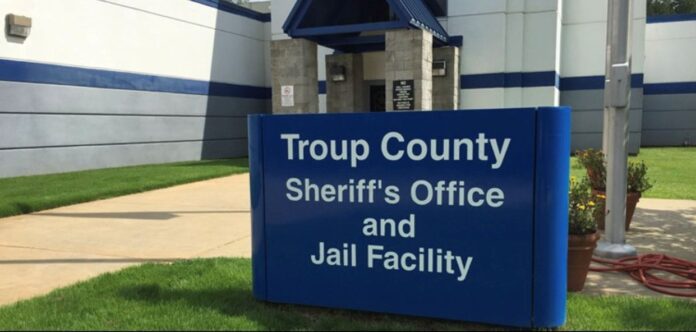
Troup County investigates inmate death (Troup County Sheriff's Office/Facebook)

On March 11, at approximately 8:29 a.m., a male inmate at the Troup County Jail was found unresponsive by jail staff during routine meal pass. Jail medical personnel were immediately notified who began life-saving measures. Within a few minutes Troup County Fire Department and AMR arrived on scene and took over care.

The inmate, Montavious Rhodes, 44 years old, was transported to Wellstar West Georgia Medical Center where he later died. A cause of death is unknown until the completion of an autopsy by the Georgia Bureau of Investigations.

Columbus forum hosts democratic gubernatorial candidates

Forum to host democratic gubernatorial candidates (Savannah Chamber of Commerce/Facebook)

Local organizations in Columbus are hosting a forum tonight called Saving Our Democracy Forum. According to the Muscogee County Democratic Committee our community has a powerful opportunity to hear directly from Democratic gubernatorial candidates as they discuss the future of Georgia and the work ahead to protect our democracy.

Candidates scheduled to participate in the forum include Michael Thurmond, Keisha Lance Bottoms, Geoff Duncan, Jason Esteves, Derrick Jackson and Olu Brown. The forum will be moderated by Geniece Granville and Wane Hailes.

The event will be held at the Page‑Doleman Complex, 800 8th St., Columbus, GA
Doors open at 6:00 PM and it’s free & open to the public. This forum is presented in partnership with local organizations committed to civic engagement, voter empowerment, and community leadership.

Assault suspect taken into custody after tip from 911 caller

Jonathan Lee Jordan of Alto is charged with aggravated assault in connection with an incident that launched a large-scale manhunt off Mud Creek Road in south Habersham County on March 12, 2026. (Source: Habersham County Sheriff's Office)

HABERSHAM COUNTY, Ga. — Law enforcement searched for nearly nine hours Thursday for a man wanted in connection with an alleged assault in the Mud Creek community. Shortly after authorities suspended the active manhunt, deputies arrested the suspect after a member of the public spotted him and called 911.

Habersham County Sheriff Robin Krockum confirmed Thursday evening that 41-year-old Jonathan Lee Jordan of Alto is now in custody.

Deputies and assisting agencies spent most of the day searching for Jordan after investigators say he fled the scene of an alleged assault at his home in south Habersham County.

Day-long search

Public safety officials fly a drone over a large swath of undeveloped land off Mud Creek Road in south Habersham County where law enforcement suspected Jonathan Lee was hiding. (Patrick Fargason/NowGeorgia.com)
Drone used in search for assault suspect Jonathan Jordan on Thursday, March 12, 2026. (Patrick Fargason/NowGeorgia.com)

Deputies responded to the reported assault at a residence in the 3800 block of Mud Creek Road around 7:45 a.m. Thursday, March 12.

Investigators say Jordan ran from the home before deputies arrived.

Throughout the day, multiple units from the sheriff’s office, including the Uniform Patrol Division, Criminal Investigations Division, and K-9 Unit, searched the area. Other law enforcement agencies also assisted. Authorities used drones and an airplane as part of the effort.

Investigators focused much of their search on a large area of undeveloped land off Mud Creek Road where they believed Jordan may have been hiding.

As of mid-afternoon, the sheriff’s office said investigators believed Jordan was still nearby.

Multiple Habersham County sheriff’s patrol units spent the day on March 12 searching the Mud Creek community for the wanted suspect, Jonathan Lee Jordan. (Patrick Fargason/NowGeorgia.com)

“At this time, we believe the individual is still in the area and our K9’s are tracking at this time,” the sheriff’s office said earlier Thursday. “We will continue to utilize every available tool in our attempts to locate the man.”

Despite the extensive search, deputies were unable to locate Jordan. Shortly before 5 p.m. Thursday, authorities announced they were suspending the active manhunt and shifting to continued patrols in the area while asking the public to remain alert.

Within about two hours, a member of the public reported seeing Jordan near Mud Creek Road. Sheriff Krockum said patrol units in the area responded and took him into custody.

Throughout the search, investigators said they did not believe Jordan was armed but urged residents to remain cautious and vigilant.

An ‘isolated incident’

Level Grove Elementary School and South Habersham Middle School were both on soft lockdown during the manhunt. (Patrick Fargason/NowGeorgia.com)

The sheriff’s office told Now Georgia the victim sustained superficial injuries after being choked during the initial incident. Officials said the alleged assault appears to be an isolated incident because Jordan was “familiar with the victim.”

Nearby schools were placed on soft lockdown Thursday as a precaution while the search was underway.

“Level Grove and South Habersham were made aware of the manhunt taking place in the Mud Creek area as soon as it began, and administrators at those schools, in coordination with their SROs, implemented any needed procedures,” said Habersham County Sheriff’s Office spokesperson Rob Moore.

Students were released on their normal schedules, though officials increased the law-enforcement presence on campus and at bus stops along Mud Creek Road.

Following his arrest, Jordan was transported to the Habersham County Detention Center in Clarkesville. Warrants have been obtained charging him with aggravated assault.

Sheriff Krockum said additional information about the case will be released Friday.

Funeral Saturday for North Hall teacher killed during prank; calls grow for DA to drop charges

GAINESVILLE, Ga. — A growing online petition, funeral arrangements for this weekend and continued community fundraising are adding new developments to the case of a North Hall High School teacher killed during what authorities say was a prank outside his home.

Jason Ryan Hughes, 40, a math teacher and coach at North Hall High School, died March 6 after being struck by a pickup truck driven by a student during a toilet-paper prank at his Gainesville home.

The incident has sparked widespread grief across Hall County — and a growing public effort urging prosecutors to drop criminal charges against the students involved.

Petition calls for charges to be dropped

An online petition circulating this week calls on the Hall County District Attorney’s Office to respect Hughes’ family’s wishes and dismiss the charges against the five students involved. The petition has over 4,200 signatures as of Thursday morning.

Laura and Jason Hughes (Photo courtesay Sidesmedia/Facebook)

The petition asks supporters to “honor Jason Hughes’ legacy” by showing grace toward the teenagers, echoing the message Hughes’ family has publicly shared since the tragedy.

Hughes’ wife, Laura Hughes, said earlier that the family supports dropping the charges, describing the incident as a tragic accident and saying the family does not want the students’ lives ruined by the event.

Authorities say a group of teenagers went to Hughes’ home to toilet-paper trees — a prank associated with prom season. When Hughes came outside, the students fled in two vehicles. Hughes slipped in the roadway and was struck by a pickup truck driven by 18-year-old Jayden Ryan Wallace.

Wallace faces felony charges of first-degree vehicular homicide and reckless driving. Four other students face misdemeanor charges of criminal trespass and littering.

District attorney responds

Hall County District Attorney Lee Darragh said his office is reviewing the case and will take the family’s position into serious consideration.

Darragh said Hughes’ family’s wishes will be given “great deference” as prosecutors decide how to proceed with the charges.

The final decision on whether the charges will move forward rests with the district attorney’s office.

Community leaders and residents have increasingly joined calls for leniency, describing the incident as a heartbreaking accident involving students who knew Hughes personally.

Flowers lie along a fence outside North Hall High School in Gainesville, Ga., on Monday, March 9, 2026. (AP Photo/Emilie Megnien)

Funeral set for Saturday

A public petition urging prosecutors to drop the charges has begun circulating online, gathering thousands of signatures from supporters who say they want to honor Hughes’ family’s wishes.

At the same time, an online fundraiser created to support Hughes’ wife and two young sons had raised nearly $490,000 from thousands of donors as of Thursday.

Funeral services for Hughes are scheduled for 11 a.m. Saturday at Family Church, 3590 Thompson Bridge Road in Gainesville, where a large turnout is expected from students, colleagues and community members.

Hughes, remembered by students and colleagues as a devoted teacher and mentor, spent years investing in the lives of young people at North Hall High School. In the days since his death, many in the community have echoed the message shared by his family — a call for grace and forgiveness in the face of tragedy.

Area high schools release 2026 football schedules following GHSA realignment

The Habersham Central Raiders take the field for their first home playoff game since 2007 last fall. (Vivian Fargason/Now Habersham)

CLARKESVILLE, Ga. — A new Georgia High School Association classification cycle is reshaping football schedules across Northeast Georgia as several area programs begin releasing their slates for the 2026 season.

The GHSA’s latest realignment, which takes effect for the 2026-27 school year, moves several Northeast Georgia schools into new classifications and regions, forcing programs to adjust schedules while maintaining many long-standing rivalries.

Among the changes, Habersham Central moves into Class 6A competition, while White County shifts to Class 4A. Several area teams — including Franklin County, Hart County, Elbert County and Lumpkin County — remain in Region 8-AAA.

Many teams enter the new season after strong performances in 2025. Habersham Central finished 7-4 last season, while Franklin County posted a 7-3 record. Stephens County and East Jackson both finished 5-5, and Hart County ended the season at 3-7.

Several schools across Northeast Georgia have already released their 2026 football schedules.

Habersham Central

Habersham Central will open the regular season Aug. 21 at Hart County following an Aug. 7 scrimmage at Lumpkin County.



Habersham Central’s 2026 schedule includes:

Aug. 21 — at Hart County
Aug. 28 — Stephens County
Sept. 4 — at Monroe Area
Sept. 11 — Open
Sept. 18 — at Loganville
Sept. 25 — Jackson County
Oct. 2 — at Apalachee
Oct. 9 — Clarke Central
Oct. 16 — Open
Oct. 23 — at Walnut Grove
Oct. 30 — Cedar Shoals
Nov. 6 — Mountain View


White County

White County will open the regular season Aug. 21 against East Hall following preseason scrimmages against Rabun County in the spring and Commerce in August.

White County’s 2026 schedule includes:

Aug. 21 — East Hall
Aug. 28 — Union County
Sept. 4 — at Lumpkin County
Sept. 11 — East Jackson
Sept. 18 — at Fannin County
Oct. 2 — Gilmer
Oct. 9 — Pickens
Oct. 16 — at Dawson County
Oct. 30 — North Hall
Nov. 6 — at Chestatee

Lumpkin County

Lumpkin County will open the season Aug. 21 against Dawson County after scrimmages against East Hall in the spring and Habersham Central in August.

Lumpkin County’s 2026 schedule includes:

Aug. 21 — Dawson County
Aug. 28 — at Pickens
Sept. 4 — White County
Sept. 18 — at East Forsyth
Sept. 25 — at Hart County
Oct. 9 — Stephens County
Oct. 16 — at Hebron Christian
Oct. 23 — Elbert County
Oct. 30 — at Morgan County
Nov. 6 — Franklin County

Franklin County

Franklin County will open the season Aug. 21 against Hart County before traveling to East Hall the following week.



Franklin County’s 2026 schedule includes:

Aug. 21 — Hart County
Aug. 28 — at East Hall
Sept. 4 — at Madison County
Sept. 18 — Elbert County
Sept. 25 — Social Circle
Oct. 2 — at Rabun County
Oct. 9 — East Jackson
Oct. 16 — Banks County
Oct. 30 — at Stephens County
Nov. 6 — Lumpkin County


Rabun County

Rabun County will open the regular season Aug. 28 against Metter following an Aug. 15 scrimmage at Franklin, North Carolina.

Rabun County’s 2026 schedule includes:

Aug. 28 — Metter
Sept. 4 — at Dawson County
Sept. 11 — at Walnut Grove
Sept. 18 — Gilmer County
Sept. 25 — at Banks County
Oct. 9 — Athens Academy
Oct. 16 — at Commerce
Oct. 23 — at Oglethorpe County
Oct. 30 — Providence Christian
Nov. 6 — Prince Avenue Christian

Hart County

Hart County will open the season Aug. 21 at home against Habersham Central after preseason scrimmages against Oglethorpe County and Oconee County.

Hart County’s 2026 schedule includes:

Aug. 21 — Habersham Central
Aug. 28 — at Madison County
Sept. 4 — Cedar Shoals
Sept. 11 — at Winder-Barrow
Sept. 18 — Hebron Christian
Sept. 25 — Lumpkin County
Oct. 2 — at Stephens County
Oct. 9 — Open
Oct. 16 — at Elbert County
Oct. 23 — Morgan County
Oct. 30 — at Franklin County
Nov. 6 — Open

Elbert County

Elbert County will open the season Aug. 21 at East Jackson before hosting Wesleyan the following week.

Elbert County’s 2026 schedule includes:

Aug. 21 — at East Jackson
Aug. 28 — Wesleyan
Sept. 4 — Commerce
Sept. 18 — at Whitefield Academy
Oct. 2 — Morgan County
Oct. 9 — at Franklin County
Oct. 16 — Hart County
Oct. 23 — at Lumpkin County
Oct. 30 — Stephens County
Nov. 6 — at Hebron Christian

East Jackson

East Jackson opens the season Aug. 21 against Elbert County before playing three consecutive road games.

East Jackson’s 2026 schedule includes:

Aug. 21 — Elbert County
Aug. 28 — at Lanier
Sept. 4 — at Banks County
Sept. 11 — at North Carolina School of Science and Math
Sept. 18 — Hart County
Oct. 2 — Whitehall-Yearling
Oct. 9 — at Madison County
Oct. 23 — East Hall
Oct. 30 — North Hall
Nov. 6 — at Oconee County

Several other Northeast Georgia programs — including Stephens County, Banks County, Commerce, Jefferson and Jackson County — had not yet publicly released their 2026 football schedules as of press time.

House passes bill seeking to ease access to Georgia’s medical cannabis program

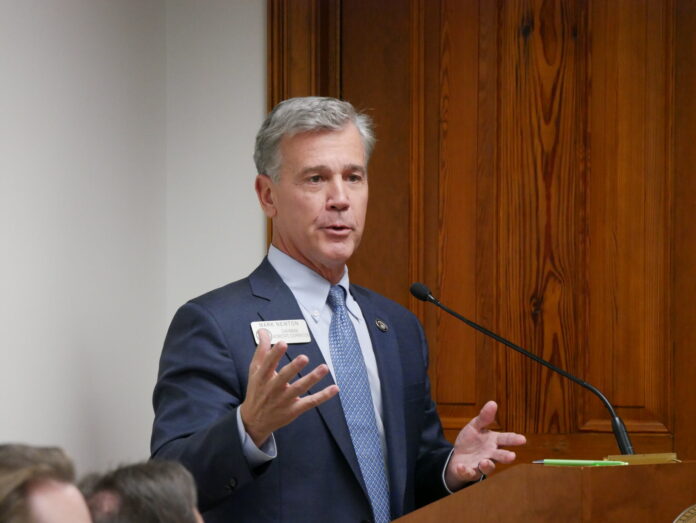
FILE PHOTO - Rep. Mark Newton, an Augusta Republican, was the House sponsor for a Senate bill aimed at modernizing Georgia’s medical cannabis program. (Jill Nolin/Georgia Recorder)

ATLANTA (Georgia Recorder) — A bill aimed at modernizing Georgia’s medical cannabis program passed the Georgia House with broad bipartisan support, marking another step in lawmakers’ yearslong effort to incrementally increase patients’ access to the program.

Senate Bill 220, introduced by Newnan Republican Sen. Matt Brass, would expand the conditions eligible to receive a medical cannabis card, change the limits on the amount of cannabis that someone can possess and enable patients to vape the product. It passed the House in a 138-21 vote.

The changes made to the bill incorporate feedback from a House study committee that met last year to examine the issue, according to Rep. Mark Newton, an Augusta Republican who sponsored the bill in the House. In a speech shortly before Wednesday’s vote, he said updates to the program were needed to ensure that patients and providers can successfully navigate the program.

“For the patients that this program is designed to serve, it’s not always worked well enough,” Newton said. “This bill is an effort to make sure that for the patients, this program works better.”

Tetrahydrocannabinol, generally abbreviated to “THC,” is the psychoactive compound in marijuana that is currently classified as a Schedule I drug at the federal level, though the Trump administration is looking to loosen federal restrictions on marijuana to gain a better understanding of its potential medical benefits. Some studies have shown that THC’s non-psychoactive counterpart cannabidiol, also known as CBD and derived from the hemp plant, may be effective in treating health conditions like epilepsy, chronic pain and anxiety.

Both compounds fall under the umbrella of medical cannabis, according to the Georgia Access to Medical Cannabis Commission, which administers the state’s program.

Georgia law currently mandates that medical cannabis products must not contain more than 5% THC. The version of the bill that passed the Senate would have raised that cap to 50%, but House lawmakers ultimately decided to switch from a percentage cap to a 12,000 milligram limit, which Newton said is aimed at ensuring Georgia’s regulations better reflect doctors’ prescribing practices.

“There are other delivery methods, other ways of delivering this medical cannabis, that are more aligned with the way we practice medicine in every other field,” Newton, who is an emergency medicine doctor, said.

The bill also adds a provision allowing patients over the age of 21 to vape medical cannabis, which was not previously allowed under Georgia law. Advocates had argued that patients with seizures and other conditions needed greater access to inhalable forms of medical cannabis, which can offer relief faster than alternate forms of the drug.

“The oral forms were taking one to two hours, sometimes four hours, to have an effect,” Newton said. “Some people’s conditions, we heard from patients, need some relief more rapidly than that, and so the inhalation version takes care of that.”

Smoking and public consumption of cannabis will still be outlawed under the bill, he added, as will products like candy and edibles. The bill also expands the list of qualifying health conditions, adding Lupus, severe arthritis and severe insomnia, and removing the requirement that certain diagnoses like cancer or Parkinson’s disease be “severe or end stage.”

Rep. Alan Powell (R-Hartwell) on Crossover Day (Ross Williams/Georgia Recorder)

Rep. Alan Powell, a Hartwell Republican, also applauded the bill in a speech on the House floor.

“This is a natural product,” he said. “I have said this from this well before, and I continue to tell you that something that God lets grow naturally is better than anything made in a pharmaceutical laboratory.”

Newton said he hopes to see more medical research on cannabis develop in the coming years if marijuana becomes a Schedule III drug at the federal level. Though no lawmakers spoke against the bill on the floor, some voiced concerns about the lack of current medical evidence to support expanding the program.

“I’m for it, I just think that we need to do a little more (research) about it,” said Rep. Jason Ridley, a Chatsworth Republican who voted against the bill. “I’d just like to see a little more parameters put around that exactly what we’re dealing with.”

Bills related to medical cannabis and hemp beverages became a focal point during the 2025 session, which also marked the 10-year anniversary of Haleigh’s Hope Act. The law created the licensing commission, legalized possession of low-THC oil for the first time in Georgia and created a new research program dedicated to studying the drug’s impact.

Subsequent legislation enabled companies to produce and sell the oil in-state, but advocates have argued that Georgia’s current laws do not go far enough to help patients access medical cannabis in the forms that they need.

The bill now heads back to the Senate for another vote. The session is set to end April 2.

Proposal would require citizenship checks for Georgia families to access food aid

House Bill 947 would implement new data-matching and verification procedures for Supplemental Nutrition Assistance Program participants, including a check of their citizenship status, before a family can access benefits. (Maya Homan/Georgia Recorder)

ATLANTA (Georgia Recorder) – State House lawmakers approved new requirements for families applying for food assistance in what was one of the final votes on a key legislative deadline day, with the proposal passing after midnight Saturday.

However, advocates have pushed back on the legislation, arguing that the changes would not adequately address errors within the system and urging lawmakers to instead increase funding for the department that oversees the program.

House Bill 947, sponsored by Dallas Republican Rep. Martin Momtahan, would implement new data-matching and verification procedures for Supplemental Nutrition Assistance Program participants, including a check of their citizenship status, before a family can access benefits. It would also prevent families enrolled in the program from using their benefits to purchase food or drinks “in a food service establishment,” or any beverages, such as a coffee or smoothie, that are “prepared, mixed, or blended in a food sales establishment” like a convenience store.

Proponents of the bill say the changes are aimed at reducing Georgia’s payment error rate for the federal food aid program. That can be caused either by unintentional mistakes from the applicant, such as a recipient forgetting to report a change in how many people live in the household, or by a processing error, such as a government agency incorrectly calculating a household’s expenses. According to the U.S. Department of Agriculture, Georgia’s error rate currently sits at 15.56%, and critics say the changes may actually worsen error rates while making it harder for families to access food.

The federal government currently pays for SNAP benefits and splits administration costs 50/50 with states. But starting in October, all states will be on the hook for 75% of their own administrative costs due to changes implemented under last year’s One Big Beautiful Bill Act. The new law also allows the feds to penalize states for their SNAP errors, requiring them to pay from 5%-15% of their benefit costs if their error rates are over 6%.

“If that error rate remains this high, Georgia taxpayers will face substantial federal callback penalties,” Momtahan said.

His bill, he added, “ensures that SNAP benefits are going to families who truly qualify, while protecting Georgia’s taxpayers from federal penalties.”

Rep. Robert Dickey, a Musella Republican, also urged lawmakers to pass the measure.

“This bill is about keeping us out of federal penalties,” he said. “If you want money for these children and for families that need it, this bill is needed so we do not fall into the trap of hundreds and hundreds of millions of dollars going back to Washington because our error rate is high.”

An earlier version of the bill had restricted SNAP benefits from being used to purchase candy, energy drinks and juices with less than 50% fruit or vegetable juice, as well as some sodas and desserts. However, those restrictions had been removed from the legislation by the time it reached the House floor for a vote.

House Democrats criticized the bill, arguing that the restrictions on what SNAP recipients could purchase would unnecessarily penalize struggling families.

“A working parent in an urban food desert who purchases prepared food because their schedule and circumstances do not allow for home cooking is not making a frivolous choice,” said Rep. Inga Willis, an Atlanta Democrat. “They are making the best choice available to them given the constraints of their everyday lives.”

“What this bill does not do is change those constraints,” she continued. “It does not mandate that healthy, affordable food options be available to recipients before their current options are taken away. It simply removes options and leaves recipients to manage the consequences.”

Separately, lawmakers are also recommending that the state allocate nearly $11 million within next year’s budget to fund 319 additional compliance roles within the Georgia Department of Human Services — which is responsible for dispersing federal SNAP funds to Georgia residents — in an effort to reduce payment error rates.

Advocacy groups, such as Asian Americans Advancing Justice-Atlanta, say the additional documents required under the bill, such as those used to verify applicants’ immigration status, could pose barriers to families applying for food assistance, particularly if there is a language barrier involved.

“Paperwork really is a burden and can make or break whether or not someone is able to get through the process,” said the group’s policy director, Jennifer Lee.

A new provision requiring applicants to report the immigration status of their family members could also lead to a drop in the number of applicants within immigrant communities, even those who are legally present in the country, Lee said. The federal government has also made moves to monitor the immigration status of people using programs like Medicaid.

“I think the chilling effect is already occurring now, actually, around people not wanting to have contact with government programs, even if they’re eligible, just because of fear of how their data will be used,” she said.

The Georgia Budget and Policy Institute also voiced concerns that the additional verification requirements outlined in the bill could prevent eligible families from accessing the program, which could increase the error rates.

“We often think about errors as overpayments, but they are also underpayments,” said Ife Finch Floyd, the institute’s director of economic justice. “It really just is about accuracy and making sure that that family or household is getting the benefits that they are eligible for.”

As the bill advances, Floyd added, she hopes to see policies that help support the Department of Human Services as it implements the changes required under the One Big Beautiful Bill Act.

“We need to do more to support that agency, not create more burdensome administrative processes that are not going to help them in the long run and are certainly not going to help SNAP recipients,” Floyd said.

The bill passed the House with a 95-66 vote and is now awaiting action in the Senate. The Legislature adjourns April 2.

US military refueling plane goes down in Iraq and rescue is underway

This photo provided by the U.S. Department of Defense shows a North American Aerospace Defense Command F-16 fighter refueling from a KC-135 Stratotanker over western Alaska on Thursday, Feb. 19, 2026. (U.S. Department of Defense via AP)

WASHINGTON (AP) — An American military refueling plane went down in Iraq and rescue efforts were underway, U.S. Central Command said Thursday. The plane had a crew of at least 5 onboard, but whether there were any casualties remains unclear.

The KC-135 aircraft was part of the operation against Iran, but the crash was not due to hostile fire or friendly fire, the military said in a statement.

U.S. Central Command, which oversees the Middle East, said that two aircraft were involved and that one landed safely and the other went down in western Iraq. It described the latter as “a loss.”

A U.S. official, who spoke on condition of anonymity to discuss the developing situation, said the other plane involved also was a KC-135 tanker.

“More information will be made available as the situation develops,” Central Command said in a statement. “We ask for continued patience to gather additional details and provide clarity for the families of service members.”

It wasn’t immediately clear if there were any casualties. Both President Donald Trump and Defense Secretary Pete Hegseth have warned that the Iran war would likely claim more American lives before it ends.

The tanker is the fourth publicly acknowledged aircraft to crash as part of the U.S. military’s operations against Iran. Last week, the military confirmed that three American fighter jets were mistakenly downed by friendly Kuwaiti fire.

All six crew members safely ejected from the F-15E Strike Eagles and were in stable condition after being recovered, the U.S. said.

Seven American troops have been killed in combat during the Iran war so far. Six of the service members were killed when an Iranian drone struck an operations center at a civilian port in Kuwait. The seventh died after being wounded during an attack on the Prince Sultan Air Base in Saudi Arabia.

About 140 U.S. service members have been wounded, including eight severely, the Pentagon said earlier this week.