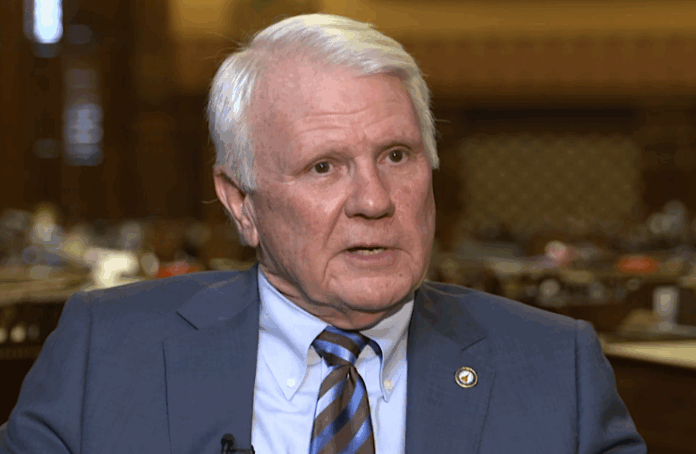
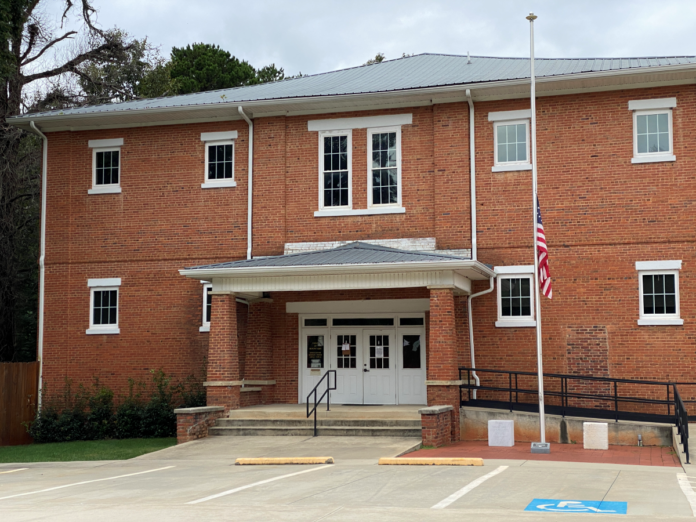
Nine suspects have been indicted and arrested in connection with a title fraud scheme in north Georgia following a six-month investigation.
The Hall County Sheriff’s Office Special Investigations Unit initiated the case in June 2025 after learning of fraud committed by Brandy Marie Pitts, 46, of Lavonia, and Susan Faye Palencia, 61, of Homer. Investigators say both women owned multiple LLCs operating out of an office in Gainesville and colluded with local auto dealerships to commit the crimes.
According to the investigation, car dealers sold older, high-mileage vehicles at elevated prices to unlicensed residents. Since unlicensed individuals cannot legally register vehicles, sales staff directed them to Pitts and Palencia. The women charged customers hundreds of dollars to register the vehicles under their corporation names and urged drivers to buy insurance through the America Insurance Agency, which they also owned.
Authorities determined the pair had conducted these activities since 2018, illegally obtaining more than one million dollars over a seven-year period. Hundreds of vehicles were registered under companies owned by Pitts and Palencia.
In December 2025, the Hall County District Attorney’s Office indicted nine suspects for violation of Georgia’s Racketeer Influenced and Corrupt Organizations (RICO) Act. Arrest orders were issued on December 19th, and all suspects have been booked at the Hall County Jail.
(Source: Hall County Facebook) – Title Fraud Scheme Suspects
The suspects include:
Brandy Marie Pitts, 46, Lavonia
Susan Faye Palencia, 61, Homer
Manuel Rene Alvarez, 51, Gainesville
Curtis Allen Livingston, 51, Suwanee
Scott Wedford Norris, 36, Marietta
Maria D. Escamilla, 47, Flowery Branch
Vianney Garcia Guerrero, 36, Buford
Lindsey Ngu, 25, Gainesville
Juan Camilo Sardi, 27, Gainesville
Most suspects posted bond and have been released. Ngu remains in jail on a drug court hold.
Officials thanked several agencies for their assistance, including the Hall County Tax Commissioner’s Office, the Flowery Branch Police Department, the Gainesville Police Department, the Banks County Sheriff’s Office, the Lavonia Police Department, the Rabun County Sheriff’s Office, the Rabun CountyTax Commissioner’s Office, the Georgia Office of the Commissioner of Insurance & Fire Safety, theGeorgia Department of Revenue, the Georgia Secretary of State’s Office, and the National Insurance Crime Bureau.
Pedestrian struck on Victory Drive (NowGeorgia.com)
Officers responded to Veterans Parkway near Almond Drive regarding a vehicle vs. pedestrian incident on Sunday, January 11, 2026, around 6:30 a.m.
The pedestrian was transported to Piedmont Columbus Regional with serious injuries and was pronounced deceased later that afternoon at 2:34 p.m. The identity of the deceased is being withheld pending the notification of next of kin according to the Muscogee County Coroner’s Office.
Selah Wiltshire took home the 50-yard freestyle title at the Shiver Me Timbers swim meet at Tallulah Falls Saturday. (TFS School)
TALLULAH FALLS, Ga. — The Lady Indians delivered a dominant performance Saturday as Tallulah Falls School hosted the annual Shiver Me Timbers swim meet, featuring nine varsity programs and six middle school teams.
The Lady Indians varsity squad won the girls meet by a wide margin, while the Indians placed second in the boys standings. At the middle school level, the Indians boys team captured first place, and the girls finished runner-up, according to Brian Carter, Tallulah Falls School’s director of sports communication and digital media.
In varsity girls competition, the Lady Indians swept both relays, winning the 200 medley relay behind Valentina Arias, Selah Wiltshire, Mattie Patterson and Lucia Roser de Hoyos, and the 200 free relay with Roser de Hoyos, Arias, Patterson and Wiltshire. Wiltshire claimed the 50-yard freestyle, while Roser de Hoyos won the 100 freestyle.
The varsity boys team earned a relay victory in the 400 free relay, with Waldon McIntosh, Teagan Penland, Martin Raybon and Caden Polley combining for the win. Individually, McIntosh took first in the 100 butterfly, and Polley won the 100 freestyle.
At the middle school level, the Indians boys team won both the 200 medley relay — Brody Dampier, Lincoln Penland, Logan Thompson and Rhett Addison — and the 200 free relay with Thompson, Addison, Dampier and Penland. Dampier won the 100 individual medley and the 50 butterfly, Penland captured the 50 freestyle and 50 breaststroke, and Thompson swept the 100 freestyle and 50 backstroke.
For the middle school girls, Naomi Russo won the 100 freestyle and 50 backstroke, while Kayleigh McEntire claimed the 50 butterfly.
FILE - A man wears an "I voted" sticker on his shirt, printed with the American flag and the U.S. constitution, after voting at Wa-Ke Hatchee Recreation Center in Fort Myers, Fla, on Election Day, Nov. 8, 2022. (AP Photo/Rebecca Blackwell, File)
WASHINGTON (AP) — Americans are increasingly rejecting the two major political parties, according to new polling.
Just under half, 45%, of U.S. adults now identify as independents, a new Gallup survey found. That’s a substantial shift from 20 years ago, when closer to one-third of Americans said they didn’t identify with the Democrats or Republicans.
This group appears, increasingly, to be driven by their unhappiness with the party in power, according to Gallup’s analysis. That’s a dynamic that could be good for Democrats in this year’s midterm elections, but doesn’t promise lasting loyalty. Independents have gravitated toward the Democrats over the past year when asked which party they lean toward, Gallup found, but attitudes toward the party haven’t gotten warmer. That suggests that the Democrats’ gains are probably more related to independents’ increasingly sour views of President Donald Trump.
Younger people, in particular, are rejecting the parties at much higher rates than older generations. More than half of Generation Z and Millennials identify as political independents, while a majority of older generations side with a party. That’s different from the past, when more young adults identified with the Democrats or the Republicans. And it’s part of the reason why frequent, dramatic swings in political power may become increasingly normal.
Democrats regain the edge with political independents
Independents have long been the largest political group in the U.S., and their numbers have increased over the last 15 years. But often, they’re more inclined to side with one of the parties over the other.
This year, the Democratic Party gained the partisanship edge when independents were asked whether they lean more toward the Democratic or Republican Party. Nearly half, 47%, of U.S. adults now identify as Democrats or lean toward the Democratic Party, while 42% are Republicans or lean Republican. This is an indication of how Americans are feeling about their political affiliations, and it may not be reflected in voters’ actual registration.
This shifted the 3-year party affiliation advantage that the Republican Party held while President Joe Biden was in office, reverting to where the Democrats stood during Trump’s first term.
While that’s certainly not bad news for Democrats as they look to regain one or both houses of Congress in November, it’s likelier that they’re benefiting from independents’ unhappiness with Trump, rather than building lasting goodwill for themselves. Trump’s approval among independents has fallen steadily over the year, while Democrats’ favorability remains historically low.
Young people drive independents’ strength
Younger Americans are driving the recent rise in U.S. adults identifying as independents.
The Gallup polling found majorities of Gen Z and Millennial adults – who were born between 1981 and 2007 – now identify as independents. Independent identity is softer in older generations, where only about 4 in 10 in Gen X currently call themselves independents and roughly 3 in 10 older adults do.
Young adults today are more likely than previous generations to identify outside of the Democratic and Republican Party. While 56% of Gen Z adults call themselves independents, that’s higher than in 2012, when 47% of Millennials said they were independents, and 1992, when 40% of Gen X adults identified that way, according to the Gallup analysis.
That means that this trend isn’t likely to shift, unless the parties are able to change the way younger people see them.
Independent Americans are increasingly the moderates
Americans who identify as moderates increasingly don’t see themselves in either party, Gallup’s polling shows.
More independents have described their political views as “moderate” over the last decade, while Democrats and Republicans have grown less likely to identity as moderates.
About half of independents, 47%, called themselves moderates in 2025, compared to about 3 in 10 Democrats and about 2 in 10 Republicans.
At the same time, Democrats and Republicans have become increasingly polarized in their ideology. About 6 in 10 Democrats now call themselves liberal, while the share that consider themselves moderate is among the lowest it’s ever been. Among Republicans, 77% consider themselves conservative, and moderate identity is also at a low point.
That creates another challenge for the parties to contend with, since appeals to the center to win the growing pool of independents could risk alienating the most committed people in their base.
The AP’s Linley Sanders contributed to this report.
WASHINGTON — More than a year after Congress approved disaster relief for farmers impacted by Hurricane Helene, U.S. Sen. Jon Ossoff is pressing the U.S. Department of Agriculture to finalize a long-delayed block grant agreement needed to release funding to Georgia producers.
In a letter sent this month to USDA Secretary Brooke Rollins, Ossoff called the delay “unacceptable,” noting that Georgia farmers are still waiting on relief despite Congress approving $21 billion in agricultural disaster funding in December 2024.
“It’s now been over a year since the United States Senate passed $21 billion in agricultural disaster funding for farmers in Georgia and across the Southeast,” Ossoff wrote. “Yet today, Georgia farmers are unacceptably still waiting for a block grant agreement to be finalized by the U.S. Department of Agriculture.”
Georgia requested the disaster funds be delivered through a block grant, allowing the state to distribute the money directly to farmers. While USDA and the State of Georgia announced in September that Georgia would receive $531 million in federal funding, the block grant agreement has not been finalized.
Other states have agreements in place
Ossoff noted that USDA has already completed block grant agreements with Florida, Virginia, North Carolina and South Carolina.
“The State of Georgia is ready. Georgia farmers are waiting for USDA,” he wrote.
The Georgia Department of Agriculture announced last month it has established a program to accept applications for the federal funding, but payments cannot be made until USDA finalizes the agreement.
Ossoff contrasted the delay with earlier disaster responses, noting that after Hurricane Michael it took Congress more than eight months to approve relief, while funding after Helene was passed in under 90 days.
The senator has repeatedly pressed USDA officials on the issue. In July, Ossoff requested an update from Rollins and Georgia Agriculture Commissioner Tyler Harper on the status of the negotiations. In May, Ossoff questioned Rollins during a U.S. Senate hearing, when she said the funding would be made available “by the end of the month, hopefully in the next week.”
In February, Ossoff and Sen. Raphael Warnock urged USDA to prioritize swift distribution of the disaster assistance approved by Congress.
Ossoff said he will continue pushing USDA to release the funds secured for Georgia farmers following Hurricane Helene.
Federal Reserve Chairman Jerome Powell speaks during a news conference following the Federal Open Market Committee meeting, Wednesday, May 7, 2025, at the Federal Reserve in Washington. (AP Photo/Jacquelyn Martin)
WASHINGTON (States Newsroom) — President Donald Trump’s feud with Federal Reserve Chairman Jerome Powell has escalated into a Department of Justice investigation, raising alarm bells among some Republicans in the Senate, where Trump will need broad backing from GOP lawmakers to get his choice for the next Fed chairman approved after Powell’s term ends in May.
Retiring North Carolina Sen. Thom Tillis, who sits on the narrowly divided Banking Committee that will hold hearings on the next nominee, wrote in a statement he won’t approve anyone to fill Powell’s seat if Trump or administration officials try to further erode its independence.
“If there were any remaining doubt whether advisers within the Trump Administration are actively pushing to end the independence of the Federal Reserve, there should now be none,” Tillis wrote. “It is now the independence and credibility of the Department of Justice that are in question.”
Tillis added he plans to “oppose the confirmation of any nominee for the Fed—including the upcoming Fed Chair vacancy—until this legal matter is fully resolved.”
Powell fights back in a video
Trump has criticized Powell repeatedly since retaking the Oval Office in January, pressing him to reduce interest rates faster and signaling he wanted to fire him.
Powell said in a video released this weekend that Justice Department officials on Friday “served the Federal Reserve with grand jury subpoenas, threatening a criminal indictment related to my testimony before the Senate Banking Committee last June.”
Powell alleged the DOJ investigation is not purely about oversight of the multi-year renovation project at the Fed’s offices in Washington, D.C., but “a consequence of the Federal Reserve setting interest rates based on our best assessment of what will serve the public, rather than following the preferences of the president.”
“This is about whether the Fed will be able to continue to set interest rates based on evidence and economic conditions—or whether instead monetary policy will be directed by political pressure or intimidation,” Powell said.
Trump first nominated Powell to be chairman of the Federal Reserve in November 2017 for a four-year term that began in February 2018, writing in a statement that Powell had “demonstrated steady leadership, sound judgment, and policy expertise.”
“Mr. Powell will bring to the Federal Reserve a unique background of Government service and business experience,” Trump wrote. “He previously served as Under Secretary at the Department of Treasury in the administration of President George H.W. Bush. Mr. Powell also has nearly three decades of business experience.”
The Senate voted 84-13 in January 2018 to confirm Powell to the role.
President Joe Biden re-nominated Powell in November 2021 for another four-year term that began in May 2022 after the Senate voted 80-19 to confirm him for a second time.
Tillis leverage on committee
Trump hasn’t said publicly whom he will nominate to succeed Powell as Fed chairman, but whoever he picks will need to move past the Senate Banking Committee in order to receive a confirmation vote on the floor and actually take on the role.
The Banking Committee holds 13 Republicans and 11 Democrats, giving Tillis considerable leverage to block any Trump nominee from advancing if all of the Democrats on the panel also vote against reporting that person to the floor.
Massachusetts Democratic Sen. Elizabeth Warren, ranking member on the committee, wrote in a statement that “Trump is abusing the authorities of the Department of Justice like a wannabe dictator so the Fed serves his interests, along with his billionaire friends.”
“As Donald Trump prepares to nominate a new Fed Chair, he wants to push Jerome Powell off the Fed Board for good and install another sock puppet to complete his corrupt takeover of America’s central bank,” Warren wrote. “This Committee and the Senate should not move forward with any Trump nominee for the Fed, including Fed Chair.”
Chairman Tim Scott, R-S.C., had not released any public statements about the Department of Justice investigation into Powell as of Monday morning.
Murkowski sees ‘attempt at coercion’
Alaska Republican Sen. Lisa Murkowski, who isn’t on the committee, released a written statement after speaking with Powell on Monday morning, saying “it’s clear the administration’s investigation is nothing more than an attempt at coercion.”
“If the Department of Justice believes an investigation into Chair Powell is warranted based on project cost overruns—which are not unusual—then Congress needs to investigate the Department of Justice,” Murkowski wrote. “The stakes are too high to look the other way: if the Federal Reserve loses its independence, the stability of our markets and the broader economy will suffer. My colleague, Senator Tillis, is right in blocking any Federal Reserve nominees until this is resolved.”
Senate Minority Leader Chuck Schumer, D-N.Y., wrote in a statement the Justice Department’s actions represent “the kind of bullying that we’ve all come to expect from Donald Trump and his cronies.”
“Anyone who is independent and doesn’t just fall in line behind Trump gets investigated,” Schumer wrote. “Jay Powell and the Fed aren’t the reason Trump’s economy and his poll numbers are in the toilet. If he’s looking for the person who caused that he should look in the mirror.”
Former Federal Reserve chairmen, Treasury secretaries and White House economic advisers released a written statement that the Fed’s “independence and the public’s perception of that independence are critical for economic performance, including achieving the goals Congress has set for the Federal Reserve of stable prices, maximum employment, and moderate long-term interest rates.”
“The reported criminal inquiry into Federal Reserve Chair Jay Powell is an unprecedented attempt to use prosecutorial attacks to undermine that independence,” they wrote. “This is how monetary policy is made in emerging markets with weak institutions, with highly negative consequences for inflation and the functioning of their economies more broadly. It has no place in the United States whose greatest strength is the rule of law, which is at the foundation of our economic success.”
White House press secretary Karoline Leavitt told reporters in the afternoon she didn’t know if Trump had seen Powell’s video but defended the president’s right to denounce the Fed’s actions under his leadership.
“Look, the president has every right to criticize the Fed chair. He has a First Amendment right, just like all of you do,” Leavitt said. “And one thing for sure, the president has made it quite clear that Jerome Powell is bad at his job. As for whether or not Jerome Powell is a criminal, that’s an answer the Department of Justice is going to have to find out and it looks like they intend to find that out.”
Patsy Garrett Allen, age 75, of Clarkesville passed away peacefully in her home on Sunday, January 11, 2026, after an extended illness.
Patsy was born to the late Tommy and Betty Garrett on November 5, 1950, in Atlanta, and was preceded in death by her husband, William Donald Allen, and brother, Tom A. Garrett.
Pat is survived by brother, Rick Garrett, of Snellville; son and daughter-in-law, Shane and Jessica Ward of Clarkesville; daughters and sons-in-law, Tammy and Mark Lathan of Mt. Airy, and Vicky and Mike Sullens of Alto; grandchildren include Cleve and Devon Coley of Navarre, FL, Christopher and Katie Coley of Valdosta, Emily Sullens of Alto, Grayson Sullens and Casey Haygood of Clarkesville, Brittany Ward of Clarkesville, and Maleigha Ward of Clarkesville; great-grandchildren include Cambria and Kaisen Coley of Valdosta.
Pat was always full of life and kept her spunk through her final days. She loved gardening, good music, and could usually be found with her sunglasses, a bright lipstick, and the radio turned up in her Mustang GT. Pat retired from North Habersham Middle School where she served in the school cafeteria. She enjoyed getting to know the students each year and could always be counted on to share a smile.
Pat’s greatest commitment though was to her family. From shopping trips, to attending ball games, concerts, and recitals, to lazy farm summers, we all have many great memories with Pat, and she will be missed. Pat is now reunited with her husband, parents, and brother, and we know she is enjoying her great heavenly reunion.
We would like to thank Family Hospice for their excellent care, as well as caregivers, Sommer, Kim, Kelly, Frankie, Mia, and Bree.
Pat’s wishes were to be cremated, and no services will be held. She wished for us all to remember her for her vibrant life here on earth.
An online guest registry is available for the family here.
McGahee-Griffin & McEntire Funeral Home of Cornelia, Georgia (706/778-8668) is in charge of arrangements.
ALTO, Ga. — The Alto Town Council will swear in three officials and make several key appointments during its regular January meeting Tuesday night at City Hall.
The council is scheduled to meet at 7 p.m., with a work session set for 6 p.m. An executive session is also on the agenda prior to the swearing-in ceremony.
Council members plan to swear in representatives for three council posts. John Smith is set to take the Post 1 seat after the town canceled its Nov. 4 municipal election when incumbent P.J. Huggins withdrew from the race, leaving Smith and other candidates unopposed. Huggins, a former mayor and current Post 1 councilmember, had been serving out the unexpired term of the late Carolyn McCabe.
Allen Fox will be sworn in to Post 3, and Debbie Turner will be sworn in to Post 5. Both were unopposed in the canceled election and will continue in office beginning Jan. 1.
Following the swearing-in, the council is expected to appoint a mayor pro tem, along with the town attorney and municipal court judge. Public comment will be held before adjournment.
FILE PHOTO - Monday's kickoff of the 2026 legislative session is likely to bring big crowds to the state Capitol. Pictured is Rep. Bethany Ballard with lobbyists and advocates at the ropes. (Ross Williams/Georgia Recorder)
(Georgia Recorder) — Monday marks the start of Georgia’s annual legislative session, when state legislators will head to Atlanta for 40 days of deliberating and passing laws underneath the Gold Dome of the state Capitol.
What does that mean?
The yearly legislative session is when the representatives and senators Georgians elect pass new laws, so the Capitol will be buzzing for the next three months with politicians and lobbyists trying to make deals and get their priorities into law.
The session lasts 40 days, but not all in a row. Sometimes lawmakers take days off or set aside days just for committee meetings. One of the lawmakers’ first priorities will be to set a schedule for the year, and leaders from both chambers got a jumpstart on that when they released a proposed calendar Sunday.
The Georgia State Capitol’s gold dome. (Ross Williams/Georgia Recorder)
Under the proposed schedule, lawmakers will eagerly wrap up their work on Thursday, April 2.
Georgia law prevents lawmakers from raising money for their campaigns during the session – the idea is to prevent even the appearance of pay-for-play politics.
And 2026 is set to be a seismic election year with Republican Gov. Brian Kemp term-limited from running again. This future vacancy at the top has caused a cascade effect of politicians running for higher office, especially in the state Senate.
Lawmakers who are not planning to upgrade their title are also under pressure because the entire House and Senate will be up for re-election in November.
Advocacy groups such as the ACLU of Georgia have planned events to kick off the first day of session. Alongside partner organizations like Indivisible Georgia Coalition, representatives from the ACLU of Georgia will hold training sessions, provide an update of ongoing court cases and preview their legislative priorities for the upcoming session.
Christopher Bruce. (Ross Williams/Georgia Recorder)
“Georgians are telling legislators we need to emphasize people over politics, and that’s going to be the message that happens at the Capitol,” said Christopher Bruce, who works as the ACLU of Georgia’s policy and advocacy director.
Over 600 people have signed up to attend the “Pack the Capitol” event hosted by the ACLU and other advocacy groups, he added.
Faith leaders from different traditions will also be among the groups gathering at the Capitol Monday as the session kicks off. The event, which will include speeches and a group singing of “God Bless America,” is organized by First Five Freedoms and aims to promote civility and empathy.
Pastor Randy Rainwater with Grace New Hope Church in Lawrenceville will be among the faith leaders there to pray for state lawmakers.
“As a pastor, as someone who cares about people both in my congregation and out of my congregation, the wellbeing of us as Georgia citizens and as Americans depends so much on our unity,” Rainwater said. “And that’s what made us a nation. It’s what’s allowed us to survive for now 250 years. If we’re not a civil people, this doesn’t work.”
With so many sitting lawmakers seeking higher office this year, there’s debate over whether much will be accomplished in the next few months.
And the dim prospects of a productive session can be frustrating for those who plan to walk into their respective chamber Monday with policy goals in mind.
For Rep. Michelle Au, the start of session represents a chance to put into action the plans she’s been developing since lawmakers adjourned last year. She likened returning to the Gold Dome for the start of the session to the excitement of going back to camp after time away, even as she acknowledged the election-year constraints that will likely limit how much gets done.
“I do think it’s going to be, in my mind, the more annoying confluence of having the inability to get a lot of stuff accomplished along with a lot of performance art and posturing and electioneering,” said Au, a Johns Creek Democrat and anesthesiologist who takes leave from her job during the session.
“So, there’s going to be more talking taking more time with less output,” she added.
House Speaker Jon Burns, a Newington Republican, speaks to reporters ahead of the 2026 legislative session. (Maya Homan/Georgia Recorder)
Speaking to reporters in the Capitol on Wednesday, House Speaker Jon Burns said he believes “meaningful legislation” can still be passed.
“There are a lot of things being said about how this session may not be productive,” he said. “I don’t agree. I think our job is to come here and perform, do our jobs, and I believe we’re going to pass meaningful legislation this session.
Burns said his top priority for the year will be to pass legislation aimed at boosting Georgia’s literacy rate, citing statistics showing that only a third of students read at a proficient level by the time they finish third grade.
With Georgians struggling to deal with rising costs of living, and with Democratic flips of a state House seat and two seats on the state board overseeing utility costs underscoring the importance of the economy on the minds of voters, the word “affordability” is likely to pass the lips of many a lawmaker in speeches this year.
Senate Republicans want to help make life more affordable by reducing and eventually eliminating the state income tax by 2032, while Burns said the House will introduce a plan to cut property taxes. Details on both plans, including how the state and local governments can compensate for revenue losses, have yet to be publicly revealed.
Sen. Max Burns. (Ross Williams/Georgia Recorder)
Sen. Max Burns, a Sylvania Republican and chair of the Senate Higher Education Committee, said Republicans will be eyeing ways to make getting a degree in Georgia more affordable as well.
That could include creating needs-based financial aid for college students for the first time, Burns said or reducing the time it takes to graduate.
The average time it takes to earn a degree varies between University System of Georgia schools with an average of about four years and nine months system-wide. Georgia Tech students graduate the quickest on average at about four years and two months. Atlanta Metropolitan College has the longest average time to degree completion at six years and eight months.
“If we look at the challenge of affordability, it’s not necessarily the cost of tuition or the direct cost of education, it’s the ancillary costs that are really driving that, especially the cost of living and some of the fee structures,” he said. “But if we can compress graduation by a semester or two, then what you do is you really reduce the cost of education.”
Republicans control both chambers and the governor’s mansion, so what they say typically goes, though Democrats can try to wield some influence, especially when there is disagreement in the GOP ranks.
House Minority Whip Sam Park of Lawrenceville said that Democrats in the House will be focused on ensuring that every Georgia resident can afford necessities like child care, health care and housing.
Sam Park. (Ross Williams/Georgia Recorder)
“Health care, housing and education will be our areas of focus in which we’re really looking at affordability,” he said.
However, Park also said he is worried about Republican-led tax cuts and the potential reemergence of social issues dominating the Legislature during a year full of high-profile elections.
“Especially with my Republican colleagues, it seems that they’re very much focused on seeing who can out-MAGA each other, which I think is ultimately to the detriment of Georgians who are really struggling with this affordability crisis,” Park said.
Back from the dead
The Legislature runs on a two-year cycle, which means that bills that were introduced but not passed last year could be revived this year.
Some significant bills that could be roused from their slumber include:
A ban on puberty-blocking drugs for transgender minors which was dialed back in a House committee
A bill preventing state workers or their dependants from receiving gender-affirming care through the state health plan
A ban on diversity, equity and inclusion policies in schools and colleges that was grafted onto a billdealing with sick days for teachers after it did not pass the Senate ahead of a legislative deadline
Duelling plans to deal with traffic cameras in school zones, either by putting new regulations on them or getting rid of them altogether.
A push to make hand-marked paper ballots the primary voting system across the state
A bill preventing political campaigns from knowingly publishing certain audio or AI-made materials within 90 days of an election.
Georgia Recorder editor Jill Nolin contributed to this story.
ATLANTA — As Georgia lawmakers head back to the Capitol for the 2026 legislative session, House Speaker Jon Burns and the state’s top education leaders say their focus will be on literacy, classrooms, and strengthening the state’s future workforce.
Burns outlined his priorities during a recent news conference, saying the House will push hardest this year on improving literacy, shoring up Georgia’s medical workforce, and cutting the burden of property taxes on homeowners.
Education reform, he said, will again be front and center — including a possible expansion of the state’s school cellphone ban.
“You’ll see us move this session, I do believe, to ban cellphones in high schools,” Burns said. “Because so many jurisdictions around the state have already done that as well.”
Georgia lawmakers already passed a statewide ban on student cellphone use through eighth grade last year. Now, leaders are considering whether that policy should be extended to high school students.
Education leaders outline their own agenda
At the same time, education advocates are rolling out their priorities for the session that begins Monday, Jan. 12.
At an event hosted by Georgia Public Broadcasting in Atlanta, Matt Smith of the Georgia Partnership for Excellence in Education presented the group’s annual “Top 10 Issues” list for 2026 — a roadmap of policies education leaders believe would have the greatest impact on student success and the state’s economy.
Smith said the list is driven by research and long-term outcomes.
“What are the high-impact strategies that would affect whether or not folks have educational attainment and personal wellbeing and economic stability?” Smith said.
Among the top concerns: increasing the number of teachers working in Georgia, strengthening early literacy, and making sure students get the most value from college and career programs.
Education remains the largest single item in Georgia’s budget, and legislative leaders have already indicated that literacy and early childhood education will be at the top of their funding and policy agenda in 2026.
State School Superintendent Richard Woods voiced his support for expanding the state’s cellphone ban into high school.
The 2026 Georgia legislative session officially begins Monday, Jan. 12
Atlanta Hawks guard Nickeil Alexander-Walker (7) shoots a 3-point basket next to Golden State Warriors guard Gary Payton II (0) during the first half of an NBA basketball game, Sunday, Jan. 11, 2026, in San Francisco. (AP Photo/Godofredo A. Vásquez)
SAN FRANCISCO (AP) — Nickeil Alexander-Walker scored 24 points, Jalen Johnson contributed 23 points, 11 rebounds and six assists and the Atlanta Hawks beat the Golden State Warriors 124-111 on Sunday night.
Luke Kennard had a season-best 22 points and six 3-pointers off the bench in the Hawks’ third straight win.
Stephen Curry scored 31 for his 13th 30-point performance of the season and Jimmy Butler had 30 points, seven rebounds and six assists in his fourth 30-point outing as the Warriors had a three-game home winning streak snapped. They had one other game both scoring 30 or more points and the Warriors also lost that one at Orlando on Nov. 18.
Butler had 17 points, five assists and four rebounds by halftime, when the Warriors were just 5 for 19 from 3-point range. It marked the third time in his last four games scoring 20 or more points.
Alexander-Walker scored eight straight points over the final 1:14 of the first half including back-to-back 3-pointers in the closing minute as Atlanta led 59-53 at the break, also getting CJ McCollum’s jumper to beat the halftime buzzer.
After Dyson Daniels’ layup at the 8:47 mark of the third put Atlanta ahead 70-58, Golden State went on a 10-0 burst but couldn’t keep the momentum.
Warriors forward Draymond Green had made a 3-pointer in two consecutive games — but has never done so in three in a row.
Golden State made 5 of 6 shots to start the game and go ahead 14-4 — seven of those by Curry.
Curry and father Dell have now scored the second-most points by a father-son duo in NBA history, passing Joe and Kobe Bryant’s 38,895. LeBron James and Bronny are first with 42,692.
The Town of Mt. Airy council will hold a called meeting Tuesday, January 13, with votes expected on the town’s 2026 operating budget and a proposed farm winery ordinance.The meeting is scheduled for 6:30 p.m. at Mt. Airy Town Hall.
Council members are expected to vote on a resolution adopting the fiscal year 2026 operating budget, following a public hearing and discussion earlier this month. As outlined during the Jan. 5 meeting, the proposed budget includes a $61,892 increase in expenses compared to last yea. The increase stems from higher insurance premiums and inflationary cost increases.
The council will also take up farm winery regulations, including the second and final reading of an ordinance amending Chapter 5 of the town code. The proposal has been under discussion for several months as town officials work to clarify licensing and operational standards for farm wineries within Mt. Airy.
In addition, council members are expected to consider an amendment to the town’s fee schedule to add a farm winery license fee if the ordinance is approved.
The agenda for the called meeting is limited to the budget resolution, farm winery ordinance, related fee changes, and routine procedural items.
The meeting follows recent council action swearing in a new mayor and setting priorities for the coming year, including long-term financial planning and economic development initiatives tied to agritourism.