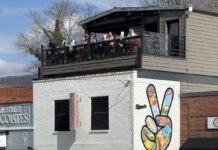
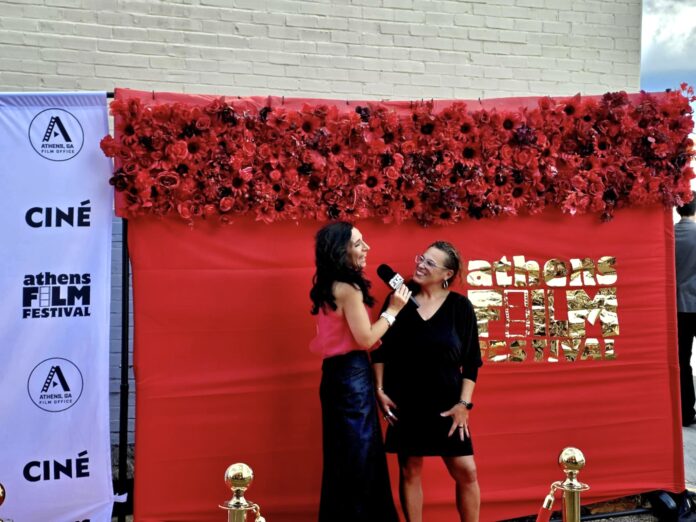
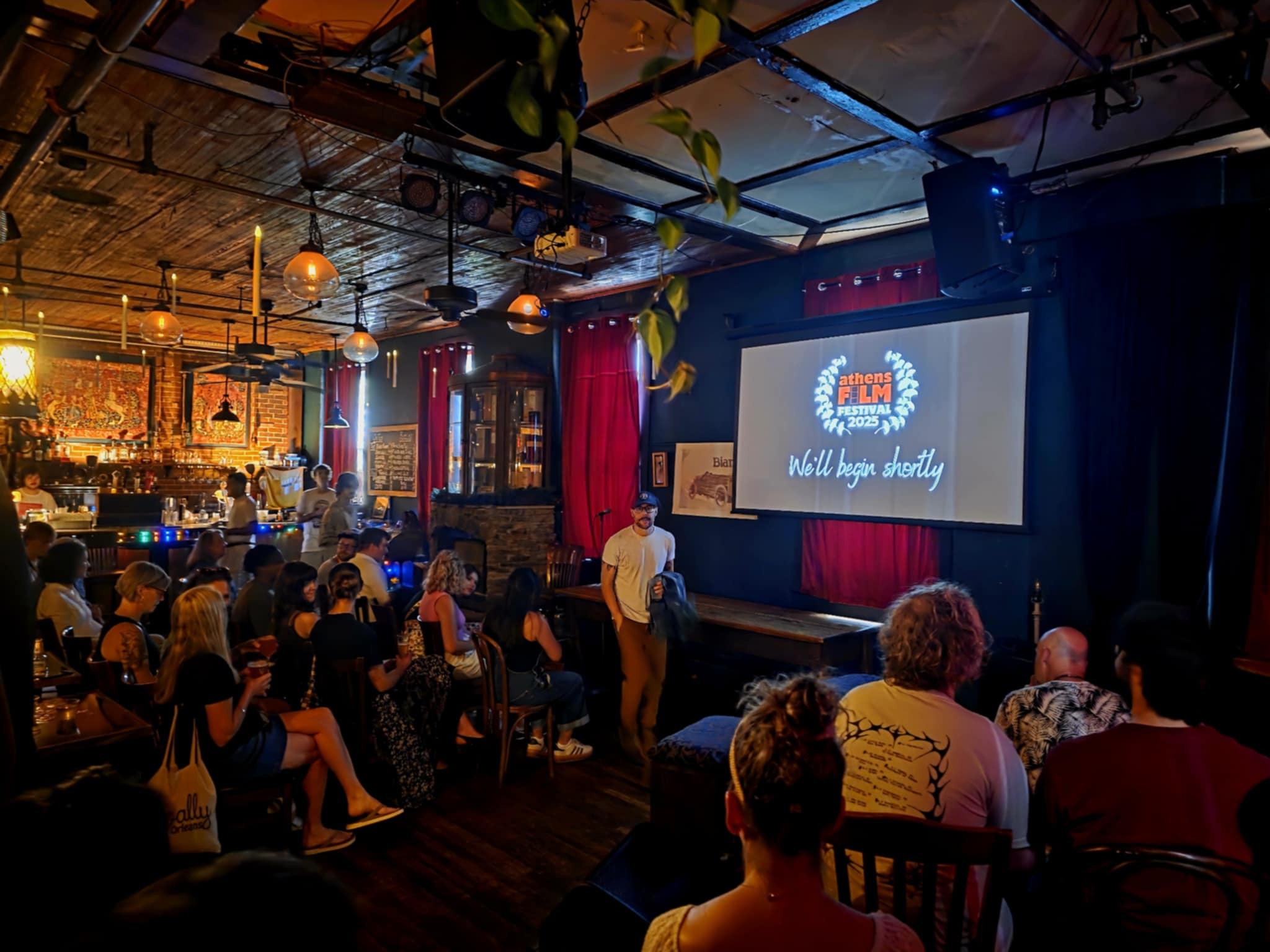
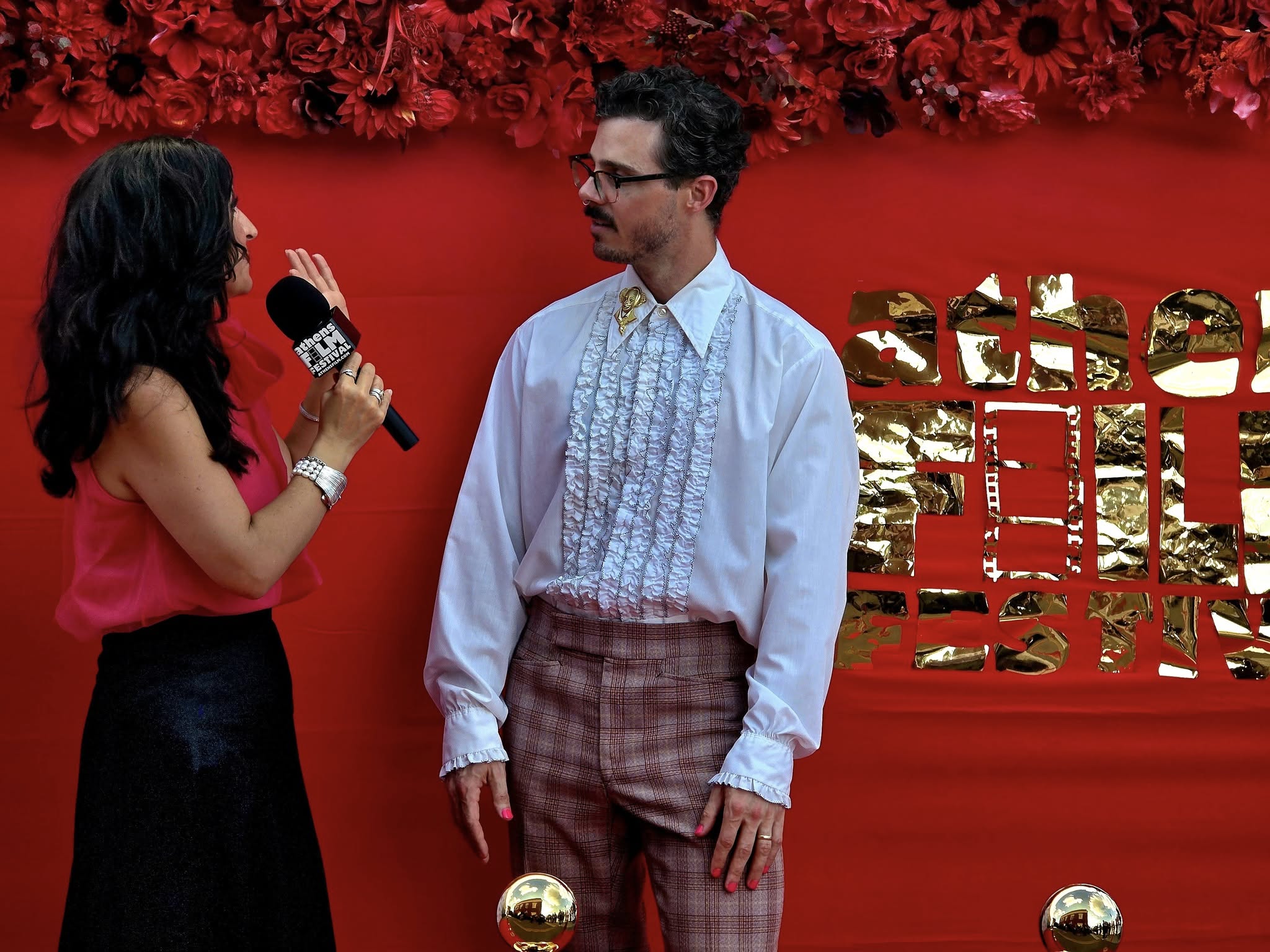
The upstairs loft of The Globe filled quickly. Candle-bulbed lights flickered from the ceiling, beer glasses clinked against wood tables, and a quiet anticipation spread across the room as a short film flickered to life on the projector screen. Just a few blocks away, a red carpet stretched along the brick façade of Ciné, where filmmakers posed for interviews against a wall of flowers and flashing cameras, an event hosted by the elegant Dr. Rosaria Meek of the University of North Georgia.
This was the Athens Film Festival, a four-day-long showcase that managed to feel both glamorous and familiar, pairing international cinema with the intimacy of a college town. For many Northeast Georgians, it offered something long desired: Atlanta-level culture, without the interstate traffic.
A festival for everyone
“Art in Athens belongs to everyone,” the festival’s website declares. “We’re not just screening films — we’re building bridges between filmmakers, cinephiles, locals, and visitors.”
Chuck Griffin, the festival’s executive director, echoed that vision when I asked what makes Athens the right stage. “Athens’ audience is unlike any other. I always say that Athens is not a music town, or an arts town, or even a football town. It’s an audience town. And the audience shows appreciation and generosity toward art/cinema like no other.”
Allison Griffin, the festival’s producer, suggests that the team sees themselves as curators of connection as much as cinema. “We want to be known as a serious festival that values filmmakers and makes them feel welcomed and supported. We also want to be known by our community as a true ‘Athens’ event, meaning we won’t grow so big that the only people able to attend are in the film industry. I would like to see us become Oscar-qualifying, without losing focus of our most treasured asset — our unmatched arts-focused local audience.”
The programming reflected that promise—international features screened alongside Georgia-made shorts. Student projects played next to award-winning documentaries. The lineup spanned narrative and animated films, Latin American cinema, horror blocks, comedies, music videos, and workshops on craft.
The venues themselves became part of the story. Ciné, the Morton Theatre, The Globe, Creature Comforts, Paloma Park, Flicker, and Lightroom ATH formed a walking tour of Athens’ creative infrastructure. Each space contributed its character: the Shakespearean barroom intimacy of The Globe, the millennial-coded cool factor of Creature Comforts, and the historic stage lights of the Morton.
Conversing with University of Georgia students and film aficionados
During the narrative shorts block at The Globe, the atmosphere matched the films: youthful, sharp, and buzzing with opinions. The venue itself set the stage, a beloved Athens institution where old wood floors creak underfoot, heavy red curtains frame the stage, and mismatched tables gather students, professors, and locals alike. Candle-shaped lights hung from the ceiling, lending the room warmth, while the hum of conversation floated up to the exposed beams.
(Carly McCurry/NowHabersham.com)
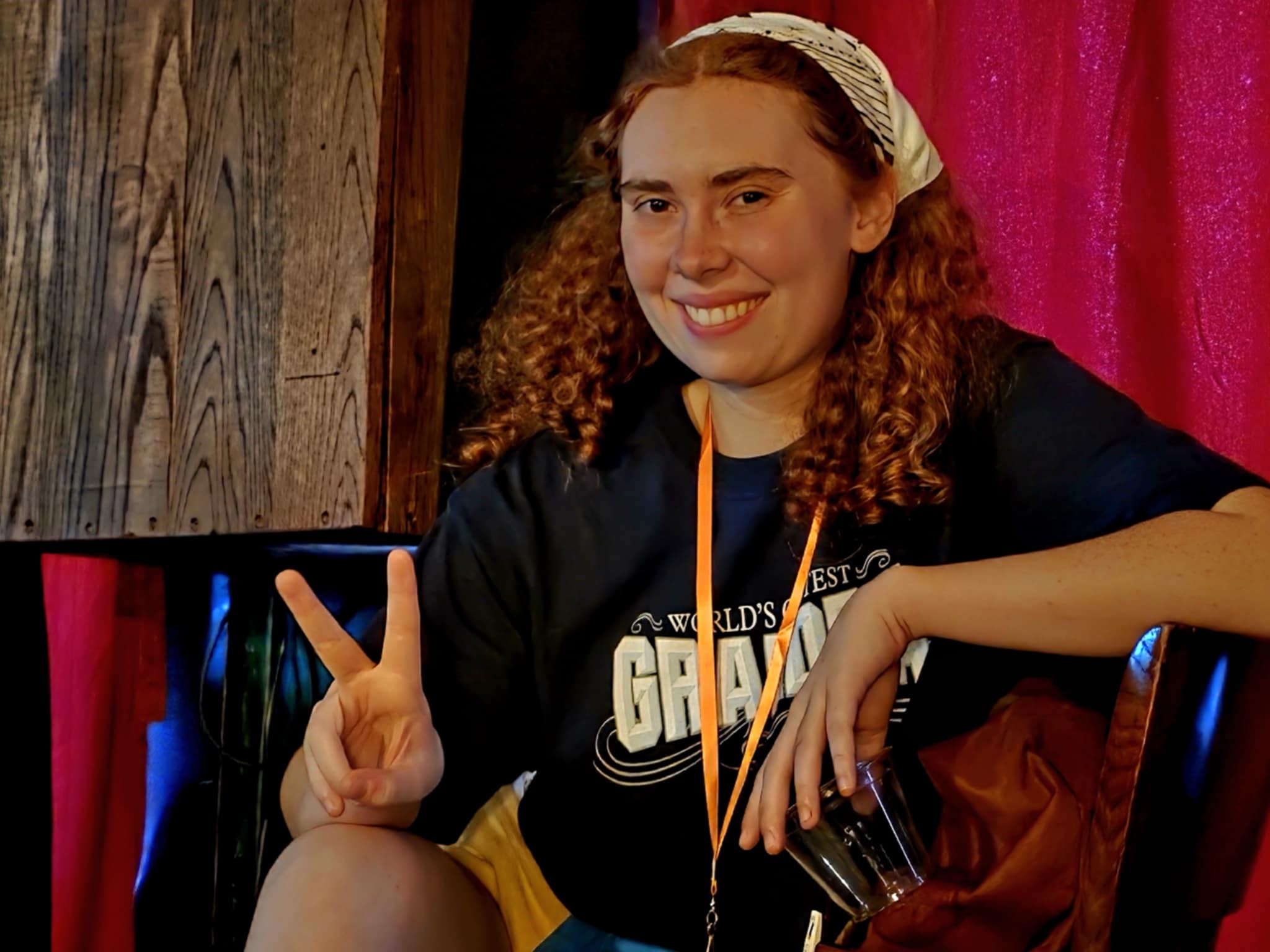
I spoke with a University of Georgia film student with corkscrew curls and a jaunty smile, perched in exactly the posture you might expect of a film student. We explored the gradients, themes, and nuances of several titles, opening perspectives I hadn’t previously considered.
Another guest, a distinguished-looking gentleman in a very fine hat, introduced the topic of the recurring theme of masturbation in several shorts. Uncomfortable, yes, but surfacing often enough to demand notice. We agreed it functioned less as provocation and more as a metaphor for the mental and emotional impotence of the male perpetrators onscreen.
Other themes surfaced, too, taken up by students, filmmakers, and film lovers alike. Again and again came the idea of how a single choice can permanently alter the trajectory of a life. Calle San Agustín by Francis Báez Almendro captured the wistful ache of a missed opportunity for love, while the devastating Over the Rail by Tom Vallejo followed the unraveling of a homeless man’s life, each decision compounding into collapse.
(Carly McCurry/NowHabersham.com)
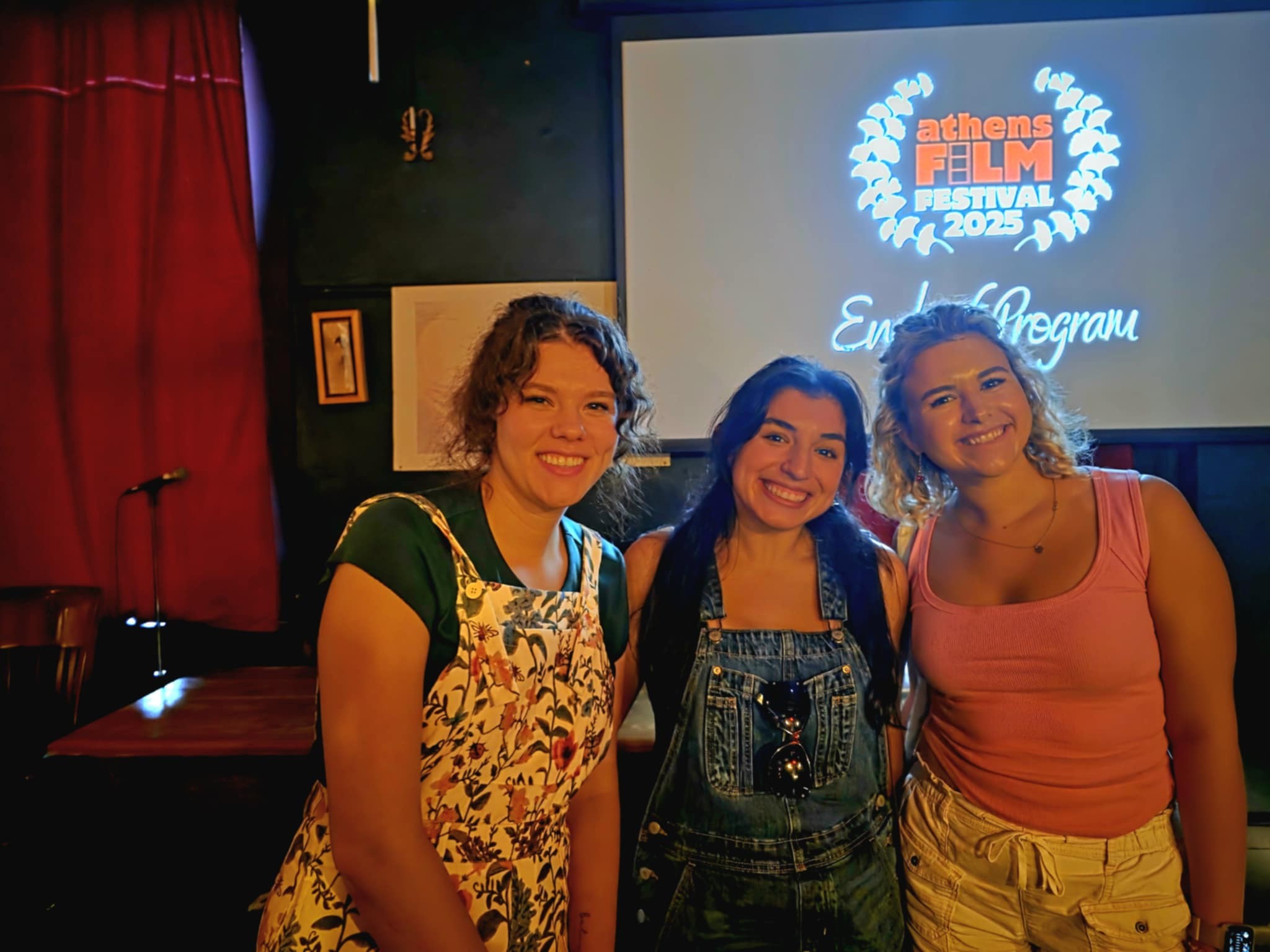
A group of young men, UGA seniors, praised the block’s feminist entries, especially F*ck That Guy. They admired what the filmmakers accomplished on a limited budget and also highlighted Calle San Agustín for its one-shot execution and storytelling. Nearby, a group of young women, out for a night of culture, echoed the enthusiasm, singling out both films as favorites.
For my part, I gravitated to La Finestra, a short film that focused on the final day of a holiday in Italy. It was pretty: pretty actresses, pretty lighting, and pretty voices. Yet, in just six minutes, it managed to capture class, sex, and culture in a way that well exceeded its pretty packaging.
These conversations interlace with what Allison Griffin wrote when discussing working with the University of Georgia students, “We have met very talented students this way – and not all of them are film majors. Being in Athens, though, we attract students from several universities, as Northeast Georgia has quite a few! We aren’t a student-only film festival, but the different ways students can be involved create lots of opportunities – sales, marketing, PR, editing, photography, event-planning — it’s rich with opportunity with a large event like this.”
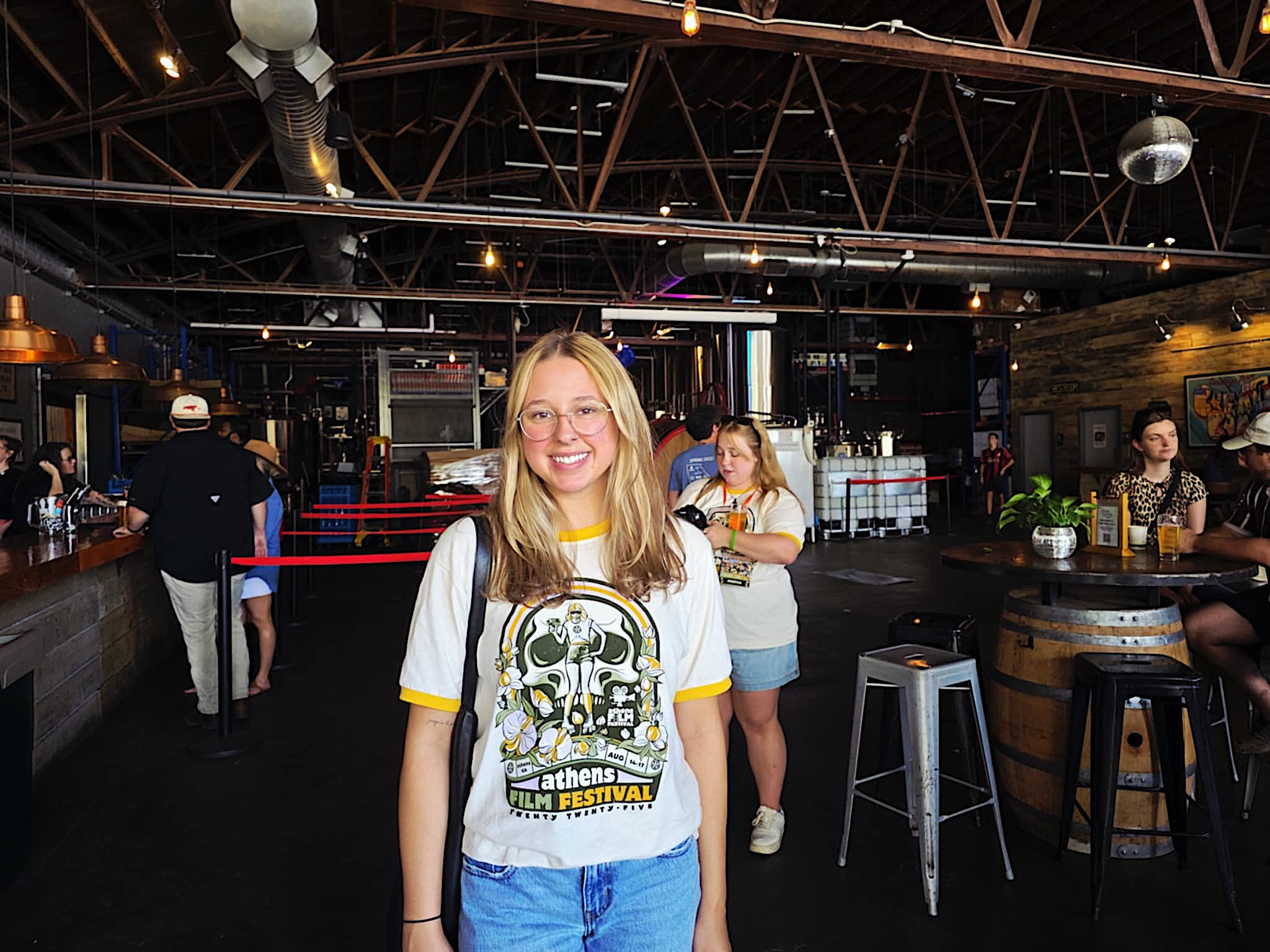
(Carly McCurry/NowHabersham.com)
Indeed, a recent graduate of the University of Georgia, Mikayla Morris, who works with More Creative, took the time to work her full-time job as a project manager and volunteer with the festival. Some of the other volunteers were affiliated with the historic Cine theater or maintained ties with professors beyond graduation.
Northeast Georgia films
For White County native Ruth Davidson, the festival became a platform to speak for her city. Her documentary Helen, GA: A Story Beyond Souvenirs explored the tension between the Bavarian tourist façade and the authentic Appalachian culture that surrounds it.
Davidson suggests that tourism creates a kind of staging for a play. “But step even a mile outside town, and it feels more authentic. The challenge is sharing that history while protecting it.” Her film joined others in the documentary block.
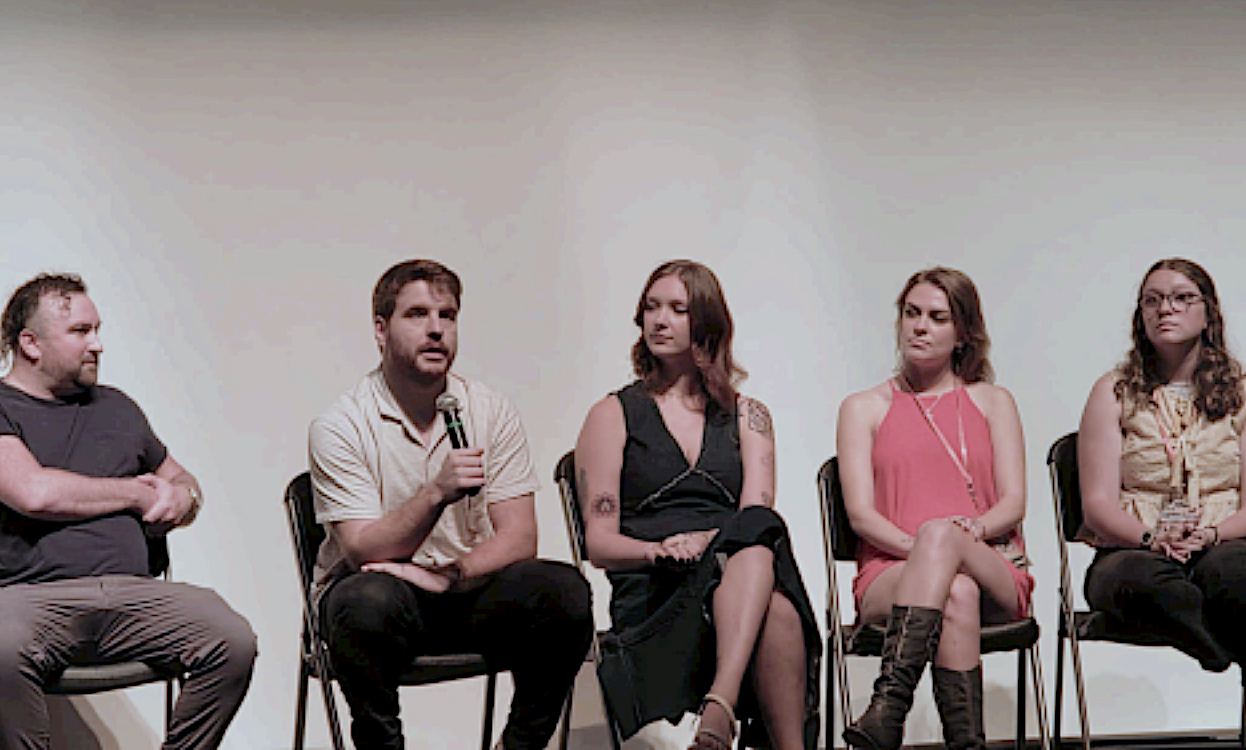
(Carly McCurry/NowHabersham.com)
Among the Georgia-centered films, one title dominated conversations at the festival’s networking events: Fortune, directed by Matthew Perkins. Set in rural Georgia, Fortune plays like a Southern Gothic—dark as McCarthy, moving as Faulkner.
The film delivered both suspense and authenticity. At its climax, the audience gasped, cried out, and finally erupted in cheers. I found myself gripping the arms of my chair. This was not polite applause; it was an uncontrived, communal response.
Part of the film’s power lay in its treatment of place. Perkins captured the texture of Athens and the broader Georgia landscape without irony or condescension, an achievement that eludes many highbrow filmmakers. The result was a work that felt unflinchingly real, a story rooted in the soil it portrayed.
On the patio, connections
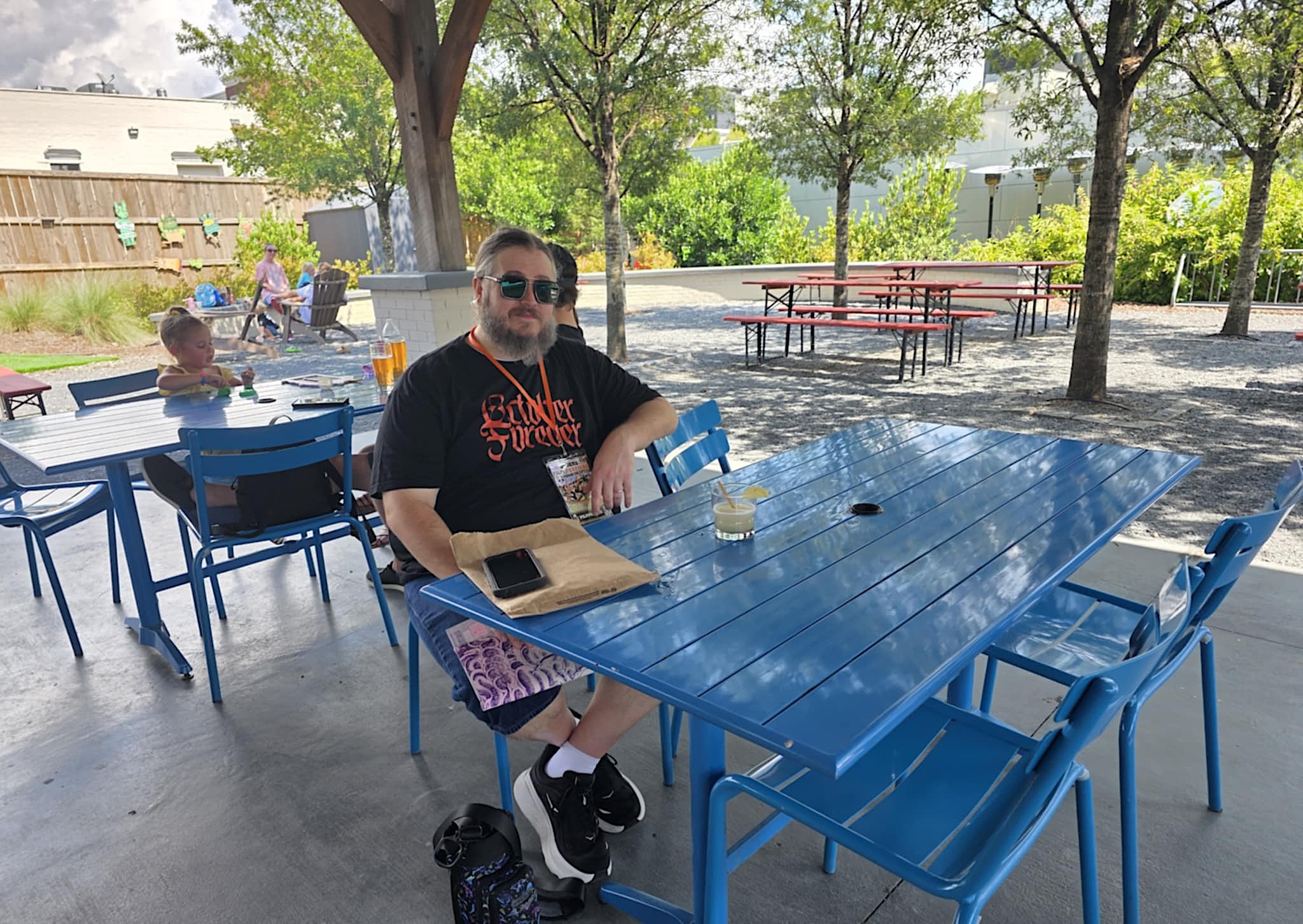
At Creature Comforts, filmmakers swapped notes over pints. John Hill, an animator and professor from Mobile, Alabama, whose short Next Show in 90 Minutes screened during the event, praised the festival’s breadth. “It feels like what you’d expect at a bigger festival, but it’s right here.”
Chris Kelly, a filmmaker from Douglasville, echoed the sentiment. “It’s wonderful to be acknowledged,” he said. “Festivals like this matter. They connect you with audiences who genuinely care about the work.”