
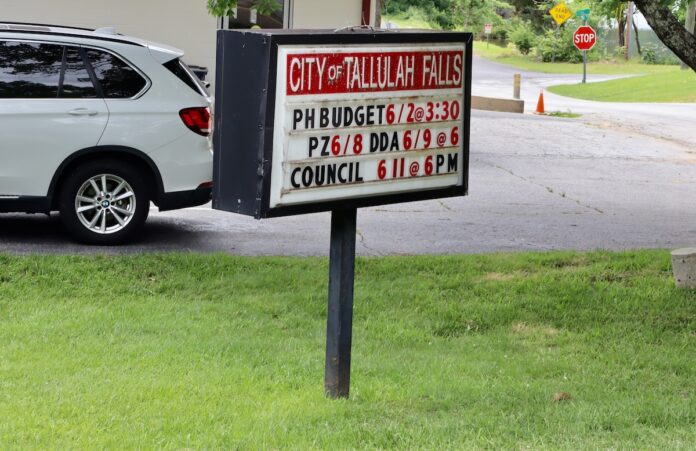
TALLULAH FALLS, Ga. — The Tallulah Falls Town Council unanimously approved an intergovernmental agreement July 9 needed to place Habersham County’s proposed Floating Homestead Local Option Sales Tax (FLOST) before voters, becoming the fourth municipality to approve the measure this week.
The agreement applies only to the portion of Tallulah Falls located in Habersham County. The town spans both Habersham and Rabun counties.
Council members also unanimously approved a 2026 budget amendment that reorganizes accounting categories without changing the town’s overall spending plan.
County moves closer to November vote
Tallulah Falls joins Baldwin and Cornelia, which approved the agreement July 7, and Demorest, which also approved it Thursday.
If Mt. Airy and Clarkesville approve the agreement Monday as expected, Alto would become the final municipality to consider the measure Tuesday before it returns to the Habersham County Board of Commissioners.
Under the timeline outlined by county officials during recent municipal presentations, the county commission must approve the agreement and call for the referendum in time to meet the legal advertising deadlines ahead of the Nov. 3 General Election. If approved by voters, the 1% sales tax would take effect Jan. 1, 2027, and remain in place through Dec. 31, 2031.
Revenue generated by the tax would be dedicated to offsetting property taxes for Habersham County and participating municipalities.
FLOST was created as part of House Bill 581, which established Georgia’s floating homestead exemption and created a mechanism for local governments to replace Local Option Sales Tax revenue affected by the property’s tax relief provisions.
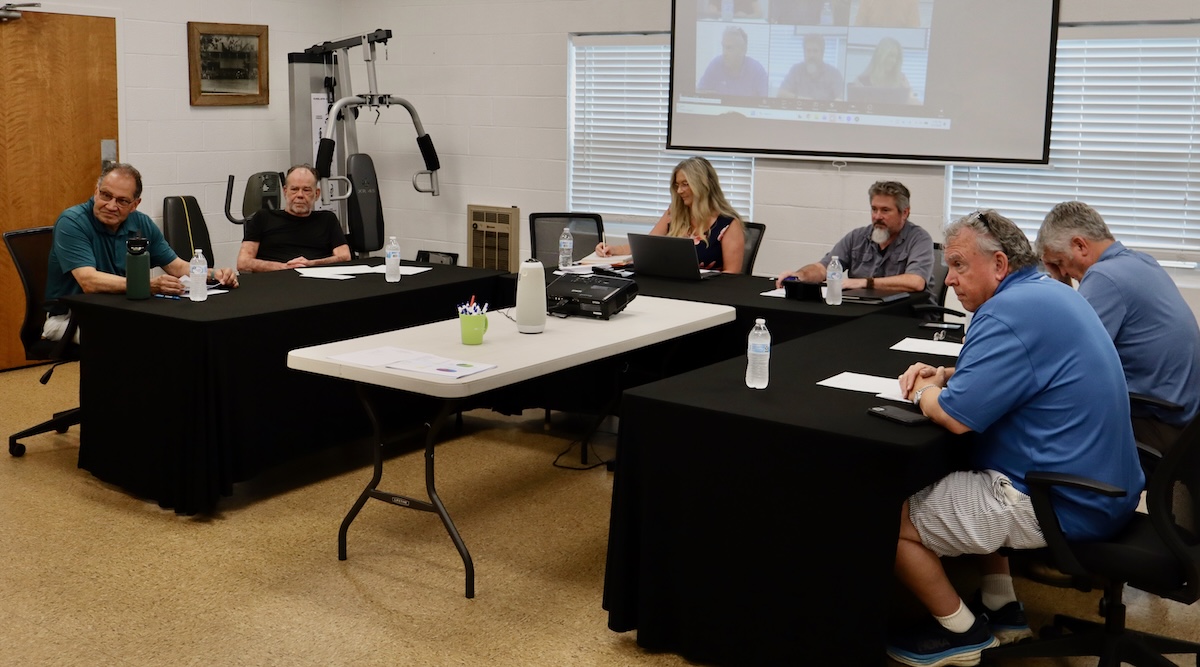
Habersham-only agreement
Mayor Mike Early reminded council members that the agreement affects only the Habersham County portion of Tallulah Falls, one of the few municipalities in Georgia that spans two counties.
“This will only affect our Habersham side of town,” Early said. “This was the reason we remained opt in to it.”
Early said he wished Rabun County had also opted into House Bill 581.
“I wish Rabun County would have done the same. They haven’t yet, but maybe next year,” he said.
He added that Tallulah Falls’ share of any revenue generated by the proposed sales tax would be determined by a state-prescribed distribution formula rather than negotiations among local governments.
“We get a share based on a prescribed formula,” Early said. “There’s no negotiation.”
Budget amendment reorganizes accounts
The council also unanimously approved a 2026 budget amendment, although City Administrator Linda Lapeyrouse said the change does not alter the town’s spending plan.
“There’s really not a monetary amendment on anything this year,” Lapeyrouse said. “The monetary amount doesn’t change. It’s just a reformatting.”
Lapeyrouse explained the amendment reorganizes how expenditures are categorized in the town’s new financial software. The original budget was organized by individual projects, while the new system groups expenses into broader categories such as police, fire and public safety.
Councilman Craig Weatherly questioned why a budget amendment was necessary if no funding levels were changing.
“If it is just reformatting that all the money stays the same, why do you need a budget amendment?” Weatherly asked.
Lapeyrouse said the amendment was needed because the new software did not match the format used when the budget was originally adopted, requiring the town to reorganize budget categories while leaving overall appropriations unchanged.
The amendment was approved unanimously.
Don’t miss what everyone in town is talking about.
Join 4,000+ locals and choose our free newsletter covering news, events and the stories shaping our region.