
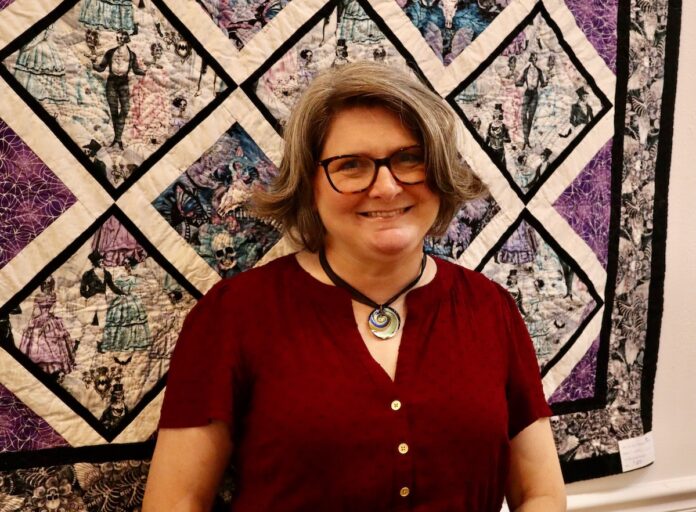
SAUTEE NACOOCHEE, Ga. — Anna Robertson said she was “completely honored and surprised” when she learned she had been selected for a 2026 South Arts Literary Arts Grant, support she now says is helping her finish a long-developing historical novel rooted in rural Georgia folklore and archival research.
Robertson sat down with Now Georgia recently at the Sautee Nacoochee Cultural Center to discuss the grant, her writing process and her work-in-progress novel centered on Mayhayley Lancaster, a early 20th-century Georgia figure known in regional history and folklore for her political activity, community roles and reputation as a fortune teller.
“I was completely honored and surprised, and just overwhelmed that I was selected,” Robertson said. “South Arts is a really prestigious foundation. I’ve known about them for years because I’ve worked as a grant writer, but I didn’t know about the literary arts grant.”
Robertson is one of 16 writers and 12 literary organizations across the Southeast selected for the 2026 South Arts Literary Arts Grants, which provide up to $5,000 in project-based support for creative work, publishing and professional development. The initiative is part of the organization’s Literary Arts Initiative, launched in 2024 to support writers and independent presses across nine Southern states.
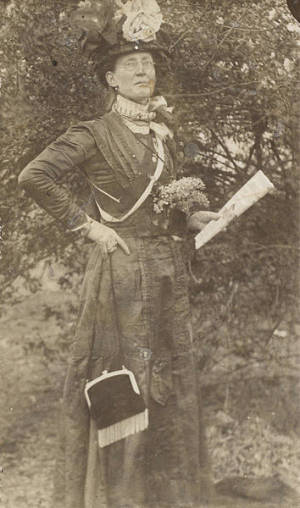
Robertson said her project began as a thesis while she was pursuing graduate studies in creative writing at Western Carolina University. The novel focuses on Mayhayley Lancaster, a Heard County, Ga., figure whose life has been shaped by both documented history and regional folklore.
“It started as a thesis project in 2023 when I decided to go back to school to study fiction writing,” she said. “I really thought I would just take a fiction class with Ron Rash, because he was my favorite author. But I ended up staying and picked Mayhayley as a subject for a thesis because my grandmother actually went to visit her in real life.”
Robertson said she is writing the novel as a work of historical fiction that attempts to explore Lancaster “from the inside out,” rather than through the lens of folklore alone.
“There’s not a lot of women who are written about from their own perspective,” she said. “They’re written about from other people’s perspective.”
As she researches Lancaster’s life, Robertson said she has traveled across Alabama and Georgia since January, working through archives in Montgomery, LaGrange and Athens. While she expected major university archives to be the most useful, she said some of the strongest material came from smaller regional collections.
“I actually was able to find more of what I needed at Troup County Archives rather than the University of Georgia,” she said.
Robertson described Lancaster as a complex and contradictory figure in Georgia history, someone who was widely known for fortune telling but also engaged in farming, midwifery and political life.
“She really didn’t want to be known so much as a fortune teller as she wanted to be known more as a businesswoman,” Robertson said.
Robertson said she is especially interested in the motivations behind Lancaster’s life choices and what she describes as the “wound” that shaped her path.
“What would make a person choose the life that she chose?” she said. “She was tied to the community in a way that I’m trying to figure out.”
The novel also reflects Robertson’s own background, which includes growing up on a farm in Gold Hill, Ala., and later working in mental health and social services before returning to graduate school for creative writing.
“It really taught me how to step into other people’s shoes,” she said of her counseling background. “You have to suspend your judgment. It’s a lot more interesting to sit with those qualities and think about what drove her in these different directions.”
Robertson said she has lived in Sautee Nacoochee for 14 years and considers it her adopted hometown, crediting the community with nurturing her creative development.
“This community just nurtures creativity in a way that I’ve never experienced,” she said. “My superpower is finding the creative underbelly of the Deep South.”
She said the South Arts grant will allow her to continue archival research, attend writing residencies and carve out dedicated time to complete the manuscript, which began as her graduate thesis.
“That was a tremendous honor, and it allowed me to finish my thesis,” she said of earlier support from the Elizabeth George Foundation.
Robertson said she also plans to use the South Arts grant period to present portions of the work publicly and build interest in the novel as she moves toward completion and potential publication.
“I’ve been working on it since January,” she said. “What I’m hoping to do is really dig back into the work, refine it, and finish the novel.”
South Arts’ Literary Arts Grants are supported by the Amazon Literary Partnership and other donors.
Don’t miss what everyone in town is talking about.
Join 4,000+ locals and choose our free newsletter covering news, events and the stories shaping our region.