
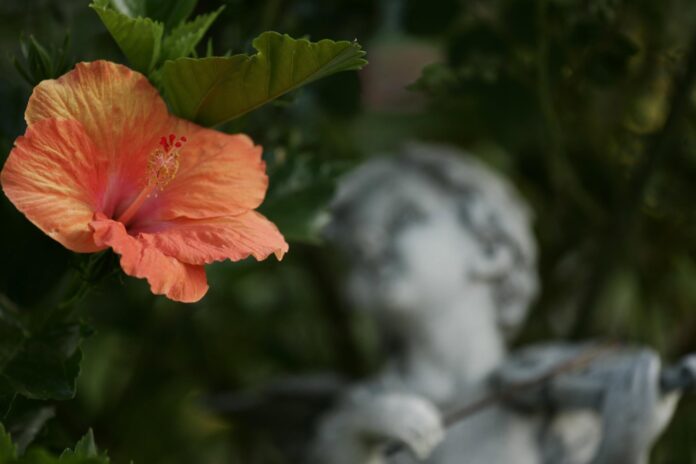
If you’re dreaming of sandy beaches and palm trees, few flowers provide more of a tropical flair than hibiscus. Canna lilies, plumeria, and bougainvillea put on a great show, but the dinner plate-sized blooms of hibiscus are like a neon sign flashing “look at me!”
Summer heat and humidity can certainly make it feel as if we live in the tropics, so why not add a flower that will match the “feel” with a stunning display? These sun-loving plants feature bold, plate-shaped flowers in a dazzling array of colors. You’ll most commonly find these flowering plants blooming in shades of red, pink, yellow, and orange, but there are also purple, lavender-blue, white, and bicolor varieties available. Some hibiscus also have variegated foliage, which adds even more appeal.
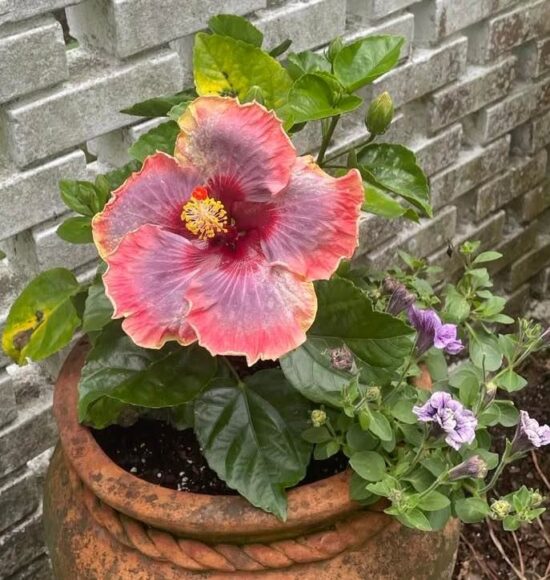
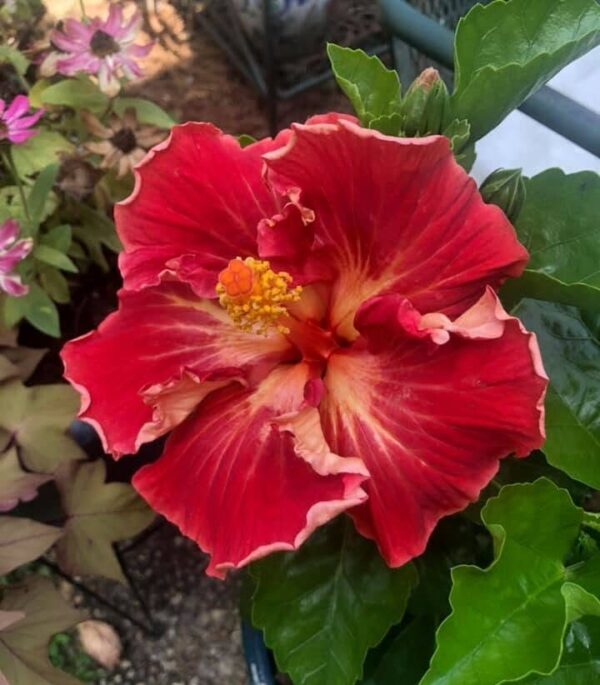
Tropical hibiscus are summer-blooming plants that grow well in containers or in the landscape. They add dramatic décor to decks, patios, and other spaces. One of the prized additions to my patio containers is a variety called Cajun Paprika. I bought it at a local nursery and waited and waited for it to bloom. When it did, I was amazed. Isn’t she beautiful?
While I am partial to the tropical hibiscus, which with proper planning can be overwintered in your home, garage, or greenhouse, there are also beautiful varieties of perennial hibiscus. These are perfect in your landscape and are cold hardy down to zone 4. There are two groups of these perennials, one is in the Rose Mallow family, the other is referred to as Rose of Sharon or Confederate Rose.
While my perennial hibiscus puts on a display in the landscape, the tropical varieties are tailor-made for containers. This allows you to move the hibiscus plant to ideal locations, depending on the time of year. Provide the plants with at least six hours of sunlight, especially if you want to see those lovely blooms. Although warm, humid conditions are ideal for tropical hibiscus, you may want to provide a little afternoon shade when it’s overly hot. Again, containers make this easy to do. Hibiscus plants prefer a cozy fit when growing in a container. This means that they should be slightly rootbound in the pot. When you do decide to repot, give the hibiscus only a little bit more room and always make sure that your hibiscus plant has excellent drainage.
Caring for hibiscus
When hibiscus is in the blooming stage, they need more water, especially in the hottest summer months, daily watering. Once the weather cools, your hibiscus needs far less water, and too much water can kill it.
A growing hibiscus plant needs nutrients to bloom well. In the summer, use a fertilizer high in potassium. You can either use a diluted liquid fertilizer once a week, a slow-release fertilizer once a month, or you can add high potassium compost to the soil.
These are the basics for how to care for hibiscus plants in your garden. As you can see, they are easy maintenance, high-impact flowers that will make your garden look like a tropical paradise.
Don’t miss what everyone in town is talking about.
Join 4,000+ locals and choose our free newsletter covering news, events and the stories shaping our region.