

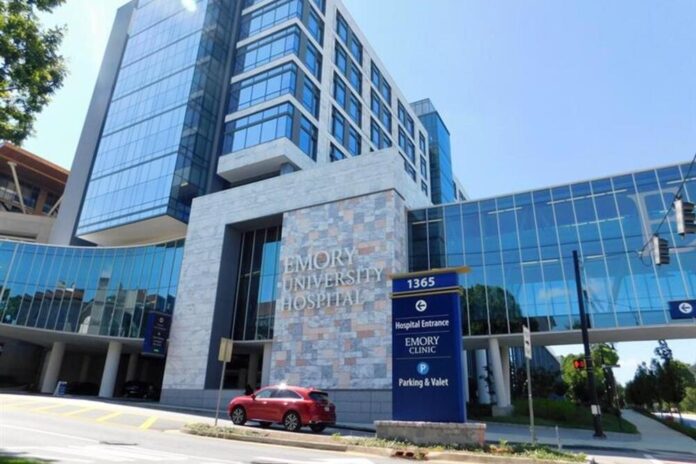
(GPB News) – Access to clinical trials that test new medications or treatments is often limited to patients at major academic hospitals.
That’s one barrier for patients, according to Larry Busse, a professor at Emory University School of Medicine.
Another is that clinical trials have been severely disrupted by cuts to medical research funding, historically funded equally by agencies such as the Centers for Disease Control and Prevention and National Institute of Health as by pharmaceutical companies.
“Private funding sort of became one of the predominant mechanisms,” Busse said. “And I think one of reasons for our recent successes.”
Busse is the founder and director of The Satellite Trials Group of Emory (STaGE), an initiative that screens patients at Emory’s satellite hospitals for their eligibility in clinical trials. Since the start of the initiative, a few thousand patients have been screened.
Every patient gets a chance to participate in clinical trials if they meet the needs of the study. These screenings shorten the pipeline typical of trial recruitment.
“It’s really not dependent on a patient showing up at a hospital where just by sheer luck there happens to be an investigator studying ‘X’ disease,” Busse said. “We turn that upside down, and so we go find the patients where they are.”
The STaGE is currently involved with over a dozen clinical trials at four Emory hospitals, from treatments for allergic reactions to sepsis. The focus on common diseases is intentional, said Ishan Mehta, a pulmonary critical care doctor at Emory St. Josephs in Sandy Springs, just north of Atlanta.
“These trials usually get funneled through the main university setting, mainly because there is that ability,” Mehta said. “What we wanted to do was look at these common conditions, things that we have on a day-to-day basis and see how we can improve our patient’s accessibility to those trials.”
According to rankings in Augusta University’s Healthy Georgia report, Georgia ranks in the middle of U.S. states for its rates of cardiovascular disease, skin cancer, lung disease and obesity.
Among the top five causes of premature death in the state are heart disease, kidney failure and related causes, according to the department of public health.
“If we can improve our advances in our day-to-day conditions that we are seeing, that would be the biggest impact that we can have towards the public,” Mehta said.
Don’t miss what everyone in town is talking about.
Join 4,000+ locals and choose our free newsletter covering news, events and the stories shaping our region.