(Georgia Recorder) — Last year, Georgia Gov. Brian Kemp’s legislative priorities going into the 2025 legislative session had an almost singular focus: overhauling the state’s civil litigation system through a series of policies that proponents refer to as “tort reform.”
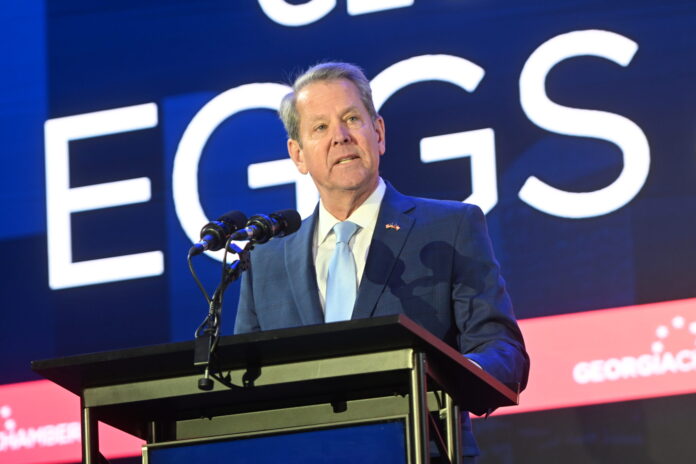
This year, with the fight over tort in the rearview mirror, Kemp has begun to roll out his plans for his last session in office. During a celebratory speech at the Georgia Chamber of Commerce’s annual Eggs and Issues breakfast, he previewed a series of new infrastructure proposals aimed at easing traffic, investing in natural gas infrastructure and reducing homelessness in Atlanta.
The Republican governor’s full budget proposal will be outlined during his annual State of the State address Thursday. But in his remarks to business leaders during Wednesday’s breakfast, held at Mercedes-Benz Stadium, Kemp offered a glimpse into his 2026 wish list, starting with capital projects aimed at reducing traffic.
“Road congestion doesn’t care if you’re a Republican or a Democrat, only that you’re running late to work or an appointment or to your kid’s ball game,” Kemp said. “It costs commuters time with their loved ones and money, it costs businesses valuable production output, and it costs the entire state potential economic development projects.”
Kemp’s proposed budget will include $1.8 billion to expand the I-75 South corridor in Henry County, as well as an additional $200 million to continue work on State Route 316/University Parkway, he said. Communities across the state would also receive an extra $250 million for local road projects, and rural areas would receive $100 million to strengthen or replace failing bridges. Rural communities would also receive an additional $35 million in the amended budget for natural gas infrastructure upgrades under Kemp’s proposal.
“All of this additional funding for transportation projects is certainly needed, but it also has the added benefit of keeping Georgians working in the years to come,” Kemp said.
He debuted a proposal to address homelessness in Atlanta by creating a $50 million grant that will allow the state to work alongside local nonprofit organizations, Atlanta Mayor Andre Dickens and other advocates to decrease homelessness.
“This grant will act as a force multiplier to complement the good work already underway by Mayor Dickens and other champions on this challenging issue,” Kemp said.
Funds will provide funding for emergency shelter and transitional housing, mental health and substance use services and other outreach efforts to reduce homelessness in Georgia’s capital city ahead of the 2026 FIFA World Cup, which is expected to bring 500,000 visitors to Atlanta, according to some estimates.
Other legislative leaders also discussed their priorities, with House Speaker Jon Burns highlighting his chamber’s plans to eliminate property taxes on primary residences, while Lt. Gov. Burt Jones pledged to continue lowering the state income tax rate.
“For too many families in our state, the cost of purchasing or building a home has put ownership out of reach,” Burns said. “This doesn’t just impact potential home buyers, it’s also a workforce development issue hurting businesses, job creators and local economies.”
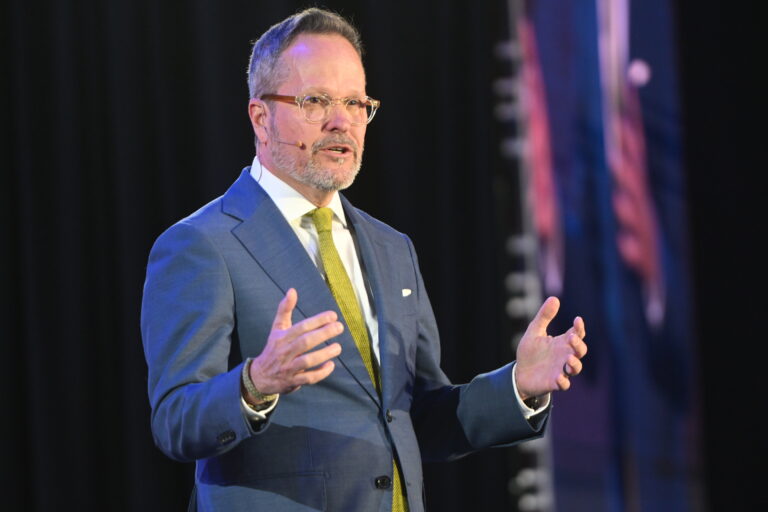
Chris Clark, the president and CEO of the Georgia Chamber of Commerce, lauded the new investments in Georgia’s infrastructure and efforts to reduce homelessness across the state.
“We all want to look good when the World Cup comes to town, but this is about men and women that live, work, play and pray here,” he said. “I think this was a wonderful announcement today, and hopefully it’s a trend for how states can work with local leaders to address those critical issues.”
On the topic of the Legislature’s dueling ideas for cutting taxes, Clark said he was eagerly awaiting the full proposals, but would not endorse either idea until more details become available.
“What we don’t want is to shift the tax burden from one place to another place, or have to raise taxes somewhere else to make up for it,” he said. “We’ll work with both the House and the Senate, we’ll listen to what their plans are, and then we’ll take a look and see how we weigh in.”