
“Another Pleasant Valley Sunday
Here in status symbol land
See Mrs. Gray, she’s proud today
Because her roses are in bloom.
And Mr. Green, he’s so serene
He’s got a TV in every room.”
— Written by Carole King and Gerry Goffin for The Monkees in the summer of 1967.
What is it with us and our status symbols? For some reason, the older I become, the more aware of them I am. Cars, watches, handbags, shoes, designer labels—we use them to define who we are and where we’ve been. The more we display our baubles and crowns, the more we convince ourselves we’ve made it.
The truth is, many can’t afford the popular symbols, but the desire to belong often outweighs the need to be responsible.
We all want to feel successful, feel included, even admired. But in a time of widening economic disparity, all that sparkles can feel less like celebration and more like performance.
If we choose humility over display, it can feel as though our shine has dimmed, as if we’ve somehow come up short.
We surf the web, compare, and quietly measure our lives against an illusion—trying to keep up with a version of the Joneses that may not even exist.
When I was a young girl being raised by Depression-era parents, my mother made most of my clothes. Around that same time, Villager skirts and John Romain bags were the symbols of teenage acceptance. I wanted them badly—because my friends had them.
We will not be remembered for what we bought, but for what we chose to give away.
For my seventeenth birthday, I asked for a wool tweed Villager skirt I had admired at my favorite department store. Weeks later, I opened my gift, and there it was, wrapped in carefully folded tissue. I was thrilled!
But when I lifted it out of the box, I noticed something was missing.
“Mom, where’s the Villager label?”
She smiled and said, “Honey, I wasn’t paying that price for that skirt. I found the same fabric, studied the design, and made it for you. Besides, who’s going to look inside your waistband to check?”
I wore that skirt with pride. Not because of a label—but because of the love stitched into every seam.
Gold, glitter, and shine do not increase our value or popularity. We will not be remembered for what we bought, but for what we chose to give away. If our lives revolve around seeking attention, admiration, or acceptance, what does that truly reflect about us?
In America today, status symbols have become a language signaling where we think we belong in a world that feels increasingly divided. We see it in the way success is displayed – bigger, louder, more visible – as if the proof of having ‘arrived’ must constantly be reinforced.
Nice things don’t define who I am. We can choose to use what we have to lift others or to seek attention. Our true worth lies in how we act, not what we own.
The world’s crowns ask to be seen. The one that matters asks us to see differently.
When I think of status symbols, I see a crown—gold, heavy, encrusted with jewels. Something worn to display power and importance. And yet, those crowns eventually end up behind glass, reduced to artifacts of a moment that passed.
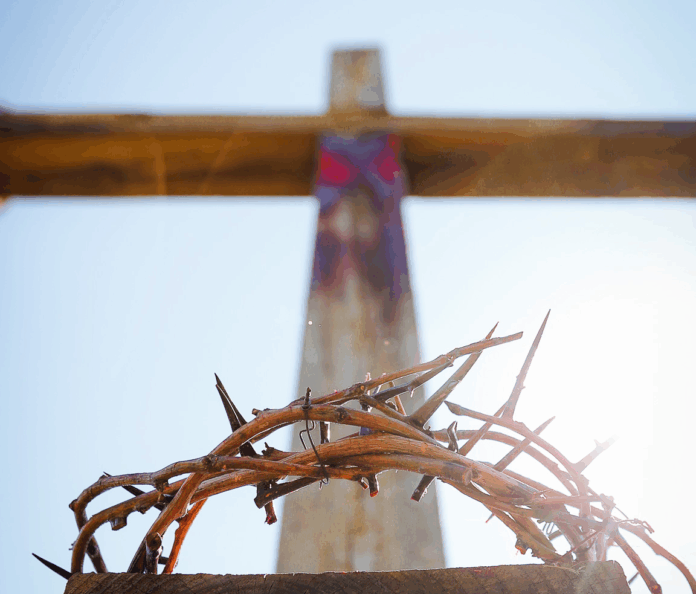
The crown most worth remembering looked nothing like that. It was made of thorns, worn by a carpenter, a fisherman, and a savior.
Our status symbols pale in comparison. There isn’t enough wealth, gold, or recognition in the world to purchase what truly matters.
Feel free to put on your designer clothes, grab your Louis Vuitton bag, and pick up the keys to your luxury car. We all visit Pleasant Valley from time to time, but we should remember that others may not even know it exists.
Yes, we reach for crowns that shine, believing they reflect our value. But the more we chase them, the easier it is to forget that our worth was never something we had to earn or display.
The world’s crowns ask to be seen. The one that matters asks us to see differently.
“Don’t store up treasures here on earth where they can erode away or may be stolen. Store them in heaven where they will never lose their value, and are safe from thieves. If your profits are in heaven, your heart will be there too.” Matthew 6: 19-21