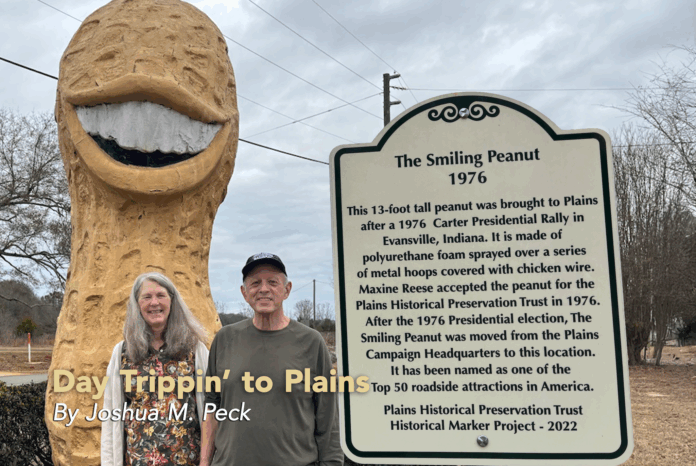
PLAINS, Ga. — Even if you’re too young to remember Jimmy Carter, you probably know he was our only Georgia-born-and-bred president. Although the success of his presidency remains a subject of historical debate, one thing everyone can agree on is that he made a significant impact on America, even in his 46 post-presidential years. And he did it rising out of very modest roots, in Plains—a town so small it makes Clarkesville or Cusseta look like a metropolis.
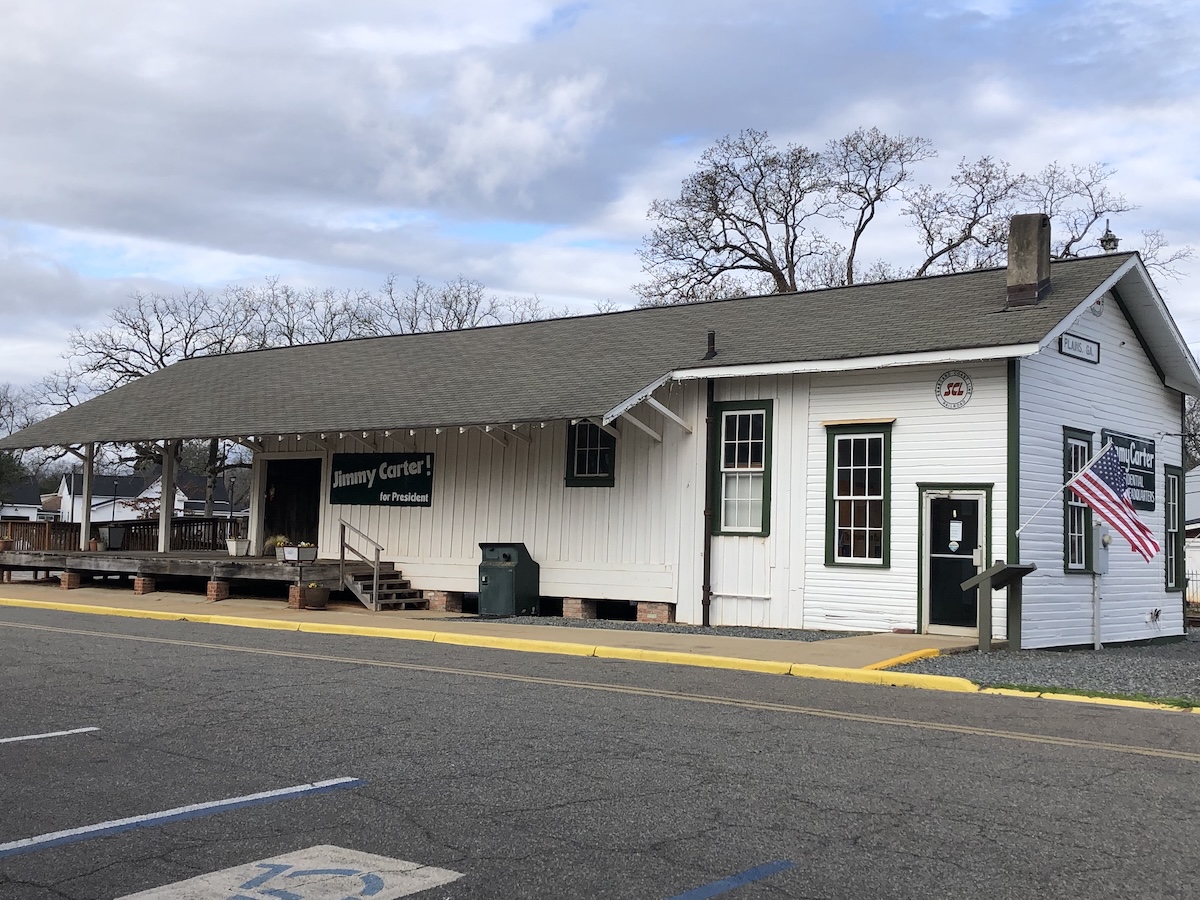
My wife and I took a few days between Christmas and New Year’s to enjoy the Sumter County sites, now part of the Jimmy Carter National Historical Park run by the U.S. National Park Service. These are the places that made Jimmy Carter, well, Jimmy Carter. No one locale where he and his wife, Rosalynn, grew, learned, and governed in the area has anything more than an intimate small-museum feel to it, but in aggregate, the little town offers a stirring collection of memories of the 39th president, who died, aged 100, a year before our visit, in the waning days of 2024. Rosalynn died a year earlier.
After the presidency
Also remembered here are Carter’s extraordinary post-presidency years, consisting largely of peace-building, via Atlanta’s Carter Center, and occasionally, homebuilding, wielding a hammer and saw for Habitat for Humanity.
We started at the former Plains High School, where both Jimmy and Rosalynn had enormously formative years, particularly under the tutelage of one fondly remembered, influential teacher, memorialized here, Julia Coleman.
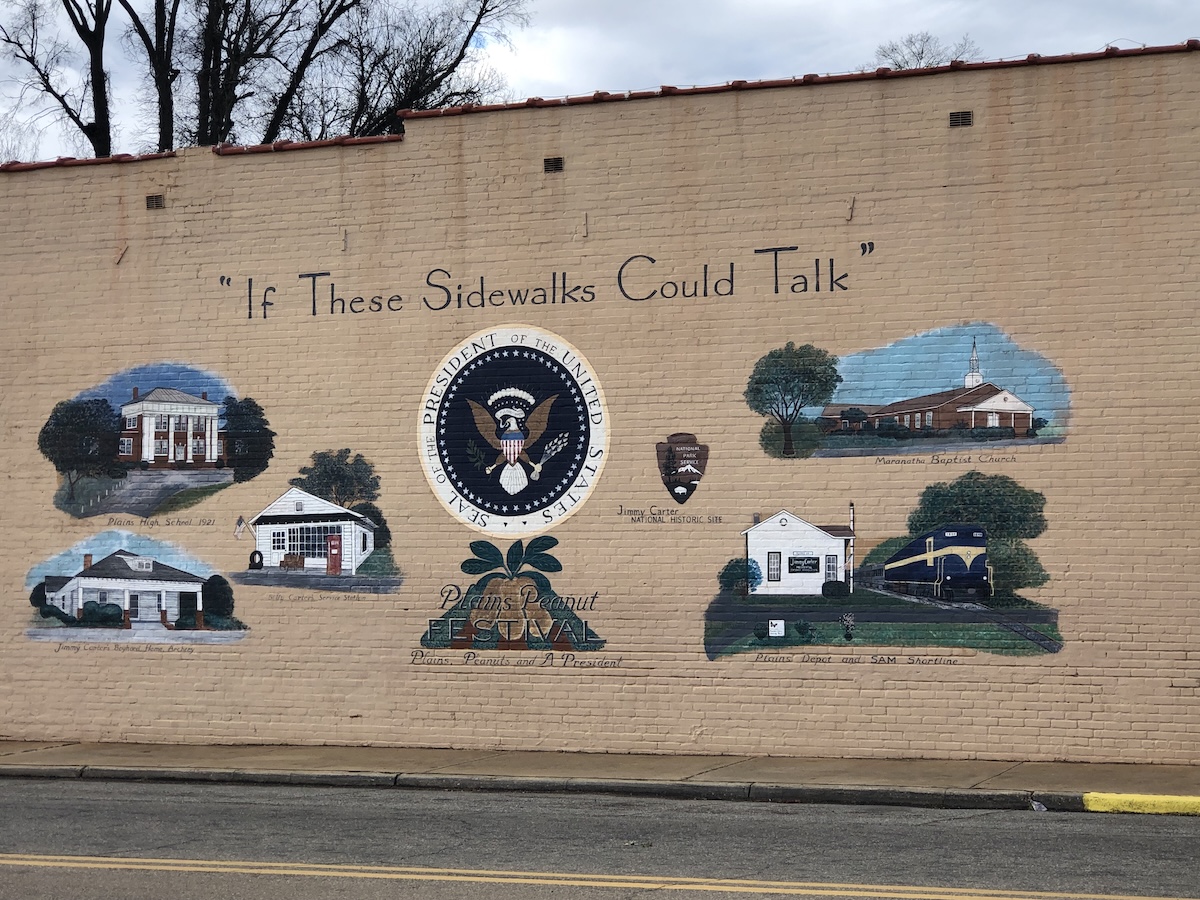
The high school is now given over entirely to remembering their early days and subsequent careers. Just a quick few hundred yards from “downtown” Plains (which amounts to perhaps a 100-yard row of stores and one restaurant), the school has exhibits about Carter’s rise from farm boy to Navy nuclear engineer, to farmer, to school board member (pushing for integration, ahead of his time), to state senator, to governor, and finally, president from 1977-1981.
We found ourselves quite moved by a 25-minute film about the Carters, with some moments that looked familiar from our own youth, and others less-remembered. Of the former, one striking image was the Carters, with young Amy in tow, hopping out of their limousine after his 1977 inauguration and walking the rest of the way to the White House, amidst the roaring crowds. It was a symbol of his intent to be the President of the People, following on the dark Nixon years, and President Gerald Ford’s abbreviated presidency after Nixon’s fall in disgrace.
The triumph at Camp David
Carter’s rise is well-documented here, and there’s a good deal about his signature foreign policy achievement, the 1978 Camp David Accords, culminating in the (lasting) peace agreement between Israeli Prime Minister Menachem Begin and Egyptian President Anwar Sadat.
The exhibits also encompass ample treatment of his service in lower office. It seems one mainstay of his public life was agitating—often against a hefty majority—against racial segregation. From the school board to the White House, he fervently sought equality among the races.
Along the way, we learn that Carter’s father, Earl (officially, James Earl Carter, Sr.), a local businessman and farmer, while he always endeavored to treat his Black and white customers the same, nevertheless maintained a firm belief that separating the races was the best policy. His son rebelled against that mindset.
And Jimmy’s mother, Lillian, who was alive throughout his presidency, was originally a nurse who insisted on providing equal care to patients of all races. She also treated Black people as her social equals, having them come through the front door of her home, which was not customary at the time.
Growing up with Black schoolmates
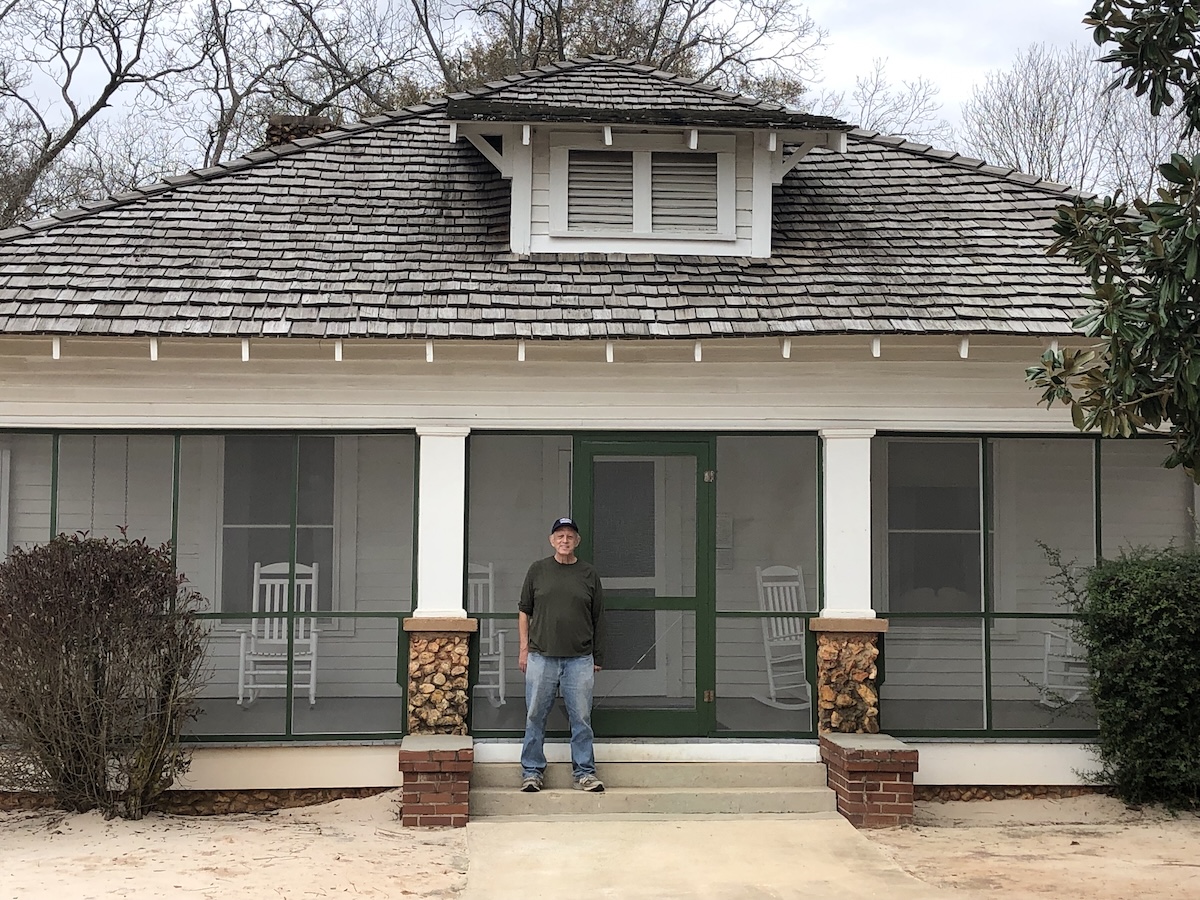
Soon, we saw how Carter came by his enlightened racial attitudes. We spent the most time on a brisk day on the Carter farm, not far west of Plains, in the tiny, unincorporated village of Archery. In Carter’s day, the village’s population consisted of 25 Black families and only one other white one. Most of Jimmy’s neighbors and school chums were Black. Significantly, Rachel and Jack Clark, a family of Black farmworkers, occupied their own house on the Carter farm, a few hundred yards from the Carters’ front door. One gets the impression they were virtually part of the Carter family.
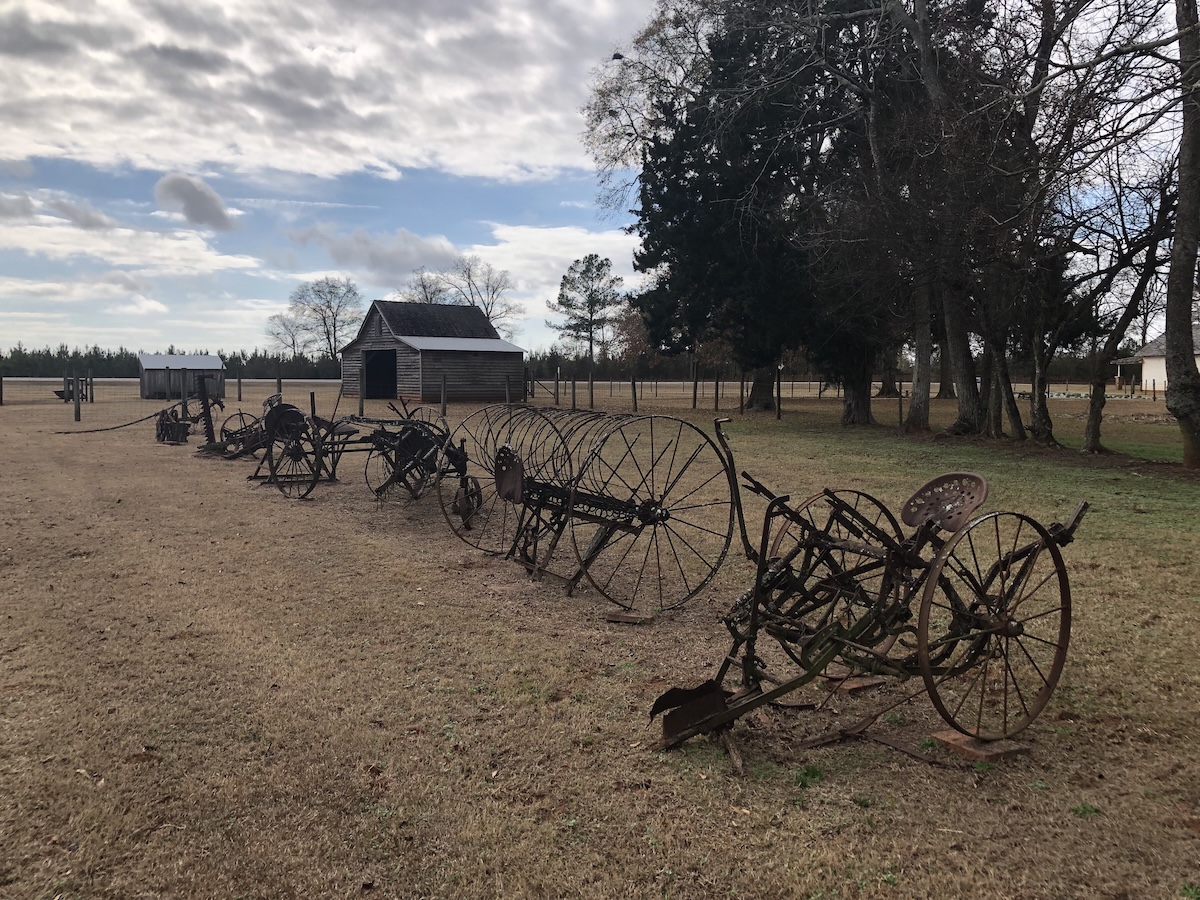
The farm is (still) beautifully organized, in its current incarnation as a historic site. Well-organized garden space, a peanut field (of course), a barn for the livestock, a range of farm equipment, and a windmill that brought water out of the ground all look to be in working condition now, as then.
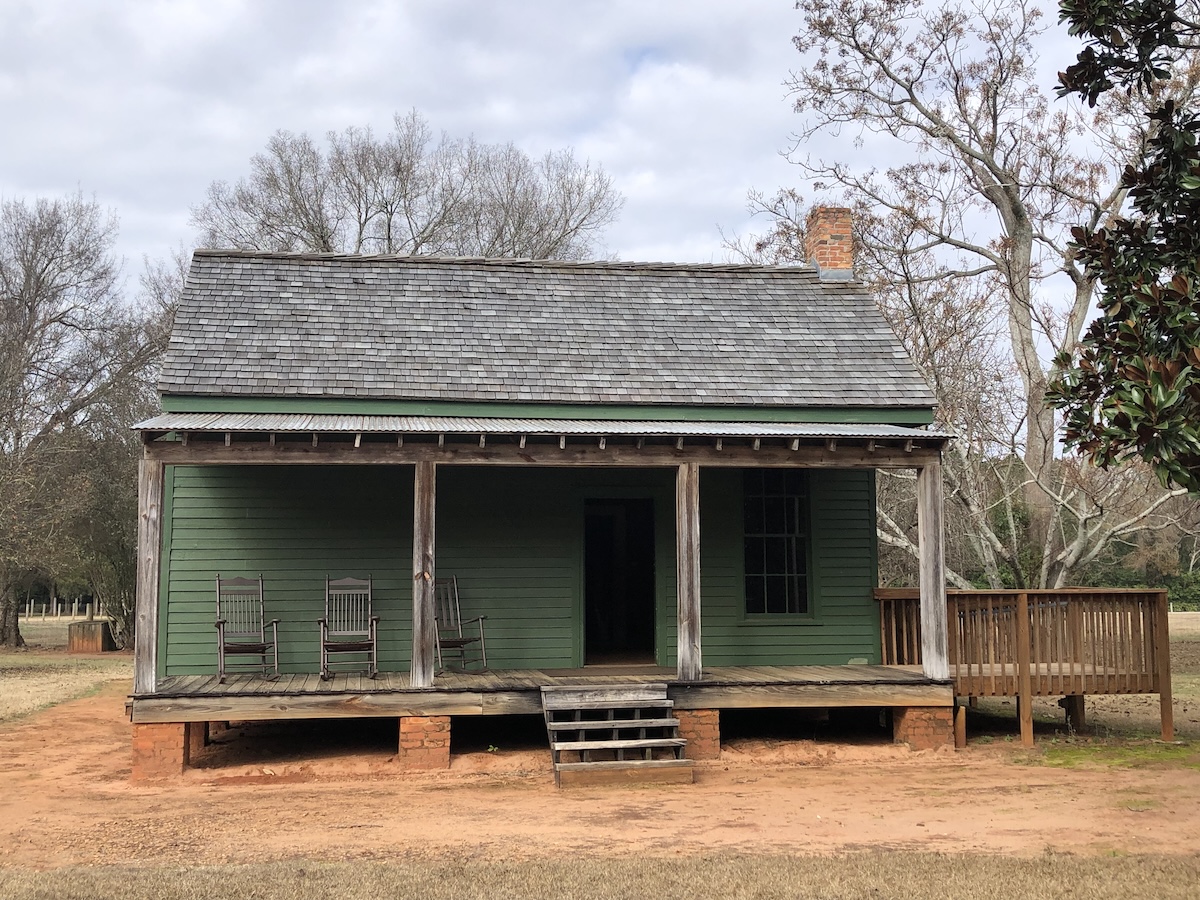
The house was heated in Carter’s youth by fireplaces, but the plaques indicate it was just the main one, in the senior Carters’ bedroom, that was generally alight, and where the Carters huddled for warmth in the winter. And personal needs were attended to outside, as was customary in the time and place, in a neighboring outhouse (no longer in use, as far as we could determine).
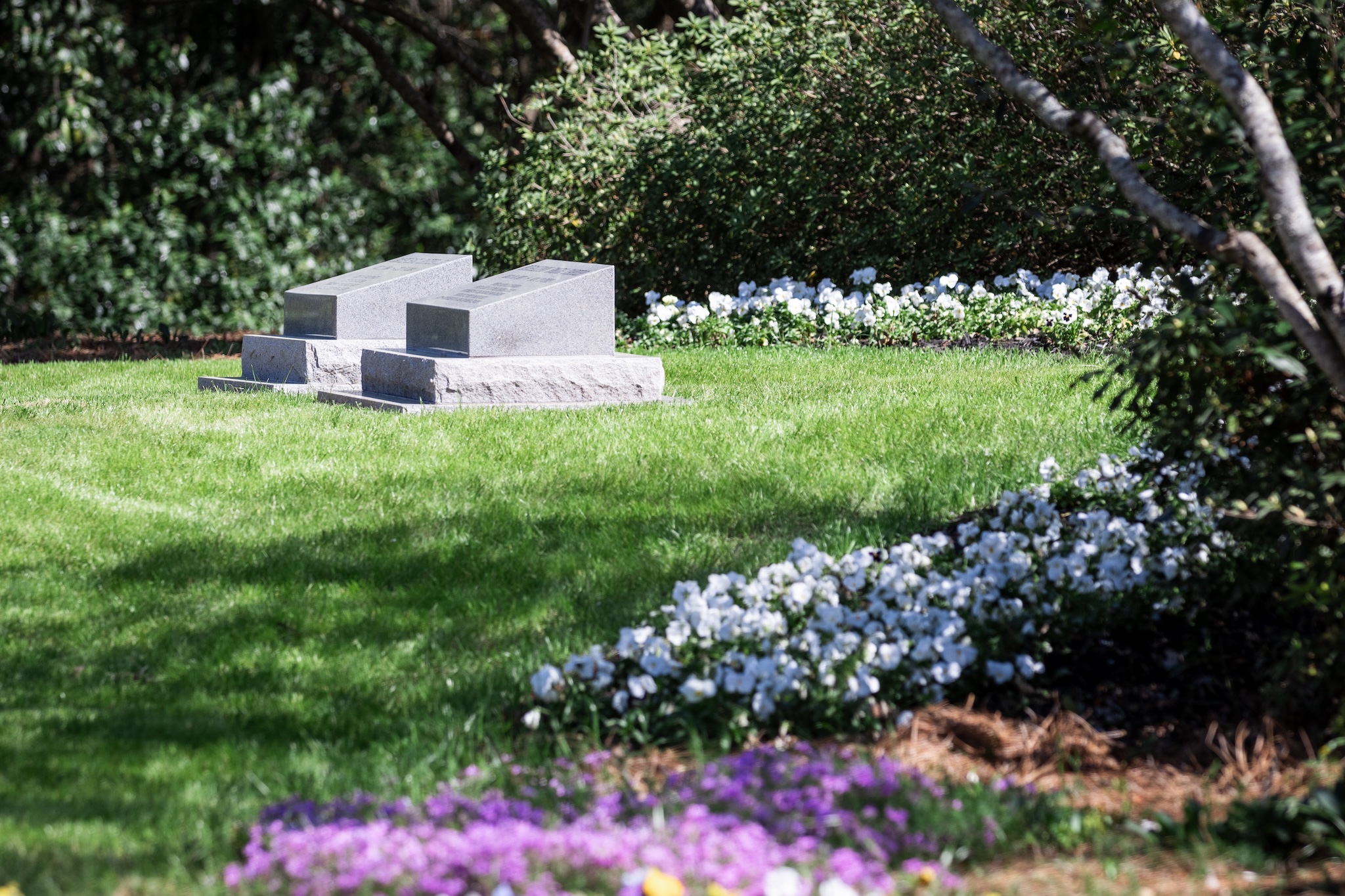
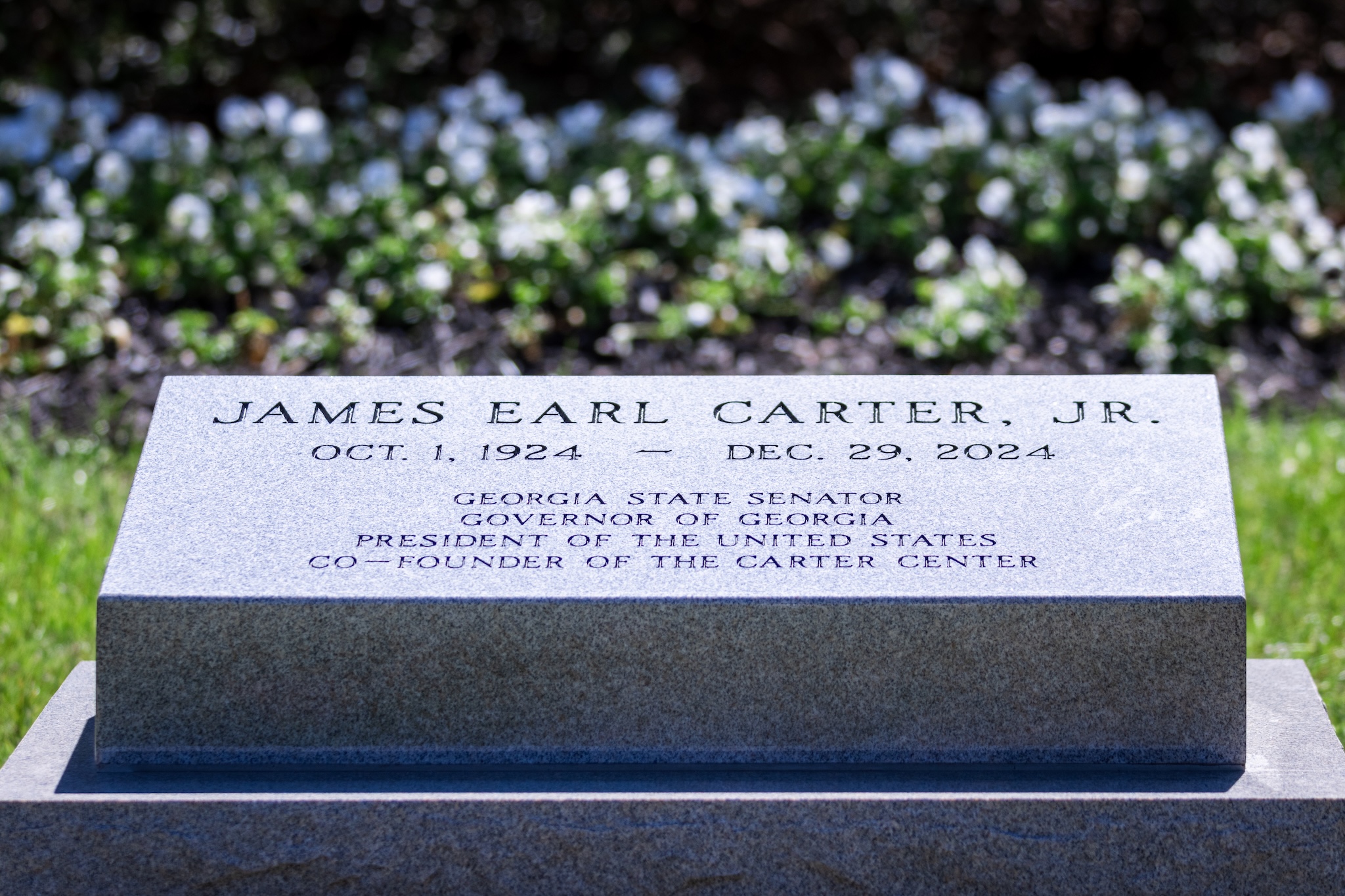
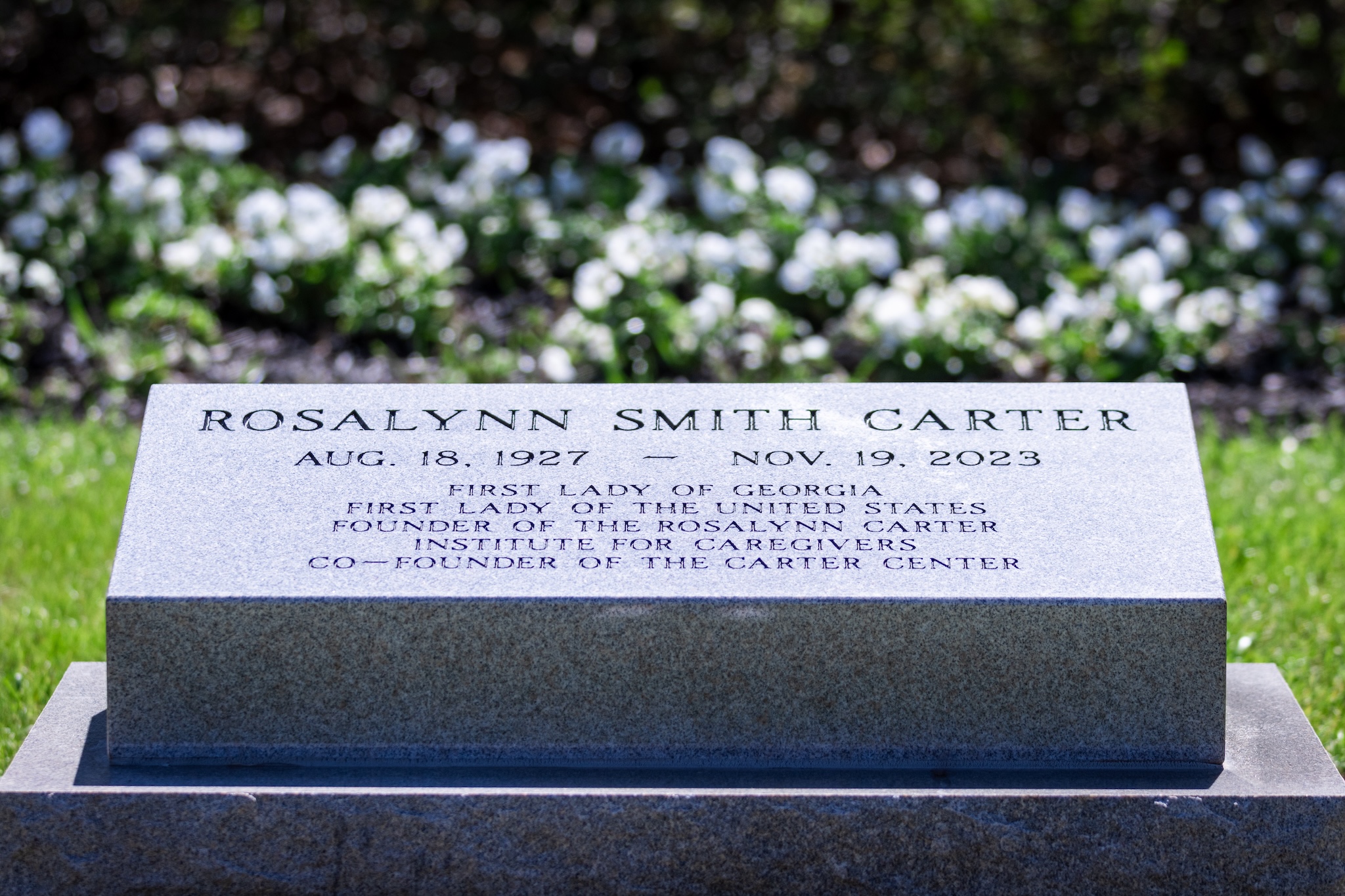
On the western edge of Plains is the modest ranch house where Jimmy and Rosalyn lived for most of their marriage (after a spell in public housing). One can’t enter their marital home, but we took a good gander, then wandered through the gardens across the way, where markers on the graves of the Carters gleam in the sun. There is a grass plot between the path and the graves, but the legends on the stones are fully visible, even without trampling (illegally) on the neighboring grass and flowers, as some of our fellow visitors insisted on doing.
The Baptist schism in Plains
The issue of race also showed up in worship, we learned. The Carters’ original church, Plains Baptist, was split by an attempt by four Black worshippers to attend. Perhaps in an attempt to saddle Carter’s 1976 presidential campaign with the issue, race also reared its head that very autumn. As The New York Times told it:
“The Plains Baptist Church, where Jimmy Carter is a deacon, locked its doors and refused to hold services today rather than admit four blacks in violation of a resolution passed in 1965 barring Negroes and ‘civil rights agitators.’
The resolution was opposed by Mr. Carter at the time of its passage, and resulted in a temporary boycott of his peanut business by townspeople.”
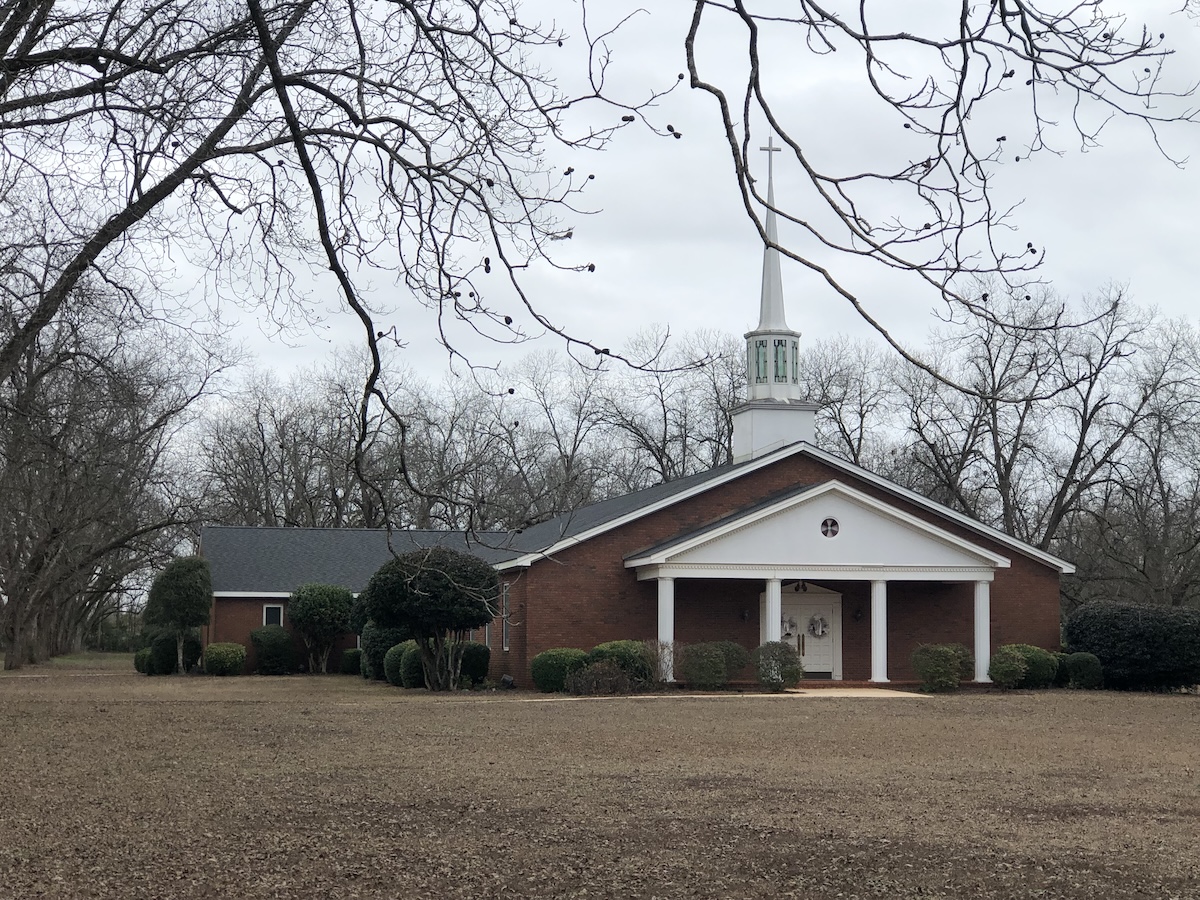
The Carters ended up among the small group of Plains Baptist Church members to break off and form Maranatha Baptist Church—again, a stone’s throw from the downtown stores—which welcomed Black and white congregants alike from the outset. It was at this church where Carter, famously, taught Sunday School for years, often in front of visitors from across the state and the country, who were intrigued by seeing the then-former-president in perhaps his most natural habitat.
Maranatha was closed the day we stopped by, but I was struck by the spare building, and by a sign which, to me (a native Northerner), seemed exotic: “NOTICE: NO HARVESTING OF PECANS ON THIS PROPERTY. PRIVATE PROPERTY.” Well, perhaps I’m a yokel, but I’d never seen any pecan on a tree before, and I certainly didn’t pick one there.
Where to stay
If you are intrigued and might consider a visit, we recommend the best hotel in Plains (it also seems to be the only one), The Plains Inn and Antiques Mall. Each cozy room is decorated in the style of a different decade, from the 1920s to the 1980s—we enjoyed the Roaring ‘40s. Good coffee is offered in a central social room, and of course, the Inn offers proximity to the historic sites and a (very) few places nearby to grab lunch.
For more food options and entertainment, the place to go is Americus, just 15 minutes down the road. It has about 16,000 residents, slightly more than Plains’ 573. There are restaurants of almost every description in Americus, including both a nice bar and grill and a fancy sit-down restaurant in the elaborate Windsor Hotel downtown.
On your way in or out of Plains, you may want to visit the Andersonville National Historic Site, the notorious Confederate prison. We skipped it, but the history is astounding (and distressing).
Just a short drive through the historic backroads of Georgia will put you in the seat of some not-very-long-ago Georgian and American history. Consider it recommended.