

Richard, a Habersham County man who makes an honest living doing home repairs sat in jail for more than three months recently, despite rather weak evidence for his having committed any crime. He had joined some friends in a van for a ride around town, and one of them, who had a beef with another local resident, stopped at the man’s house. The van pulled up, a fight ensued, the police arrived, and everyone in the van was arrested on felony assault charges. But even after the victim told the police that Richard (not his real name) was not one of his assailants, Richard sat in jail. He’d been charged by then, and only a judge could free him.
Assigned a legal aid attorney from Rabun County, he wondered what was going on as the weeks rolled by. No bail hearing, no call from his lawyer, no explanation from the court. Nothing. Eventually, Richard got a bail hearing, friends bailed him out, and he’s free now. It’s not even clear that the D.A. plans to prosecute. But meanwhile, Richard lost income, his girlfriend, and his dignity, waking up day after day in a jail cell, despite not so much as a shred of evidence against him.

One might like to think that no innocent person is ever incarcerated in Georgia, but it happens every day.
The Bail Project
“Sandra”, a 25-year-old Atlanta woman, spent 85 days in a Fulton County jail after being accused of a felony. She prefers not to disclose her real name or the nature of the alleged crime but shared her experience through The Bail Project, the organization that bailed her out.
After Sandra was released, the county took another two years before it ultimately dismissed all charges against her. If not for the donated bail, she could have spent all that time in jail.
The Bail Project, a national nonprofit with staff in two Georgia cities, provides free bail assistance and other services to thousands of low-income individuals each year.
Sandra’s incarceration cost taxpayers more than $9,000, according to The Bail Project, and in the meantime, she suffered from extreme anxiety and depression and contemplated suicide while in detention for those seven weeks.
Innocent until proven guilty
Guilty or not, when people are arrested for any felony, and many misdemeanors, a jail cell is their immediate destination. For some, that initial stay extends into burdensome periods of time, though they’ve not been found guilty of anything. An accusation is not equivalent to guilt, of course, but, from the inside of a cell, it’s hard to tell the difference.
Prosecutors and criminal justice “hawks” argue that the bail system protects society from violent predators while they await trial. But for the many citizens who pose no threat and many of whom are found not guilty or—commonly—against whom charges are dropped—it’s a different story.
“It felt dehumanizing,” Sandra said, “because if no one’s convicted or anything, they still treat you like you are. But there was nothing that I could do. It was really frustrating because I’ve never been in a situation like that before.”
She continued, “The majority of the time [in jail], I’m sleeping. In the 80-man pod, it’s like you could only be out for four hours, two hours in the day, two hours at night. And it really did start messing with me because, again, I knew that I didn’t do anything. And that’s why I feel like my experience was just so frustrating. It was scary, it started really messing with me, and I got really suicidal in there.”
Sandra didn’t know anyone who had the $6,000 for the bond that would have set her free.
“My mom couldn’t do it; all my friends were all in our early 20s; some were in college…and I’ve never been in a position where I’ve ever had to pay that much for anything.”
The Bail Project offered three other case studies, like Sandra’s, of men and women detained in Fulton and Richmond County (Augusta) who spent, respectively, 421, 495, and 507 days in jail before release, costing a total of more than $163,000 to taxpayers, by the group’s accounting. All the charges against the three were also eventually dismissed, the Project reports, as is the case in 43 percent of the cases where the group gets involved, the group reported.
Mountain Circuit D.A: It works
George Christian, District Attorney for the Mountain Judicial Circuit, covering Habersham, Rabun, and Stephens Counties, said that while there is room for improvement, he believes the bail system generally works well, at least in northeast Georgia.
“What typically happens (after an arrest) is that (a defendant) will get their first appearance through a magistrate. Generally, it’s the next day, but it’s supposed to be within 72 hours. If it doesn’t happen within 72 hours, they’re entitled to be released,” he added.
For the most serious offenses, a defendant must go before a Superior Court judge —not a magistrate — for bail to be considered.
Attorneys used to refer to these as “the seven deadly sins,” but the list has expanded. The crimes on the list now include murder, rape, treason, aggravated sodomy, armed robbery, home invasion in the first degree, carjacking, aggravated child molestation, aggravated sexual battery, dealing dangerous drugs and kidnapping, and, if the accused has been previously convicted, arson and burglary.
Christian said the magistrates in the district are prudent about contacting inmates for bail hearings, and it’s common for them to go to the jails to conduct them.
Suzanne Boykin, Christian’s chief assistant district attorney, said it’s rare for inmates to wait longer, but it is tougher for defendants in certain categories to get out on bond they can afford.
For example, she said, it’s harder for an inmate previously arrested multiple times to get out. And significantly, in cases of alleged domestic violence, both the court and the victim may want to have a legal order of protection in place before the alleged assailant is set free, even temporarily.
Asked how the system might be improved, Boykin said more options for social workers to work with defendants pre-trial, and more ability to transfer detainees to in-patient drug or alcohol rehab services would be a huge help.
“We’d feel comfortable releasing them if they went straight to rehab,” she said. Space for such defendants, however, can be hard to come by.
Defense lawyer: For many, bail is out of reach
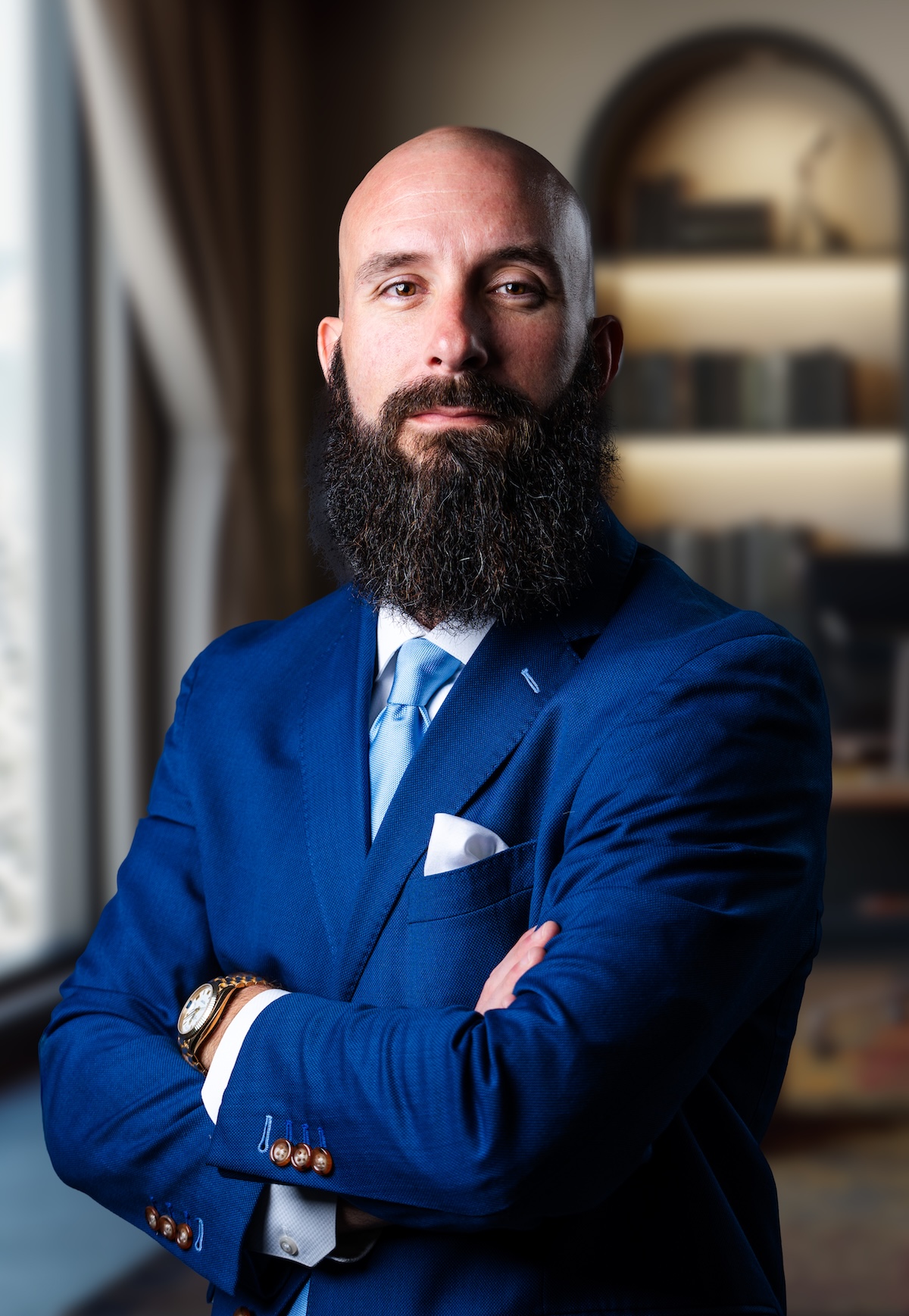
Blake Poole, a defense lawyer in Gainesville who formerly was a Hall County prosecutor, said he represents many clients who have been held in jail for weeks waiting for bail hearings and then for trial.
Poole listed the stated criteria for bail: 1) the specific circumstances of the individual; 2) the gravity of the charge; 3) the defendant’s criminal history; and 4) his or her social and work history.
Though that sounds like a recipe for fairness, Poole says, “I’ve seen bail too high for my clients to meet it…Reasonable minds may disagree as to the ‘correct number’ for the bond, but I’ve had clients who’ve had seven-figure bonds set. Even for those with the resources to hire us, it’s very difficult to make a bond like that. In fact, almost no one can.”
Poole noted that, in rural, multi-county districts, judges circulate through multiple county courtrooms. As a result, some judges hold bail hearings only once a month in each court.
“I do think there’s room for improvement, he said. “I’m pretty far right (politically), but I don’t think the government should hold people indefinitely,” he said. “If you’re going to hold someone without bond, then you’d better try them pretty quickly.”
A call to the Habersham County Sheriff’s Office seeking statistics on the length of stay for pre-trial inmates went unanswered, and Christian and Boykin said they do not keep those records.
The Federalist Society: Bail protects the public
Among the political and judicial groups that support the bail system, more-or-less in its current form, is the Federalist Society, a national group self-described as a group of “conservatives and libertarians interested in the current state of the legal order.”
On its website, the Federalist Society argues outright that bail helps keep the public safe. “In the federal system, the District of Columbia, and every state in the Union—except New York—judges are empowered to consider…the threat a criminal defendant presents to public safety when ruling on the conditions of a defendant’s pretrial release. It is axiomatic that, by virtue of his detention, a jailed defendant is denied the opportunity to harm the public. Likewise, he is deprived of the opportunity to abscond.”
Bail reformers: Bail ‘ineffective and unfair’
That’s not how it looks from the other side of the street, where The Bail Project raises millions to free indigent people from jail before trial.
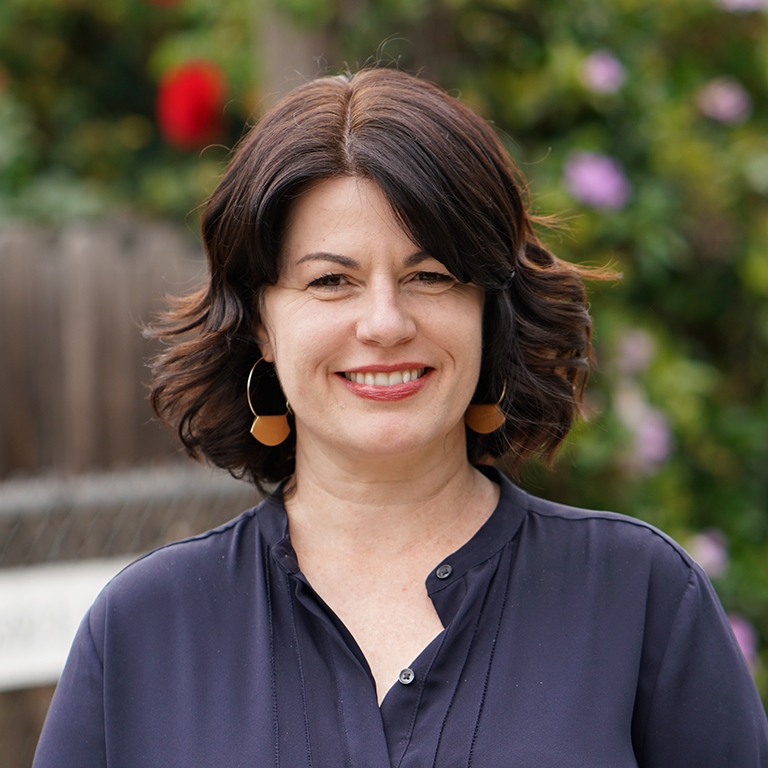
Tara Watford, Chief Data and Program Innovation Officer of the group, characterized the system as failing in almost every way.
“It fails on public safety; it undermines community stability,” Watford said. “Bail is based on wealth, not on public safety. A person who has money can walk free immediately, regardless of the risk they pose.”
She noted that even extremely low-risk incarcerated people without means often can’t afford freedom on bail; seemingly small amounts for them are still unreachable. And while they’re in jail, Watford added, “they lose jobs, homes, custody of their children…This leads to community destabilization.”
The Bail Project has spent some $91 million to free some 40,000 people from jail, but as a society, Watford said, “we spend $14 billion a year to incarcerate [these] legally innocent people.”
“Cash bail is ineffective and unfair,” Watford added. “It too often punishes people before they’re convicted of anything,” and some of whom may never have committed any crime at all.
And yet, a whole, multi-billion-dollar industry has grown up around bail, stepping in to pay defendants’ way out of jail when they can’t afford to.
‘Not a glamorous job’
Michelle Esquenazi is the national president of the National Association of Bail Agents (NABA); she also runs Empire Bail Bonds in New York City and Long Island.
“It’s not a glamorous job,” she said.
While Esquenazi acknowledged that some in the criminal justice system resent or even hate the members of her business, “we are collectively the single most accountable piece of the system.”
Bail agents post cash bail for defendants, generally for a fee of 10 to 15 percent of the total amount. “If they don’t show,” Esquenazi said, “we are financially liable.” But she noted that there is no taxpayer expense for the service.
“We help protect liberty,” said Esquenazi, who added that she and NABA opposed “preventive detention”—the idea that high bail should be used to keep unconvicted but theoretically dangerous people off the streets.
“That is not what the Founders thought liberty should mean,” she said.
Esquenazi said NABA strongly opposes The Bail Project’s program of “randomly bailing people out of jail,” and said NABA has tried to legislatively hinder the group’s practices. “I’m a mother of four,” Esquenazi said. “When you just blindly release people that you know nothing about, you are not protecting public safety at all.”
Trump as bail client
NABA’s state affiliate, the Georgia Association of Professional Bondsmen, represents some 700 bondsmen (and women) at 325 companies. Its president, Charles Shaw, runs ASAP Bail Bonds of Georgia, based in Atlanta. Legislatively, Shaw says, “Our foremost focus is to keep secured bail in use, and to oppose efforts to eliminate it.” The group employs lobbyists at the state level and provides career education and other benefits to practitioners as well.
Shaw’s most famous client: Donald Trump, between presidential terms, when he was charged in 2023—along with 18 co-defendants– with conspiring to “fix” the 2020 election results through applying pressure to Secretary of State Brad Raffensperger and by putting forward an unelected pro-Trump slate to the federal Electoral College. Shaw posted the $250,000 bail for Trump’s charges in Georgia state court, collecting $25,000 from the former and future president in the process. The case has since been dismissed.
NowGeorgia attempted to interview three Hall County bail bond businesses as well. A woman at one business in Gainesville answered, promised a return call, and never made that call. Others received messages and never replied at all.
ACLU seeks to beat back bail restrictions
Perhaps the nation’s best-known body tackling bail reform is the century-old American Civil
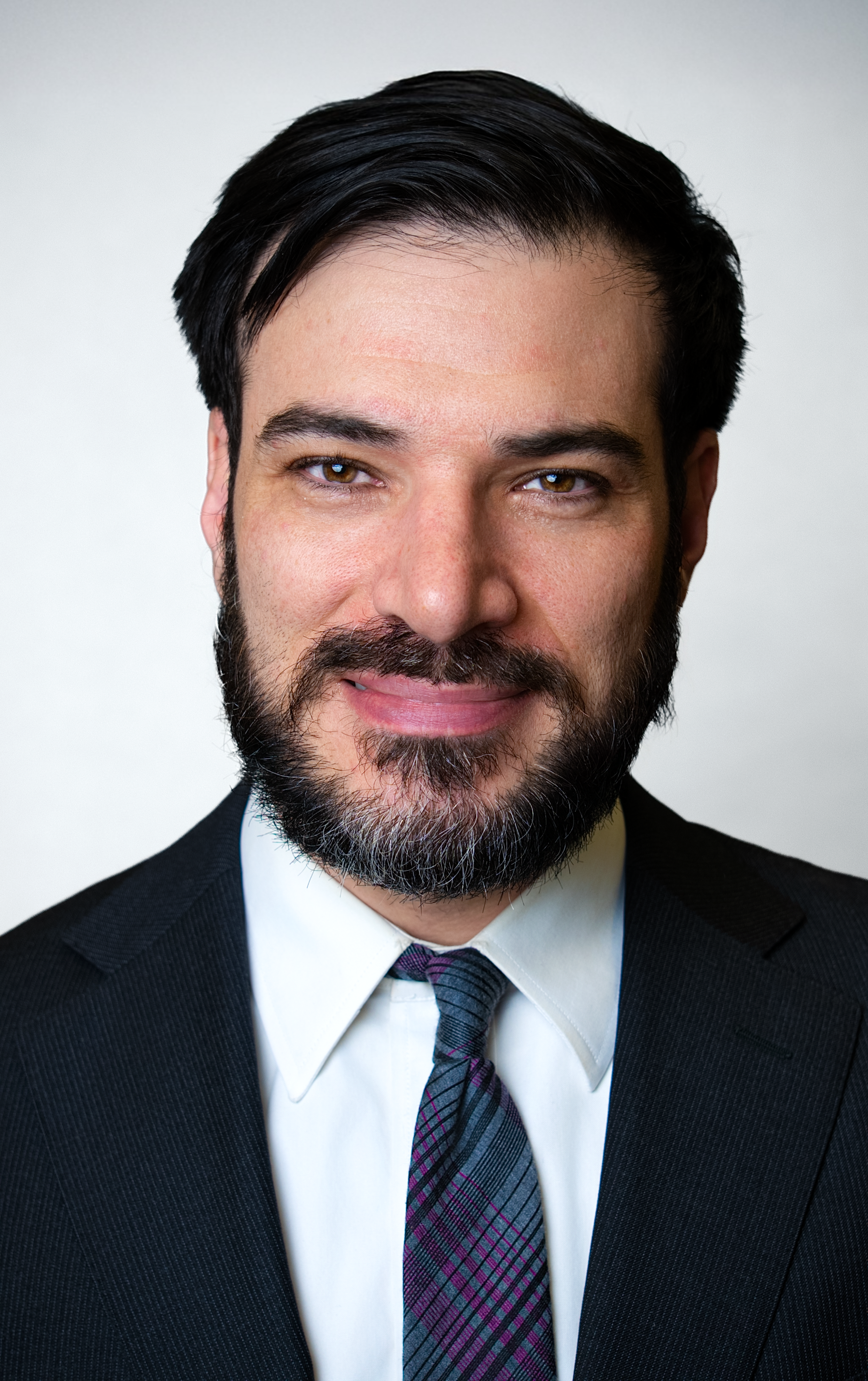
Liberties Union. Akiva Freidlin, senior staff attorney for its affiliate in Georgia, is a fierce advocate for bail reform.
“The bail system is a disaster in Georgia, as in many other places,” said Freidlin. “You have to remember that everyone is presumed innocent,” he said. “Most places require that defendants post some kind of monetary bail…but any amount is out of reach for some people.” That means that people who haven’t been found guilty of anything—and may never be—can sit in jail for weeks or months.
“That is not how it’s supposed to work,” he said. “The law is not being enforced.”
Both the Federal and Georgia constitutions entitle every accused person a right to a “speedy trial,” but regrettably, logistics seem to take priority over the Constitution, Freidlin said. “People often wait years in jail in felony cases, and in many misdemeanor matters, defendants plead guilty because it will take longer to get to trial than they would ever be sentenced to at trial, he added.
“People’s circumstances should determine the bail,” he said. “As the Georgia Court of Appeals put it in Hernandez v. State: ‘Bail set at a figure higher than an amount reasonably calculated to ensure the presence of the defendant is [unconstitutionally] excessive.'”
Furthermore, the attorney stressed, as do other bail reform advocates, that in many cases, cash bail may be altogether unnecessary; “There’s research showing that court reminder messages and assistance getting to court are at least as effective as cash bail.”
“I’ve seen too many cases where there’s NO risk of someone not returning to court—they have loved ones, or jobs, or responsibilities keeping them nearby, but they just hold them anyway,” he said.
Freidlin says two litigation matters are making their way through the courts, challenging the current bail system.
In a federal case, some non-profit groups, such as Barred Business (an ACLU client), have banded together to support ‘charitable bailouts.’
“They want that person safe and free,” certainly at least until they’ve had their day in court, Freidlin added.
But a new Georgia policy, enacted in mid-2024, decreed that no single party could bail out more than three people in a given jurisdiction in a year, says Freidlin.
“There’s no real justification for that,” he says, and a court agreed, enjoining law enforcement from obeying the new law while the case makes its way through the courts.
Freidlin noted that the fight against these charitable groups is partially funded by the national multi-billion-dollar bail/bond industry, which makes its revenue off posting bail for a fee of 10-15 percent of whatever bail amount is set—money the defendant never sees again.
The courts have temporarily ruled for the charitable groups, but “not every sheriff’s office is aware that the rule has been enjoined for more than two years.”
Bail hearing negotiations in Clarkesville
On March 6, a hearing took place in Magistrate Court in Clarkesville, Georgia, where a string of county and local law enforcement officers, lawyers, and the defendants themselves, mostly on camera from the county jail, testified to arrive at bail amounts for each prisoner. Associate Magistrate James E. Dempsey Jr. presided, and Gainesville-based attorney Andrew Martin of the Georgia Association of Criminal Defense Lawyers represented most of the defendants in the bail hearings that day.
Officer Curtis Lambert described coming on a scene in Demorest on November 27, 2025, of a woman crying and covered in blood, reporting that her husband had hit her. She was taken to Northeast Georgia Medical Center for treatment, and though she was reluctant to testify against her husband, he was taken into custody the next day.
Martin sought to lower the defendant’s bond from $10,000 to $2,000, saying the defendant “has an 11-year-old daughter who needs his support financially…lower bond is warranted.”
Dempsey set the bond at $4,500, with the condition that the man keep his distance from the alleged victim and her home.
In another case, an officer had pulled over a driver, Brian A. Mobley, on State Route 365, noting that the trailer he was pulling had no license plate.
The officer believed Mobley was acting suspiciously; he was breathing rapidly, and the artery in his neck was visibly pulsing, typical signs, the officer said, of guilt.
With the help of a drug-detection dog brought to the scene, the police searched the car, revealing a white crystal substance that later proved to be methamphetamine, and 11 pills of unprescribed oxycodone.
Mobley was being held on a $6,000 bond; Martin said his client could scrape together at most $200.
Noting that the defendant had already spent 75 days in jail and had agreed to substance abuse counseling, Dempsey lowered the bond to $1,000.
It was not clear whether either defendant could make bail—with or without help—and Martin declined to answer questions about their cases.
An elderly defendant graduates to bail activism
The ACLU’s Freidlin described another subject of the bail system, Dorothy, who made a slight mistake a few years ago that turned out to be the worst of her life.
At age 70, mildly confused, and suffering a mental health crisis, Dorothy wandered into a grocery store in Atlanta, selected a bag of potato chips, and then forgot what she was doing there. She wandered back out and was immediately apprehended.
In years past, Dorothy would have at most paid a small fine, been referred to a health clinic or social services, and sent on her way.
“The county magistrate set bail at $200, which for Dorothy might as well have been $2 million,” Freidlin said. She was destitute.
Dorothy sat in jail for two weeks. When her case was eventually heard, the charges were dismissed and the arrest expunged from her record.
When she was set free, Dorothy took up the cause of other people in circumstances like hers. She has testified many times before state and judicial bodies about her experience and decried the injustice of a system that locks people up—not as punishment or rehabilitation—but before they even have their day in court.
Thus far, it appears Dorothy is on the losing side.