
ATLANTA, Ga. (Georgia Recorder) — A new law clinic at Georgia State University will offer free legal services to help families address heirs’ property issues, which experts say are a leading cause of involuntary property loss and a barrier to building generational wealth.
The problem arises when a property owner does not appear on the title, most commonly when someone inherits property from a relative who passed away without a will. Such property is often split among many family members, but without clear documentation tying them to the property, families often struggle to hold onto their land or access services like disaster relief funds that require proof of homeownership.
The problem is particularly acute among low-income households. According to a survey commissioned by the Federal Home Loan Bank of Atlanta, which is pledging $1.5 million to fund the new clinic, about 60% of homeowners nationwide whose household income falls below $50,000 do not have a will, trust or estate plan.
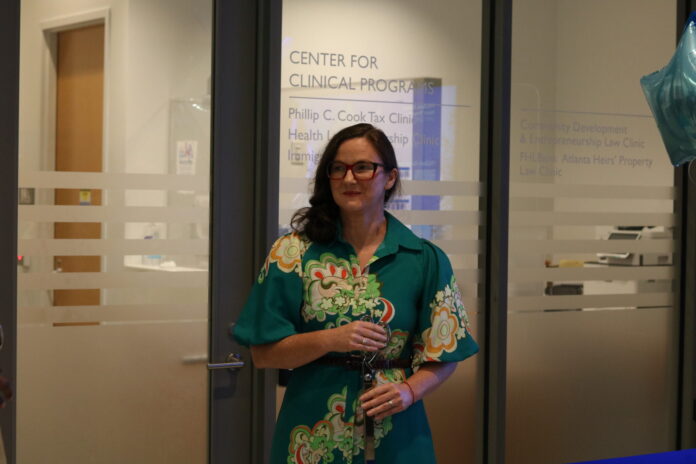
Sarah Stein, an assistant professor at Georgia State University College of Law and the director of the new clinic, said heirs’ property is a “leading cause of Black land loss in the Black Belt” across the South.
The issue can also be seen in urban areas like Atlanta, she added, where developers often disproportionately target families with heirs’ property and urge them to sell their land for below the asking price.
“That pressure on neighborhoods can lead to families deciding to participate in the sale of a home for less money than they would, or in a situation when they wouldn’t otherwise want to lose their home, but they don’t know another option,” Stein said. Rising tax bills or maintenance issues on properties that have fallen into disrepair can lead families to believe that selling their land is the best option, even when other avenues are available.
Part of the clinic’s work, she added, will be in helping families explore all their options, including ones that will allow them to hang onto family property.
“If they don’t have help that is designed to make them aware of all of their options and help them through that process, then they are more likely to fall prey to somebody who has ulterior motives or intentions,” Stein said.
The Heirs’ Property Law Clinic, which plans to begin accepting clients in 2027, aims to both head off the problem by proactively assisting with estate planning and help families resolve existing title issues. Law students at Georgia State University College of Law will provide pro bono legal services to qualifying families.
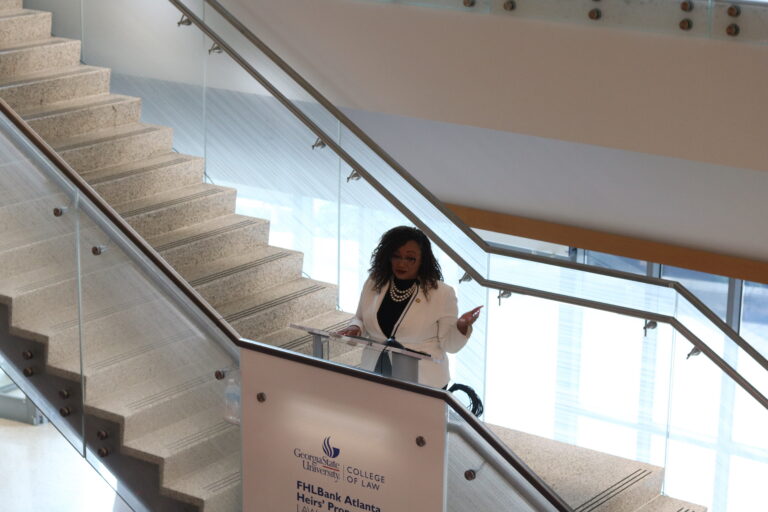
Congresswoman Nikema Williams, an Atlanta Democrat, spoke about her own family’s experience navigating heirs’ property issues in neighboring Alabama at a ribbon-cutting ceremony for the clinic Thursday evening.
“We figured out how to hold on to that land, but for too many families, that’s just not the case,” she said. “Properties that have been in your family for generations can become difficult to protect when the system doesn’t recognize the way that we have passed down land for generations. You can’t access disaster relief. You can’t make the necessary repairs to your home, and in some cases, you can actually lose it altogether.”
She added that a bill she sponsored, which would allow the U.S. Department of Housing and Urban Development to help property owners clear their titles and make it easier for those with heirs’ property to access federal disaster aid, recently passed out of committee with bipartisan support. But until there are greater resources to deal with such issues on the federal level, she said, resources like the clinic “will not only be a resource for families seeking support with their properties, but it will also train the next generation of attorneys.”
Don’t miss what everyone in town is talking about.
Join 4,000+ locals and choose our free newsletter covering news, events and the stories shaping our region.