
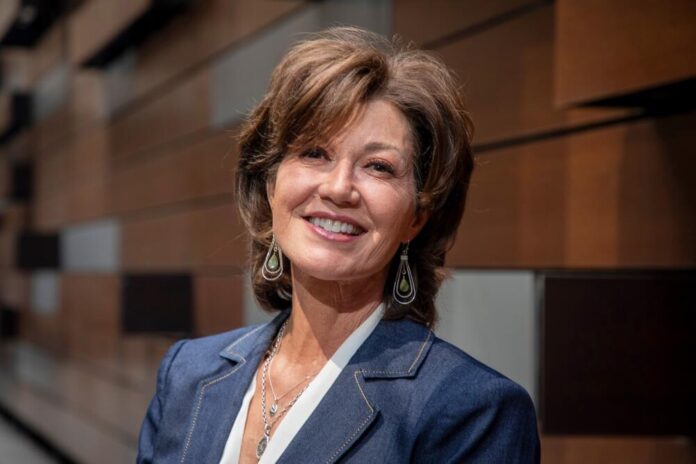
DECATUR, Ga. (GPB News) — Amy Grant’s new album, The Me That Remains, is a collection of heartfelt tunes aimed at overcoming obstacles and bridging political divides through stories about the power of community, spiritual journeys and everyday acts of kindness.
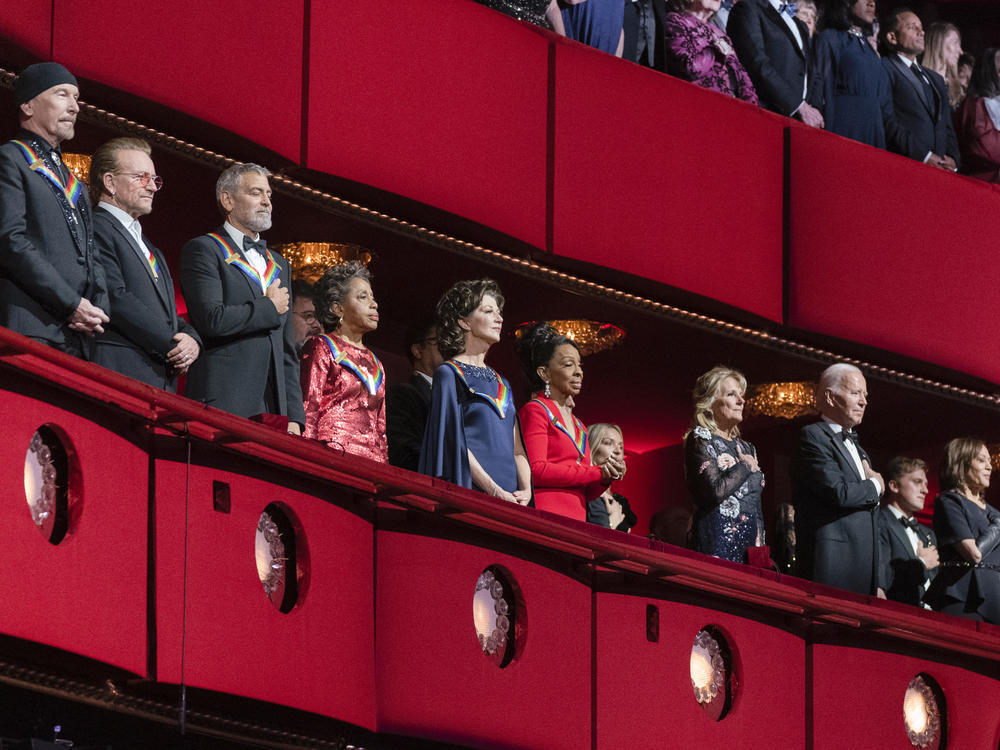
Grant is a fixture in the American music scene, with a half-dozen Grammys, scores of Dove Awards and a 2022 Kennedy Center Honor from President Joe Biden. The singer was born in Augusta, Ga., grew up in Nashville, Tenn., and moved through the ranks of contemporary Christian music in the 1970s and 1980s with songs like “My Father’s Eyes” and “El Shaddai.” A breakout star from the beginning, the contemporary Christian music sound formed around her, not the other way around.
She defied labels by topping the Billboard Hot 100 in 1991 with “Baby Baby,” and has since paved her own way in the industry, supporting LGBTQ+ allyship, gun control and affordable housing as well as collaborating with musicians across genres of gospel, rock, pop and country.
Now, at 65, her third act and first album of original material in more than a decade is a triumph, musically and personally. The title track is about finding resilience after heart surgery and a brain injury from a bicycle accident that changed her life.
“I think I was writing to speak to myself,” Grant told GPB of the long recovery process in which music served as a form of therapy and healing.
While many women struggle to continue their careers, make ends meet or afford retirement, Grant said society often overlooks the impacts of physical setbacks that fame or money can’t cure.
“You said something, you know, ‘Women our age,'” Grant said. “And I do feel like there’s a perspective that comes after your families have — your kids have grown up and launched. And right now, I feel like my memory might not be great, but my problem-solving skills and how I process things, just because of the time that I’ve lived, you realize everything takes longer than you think it is gonna take.”
Grant kicked off her latest chapter by recording her friend Sandy Lawrence’s song, “The 6th Of January (Yasgur’s Farm),” and releasing it on Jan. 6, 2026. Lawrence first conceived the song in 2011, but its themes of searching for idealism in the wake of unrest make metaphorical and historical references to both the events at the U.S. Capitol in 2021 and abolitionist John Brown’s 1859 seizure of the federal arsenal in Harper’s Ferry.
The song’s callouts to the 1960s Woodstock festival, John Lennon’s “Imagine,” Marvin Gaye’s “What’s Going On” and Martin Luther King Jr. and the civil rights movement were not lost on Grant, a child of the 1960s.
Grant said her new music operates at the intersection of faith and politics, where there are no sides, just positive messages she’s returned to since childhood.
“You know, I grew up on all the great singer-songwriters: Joni Mitchell, James Taylor, Carole King, John Denver, early Elton John, everybody[who’s] a great songwriter — the Beatles, Lennon/McCartney,” she said. “But all that… man, songs just represent everything in life.”
“And I just started singing about faith because [in] all the music that I loved, nobody was talking about their spiritual journey. In the mid-’70s, I started going to a hippie church in Nashville because my two older sisters started going there. And so it was so different from religious culture of the South. But it was alive, experientially; it was blue jeans, barefoot, flowers in people’s hair, singing spontaneously, making up their own songs. And I just thought, ‘I want to add to the repertoire of singer-songwriters with this message.’ You know, I didn’t grow up with gospel music. I didn’t grow up with contemporary Christian music. I mean, I guess it was just emerging. But I’ve always loved all kinds of music.”
For The Me That Remains, Grant worked with beloved producer Mac McAnally and a handful of songwriters to frame her thought in songs about overcoming societal division, addiction and the loss of community in America in “The Saint” and “How Do We Get There From Here?” featuring Ruby Amanfu. Two of her daughters and husband Vince Gill join for harmonies on tracks about relationships and watching a loved one cross into another spiritual realm at death.
“Beautiful Lone Companion” is an ode to God co-penned by former NFL player-turned country songwriter Mike Reid, who co-wrote Bonnie Raitt’s 1991 smash, “I Can’t Make You Love Me.”
“There’s so many ways that we compartmentalize that [love from God]with religious language,” Grant said. “We compartmentalized it by saying, ‘You’re not on my team, we don’t have on the same jersey.’ And I just feel like, the nugget of Mike’s song [“Beautiful Lone Companion”] was such a beautiful expression [in response to that]. And that the presence of love is available to everyone, everywhere. Without asking, it’s there. It already is.”
Grant said she wasn’t thinking about making statements when writing the songs for The Me That Remains, but she sees how they work together as a whole.
“I look back on it and [think], just instinctively, I was appealing to community and trying to encourage each one of us of the power of our own choice,” Grant said. “Changing the world is not about proclaiming or grand gestures. Change happens because incremental investment is done in a conscientious way every day. My whole health journey has been about incremental change.”
Amy Grant is also participating in an America 250 project, Songs of U.S., to honor American songwriters such as Woody Guthrie, Nina Simone and Bob Dylan, and her current tour is a rare chance for the singer to connect with new audiences and give fans a close-up they’ve longed for since the earliest days of her career.
“We’re trusting the songs; no bells and whistles,” Grant said. “And that feels like a sort of intimate setting that I haven’t done in the context of a tour. But to actually do a tour like this, we’re gonna be learning as we go.”
Don’t miss what everyone in town is talking about.
Join 4,000+ locals and choose our free newsletter covering news, events and the stories shaping our region.