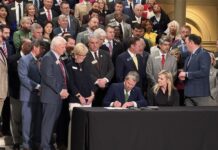

ATLANTA — A bill aimed at closing a gap in Georgia law on clergy sexual abuse is moving forward after unanimous approval by a House committee, following testimony from a Northeast Georgia survivor and expert witnesses.
The Georgia House Judiciary Committee voted March 19 to advance Senate Bill 542, sending the measure to the House Rules Committee ahead of a potential floor vote. The bill already passed the Georgia Senate on March 6 by a unanimous 55-0 vote.
The legislation would make it a criminal offense for clergy members to engage in improper sexual contact with someone under their pastoral or spiritual authority, aligning clergy with professions such as teachers, therapists and law enforcement, where consent is not considered a valid defense in cases involving power imbalances.
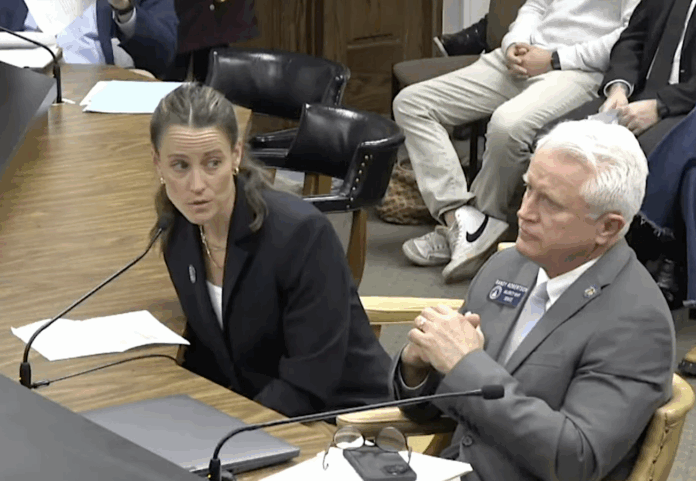
The hearing featured testimony from Hayle Swinson, a former Truett McConnell University student in Cleveland, who told lawmakers her experience reflects a broader pattern of abuse rooted in trust and authority.
“This type of abuse does not begin with force. It begins with trust — trust that is placed in a spiritual authority figure,” Swinson said.
Swinson: ‘Scripture was twisted’
She described how what began as spiritual guidance became “years of manipulation, isolation and sexual exploitation,” with religious teachings used to justify the abuse.
“Scripture was twisted … to convince me that this is God’s will,” she said. “This is not consent. This is coercion through power.”
Swinson said current Georgia law does not provide a clear path to accountability in such cases.
“In my case, it took over 35 journalists and publications to shine light on the darkness, because at that time, there was no current legal path to justice or accountability,” she said.
She urged lawmakers to act, calling the bill a chance to protect future victims.
“Predators do not hide in dark alleys. They hide where trust is the highest, and often that is in religious spaces,” Swinson said. “Justice should not depend on your ZIP code.”
The science is ‘unequivocal’
Dr. Holly Haynes, who holds a doctorate in human development and psychology from Harvard University, also testified in support of the bill, citing more than 25 years of research into trauma and a personal connection to Swinson during her time at Truett McConnell.
Haynes told lawmakers that clergy sexual abuse creates a distinct and severe form of harm that current Georgia law does not fully recognize.
“The science is unequivocal,” Haynes said. “Clergy sexual abuse inflicts a category of harm that Georgia law does not yet recognize, and it must.”
She said trauma from sexual abuse can physically alter brain function, disrupt memory and decision-making, and lead to long-term psychological effects, including high rates of post-traumatic stress disorder and depression.
“When the abuser is a member of the clergy, the damage goes further,” Haynes said, describing what research identifies as “spiritual harm,” including the loss of a survivor’s relationship with faith and community.
Haynes also addressed questions from committee Chairman Stan Gunter, R-Blairsville, about suicide risk among survivors.
“While that number is not … 70%, that number is far lower,” she said. “Any one person who takes their life is too many.”
She said shame and silence often prevent survivors from seeking help, particularly in religious settings where abuse may go unspoken.
“The least likely to come forward are the most in need of legal protection,” Haynes said.
Bill seeks to establish accountability
Supporters say SB 542 does not target religious institutions but instead establishes accountability where power dynamics can be exploited.
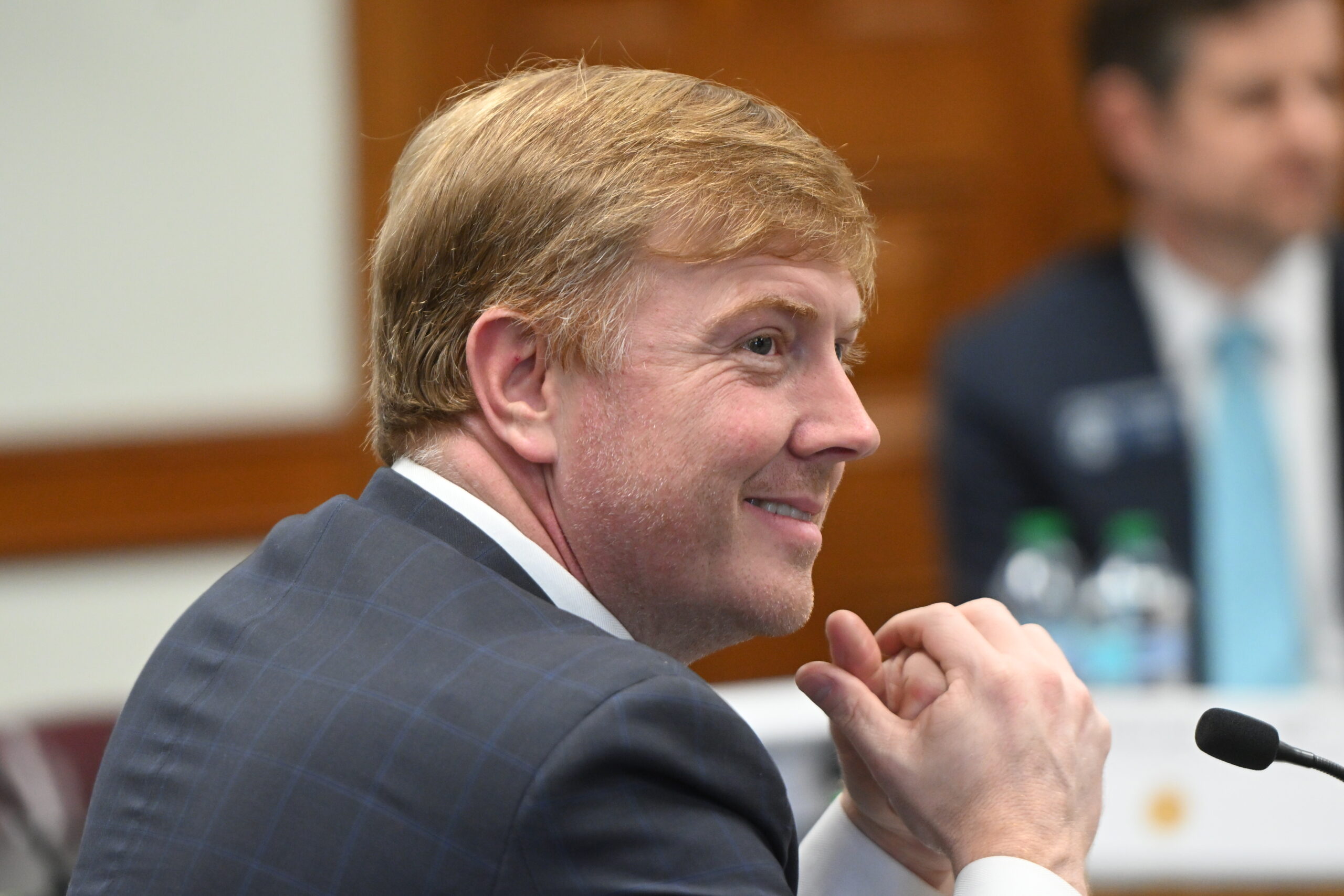
State Sen. Blake Tillery, R-Vidalia, a sponsor of the bill and chairman of the Senate Appropriations Committee, told Now Georgia the legislation is about preventing abuse of authority.
“SB 542 makes sure individuals don’t use positions of power to take advantage of those under their leadership,” Tillery said. “It’s a further step in accountability for and transparency against sexual exploitation, and I’m proud of the women that have come forward to move this bill.”
Tillery also pointed to a related effort by Sen. Randy Robertson to increase transparency around sexual harassment cases involving public officials.
“Senator Randy Robertson also sponsored an amendment to another bill that makes public sexual harassment settlements made against state legislators,” Tillery said. “This has been dubbed the ‘Epstein Amendment.’ I hope his amendment passes too.”
If approved by the full House and signed into law, Georgia would join a growing number of states that have enacted laws specifically addressing clergy sexual abuse.
For Swinson, the bill represents more than policy — it is a chance to prevent others from experiencing similar harm.
“We have an opportunity to change that for the next generation,” she said. “Protecting the abused must matter more than protecting bad actors.”