
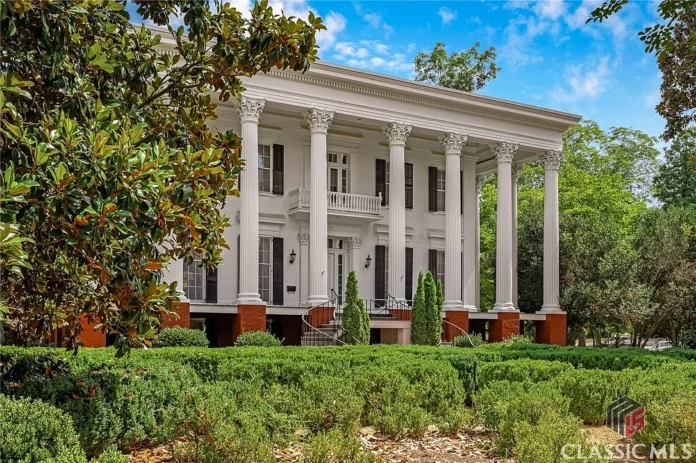
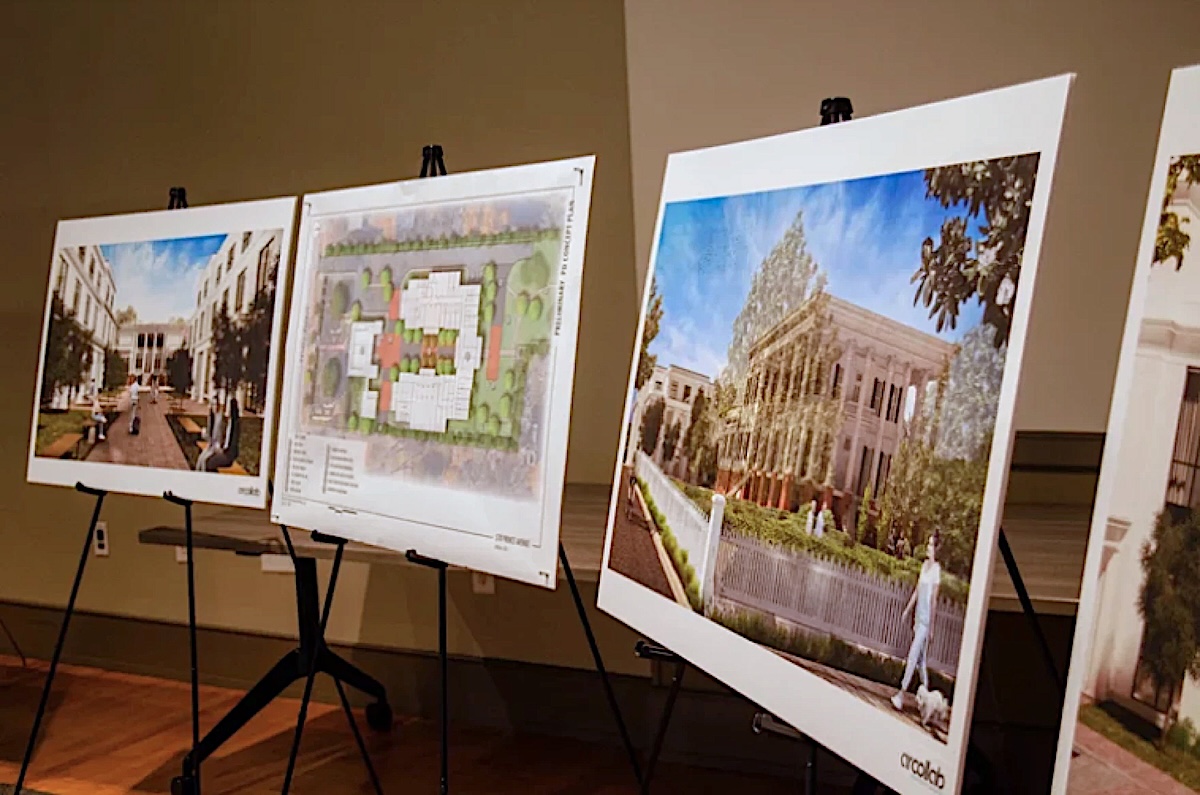
Historic Athens is not endorsing the current plan for the UGA President’s House Adaptive Reuse Project. In a statement Thursday, the group said the proposal is larger in scale than the site and surrounding historic district can sustain within preservation standards. The group said the project can succeed with key changes.
Jeff Payne is the chairman of Capstone Property Group, which is seeking to invest in the President’s House.
“To maintain a house like that is extremely expensive,” Payne told WUGA News.” “It’s about $2.5 to $3 million in deferred maintenance and uh, electrical systems and HVAC that have to be addressed before we do anything. There needs to be some mechanism to continue to fund that, which we would do through the hotel.”
Historic Athens:
Key Areas for Consideration in Any Revised Proposal
1. Scale and Context: Significant, measurable reductions in footprint, height, and room count to fit the historic neighborhood and preserve key viewsheds. We are not setting a fixed number because scale must be judged by balance: preservation of the President’s House and gardens, the hotel’s operational viability, and the capacity of the five-acre site. Any new construction should remain visually subordinate in the Prince Avenue viewshed. If surface parking is used, it must be carefully located and screened to limit neighborhood impact. Off-site parking and shuttles should also be considered.
2. Construction Safeguards: A no-blasting commitment with excavation used where feasible, monitoring of vibration, stormwater, and tree health, and the strongest possible tree protections to prevent collateral damage to adjacent homes and streetscapes.
3. Permanent Protections: A preservation easement on the house’s façade and significant interiors, and conservation easements on the formal front lawn and rear gardens. These protections would prevent future development pressures from erasing key historic features.
4. Neighborhood Protections: Operational limits reflected in the Planned Development and project plan, including valet and shuttle routing to prevent cut-throughs, on-site rideshare drop-off, downward-shielded lighting, enforceable noise management with set hours and acoustic buffering, and a neighborhood construction liaison selected with input from the Boulevard Neighborhood Association.
5. Archaeology: A complete archaeological study prior to site work, including survey, excavation where warranted, monitoring during earth-moving, and public reporting, with preservation of significant findings in place or through thorough documentation.
6. Interpretation: Visible interpretation of the site’s full history integrated into public-facing areas such as the gardens, historic outbuildings, hotel, restaurant, and bar.
This article comes to Now Habersham in partnership with WUGA News