

ATLANTA — A Georgia House blue-ribbon study committee examining the state’s election procedures released its recommendations Monday as lawmakers face a fast-approaching July 1 deadline that could leave Georgia’s current voting system out of compliance with state law.
The House Blue-Ribbon Study Committee on Election Procedures spent much of 2025 holding hearings across the state, gathering testimony from voters, local officials and election professionals. The committee will remain active through the end of 2026 unless dissolved earlier by the Speaker of the House.
Committee Vice Chairman Victor Anderson, R-Cornelia, who represents District 10, including Rabun County and most of Habersham County, said the committee’s work is driven by the need to resolve outstanding election law issues before the November general election.
“We’ve got some issues we have to get worked out this year before the general election in November,” Anderson told Now Georgia on Jan. 14 during an interview at the Georgia Capitol. “All election bills come through the committee that I chair. And over the interim, we had a study committee. It was actually what we call a blue-ribbon study.”
Unlike many legislative study committees that dissolve at the end of the year they are created, Anderson said this panel was extended to allow lawmakers time to address compliance issues and draft legislation.
“A lot of study committees go away in December of the year that they’re put in place,” Anderson said. “Of course, ours did not. We’re staying intact through the end of this year so we can address some of those other issues, handling compliance with the law, so we can vote next year.”
Deadline approaches
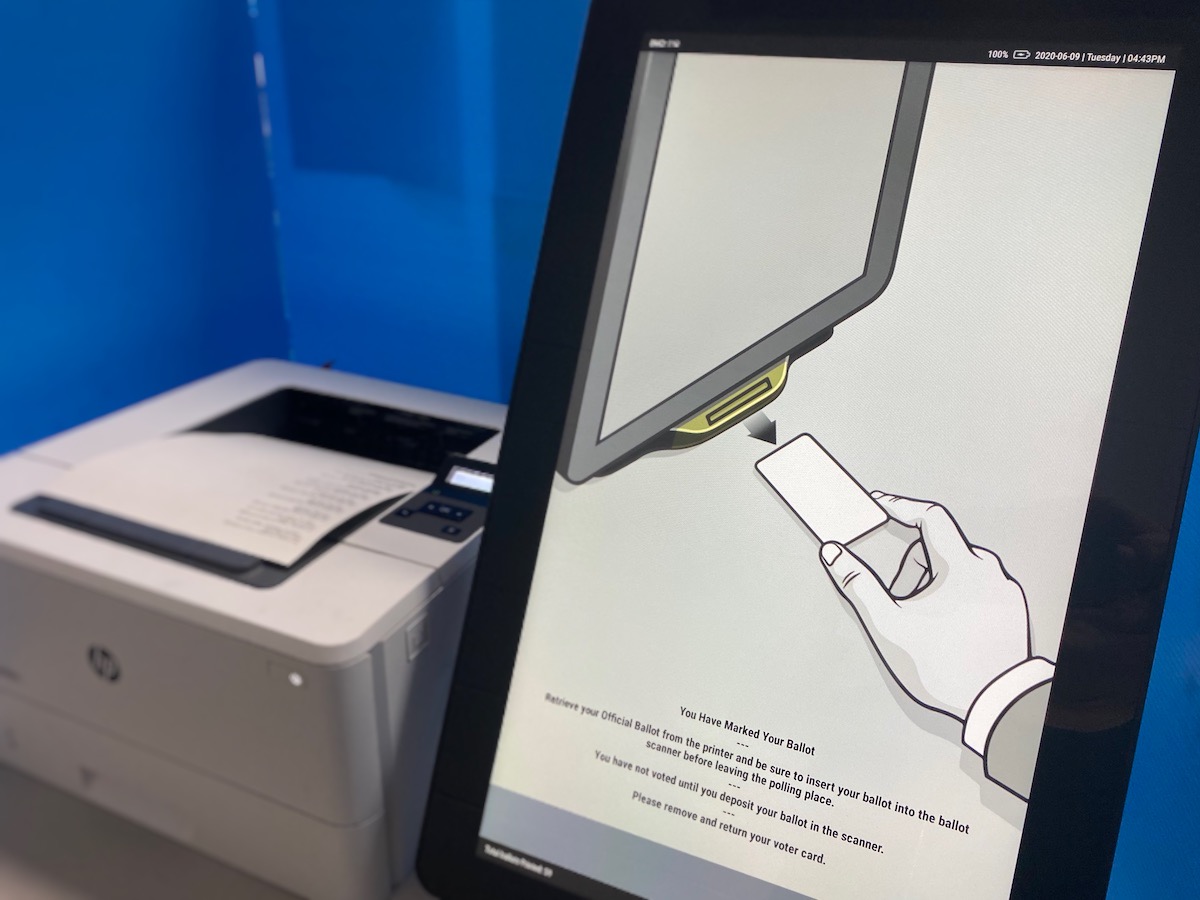
The urgency stems from a voting bill passed by the General Assembly two years ago that takes effect July 1. The law prohibits the use of QR codes, barcodes or other computer-readable coding for official vote tabulation.
“We will have to do something before the general election,” Anderson said. “The bill that passed two years ago, that goes into effect July 1 of this year, says you can no longer use the QR code or any barcode or computer-readable coding for your official vote tabulation.”
Without legislative action or changes to voting systems, Anderson said the state faces a significant challenge.
“Basically, as it sits right now, short of hand counting the results of all six-plus million voters and all the ballots associated with that in the state of Georgia, effective July 1, the system we use to vote with now, whether it’s in person or absentee, is not legal,” he said.
That reality leaves lawmakers little time to act, Anderson said.
“Whatever we do to be compliant, we have to pass this session, and we have to do it quickly,” he said.
Striking a balance

Committee Chairman Tim Fleming, R-Covington, said the recommendations reflect a balanced approach to election security, voter access and compliance with state law.
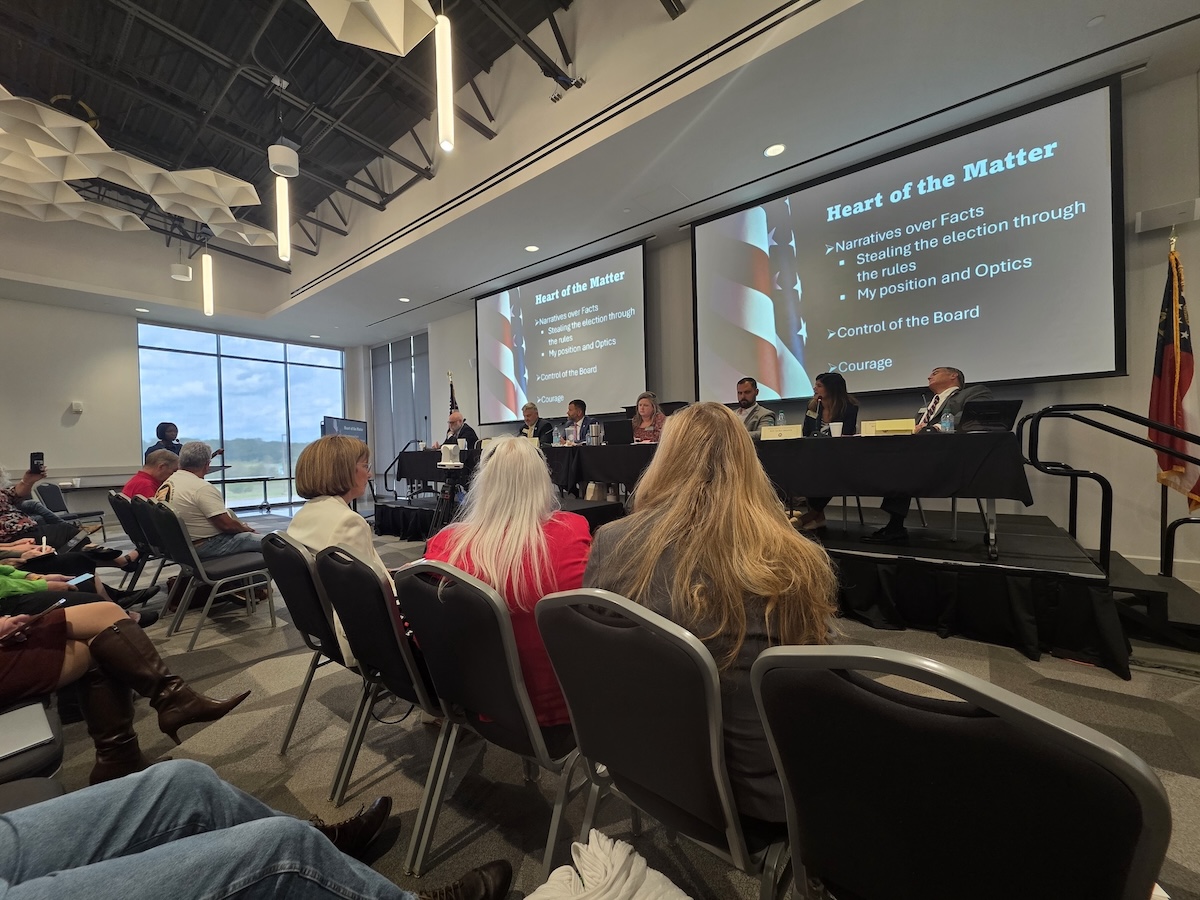
Reaching that balance was not easy. Over months of hearings held around Georgia, sharp disagreements repeatedly surfaced over how elections should be run and who should oversee them. Those divisions were especially evident last August when the committee met at North Georgia Technical College in Clarkesville.
During that hearing, lawmakers heard conflicting views on the future of the State Election Board. Some called for expanding the board’s authority, while others argued for limiting its power or restructuring it altogether. Testimony also detailed internal conflicts within the board, court rulings that overturned several of its recent rules, and the legal costs that followed.
Local election directors from Northeast Georgia focused on the practical side of running elections. They warned that full hand counts would slow results, increase the risk of human error, and require staffing levels that many counties simply cannot support. Those officials stressed that Georgia’s current system already produces a paper ballot that can be audited without eliminating machine tabulation.
At the same time, tensions between lawmakers and election officials highlighted broader concerns about trust and transparency. Several speakers cautioned that public confidence can be damaged as much by partisan infighting and unclear rules as by any flaw in voting equipment itself.
What’s next?

House Speaker Jon Burns, R-Newington, praised the committee’s efforts to put forward what he called, “common-sense, practical reform.”
“Georgia’s voters deserve a sustainable, long-term election process that enables trust, transparency and accountability, which is why I look forward to the committee’s continued work throughout the remainder of the year,” Burns said.
The committee’s report now serves as a guide as lawmakers draft and debate election legislation during the current session. With the July 1 compliance deadline approaching and the November general election ahead, Anderson and other members have emphasized that doing nothing is not an option.