
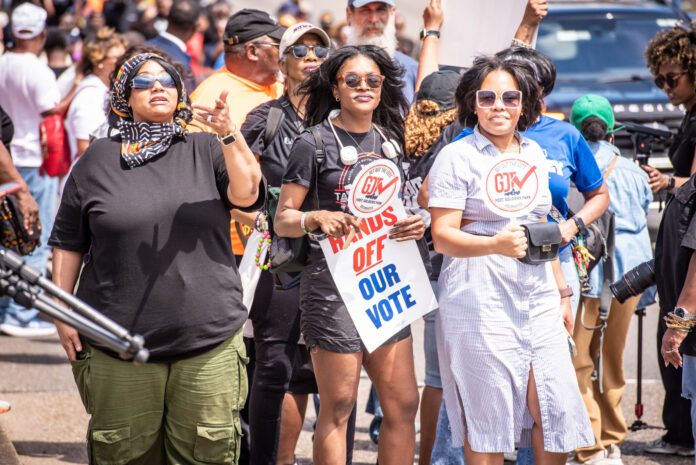
(Alabama Reflector) — A three-judge panel on Tuesday morning blocked Alabama from using a 2023 congressional map the panel ruled racially discriminatory and ordered the state to use a remedial map aimed at giving Black Alabamians a chance to elect their preferred leaders.
The order comes almost a month after the U.S. Supreme Court substantially weakened Section 2 of the Voting Rights Act in a case known as Louisiana v. Callais, and weeks after Gov. Kay Ivey called a special session in which Republican lawmakers set special primaries for August in the expectation that the state would be allowed to use the 2023 map, which would likely cost Democrats a seat in Alabama’s U.S. House delegation.
The panel was ordered by the U.S. Supreme Court to reevaluate its ruling on the map in light of its April ruling. But at a hearing on Friday, the panel expressed skepticism toward the state’s argument that the 2023 map was drawn with partisan intent, not to dilute Black voters. The same three-judge panel previously found that the map was intentionally racially discriminatory and issued a “race-blind” map that led to the election of U.S. Rep. Shomari Figures, D-Mobile, of the 2nd Congressional District.
The judges, U.S. District Judge Anna Manasco, U.S. District Judge Terry Moorer, appointed by President Donald Trump; and U.S. Circuit Judge Stanley Marcus, appointed by former President Bill Clinton, wrote in the 79-page opinion that the state’s argument contradicted its arguments made in 2023, and said that its 2023 map “made it impossible not only to remediate the vote dilution we identified, but also to respect the longstanding community of interest the Legislature identified in Alabama’s Black Belt.”
“These events, along with legislators’ contemporaneous statements about race, support only one inference: the purpose of the 2023 Plan was to distribute Black voters across districts to dilute their votes, at least in part because they are Black,” the panel wrote in the filing. “Counsel argues mightily that the Legislature’s partisan motives drove the creation of the 2023 Plan, but this enormous record contains no evidence of a partisan motive. And the only evidence on the issue cuts against one: Alabama’s legislative leadership testified that overtures from national party leaders did not affect their work.”
State appeals and reactions
The state appealed the ruling to the U.S. Supreme Court on Tuesday morning, according to court documents.
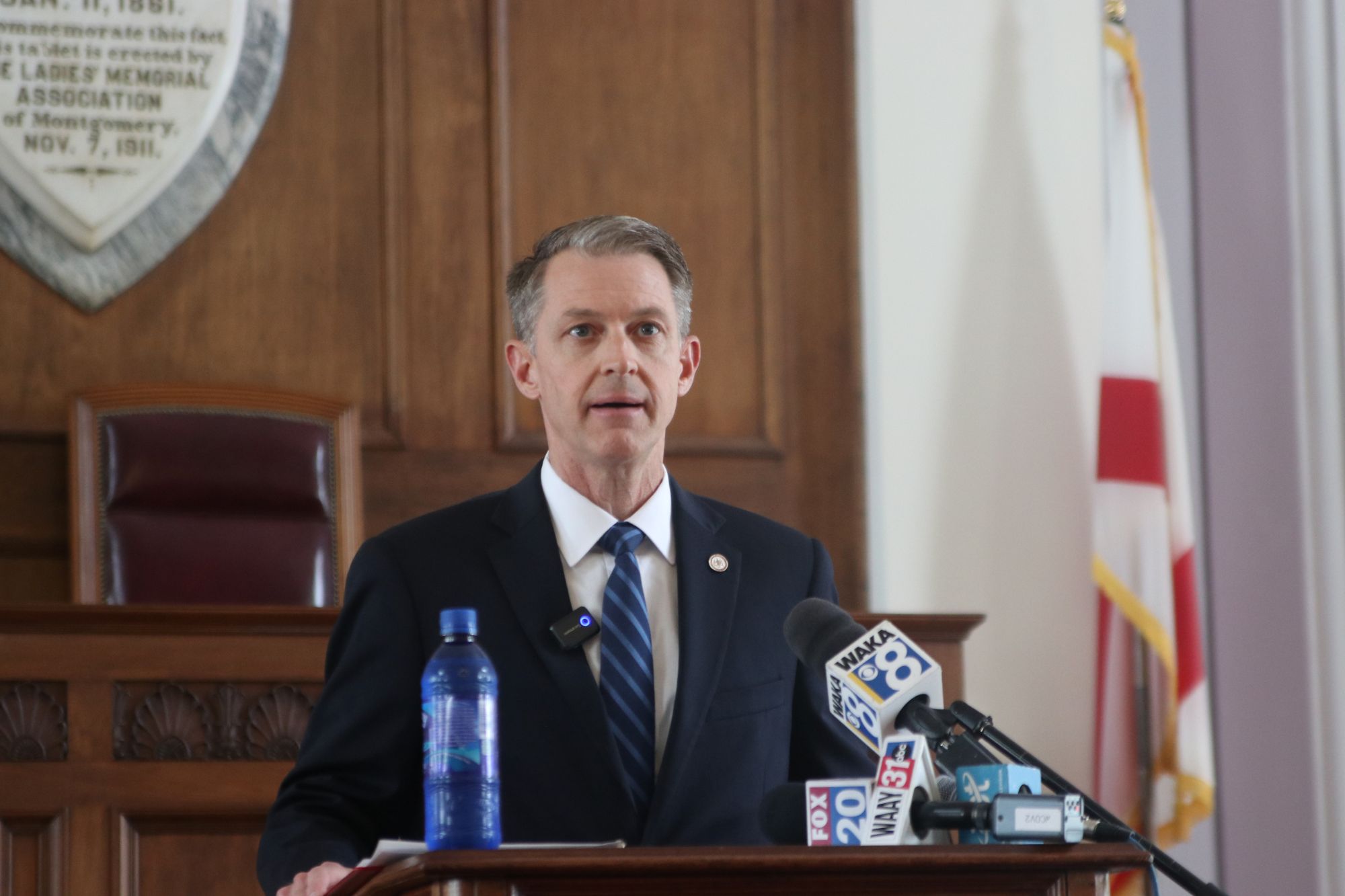
Attorney General Steve Marshall said in a statement Tuesday morning that he will appeal the order to the Supreme Court immediately.
“This is a very fluid situation, and I will do my best to keep the people of Alabama apprised of our efforts,” Alabama Attorney General Steve Marshall said in a statement Tuesday. “Know this — in my mind, it is not a matter of whether we win this case, only when,” he said.
Ivey said in a statement Tuesday morning that she fully supports Marshall’s appeal to the Supreme Court.
“I remain hopeful they will allow Alabama to move forward with our August 11 Special Primary Election. I will continue to say: Alabama knows our state, our people and our districts best,” she said.
Secretary of State Wes Allen said in a statement Tuesday afternoon that he “strongly disagree(s) with the lower Court’s decision, and I look forward to appealing it to the United States Supreme Court as soon as possible.”
JaTaune Bosby Gilchrist, executive director of the ACLU of Alabama, said in a statement Tuesday morning that they will continue to fight for fair representation through the state’s appeal.
“While we fully anticipate the State will continue to fight to use its racist maps to advance their partisan agenda, we will vigorously defend the right of Alabamians to elect representatives of their choosing,” Gilchrist said.
The plaintiffs in the case said in a statement Tuesday afternoon that the state has sown confusion in its attempt to change maps midway through an election.
“The court saw through Alabama’s blatant attempt to reinstate a race-based congressional map that the legislature deliberately enacted to deny Black voters a voice in Congress,” they said. “Rather than accept this reality, state officials have knowingly sown confusion and doubled-down on their attacks on Black voters. The court’s order today to reinstate the Milligan remedial map is a crucial victory for fair representation and brings necessary clarity to the state’s 2026 elections.”
It is unclear how the special primary election will proceed. The judges ordered Allen to administer all “remaining events comprising Alabama’s 2026 congressional elections” according to the court-ordered map. That order will expire when the Legislature passes a new district map. The state last year agreed to use the current remedial map until 2030.
Messages seeking comment with the qualified candidates for the special primary election, which is set for Aug. 11, were left Tuesday morning.
In a post on social media, Figures said he expected the ruling, but also expects the state to appeal to the Supreme Court.
“This is a significant step in the right direction, but there is still a long way to go before this fight is settled,” he wrote.
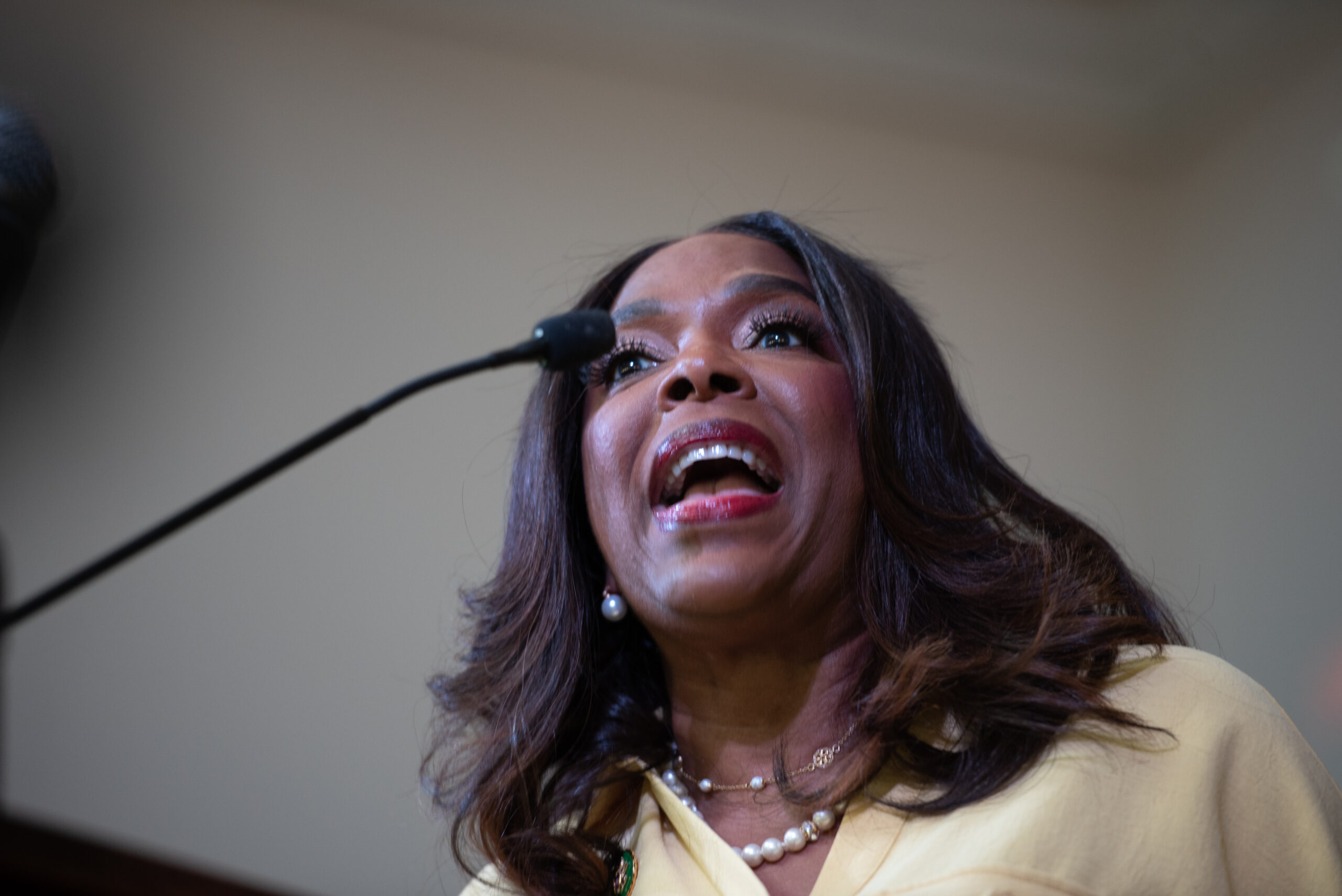
U.S. Rep. Terri Sewell, D-Selma, of the 7th Congressional District, said in a statement posted to social media that the court prevented Alabama Republicans from using tactics to racially discriminate against Black voters.
“Today, the court made clear that those tactics will not stand,” she wrote. “Black voters in Alabama cannot and will not be silenced.”
Alabama House Speaker Nathaniel Ledbetter, R-Rainsville, called the judges “activists” and accused them of “handing Democrats congressional victories in the courtroom” in a social media post.
“Elections should be decided by voters at the ballot box, not activist judges who believe they know better than the people they were appointed to serve. I believe this decision is blatantly in violation of the Supreme Court’s ruling in Callais v. Louisiana and will not stand once it is presented before a higher court,” he wrote. “This is nothing more than a politically motivated attempt to weaponize the judicial system for partisan gain, and Alabama has every intention of taking this to the Supreme Court and fighting back.”
Alabama House Minority Leader Anthony Daniels, D-Huntsville, said in a statement Tuesday morning that the order only applies to the 2026 midterm elections, and the fight for fair representation is not over.
“Let this moment be a powerful call to action to ensure that we do everything possible to get out the vote and drive historic turnout at the polls,” he said. “Like I’ve said, ‘If your vote didn’t matter, they wouldn’t be trying so hard to take it from you.’’’
‘Tainted by intentional race-based discrimination’
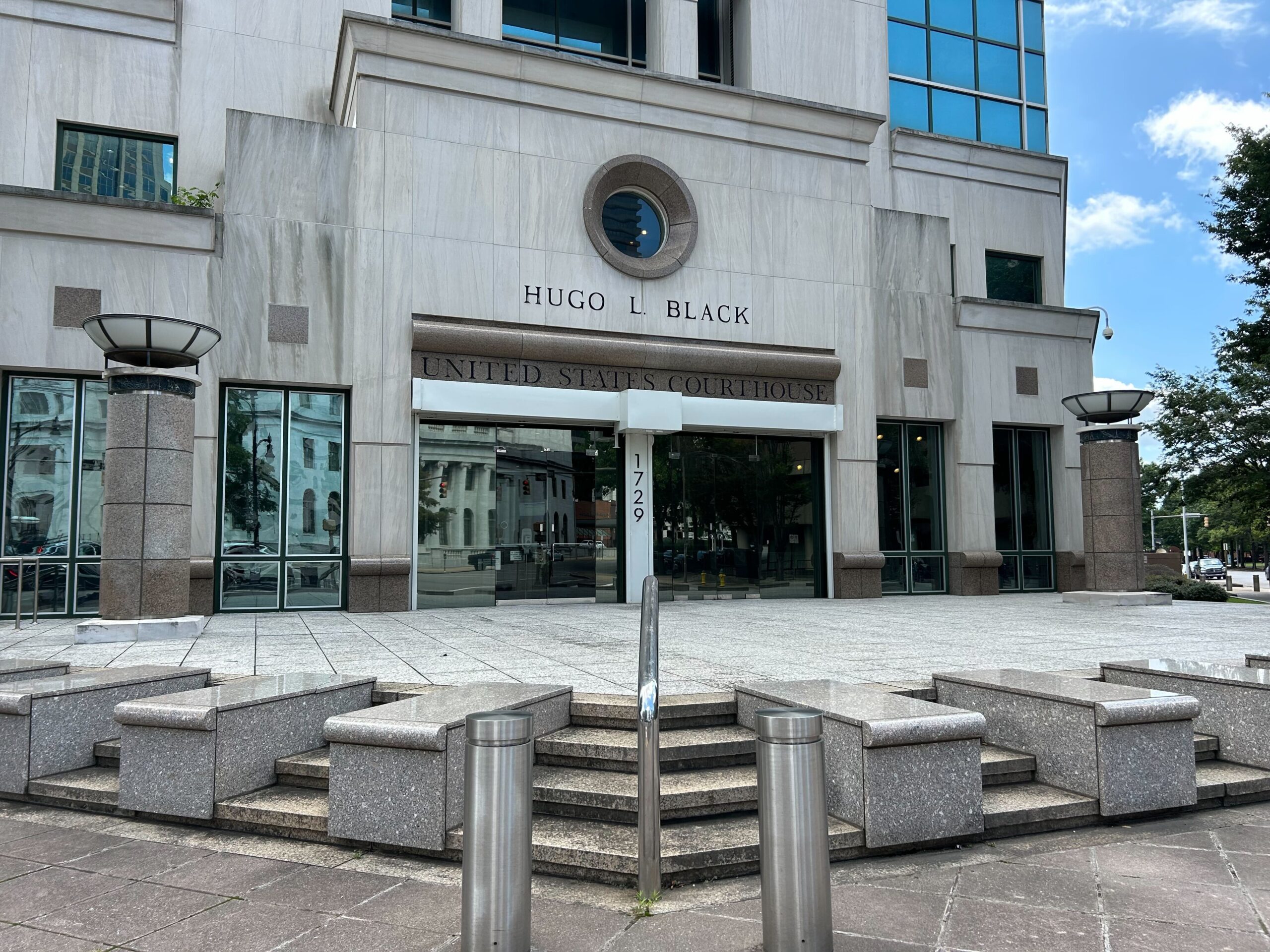
The three-judge panel wrote Tuesday that the Callais decision strengthens their finding that the 2023 Legislature-passed congressional map was intentionally racially discriminatory and diluted Black voters.
“Ultimately, we cannot see our way clear to requiring Alabamians to cast their votes in the 2026 elections under a districting plan tainted by intentional race-based discrimination,” they said.
The Supreme Court did not repeal Section 2 of the Voting Rights Act in the Callais decision, which prohibits race-based discrimination in voting practices, but it required proof of intentional racial discrimination. The three-judge panel said that, in light of Callais, the 2023 map is unconstitutional because legislators were warned of impacts of the 2023 map, but passed it anyway.
“The Legislature’s conduct and that concession made this case unique: we were not (and still are not) aware of any other case in which a legislature — faced with a federal court order declaring that its electoral plan unlawfully dilutes minority votes and requiring a remedy that provides an additional opportunity district — responded with a plan that the state conceded did not provide that district,” the panel wrote.
“Undisputed evidence establishes that in 2023, the Legislature should have foreseen, and in fact actually foresaw, the disparate impact of the 2023 Plan on Black Alabamians, and enacted it anyway,” they wrote.
In the Callais decision, the Supreme Court ruled that racial discrimination with intent does violate Section 2 of the Voting Rights Act, but redistricting in the name of party does not. Texas, California, South Carolina, Tennessee, Florida and Virginia have either redistricted to give either party more guaranteed congressional seats in the 2026 midterm elections, or are in the process of doing so.
During the 2026 Special Session, lawmakers repeatedly said that their intention to revert to the 2023 map was for partisan gain, not racial discrimination. The judges wrote that the state’s counsel argued “mightily that the Legislature’s partisan motives drove the creation of the 2023 Plan, but this enormous record contains no evidence of a partisan motive.
“In the simplest terms, the sequence and substance of extraordinary legislative events, against the backdrop of the Legislature’s knowledge, compels us to conclude that the Legislature doubled down on racially discriminatory vote dilution after we and the Supreme Court found that it was racially discriminatory vote dilution,” they said. “The same evidence leaves us no room to conclude that when the Legislature did all this, it had party politics in mind. The only available intent evidence tells us that considerations of race were the key reason.”
The state argued that, under Callais, race cannot be considered when drawing district lines. The judges argue that Callais prohibits race from being the only factor, and it was not the only factor in the remedial map, drawn by a special master, that was used in the 2024 election and in the May 19 primary election. The same was the case for Moon Duchin, an expert for the plaintiffs, who drew many “race-blind” maps in the case.
“We have consistently held that the additional majority-Black districts in the Plaintiffs’ illustrative maps are reasonably configured; Dr. Duchin has consistently testified that it is relatively easy to draw an additional reasonably configured majority-Black district, and the special master prepared three remedial plans with reasonably configured remedial districts with no apparent difficulty,” they wrote.
The judges acknowledge that their involvement in the state’s election is “most unwelcome,” which is why the injunction is temporary.
Ballots cast in the 1st, 2nd, 6th and 7th congressional districts will be voided, according to the order, due to Alabama law.
Where the court previously prohibited the state from redistricting until 2030, it is now only requiring the state to use the current court-ordered map for the 2026 elections. The injunction will expire when the Legislature creates a new congressional district plan on its own accord. Typically, redistricting happens every 10 years after the U.S. Census.
Don’t miss what everyone in town is talking about.
Join 4,000+ locals and choose our free newsletter covering news, events and the stories shaping our region.