
ATLANTA — A bill aimed at criminalizing clergy sexual abuse in Georgia is headed to Gov. Brian Kemp’s desk after passing the state House unanimously Thursday, capping a swift and emotional legislative push driven in part by a Northeast Georgia survivor.
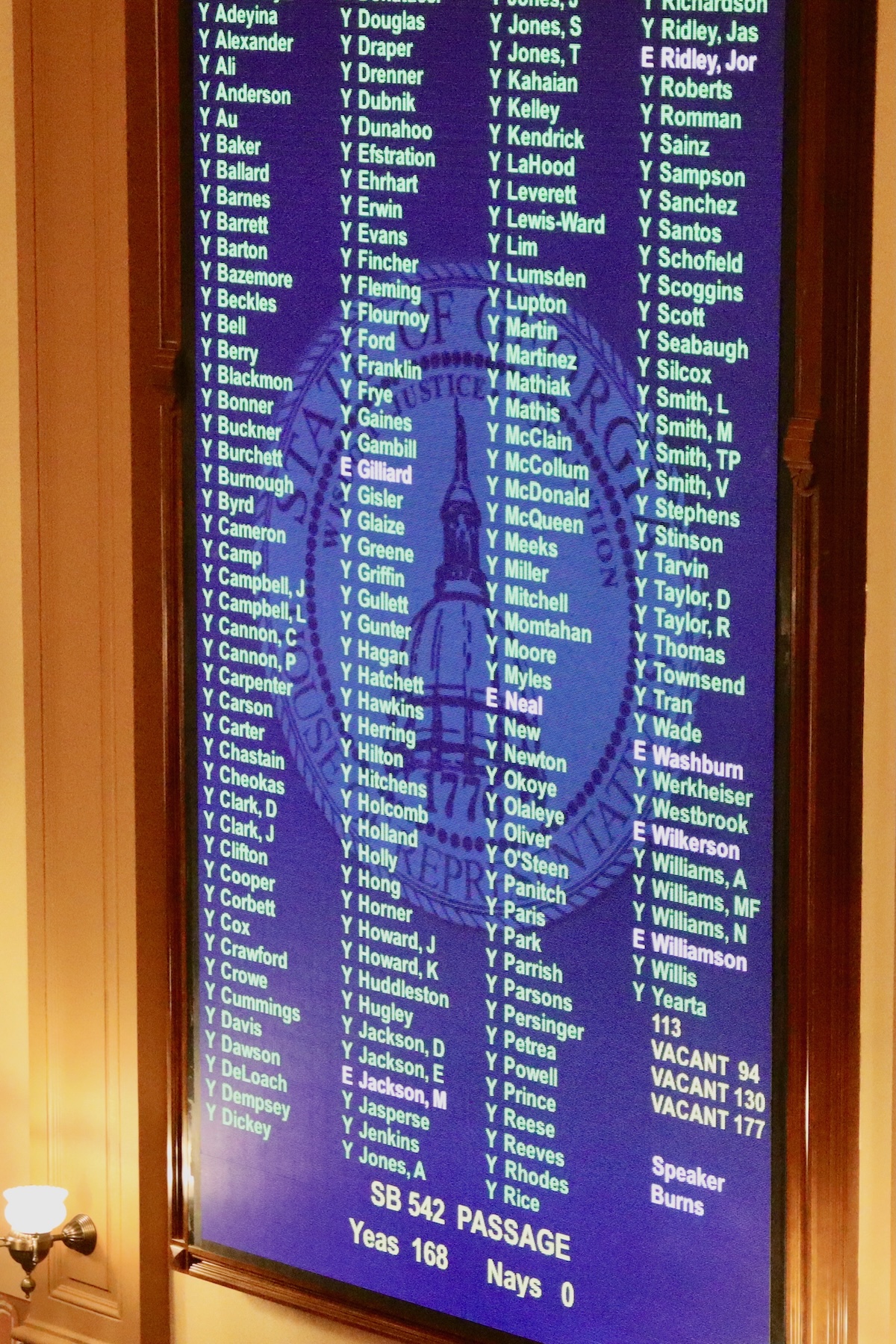
The Georgia House voted 168-0 to approve Senate Bill 542. The measure previously passed the Senate on March 6 by a unanimous 55-0 vote.
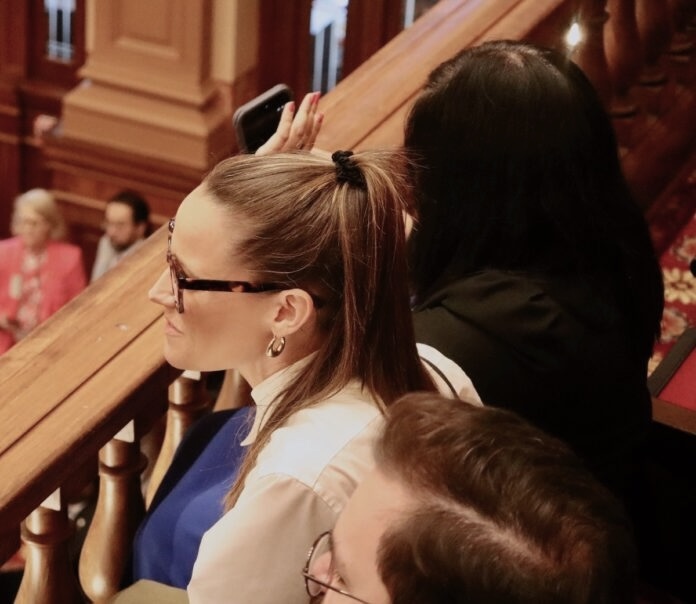
Swinson spoke with Now Georgia moments after the vote, still processing the outcome before walking through the Capitol with her team as lawmakers stopped to applaud and thank her — a visible sign of the bipartisan support behind the bill she helped bring to the finish line.
The legislation creates a criminal offense for clergy members who engage in sexual contact with individuals under their pastoral or spiritual authority, removing consent as a defense in cases involving coercion or abuse of power.
‘We see you, we hear you’
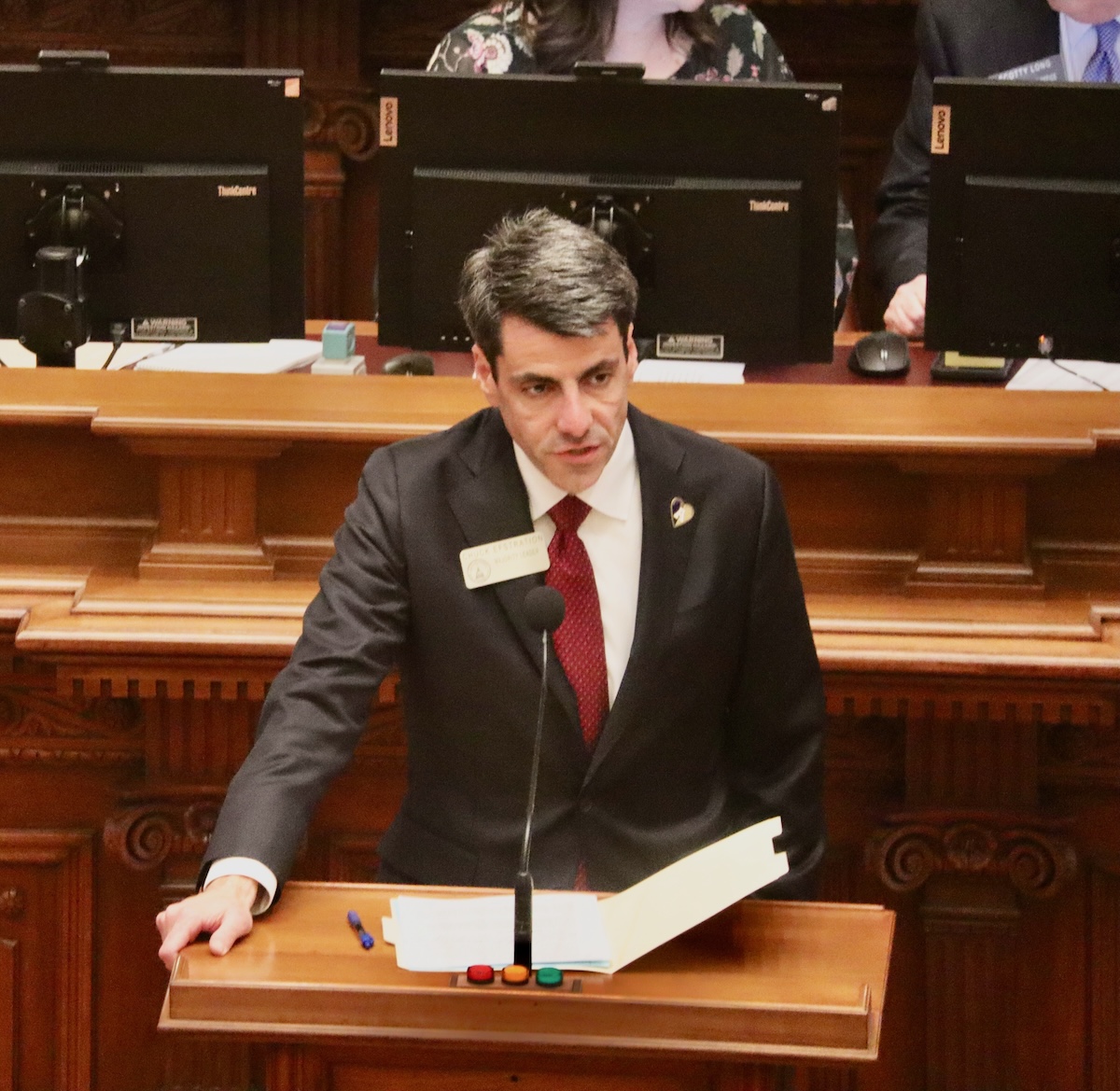
House Majority Leader Chuck Efstration, R-Mulberry, who carried the bill on the floor, framed the legislation as a response to survivors who have long lacked legal recognition.
“This legislation is about protecting individuals who seek out … comfort, guidance and healing, who are instead … faced with manipulation, coercion and betrayal,” Efstration told Now Georgia.
He said the bill acknowledges the lasting impact on victims who often suffer in silence.
“This is about survivors who carry the weight … often in silence and are impacted by what they’ve been through for years to come,” he said. “We see you, we hear you.”
Efstration emphasized that clergy occupy uniquely trusted roles, often counseling individuals during moments of grief, uncertainty and vulnerability.
“When someone sits across from a clergy member in a moment of vulnerability, this is not an equal exchange,” he said. “It’s a relationship where one person holds power, moral authority and emotional influence over the other.”
He said the bill both provides a path to justice and helps deter future abuse.
Bipartisan support on the House floor
Lawmakers from both parties spoke in favor of the measure.
Rep. Al Williams, D-Midway, called it a “good piece of legislation” after noting that clergy are held “in the highest possible stature” and that those who violate that trust should never be allowed to harm others again.
Efstration agreed, saying the law will help prosecutors address cases involving coercion and protect future victims.
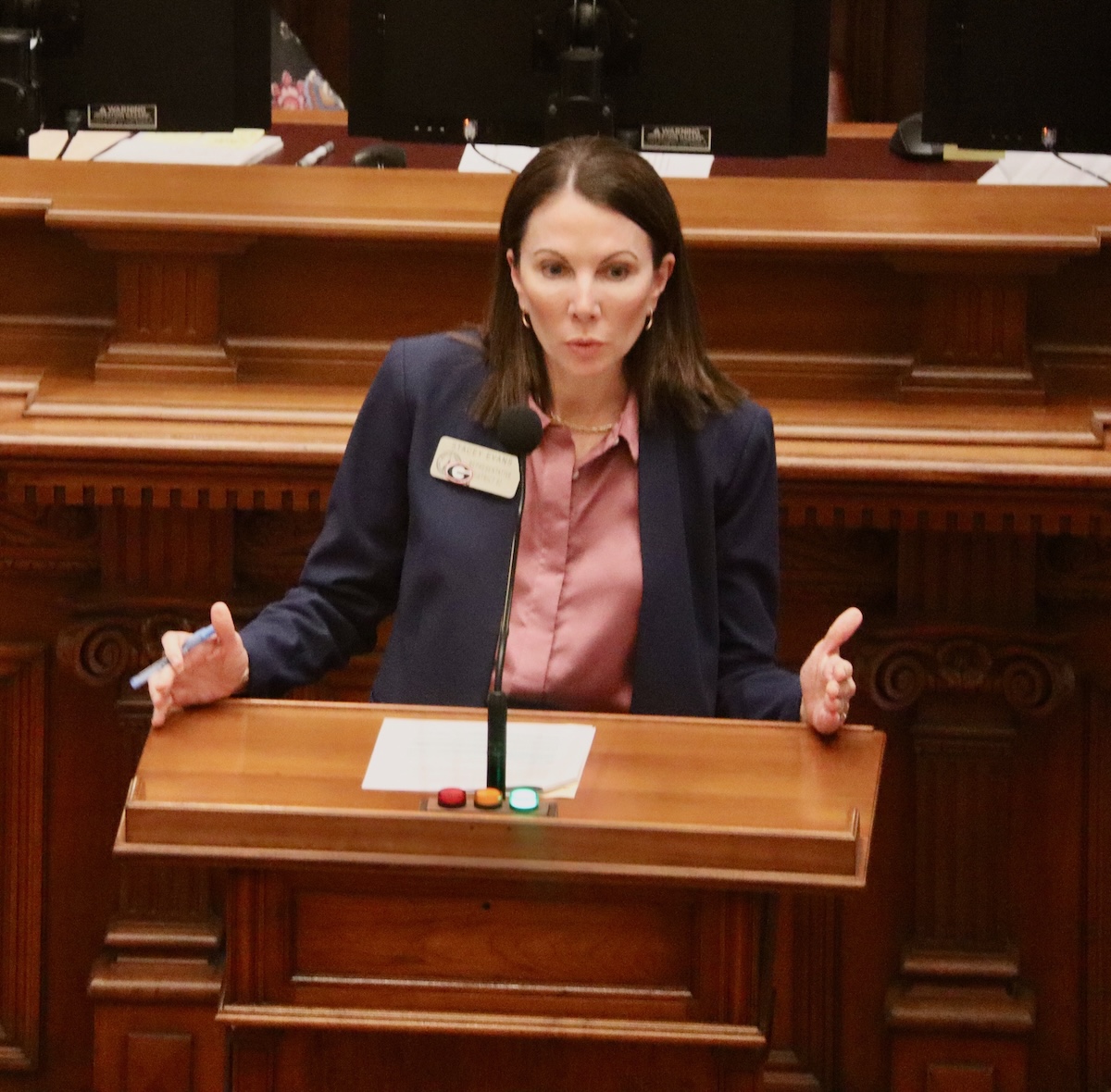
Rep. Stacey Evans, D-Atlanta, said the bill reflects the core purpose of lawmakers’ work.
“This bill provides us an opportunity to do … what we came here to do, find a hole in the law that’s really hurting real people … and fix it,” Evans said.
Evans directly referenced testimony from Hayle Swinson, a former Truett McConnell University student in Cleveland, whose story became central to the bill’s momentum.
“Adult clergy sexual abuse is real. It does not begin with force. It begins with trust placed in a spiritual authority figure,” Evans said, quoting Swinson’s testimony.
Evans also highlighted expert testimony from Dr. Holly Haynes, who described clergy abuse as causing “a category of harm that Georgia law does not yet recognize.”
Rep. Scott Hilton, R-Peachtree Corners, pointed to the role of advocates, including his constituent Kim Nunes, in bringing the issue forward.
“SB 542 is not about targeting the faith community. It’s about protecting it,” Hilton said. “It’s about standing up for victims, many who have gone unheard for way too long.”
Local survivor’s testimony fuels effort
Swinson, a former Truett McConnell University student in White County, testified before the House Judiciary Committee days before the vote, describing how abuse can develop through trust and authority.
“This type of abuse does not begin with force. It begins with trust,” she said. “This is not consent. This is coercion through power.”
She described “years of manipulation, isolation and sexual exploitation,” and said there was no clear legal path to accountability at the time.
“In my case, it took over 35 journalists and publications to shine light on the darkness,” Swinson said.
‘Validation,’ ‘shock,’ and hope
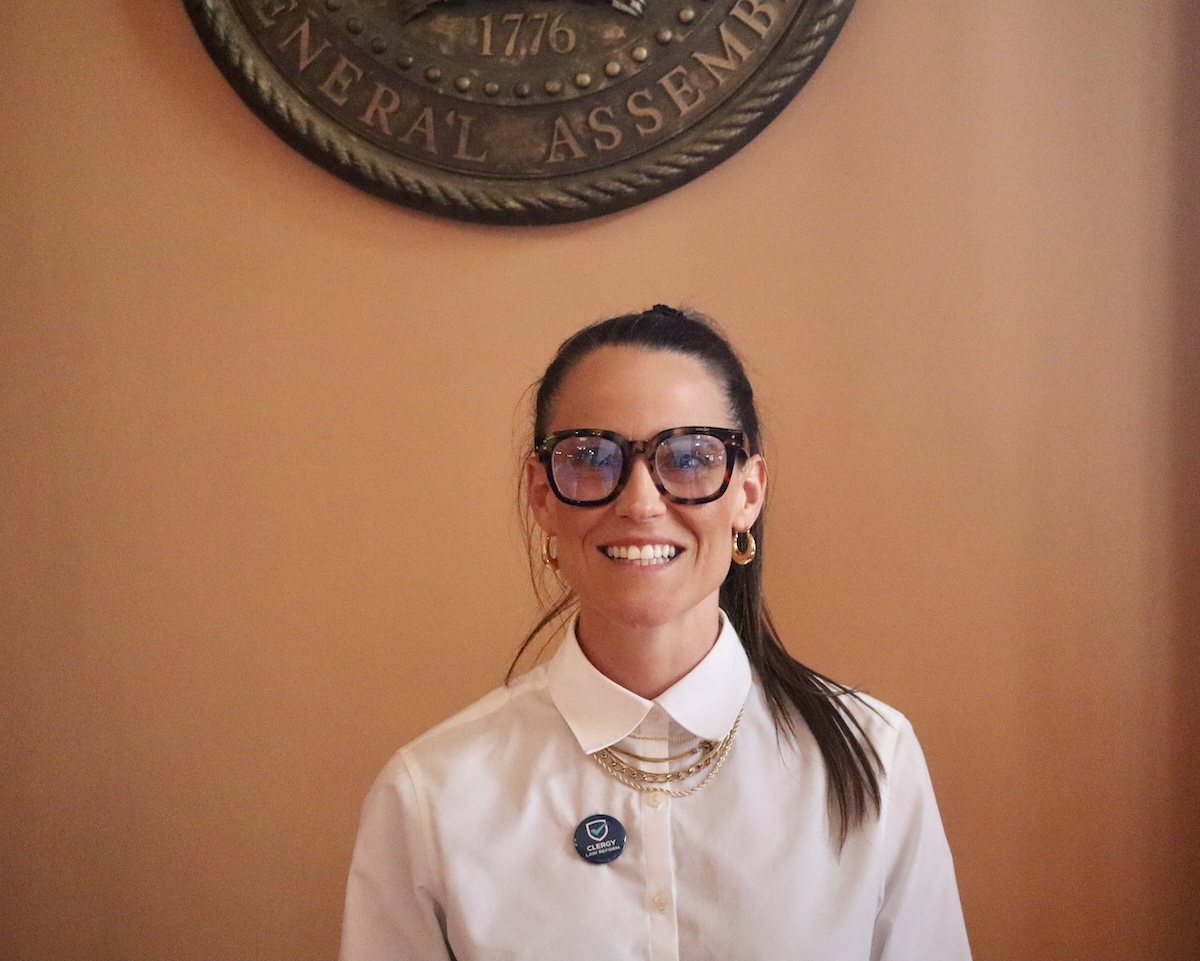
After the vote, Swinson and members of Clergy Law Reform, an advocacy group that worked on the legislation, described a mix of emotions.
“It felt validating,” said Kim Nunes, a licensed master social worker and advocate. “It felt very validating that this is an issue that is real.”
Swinson said she was initially overwhelmed.
“I think I was in a little bit of shock,” she told Now Georgia. “But overall, to see a unanimous vote in the Senate and all the way through the House gives us some hope for what the future looks like.”
She said the law could be life-changing for survivors across Georgia.
“I just was reminded of the survivors that I’ve talked to who were scared out of their mind because they will never be believed,” Swinson said. “A law like this … will not only allow people to be believed, but it will allow for them to have justice and hope and accountability moving forward.”
Closing a gap in Georgia law
Supporters say SB 542 aligns clergy with other professions — such as teachers, therapists and law enforcement — where the law recognizes that power imbalances can invalidate consent.
Dr. Holly Haynes told lawmakers the science behind trauma supports that approach.
“The science is unequivocal,” Haynes said. “Clergy sexual abuse inflicts a category of harm that Georgia law does not yet recognize.”
Sen. Blake Tillery, R-Vidalia, one of the bill’s sponsors, said the legislation strengthens accountability.
“SB 542 makes sure individuals don’t use positions of power to take advantage of those under their leadership,” Tillery told Now Georgia.
The bill was authored by Sen. Randy Robertson, R-Cataula, whose wife, Theresa Garcia Robertson, worked alongside advocates to help move the legislation forward. She shared her own experience as a survivor, describing how her family was groomed by a trusted pastor.
“My hope going forward is that this legislation shines a light on these situations and makes people more aware,” she said. “Accountability and shining the light into the darkness cannot be done enough.”
What happens next
With final passage secured, SB 542 now heads to Gov. Brian Kemp for his signature. If signed into law, Georgia will join a growing number of states that have enacted specific protections addressing clergy sexual abuse.
For Swinson, the moment represents both progress and responsibility.
“We have hope for what the future looks like,” she said.