
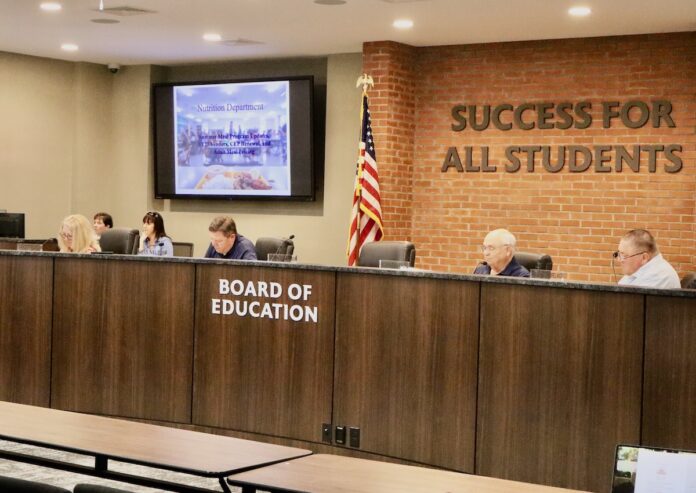
CLARKESVILLE, Ga. — The Habersham County Board of Education is expected to vote Monday on a full rollback millage rate and final fiscal year 2027 budget adoption, following a presentation that detailed modest tax digest growth, increased state funding and a projected use of fund balance.
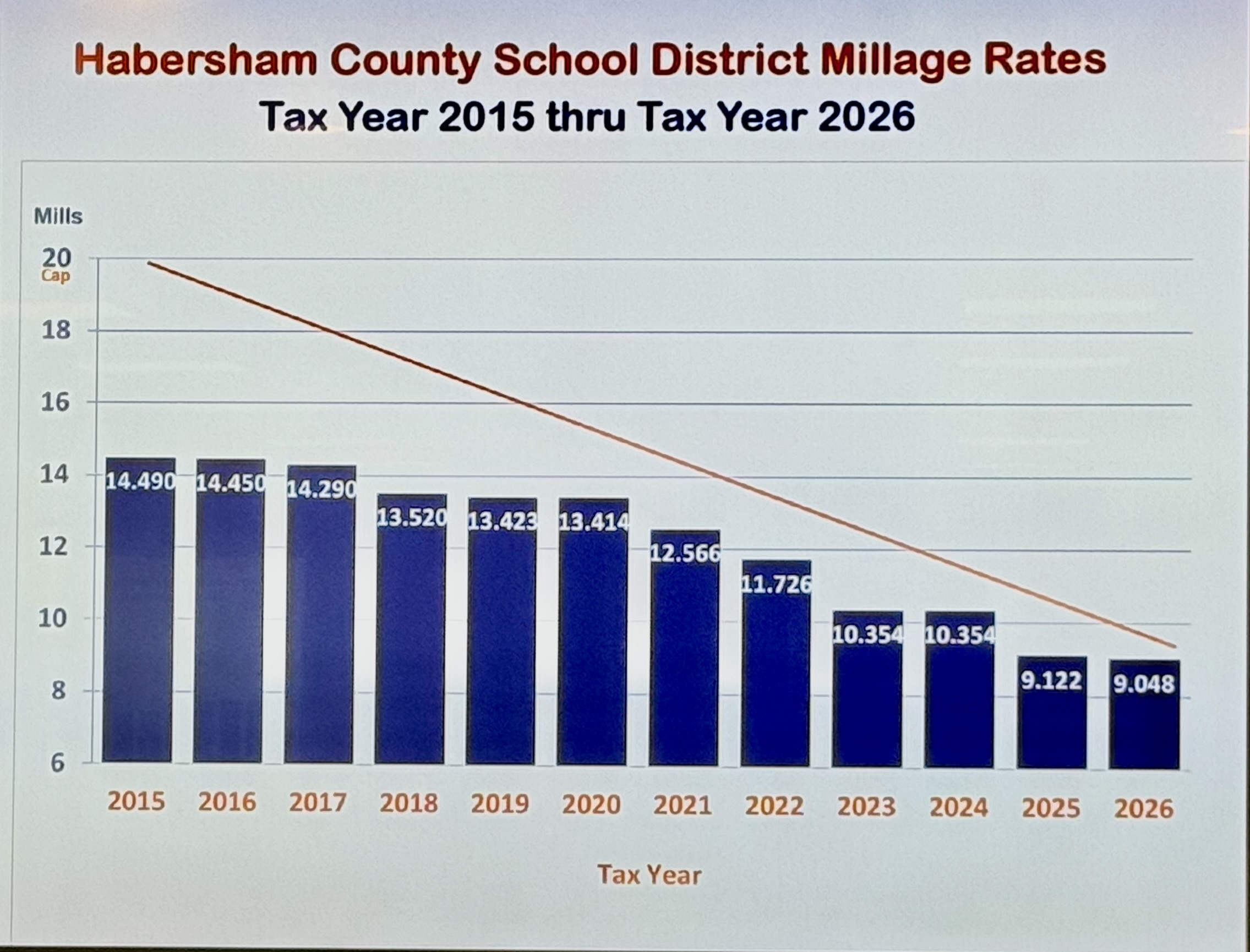
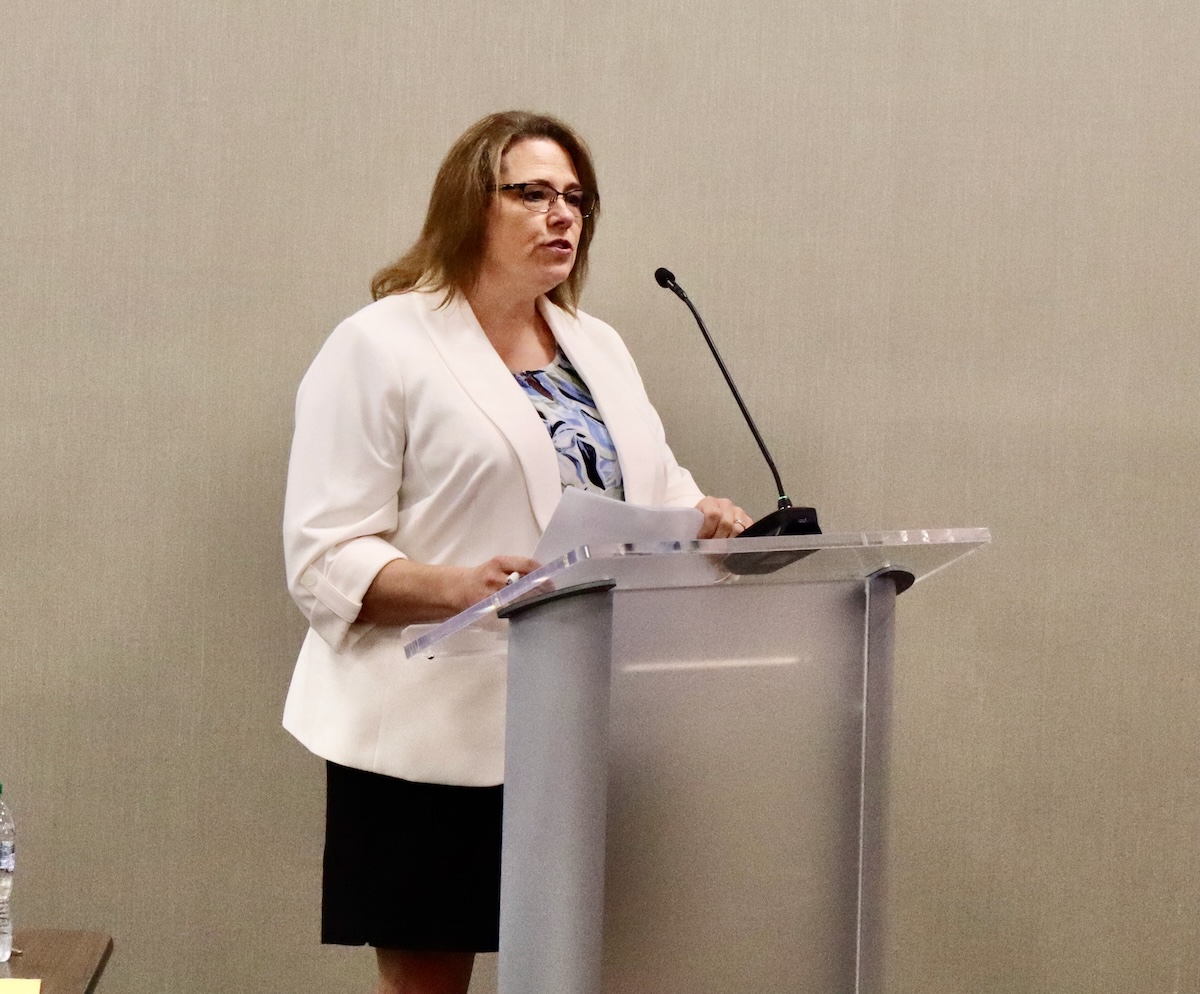
Chief Financial Officer Staci Newsome told board members during a Thursday work session that the district will recommend a full rollback of the school system’s maintenance and operations millage rate to 9.048 mills for tax year 2026.
Newsome said the rollback rate is calculated by the county based on property assessments and the tax digest, with the goal of generating the same overall revenue as the previous year despite changes in property values.
“This is great. You know, the county has made some changes in their system,” Newsome said. “We have received information from the county, and we’re going to talk through that right now.”
She said the district has already met legal advertising requirements for the millage rate, noting notices were published twice in local newspapers. The school system will now move forward with final adoption Monday.
The recommended 9.048 mills is down from 9.122 mills, which Newsome said reflects a full rollback based on county calculations.
“It’s going down, which is logical when you say you’re rolling back to bring in the same revenue,” she said.
Budget breakdown shows salaries, operating costs
Newsome walked board members through a detailed breakdown of the FY27 budget, describing it as a summary designed to simplify multiple spending categories.
She said projected state revenue appears at the top of the budget model, followed by total salary and benefits costs of about $95 million for the general fund.
After accounting for roughly $4.7 million in salary and benefit offsets from special revenue grants, net salary and benefits total about $90.3 million.
Newsome noted payroll alone averages about $7.5 million per month.
She also outlined additional categories including school-level operating allocations, department budgets, and contracted services such as special education staffing, including speech-language pathologists, occupational therapists and physical therapists. The district’s School Resource Officer program is also included in that category.
Total general fund operating expenses are projected at about $105.6 million, with approximately $15.2 million in departmental and operating expenses.
Newsome said the district uses a zero-based budgeting model in which each department builds its budget from the ground up each year.
She reported total monthly salary and operating costs of about $8.8 million.
Revenue, expenses, and fund balance
Newsome said projected FY27 revenue totals about $104.8 million, while expenditures are projected at $105.6 million, leaving a budget gap of about $770,000.
She noted the gap has narrowed significantly since early budget development.
“We started this process at $2.9 million,” Newsome said. “Everything is held, so again, I want to make sure that folks remember this is just like in our home. A budget is our best estimate of revenues and expenditures, and it will change during the year.”
Despite the shortfall, Newsome said the district expects to end the year with about $11 million in fund balance and approximately $10.3 million after the planned use of reserves.
Board discussion on reserves
Board member Doug Westmoreland raised concerns about maintaining adequate reserves, saying best practices typically call for enough to cover several months of payroll.
“As far as good practices, we want to try to have enough money in our funds to cover salaries for at least two to three months,” Westmoreland said.
He also noted public misunderstanding of reserve levels.
“The public don’t understand. They look and they’ll make comments like, ‘We’re basically sitting on $10 million,’” he said. “They don’t understand that we’ve got to have that as far as good practices.”
Superintendent Patrick Franklin said the district intends to strengthen reserves moving forward.
“I think you asked a great question,” Franklin said. “As we move forward, we’re going to really push this year to expand that fund.”
Newsome described the use of fund balance as a “strategic move,” saying reserves help stabilize operations and avoid mid-year cuts.
“That’s why we have a checkbook, that’s why we have a reserve,” she said.
She added that the district anticipates returning to a combined all-funds view, including general fund, debt service, capital projects, special revenue and school nutrition, totaling about $131.8 million in revenue and $131.7 million in expenditures, resulting in an ending fund equity of about $17.9 million.
Final budget adoption process
Newsome reminded board members that the school system does not have final authority to levy taxes, noting the Board of Commissioners ultimately sets the millage rate.
Once approved, the district will transmit the final budget to principals and department heads and complete required state reporting.
Board action on the millage rate and budget is scheduled for Monday’s regular meeting.
Don’t miss what everyone in town is talking about.
Join 4,000+ locals and choose our free newsletter covering news, events and the stories shaping our region.