Home Blog Page 986

Back by popular demand: Bluegrass at the Old Schoolhouse

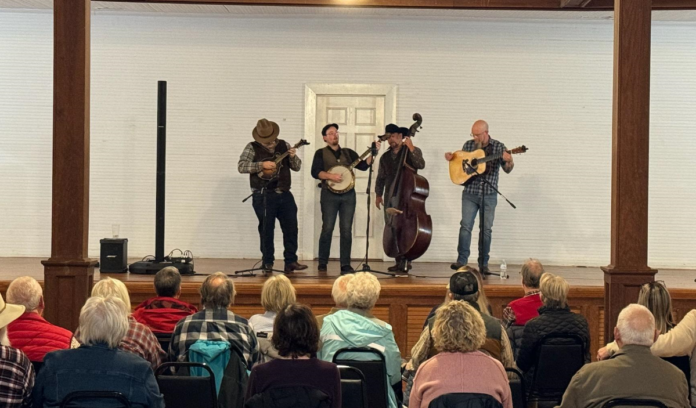
The Edgar Loudermilk Band performs for about 50 people in the Mt. Airy City Hall auditorium on Jan. 19, 2024. (Photo by Adam Tullis)

North Georgia, you asked for it, you got it!

Bluegrass music will fill the halls of the old Mount Airy schoolhouse this Friday as the space plays host to the two local bluegrass bands.

The Edgar Loudermilk Band and Willie Wells and Blue Ridge Mt. Grass will perform in the second of what many hope will become a continuing concert series called “Bluegrass at the Old Schoolhouse.”

RELATED: ‘Bluegrass at the Old Schoolhouse’ revives Mt. Airy City Hall’s rich musical history

Loudermilk performed at the renovated schoolhouse in January. The event was not well publicized, and many people expressed disappointment at not having known about it. Only about fifty people attended in a hall that can accommodate up to 200.

The bands hope to pack out the place this Friday night, Feb. 16.

The concert is being billed as “more fun than recess.” Doors open at 6 p.m., and the show starts at 7 p.m.

Tickets are $20 and may be purchased at the door on a first-come, first-served basis. Advance tickets may be purchased by calling 706-768-1503 to guarantee a seat.

Mount Airy City Hall is located at 1231 Dicks Hill Parkway in Mount Airy, Georgia.


White County Chamber hosts its first-ever women’s conference

Macy Satterfield, Jordan Buffington, and Leslie Canada share ideas at Pearls of Wisdom Women's Conference in Cleveland, GA

It was the inaugural women and business event hosted by the White County Chamber of Commerce – a morning to empower women. White County Chamber of Commerce President Beth Truelove talked about what made this day special.

“It is an opportunity for us to come together, support each other, support how we do business, take care of our families, and juggle all we have to do in a day,” said Truelove. “We are super excited that people got behind our vision. Dr. Shanda Ginn, Chairman of the Chamber Board, this was her vision and we are all just here to make it happen.”

A sold-out audience at the Pearls of Wisdom Women’s Conference in Cleveland GA (Photo Now Habersham)

The Pearls of Wisdom Conference was held at Meadows at Mossy Creek on February 13 from 9:30 a.m. until 12 p.m. to a sold-out audience.

A panel of businesswomen answered questions from how to balance family and career to what changes they’d like to see for women.

The panel consisted of Margaret McLean, Director of Corporate Communications at Cabbage Patch Kids; Carol Jackson, former State Senator and Associate VP of North Georgia Technical College; Lacy Turner, First Lady of Cleveland married to Mayor Josh Turner and Employment Coordinator for Warriors of Georgia; and Dr. Shanda Ginn, owner of Cleveland Academy.

The panel addressed women of various ages and in different fields and stages of life. “Everyone is putting out fires. Remember, fires will continue to burn,” advised Margaret McLean, “You must prioritize family.”

Panel: Beth Truelove, Margaret McLean, Dr. Shanda Ginn, Lacy Turner, and Carol Jackson. (Photo Now Habersham)

Lacy Turner added, “We have to take care of ourselves to be the best version of ‘me’ that we can be. Acknowledge when you are exhausted and recognize that you are human.”

Carol Jackson applauded women, “You are making the changes. When you think you can’t do anymore, reach down deep and do a little more.”

Dr. Shanda Ginn stressed the importance of being present at your business. “Have relationships with those you work with. Get to know the community. Most of all, learn to delegate. You cannot do it all.”

It was a time to network, meet other women in businesses, and enjoy good food, raffles, and massage chairs. It was also an avenue for solutions and to take in what is possible with hard work and determination.

“If I don’t stress anything else,” Carol Jackson reflected, “I want to encourage you to support one another. Do good for one another.”

Dr. Ginn added, “Develop a culture of friendship – go to brunches, play golf, have someone to lean on. I always tell our staff, ‘Stay away from negative Nellies’ and be around people who lift you up.”

Jason Deal named chief judge of Northeastern Judicial Circuit

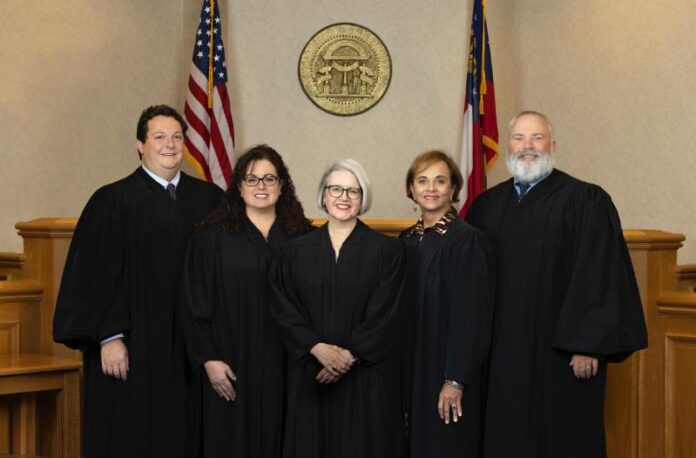
Jason Deal, far right, has been appointed by his fellow justices to serve as the Chief Judge of the Northeast Judicial Circuit. The circuit covers Hall and Dawson counties in North Georgia. Pictured with Chief Judge Deal are fellow superior court judges, from left, Clint Bearden, Lindsay Burton, Kathlene Gosselin, Bonnie Chessher Oliver. (photo nejc.org)

Jason Deal has been named the new chief judge for the Northeastern Judicial Circuit (NEJC), officials announced Tuesday in a news release. The circuit’s superior court judges unanimously chose Deal for the position, effective immediately.

Deal has served as a superior court judge since 2005. He succeeds Kathlene Gosselin, who announced her plans to retire at the end of the year.

Previously, Deal served as the assistant district attorney and, later, DA for the NEJC. He also served as a Hall County magistrate judge and currently presides over Hall County’s Drug Court and the Dawson County Treatment Court.

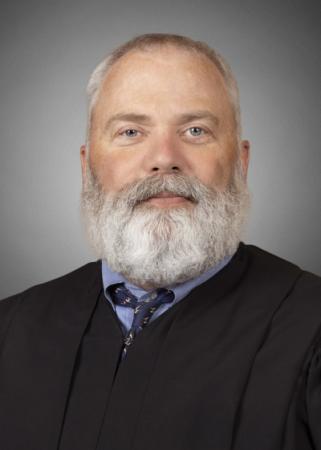
Chief Judge Deal is an Army veteran. He is the son of former Georgia governor Nathan Deal. (nejc.org)

Deal is a graduate of the University of Georgia and Furman University and has served in the U.S. Army.

“I’m grateful for the confidence of my fellow judges and appreciate the opportunity to continue the strong legacy of leadership provided by Judge Gosselin, Judge Andrew Fuller, and Judge Richard Story,” Deal said in a statement. “We’re a strong circuit, with Superior Court judges who act with thoughtfulness and unity, and we’ve never been busier.”

The chief judge oversees court operations, facilities, personnel, and other administrative matters. Judge Gosselin has held the position since July 2018.

The NEJC is comprised of five superior court judges who serve Dawson and Hall counties.

Clarkesville to adopt Joint Comprehensive Plan

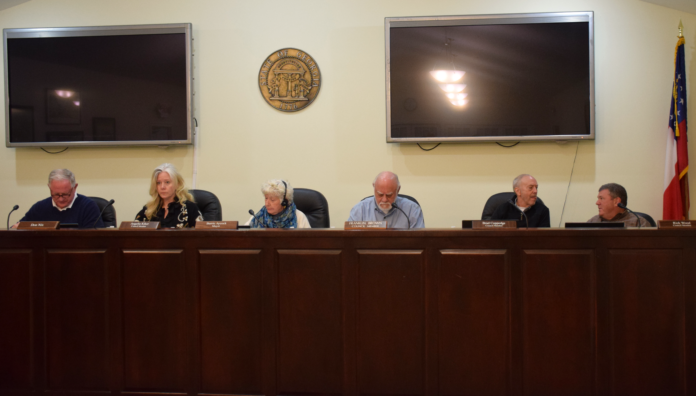
The Clarkesville City Council will consider approving the joint comprehensive plan on February 14. (Jerry Neace/NowHabersham.com)

The Clarkesville City Council will meet on February 14 to discuss and adopt a joint comprehensive plan for the city. The plan is the result of collaboration between the city, Habersham County, Alto, and Demorest.

READ Draft of joint comprehensive plan

The Georgia Mountain Regional Commission (GMRC) has been assisting with the project since last spring. Public hearings on the plan were held last summer. The first public hearing was held on May 16, 2023. The last public hearing was held on September 7, 2023.

The plan aims to meet the minimum standards required by the Georgia Planning Act of 1989 and the Department of Community Affairs. The minimum standards include community goals and vision, a statement of needs and opportunities, a community work program, environmental compliance factors, and an assessment of broadband capacity and needs.

According to GMRC, the plan prioritizes maintaining public safety services, preserving Habersham County’s rural character, ensuring affordable housing, and retaining the area’s small-town feel.

At the September 5th public hearing, GMRC Planning Director Adam Hazell said that residents’ feedback indicated what they wanted in the area. Residents wanted to maintain the current level of public safety services. They wanted to maintain Habersham County’s rural character. They wanted the area to remain affordable to live in. Residents also wanted to keep agriculture as a viable industry, and retain its small-town accessibility.

The Clarkesville City Council called meeting will be held Wednesday February 14. The meeting will begin at 4:00 p.m. at Clarkesville City Hall at 123 North Laurel Drive in Clarkesville.

Opponents of mine near Okefenokee consider options to stop it after state EPD issued draft permits

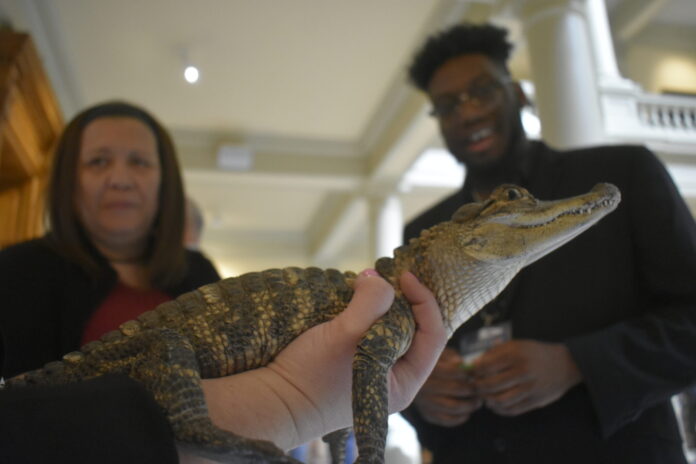
Creature and Charlie were big hits with politicians and other Capitol visitors on Swamp Day. They are two baby alligators from the Okefenokee Swamp Park in Waycross. (Ross Williams/Georgia Recorder)

(Georgia Recorder) — Visitors to the state capitol late last week may have spied two alligators at the base of the South Steps.

The gators, named Creature and Charlie, had come a long way from Waycross, Georgia, to join Okefenokee Swamp fans to celebrate Okefenokee Swamp Day and announce a new economic impact study for making the Swamp a UNESCO World Heritage site designation.

“If we want people to protect [the Okefenokee], they need to experience what we are asking them to protect,” Kim Bednarek, executive director of Okefenokee Swamp Park, said at the Capitol. “We are providing those experiences and trying to heighten the visibility of the Okefenokee so that people around the country want to protect the Okefenokee and get excited about it.”

Tourism operators like the Okefenokee Swamp Park are taking full advantage of the Okefenokee National Wildlife Refuge’s natural wonder.

But at the state level, the battle for House Bill 71, the Okefenokee Protection Act spearheaded by GOP state Rep. Darlene Taylor, rages on as Alabama-based company Twins Pines Minerals plans to dig for titanium in a 582-acre area near the swamp, sparking public outcry since the Alabama company unveiled plans in 2019.

“There’s a very good reason for the Natural Resources Committee to hear this bill again this year, to vote on it and to move it forward,” Michael O’Reilly, director of government relations at The Nature Conservancy, said. He pointed to the U.S. government’s consideration of nominating the Okefenokee National Wildlife Refuge as a world heritage site with support from Georgia’s congressional delegation.

Late Friday afternoon, the state Environmental Protection Division announced its decision to issue draft permits to Twin Pines, triggering a 60-day public comment period, where people can send in written comments to [email protected] before a virtual meeting on March 5 at 6 p.m.

The bill, which would block new or expanded mining proposals, is currently in its third year before the Legislature. Last year, it successfully earned a hearing in the House of Natural Resources and Environment Committee, but that hearing was held after the deadline for bills to move forward from one chamber to another. Despite garnering over 90 signatures from lawmakers on both sides of the aisle – representing more than enough votes to clear the chamber – the Okefenokee Protection Act was never put to a vote in the committee by Chair and Newnan Republican Rep. Lynn Smith and got kicked to this year’s legislative session.

“I’m hopeful that committee chair Smith will see this opportunity to bring a bill for a vote in the committee soon,” O’Reilly added.

Rena Ann Peck, executive director of the nonprofit Georgia River Network, said the bill creates reasonable restrictions that protect the swamp.

“I don’t think that right now, the chair of the House Natural Resources Environment Committee plans to bring it to a vote,” Peck said. “She believes that retiring (the) ability to mine on Trail Ridge is a taking, but it’s not.”

Peck said that the Okefenokee is a “globally recognized jewel” with multiple values to offer and does not qualify as a taking, which is when the government restricts the use of a property without fairly compensating the owner, as is sometimes the case with highway building.

State Rep. Darlene Taylor, a Thomasville Republican who sponsored HB71, said the Okefenokee is a unique place that deserves protection.

“There’s not another one like it,” Taylor said. “It’s got a lot of natural habitat. It is the controlling part of the ecosystem in Southeast Georgia and Northeast Florida, so it’s going to affect the water systems in that area. Like everybody else, I want it to be protected.”

Twin Pines is a powerful force to fight against in the Legislature, with $180,000 spent on Georgia lobbying in 2023, according to OpenSecrets. Supporters of the mining proposal include the Charlton County Commission, which passed a resolution to support the proposed strip mine near the Okefenokee in 2019, citing economic benefits to the region, such as jobs and tax revenue.

“If [Twin Pines] can get their permits, then they’re supportive. If they cannot get their permits through the issuing authority, then they don’t want it,” Charlton County administrator Hampton Raulerson said, saying the mining would increase the number of decent paying jobs in the region as an existing mining operation on the northern end of the county is set to leave Charlton next year.

Steve Ingle, president of Twin Pines, said in a statement that mining would invest up to $300 million in the area and that yearly taxes would nearly double Charlton County tax digest, adding, “It will provide hundreds of good-paying jobs in an area where there are many people in need of employment and we’re ready to put them to work.”

Environmentalists and members of the public say they are determined to fight back against the mining.

“This mine is a direct attack on a vital area of the state,” environmental lobbyist Neill Herring said, citing public outrage and local governments in the Okefenokee region’s opposition to the mining.

“Environmental groups in Georgia are determined to protect the Okefenokee Swamp from unwelcome intrusion into the operation of the natural systems, the natural ecology of the swamp in its entirety,” Herring said. “We will spare no effort in challenging any permit issued to any miner who threatens the integrity of the Okefenokee Wildlife Refuge.”

As this year’s crossover day looms February 29, the next step for the Okefenokee’s fate will come at the EPD public hearing.

“At this point, it’s really important that Georgians make their feelings known and submit comments by the deadline and also voice their complaints in the hearing that is scheduled for March 5,” Southern Environmental Law Center Senior Attorney Bill Sapp said. He urges Georgians to register for the hearing on the EPD website and tell their friends and family to do the same.

He can count on support from the St. Mary’s Riverkeeper, which advocates for clean water in the southeast corner of Georgia.

“We really want to highlight that it is a wetland and that it does have value not only to the environment and to our overall health, but as a recreational opportunity as well,” Emily Floore, executive director of the St. Mary’s Riverkeeper nonprofit, said. “It provides a green space for people to be able to experience nature as it was. There’s very few places we have nowadays where you can go to the outdoors and see something that is pretty much intact.”

Vertical Bridge withdraws Baldwin cell tower application

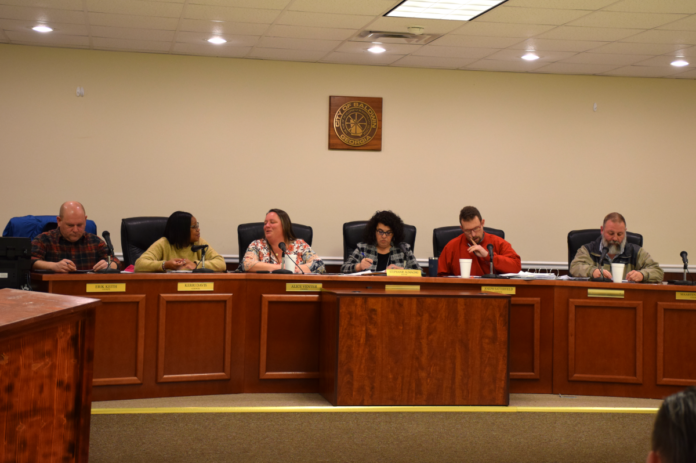
The Baldwin City Council announced during Monday night's meeting that Vertical Bridge had withdrawn their cell tower application. (Jerry Neace/NowHabersham.com)

Vertical Bridge has withdrawn its application with the city of Baldwin for a special use permit and a zoning variance. Vertical Bridge is the construction company that submitted an application to place a T-Mobile cell tower at the end of Traditions Drive. The cell tower would have been mere blocks from downtown and Baldwin Elementary School and less than a mile from the Habersham County Airport.

The announcement came during the public comments portion at the beginning of the Baldwin City Council meeting.

“There has been an update. Vertical Bridge has withdrawn their proposal for the tower. Congratulations! We just heard about this today,” Mayor Stephanie Almagno told the audience.

After the announcement, she asked Baldwin City Attorney Dale Samuels if he had anything to add.

“I would just point out the proceedings on this particular site have apparently ended. It does not mean they’re not actively looking for a solution to their coverage issues,” Samuels told the Council.

He explained that according to their science, they would need a tower somewhere between their two existing towers.

“They’re not done trying,” he said.

Cell tower opponent ‘relieved’

Last week, the City Council held a public hearing on the proposed cell tower. During that meeting, five Baldwin residents spoke in opposition to the tower. Mike Tope was one of those residents who voiced his opposition. His property is next to the site where the tower would have been located.

Tope attended Monday night’s meeting to hear the news that the cell tower application had been withdrawn. After the meeting, Tope told Now Habersham, “I’m very relieved.”

“I feel that we as a community stood together pretty well last week. Hopefully, they will consider us next time,” Tope said.

Tope took Samuels’ comments as a warning.

“If they come back for another location, we’ll hopefully be ready to talk with them again and push back again,” he said.

U.S. Senate sends to the House $95 billion aid package for Ukraine, Israel, Taiwan

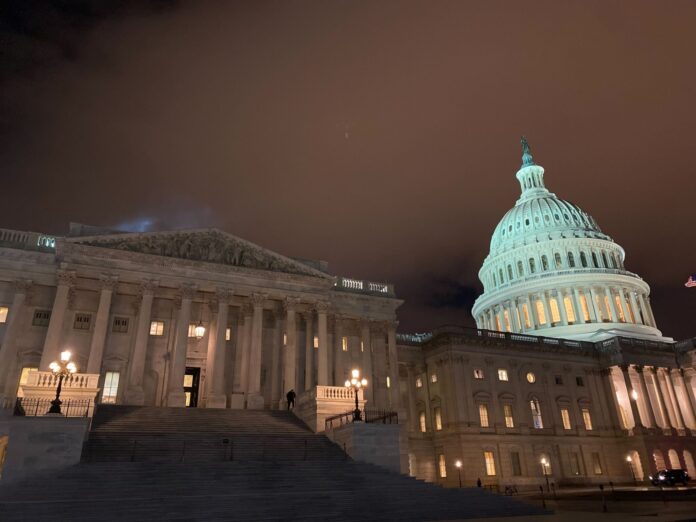
(Jennifer Shutt/States Newsroom)

WASHINGTON (States Newsroom) — The U.S. Senate voted overwhelmingly early Tuesday to approve a $95 billion emergency spending package for Ukraine, Israel and Taiwan.

The measure now goes to the U.S. House, where Speaker Mike Johnson hasn’t committed to putting the bill on the floor for debate or votes amid opposition to the military and humanitarian assistance from some in his conference’s right flank.

The Senate’s 70-29 vote to approve the bill shows broad bipartisan support in at least one chamber of Congress. However, it’ll need House approval before it can go to President Joe Biden’s desk for his signature.

Johnson, a Louisiana Republican, released a statement late Monday evening indicating he disapproves of the Senate bill in part because it does not contain any immigration provisions after Senate Republicans tanked a bipartisan border security deal that was also opposed by Johnson and House GOP leaders.

“The mandate of national security supplemental legislation was to secure America’s own border before sending additional foreign aid around the world. It is what the American people demand and deserve,” Johnson said.

“Now, in the absence of having received any single border policy change from the Senate, the House will have to continue to work its own will on these important matters. America deserves better than the Senate’s status quo.”

Senate Minority Leader Mitch McConnell, a Kentucky Republican, supported the bill, saying it is in the best interest of U.S. national security.

“Our adversaries want America to decide that reinforcing allies and partners is not in our interest, and that investing in strategic competition is not worth it,” McConnell said. “They want us to take hard-earned credibility and light it on fire.”

Republicans voting to approve the bill included Arkansas’ John Boozman, West Virginia’s Shelley Moore Capito, Louisiana’s Bill Cassidy, Maine’s Susan Collins, Texas’ John Cornyn, Idaho’s Mike Crapo, North Dakota’s Kevin Cramer, Iowa’s Joni Ernst, Iowa’s Chuck Grassley, North Dakota’s John Hoeven, Louisiana’s John Kennedy, McConnell, Kansas’ Jerry Moran, Alaska’s Lisa Murkowski, Idaho’s Jim Risch, Utah’s Mitt Romney, South Dakota’s Mike Rounds, Alaska’s Dan Sullivan, South Dakota’s John Thune, North Carolina’s Thom Tillis, Mississippi’s Roger Wicker and Indiana’s Todd Young.

Oregon’s Jeff Merkley, Vermont independent Bernie Sanders and Vermont’s Peter Welch were the three Democrats who voted against passage.

Demorest wall project nears completion, finally

The handrails along the Demorest retaining wall are finally being installed. Once contractors are finished installing the handrails, the side walk that has been closed for over three years, will reopen. (Jerry Neace/NowHabersham.com)

The Demorest wall project is finally nearing completion. The required handrails began being installed earlier this past week. According to City Manager Mark Musselwhite, it should take about 10 days for the handrails to be installed and “the barrels along the wall should go away.”.

Once the handrails are installed, the sidewalk will be reopened to pedestrian traffic.

The project began last May and was expected to be completed in late summer. The city was informed during the project’s construction that receiving the handrails in a timely manner would hinder its completion before the city’s Fourth of July celebration. At that time, the project was anticipated to be completed by the end of August due to the delay in receiving the handrails.

The project came about due to flooding rains from Hurricane Delta in October 2020 that caused sections of the original concrete wall to buckle and begin to crumble.

Georgia Department of Transportation contracted Vertical Earth Incorporated to oversee the project at a cost of $733,000. The original completion date for the project was set for December 31.

Rabun Gap delights audiences with production of ‘High School Musical’

The cast of “High School Musical” at Rabun Gap-Nacoochee School performs on the Rearden Stage. (RGNS)

The cast of Rabun Gap High School’s production of “High School Musical” brought the magic of Disney to the stage this month. The production, directed by Joshua Miller, featured over 50 students from the school’s arts program.

The show, which played Feb. 8-10 on the Rearden Stage, featured a talented cast led by a handful of seniors. Cyrus Manoogain and Lauren Eubanks played Troy and Gabriella, respectively. Other notable leads included seniors McKenna Green as Taylor, Tyler Price as Chad, Edwin Wood as Ryan, and Sophia Moore as Sharpay.

The production team, which included over 20 students, worked tirelessly to prepare for the show, starting in November.

“We are so proud of our students for their hard work and dedication to making ‘High School Musical’ a resounding success,” said Miller. “This production has not only showcased their artistic talents but has also brought our school community together in a celebration of creativity and teamwork.”

Kimmie Gee was the show’s choreographer, while Mary Lauren Keeny served as music director. June Baumann was the assistant music director, and Joey Wade led the production team as technical director.

“We are so grateful for the support the community continues to show for our arts program. The success of “High School Musical” stands as a testament to Rabun Gap’s vibrant and thriving arts community, and I am incredibly proud of everyone involved,” said Head of School Jeff Miles.

Playoff Bound! Indians punch playoff ticket; Lady Indians see season come to an end

Neyo Bain (photo by Austin Poffenberger)

BOYS

With a playoff trip on the line Monday, Tallulah Falls didn’t disappoint in a 65-57 victory over Commerce in the Region 8-A DI play-in game. The Indians held the fifth and final seed but used a big fourth-quarter run to staple down a fifth consecutive playoff berth.

The Tigers held strong and held the lead after one, 17-15. In the second, the teams continued to trade buckets while Neyo Bain notched a buzzer-beater to end the half, tied at 29. Zakhar Valasiuk hit a tying 3-pointer in the third to tie it up at 37 apiece.

Despite trailing 48-44 heading into the final period, the Indians had one more big run in them. Judah McIntosh hit the go-ahead trifecta, and TFS pulled away until the final horn.

Bain had a game-high 20 points, while Hayden Bootle scored 19. Valasiuk had nine points, McIntosh five, Sam Ketch and Todor Stanimirovic four each, Brian Neely, Jr. three, and Bryson Perdue one.

TFS is 7-19 on the season and will take on Athens Christian in the region semifinals on Wednesday.

GIRLS

In a win-or-go-home region tournament play-in game, the Lady Indians lost 37-31 against visiting Elbert County on Monday night.

TFS led 12-4 in a low-scoring opening frame and held a 17-13 halftime advantage. The Blue Devils outscored Tallulah Falls 24-14 the rest of the way, however.

Breelyn Wood finished with a team-best 13 points, with Adrijana Albijanic chipping in with six. Haygen James had four points, Allie Phasavang and Joanna Molodynska had three apiece, and Millie Holcomb had two. James and Holcomb had nine rebounds each.

The Lady Indians close the season at 8-14 overall and fifth in Region 8-A DI.

Thursday hearing in Georgia election interference case could be blockbuster

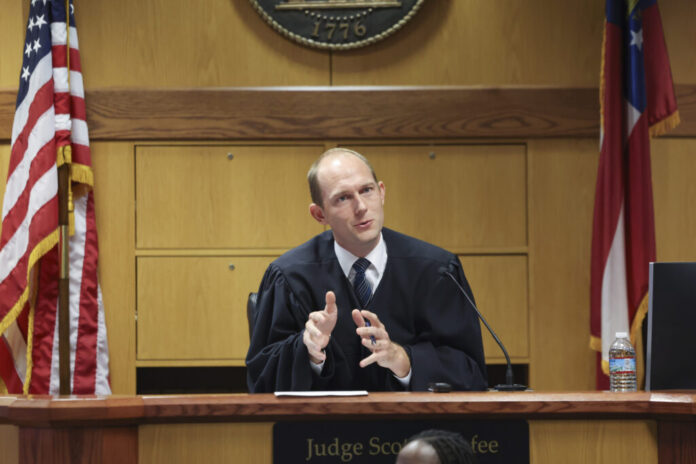
Fulton County Judge Scott McAfee said at February 12 court hearing that he would intervene if a February 15 hearing about a romantic relationship between District Attorney Fani Willis and prosecutor becomes a personal attack by defense attorneys seeking to remove Willis from the 2020 election case. (File Jason Getz/Atlanta Journal-Constitution via AP, Pool)

(Georgia Recorder) — An evidentiary hearing is set to be held this week in Fulton County Superior County Judge Scott McAfee’s courtroom to determine whether District Attorney Fani Willis committed prosecutorial misconduct serious enough to disqualify her from the historic 2020 election interference case.

McAfee argued at a court hearing Monday that remaining on course to start a hearing on Thursday is needed to obtain more facts and hear arguments regarding whether a romantic relationship between Willis and special prosecutor Nathan Wade was a conflict of interest that constitutes misappropriated taxpayer funds. Wade was hired by Willis in November 2021 to help lead a team of prosecutors in the investigation that resulted in a grand jury in August indicting former President Donald Trump and 18 co-defendants on sweeping felony charges that they illegally conspired to overturn Georgia’s 2020 presidential election,

McAfee said Monday that he will wait until the evidentiary hearing is underway before making a final ruling on whether Willis or Wade must comply with defense subpoenas ordering them to testify.

McAfee said that there are legal grounds to warrant holding a hearing about actions that could be considered valid reasons to disqualify Willis, a Democrat who was elected to office in 2020.

Ashleigh Merchant, attorney for Trump co-defendant Michal Roman, argued Monday that subpoenas issued for Willis’ staff, a former partner at Wade’s law firm and Wade’s father could provide insight into when the pair of prosecutors first became more than friendly coworkers and lend more credence into why the district attorney should be removed from the case. McAfee confirmed Monday that Wade’s former colleague and divorce attorney, Terrence Bradley, will take the stand Thursday.

Merchant says Wade has non-privileged information he can share about his former business partner’s relationship with the DA.

Willis and Wade did not attend Monday’s hearing, which was conducted in person inside the downtown Atlanta courthouse and also via livestream. Willis’ attorney stated on Monday the defense lawyers are trying to force people connected to Wade and Wills to testify in an attempt to stir up salacious gossip rather than argue the merits of the case.

Willis has defended Wade’s professional reputation against claims that he is unqualified. Willis argues that the defense lawyers have failed to demonstrate how their discretion in pursuing the case is no longer justified.

A former prosecutor, Wade has served as a Cobb County municipal judge for a decade and is a partner with an Atlanta firm that specializes in cases involving personal injury claims, family and domestic law, contract litigation, and criminal defense. Wade has been paid more than $650,000 since Willis appointed his firm to handle the case.

A plea deal was reached last year that allowed four of the 19 defendants to avoid prison time in return for testifying against their co-defendants as state witnesses. The remaining co-defendants, including Trump, former Trump attorney Rudy Giuliani, and Trump’s ex-White House Chief of Staff Mark Meadows, have pleaded not guilty.

Trump asks U.S. Supreme Court to pause trial over presidential immunity

WASHINGTON (States Newsroom) – Former President Donald Trump asked the U.S. Supreme Court on Monday to further delay his federal criminal trial on charges he attempted to subvert the 2020 election, contending his actions were protected by presidential immunity.

In a 40-page application to the Supreme Court late Monday, Trump and his attorneys asked the justices to pause pretrial activities in federal district court for the case brought by Special Counsel Jack Smith, accusing Trump of lying to and encouraging supporters who turned violent on Jan. 6, 2021, and attacked the U.S. Capitol.

Trump’s application comes just days after the Supreme Court justices heard arguments in a separate case involving the former president, this time about whether Colorado could bar him from the 2024 presidential primary ballot because he violated the Constitution’s 14th Amendment. The justices met the argument with skepticism.

Trump, the front-runner for the 2024 Republican presidential nomination, plans to challenge a three-judge panel appeals court ruling last week that said he could not claim presidential immunity to escape the criminal charges accusing him of conspiring to overturn his loss in the 2020 presidential election.

Trump’s team said in the Monday application that they plan to appeal “en banc,” meaning to the full D.C. Circuit appeals court, and also to the U.S. Supreme Court, “if necessary,” Trump’s lawyers wrote.

Smith had asked the Supreme Court in December to fast-track Trump’s immunity question, essentially leapfrogging the federal appeals process, but the justices declined the request.

The brief cited Trump’s schedule ahead of November’s presidential election, saying a long trial would keep him off the campaign trail and deprive “tens of millions of American voters, who are entitled to hear President Trump’s campaign message as they decide how to cast their ballots.”

“Conducting a months-long criminal trial of President Trump at the height of election season will radically disrupt President Trump’s ability to campaign against President Biden — which appears to be the whole point of the Special Counsel’s persistent demands for expedition,” Trump’s lawyers said.

A majority of justices would have to vote to grant a stay for it to take effect.

MORE: Trump asks U.S. Supreme Court to pause trial over presidential immunity

Immunity argument

Trump is likely to win a high court case, his lawyers said Monday, because he was representing an essential aspect of presidential power. Allowing presidents to be prosecuted would create a constant threat of prosecution for every future president, making the job virtually unmanageable.

“This threat will hang like a millstone around every future President’s neck, distorting Presidential decisionmaking, undermining the President’s independence,” Trump’s attorneys wrote. “Without immunity from criminal prosecution, the Presidency as we know it will cease to exist.”

All the allegations in the four-count indictment stemmed from actions Trump took in his official capacity as president as a good-faith effort to reverse widespread election fraud, the brief said.

Prosecutors say Trump knew there was no determinative voter fraud but nonetheless pressured state officials, Department of Justice leaders, Vice President Mike Pence, and others to illegally use the claim to overturn the election results.

The pressure campaign eventually led to the deadly storming of the Capitol by Trump’s supporters on Jan. 6, 2021, according to prosecutors and the U.S. House committee that investigated the matter.

Shortly after he left office, the U.S. House impeached Trump for his role in the attack. But with only seven Republican senators joining all Democrats in voting to convict Trump, the former president was acquitted in a Senate trial.

That should also protect Trump from court prosecution under the principle of double jeopardy, which says a person cannot be tried twice for the same crime, Trump’s lawyers argued to the Supreme Court.

Four of the Supreme Court’s nine justices would have to agree to hear the case. Trump appointed three of them.

Original trial date postponed

Although Trump has not succeeded in having the case thrown out over presidential immunity, the issue has gobbled up months of court time and delayed his trial.

U.S. District Judge Tanya S. Chutkan, who is the trial judge in the case, said last month she would postpone the original trial start date of March 4. She has not set a new date.

In October, Trump made a pretrial motion to throw out the charges based on his presidential immunity theory.

Chutkan denied the motion, and Trump appealed her decision to the D.C. Circuit.

A panel of the appeals court ruled last week to uphold Chutkan’s decision and gave Trump until Monday to take the case to the Supreme Court.

In early January, Trump’s lawyer, D. John Sauer, argued before federal appeals judges Karen LeCraft Henderson, Florence Y. Pan, and J. Michelle Childs that the former president has absolute immunity from criminal prosecution because presidents cannot be tried for “official acts” taken while in office.

When asked by the judges about hypothetical criminal acts, including ordering the assassination of a political rival or selling military secrets, Sauer notably argued that if presidents are not impeached and convicted, they would be immune from criminal prosecution.

In the unanimous unsigned federal appeals opinion on Feb. 6, the judges dismissed Trump’s arguments as “unsupported by precedent, history or the text and structure of the Constitution.”

“We cannot accept former President Trump’s claim that a President has unbounded authority to commit crimes that would neutralize the most fundamental check on executive power — the recognition and implementation of election results,” they wrote.

The three-judge federal appeals panel comprised appointees from both Democrat and Republican administrations — Henderson, appointed by George H.W. Bush, and both Pan and Childs were appointed by President Joe Biden.