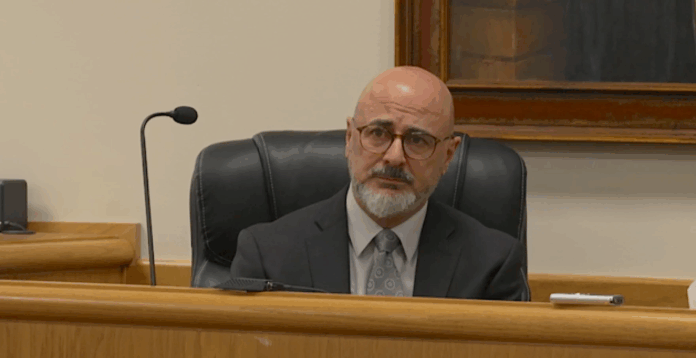
Home Blog Page 87

Cook annexation clears first reading in Baldwin

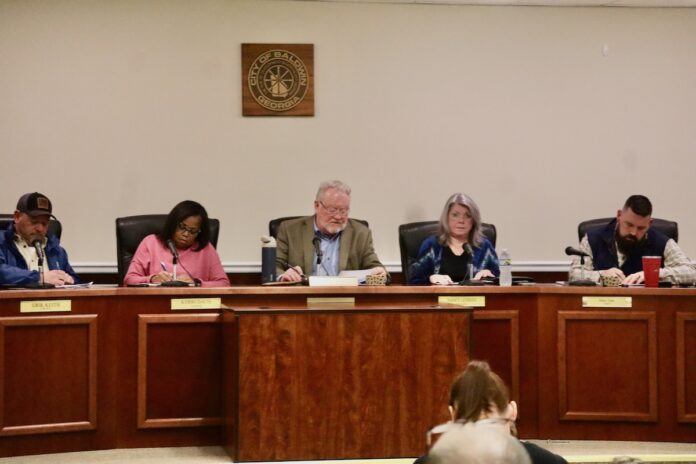
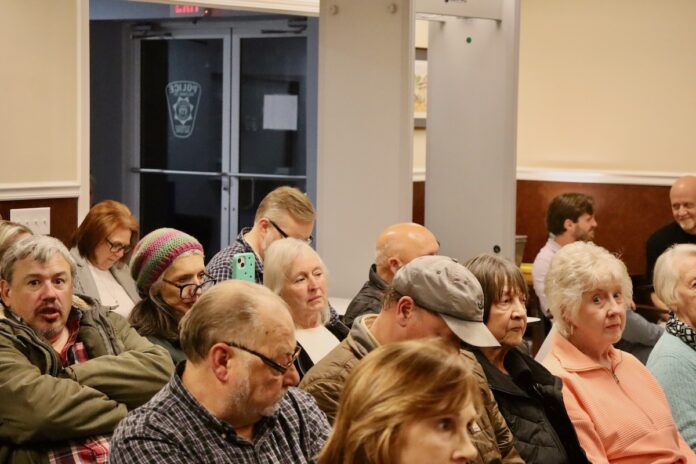
Every seat in the house was taken during the Baldwin City Council meeting Tuesday night. (Patrick Fargason/Now Georgia)

BALDWIN, Ga. — The Baldwin City Council voted Tuesday night to approve the first reading of a proposed annexation and rezoning tied to a development request from Cook Construction, a move city officials stressed was procedural and does not represent final approval of the project.

The ordinances passed by a 2-1 vote. Councilman Mike Tope made the motion, which was seconded by Councilwoman Nancy Lehman. Councilwoman Kerri Davis was not present for the meeting.

What the vote means — and what it doesn’t
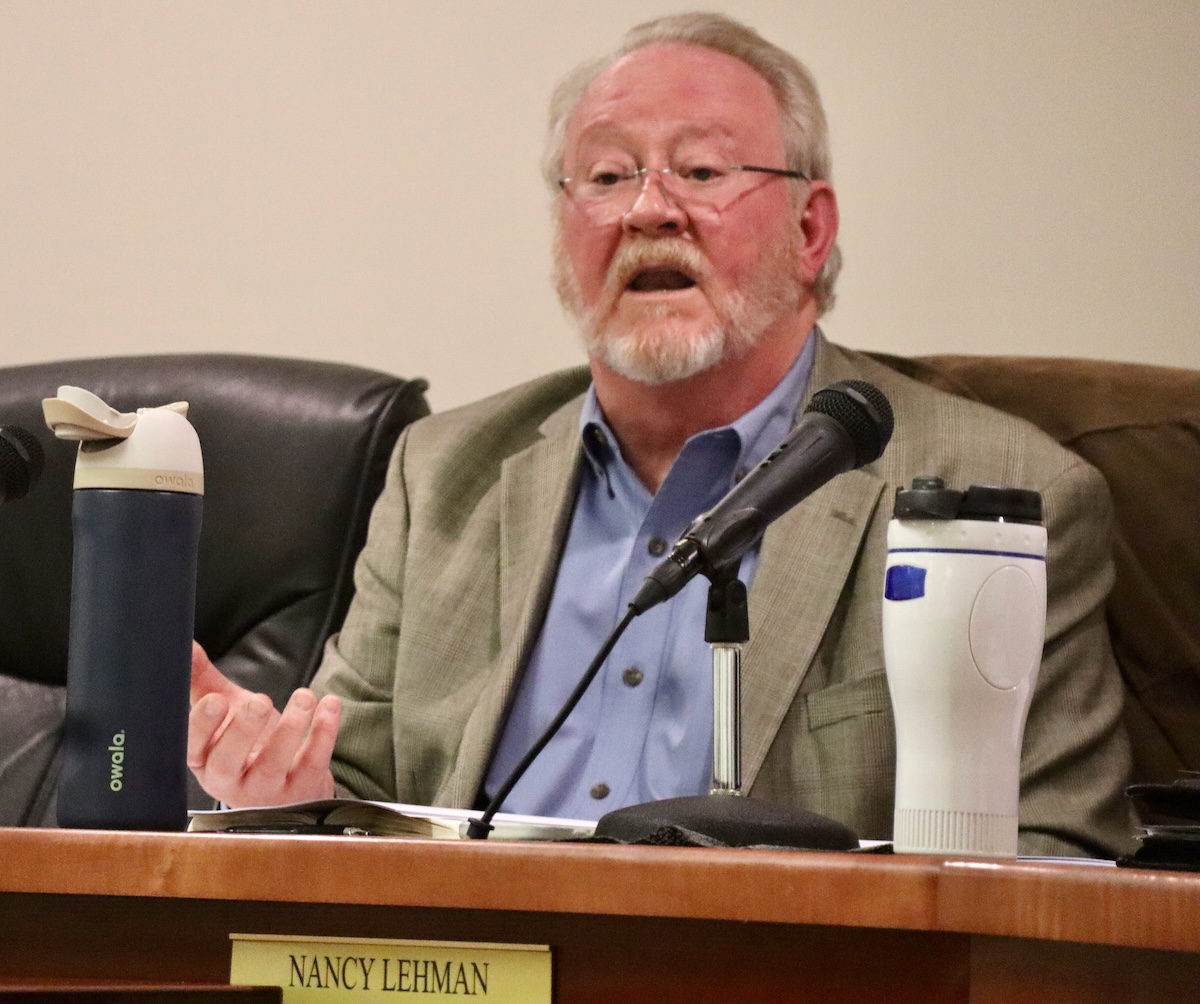
Baldwin Mayor Doug Faust outlines what this vote does. (Patrick Fargason/Now Georgia)

Before the vote, Mayor Doug Faust outlined what a first reading authorizes — and what it does not.

“This first reading is an authorization to continue the process of reviewing the annexation,” Faust said. “It is not an approval of the annexation.”

Faust said the proposal must still go through a public hearing, followed by a second reading and final vote before any annexation or zoning change could take effect. He said the city is working to identify a larger venue for the hearing and noted that state law requires at least 15 days’ public notice.

Developer outlines proposal

Cook Construction attorney Vince Fitzgerald said the proposal includes 21 acres already within Baldwin city limits and an additional 88 acres proposed for annexation, for a total of about 109 acres.

He emphasized that neither residential housing nor data centers are permitted uses under the requested highway business zoning.

The conceptual plan includes retail space, restaurants, a gas station, a grocery store, a medical office, a senior living facility and stormwater infrastructure. Fitzgerald said the plan aligns with the city’s comprehensive plan, which identifies the Ga. 365 corridor as a priority area for commercial and retail growth.

Public raises traffic, infrastructure concerns

Several residents spoke during public comment, many focusing on traffic safety, long-term infrastructure costs and the character of the area.

Former councilwoman Alice Venter warned that future road and sewer improvements could be costly and unpredictable.
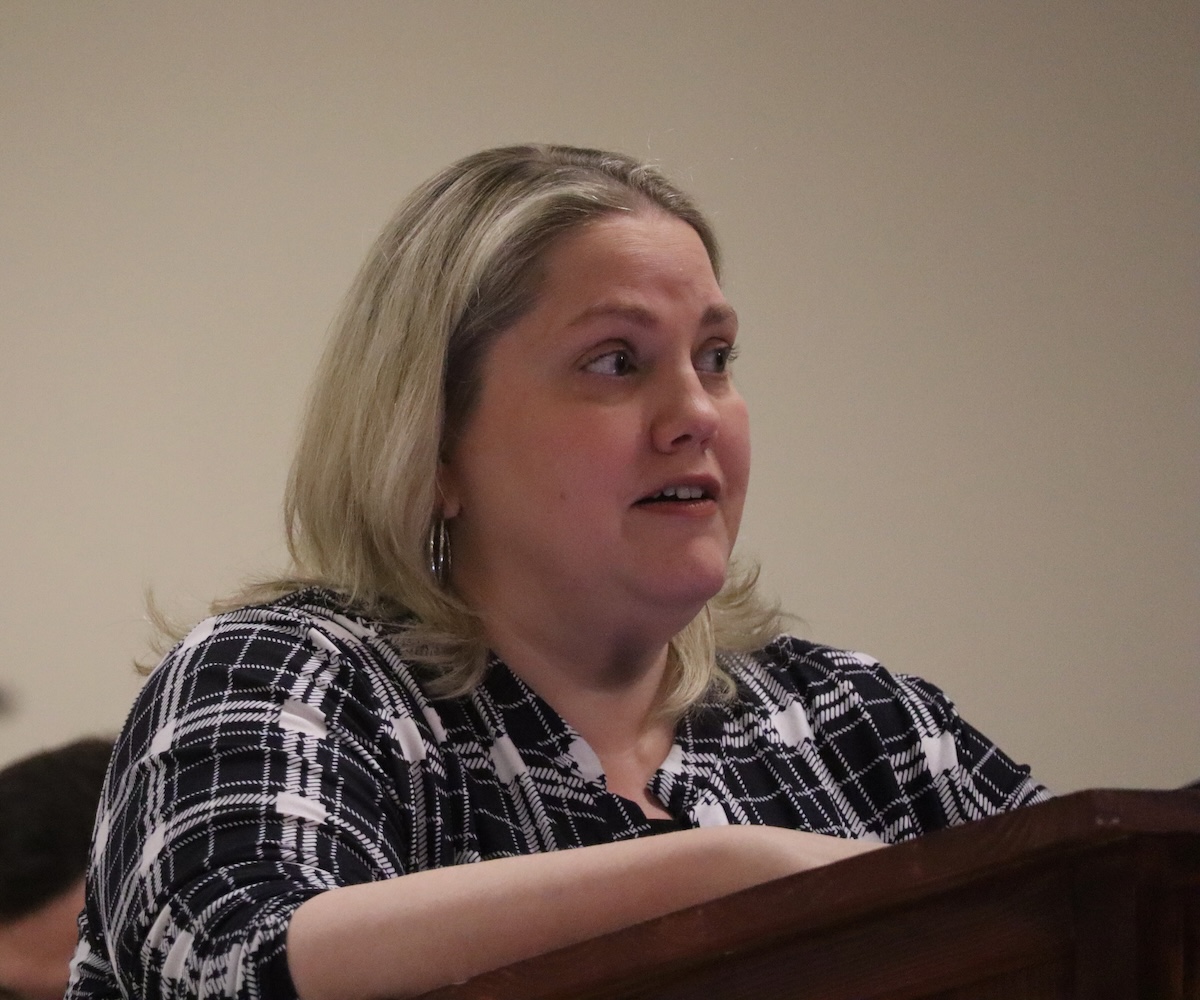
Alto resident Janet Brooks raises traffic concerns the development could bring. (Patrick Fargason/Now Georgia)

“You wouldn’t know this unless you’ve sat through years of engineering meetings,” Venter said. “Even when capacity looks fine on paper, high rain events create problems, and that infrastructure is very expensive to repair.”

Alto resident Janet Brooks said she fears development along Ga. 365 could mirror the congestion seen in metro Atlanta suburbs.

“I hate going to Woodstock, and I don’t want Habersham to become that,” Brooks said. “That road is dangerous. I sit in my parents’ living room and hear wrecks at night — many of them fatal.”

Cornelia resident Charles Frankum said traffic conditions at the Duncan Bridge intersection already feel unsafe.

“When the light turns green, I don’t go,” Frankum said. “I sit there and watch to see if people are stopping. I shouldn’t have to do that.”
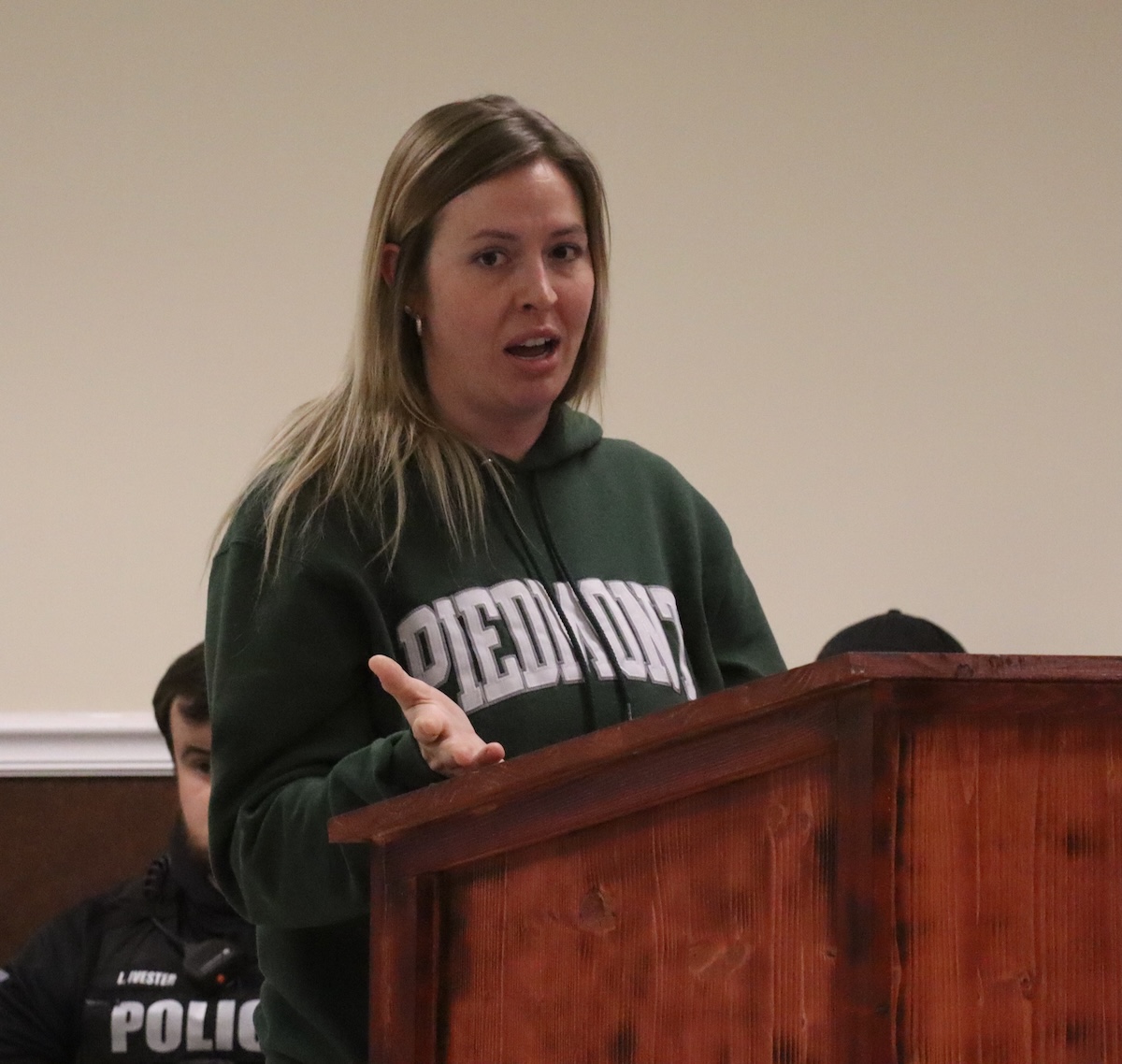
Demorest resident McKenzie Cain says she’ll to anything to protect this area she loves. (Patrick Fargason/Now Georgia)

Frankum said nearby homeowners worry construction could hurt property values and urged the council to preserve the area’s character. “We don’t want to be Atlanta,” he said. “If we did, we’d live there.”

Demorest resident McKenzie Cain said transparency and ethics should guide the city’s decisions as the proposal moves forward.

“If something’s going to be decided, it should be done ethically and transparently,” Cain said. “I love this area, and I’ll do anything to protect it.”

Cain also raised separate concerns about Fourth Amendment issues related to the city’s proposed use of Flock license plate reader cameras, noting her comments on that topic were independent of the Cook annexation.

Infrastructure funding, next steps

Councilman Joe Elam asked how water and sewer infrastructure would be funded. Faust said discussions have focused on developer-funded options, including the possible creation of a tax allocation district.

“There is no consideration that the city is paying for any of the infrastructure to bring sewer or water to them,” Faust said.

Fitzgerald said any traffic studies or required improvements would be governed by the Georgia Department of Transportation, noting Ga. 365 and Duncan Bridge Road are state highways.

Tope: Moving forward was about following process

After the meeting, Tope said his motion to approve the first reading was driven by the
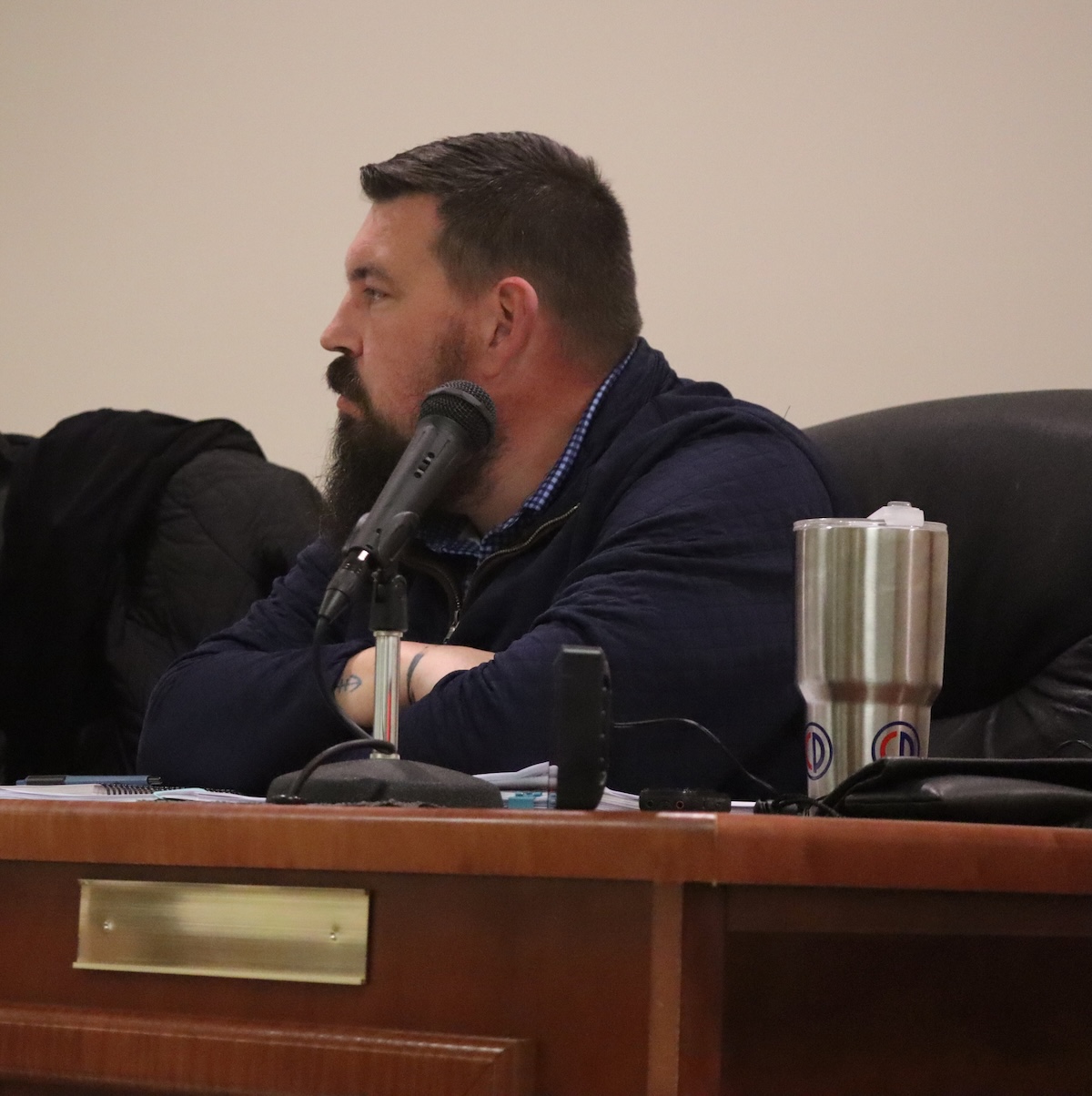
Councilman Mike Tope made the motion to approve the first reading for annexation. (Patrick Fargason/Now Georgia)

council’s obligation to follow its established process — not by support or opposition to the project itself.

“There’s a process,” Tope said. “We’ve got to follow the process. That means getting the first reading, having a public hearing and continuing through the steps.”

Tope said failing to do so could set a problematic precedent.

“This isn’t approval by any means,” he said. “If we don’t follow that process, we’re setting a precedent for future councils to shut something down and really hinder property.”

No final decision on the annexation or zoning was made Tuesday night. The proposal must still go through a public hearing and second reading before the council can vote on final approval.


Habersham County Public Works Director Jerry Baggett resigns

Habersham County Public Works Director Jerry Baggett submitted his resignation on Jan. 21, 2026. His last day on the job is Feb. 11. (Jerry Neace/NowHabersham.com)

CLARKESVILLE, Ga. — Habersham County will soon begin searching for a new public works director following the resignation of Jerry Baggett. County Manager Tim Sims said Baggett submitted his resignation in person on January 21.

“This was a voluntary resignation,” Sims said, noting that Baggett asked county leaders not to announce his departure until after the predicted ice storm so it would not distract public works employees during storm response and cleanup efforts.

Baggett’s resignation is effective February 11.

Assistant Public Works Director Mac Koon will oversee operations in the interim, while supervisors in the Road and Fleet divisions continue managing daily responsibilities to ensure uninterrupted service.

“The job description will be updated, and the position is expected to be posted within the next week or so,” Sims said. “Once applications are received, the county will proceed through the standard interview and selection process to identify the most qualified candidate.”

Baggett was appointed public works director in December 2021 after former director Derick Canupp left to take a similar position in White County. County officials cited his more than 20 years of construction management experience at the time of his hiring.

Hotel study finds Clarkesville could support 70-room downtown property

The City of Clarkesville voted to order a topographical survey as the first step in the planning stages of what to do with the old courthouse property. (Daniel Purcell/Now Georgia)

CLARKESVILLE, Ga. — A hotel feasibility study presented to Clarkesville city leaders concludes the city can support a 70-room, upscale hotel in its downtown core, renewing discussion about how to move forward with the former courthouse property the city continues to finance.

The study was presented during Monday’s City Council work session and stems from council’s earlier decision to commission the analysis while reviewing the proposed 2026 budget. City leaders said at the time the study was needed to determine whether a hotel could help generate revenue from the city-owned courthouse site and offset long-term financial obligations tied to the property.

City Manager Keith Dickerson said the study confirms a clear lodging gap in Clarkesville, particularly as nearby hotel options shift or disappear.

“The biggest thing about this is it says — and I don’t even think it really shows the full impact of what’s happening with the Holiday Inn (Apple Mountain Resort) — but to me, it says we need a hotel,” Dickerson said.

According to the study, Clarkesville currently has no traditional hotel properties and only a small bed-and-breakfast, forcing overnight visitors to stay in neighboring communities. Consultants estimate the proposed hotel would capture demand already coming to the area for outdoor recreation, festivals, events and downtown attractions.

Report recommendations

The report recommends a 70-room “soft brand” or boutique-style hotel, noting that size aligns with regional performance benchmarks and national brand standards for small markets. Projected stabilized performance by the end of the decade includes:

  • Occupancy: approximately 64%
  • Average daily rate: about $215
  • Revenue per available room: roughly $137

Leisure travel is expected to account for about 75% of room demand, driven by proximity to the Chattahoochee National Forest, Tallulah Gorge State Park, the Soque River, seasonal festivals and downtown shopping and dining. Commercial, government and group travel are projected to make up the remaining demand.

Total development costs are estimated at approximately $14 million, excluding land. With incentives, consultants project an internal rate of return exceeding 16%, depending on financing structure.

Dickerson said the study now gives the city flexibility in deciding next steps for the courthouse property, which will require refinancing in the coming years.

“We’ve got the land. We’ve got to decide the next steps,” Dickerson said. “We can send this out to groups. We can market this ourselves. We can see if we can find investors.”

Council member Leigh Johnston said she believes Clarkesville can pursue a nationally recognized hotel brand without sacrificing downtown character.

“I feel like there’s a compromise — a good compromise,” Johnston said. “You see in a lot of markets where, even if it’s a national chain, they’ll build something that’s complementary to the surroundings.”

Dickerson said one hotel group, Cobblestone, has shown consistent interest and specializes in small-market developments that allow flexibility in architectural materials and layout.

Next steps

Mayor Franklin Brown said the city should proceed deliberately and announced plans to form a committee to help guide the process. The committee will be led by the city’s Director of Economic Development, Yvonne Marinelli, and include two council members and two Planning and Zoning Board members.

City leaders emphasized the feasibility study does not commit Clarkesville to building a hotel but provides data to guide decisions about the courthouse site and future economic development.

“It tells me that we need a hotel here,” Dickerson said. “Now it’s about deciding how we do that.”

Man dies in rollover crash on I-85 off-ramp

(NowGeorgia.com)

BANKS COUNTY, Ga. — The Georgia State Patrol has released more details One man is dead following a rollover crash near Banks Crossing.

Banks County Fire & Emergency Services responded to the I-85 southbound exit ramp off Highway 441 at Banks Crossing shortly after 4 p.m. on February 2. Fire Chief Steve Nichols reported that units arrived to find a vehicle with extensive damage.

The Georgia State Patrol investigated the accident and determined that a Toyota Tacoma was traveling southbound in the left lane and a tractor-trailer was traveling southbound in the right lane. The driver of the Toyota attempted to make a lane change into the right lane and struck the left front of the tractor-trailer. The impact caused the Toyota to rotate and overturn, eventually exiting the west shoulder.

Nichols said the driver was “trapped inside with extensive injuries.” Fire personnel extricated the patient, and he was transported to Northeast Georgia Medical Center in “very serious condition.” He later died at the hospital.

The driver’s name has not been released. No other injuries were reported.

Now Georgia will continue to update this article as new information is released.

Be someone good, one cup at a time

Just off the busy highways in Cornelia, Georgia, there’s a coffee shop where people tend to stay longer than they planned. Not because they’re told to, but because no one is rushing them out the door.

BSG Coffee doesn’t feel like a place built for efficiency. It feels like a place built for people.

Inside, the pace is slower. Conversations stretch. Someone works quietly at a table while another group laughs nearby. A drink gets made. A chair gets pulled out. Time loosens its grip a little. It’s subtle, but intentional.

BSG stands for “Be Someone Good,” a phrase that serves as both the name and the heartbeat of the space. It isn’t treated like a slogan or a rule posted on the wall. It shows up in how people are welcomed and how long they’re allowed to stay. As owner Zach Staggs puts it, “There’s no ‘no loitering’ sign… we don’t really care.”

That mindset didn’t come from a branding meeting. It came from lived experience.

Staggs is open about the fact that his life didn’t always move at this pace. Before BSG, everything was faster: racing, partying, chasing momentum, and the next thrill. It was loud, exciting, and unsustainable. Over time, that constant push began to wear thin. What followed wasn’t a dramatic turning point, but a slow realization that the life he was running toward wasn’t one he wanted to keep.

Opening a coffee company wasn’t about reinventing himself. It was about slowing down long enough to choose something different.

In the early days, BSG looked nothing like it does now. The business pivoted constantly, selling beans at markets and events, figuring things out as they went, learning what worked and what didn’t. Staggs often jokes that the company is the “poster child of pivot.” But as the café eventually took shape, one thing became clear: people weren’t showing up just for coffee.

They were showing up for the space.

“People come in for five minutes and end up staying for an hour,” Staggs said. “If it becomes part of someone’s routine, then we’re doing it right.”

That idea has shaped everything about the café. BSG isn’t just a place to grab a drink. It’s where painting classes happen after hours. Where acoustic music fills the room on Thursday nights. Where book clubs meet, small groups gather, and conversations linger longer than expected. If someone has an idea that brings people together in a positive way, the door is usually open.

At the center of it all is a simple belief: kindness should be normal and noticed.

In a time when so much attention is given to what’s going wrong, BSG operates quietly in the opposite direction. The shop highlights local events, supports other creators and businesses, and looks for small ways to reward good behavior. It’s not flashy. It’s consistent.

For Staggs, “Be Someone Good” isn’t about erasing his past or presenting a polished version of himself. It’s about building something rooted in care; for the people who work there, for the people who walk in, and for a community that now has a place to slow down.

“I’ve found a much better life,” he said, reflecting on the shift. “Chasing love and helping people instead of chasing money.”

That same idea of slowing down and being present is carrying over into one of BSG Coffee’s upcoming events. Later this month, the café will host BSG Game Night Premiere, a two-hour, phone-free evening built around board games, specialty drinks, and intentional time together. No TVs. No news. No social media. Just tables, games, familiar movie soundtracks, and people looking to unwind offline.

The $20 Game Night Entry Pass includes a drink voucher for a hot or iced beverage, a raffle ticket for an end-of-night prize drawing sponsored by Wicked & Wise, and two hours designed to feel more like a living room than a venue. Created in partnership with Smudged Events, the night is open to anyone, no experience needed, just a willingness to sit down, play, and be present.

BSG Coffee isn’t trying to change the world. It’s doing something quieter, creating a room where people feel welcome to stay, to talk, to work, to be human. And sometimes, that’s enough.

In a small town like Cornelia, a space like that can mean more than coffee ever could. It can be an invitation, not shouted, but gently offered, to be someone good.

WATCH Baldwin City Council: First reading of proposed Cook Construction annexation request

The Baldwin City Council. (Patrick Fargason/Now Habersham)

The Baldwin City Council approved the first reading of an annexation request from Cook Construction to build an 82+ acre business development off GA 365.

The council approved the first reading of the Cook Construction annexation ordinance.

“This first reading is a authorization to continue the process of reviewing the annexation,” said Baldwin Mayor Doug Faust, “it is not an approval of the annexation.”

Faust went on to explain that there is still a requirement for a public hearing and a second reading before the council takes a final vote.

“Those are the steps that we have to go through. What a first reading does is put this item on the agenda, moving forward for continuing study.”

The Baldwin City Council must now publicize the matter for at least 15 days and hold a public hearing. Faust said they are looking for a larger venue in which to hold the hearing.

The controversial Cook proposal involves more than 80 acres of property off Ga. 365 previously linked to a failed annexation effort in Cornelia. In Baldwin, it has drawn public attention over traffic and growth concerns, and was previously tabled to allow for additional information and public input.

Business owner Rick Jackson launches Republican bid for Georgia governor

Healthcare billionaire CEO Rick Jackson is running for Georgia governor as a Republican. (Photo courtesy Jackson Healthcare)

ATLANTA (AP) — Health care business owner Rick Jackson announced his Republican run for governor in Georgia on Tuesday, shaking up a field of candidates that had seemed settled for months.

Jackson is bidding to succeed Republican Gov. Brian Kemp, who can’t run again because he’s term-limited. He’s vying with Lt. Gov. Burt Jones, who has already been endorsed by President Donald Trump, as well as with Secretary of State Brad Raffensperger and Attorney General Chris Carr.

Jackson dismissed them as “career politicians” who “are going to do nothing, get rich and keep you in the dark.” By contrast, he called himself “a real-life conservative who knows how to fight the tough fights and win big for Georgia.”

Jackson is pledging to spend $50 million of his own money on his campaign. His entry comes after a shadowy entity called “Georgians for Integrity” has spent more than $13 million since November on television ads, mailers, texts and social media posts attacking Jones — considered by many the GOP front-runner — on claims that he’s using his office to enrich himself. The ads make misleading assertions about Jones’ record and Jones has dismissed them as “fabricated trash.”

Jackson campaign spokesperson Lance Trover denied Tuesday that Jackson funded the attack ads.

A four-candidate Republican field could make a June 16 runoff more likely if no one wins a majority in the May 19 primary. On the Democratic ballot, seven candidates are seeking the governor’s nomination in May, hoping to wrest control of the governor’s office back from the GOP after 24 years.

Jackson is touting a sharply conservative message and rags-to-riches background, including a launch video that profiles his rise from foster care to running Jackson Healthcare, one of the largest health care staffing firms nationwide. He pledged support for “criminal deportations” and promised to purge schools of “woke ideology,” while banning diversity, equity and inclusion initiatives.

“And if we can’t cut the state income tax in half and freeze property taxes, I won’t run again,” Jackson pledged in the video, stepping straight into two key tax debates currently ongoing at the Georgia Capitol.

Like Jones and Raffensperger, Jackson brings personal wealth to the race. Health care providers nationwide hire Jackson Healthcare to provide them with doctors, nurses and other medical professionals that Jackson employs. The company also helps health care providers find permanent employees and consulting with them on staffing. In 2021, Jackson also bought US Antibiotics, a Bristol, Tennessee, company that says it’s the only American manufacturer of two top antibiotics. Privately owned, Jackson Healthcare reports more than $3 billion in yearly revenue.

The Jackson campaign has already committed to more than $1.2 million in ad spending on television alone in the next week, as he seeks to make a splash with 14 weeks remaining before the primary, according to figures obtained by The Associated Press. Jackson said he would spend an initial $40 million on advertising.

Jackson said he’s a billionaire and bragged about making a $1 million donation to Trump, saying “Trump’s success inspired me to do this for Georgia.” But he’s been a big donor in Georgia Republican circles for more than a decade. Among the past beneficiaries of his donations are Carr, Raffensperger and former Republican Lt. Gov. Geoff Duncan, who’s now running for governor as a Democrat after Duncan fell out with Trump over the president’s attempts to overturn Georgia’s 2020 election.

As one example of his influence, Kemp touted Jackson Healthcare’s involvement in providing doctors and nurses to Georgia’s hospitals during the pandemic. Jackson also takes credit for a law that provides free college tuition, room and board for students who were in foster care or placed for adoption by Georgia’s child welfare agency.

Jackson has given money to some people who have opposed Trump, including former Florida Gov. Jeb Bush in 2015. Jones spokesperson Kayla Lott was dismissive of the idea that Jackson could threaten Jones’ support, saying: “The never-Trump lane just got way more expensive and way more crowded.”

Carr’s campaign said their argument that he’s best positioned to win the general election hasn’t changed.

“Chris is who he has always been: a proven conservative leader with a record of results and the credibility to unite voters across Georgia,” spokesperson Julia Mazzone said in a statement.

Raffensperger’s campaign declined to comment on Jackson’s entry. Jones’ campaign didn’t immediately respond to an email seeking comment.

Trump doubles down on calling for the feds to take over state elections

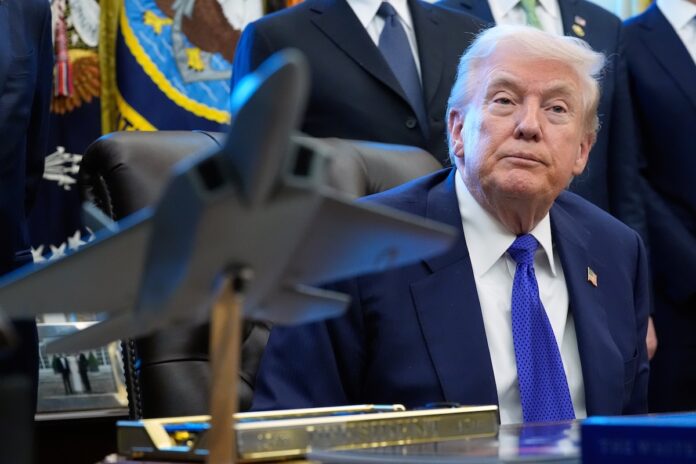
President Donald Trump listens to a question from a reporter as he speaks in the Oval Office of the White House, Monday, Feb. 2, 2026, in Washington. (AP Photo/Alex Brandon)

(States Newsroom) — President Donald Trump restated a call Tuesday for federal control over election administration across the country, undermining the structure outlined in the Constitution that empowers states to run elections.

For the second time in as many days, Trump indicated he wanted the federal government more involved in elections. The issue renews concerns over Trump’s expansion of presidential power, which critics of his second presidency have labeled authoritarian.

Speaking after a bill signing ceremony in the Oval Office and surrounded by Republican leaders in Congress, he responded to a question about earlier comments on “nationalizing” election administration by indicating the lawmakers standing behind him should “do something about it.”

“I want to see elections be honest,” he said. “If you think about it, the state is an agent for the federal government in elections. I don’t know why the federal government doesn’t do them anyway.”

Trump repeated debunked claims that he lost the 2020 presidential election only because of election fraud, especially in large Democrat-leaning cities including Atlanta, Philadelphia and Detroit.

“The federal government should not allow that,” he said. “The federal government should get involved. These are agents of the federal government to count the votes. If they can’t count the votes legally and honestly, then somebody else should take over.”

The comments marked the second time in as many days that Trump has floated a federal takeover of election infrastructure and came after Republican leaders in Congress and the White House press secretary had downplayed his earlier remarks.

In a podcast interview released Monday, Trump said his party should “nationalize” elections.

“The Republicans should say, ‘We want to take over,’” he said. “We should take over the voting, the voting in at least many — 15 places. The Republicans ought to nationalize the voting.”

Afternoon walkback

Days after the FBI raided the Fulton County Election Hub and Operation Center in Union City, Georgia, President Donald Trump started talking about nationalizing elections in 15 states. (Ross Williams/Georgia Recorder)

Reporters asked U.S. House Speaker Mike Johnson and Senate Majority Leader John Thune at press availabilities Tuesday about Trump’s initial comments.

Both avoided endorsing the view and sought to tie them to GOP legislation that would create a nationwide requirement that voters show proof of citizenship.

“We have thoughtful debate about our election system every election cycle and sometimes in between,” Johnson, a Louisiana Republican, said. “We know it’s in our system: The states have been in charge of administering their elections. What you’re hearing from the president is his frustration about the lack of some of the blue states, frankly, of enforcing these things and making sure that they are free and fair elections. We need constant improvement on that front.”

“I think the president has clarified what he meant by that, and that is that he supports the SAVE Act,” Thune, a South Dakota Republican, said earlier Tuesday. “There are other views, probably, when it comes to nationalizing or federalizing elections, but I think at least on that narrow issue, which is what the SAVE Act gets at, I think that’s what the president was addressing.”

White House press secretary Karoline Leavitt also endorsed the GOP elections bill and said states and cities that allow noncitizens to vote in local elections created a system that was rife with fraud. Reports of election fraud are exceedingly rare.

“There are millions of people who have questions about that, as does the president,” she said. “He wants to make it right and the SAVE Act is the solution.”

But Trump on Tuesday evening, with Johnson among those standing behind him, seemed to indicate a broader desire for the federal government to be directly involved with election administration.

2020 election history

Trump has a charged history with claims around election integrity.

His persistent lie that he won the 2020 election, despite dozens of court cases that showed no determinative fraud, sparked the Jan. 6, 2021, attack on the U.S. Capitol as his supporters sought to reverse the election results.

He has continued to make the claim since returning to office and spoke by phone with FBI agents who seized voting machines in Fulton County, Georgia, according to New York Times reporting, raising questions about his use of law enforcement to reinforce his political power.

Trump’s opponents, some of whom have said he is sliding toward authoritarianism in his second term, quickly rebuked his recent comments.

“Donald Trump called for Republican officials to ‘take over’ voting procedures in 15 states,” Sen. Mark Warner, a Virginia Democrat, wrote on social media. “People of all political parties need to be able to stand up and say this can’t happen.”

Walter Olson, a senior fellow with the libertarian Cato Institute, said in a statement that federalization of elections would be a bad idea on the merits, but Trump’s history raised additional concern and called for Americans to be “vigilant against any repeated such attempt before, during or after the approaching midterms.”

“This trial balloon for a federal takeover is not coming from any ordinary official,” Olson said. “It is coming from a man who already once tried to overturn a free and fair election because it went against him, employing a firehose of lies and meritless legal theories, and who repeatedly pressed his underlings, many of whom in those days were willing to say ‘no’ about schemes such as sending in federal troops to seize voting machines.”

Food lovers rejoice 

Country's BBQ is one of the many staples of one of Georgia's most loved foods.

If you ever check into the Columbus Georgia Foodies on Facebook, you know about local recommendations for all types of food from barbecue to banana pudding and burritos. 

In honor of the 250th Anniversary of our nation’s Declaration of Independence, the Chattahoochee Valley Libraries are celebrating our history, heritage, and culture via the power of cuisine.  

How many of you have a worn splattered recipe card from your mother? They are treasured items.

Nationally known experts, authors, and television personalities, will be featured in the keynote speaker series and include dozens of movies, genealogy classes, recipe digitization events, exhibits at all branches of the Chattahoochee Valley Libraries. 

The Food and The Soul of America series began in January with two-time James Beard Award-winning author Adrian Miller. Georgia Author and Archivist Valerie J. Frey led a lecture/workshop on how you can save and explore family history through recipes.   

Each of the keynote and Georgia History series features edible samples of foods being discussed in that particular program. In addition, each author’s books will be for sale at their events, with opportunities to meet and get autographs from the speakers after each program. 

Here is what you can enjoy this month: 

AUTHOR/TELEVISION HOST JOHN T. EDGE Thursday, February 5 at 6:00 pm in the W.C. Bradley Reading Room. 

The beloved host and writer of the ESPN/SEC Network hit TrueSouth brings his legendary expertise on the history and power of food in the American South. This multiple award-winning writer and storyteller was the longtime director of the Southern Foodways Alliance and one of the important voices who raised the nation’s consciousness on the glory of grits, collards, and cornbread.  

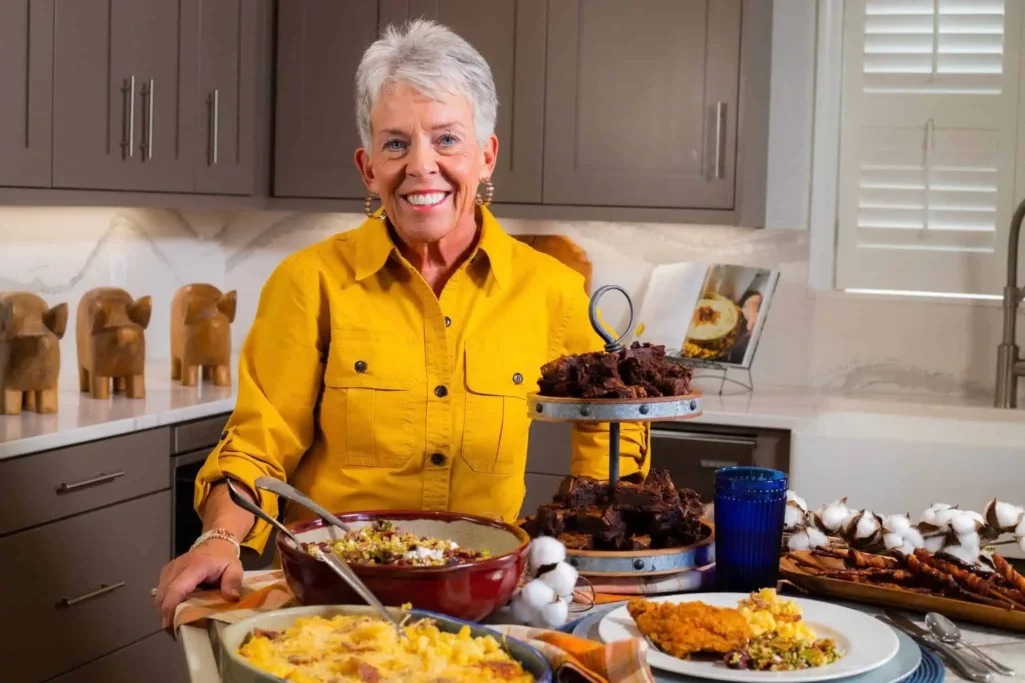
CLASSIC COUNTRY COOKING: A TALK WITH MELINDA NEWTON, “THE CHICKEN LADY” OF MINNIE’S UPTOWN RESTAURANT, Tuesday, February 10 at 6:00 pm in the library Auditorium 

Join us for an evening of local history and cuisine as Melinda Newton, aka “The Chicken Lady,” shares her story. Growing up surrounded by good southern cookin’ and local restaurateurs, the inheritor of Minnie’s Uptown Restaurant has learned more than a thing or two about bringing a classic recipe to life, being a local business owner, and sharing the joy of a warm plate of comfort food.  

Minnie’s is an iconic home cooking restaurant in Columbus. It is what many southerners refer to as a meat and three.

Minnie’s CEO, Melinda Weeks Newton says, “I am honored they would select me to be a part of this event. The library and CSU have been supportive of creating a treasure trove of recipes from my family.”  

Minnie’s is a local favorite and has been around since 1987.  

VERY VERA!, Tuesday, February 17, at 6:00pm at the W.C. Bradley Reading Room 

Vera “Very Vera” Stewart, the Augusta entrepreneur who turned her catering business into a social media empire, will give this delightful address about present day Southern Food and Culture. Known for her many food-oriented businesses as well as for defeating Bobby Flay during one of his “Throwdown with Bobby Flay” episodes, she’ll bring her unique perspective and captivating personality. 

Vera Stewart is a TV cooking host. Her cooking show is in its 14th season in 71 TV markets across 32 states. Her show appears on WLTZ NBC 38 on Saturday and Sunday.

Like Melinda Weeks Newton, Vera Stewart is a food force of nature.  

HISTORIC GEORGIA RECIPES, Thursday February 26, at 6:00 pm at the Synovus Meeting Rooms A&B 

Georgia Author and Archivist Valerie J. Frey returns to explore sources of recipes in Georgia and the South before World War II. She will highlight various cookbooks and recipes, including Verstille’s Southern Cookery, the 1866 cookbook by occasional Columbus resident Ellen Jane Verstille. At the end of her presentation, she’ll offer samples of some of the food items discussed, all to be washed down with Temperance Punch from a 1909 recipe. 

The speaker series runs through March 4. They are free and open to the public. Displays will be set up through April. Enjoy and if it makes you hungry, you’ll know what to do. 

For more information, click here. 

US shoots down Iranian drone that ‘aggressively’ approached an aircraft carrier, military says

This handout image from the U.S. Navy shows an EA-18G Growler launching from the flight deck of the Nimitz-class aircraft carrier USS Abraham Lincoln in the Indian Ocean on Jan. 23, 2026. (Mass Communication Specialist Seaman Daniel Kimmelman/U.S. Navy via AP)

WASHINGTON (AP) — A U.S. Navy fighter jet shot down an Iranian drone that was approaching the aircraft carrier USS Abraham Lincoln in the Arabian Sea, U.S. Central Command said Tuesday, threatening to ramp up tensions as the Trump administration warns of possible military action to get Iran to the negotiating table.

The drone “aggressively approached” the aircraft carrier with “unclear intent” and kept flying toward it “despite de-escalatory measures taken by U.S. forces operating in international waters,” Central Command spokesman Capt. Tim Hawkins said in a statement.

The shootdown occurred within hours of Iranian forces harassing a U.S.-flagged and U.S.-crewed merchant vessel that was sailing in the Strait of Hormuz, the American military said.

The developments could escalate the heightened tensions between the longtime adversaries as President Donald Trump has threatened to use military action first over Iran’s bloody crackdown on nationwide protests and then to try to get the country to make a deal over its nuclear program. Trump’s Republican administration has built up military forces in the region, sending the aircraft carrier, guided-missile destroyers, air defense assets and more to supplement its presence.

The Shahed-139 drone was shot down by an F-35C fighter jet from the Lincoln, which was sailing about 500 miles (800 kilometers) from Iran’s southern coast, Hawkins said. No American troops were harmed, and no U.S. equipment was damaged, the military’s statement noted.

Iranian state media reported that Iran’s paramilitary Revolutionary Guard is investigating the “interruption” of the drone. Semi-official Tasnim news agency posted on its Telegram that before the footage cut out, the drone was able to successfully transfer the images it took back to Iran.

US says Iran also harassed a merchant vessel

After the shootdown, Revolutionary Guard forces harassed the merchant vessel Stena Imperative, the U.S. military said. Two boats and an Iranian Mohajer drone approached the ship “at high speeds and threatened to board and seize the tanker,” Hawkins’ statement said.

The destroyer USS McFaul responded and escorted the Stena Imperative “with defensive air support from the U.S. Air Force,” the statement said, adding that the merchant vessel was now sailing safely.

Talks between special envoy Steve Witkoff and Iranian officials are still planned, White House and Iranian officials said.

Trump would not be drawn on where talks would take place, but he told reporters that “we are negotiating with them right now.” He also noted the U.S. strikes on Iranian nuclear sites in June and said, ”I don’t think they want that happening again.”

Iranian President Masoud Pezeshkian said Tuesday that he instructed the country’s foreign minister to “pursue fair and equitable negotiations” with the U.S., marking one of the first clear signs from Tehran that it wants to try to negotiate with Washington.

Iranian Foreign Ministry spokesman Esmail Baghaei also told state TV that the talks were still expected in the next few days but that the details, including where they will take place, were still being discussed. Baghaei said Turkey and Oman, among other regional countries, have offered to host the talks, according to the semiofficial Tasnim news agency.

Tensions began to rise again between the U.S. and Iran as the Islamic Republic spent weeks quelling protests that began in late December against growing economic instability before broadening into a challenge to the country’s ruling theocracy.

Trump had promised in early January to “rescue” Iranians from their government’s protest crackdown before starting to pressure Tehran again to make a deal over its nuclear program. That is even as the Republican president insists Iranian nuclear sites were “obliterated” in U.S. strikes in June.

Turkey had been working behind the scenes to make the talks happen there later this week as Witkoff is traveling in the region. A Turkish official later said the location of talks was uncertain but that Turkey was ready to support the process.

US military builds up presence in the region

Meanwhile, the U.S. military has been moving a growing number of assets into the region over the past several weeks, including the Lincoln and several destroyers, which arrived last week.

The carrier strike group, which brought roughly 5,700 additional service members, joined three destroyers and three littoral combat ships that were already in the region.

Analysts of flight-tracking data also have noticed dozens of U.S. military cargo planes heading to the region.

The activity is similar to last year when the U.S. moved in air defense hardware, like a Patriot missile system, in anticipation of an Iranian counterattack following the U.S. bombing of three key nuclear sites. Iran launched more than a dozen missiles at Al Udeid Air Base in Qatar days after the strikes.

The U.S. has several bases in the Middle East, including Al Udeid, which hosts thousands of American troops and is the forward headquarters for U.S. Central Command.

AP’s Konstantin Toropin contributed to this report

Trump signs funding bill, setting up immigration enforcement debate

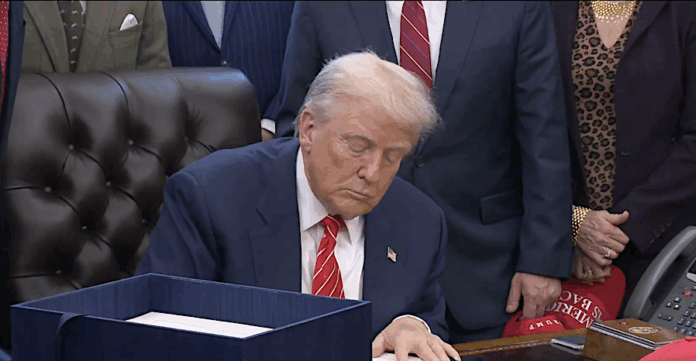
President Donald Trump signs a government funding bill in the Oval Office of the White House on Feb. 3, 2026. (White House livestream image)

WASHINGTON — The partial government shutdown that began this weekend ended Tuesday when President Donald Trump signed the funding package that both chambers of Congress approved within the last week.

“We’ve succeeded in passing a fiscally reasonable package that actually cuts wasteful federal spending while supporting critical programs for the safety, security and prosperity for the American people,” Trump said in the Oval Office.

The House voted 217-214 earlier in the day to clear the package for Trump following a tumultuous couple of weeks on Capitol Hill after it had stalled in the Senate. Democrats demanded additional restraints on immigration enforcement in reaction to the shooting death of a second U.S. citizen in Minneapolis.

Trump and Senate Minority Leader Chuck Schumer, D-N.Y., reached agreement last week to pull the full-year appropriations bill for the Department of Homeland Security and replace it with a two-week stopgap measure.

That is supposed to give leaders in Congress and the administration a bit of time to find consensus on changes to how immigration officers operate.

Trump did not say if he agreed with any of the proposed changes to immigration enforcement floated by Democrats.

“I haven’t even thought about it,” Trump said.

Speaker Mike Johnson, R-La., said during a morning press conference he wants negotiations to address local and state governments that don’t cooperate with federal immigration enforcement activities, often called sanctuary cities.

“What must be a part of that discussion is the participation of blue cities in federal immigration enforcement,” he said. “You can’t go to a sanctuary city and pretend like the law doesn’t apply there. It does and so we are going to be working through all that.”

Administrative warrants debate

Johnson said GOP lawmakers would not agree to require federal immigration agents to secure judicial warrants in order to detain people, one of several proposals Democrats have put forward.

“We are never going to go along with adding an entirely new layer of judicial warrants because it is unimplementable,” he said. “It cannot be done and it should not be done and it’s not necessary.”

Johnson, a constitutional lawyer, said those administrative warrants are “sufficient legal authority to go and apprehend someone.”

When pressed if that type of warrant is enough to enter someone’s home without violating the Fourth Amendment, Johnson said that a “controversy has erupted” over what immigration agents should do when someone they’re trying to detain enters a private residence.

“What is Immigration and Customs Enforcement supposed to do at that point? ‘Oh gee whiz, they locked the door. I guess we’ll just go on.’ So there is some logic and reason that is to be applied here,” Johnson said. “Some have complained that the force has been excessive or what have you. I don’t know. We’re going to figure that out. It’s part of the discussion over the next couple weeks.”

Johnson said GOP negotiators will also make sure Congress maintains “important parameters” on immigration law and enforcement.

“We can’t go down the road of amnesty, you can’t in any way lighten the enforcement requirement of federal immigration law,” he said. “That’s what the American people demand and deserve.”

Senators ‘ready to work’

Senate Majority Leader John Thune said during an afternoon press conference that Alabama Sen. Katie Britt, chairwoman of the Homeland Security Appropriations Subcommittee, would lead negotiations for Republicans in that chamber.

“Katie Britt will lead that on our side, but ultimately, that’s going to be a conversation between the President of the United States and (Senate) Democrats,” Thune, a South Dakota Republican, said.

During an afternoon press conference, Schumer said that “Thune has to be a part of these negotiations.”

Schumer said that Democrats are going to detail their proposals to Republicans in the House, Senate and White House.

“If Leader Thune negotiates in good faith, we can get it done,” Schumer said of the Homeland Security funding bill.

Sen. Patty Murray, D-Wash., who serves as ranking member on the Senate Committee on Appropriations, said Senate Democrats are “ready to work.”

“We have a proposal ready. We’re going to start moving no matter who they (pick) at the end of the day, and the White House needs to be involved,” Murray said.

Sen. Lisa Murkowski, R-Alaska, said there are “a whole bunch” of proposals.

“The House had to do what they had to do … which is great. And what we now have to do is figure out what’s this universe of reforms that we can come to consensus on,” said Murkowski, who issued a statement last week declaring her support for “meaningful reforms” for ICE.

‘Most basic duty’ of Congress

Connecticut Rep. Rosa DeLauro, the top Democrat on the Appropriations Committee, said during floor debate on the government spending package that clearing the legislation was the best way to move into negotiations about immigration enforcement.

“We will be in the strongest possible position to fight for and win the drastic changes we all know are needed to protect our communities — judicial warrant requirements, no more detentions or deportations of United States citizens, an enforceable code of conduct, taking off the masks, putting the badges on, requiring the body cameras, real accountability for the egregious abuses we have seen,” she said.

House Appropriations Committee Chairman Tom Cole, R-Okla., said funding the government “is not an optional exercise, it’s the most basic duty we have in Congress.”

“Shutdowns are never the answer, they don’t work,” he said. “They only hurt the American people. So today lawmakers in this chamber have an opportunity to avoid repeating past mistakes.”

In addition to providing two more weeks of funding for the Department of Homeland Security, the $1.2 trillion spending package holds full-year appropriations bills for the departments of Defense, Education, Health and Human Services, Housing and Urban Development, Labor, State, Transportation and Treasury. The Senate voted 71-29 on Friday evening to send the package to the House.

Congress had already approved half of the dozen annual appropriations bills for the fiscal year that began back on Oct. 1.

Close friend provides testimony in Day 2 of Tara Baker trial

February 3, 2026 - Dr. Andrew Falzone on the stand. Dr. Falzone was the former medical examiner with the Georgia Bureau of Investigation who performed the autopsy on Tara Baker’s body in 2001. (WUGA News)

ATHENS, Ga. — Two witnesses have taken the stand so far on the second day of the Tara Baker murder trial, including a former classmate and close friend of the UGA law student who was slain over 25 years ago. Edrick Faust is on trial for Baker’s murder. Faust, who lived in the neighborhood where Baker was killed, was arrested in 2024 when DNA analysis linked him to the case. He is charged with 12 counts, including murder, rape, arson, and aggravated sodomy.

Dr. Andrew Falzone, a former medical examiner with the Georgia Bureau of Investigation who performed the autopsy on Baker’s body in 2001, was the first to be called to the stand. Dozens of exhibits from the autopsy were introduced in court to be used as evidence, one of which, a bag marked as pubic hair, was objected to by the defense as empty and irrelevant. Their objection was overruled.

Katherine Lahnstein, who became “fast friends” with Baker in their first year of law school, was next to take the stand. She last saw Baker on her way out of the library on Jan. 18, 2001 around 9 p.m, one day before Baker’s 24th birthday.

Lahnstein recalled their last conversation, a phone call she received from Baker around 9:30pm that night, when Baker “admonished” Lahnstein for failing to call her to confirm she had made it home safely.

She did not see Baker in class the following morning, nor did Baker arrive at the winery that night as the two had planned to celebrate her birthday. Lahnstein received word of Baker’s death on January 20, which was confirmed to her from a newspaper headline.

Day one of the trial led Western Circuit Chief Superior Court Judge Lisa Lott, who is presiding over the case, to find defense attorney Ahmad Crews in contempt of court and fined him 1k after he violated pre-trial motions for the 2nd time in 10 minutes during opening statements.

“This is the second time, Judge, Mr. Crews has violated the rules to work himself around the state rules of Georgia,” District Attorney Kalki Yalamanchili said.

Testimonies from a 911 responder and more will proceed through Tuesday afternoon, and court will resume for the 7 day trial tomorrow morning.

RELATED

Opening arguments heard in Tara Baker murder trial

This article appears on Now Georgia in partnership with WUGA News