Home Blog Page 82

Trump’s immigration crackdown is straining federal courts. Judges are raising the alarm

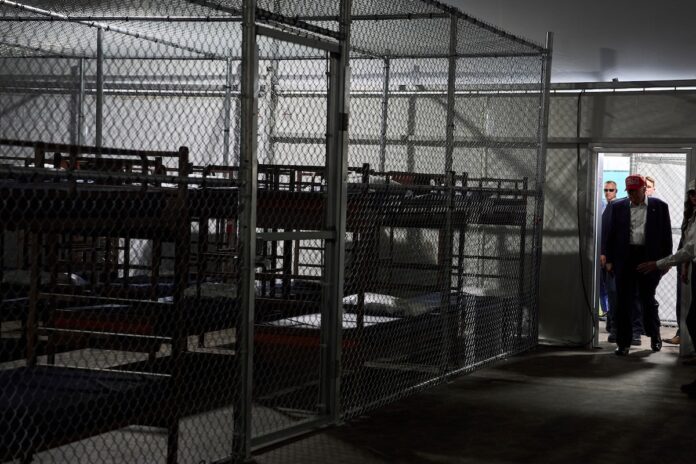
FILE - President Donald Trump tours "Alligator Alcatraz," a new migrant detention facility at Dade-Collier Training and Transition facility, on July 1, 2025, in Ochopee, Fla. (AP Photo/Evan Vucci, File)

ATLANTA (AP) — Federal judges around the country are scrambling to address a deluge of lawsuits from immigrants locked up under the Trump administration’s mass deportationcampaign.

Under past administrations, people with no criminal record could generally request a bond hearing before an immigration judge while their cases wound through immigration court unless they were stopped at the border. President Donald Trump ‘s White House reversed that policy in favor of mandatory detention.

Immigrants by the thousands have been turning to federal courts by using another legal tool: habeas corpus petitions. While the administration scored a major legal victory Friday, here’s a look at how that’s affecting federal courts and what some judges have done in response:

Judges are raising the alarm

In one federal court district in Georgia, the enormous volume of habeas petitions has created “an administrative judicial emergency,” a judge wrote in a court order on Jan. 29. U.S. District Judge Clay Land in Columbus said the Trump administration was refusing to provide bond hearings to immigrants at Georgia’s Stewart Detention Center despite his ”clear and definitive rulings” against mandatory detention. Instead, the court had to order the hearing in each individual case, wrote Land, a nominee of Republican President George W. Bush.

In Minnesota, where the administration’s immigration enforcement surge continues, U.S. District Chief Judge Patrick Schiltz said in a Jan. 26 order Trump officials had made “no provision for dealing with the hundreds of habeas petitions and other lawsuits that were sure to result.” The court had received more than 400 habeas petitions in January alone, according to a filing by the government in a separate case.

Schiltz, who was also nominated by Bush, said in a separate order two days later that the government since January had failed to comply with scores of court decisions ordering it to release or provide other relief to people arrested during Operation Metro Surge.

And in the Southern District of New York, U.S. District Judge Arun Subramanian said in an opinion in December that the district had been “flooded” with petitions for relief from immigrants who posed no flight risk or danger but were nonetheless imprisoned indefinitely. Subramanian, who was nominated by President Joe Biden, a Democrat, and presides in New York City, granted a 52-year-old Guinean woman’s habeas petition and ordered her release.

“No one disputes that the government may, consistent with the law’s requirements, pursue the removal of people who are in this country unlawfully,” he wrote. “But the way we treat others matters.”

The administration defends its actions

The Department of Homeland Security said in a statement on Friday that the administration was “more than prepared to handle the legal caseload necessary to deliver President Trump’s deportation agenda for the American people.”

DHS and the Justice Department, which also emailed a statement, slammed the judiciary.

“If rogue judges followed the law in adjudicating cases and respected the Government’s obligation to properly prepare cases, there wouldn’t be an ‘overwhelming’ habeas caseload or concern over DHS following orders,” the Justice Department statement said.

On Friday, a federal appeals court backed the administration’s policy of detaining immigrants without bond. The 2-1 ruling by a panel of the 5th U.S. Circuit Court of Appeals marked a major legal victory for the government and countered a slew of recent lower court decisions that argued the practice was illegal.

Immigration attorneys accuse the administration of flouting a key court decision

In November, a federal judge in California ruled that the Trump administration’s mandatory detention policy was illegal. U.S. District Judge Sunshine Sykes in Riverside, who was also nominated by Biden, later expanded the scope of the decision to apply to detained immigrants nationwide.

But plaintiffs’ attorneys said the administration continued to deny bond hearings.

“This was a clear cut example of blatant defiance, blatant disregard of a court’s order,” Matt Adams, lead attorney for the plaintiffs, told The Associated Press in January.

According to Sykes, the government argued her decision was “advisory” and told immigration judges, who work for the Justice Department and are not part of the judicial branch, to ignore it. The judge said she found the latter instruction “troubling.”

In its statement, DHS said “activist judges have attempted to thwart President Trump from fulfilling the American people’s mandate for mass deportations.”

Judges are trying to find ways to ease the burden

Land, the federal judge in Georgia, directed other judges in his district to immediately order the government to provide bond hearings to immigrants who meet criteria established by two previous habeas cases.

Maryland District Court Chief Judge George L. Russell III has ordered the administration not to immediately remove any immigrants who file habeas petitions with his court, under certain conditions. Russell, who was nominated by President Barack Obama, a Democrat, said in an amended order in December that the court had received an influx of habeas petitions after hours that “resulted in hurried and frustrating hearings.”

In Tacoma, Washington, U.S. District Judge Tiffany Cartwright ordered the administration last month to give immigrants detained at a processing center in Tacoma notice of her ruling that the mandatory detention policy was illegal. Cartwright, who was also nominated by Biden, said the high volume of habeas filings had put a “tremendous strain” on immigration attorneys and the court.
Harper seeks return to Habersham County Commission

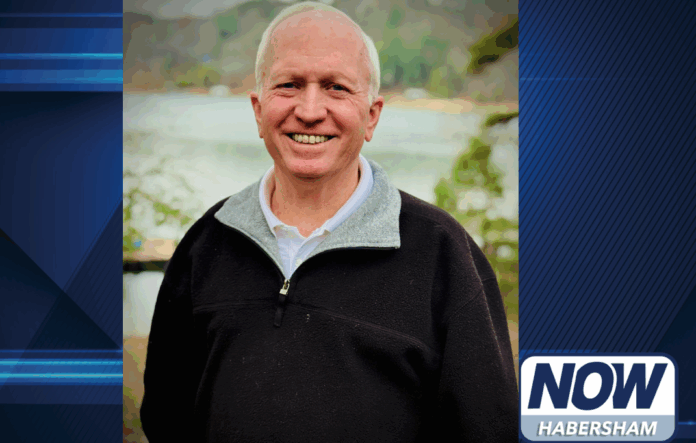
Andrea Harper has announced she is running for the Habersham County Commission District 2 seat, seeking a return to the board after stepping down at the end of her term in 2018.

Harper previously served as a commissioner from 2011 to 2019. In her announcement on social media Monday, Harper said, “I was a full-time commissioner, and if elected, I pledge to be your full-time commissioner again.”

The just-announced candidate said she has launched a Facebook page, ‘Andrea Harper for County Commission 2026,’ where she plans to share updates and respond to residents’ questions.

Harper will face Shelley Tullis, who announced her candidacy for the District 2 seat in January.

Cornelia’s $51 million investment reflects infrastructure demands tied to growth

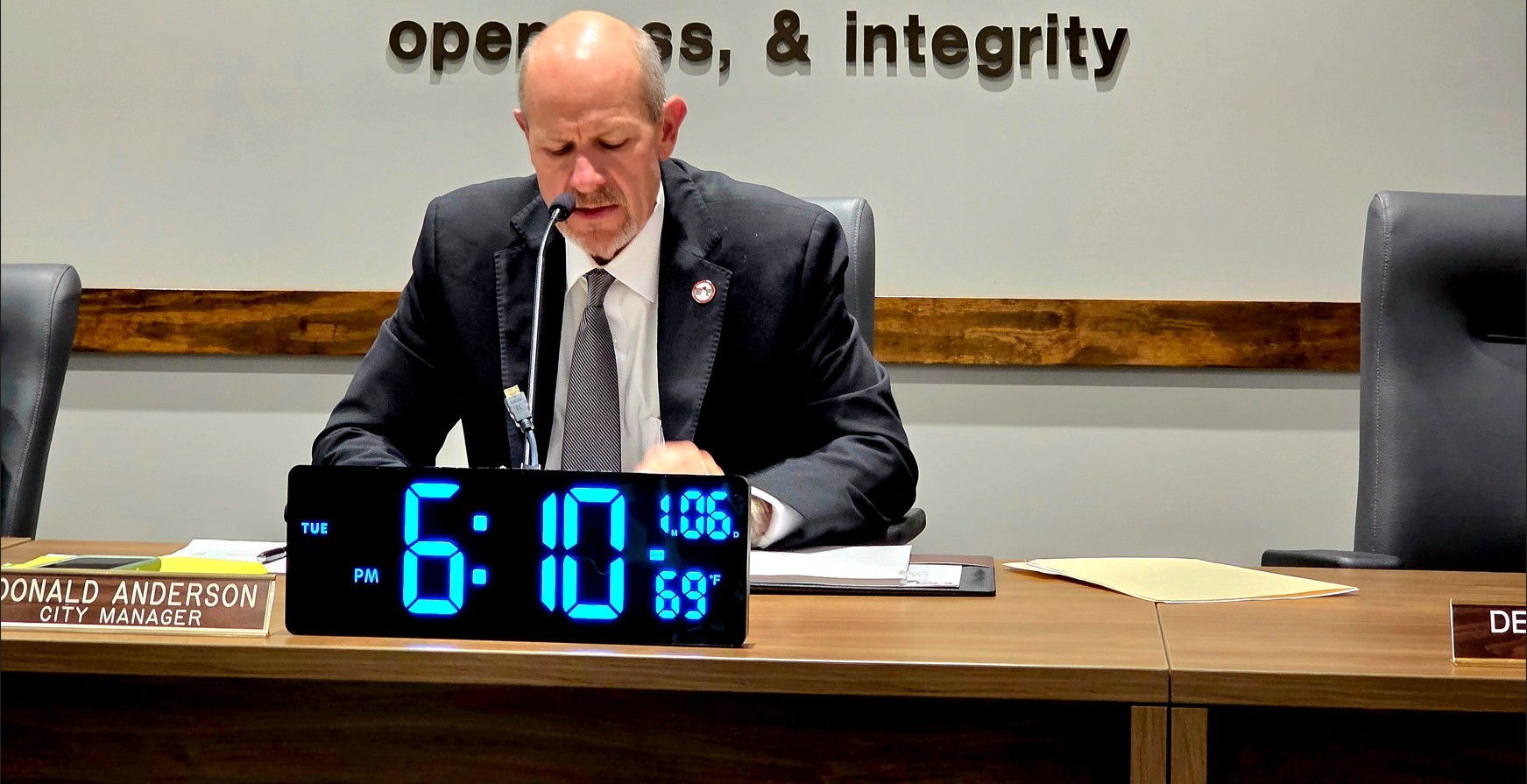
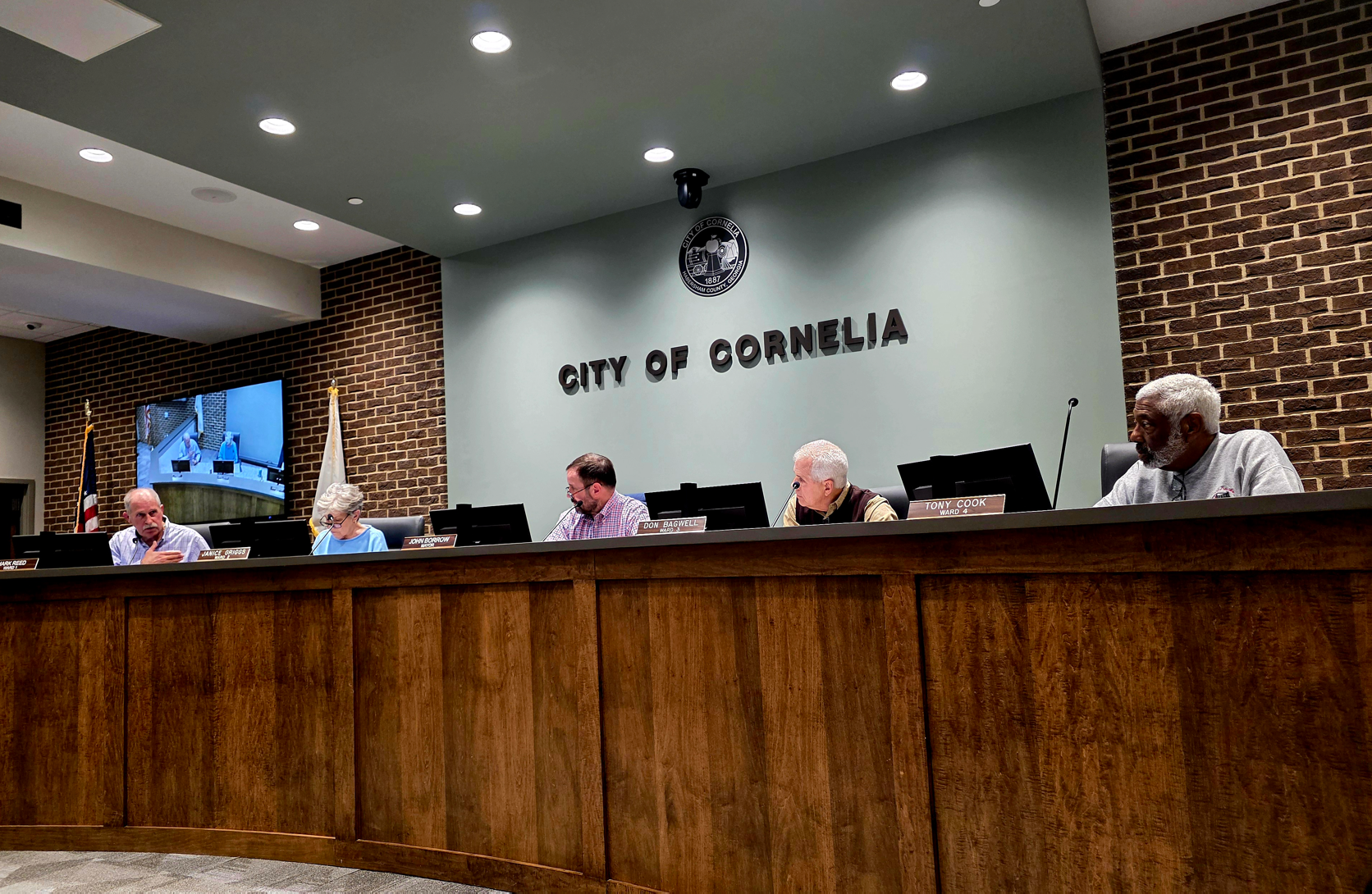
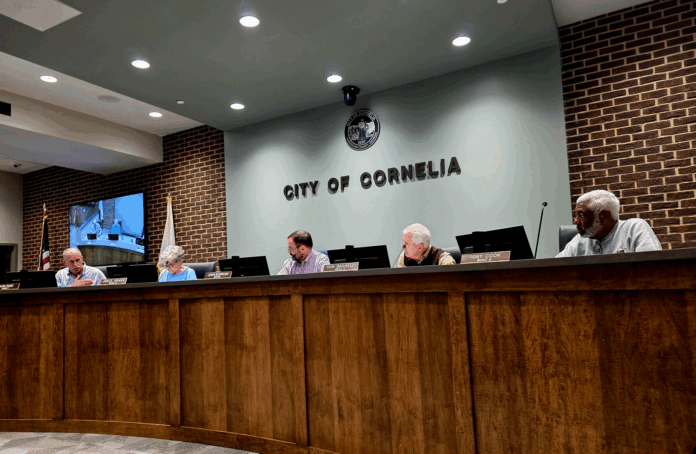
Cornelia City Commission members Mark Reed, Janice Griggs, Mayor Don Bagwell, and Tony Cook listen as City Manager John Anderson delivers his report during a January meeting that included discussion of housing needs, infrastructure planning, and upcoming capital projects. (Carly McCurry / Now Habersham)

As 2026 begins, Cornelia stands at a pivotal point, facing rising housing costs while investing in infrastructure to support sustained growth. The January city commission meeting brought those pressures into focus through detailed discussions on housing demand, capital planning, and long-term priorities for the city.

City Manager’s Report Showcases Public Art, Investment, and Community Milestones

City Manager Donald Anderson outlined financial updates, grant awards, and capital planning, reporting that the city received a clean audit for fiscal year 2024, with reserve funds increasing again. He said Cornelia secured a Vibrant Communities grant to fund a mural project at Jim Smith Park and highlighted an additional public art project completed by Cheyenne Renee, who painted a mural on the side of Cornelia Pharmacy as part of the national 50 in 50 Mural Project.

City Manager Donald Anderson delivers his report to the Cornelia City Commission, outlining progress on major capital projects, including wastewater and water system upgrades, the Kinetic Amphitheater, and park improvements, while also reviewing grant awards, infrastructure repairs, and upcoming planning work tied to the city’s long-term growth. (Carly McCurry / Now Habersham)

Anderson also noted the city approved an agreement with the Downtown Development Authority to allow the sale of a downtown property to Sweet Acre Farms, which plans to renovate the existing warehouse into a multi-use facility. He said the city kicked off the holiday season with the annual tree lighting, which drew about 100 people, followed by more than 10,000 vehicles visiting the Christmas lights display at City Park.

Looking ahead, he stated Cornelia is planning approximately $51 million in capital projects moving into 2026, including wastewater plant expansion, water and sewer upgrades, road improvements, and reservoir work, supported in part by about $2.5 million in federal and state funding.

Housing pressure in daily life

Cornelia’s housing debate has shifted from abstract concerns to visible strain. City officials and dozens of community stakeholders have described a market that no longer produces enough attainable homes for the people who work in the city.

Mayor John Borrow summarized what the city has heard over years of public engagement.
“We’ve met with hundreds — maybe even a thousand — people over the past five years,” Borrow said. “We hear from teachers and nurses who say they’d like to live in Cornelia but can’t afford to. We understand there’s a national housing crisis, and one-way cities can address that is by allowing higher density.

That concern extends beyond housing itself. School stability, public safety staffing, and downtown business vitality all depend on whether people can afford to live near their jobs.

A housing study puts data behind the concern

Residents of Cornelia participate in yearlong housing discussions held in partnership with the Georgia Conservancy through the city’s Georgia Initiative for Community Housing, attending crowded public meetings, workshops, and outreach events to address the growing need for attainable housing. Engagement included surveys, community events at Catch Me in Cornelia, reflecting sustained input from people who live in the city.
(Carly McCurry / Now Habersham)

During the January meeting, via a Zoom conference, Michaela Master presented the results of a Housing Needs Assessment completed with the Georgia Conservancy as part of Cornelia’s work through the Georgia Initiative for Community Housing (GICH). The study examined what housing exists in Cornelia today, what local households need, and which city policies make it harder to build attainable homes.

Consultants gathered input through public meetings, workshops, and community surveys. They also analyzed income levels, housing prices, zoning rules, and development patterns. Master, a community planner with the Georgia Conservancy, explained why cost trends matter.

“We looked at the ballooning in housing costs and what incomes are needed to attain those housing costs,” Master said. She noted that housing analysts generally consider households “housing burdened” when they spend more than 30 percent of their income on housing. Many gathered in the room reacted openly to the data showing home prices rising from $167,558.82 in 2019 to $333,045.97 in 2024.

Over the same period, the annual household income needed to afford housing increased from $58,880 to $109,680, placing homeownership increasingly out of reach for many teachers, nurses, city employees, and other essential workers who keep Cornelia’s schools, hospitals, and services operating. “You look at the median income, and how house prices have doubled in the last six years. That’s shocking,” said Mark Reed of Ward 1.

A slide from the Georgia Conservancy’s housing assessment illustrates the widening gap between incomes and housing costs in Cornelia—more than double in five years, far exceeding Cornelia’s median household income of $54,321.
(Carly McCurry / Now Habersham)

The study did not recommend just one type of housing solution. Instead, it argued that Cornelia should plan for housing variety, noting the scarcity of smaller homes, townhomes, duplexes, accessory dwelling units, and cottage-style developments—options that span the gamut of seniors, recent college graduates, nuclear families, small business owners, and factory workers at Fieldale who need attainable places to live.

Master framed the goal as expanding opportunity rather than directing outcomes.

She emphasized that the city’s role is not to make housing choices for residents, but to ensure the community allows a range of options to exist so individuals can choose what fits their lives. When only one type of housing is available, she noted, choice disappears, regardless of income or preference.

“The idea is to think more out of the box about different types of housing that fits a greater range of incomes and lifestyles,” Master said. “So that you do have a more vibrant community.”

Accommodating growth

The question of density remains one of Cornelia’s most sensitive topics, especially after the collapse of the Red Apple Corridor annexation following hours of public opposition. That hearing drew many speakers from outside the city limits, highlighting a divide between regional concern and city-specific needs.

Cornelia City Commission members Mark Reed, Janice Griggs, Mayor Don Bagwell, and Tony Cook listen as City Manager John Anderson delivers his report during a January meeting that included discussion of housing needs, infrastructure planning, and upcoming capital projects.
(Carly McCurry / Now Habersham)

Commissioner Don Bagwell addressed that divide directly during the January meeting. He acknowledged resistance to density while arguing that placement matters.

“There were a lot of objections to increasing density, particularly in residential areas,” Bagwell said. “But I think I like the idea of increasing density in the town center. That’s the one place where I think it could really bring great benefit to the businesses, of course because of the disposable income that would represent. And the fact that it would add not only to the appearance of the city, but to the vitality of the city to have that there.”

Bagwell also linked housing and economic growth to a broader reality. “Net disposable income will have to come from people who are not here,” he said. “My hope and my prayer is that if we build it, they will come.”

In a later conversation, he explained that his decision to continue serving stemmed from his optimism about Cornelia’s future and his belief that the commission’s responsibility is to represent the city’s residents and taxpayers. “I’m excited about being a part of that progress and making sure that the wishes of the people in the city — the people who pay taxes to the city and trust us with their tax money — are reflected in the decisions that we make,” Bagwell said.

That distinction carries weight in a city where long-term housing planning has been shaped by resident surveys, well-attended GICH meetings, and local stakeholders, while the most vocal opposition to recent annexation proposals came largely from outside Cornelia’s tax base, fueled by a rapid surge of social media attention and misinformation.

Growth pressure will not wait

Discussions of Cornelia’s housing concerns acknowledged regional economic forces that extend beyond the city’s direct control. The Georgia Ports Authority plans to open the Blue Ridge Connector inland terminal in Spring 2026, linking Savannah’s port directly to Gainesville by rail. That project is expected to increase logistics activity, traffic, and demand for workforce housing across Northeast Georgia. Cornelia’s leaders have acknowledged that infrastructure expansion already underway assumes continued growth. A city does not commit to $51 million in capital projects, expand wastewater capacity, and replace aging water lines if it expects demand to decline.

Attorney says Falcons rookie James Pearce Jr. maintains his innocence while facing 5 felony charges

FILE - Atlanta Falcons linebacker James Pearce Jr. (27) is interviewed after an NFL football game against the New Orleans Saints, on Jan. 4, 2026, in Atlanta. (AP Photo/Danny Karnik, File)

ATLANTA (AP) — The attorney for Atlanta Falcons rookie James Pearce Jr. says Pearce “maintains his innocence” as he faces five felony charges following his arrest near Miami on Saturday night.

Pearce’s charges include fleeing police after what Doral police said was a domestic dispute with WNBA player Rickea Jackson. Pearce was arrested after crashing his car. His charges include two counts of aggravated battery with a deadly weapon and aggravated stalking.

According to details of the arrest in the complaint/arrest affidavit obtained by The Associated Press from the Miami-Dade County state attorney’s office on Monday, Pearce allegedly refused an initial order from police to “get on the floor” when they responded to the report of the domestic dispute. The police account says Pearce then drove away and hit a police officer’s left knee with his Lamborghini “intentionally in an attempt to evade arrest.”

According to the police account of the arrest, Pearce wrecked his vehicle and then continued in his attempt to elude police by running before being apprehended following a “short struggle.”

The police account said Jackson told police she ended the relationship with Pearce after three years and blocked his phone number before Pearce continued to contact her by using a different number.

According to the police account, Jackson told police she attempted to drive away from Pearce and was driving toward the Doral police station to seek help when Pearce “intentionally collided into the rear of her vehicle with his SUV” before police arrived.

Pearce posted bond of $20,500 Sunday at the Turner Guilford Knight Correctional Center.

“We look forward to working with the State Attorney’s office in fully investigating this case and uncovering the truth,” Pearce’s attorney, Jacob Nunez, said in a statement released to The Associated Press on Monday.

“Mr. Pearce maintains his innocence and urges the public to understand that while allegations have the power to shape a narrative, that it is hardly the full, complete story. We look forward to vigorously defending our client and remain confident that he will continue contributing positively to both his team and the community he serves so well.”

Nunez declined further comment.

Pearce was given a pre-trial stay-away order from Jackson. Pearce and Jackson’s relationship began when both played at Tennessee. Jackson sat beside Pearce at the 2025 NFL draft.

The Falcons said in a statement Saturday they are aware of the arrest. “We are in the process of gathering more information and will not have any further comment on an open legal matter at this time,” the team said.

The charges could threaten Pearce’s future with the team.

The Falcons traded their 2026 first-round draft pick to the Los Angeles Rams for the No. 26 overall pick in last year’s draft used to select Pearce. He then set a Falcons rookie record with a team-leading 10 1/2 sacks. The Falcons set a team record with 57 sacks, one year after finishing next to last in the league with only 31.

Despite the improved pass rush, the Falcons finished 8-9 for their eighth consecutive losing season. Second-year coach Raheem Morris and general manager Terry Fontenot were fired. New president of football Matt Ryan has helped reshape the team’s leadership, including the hirings of coach Kevin Stefanski and general manager Ian Cunningham.

Ryan, Cunningham and Stefanski already faced difficult offseason decisions, including the possible release of veteran quarterback Kirk Cousins despite starter Michael Penix Jr.’s uncertain status for the start of the season as he recovers from a knee injury. Pearce’s arrest and uncertain legal ramifications add significant difficulty to the challenge of building the team’s first winning season and playoff appearance since 2017.

Hall County Democrat Soracco lays out platform in House District 29 race

Army veteran and former FEMA employee Scott Soracco announced his candidacy for House District 29 in Hall County. Soracco will run as a Democrat against Republican incumbent Matt Dubnik. (photo submitted)

GAINESVILLE, Ga. — Scott Soracco, a retired Army officer and former federal emergency management official, is running unopposed in the Democratic primary for Georgia House District 29, a seat covering Oakwood and parts of Gainesville in Hall County.

The district is currently represented by Republican Matt Dubnik, chairman of the House Education Appropriations Committee.

Soracco said his campaign is rooted in long-term planning, education funding, healthcare access, and fiscal responsibility — priorities he ties directly to decades of public service.

Local roots and public service background

Soracco said he has longstanding ties to the Lake Lanier area, dating back to childhood summers and weekends spent in North Georgia.

“I grew up coming to Lake Lanier,” Soracco said. “We’ve been spending time up here since 1968, and I’ve seen this area grow.”

He served 27 years as an Army Reserve officer, including seven years on active duty. His military career included service in the first Gulf War, deployments to Bosnia and Germany, counterterrorism work, and drug interdiction operations based out of Key West.

After retiring from the military around 2010, Soracco joined the Federal Emergency Management Agency, where he worked as an operations section chief and participated in more than 50 disaster responses nationwide.

“States are always in charge,” Soracco said of FEMA’s role. “They ask us to come in. My job was to work with state emergency management and design the operation — which federal agencies would support the state.”

Why he decided to run

Soracco said he began exploring public office after retiring from FEMA, initially looking at local government before turning his attention to the state legislature.

He said residency boundaries and election timing ruled out a county commission run, but a Democratic recruitment effort focused on contesting unopposed House seats ultimately led him to District 29.

“There’s a lot to getting on the ballot,” Soracco said. “Ethics filings, campaign accounts, tax ID numbers — things they don’t teach you in school.”

Long-term planning and education funding

Soracco said the biggest issue facing Georgia is a lack of long-term fiscal planning.

“We need to plan for the future — five, 10, 15 years out,” he said. “That’s what I’ve done in the Army and with FEMA.”

He said education funding is a key example of where the state falls short, arguing Georgia is not fully meeting its obligation to public schools.

“People say property taxes pay for education, but that’s only half,” Soracco said. “The state is supposed to pay the other half, and it doesn’t seem like that’s happening.”

While acknowledging the incumbent’s leadership role in education appropriations, Soracco said his focus is on systemwide funding challenges rather than individual lawmakers.
“What I’m seeing is that education still isn’t fully funded, and that affects counties across the state,” he said.

Soracco also said Georgia’s decades-old education funding formula should be reviewed to reflect population growth and economic changes, particularly in fast-growing communities like Gainesville.

Healthcare and access to care

On healthcare, Soracco said individuals — not politicians — should make medical decisions in consultation with their healthcare providers.

“Our citizens need the freedom of choice to make their own healthcare decisions with their medical advisors and based on their values,” he said.

He also said the state should take a closer look at Medicaid policy and how funding decisions affect hospitals and access to care, particularly outside major metro areas, while praising the strength of Hall County’s healthcare system.

Taxes and fiscal responsibility

Soracco said he is skeptical of proposals to eliminate Georgia’s state income tax without a clear plan to replace lost revenue.

“How do you plan to replace the income the state needs?” he said. “Are we that rich?”

He said shifting the burden to higher sales taxes could disproportionately impact residents and said alternatives should be studied carefully.

“What’s wrong with looking at a flat income tax of four percent or even three?” Soracco said.

Soracco said he is still learning the details of state government and fiscal policy and plans to continue meeting with voters to better understand local needs.

“There’s a lot to learn,” he said. “I’m meeting people, I’m learning what the needs are, and I’m figuring out how the state works.”

Campaign focus

On the campaign trail, Soracco said he plans to focus on direct voter outreach, fundraising, and encouraging participation in the election process.

“I plan to get out and meet people,” he said. “Fundraising is important, but so is making sure people know I’m running and understand the platform.”

He said voter engagement remains a concern.

“A lot of people don’t vote,” Soracco said. “That goes back to education — people don’t always know why they should.”

The Democratic primary is scheduled for May. With no primary opposition, Soracco is expected to advance to the general election in November.

Mt. Airy council to revisit engineering services after storm delay

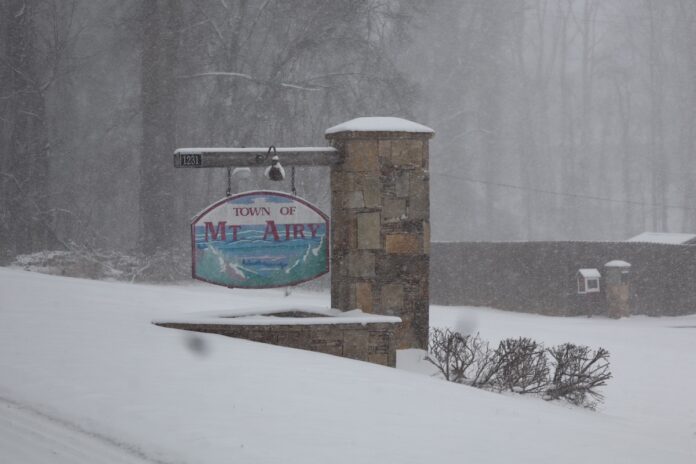
The Mt. Airy Town Council will meet tonight after last weekend's snow storm which postponed their Feb. 2 meeting. (Patrick Fargason/Now Georgia)

MT. AIRY, Ga. — The Mt. Airy Town Council will meet Monday night to take up several business items that were postponed last week after a winter storm dumped up to 7 inches of snow on the town and left roads nearly impassable.

The meeting is scheduled for 7 p.m. tonight, at Mt. Airy Town Hall. It was originally set for Feb. 2 but delayed following the Jan. 31 snowstorm, which made Dicks Hill Parkway and other routes hazardous for travel.

Among the key agenda items is discussion and consideration of a proposal for engineering services from Carter Engineering Consultants Inc. The issue follows the council’s unanimous adoption of the town’s 2026 budget in January, when Mayor Adam Tullis emphasized the importance of continued access to engineering support for infrastructure planning and project oversight. At that time, Tullis said engineering services are critical as the town balances routine maintenance needs with long-term capital planning.

Council members will also consider an elevator maintenance contract under old business and a resolution addressing the mayor’s spending limit, which could clarify or update the scope of the mayor’s authority to approve expenditures without council approval.

Following public comments and department reports, the council is expected to enter executive session later in the evening to discuss personnel matters before adjourning.

Trial to begin in Georgia for the father of the Apalachee High School shooting suspect

FILE - Colin Gray, the father of Apalachee High School shooting suspect Colt Gray, arrives to the courtroom at the Barrow County courthouse on Thursday, Dec. 18, 2025, in Winder,Ga. (AP Photo/Brynn Anderson, File)

ATLANTA (AP) — Jury selection is set to begin Monday in the trial of a man whose teenage son is accused of killing two students and two teachers at a Georgia high school in September 2024.

Colin Gray faces 29 counts, including two counts of second-degree murder, two counts of involuntary manslaughter and numerous counts of second-degree cruelty to children related to the shooting at Apalachee High School in Winder. He is one of a handful of parents around the country charged with crimes after their children are accused of committing acts of violence.

An indictment says Gray committed cruelty to children by giving his son, Colt, access to a gun and ammunition “after receiving sufficient warning that Colt Gray would harm and endanger the bodily safety of another.” Second-degree murder, an unusual charge under Georgia law, is defined as causing the death of a child by committing the crime of cruelty to children.

Killed in the shooting were teachers Richard Aspinwall, 39, and Cristina Irimie, 53, and two 14-year-old students, Mason Schermerhorn and Christian Angulo. Another teacher and eight other students were wounded.

The shooting

Investigators have said Colt Gray, who was 14 at the time, carefully planned the Sept. 4, 2024, shooting at the school northeast of Atlanta that is attended by 1,900 students.

He wrote step-by-step plans for the assault in a notebook, including diagrams and potential body counts, a Georgia Bureau of Investigation agent testified at a hearing the month after the shooting.

With a semiautomatic, assault-style rifle in his book bag, the barrel sticking out and wrapped in poster board, he boarded the school bus, investigators said. He left his second-period class and emerged from a bathroom with the gun and then shot people in a classroom and hallways, investigators said.

Accusations against the father

Colin Gray had given his son the gun as a gift the Christmas before the shooting and later, at his son’s request, bought a larger magazine so the weapon could hold more rounds, an investigator testified during a pretrial hearing.

Colin Gray knew his son was obsessed with school shooters, even having a shrine in his bedroom to Nikolas Cruz, the shooter in the 2018 massacre at Marjory Stoneman Douglas High School in Parkland, Florida, prosecutors have said. A GBI agent testified that the teen’s parents had discussed their son’s fascination with school shooters but decided that it was in a joking context and not a serious issue.

Colin Gray was also aware his son’s mental health had deteriorated, investigators testified. Seeking help from a counseling service weeks before the shooting, he wrote about his son: “We have had a very difficult past couple of years and he needs help. Anger, anxiety, quick to be volatile. I don’t know what to do.”

The trial

The trial will be held in Winder, in Barrow County, where Apalachee High School is located. But jury selection will take place in Gainesville, in Hall County, about 25 miles (40 kilometers) away.

Colin Gray’s lawyer had sought a change of venue, arguing publicity may have tainted the opinion of potential Barrow County jurors. Prosecutors agreed, noting the impact the shooting had on the community.

The defense was unhappy with the judge’s selection of Hall County for the jury pool, acknowledging the convenience for jurors but arguing it was too close, remaining “within the geographic epicenter of this tragedy.”

The judge in the case set bond for Gray at $500,000, but he has remained in custody since he was arrested the day after shooting.

It’s unknown how long jury selection will take after it begins Monday or how long the trial will last once testimony gets underway. The judge has blocked off three weeks for jury selection and the trial.

Other cases against parents

There have been a number of cases around the country where prosecutors have chosen to charge parents when they believe there is evidence a parent contributed to violence attributed to a child.

Jennifer and James Crumbley were the first parents in the U.S. to be held criminally responsible for a mass shooting at a school by a child. They were convicted months before the shooting at Apalachee High School and are serving 10-year prison terms for involuntary manslaughter.

Their son, Ethan Crumbley, killed four students and wounded others at Michigan’s Oxford High School in 2021. Prosecutors faulted the Crumbleys for not securing a firearm at home and acting indifferently to signs of their son’s deteriorating mental health. They said Ethan’s actions were foreseeable and the parents had failed to prevent the violence.

Jeffrey Rupnow is charged with intentionally giving a dangerous weapon to a person under 18 causing death. His daughter, Natalie Rupnow, 15, killed a student and a teacher at Abundant Life Christian School in Madison, Wisconsin, and killed herself in December 2024.

Robert Crimo Jr. pleaded guilty to misdemeanors and was sentenced for endorsing his son’s Illinois gun permit in 2019 despite knowing Robert Crimo III had expressed suicidal thoughts. Crimo III killed seven people in 2022 at a Fourth of July parade in Highland Park, a northern suburb of Chicago.

The case against Colt Gray

Colt Gray was indicted on a total of 55 counts, including murder in the deaths of four people and 25 counts of aggravated assault. He has pleaded not guilty, but a lawyer for the teen said during a hearing in May that his client would likely be ready to plead guilty after a psychologist’s report was prepared.

New lawyers have started representing him since then. At a brief hearing in December, the judge said a status hearing in the case would be held in mid-March.

Authorities warn of rising phone scams across Northeast Georgia

Law enforcement agencies across Northeast Georgia are warning residents to stay alert as reports of phone scams continue to grow, with criminals increasingly impersonating law enforcement and targeting vulnerable populations.

The White County Sheriff’s Office says multiple residents have reported receiving calls from someone claiming to be a sergeant with the sheriff’s office, telling them they have an active warrant. In many cases, the caller ID appears to match the agency — a tactic known as “spoofing” that is designed to make the call look legitimate.

Authorities stress that sheriff’s offices will not call to notify someone about a warrant and cannot confirm warrants over the phone. They also emphasized that no legitimate agency will accept payment in place of executing a warrant or request funds through digital payments, gift cards, cryptocurrency, or wire transfers.

Impersonation scams

In Stephens County, Sheriff Rusty Fulbright says there’s been a significant increase in sophisticated financial scams, particularly those targeting elderly residents.

“Our seniors are the pillar of this county, and it is unacceptable that criminals are exploiting their trust and kindness,” said Fulbright. “These predators use fear and urgency to bypass common sense. We are calling on all family members to step in, start a conversation, and put safeguards in place before the phone rings.”

Investigators in Stephens County say many of the cases involve “impersonation scams,” where fraudsters pose as law enforcement officers, court officials, financial institutions, or even family members in distress to steal life savings. Some victims are told a relative is about to be arrested, while others are warned their bank account has been compromised.

Recently, scammers have convinced victims to withdraw large amounts of cash and either deliver it to unknown individuals or arrange for pickup — a red flag authorities say should immediately raise suspicion.

Sheriff Fulbright offered a clear reminder to residents: “The Sheriff’s Office will never call you to demand money over the phone.” He added, “Communication is the best defense. Talk to your parents and grandparents today. Let them know it’s okay to hang up on anyone asking for money.”

How to avoid getting scammed

Law enforcement officials recommend several safeguards for families, including establishing a trusted contact on bank accounts, enabling real-time transaction alerts, creating a family code word to verify emergencies, and considering inquiry-only access to help monitor suspicious activity without removing financial independence.

Anyone who receives a suspicious call should hang up immediately and contact their local sheriff’s office directly to verify the information. Residents can reach the White County Sheriff’s Office at 706-865-5177 or the Stephens County Sheriff’s Office at 706-886-2525.

Authorities urge the public not to share personal or financial information with unsolicited callers and to check in with older relatives who may be more susceptible to these evolving scams.

Sautee Nacoochee Center seeks talent for immersive summer Shakespeare festival

(Sautee Nacoochee Center/Facebook)

SAUTEE, Ga. — The Sautee Nacoochee Center is inviting performers, artists, and creatives of all kinds to take part in SOLfest 2026, an outdoor performing arts festival that transforms the center’s sprawling campus into a living stage.

The featured production, A Midsummer Night’s Dream, returns after a wildly popular run last year. Shakespeare’s classic comedy, filled with romance, magic, and mischief, will unfold across the 8½-acre property, with audiences moving from scene to scene for a fully immersive theater experience.

To build the production, the center is hosting an open Talent Inventory on March 7. Organizers stress this is not an audition; anyone willing to commit to rehearsals and performances will have a place in the show, whether on stage or behind the scenes. Opportunities are available for performers, designers, technicians, and volunteers of all ages and experience levels.

The session will be held in the Community Hall and will give participants a preview of the collaborative production process while connecting with fellow creatives.

Those interested are encouraged to RSVP at SauteeNacoocheeCenter.org.

The Talent Inventory runs from 10 a.m. to 1 p.m. A production orientation meeting is scheduled for April 18, with rehearsals beginning May 5. Performances are set for June 12–14 and June 19–21.

For more information or to volunteer, contact Performing Arts Director Jenna Scaramuzzo at [email protected] or call 706-878-3300 ext. 303.

Located at 283 Highway 255 North, the Sautee Nacoochee Center is a member-based nonprofit serving White and Habersham counties and the broader Northeast Georgia region.

Judy Lynn Hallford Canup

Untitled design - 1

Judy Lynn Hallford Canup, 69, of Toccoa, Georgia, passed away following a sudden and fast-moving cancer diagnosis.

Judy was married nearly 50 years to her husband, R. Keith Canup, and together they built a life rooted in faith, family, and service. She was a devoted follower of Jesus Christ and was actively attending River Point Community Church. Judy lived her faith openly and consistently, impacting many through her words, actions, and example. Judy worked for 20 years at Standard Telephone Company and 12 years at Farm Bureau before dedicating her later years to her most cherished role—being a full-time “Mimi” to her grandchildren.

She is survived by her husband, R. Keith Canup; her children and grandchildren: Luke Canup, wife LaDonna, and children Townsen and Etrulia, Tyler Canup, wife Carrie, and children Cason, Avie, and Macie, Karli Greenfield, husband Nic Greenfield, and children Landon and Elanor. She is also survived by her sister-in-law, Juanita Killebrew, and her nieces, Laura Cruz and Amy Ellen Mathews, daughters of her late brother, Larry Hallford, as well as numerous sisters- and brothers-in-law, nieces, nephews, and other relatives.

Judy was preceded in death by her parents, Jeff and Trudy Hallford; her older brother, Larry Hallford; and her aunts and uncles.

Family and friends are invited to come as you are, honoring Judy’s heart for people to feel welcomed just as they are. Visitation will be held Thursday, February 12, 2026, from 2:00–4:00 p.m. at Hillside Memorial Chapel. A Celebration of Life service will follow at 6:00 p.m. at River Point Community Church.

A private graveside service for the family will be held at Antioch Baptist Church Cemetery at 11:00 a.m. on Friday, February 13, 2026.

In lieu of flowers, memorials may be made in Judy’s memory to: Georgia Mountain Tres Dias at GMTD, 106 Pilgrim Village Drive, Suite 300, Cumming, GA 30040 (Please note In Memory of Judy Canup), or to Love Packages, c/o Hills Crossing Baptist Church, 3569 Toccoa Highway, Clarkesville, GA 30523, or by visiting www.hillscrossing.breezechms.com and select “Give to Love Packages” from the drop down menu.

An online guest book is available by visiting hillsidememorialchapel.com.

Arrangements are in the care and professional direction of Hillside Memorial Chapel & Gardens, Clarkesville.

The Pirates are signing veteran DH Marcell Ozuna, AP source says

Atlanta Braves' Marcell Ozuna singles in two runs during the sixth inning of a baseball game against the Washington Nationals, Wednesday, Sept. 17, 2025, in Washington. (AP Photo/Nick Wass)

Veteran slugger Marcell Ozuna is heading to Pittsburgh.

The 35-year-old free agent has reached an agreement with the Pirates on a one-year deal worth $12 million, a person familiar with the agreement told The Associated Press on Monday. The person spoke on condition of anonymity because the deal is pending Ozuna passing a physical.

Ozuna would give the Pirates another experienced bat to potentially boost a lineup that was among the worst in the majors in 2025. The right-handed Ozuna hit .232 with 21 home runs and 68 RBIs last season for Atlanta.

Pittsburgh previously acquired All-Star second baseman Brandon Lowe and signed All-Star first baseman/outfielder Ryan O’Hearn during an unusually busy offseason for the club as it tries to give a young pitching staff anchored by reigning National League Cy Young winner Paul Skenes some help.

Ozuna’s arrival could mean Pittsburgh is moving on from longtime franchise cornerstone Andrew McCutchen. The 39-year-old, five-time All-Star and 2013 NL MVP, who has spent 12 of his 17 seasons in the majors with the Pirates, remains unsigned after hitting .239 with 13 homers while serving primarily as the club’s designated hitter.

Ozuna is a three-time All-Star himself and a career .269 hitter in 13 seasons with Miami, St. Louis and Atlanta. The native of the Dominican Republic has batted over .300 three times, most recently in 2024.

One of the few places where Ozuna has struggled is PNC Park, his potential new home. Ozuna is a career .225 hitter with just one home run in 36 games at the ballpark that has been historically difficult for right-handed hitters.

The Pirates are banking on Ozuna figuring it out to give a left-handed dominant lineup a little balance. Lowe, O’Hearn and outfielder Oneil Cruz are lefties. Outfielder Bryan Reynolds is a switch-hitter.

The Pirates begin spring training when pitchers and catchers report to their complex in Bradenton, Florida, later this week.

Seahawks ride their ‘Dark Side’ defense to a Super Bowl title, pounding the Patriots 29-13

Seattle Seahawks head coach Mike MacDonald hold the Lombardi Trophy after defeating the New England Patriots the NFL Super Bowl 60 football game, Sunday, Feb. 8, 2026, in Santa Clara, Calif. (AP Photo/Sue Ogrocki)

SANTA CLARA, Calif. (AP) — Defense won this championship.

Devon Witherspoon, Derick Hall, Byron Murphy and the rest of Mike Macdonald’s ferocious unit pummeled Drake Maye, and the Seattle Seahawks beat the New England Patriots 29-13 on Sunday to win the franchise’s second Super Bowl.

Sam Darnold threw a touchdown pass to AJ Barner, Kenneth Walker III ran for 135 yards and Jason Myers set a Super Bowl record by making all five of his field-goal tries.

Walker became the first running back to win the Super Bowl MVP award since Terrell Davis 28 years ago.

Uchenna Nwosu punctuated a punishing defensive performance by snagging Maye’s pass in the air after Witherspoon hit his arm and ran it back 45 yards for a pick-6.

“It’s a one-of-a-kind feeling, bro,” Witherspoon said. “You talk about a group of guys who battle every day, who believe in each other and believe in their coach, you can’t describe this group no better. It’s just a one-of-a-kind feeling. I was just so happy to battle with these guys. We went through a lot, but we believed. All of you all doubters out there who said all that other stuff, you all don’t know what’s going on in this building. We’re one of one over here.”

Seattle’s “Dark Side” defense helped Darnold become the first quarterback in the 2018 draft class to win a Super Bowl, ahead of Josh Allen, Baker Mayfield and Lamar Jackson.

“To do this with this team, I wouldn’t want it any other way,” Darnold said. “So proud of our guys, our defense. I mean, I can’t say enough great things about our defense, our special teams.”

Labeled a bust, dumped by two teams and considered expendable by two others, Darnold proved his doubters wrong while helping the Seahawks go 17-3.

After leading the NFL with 20 turnovers in the regular season, Darnold didn’t have any in three playoff games. He wasn’t particularly sharp against a solid Patriots defense but protected the ball and made enough plays, finishing 19 of 38 for 202 yards.

“I know we won the Super Bowl, but we could have been a little bit better on offense, but I don’t care about that right now,” Darnold said. “It’s an unbelievable feeling, man. I’m just so happy for the guys in the locker room and the coaches that put in so much effort throughout the whole season.”

The Seahawks sacked Maye six times, including two apiece by Hall and Murphy. Hall’s strip-sacklate in the third quarter set up a short field and Darnold connected with Barner on 16-yard scoring toss to make it 19-0.

Julian Love’s interception set up another field goal that made it 22-7 with 5:35 left.

The Patriots (17-4) punted on the first eight drives, excluding a kneel-down to end the first half.

“We had a really good year, one that I’m proud of,” New England coach Mike Vrabel said. “But this game wasn’t a reflection of that. We were outcoached and outplayed.”

Down 19-0, Maye and the Patriots’ offense finally got going. He hit Mack Hollins over the middle in traffic for 24 yards and then lofted a perfect 35-yard TD pass to Hollins down the left side to cut the deficit to 19-7.

Tom Brady once led Bill Belichick’s Patriots to the greatest comeback in Super Bowl history, when New England rallied from a 28-3 deficit against Atlanta for a 34-28 overtime victory.

But Maye, who was runner-up to Matthew Stafford for the AP NFL MVP award in the closest race in two decades, didn’t come close. He had a chance to get it closer, but his ill-advised pass into triple coverage was picked by Love and the Patriots trailed by 15 when they got the ball back with 5:35 left.

Then came Nwosu’s touchdown, a fitting way to cap an overwhelming effort by the NFL’s stingiest defense.

“Definitely hurts. They played better than us tonight,” Maye said.

Maye’s 7-yard TD pass to Rhamondre Stevenson late in the game only made the margin smaller.

The Seahawks took a 3-0 lead on Myers’ 33-yard field goal on the game’s opening drive. Myers connected from 39 and 41 yards to extend the lead to 9-0 at halftime. He was good from 41 on Seattle’s first drive of the third quarter to make it 12-0.

Patriots player of the game

Cornerback Christian Gonzalez made two outstanding plays to prevent potential touchdowns in the second quarter. He raced back and leaped in the air to slap away a deep pass to Rashid Shaheed that could have been a 76-yard TD.

On Seattle’s last drive in the first half, Gonzalez knocked down a pass to All-Pro wide receiver Jaxon Smith-Njigba that would have been a 23-yard TD.

Mills gets a two-for-one sack

Rylie Mills pushed left guard Jared Wilson into Maye and took both of them down on one of Seattle’s sacks.

Bad Bunny shines at halftime

Bad Bunny headlined a visually stunning halftime performance that also featured appearances by Lady Gaga and Ricky Martin. The Grammy-winning Puerto Rican artist entirely in Spanish.

Patriots denied a record 7th title

The Patriots failed to win the franchise’s seventh Super Bowl, which would have set an NFL record. They’re tied with the Steelers with six championships.

Vrabel, the AP NFL Coach of the Year, was aiming to become the fifth person to win a Super Bowl as a player and head coach and the first to do both with the same team.

The 23-year-old Maye was trying to become the youngest QB to win a Lombardi Trophy. Ben Roethlisberger still holds that mark.