Home Blog Page 6

Long security lines start popping up at airports as TSA officers go without pay

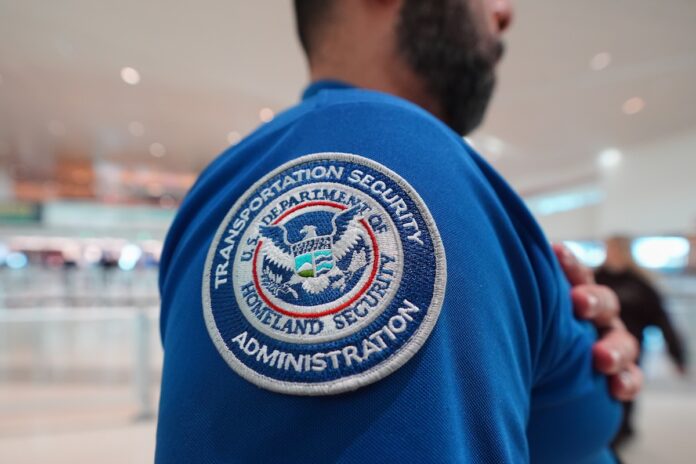
A TSA agent wears a U.S. Department of Homeland Security patch on their uniform at Love Field Airport, in Dallas, Wednesday, Feb. 18, 2026. (AP Photo/LM Otero)

(States Newsroom) — Passengers at a handful of airports this week waited in hours-long security lines as the government shutdown of the Department of Homeland Security dragged on.

Though Transportation Security Administration officers are required by law to work during a lapse in funding, more than usual have been absent after receiving only a partial paycheck during the most recent pay period. TSA officers will miss an entire paycheck this weekend if the shutdown is still in effect then.

No end to the shutdown appeared imminent Wednesday, as the U.S. Senate rejected a bill that would have funded TSA and other agencies in DHS that are not related to immigration enforcement.

In the meantime, TSA officers are not being paid.

Most live paycheck-to-paycheck, said Johnny Jones, the secretary-treasurer of the American Federation of Government Employees Council 100, which represents TSA agents.

The lack of pay has contributed to absenteeism, Jones added. The union does not condone coordinated “sick-outs,” which are illegal.

But individual officers miss work for one of three reasons during a shutdown, he said: pre-planned time off, legitimate illness or personal emergencies, and those calling in sick but seeking other work to pay bills.

“If you’re normally receiving a paycheck, you wouldn’t have that third group,” he said.

Some of those who are working are going without lunch or making other sacrifices, Jones added. And he said two colleagues were evicted during the most recent shutdown last fall, which lasted for 43 days.

The U.S. war against Iran, which has an estimated price in the billions of dollars in just its first two weeks, has also driven resentment among TSA workers, Jones said.

“One of the things that I’ve heard from the colleagues is that, man, we got plenty of money to go fight wars and bomb Iran, but we can’t pay our own employees,” he said.

Long lines

No exceptionally long wait times were reported Wednesday, but the previous few days saw several examples of snarled security lines.

Security lines topped three hours at Houston’s William P. Hobby International Airport on Monday and Tuesday.

Lines at Louis Armstrong New Orleans International Airport were up to two hours Monday and the airport’s social media drew a direct line to the shutdown.

“Due to impacts from the federal government’s partial shutdown, there continues to be a shortage of TSA workers at the security checkpoint … which is causing longer-than-average lines,” the airport’s X account posted.

Atlanta’s Hartsfield-Jackson International Airport also urged passengers to leave extra time to account for factors including “TSA staffing constraints.”

CBS News reported Wednesday that more than 300 TSA agents have left their jobs since the shutdown began. TSA officials did not respond to messages seeking confirmation of that figure.

Senate gridlock

The top Democrat on the U.S. Senate Appropriations Committee, Washington’s Patty Murray, sought unanimous consent Wednesday for the Senate to approve a bill that would fund all of DHS other than Immigration and Customs Enforcement, Customs and Border Protection, and the secretary’s office.

Sen. Katie Britt, an Alabama Republican who chairs the subcommittee on Homeland Security funding, objected.

Murray’s bill “would effectively defund our law enforcement officers that are charged with keeping Americans safe,” Britt said.

Each party blamed the other for the impasse, which has been unbreachable since the department’s funding lapsed Feb. 14.

Following the January fatal shootings of two U.S. citizens by immigration officers in Minneapolis, Democrats are demanding changes to immigration agencies’ conduct as a condition of funding the department.

Republicans have said they are willing to negotiate the issue, but the parties disagree on what to do for the department, which also includes the Coast Guard and the Federal Emergency Management Agency, in the meantime.

Republican leaders sought to pass a short-term continuing resolution to fund the entire department, but Democrats rejected it, saying it would allow the operation of immigration agencies without adding accountability measures.

“Right now, TSA agents are going without pay because Republicans and the White House have decided they would rather shut down all of DHS than pass some very basic reforms to rein in ICE and Border Patrol,” Murray said. “We also want TSA and FEMA funded, but we are not going to be blackmailed into cutting a blank check for ICE to get it done.”

Politics cited

Senate Majority Leader John Thune, of South Dakota, said Democrats have stopped negotiating on DHS funding in a bid to keep the issue alive for the November midterm elections.

“The American people are tired,” he said. “Lines get longer at the airports because TSA isn’t funded. The American people want us to do our jobs. Republicans are at the table. We’re ready to work toward a solution. Democrats have walked away.”

Jones, the AFGE member and TSA officer, declined to say which approach to short-term funding was preferable, but said it was Congress’ job to fund the federal government.

“We all swear the same oath to the same Constitution,” he said. “Now my job function is a little different than theirs, so they need to do theirs so I can do mine.”

Hartwell woman killed in late-night rollover crash

HARTWELL, Ga. — A 45-year-old Hartwell woman was killed Tuesday night after her vehicle rolled multiple times on Reed Creek Highway, authorities said.

Candice Allison Mize was pronounced dead at the scene, according to the Hart County Sheriff’s Office.

Deputies responded around 11:28 p.m. on March 10 after a mobile phone alert reported a possible vehicle crash in the area of 4800 Reed Creek Highway. When deputies arrived, they found a single vehicle that had rolled several times.

Investigators said the driver was ejected from the vehicle during the crash. Hart County EMS and Hart County Fire personnel attempted life-saving measures, but Mize died at the scene.

The Georgia State Patrol responded to assist with the crash investigation. The Hart County Coroner’s Office also responded.

The Georgia State Patrol said that speed was a contributing factor in the crash.

Tillery discusses taxes, annexation, and legislative session during Habersham visit

State Sen. Blake Tillery speaks to members of the Habersham County Republican Party during a meeting Tuesday, March 10, 2026, at the Habersham County Senior Center in Demorest. Tillery discussed the legislative session, tax reform and other issues before speaking exclusively with Now Georgia following the meeting. (photo submitted)

DEMOREST, Ga. — State Sen. and Republican candidate for Lieutenant Governor Blake Tillery returned to Habersham County Tuesday night, meeting with members of the Habersham County Republican Party and discussing the legislative session, tax reform and local issues ranging from trout streams to annexation disputes.

Following the meeting at the Habersham County Senior Center, Tillery spoke exclusively with Now Georgia about the visit, the legislative session under the Gold Dome and his ongoing statewide campaign.

The meeting drew roughly 30 attendees, and Tillery said the visit offered a chance to step away briefly from the pace of the legislative session.

“It was a great time to break away for a few hours and come up and meet with about, probably about 30 people,” Tillery said. “Almost everybody left with a sign. So it was good. It was great to talk about issues that mattered to them, especially local ones, as it related to natural resources and creeks and streams, and then also economic issues like young families and trying to buy homes and affordability.”

Session moves forward after Crossover Day

Tillery’s visit came just days after the Georgia General Assembly passed its key legislative milestone known as “Crossover Day,” the deadline for bills to pass one chamber in order to remain viable during the session.

With that benchmark now behind lawmakers, Tillery said affordability for middle-class families remains a central focus of the remaining weeks of the session.

“Yeah, affordability for the middle class, and I think we best answer that on income tax reform,” Tillery said. “Of course, I’ve laid out a plan that eliminates the income tax on 64% of Georgians in the first year and gives the other 30 — whatever it would be, 36% — relief as well.”

Tillery has proposed a plan that would gradually eliminate Georgia’s state income tax over time while reducing the burden on working families. Under the proposal, many low- and middle-income taxpayers would see their state income tax liability eliminated in the first year, with additional reductions phased in later.

He has argued that the plan would make Georgia more competitive economically while returning more money to taxpayers. The proposal has also become a central part of Tillery’s message as he campaigns statewide for lieutenant governor.

Local questions raised at Habersham GOP meeting

State Sen. Blake Tillery greets an attendee following a Habersham County Republican Party meeting Tuesday, March 10, 2026, at the Habersham County Senior Center in Demorest. (photo submitted)

During the meeting, Tillery said attendees raised several issues tied specifically to Habersham County and Northeast Georgia.

“I got a few about protecting the natural streams and trout streams,” he said. “There were also several people there who were running for county commission to ask some questions.”

Tillery said one local school board member also asked how eliminating the state income tax could affect local government revenues.

“A school board member who wanted to ask, you know, what’s if you do away with the state income tax, how does that affect local revenue?” Tillery said. “So we went through those issues, and I must have answered them ok, because they all left the meeting with signs.”

Annexation debate reaches the Capitol

Tillery also addressed questions about annexation disputes — an issue that has drawn attention at the state level following controversies in both Baldwin and Cornelia.

Now Georgia recently reported that lawmakers are examining Georgia’s annexation process after disputes such as the Red Apple development controversy and questions surrounding potential annexations in Habersham County.

When asked about proposed legislation dealing with annexation procedures, Tillery said he is aware of discussions among Senate Republicans. The legislation, Senate Bill 496, is sponsored by Bo Hatchett, whose district includes Habersham County.

“I know a little bit about it,” Tillery said. “Hatchett sits right in front of me. He’s talking about it with our caucus.”

Tillery said his general philosophy is that decisions about local development should remain in the hands of local officials.

“My position’s been to the best government’s the closest government,” he said. “So we should let local officials decide what’s best for their communities.”

Campaign continues across Georgia

Tillery, who is traveling the state as part of his campaign, said support from law enforcement leaders and elected officials continues to grow.

“The other thing else I would add is we’ve gotten the endorsements of over 75 sheriffs now,” Tillery said. “And over 300 elected officials.”

“We really are a statewide campaign organized in all 159 counties, just working as hard as we can,” he added.

Tillery also praised the reception he has received from Habersham County voters during his visits.

“The people of Habersham County have been — I’ll say this on the record — they’ve just been so kind to me,” he said. “And I hope I’m being just as kind in return.”

Alto council tables budget resolution after confusion during meeting

Members of the Alto Town Council meet Tuesday at Alto City Hall. The council approved an updated fee schedule but unanimously voted to table a budget resolution after several members said they were unfamiliar with the proposal. (Patrick Fargason/NowGeorgia.com)

ALTO, Ga. — Confusion over a proposed budget resolution led the Alto Town Council to delay action Tuesday night on a measure tied to the town’s ongoing effort to finalize its finances and move toward adopting a 2026 budget.

Mayor Gail Armour introduced the resolution during the council’s regular meeting and began reading the document aloud. Several council members said they had not previously seen the language of the proposal.

Armour told the council the resolution had been discussed during the town’s Feb. 10 meeting.

However, as the mayor read the resolution, council members said they were unsure what the measure would do.

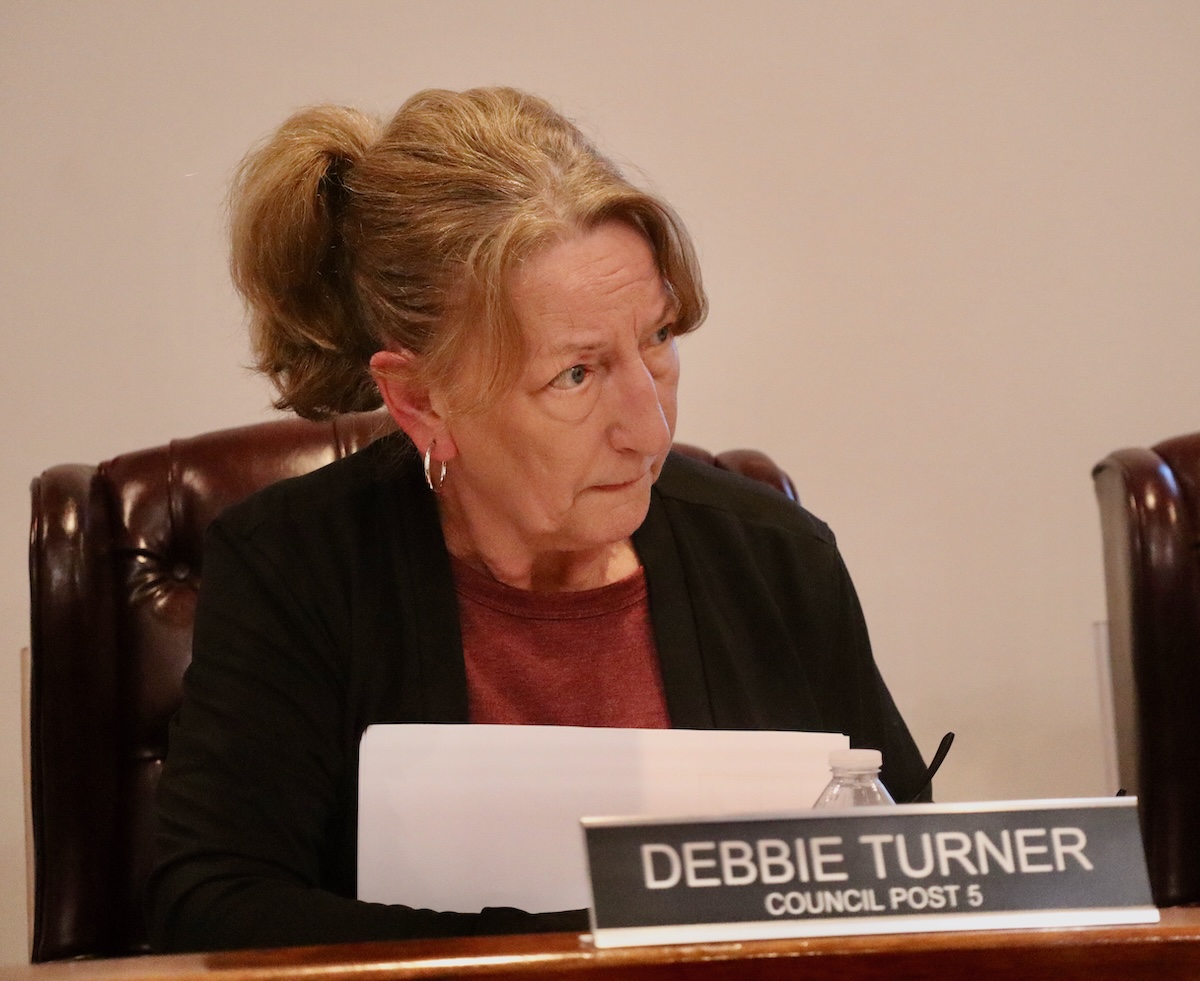
Alto City Councilwoman Debbie Turner reviews documents during Tuesday’s Alto Town Council meeting. Turner raised concerns during discussion of a proposed budget resolution, saying council members needed time to understand the measure before voting. (Patrick Fargason/NowGeorgia.com)

Councilwoman Debbie Turner said Councilman John Smith, seated beside her, was also confused by the proposal.

“John is telling me that he doesn’t understand any of this either,” Turner said. “So that’s definitely important that everybody understand this.”

Resolution intended to extend current budget

Alto’s Chief Financial Officer Lisa Turner explained the resolution was intended to temporarily extend the town’s existing 2025 budget authority into 2026 while financial records are reconciled.

“The purpose of it was to extend the 2025 budget that we have in place to cover 2026,” Turner said, “including the provisions that the council wanted added in until we can get the 2026 budget adopted.”

She said the measure would also maintain several cost-control provisions previously requested by the council, including a hiring freeze and limits on overtime.

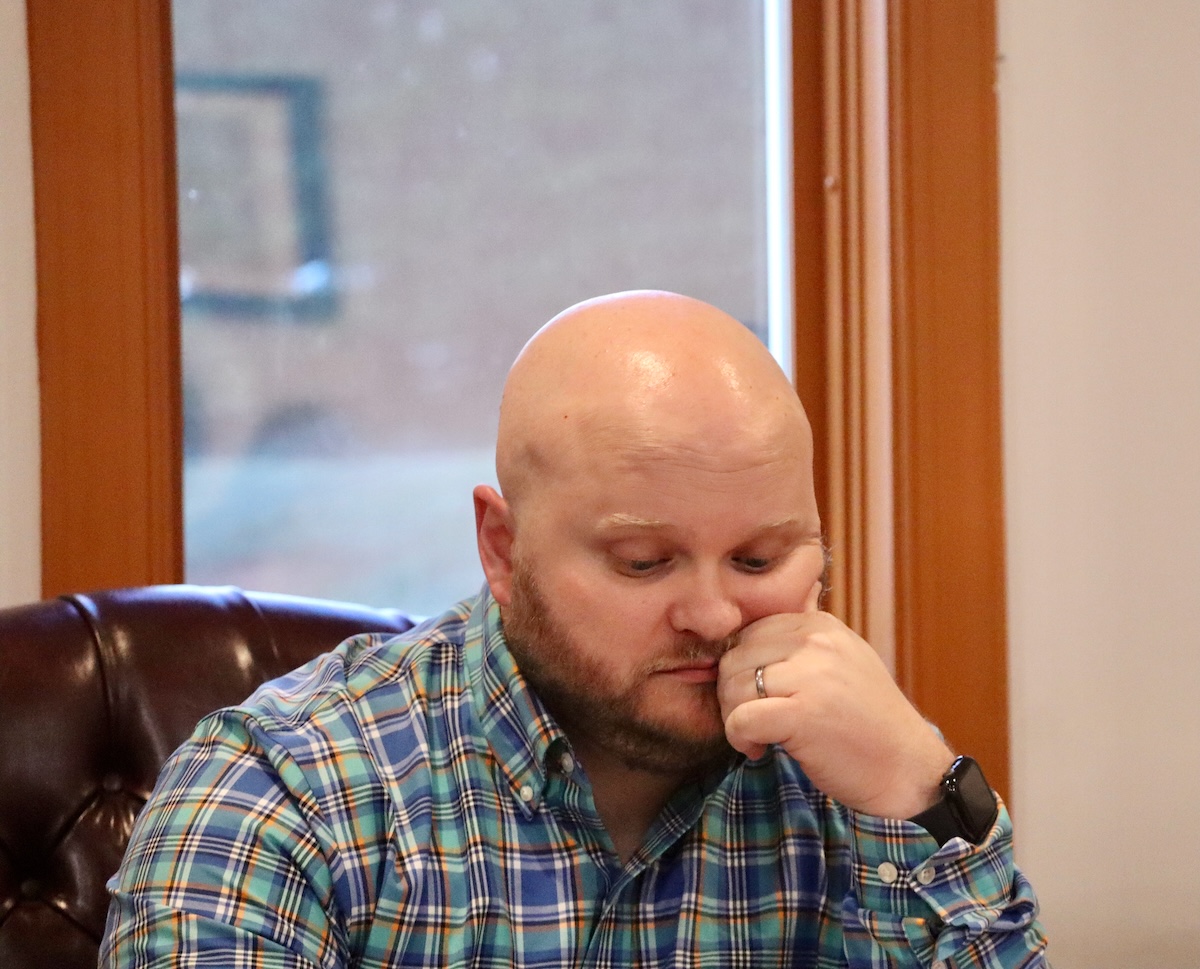
Alto City Councilman Eddie Palmer listens during Tuesday’s Alto Town Council meeting. Palmer later revised his motion and asked the council to table a budget resolution so members could review it before taking action. (Patrick Fargason/NowGeorgia.com

Councilman Eddie Palmer initially made a motion to approve the resolution. As questions continued, however, Palmer revised his motion and instead called for the measure to be tabled so council members could review it.

“In order to stop the confusion here, I’ll rephrase my motion,” Palmer said. “That we table this matter until everybody’s had a chance to look at the study.”

The council unanimously voted to table the resolution. Armour did not comment following the vote.

The delay marks the latest step in Alto’s ongoing effort to reconcile financial records before adopting a 2026 budget. The council has previously said amendments to the current fiscal year budget are needed before a new budget can be finalized.

Council approves updated fee schedule

Earlier in the meeting, the council approved an updated fee schedule after a lengthy discussion about service costs and water rates.

The revised schedule includes a $2 increase in the town’s monthly garbage collection fee and raises the water inspection fee for new hookups from $50 to $75. The changes will take effect during the April 2026 billing cycle.

Alto City Councilman Allen Fox listens during discussion of the town’s proposed fee schedule and a budget resolution during the Alto Town Council meeting Tuesday at City Hall. The council later voted unanimously to table the budget resolution after several members said they had not previously reviewed the document. (Patrick Fargason/NowGeorgia.com)

Chief Financial Officer Lisa Turner said the town may also need to gradually increase water rates while awaiting the results of a formal water rate study.

“We know when they do the water study that it’s going to merit an increase,” Turner said. “We just don’t know exactly how much.”

She suggested the council consider modest incremental increases, such as 50 cents or $1 per 1,000 gallons of water, to help offset operating costs until the study is completed.

Councilman Allen Fox said the town may need to phase in water rate increases rather than implement a larger adjustment at once.

“I think we’re probably going to have to step into that,” Fox said. “Maybe over six months say this is what it should be.”

Fox also raised broader concerns about inspection requirements tied to rental housing.

“It feels like a major government overreach to me, just to come between a landlord and a tenant,” Fox said. “But since that’s the system we have in place right now, it only makes sense to cover the costs.”

Despite the debate, the council ultimately approved the revised fee schedule unanimously.

Kemp spokesman says FEMA disaster request already underway after Clyde letter

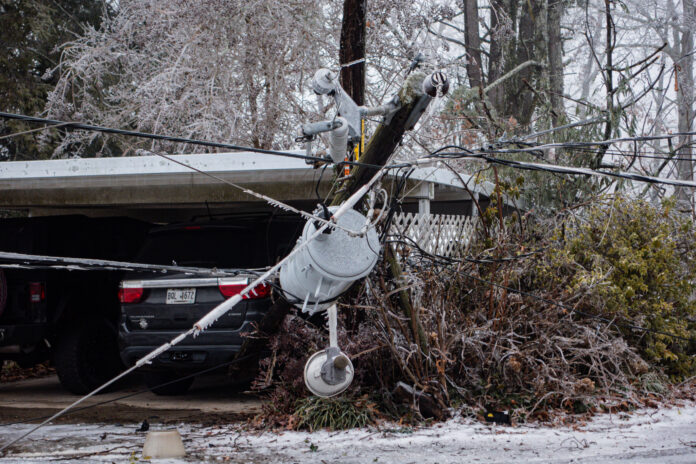
Trees and power lines fell across northern Georgia under the weight of ice and strong winds during Winter Storm Fern. (Daniel Purcell/NowGeorgia.com)

WASHINGTON — U.S. Rep. Andrew Clyde is urging Gov. Brian Kemp to request a federal disaster declaration for Northeast Georgia counties heavily impacted by Winter Storm Fern, saying the damage from the storm has overwhelmed the ability of local governments to recover on their own.

In a letter sent Wednesday, Clyde asked Kemp to submit a request to the Federal Emergency Management Agency for a presidential major disaster declaration before a March 12 deadline.

Clyde represents Georgia’s 9th Congressional District, which covers much of Northeast Georgia. In the days following the storm, he visited White, Habersham and Rabun counties to assess the damage and meet with local officials and emergency responders.

Kemp: disaster request already in progress

A spokesman for Kemp told Now Georgia the state was already preparing the disaster request before Clyde’s letter arrived.

“At Gov. Kemp’s direction, GEMA has been working on a major disaster declaration application, predating the congressman’s letter which arrived just this afternoon,” the spokesman said. “We expect that application to be submitted to FEMA tomorrow.

“We look forward to Congressman Clyde advocating for the application’s approval on behalf of the people of the impacted counties in his district.”

Storm caused widespread damage

Winter Storm Fern struck Northeast Georgia as a multi-day weather event that brought freezing rain, snow, high winds and prolonged icy conditions across the region.

Ice accumulations exceeded half an inch in several communities, toppling trees and downing power lines. Hundreds of thousands of Georgians lost electricity during the storm, many for extended periods.

Rep. Clyde thanks Georgia National Guard troops deployed to White County during Winter Storm Fern. (photo submitted)

While the storm affected parts of the state, Clyde said the damage was concentrated in Northeast Georgia.

“The storm’s destructive ice and wind toppled trees and downed power lines across Northeast Georgia,” Clyde wrote, adding that the region’s communities faced severe and localized impacts from the storm.


Local governments facing financial strain

During his visits to the region, Clyde met with county officials, utility crews, Georgia National Guard members and American Red Cross personnel involved in recovery efforts.

He said local leaders told him the cost of debris removal, infrastructure repair and emergency response is stretching county budgets beyond their limits.

“The damage caused by Winter Storm Fern is simply beyond the capacity of these counties’ budgets to address alone,” Clyde wrote in the letter.

Disaster declaration process

Under the federal Stafford Act, a governor must first request a disaster declaration before FEMA and the president can consider approving federal assistance.

Clyde said damage assessments suggest several Northeast Georgia counties may already meet FEMA’s county-level damage thresholds, though statewide totals may fall short because the storm’s effects were concentrated in a limited region.

However, FEMA guidelines allow for disaster declarations when severe impacts are concentrated in a smaller geographic area.

Clyde said that appears to be the case for Northeast Georgia following Winter Storm Fern, and pledged to advocate for federal assistance if the governor submits the request.

12-year-old Georgia girl dies days after collapsing following a fight near a school bus stop

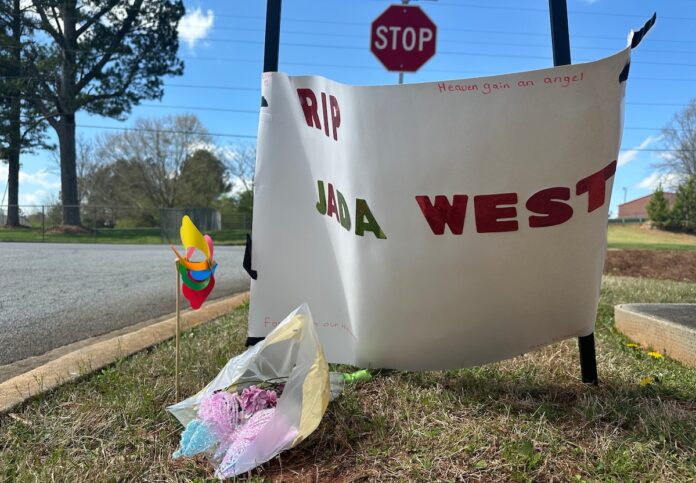
A paper sign left in memory of Jada West stands in her neighborhood in Villa Rica, Ga., Wednesday, March 11, 2026. (AP Photo/Kate Brumback)

VILLA RICA, Ga. (AP) — A 12-year-old girl was taken to a hospital and died days after she collapsed in the street following a fistfight near a school bus stop in her Georgia neighborhood, according to police.

The death of sixth grader Jada West is being investigated by police in suburban Villa Rica, about 30 miles (48 kilometers) west of Atlanta.

Sgt. Spencer Crawford, a police spokesman, said Wednesday that investigators are reviewing evidence, including cellphone video of the fight, and are awaiting autopsy results. He said police plan to meet later this week with prosecutors, who will ultimately decide whether to bring charges.

The fight between Jada and another student from Mason Creek Middle School broke out at an intersection near the girl’s home on Thursday afternoon, Crawford said.

Cellphone video posted by Jada’s aunt on social media shows a school bus leaving the scene more than 90 seconds before any punches get thrown. The video shows Jada and another girl yelling and taunting each other while standing a good distance apart. A group of classmates stands watching them.

Someone can be heard saying, “Who is going to fight you over some noise?”

The video shows both girls putting down their backpacks at roughly the same time. They approach each other and then begin throwing punches. Within seconds, they fall to the pavement, clutching each other, with Jada landing on her back and rolling backward feet-first over her head and neck.

Both girls stand up before a woman intervenes, and the adult can be heard telling Jada to go home. The video shows Jada picking up her backpack and appearing to walk away when the clip ends.

It’s unclear what happened next, but Jada didn’t make it home. Crawford said police were dispatched on a call of “a young juvenile who was in cardiac arrest laying in the street.”

“When we actually arrived, paramedics were on the scene, and they were already loading her up and performing CPR,” Crawford said. “Paramedics told us there was an adult on the scene performing CPR when they arrived.”

Jada was taken to a hospital. On Sunday, her mother, Rashunda McClendon, posted a video to Facebook asking people to “please pray for my baby. She’s fighting for her life.”

Jada’s aunt, De’Quala McClendon, later announced on Facebook on Sunday that her niece had died.

“Now you got your spiritual crown,” she wrote, “it hurts so so bad but I know you are ok.”

Rashunda McClendon declined to speak with an Associated Press reporter who came to her home on Wednesday.

A paper sign staked into the ground near the scene of the fight said, “RIP JADA WEST,” and bore the message: “Heaven gain an angel.” A bouquet and a plastic pinwheel were left beside it.

Douglas County District Attorney Dalia Racine said in a statement that her office is aware of the police investigation into Jada’s death but gave no further comment.

The Douglas County School System, in a statement, described Jada as “an upbeat, kind, and vibrant student.” It said counselors were made available at the school to speak with students and staff.

“This incident did not occur on school property or during school hours, and there is nothing to indicate that this is related to any on-campus activity,” the school district’s statement said.

AP’s Russ Bynum contributed to this report

Dems demand swift Pentagon investigation into deadly air strike on girls’ school in Iran

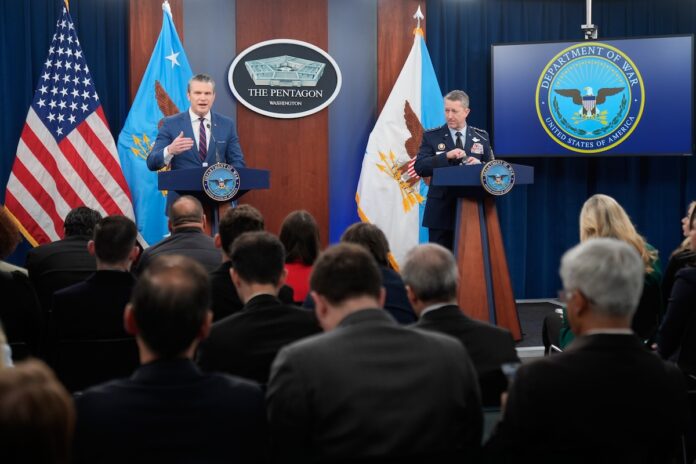
Defense Secretary Pete Hegseth and Chairman of the Joint Chiefs of Staff Gen. Dan Caine speak during a press briefing at the Pentagon, Monday, March 2, 2026, in Washington. (AP Photo/Mark Schiefelbein)

WASHINGTON (States Newsroom) — The Department of Defense must quickly release the results of its investigation into whether the U.S. military bombed a girls’ elementary school in Iran that left at least 168 people dead, according to a letter sent Wednesday that was signed by nearly every Senate Democrat.

“To be clear, the war against Iran is a war of choice without Congressional authorization,” they wrote. “Nonetheless, as these military actions continue, the United States and Israel must abide by U.S. and international law, including the law of armed conflict.”

The letter from 46 senators to Secretary Pete Hegseth calls on Pentagon officials to conduct “a swift investigation into the strikes on this school and any other potential U.S. military actions causing civilian harm, and the findings must be released to the public as soon as possible, along with any measures to pursue accountability.”

A spokesperson for the Department of Defense said in a statement the “incident is under investigation.”

US responsibility probed

President Donald Trump said while leaving the White House Wednesday that he didn’t know anything about preliminary reports that the U.S. is responsible for the bombing. The New York Times reported earlier in the day that an “ongoing military investigation has determined that the United States is responsible for a deadly Tomahawk missile strike on an Iranian elementary school.”

The lawmakers’ letter requests the Pentagon answer a series of questions, including

  • Whether the U.S. military conducted the strike on Feb. 28 on the girls’ elementary school.
  • If it was a U.S. strike, what the military meant to bomb and what led to the school being hit instead.
  • Whether the department is “complying with rules to prevent the commission of war crimes.”
  • If the DOD created a “no-strike list” before bombing began in Iran and what other steps military officials have taken to reduce or prevent harm to civilians.
  • Whether the military is using artificial intelligence tools in its operations in Iran.
  • What steps the department took to comply with the laws of war.

Georgia Sens. Jon Ossoff and Raphael Warnock were among those who signed the letter. Pennsylvania’s John Fetterman was the sole Democrat not to sign.

Boil water advisory now lifted for parts of Demorest

(NowHabersham.com)

DEMOREST, Ga. — The City of Demorest has now lifted its boil water advisory for several areas following a water line repair that may have disrupted service or caused low water pressure in parts of the system.

The advisory, issued March 10, is precautionary due to the potential risk of microbial contamination when water pressure drops.

The affected areas include: Lat Wilson Road, Wilson Road, Oakdale Drive, Old Camp Creek Road, York Drive, and Eastwinds Drive.

City officials say customers who experienced water outages or low pressure should bring tap water to a rolling boil for at least two minutes before consuming or cooking with it. Boiled or bottled water should also be used for brushing teeth, making ice, or watering pets.

Residents in the affected area should flush faucets for at least two minutes before using the water for drinking or food preparation.

Customers with questions may contact the City of Demorest water system at 678-315-1813.

Local food series continues with culinary legend

Michael W. Twitty lectures about Southern food and its history across the world. (Photo/Michael W. Twitty)

Look no further than the Facebook group, Columbus, GA Foodies with 94,500 followers to see why the Chattahoochee Valley Libraries Food & Soul of America series is a big hit.

Since January, the library system has brought in well known chefs and authors who write about food and its history, including cooking show host Vera Stewart, Valerie Frey, and John Edge.

Next up, Thursday, March 12, is Michael W. Twitty. He will be at the Columbus Public Library, 3000 Macon Road, at 6:00 pm. Admission is free. The James Beard Award-winning author will present an in depth look into the story, practice, and legacy of Southern food.

Michael’s experience ranges from growing heirloom seeds to baking and writing about Southern food history. (Photo/Afroculinaria)

In 2010, Twitty launched Afroculinaria, a culinary history blog that covers African American food. He also worked with the D. Landreth Seed Company to compile the African American Heritage Collection of heirloom seeds for the company’s 225th anniversary.

His latest cookbook is Recipes from the American South. His books will be available for purchase and Twitty will sign autographs after his talk. It’s a wonderful opportunity to meet a Southern cuisine historian and aficionado.

Iran war is estimated to cost in the billions already, with no end in sight

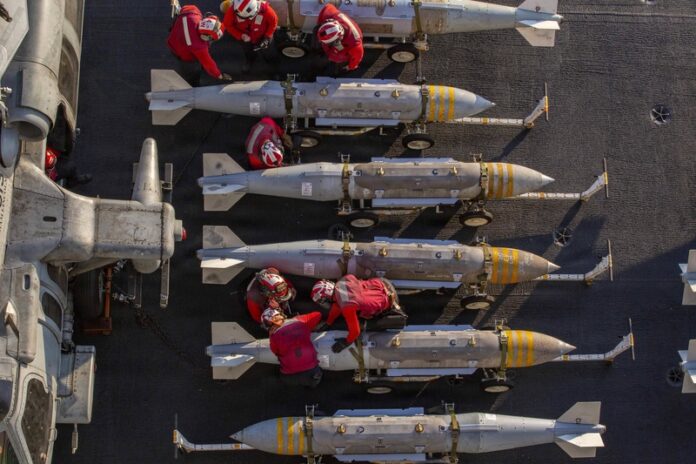
Sailors prepare to stage ordnance on the flight deck of the USS Abraham Lincoln in support of Operation Epic Fury in the U.S. Central Command area of responsibility, Feb. 28, 2026. (Photo by U.S. Navy)

WASHINGTON (States News) — Members of Congress have not formally authorized a war in Iran, though they may soon be expected to approve emergency funding for the endeavor without any projection from the Trump administration as to how long it may last or the full cost, not just in dollars but in American troop and civilian lives.

Experts on defense spending interviewed by States Newsroom say the cost of weeks of air bombing will mount into the billions of dollars, a sum that will balloon if ground troops are sent into Iran to undertake regime change and if the war extends for months to come.

Defense Department officials briefed Congress on Monday that the Pentagon spent $5.6 billion on munitions alone during the first two days of the war, according to a congressional aide not authorized to speak publicly. The aide expects DOD has spent into the double digits in the days since.

President Donald Trump has sent mixed signals about the timeline and end goals for the war, called Operation Epic Fury. He at first said the bombing campaign he began alongside the Israeli government could last between four and six weeks and on Monday said it is possible it will end “quickly.” Trump, however, hasn’t ruled out a longer assault or the deployment of ground troops.

Republican lawmakers who control Congress say the ongoing attack is an essential national security undertaking and that they won’t constrain Trump in his role as commander-in-chief.

Democrats, who tried unsuccessfully to remove U.S. troops from hostilities until approved by Congress, will be needed to provide enough votes to move any supplemental spending request through the Senate — one possible obstacle to a prolonged conflict.

Even a relatively brief war will have long-lasting, far-reaching consequences for the millions of people pulled into the conflict.

“One lesson of history is that a war that is supposedly short or brief has these huge repercussions that ripple across time,” said Stephanie Savell, director of the Cost of War project at the Watson School of International & Public Affairs at Brown University.

Neither the White House nor the Office of Management and Budget have disclosed publicly how much the bombing has cost taxpayers so far or how much spending it might eventually require. A Defense Department spokesperson said they “have nothing to provide on this at this time.” The top Democrat on the House Budget Committee, Rep. Brendan Boyle of Pennsylvania, has asked the Congressional Budget Office to come up with a number.

Comparison with Iraq, Afghanistan

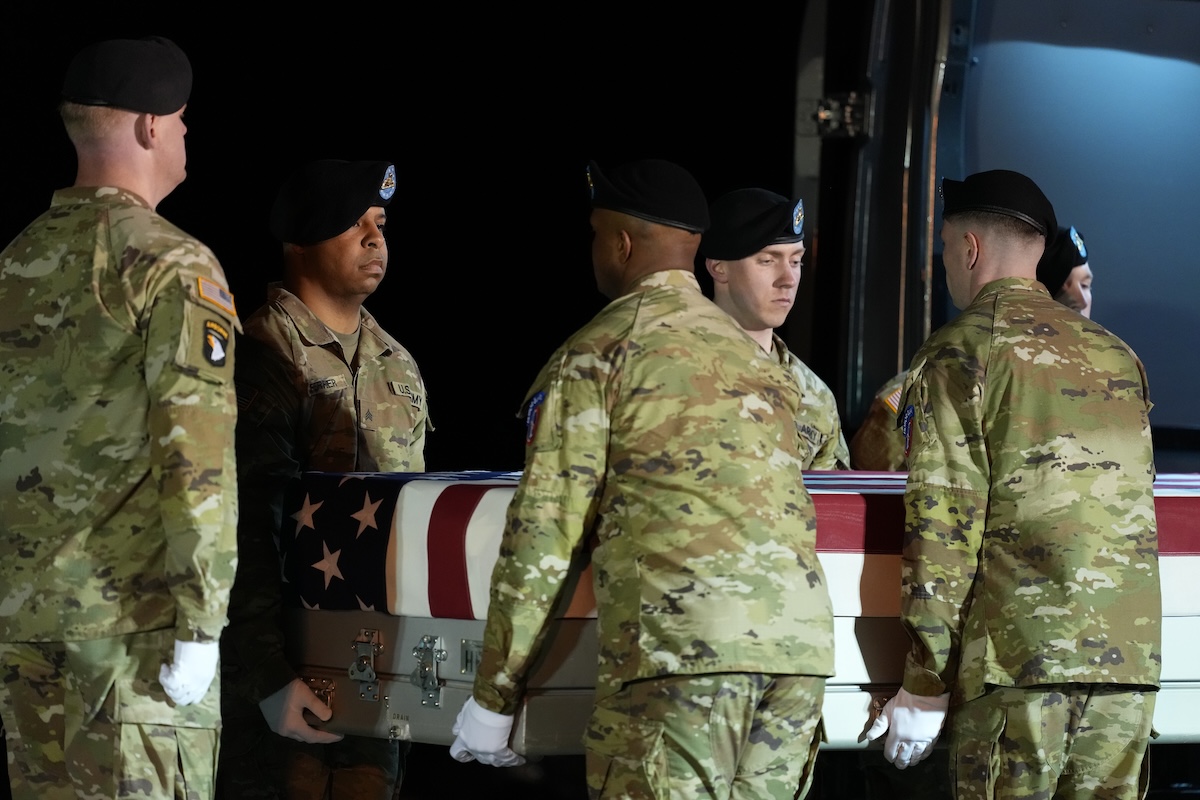
A U.S. Army carry team places the transfer case with the remains of U.S. Army Sgt. Benjamin N. Pennington, 26, of Glendale, Ky., the seventh U.S. service member to die in combat during the Iran war, in the the transfer vehicle during a dignified transfer Monday, March 9, 2026, at Dover Air Force Base, Del. (AP Photo/Julia Demaree Nikhinson)

Michael O’Hanlon, director of research in the foreign policy program at the liberal-leaning Brookings Institution, said a ballpark estimate for the military costs of war during an “extended air campaign” would normally run a couple of billion dollars a month.

“But at this point, I think we’re more likely in the couple billion a week range,” he said.

Achieving long-lasting regime change, which Trump has spoken about often since the war began, could be much more costly, both in terms of American spending and troops’ lives, as well as civilian casualties.

The wars in Afghanistan and Iraq averaged about $1 million per deployed U.S. troop per year once all of the infrastructure, equipment, health care and other factors were rolled into the cost of war.

During the peak of those wars, O’Hanlon said, there were about 100,000 to 175,000 troops in those two countries and the United States was spending about $200 billion annually.

“If you needed at least 100,000 U.S. troops in Afghanistan, you could conceivably need a quarter million or more in Iran if you’re really going to try to occupy and stabilize the whole country,” he said. “So that means now you’re getting into the range of $250 to $300 billion a year for a presence that would stay in Iran for a full 12 months. And then each and every year it would be additional.”

That, however, is just the potential cost for the military. It doesn’t include damage to U.S. diplomatic facilities in the region or other costs associated with war.

“You’ve got your infrastructure damage as well as higher energy costs around the world. And already talk of less fertilizer being produced, which is going to reduce crop yields,” O’Hanlon said. “So there are all sorts of second-order effects.”

‘Wars are never quick or cheap or easy’

U.S. Department of Defense footage shows that moment when, according to the Pentagon, a U.S. submarine sank an Iranian warship in the Indian Ocean Tuesday night, Feb. 3, 2026. (U.S. DOD via AP)

The death toll for U.S. troops, seven of whom have already died, could also increase depending on the scope of the conflict.

There were about 150 combat fatalities during the first Gulf War in the early 1990s, as well as about 150 deaths from training and accidents in the lead-up and aftermath, O’Hanlon said.

The war in Afghanistan led to the deaths of about 2,500 U.S. troops across roughly two decades. About 4,500 Americans died in the 15 years of the war in Iraq, he said.

Savell, of the Cost of War program at Brown University, said research has shown that “wars are never quick or cheap or easy.”

The Iraq War that began in 2003, she said, is one of many examples of political leaders messaging ahead of time that a conflict would be “short and decisive and relatively inexpensive.”

“We see many of those kinds of narratives being, you know, a refrain these days in relation to Iran as well,” Savell said. “So I think that the comparison in that sense is apt.”

The Iraq war also had major unanticipated consequences for those living in the region, including “that the U.S. invasion was partially responsible for the rise of the Islamic State,” Savell said.

“And that militant group has now spread its terror attacks around the world,” she said.

In addition to the direct deaths of both troops and civilians that come from bullets, bombs and other weapons of war, there will be indirect deaths that stem from a lack of clean water, food and medical care.

“Those kinds of things have really, really long-lasting and deep impacts for people, especially women and children,” Savell said. “In contemporary wars, children ages zero to five are often the ones who end up suffering in the long term because of the diseases and the malnutrition that can be a reverberating effect of war.”

Regime change ambitions

Seth G. Jones, president of the defense and security department at the Center for Strategic and International Studies, said during a roundtable discussion that he believes it will be “very difficult” for the U.S. and Israeli militaries to cause “major damage to the Iranian regime largely from air and naval assets.”

“I think even with ground troops, trying to social engineer a foreign government is incredibly difficult,” he said.

The U.S. military’s wars in Afghanistan and Iraq, as well as operations in Libya, he said, all used a combination of tactics, including ground forces.

“Those wars persisted for years, if not decades, after that. And we saw civil wars in all three cases and insurgencies,” Jones said. “So, trying to do that without a meaningful ground presence, I think, is going to be virtually impossible. And then you run the risk of what the U.S. did in 1991 in Iraq and Hungary in 1956, which is it urged individuals to rise up, and they were slaughtered in both cases, the Kurds and the Hungarians.”

Shaping an entirely new Iranian regime, he said, would take “months if not longer.”

A prolonged conflict could lead to several challenges for the U.S. military, one of which will be restocking munitions like the Terminal High Altitude Area Defense, or THAAD, about a quarter of which were drawn down in 2025, according to Jones.

“The more the U.S. fires, the less munitions it has, offensive and defensive, including

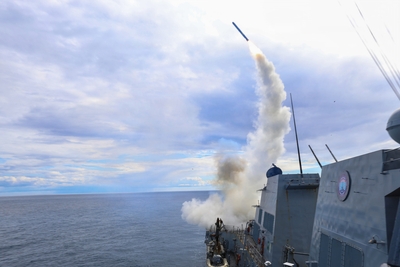
The USS Thomas Hudner fires a land attack missile in support of Operation Epic Fury in the U.S. Central Command area of responsibility, March 1, 2026. (Photo by U.S. Navy)

available for its war plans … against China in the Taiwan Strait, against North Korea on the Korean Peninsula and against Russia,” Jones said.

There is also a chance the conflict could widen even further if Iranian supporters outside of that country decide to begin targeting the U.S. military or civilians.

“Do the Houthis start firing from Yemen? Do we see Iraqi Shia militia start conducting attacks, including against U.S. forces in Syria, Iraq, Jordan, or other locations?” Jones said. “Or do we see the Islamic Revolutionary Guards Quds Force and its partners conduct attacks elsewhere? We know they’ve conducted assassination plots, at least, in the U.S., including in the city of Washington. So how does that expand?”

The defense budget

Mara Karlin, visiting fellow at the Brookings Institution and a professor of practice at Johns Hopkins University’s School of Advanced International Studies, said during a panel discussionthat while the U.S. military has a large budget, its resources aren’t infinite.

Congress approved $838.7 billion for the Department of Defense in January as part of its annual government funding process. Republicans approved another $150 billion for the Pentagon to spend on specific programs, like air and missile defense, as well as shipbuilding, in their “big, beautiful” law enacted in 2025.

“Fundamentally, the U.S. military can often find ways to walk and chew gum; it just gets really hard to do so and the costs can only increase,” she said.

And while the possibility of Trump sending in U.S. ground forces isn’t completely out of the picture, Karlin said that “is almost inconceivable.”

“Ground troops mean you’re getting ready for a lot of casualties, especially given that you have the potential for regime collapse,” she said.

Making that type of choice, to put U.S. troops into Iran, would likely ensure the war “will be long and it will be ugly,” despite the possibility of significant change.

“Iraq 2026 actually looks pretty different. The costs to get to that from 2003 onward were so extraordinarily high,” Karlin said. “And I think that it is safe to assume that if one were to use that analogy, you would see something as rough, if not much, much worse.”

North Georgia Community Foundation names Don Grimsley board chair, adds eight trustees

Members of the North Georgia Community Foundation’s Board of Trustees gather for a photo in Gainesville. The foundation recently named Don Grimsley as board chair and welcomed eight new trustees: Brook Davidson, Ashley Davis, Cindy Green, Lynn Jackson, Jay Parrish, Teresa Rivero, Lauren Samples and Kevin Tanner. (North Georgia Community Foundation)

GAINESVILLE — The North Georgia Community Foundation has named Gainesville businessman Don Grimsley as chair of its Board of Trustees and appointed eight new members to the board.

The foundation announced the additions in a news release, welcoming Brook Davidson, Ashley Davis, Cindy Green, Lynn Jackson, Jay Parrish, Teresa Rivero, Lauren Samples and Kevin Tanner as new trustees.

Michelle R. Prater, president and CEO of the North Georgia Community Foundation, said the new leadership will help guide the organization’s continued work across the region.

“We are honored to welcome these outstanding leaders to the NGCF Board of Trustees,” Prater said. “Their experience and commitment to service will help guide our work as we continue strengthening communities across North Georgia.”

Grimsley, a Gainesville business owner and longtime community leader, has served on the foundation’s board since 2022. He began his career with Bank of America and SunTrust Robinson Humphrey before moving to Gainesville. He currently owns and operates four Dairy Queen restaurants and works as a commercial real estate broker with Candler Real Estate.

In addition to his work with the foundation, Grimsley has served in numerous community leadership roles, including with the University of Georgia Alumni Association Executive Board, Family Promise of Hall County, Lakeview Academy, the Northeast Georgia Council of the Boy Scouts of America and the Medical Center Foundation Golf Committee. He also serves on the Board of Trustees for Leadership Georgia.

The eight new trustees bring experience from business, health care, education, law enforcement and philanthropy.

Davidson is managing partner at the Gainesville law firm Stewart, Melvin & Frost and serves on the Brenau University Conflict Resolution and Legal Studies Advisory Board and the Boys & Girls Clubs of Lanier board. Davis is chief operating officer of Lawson Air Conditioning & Plumbing and is active with the Junior League of Gainesville-Hall County and the Greater Hall Chamber’s Vision2030 initiative.

Green is a retired DuPont executive and co-owner of Cotton Calf Kitchen in Braselton. Jackson is chief executive officer of Northside Hospital Forsyth and has led the hospital’s expansion since 1999.

Parrish serves as Gainesville’s police chief and began his career with the department as a patrol officer in 2000. Rivero is a senior program officer with the Bill & Melinda Gates Foundation focused on improving math achievement in public schools.

Samples is a certified public accountant and partner at Tillman, Bailey, Samples & Associates, while Tanner serves as commissioner of the Georgia Department of Behavioral Health and Developmental Disabilities and previously represented House District 9 in the Georgia House of Representatives.

The North Georgia Community Foundation manages more than $186 million in charitable assets and partners with individuals, families and nonprofits to support philanthropic efforts across the region.

For more than four decades, the foundation has worked to support community initiatives through charitable giving, partnerships and long-term stewardship of philanthropic funds.

Democrats sue Trump administration for information on possible plans for troops at polls

Elizabeth May marks her ballot while voting at Second Presbyterian Church in Little Rock’s Pleasant Valley neighborhood on Tuesday, March 3, 2026. (Photo by John Sykes/Arkansas Advocate)

WASHINGTON (States Newsroom) — The Democratic National Committee Tuesday filed a lawsuit in federal court aiming to force the Trump administration to admit if it plans to send armed federal law enforcement or U.S. troops to polling locations in the upcoming midterm elections.

The suit in the U.S. District Court for the District of Columbia charges that 11 Freedom of Information Act, or FOIA, requests submitted to the Department of Justice, Department of Homeland Security and the Department of Defense by the DNC in October have gone unanswered, a violation of public records law.

“To ensure that the American people obtain timely knowledge of potential threats to free and fair elections and to enable the DNC to take appropriate action to ensure voting rights are protected, the DNC now seeks this Court’s aid to enforce FOIA requirements,” according to the suit.

The suit was assigned to federal Judge Beryl A. Howell, who was appointed by former President Barack Obama.

Voting machines

The suit details how the FOIA requests were filed after comments from President Donald Trump to the New York Times that he regretted not using the U.S. military to seize voting machines after he lost the 2020 presidential election.

“These and many other actions have raised serious concerns among voters across the country that the President will order armed federal agents or troops to polling places, drop boxes, and election offices, … and will send FBI agents or Justice Department officials to interfere with the orderly administration and certification of elections,” according to the complaint.

The suit also cites comments from White House press secretary Karoline Leavitt that she “couldn’t guarantee” that federal law enforcement officers would not be at polling locations this November.

“Donald Trump wants to bully and cheat his way through a midterm election that he knows Republicans will lose, but we won’t let him,” DNC Chair Ken Martin said in a statement. “The DNC will stand on the side of voters and use every tool in our arsenal to stop voter suppression and intimidation before it can even begin.”

Are there records?

It’s also possible that no records exist.

Congressional Democrats have pressed Trump officials during hearings on plans to send agents from U.S. Immigration and Customs Enforcement and U.S. Customs and Border Protection to polling locations.

Both heads of those agencies, ICE acting director Todd Lyons and CBP Commissioner Rodney Scott, said there were no plans to send any of their agents or officers to polling locations.

Homeland Security Secretary Kristi Noem, who is leaving her post at the end of month and being replaced by Oklahoma GOP Sen. Markwayne Mullin, was also pressed by Democrats.

She said there were no plans for ICE agents, but also asked Democrats if they plan for noncitizens to vote in federal elections, something that is already illegal and rarely occurs.

But during the hearing, Noem would not commit to issuing a directive barring immigration agents from polling locations.