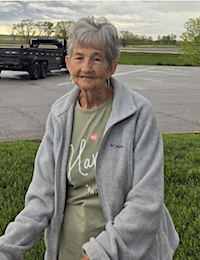
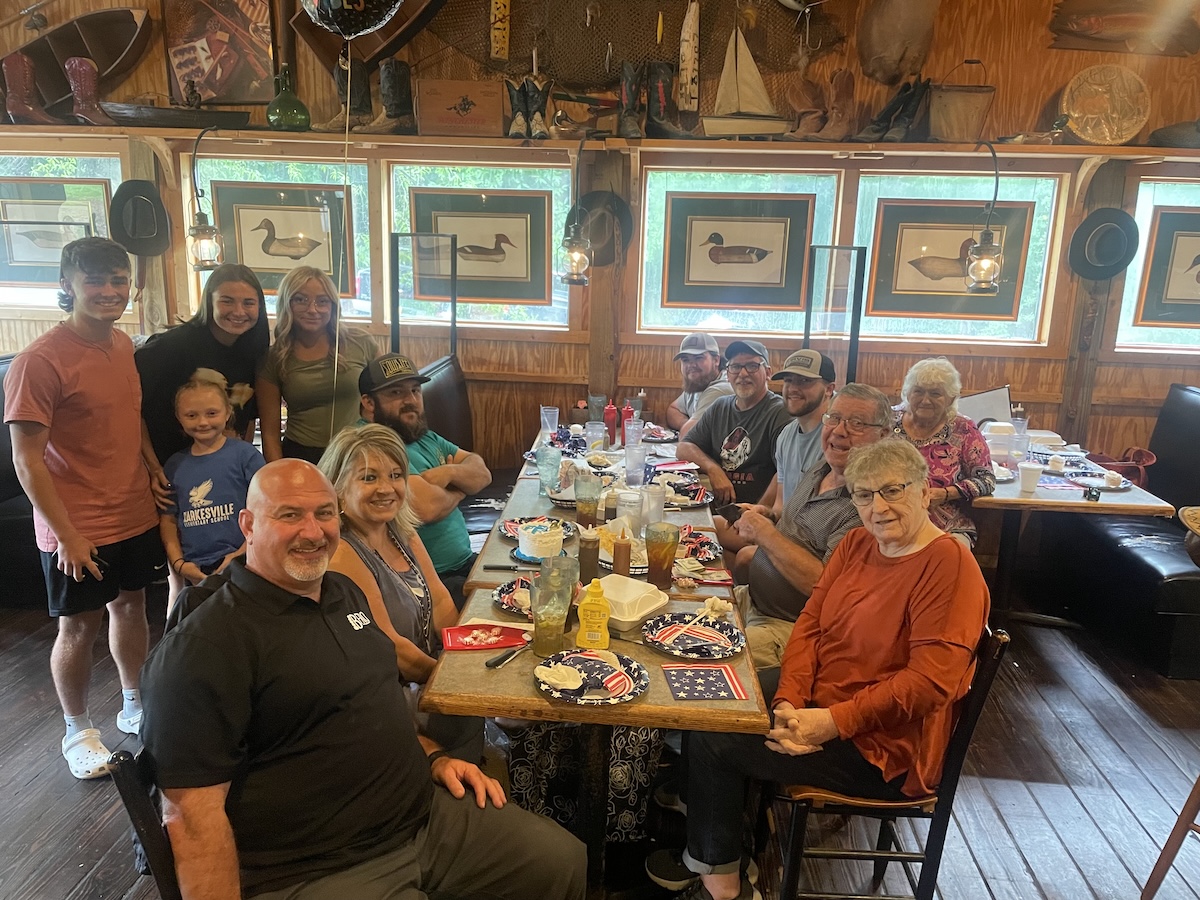
Fay Gardner Bryant, age 78 of Clarkesville, passed away Wednesday, March 26, 2025.
Born in Coolidge, Georgia on January 15, 1947, Fay was the daughter of the late Delma C. and Dottie Ree Strickland Gardner. She was a retired paraprofessional with Sunset Elementary School in Moultrie.
Fay and Wayne moved to Clarkesville 10 years ago and were faithful members at Oaky Mountain Baptist Church. Fay enjoyed fishing, gardening, and fellowship with her church family. She and Wayne enjoyed traveling by RV. More than anything, Fay loved her husband, children and family. In addition to her parents, Fay is preceded in death by infant daughter Melissa Burgess.
Survivors include husband Wayne Bryant of Clarkesville, sons Derek Burgess (Brandi) of Forsyth and Tim Burgess of Cordele; daughter Michelle Burgess of Toccoa; stepson Tim Bryant (Candace) of Lake Butler, Florida; stepdaughter Jennifer Blevins of Moorehead, Kentucky; brother Johnny Gardner (Betty) of Valdosta; sisters Joyce Benton of Moultrie and Latrelle Burkholder of Valdosta; as well as 12 grandchildren, 11 great grandchildren and numerous cousins and extended family.
A private interment will be held at Big Creek Baptist Church Cemetery in Coolidge, Georgia.
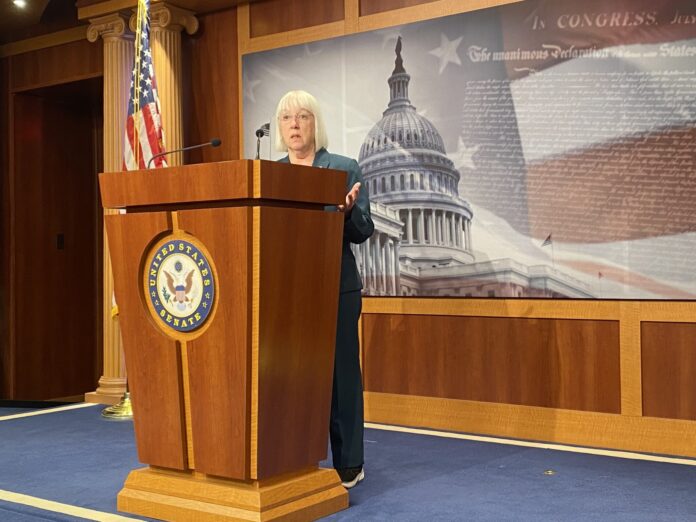
U.S. Sen. Patty Murray, D-Wash., speaks to reporters during a press conference inside the U.S. Capitol on Thursday, March 27, 2025. (Jennifer Shutt/States Newsroom)
WASHINGTON (States Newsroom) — The top Republican and top Democrat on the U.S. Senate Appropriations Committee sent the Trump administration a joint letter on Thursday, telling the Office of Management and Budget it’s on thin ice with the panel.
The dispute has to do with how the White House is implementing the stopgap spending law that Congress approved earlier this month, which funds the federal government through the end of the fiscal year on Sept. 30.
Chairwoman Susan Collins, R-Maine, and ranking member Patty Murray, D-Wash, wrote in the two-page letter that the way OMB is approaching a section on emergency designations is in sharp contrast to how other administrations have implemented it.
“This (or substantially similar) language has been used in appropriations legislation for decades, and it has always been interpreted to give the President a binary choice: He must concur with all or none of Congress’s emergency designations,” Collins and Murray wrote. “Just as the President does not have a line-item veto, he does not have the ability to pick and choose which emergency spending to designate.
“This interpretation is consistent with congressional intent and is the most logical and consistent reading of the law.”
The two wrote the Trump administration’s new “piecemeal approach” raises questions about whether emergency funding, including $8 billion in housing assistance, will be available as Congress intended.
Collins and Murray appeared to imply that OMB not correcting course on the emergency designation would strain the working relationship between the Appropriations Committee and the Trump administration.
The two will need to work together in the months ahead to draft the dozen appropriations bills for fiscal year 2026, which is slated to begin Oct. 1.
“We are concerned that sudden changes to OMB’s interpretation of long-standing statutory provisions could be disruptive to the appropriations process and make it more difficult for the Appropriations Committee to work in a collaborative fashion with the Administration to advance priorities on behalf of the American people,” they wrote. “Collaboration will become even more challenging when the Committee is first informed of such developments through the press, rather than notified through official channels, as was the case here.”
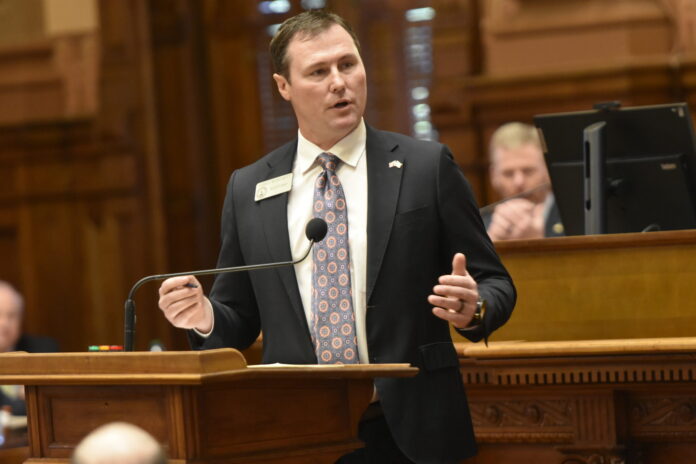
House Majority Caucus Whip James Burchett argues third-party financing of civil lawsuits needs better disclosure. (Ross Williams/Georgia Recorder)
ATLANTA (Georgia Recorder) — A sequel to Georgia Gov. Brian Kemp’s push to overhaul Georgia’s civil litigation system has passed the House in a 98-69 vote, bringing the governor’s top legislative priority closer to fruition.
Unlike its far-reaching counterpart, Senate Bill 69 focuses solely on promoting greater transparency into third-party groups that finance civil suits, which supporters argue could give both judges and juries a clearer sense of what forces might be influencing a case before deciding whether to award damages.
The bill was amended in the House Subcommittee of Rules on Lawsuit Reform to include a new section allowing the Department of Banking and Finance to deny litigation financing registrations and outlining an appeals process for organizations that have been denied. It also clarifies prior language defining foreign adversaries and requires additional disclosures for any stakeholders who own 10% or more of a company financing litigation.
Because of the additional provisions added on the House side, SB 69 will need to return to the Senate for another vote to reconcile changes before it can advance to the governor’s desk, but is not expected to encounter any additional hurdles. The bill has enjoyed more bipartisan support than Senate Bill 68, passing unanimously during its first vote in the Senate.
The use of third-party lawsuit funding is a multibillion dollar industry, according to the U.S. Chamber of Commerce. It works by allowing hedge funds and other investment groups to finance lawsuits in exchange for a portion of anticipated damages awarded to the plaintiffs. Supporters of the practice, which is sometimes referred to as champerty, argue that it can expand access for plaintiffs, who may be struggling financially in the wake of an accident that leaves them unable to work or results in hefty medical bills.
However, critics say that it allows private equity groups to exert influence over trials, which could prolong costly litigation expenses, and may give foreign actors access to sensitive information they would not otherwise be able to obtain. Georgia law doesn’t currently require plaintiffs to disclose the use of outside funding.
“Currently there are no provisions whatsoever that outline regulations on litigation financing,” said House Majority Caucus Whip James Burchett, a Waycross Republican who sponsored the bill in the House. “What this bill seeks to do is put some guard rails and regulation on the industry.”
Efforts to require greater transparency for third-party lawsuit financing have become increasingly popular in state legislatures across the country in recent years, with Indiana, Louisiana and West Virginia all passing new restrictions against the practice in 2024. Georgia lawmakers also said the legislation will help safeguard business innovation to support growth in the state’s economy.
“We have to be thinking of different ways to get more innovation into our economy and our industries,” said Rep. Todd Jones, a South Forsyth Republican who chairs the House Technology and Infrastructure Innovation Committee. “One of the ways that we protect innovation is to ensure that bad actors don’t capture trade secrets, patents and other intellectual property through bad actors and the litigation process.”
As with the first part of Kemp’s tort overhaul legislation, the majority of House Democrats opposed the bill, though Rep. Michelle Au of Johns Creek, Rep. Tangie Herring of Macon and Rep. Brian Prince of Augusta crossed party lines to vote in favor of the legislation. Rep. Charlice Byrd of Woodstock was the sole Republican “no” vote.
Minority Caucus Chair Tanya Miller, an Atlanta Democrat who served on the House Subcommittee of Rules on Lawsuit Reform where the bill was heard, condemned SB 69’s passage, calling Kemp’s push to overhaul Georgia’s civil courts a “manufactured crisis.”
“Like so many Republican-backed bills, it attempts to solve a problem that simply doesn’t exist,” she said of SB 69. “In committee, not a single case in Georgia was identified to justify this legislation. That’s because the need for this bill was never grounded in facts—it’s part of a broader propaganda playbook designed to protect big business and the insurance industry at the expense of everyday Georgians.”
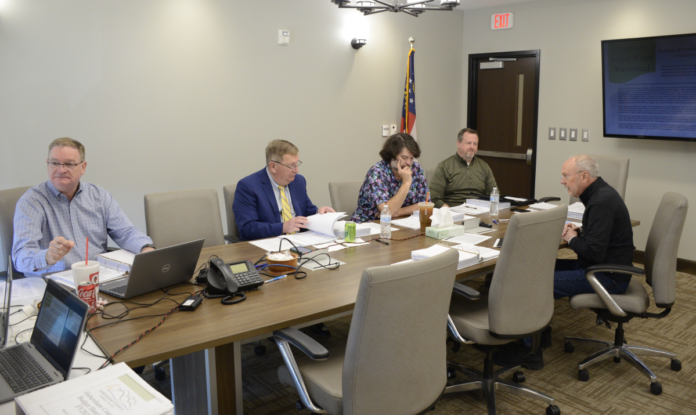
SRWA's President Brad Coppedge discusses his budget request with Habersham County Commissioners on Day 3 of the budget review meetings. (Jerry Neace/NowHabersham.com)
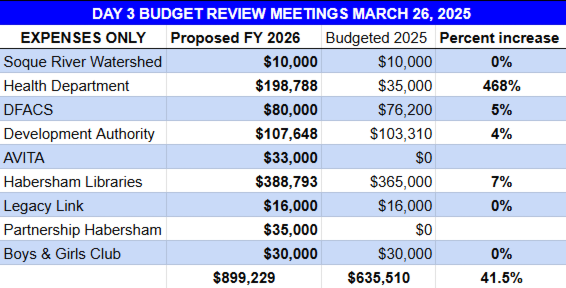
Several non-profit agencies serving Habersham County presented their budget requests on the final day of the county’s budget review meetings, showcasing their programs for residents of all ages.
Brad Coppedge, President of the Soque River Watershed Association (SRWA), highlighted the organization’s 27th year of protecting the Soque River, a vital water source for the county. SRWA’s initiatives, supported by county funding, include expanded water testing at over 20 sites, educational outreach programs in local schools, and river clean-up and restoration efforts. Coppedge requested $10,000 in funding for FY 2026, maintaining the same amount as last year.
The Habersham County Health Department presented a budget request of $198,788, a 468% increase over last year’s request. The department reported 4,278 patient encounters by February 2025, a reflection of its growing services. Notable increases in environmental health and WIC enrollment were also shared.
The Health Department received $35,000 in funding from the county in 2025. According to interim County Manager Tim Sims, the county performed a lot of renovations to the Health Department last year to accommodate a new employee they hired and purchased some needed rollable shelving. That is the reason last year’s amount was much lower.
The Department of Family and Children Services (DFCS) submitted a request for $80,000, a 5% increase from last year. Although the DFCS representative was unable to attend due to illness, the agency’s funding supports foster care services, including extracurricular activities for youth, support for foster parents and kinship caregivers, and staff retention programs.
The Habersham County Development Authority amount is only for budgetary purposes. It uses reserve funds and not taxpayer funds. (Source: NowHabersham.com)
Avita, which provides mental health services, reported serving 867 individuals in 2024. The organization has committed to providing counseling services in local schools and expanded its housing support programs for 10 individuals at the Hyde Park Townhome complex. Avita requested $33,000 for FY 2026, up from in-kind services received from the county last year.
The Habersham library system requested $388,793 from the county for fiscal year 2026, a 7% increase over last year. It reported 82,596 visits in FY 2024, with 126,325 physical items circulated and 27,925 digital items checked out. In addition to lending materials, the libraries hosted over 6,700 program attendees and provided essential services like Wi-Fi, computer sessions, and meeting space for local organizations.
Legacy Link, Inc., the Area Agency on Aging for the Georgia Mountains Region, presented a request for $16,000, maintaining the same funding as last year. Their services for local seniors included home-delivered meals, transportation services, wellness programs, and case management, benefiting hundreds of residents.
Partnership Habersham, which aids economic development, shared its land sales in the Airport Business Park, generating $1.45 million for the Habersham County Development Authority (HCDA). The organization also launched programs like Raider Up, designed to help high school students explore local career opportunities. They requested continued support for their initiatives.
Habersham County Development Authority Chairman Jim Butterworth addressed the commission, noting a 4% increase in the authority’s budget, which is supported by reserve funds from previous land sales not taxpayer funds. Butterworth emphasized the authority’s role in recruiting businesses and supporting growth within the county.
Lastly, the Boys and Girls Club reported serving 544 students in 2024 through afterschool and summer programs. Their services, which include homework help, STEM activities, and leadership development, showed strong outcomes, with 90% of participants expressing a love for learning and 93% performing at grade level.The organization has requested $30,000 for next year, the same amount it received last year.
The U.S. Forest Service issued a temporary ban on campfires and outdoor burning in the Chattahoochee-Oconee National Forest from Nov. 14 to Dec. 16, 2023.
The USDA Forest Service has announced a campfire ban across the Chattahoochee-Oconee National Forest in response to heightened fire risks caused by prolonged dry conditions, including weeks of high winds and low humidity. This Forest-wide restriction is aimed at further minimizing the risk of human-caused wildfires in the area.
The ban is effective immediately as of March 27, 2025, and will remain in place until further notice. Under this Stage II fire restriction, all campfires, including charcoal fires and other open flames, are prohibited across all four Ranger Districts of the Chattahoochee-Oconee National Forest. Visitors may still use commercially available fuel stoves designed for cooking. It is important to note that fireworks are always prohibited in national forests, regardless of weather conditions.
“Many people don’t realize how frequent wildfires are in the South,” said Forest Supervisor Judy Toppins. “Since the start of the month, we’ve already seen multiple fires in this national forest, in addition to large fires spreading across private and public lands in neighboring states.”
Firefighters have been working tirelessly to contain these fires before they could escalate. Wildland firefighters and emergency responders throughout the South are on high alert, actively battling fires and working to protect communities from fast-moving wildfires.
Mike Davis, fire management officer for the Chattahoochee-Oconee National Forest, stressed the importance of adhering to burn bans and taking preventative measures around homes.
“Even small fires can spread rapidly when conditions are this dry,” said Davis. “We encourage residents to clear leaves and debris at least 30 feet from buildings and avoid any outdoor burning until conditions improve.”
Human activity is responsible for an average of 87 percent of wildfires, often due to escaped debris burns, unattended campfires, or sparks from vehicles and equipment. Simple precautions, such as properly extinguishing cigarettes, ensuring vehicles remain on designated roads, and avoiding outdoor flames, can significantly reduce the risk of wildfires.
If you notice suspicious fire-related activity in the forest, please call the Georgia Forestry Commission Arson Hotline at 1-800-428-7337.
Firefighters battle a mobile home fire on Mt. Vernon Road in Hall County on March 27, 2025. (Hall County Fire Rescue)
Two adults are displaced following a residential fire that destroyed a mobile home, detached garage, and outbuilding.
The fire in the 6100 block of Mt. Vernon Road broke out around 9:15 a.m. on March 27.
Hall County Fire Rescue (HCFR) arrived to find the structures already fully involved in fire. Firefighters quickly established a water supply and initiated a defensive attack, knocking down the flames, says HCFR Public Information Officer Kimberlie Ledsinger.
Both the mobile home and the detached garage were deemed a total loss.
The Red Cross was called in to assist the two displaced adults.
The Hall County Fire Marshal’s Office is investigating the cause of the fire.
Emergency response units search the crash site of an American Airlines plane on the Potomac River on Jan. 30, 2025, after the plane crashed on approach to Reagan National Airport just outside Washington, D.C. (Livestream image courtesy ABC 7, Washington D.C.)
WASHINGTON, D.C. (States Newsroom) — The U.S. Army and Federal Aviation Administration continued to allow some flights to operate near a Washington, D.C.-area airport with a location communications system turned off, even after the absence of that system contributed to the January midair collision that killed 67 people, officials testified at a U.S. Senate panel hearing Thursday.
Acting FAA Administrator Chris Rocheleau told the Senate Commerce, Science and Transportation Aviation, Space and Innovation Subcommittee that he was ordering all flights in the airspace of Ronald Reagan Washington National Airport operate with a certain aircraft tracking system.
But until Thursday, no such order was in place, Rocheleau said, to the dismay of some leading committee members.
The system, known as Automatic Dependent Surveillance–Broadcast, or ADS-B, automatically broadcasts once per second an aircraft’s location to other nearby pilots. The system for broadcasting outgoing signals is called ADS-B out, and the ability to receive the signals is called ADS-B in.
The U.S. Army continues to allow flights with ADS-B turned off, even in the area around the Virginia-based airport that serves the District of Columbia, Maryland and Virginia, also known as DCA, U.S. Army Brigadier Gen. Matthew Braman, the director of Army aviation, told the panel.
“I have to say I find that shocking and deeply unacceptable,” Sen. Ted Cruz, a Texas Republican who chairs the full committee, told Braman.
“And I want to encourage the Army right now to revisit that policy and revisit that policy today,” Cruz continued. “If the Army chooses not to, I have a high level of confidence that Congress will pass legislation mandating that you revisit the policy. If today another accident occurs over DCA with another helicopter that had ADS-B out turned off, the Army will have very direct responsibility, and I am at a loss to come up with any justification for risking the lives of the traveling public with that decision.”
Rocheleau said he was putting in place a requirement Thursday to require all flights near DCA, including military flights, to have ADS-B turned on.
ADS-B is considered much more accurate than traditional radar, which broadcasts once every four to six seconds, National Transportation Safety Board Chair Jennifer Homendy said.
The full committee’s ranking Democrat, Maria Cantwell of Washington, appeared not to know in advance Rocheleau was planning to issue the requirement and questioned his handling of the issue.
“Acting administrator, you’re not building faith in this system of oversight of the FAA,” she said.
She noted several government agencies and departments, including the Department of Homeland Security, had applied for exemptions to be allowed to keep their safety systems off.
Rocheleau said the FAA had a memorandum of understanding with other federal airspace users that they must use the safety system, though Cantwell noted that was not legally enforceable.
‘Intolerable risk’
Several factors contributed to the deadly Jan. 29 collision of an Army Black Hawk helicopter with an American Airlines commercial jet over the Potomac River, Homendy said. Sixty-four people on the regional jet died, along with three in the Black Hawk.
But the helicopter’s approved flight path that left no margin for error presented an “intolerable risk to aviation safety,” she said.
Subcommittee Chairman Jerry Moran, a Kansas Republican, said the FAA ignored warning signs for years.
Over a 13-year span, there was not a single month that did not include a “close call” between a helicopter and a commercial jet operating at DCA, Moran said.
He added that in just more than three years, from October 2021 to December 2024, there were 15,000 “close proximity events” between a helicopter and a commercial jet.
“I want to know how, with these statistics in the FAA files, why, prior to Jan. 29 the agency failed to improve safety protocols at Reagan National Airport,” he said.
“Sixty-seven lives that were lost on Jan. 29 were taken prematurely in an accident that, by all indications, should have been avoided,” he said.
The collision was the first disaster of President Donald Trump’s second term and came just two days after the Senate confirmed former Wisconsin Rep. Sean Duffy as Transportation secretary.
It was the deadliest plane crash in the Washington area since 1982, when an Air Florida flight crashed into the Potomac River and killed 78 people.
Transparency
Homendy also told the panel her agency had trouble procuring records and even basic information from an FAA-led working group on helicopter safety in the D.C. area.
The Army is also a member of that working group, Braman said.
“Can I please say there is a D.C. helicopter working group that we have been trying to figure out who is part of the working group and get minutes and get documents from that working group to see what information was shared and what was discussed over the years, and we have not been able to attain that yet,” Homendy said.
She added she wanted to review how the flight plan was approved.
Rocheleau said he would work to figure out why the NTSB has had issues with the records.
In a statement, the law firm representing some families of those killed in the crash, called for more transparency from the agencies involved.
Rocheleau and Braman “were less than forthcoming to the American public and did their best to obfuscate the information provided to the committee,” the statement from Clifford Law Offices read. “They failed to accept responsibility and accountability for this needless tragedy and the thousands of other adverse experiences that could have led to additional disasters.”
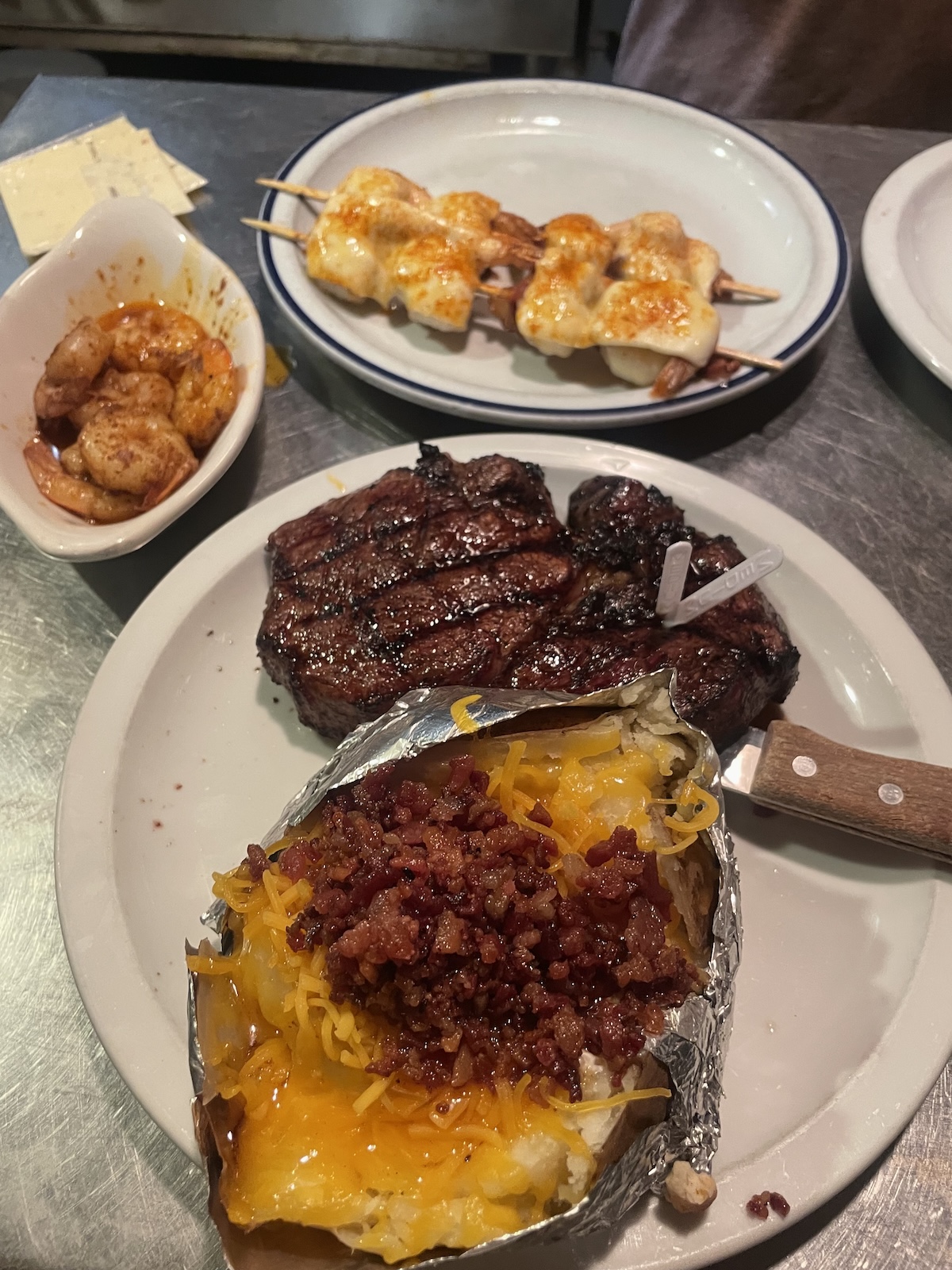
After two decades of delicious food and family gatherings, Ribeyes is closing March 29, 2025. (Nora Almazan/NowHabersham.com)
For over two decades, Ribeyes in Cornelia, Georgia, has been a cornerstone of the community—a place where good food, good times, and good company met. The iconic family-owned restaurant, beloved by locals and visitors alike, is now closing its doors, marking the end of an era. The final day is Saturday, March 29.
Alfred and Lynetta Young, the heart and soul behind Ribeyes, have decided to retire after nearly 50 years of marriage and a lifetime of hard work, dedication, and love for their customers.
Alfred Young was an artist at work when preparing his secret steak recipe. (submitted)
A Family Affair
Alfred and Lynetta Young opened the doors of Ribeyes 20 years ago, with a dream to provide a welcoming space where people could gather over delicious steaks, seafood, and drinks. Granddaughter Halie Frankum has worked with her grandparents since she was around 13 years old.
“We first opened in Cornelia where the Ace Hardware is today. The recession hit and times were tough for my family,” Frankum reflected. “My grandparents said we have two options – close our doors, or own-our-own and do the best we can. They chose the second option, bought their own building, and it was the best decision they ever made.”
Over the years, the restaurant became more than just a place to eat—it was a place where families made memories, celebrated milestones, and created lasting connections.
Alfred and Lynetta Young are preparing for life after Ribeyes. (submitted)
The Young family’s commitment to their business was evident in the fact that their children, grandchildren, and even great-grandchildren worked alongside them.
The family bond was more than just blood—it was a shared passion for serving their community and making sure everyone who walked through the door felt like family.
“My Aunt Crystal, (Rhinehart), who is like an icon at Ribeyes, truly put her heart and soul into making everyone who came to Ribeyes feel like they were coming to grandma’s for dinner. Everyone knew and loved her,” Frankum explained. Crystal is the youngest daughter of Alfred and Lynette and a huge dose of what made the restaurant so successful.
The Secret Recipe for Success
For close to 30 years, Alfred worked as head management at TC Baycor in Cornelia. Each year when they had the annual employee Barbeque, Alfred would cook the steaks and the consensus was he needed to open a restaurant.
Alfred’s secret recipe for steaks became the stuff of legends in the region. Known for their mouthwatering, perfectly seasoned flavor, no one whose ever had the delectable, savory, bite could leave without coming back. His ribeyes were addictive.
Something everybody knew – Alfred’s steaks were addictive. (Nora Almazan/NowHabersham.com)
The restaurant was renowned for its unique flavors and quality of dishes that kept customers coming back again and again. The smell of sizzling steaks, the sound of laughter, and the warmth of a friendly greeting from Alfred, Lynetta, Crystal, and Halie made every visit a memorable experience.
But it wasn’t just the food that kept patrons loyal—it was the personal touch. The Youngs made it a point to know their customers by name. Whether it was a regular who came in every Friday for their favorite meal or someone celebrating a special occasion, Alfred and Lynetta always took the time to make everyone feel like they mattered. They knew about their customers’ lives—their joys, their struggles, and everything in between.
Customers felt like family at Ribeyes. (submitted)
A Place for Celebration and Comfort
Ribeyes wasn’t just a place to eat; it was a place where life’s most important moments were celebrated. Birthdays, graduations, engagements, and even the birth of children—if something big happened in a customer’s life, you could count on Alfred and Lynetta to be there, sharing in the joy.
As in life, not all moments are happy. “Some of the toughest moments,” Frankum said, “were when one of our beloved customers would pass away or go through a difficult time or illness.”
The Youngs stood by their customers through the hard times, grieving alongside them during losses and offering comfort in their own special way.
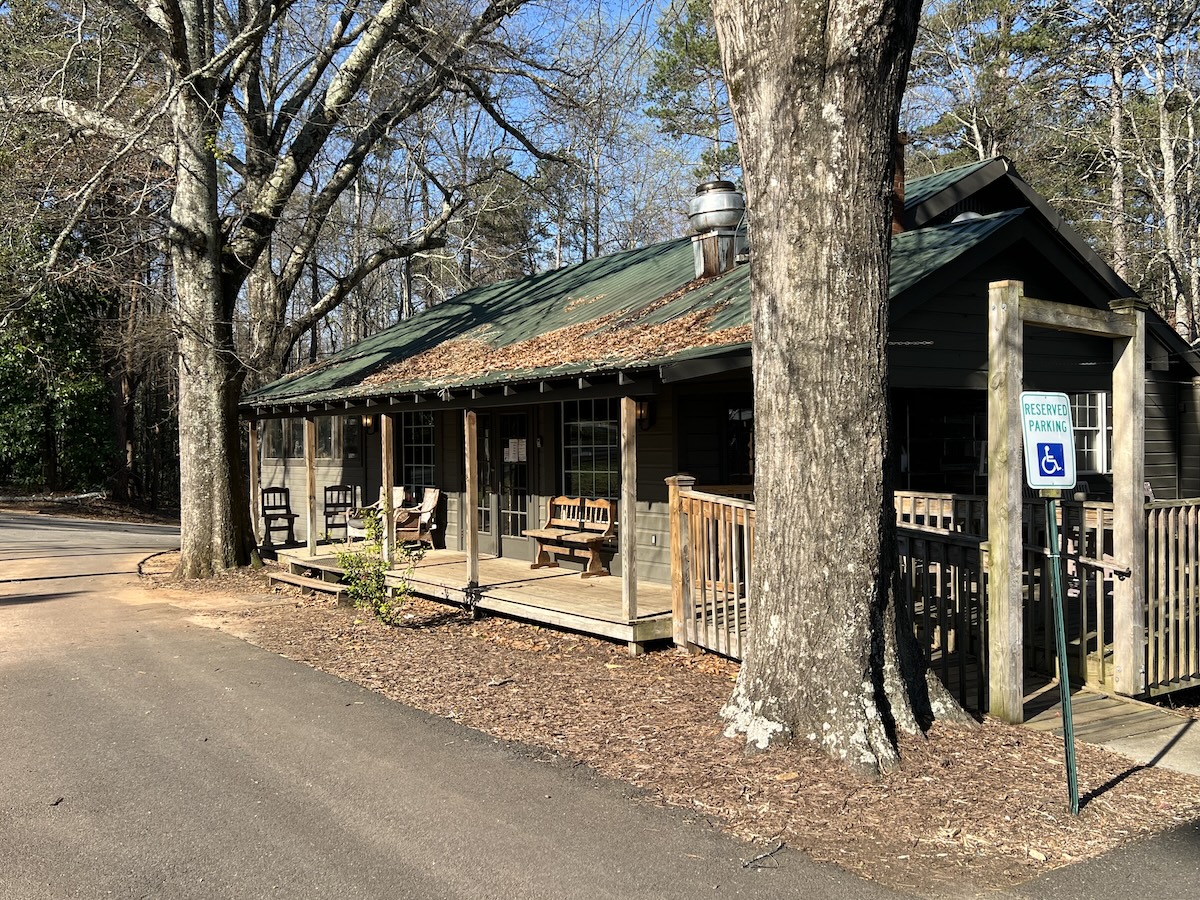
The front porch was a favorite spot for many customer to relax and spend time together. (Nora Almazan/NowHabersham.com)
Spending time on the front porch was a treasured memory for many who dined at Ribeyes. The inviting atmosphere gave diners a chance to just sit, relax, and enjoy what made people keep coming back – the sense of belonging and the feeling of being cared for. It was a time to unwind after a long day or catch up with friends. It was a place where stories were shared, laughter echoed, and relationships were built.
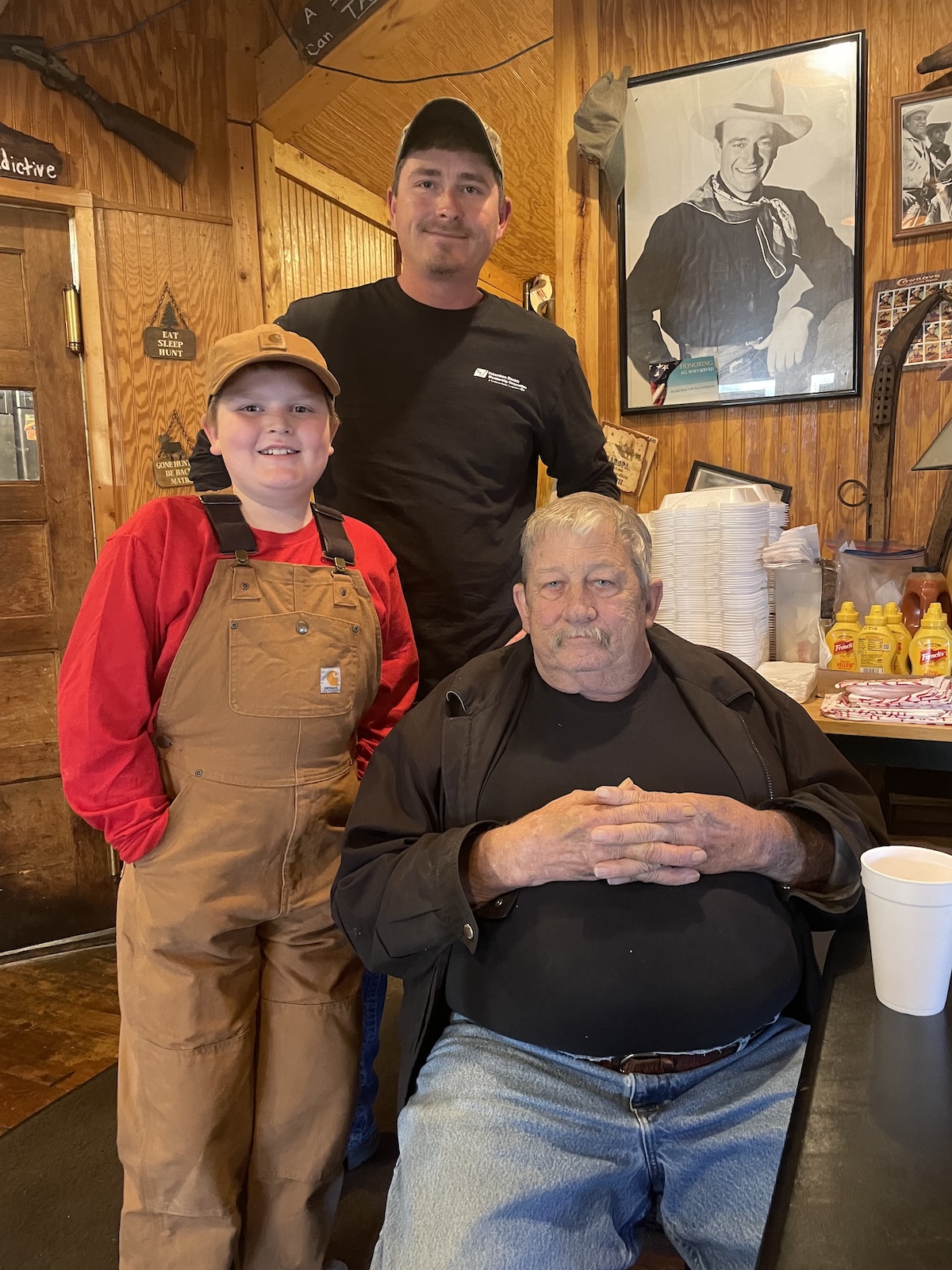
Tyler, Mason, and Alfred at Ribeyes. (submitted)
The End of an Era
The decision to close Ribeyes was not made lightly. After 20 years of serving the community, Alfred and Lynetta felt it was time to step back and enjoy the fruits of their labor. Their legacy, however, will live on in the countless lives they touched and the memories they helped create.
Many have asked Halie and her husband Tyler to take over and keep it going. “Tyler picked me up for our first date here at the restaurant. I was 16,” Halie reflected. “My grandparents didn’t like him too much at first, but Tyler won them over. He’d jump back there in the kitchen, wash dishes. Now he cooks along side my Pappa on the weekends. Pappa won’t admit it but I know he loves Tyler more than me now!”
Tyler and Halie have three children (Chloe, Mason, and Wyatt) who help in the restaurant and have grown to love working with their grandparents.
The restaurant has provided job opportunities for many in the community and it has supported their family well.
Ribeyes food made memories. (submitted)
In a heartfelt statement, Alfred and Lynetta shared, “It’s been an honor to serve this community. We’ve watched families grow, seen friends become family, and have had the privilege of being a part of so many special moments. We’re grateful for all the love and support we’ve received over the years.”
Halie added, “We never had to advertise. Our customers kept us opened by word of mouth and a love for gathering here in this special place that we’ve all come to love and call home.”
As Ribeyes closes its doors for the final time, the Youngs will leave behind a lasting legacy of warmth, love, and community. While the restaurant may be gone, the memories and the spirit of what it represented will continue to live on in the hearts of those who were fortunate enough to experience it.
“We want to thank all of you for being a part of our family and our restaurant. It was you who made us successful by continuing to come back and enjoy the food and the time together,” the Youngs expressed.
For Cornelia, and for all who called Ribeyes home, the closing of this beloved institution is the end of an era, but it is also a reminder of the power of family, tradition, and the connections we make along the way.
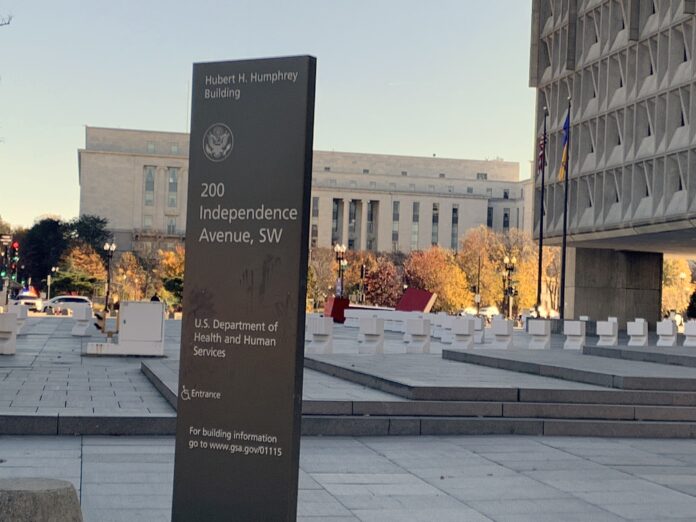
The Hubert H. Humphrey Building, the headquarters of the U.S. Department of Health and Human Services in Washington, D.C., as seen on Nov. 23, 2023. (Jane Norman/States Newsroom)
WASHINGTON (States Newsroom) — The Trump administration announced a sweeping plan Thursday to restructure the Department of Health and Human Services by cutting an additional 10,000 workers and closing down half of its 10 regional offices.
The overhaul will affect many of the agencies that make up HHS, including the Food and Drug Administration, Centers for Disease Control and Prevention, National Institutes of Health and the Centers for Medicare and Medicaid Services. HHS overall will be downsized from a full-time workforce of 82,000 to 62,000, including those who took early retirement or a buyout offer.
HHS Secretary Robert F. Kennedy, Jr. released a written statement along with the announcement, saying the changes would benefit Americans.
“We aren’t just reducing bureaucratic sprawl. We are realigning the organization with its core mission and our new priorities in reversing the chronic disease epidemic,” Kennedy said. “This Department will do more — a lot more — at a lower cost to the taxpayer.”
The U.S. Senate voted to confirm Kennedy as the nation’s top public health official in mid-February.
Democrats immediately reacted with deep concern.
Senate Appropriations Committee ranking member Patty Murray, D-Wash., said that she was “stunned at the lack of thought about what they are doing to the American public and their health.”
Murray said the committee, which controls about one-third of all federal spending, “absolutely” has an oversight role to play in tracking HHS actions.
Wisconsin Sen. Tammy Baldwin, the top Democrat on the Appropriations subcommittee that funds HHS, said she believes HHS has overstepped its authority and expects the panel will look into its actions.
“These individuals who are going to be terminated under this plan play vital roles in the health of Wisconsinites and people nationally,” Baldwin said. “And I believe that they do not have the authority, the Trump administration does not have the authority to do this wholesale reorganization without working with Congress.”
Maryland Democratic Sen. Angela Alsobrooks, whose constituents in suburban Washington likely hold many of the jobs in question, wrote in a statement the HHS’ restructuring plans are “dangerous and deadly.”
“I warned America that confirming RFK Jr. would be a mistake,” Alsobrooks wrote. “His blatant distrust of science and disregard for research and advancement makes him completely unqualified.”
Cuts across department
The announcement says reorganizing HHS will cut its $1.7 trillion annual budget by about $1.8 billion, in part, by lowering overall staff levels.
Staffing cuts will be spread out over HHS and several of the agencies it oversees. The restructuring plans to eliminate 3,500 full-time workers at the FDA, 2,400 employees at the CDC, 1,200 staff at the NIH and 300 workers at the Centers for Medicare and Medicaid Services.
“The consolidation and cuts are designed not only to save money, but to make the organization more efficient and more responsive to Americans’ needs, and to implement the Make America Healthy Again goal of ending the chronic disease epidemic,” according to a fact sheet.
Senate Health, Education, Labor and Pensions, or HELP, Committee Chairman Bill Cassidy, R-La., wrote in a statement that he looks “forward to hearing how this reorganization furthers these goals.”
“I am interested in HHS working better, such as lifesaving drug approval more rapidly, and Medicare service improved,” Cassidy wrote.
Regional offices, divisions affected
HHS did not immediately respond to a request from States Newsroom about which five of its 10 regional offices would shutter or when those closures would take effect.
Its website shows the offices are located in Boston; New York City; Philadelphia; Atlanta; Chicago; Dallas; Kansas City, Missouri; Denver; San Francisco; and Seattle.
HHS plans to reduce its divisions from 28 to 15 while also establishing the Administration for a Healthy America, or AHA.
That new entity will combine the Office of the Assistant Secretary for Health, Health Resources and Services Administration, Substance Abuse and Mental Health Services Administration, Agency for Toxic Substances and Disease Registry and National Institute for Occupational Safety and Health.
That change will “improve coordination of health resources for low-income Americans and will focus on areas including, Primary Care, Maternal and Child Health, Mental Health, Environmental Health, HIV/AIDS, and Workforce development. Transferring SAMHSA to AHA will increase operational efficiency and assure programs are carried out because it will break down artificial divisions between similar programs,” according to the announcement.
HHS will roll the Administration for Strategic Preparedness and Response into the CDC.
The department plans to create a new assistant secretary for enforcement, who will be responsible for work within the Departmental Appeals Board, Office of Medicare Hearings and Appeals and Office for Civil Rights.
House speaker says HHS is ‘bloated’
U.S. House Speaker Mike Johnson, R-La., posted on social media that he fully backed the changes in store for HHS.
”HHS is one of the most bureaucratic and bloated government agencies,” Johnson wrote. “@SecKennedy is bringing new, much-needed ideas to the department by returning HHS to its core mission while maintaining the critical programs it provides Americans.”
Advocates shared Democrats’ concern about the staff cutbacks.
Stella Dantas, president of the American College of Obstetricians and Gynecologists, released a statement saying the organization was “alarmed by the sudden termination of thousands of dedicated HHS employees, whose absence compounds the loss of thousands of fellow employees who have already been forced to leave U.S. health agencies.”
“Thanks to collaboration with HHS, ACOG has been able to contribute to advances in the provision of maternal health care, broadened coverage of critical preventive care, increased adoption of vaccines, raised awareness of fetal alcohol syndrome, strengthened STI prevention efforts, and more,” Dantas wrote. “This attack on public health—and HHS’ ability to advance it—will hurt people across the United States every single day.”
Strong winds fanned a brush fire that resulted in heavy losses in Commerce.
The fire broke out shortly after 3 p.m. near Highway 326 and Duncan Road. It destroyed two barns, one storage unit, and three vehicles. Several antique vehicles were also lost in the blaze, according to Banks County Fire Chief Steve Nichols.
Banks County Fire & Emergency Services responded to find multiple structures engulfed in flames. They called in additional resources from Bold Springs, Sandy Cross, and Jackson County CI fire departments as well as Georgia Forestry to help bring the blaze under control.
Nichols says, the fire was caused by an unpermitted controlled burn conducted on a Red Flag warnimg day with high winds. Georgia Forestry cited the person who started the fire.
There were no injuries reported in connection with the blaze.
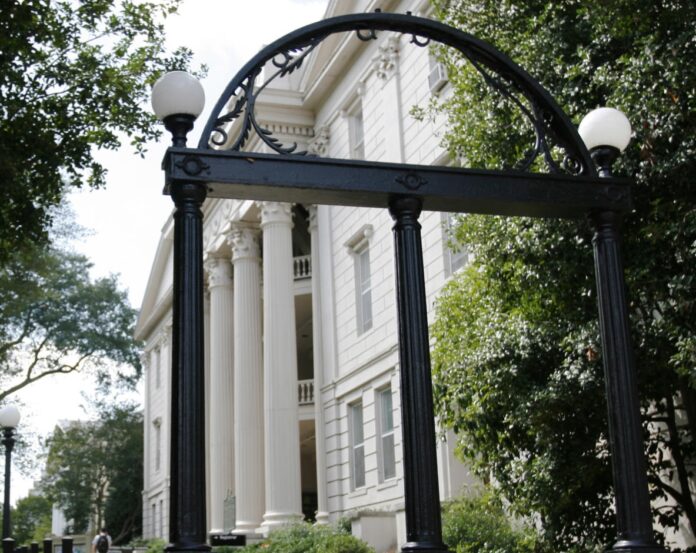
The University of Georgia in Athens Georgia. (UGA website)
Five faculty members from the University of Georgia (UGA) have been named Fellows of the American Association for the Advancement of Science (AAAS), a prestigious honor recognizing significant scientific contributions. This brings UGA’s total to 50 members in the exclusive group.
The newly elected UGA Fellows are Melissa Mitchum from the College of Agricultural and Environmental Sciences and Thomas Mote, Robert Schmitz, Michael Terns, and Zheng-Hua Ye from the Franklin College of Arts and Sciences. Each of these individuals has made substantial contributions to their respective fields, including plant pathology, genetics, climate impact, viruses, and biotechnology.
Mitchum, a professor in the Department of Plant Pathology and the Institute of Plant Breeding, Genetics, and Genomics at UGA’s Center for Applied Genetic Technologies, specializes in the interactions between nematodes and key crops such as soybeans, tomatoes, and corn. Her research focuses on understanding how nematodes manipulate plant cells and discovering plant genes that resist infection, with the aim of helping breeders develop more resistant crops.
Mote, Distinguished Research Professor in the Department of Geography, studies atmospheric patterns and their influence on extreme weather events, ranging from heavy rainfall to ice melt. His work spans diverse regions, including Greenland, where he examines the effects of weather systems on the ice sheet, and the Caribbean, where he investigates the impacts of climate change and land use on rainfall and drought.
Schmitz, a professor and Lars G. Ljungdahl Distinguished Investigator in the Department of Genetics, leads research into how epigenetic variation enables plants to thrive in diverse environments. His team is developing methods to identify DNA sequences that can precisely control gene expression, aiming to enhance crop performance.
Terns, Regents’ Professor in the Department of Biochemistry and Molecular Biology, primarily researches CRISPR-Cas systems—RNA-based immune systems that bacteria use to defend against viruses. His work has advanced the understanding of these systems and their potential for applications in gene editing, disease treatment, and precision antibiotics.
Ye, a professor in the Department of Plant Biology, investigates the molecular mechanisms behind secondary cell wall biosynthesis. His groundbreaking work includes developing a trait in alfalfa that reduces lignin without compromising the plant’s strength, resulting in increased yield and improved nutritional value for livestock.
The 2024 AAAS class includes a total of 471 inductees. The new Fellows will be officially recognized at the AAAS Annual Forum in Washington, D.C., on June 7, 2025.
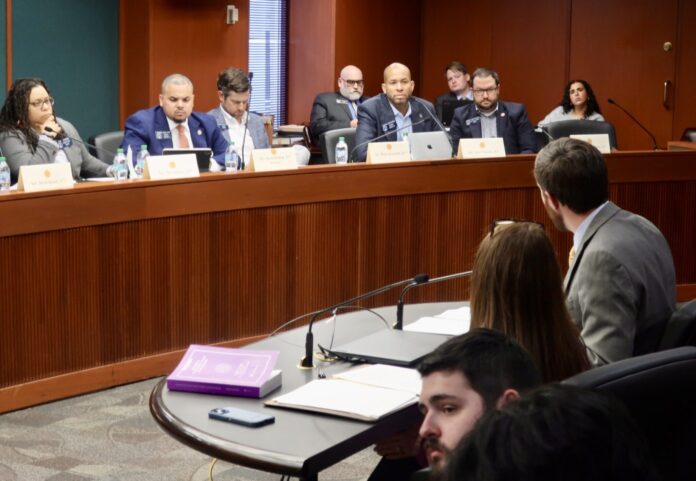
Pictured, bottomr right to left, Charlene McGowan, general counsel for the Georgia Secretary of State, and State Election Director Blake Evans urged Senate Ethics Committee members Wednesday to not ditch the current voter registration sharing database. (Stanley Dunlap/Georgia Recorder)
ATLANTA (Georgia Recorder) — Sweeping changes to election rules intended to increase paper ballot options, expand the powers of the State Election Board, and remove the state from a voter registration sharing database are up for debate as the 2025 Georgia Legislature nears a close.
The Senate Ethics Committee held a two hour hearing on the latest version of House Bill 397, which could mandate big changes to Georgia election procedures if signed into law. No vote was taken on the bill sponsored by Covington Republican Rep. Tim Fleming.
The Republican-backed election bill would prohibit Georgia from sharing voter information with third-party groups like the current participation in the Electronic Registration Information Center, known as ERIC. The partnership allows Georgia to share updated voter rolls with 24 other states.
Under HB 397, the Georgia elections board would evaluate the procedures and policies for withdrawing from ERIC and provide recommendations to the Senate Ethics Committee and the House Governmental Affairs Committee by the end of this year.
It would also give the Secretary of State the authority to make agreements with other states to share voter roll data.
Secretary of State election officials asked legislators Wednesday to reconsider banning the state from participating in a multistate database they say helps efficiently maintain accurate voter rolls.
Charlene McGowan, general counsel for the Georgia Secretary of State, said the proposals in HB 397 could undermine the states’ ability to conduct meaningful and secure data matching with other states, whether it be through a state to state agreement or a multi state compact.
“This bill does severely restrict the Secretary’s ability to share information, such as driver’s license numbers, Social Security numbers with other states,” she said. “The problem with that is that states rely on that type of information in order to conduct accurate matching.”
The bill’s Republican sponsors were also urged by the statewide association of county election officials to make changes to the bill that would require hand counting of ballots as voting precincts are closing down for the day.
Fulton County is home to more than 750,000 registered voters, according to the secretary of state office’s website. State law requires that local election superintendents report to the secretary of state and post publicly the total number of ballots cast both on Election Day and during early voting, including absentee ballots.
Rebecca Anglin, the election director in Greene County, expressed concerns about the chain of custody and hand count of paper ballots at the precinct level, emphasizing the need for secure handling and timely reporting.
Bill offers more power to State Election Board
The election overhaul legislation proposes giving the State Election Board more independence from the secretary of state’s office by moving its administration under the state accounting office.
The controversial state GOP-controlled board that is now controlled by three supporters of President Donald Trump could also be the body to hear appeals to a controversial mass voter challenge after complaints are settled by county election boards.
“This will allow for faster adjudication. If you start with them and then you disagree with the decision, then you’ll go to the superior court,” Fleming said.
Georgia Republican Party District Chairman Brad Carver said it’s important that the State Election Board gets enough backing from the state to be fully staffed to afford more investigators and other support positions that can trim case backlogs and handle new roles.
He mentioned the significant expenses associated with voter challenges going to superior courts instead of election officials.
“If you have an appellate authority in the State Election Board, you will have more consistent application to make sure that the laws are followed across the state by all 159 counties,” Carver said.
Another provision expands board duties to allow custody of all state investigative reports and communications between the secretary of state and election superintendents.
Fleming said the bill seeks to restore more autonomy to the state board that enforces election rule compliance.
“The State Election Board handles elections investigations and complaints, and having access to this information is necessary for them to do their job and for adjudication purposes,” Fleming said., “This continues to return autonomy to the State Election Board.”
State election officials could also spell out their rulemaking powers with proposed yearround authority to adopt election rules so long as they don’t take effect within 60 days of an election.
Paper ballot bill clears committee
The Senate Ethics Committee passed a bill Wednesday that would allow Georgia voters to cast a hand-marked paper ballot at polling places during early voting and on Election Day.
The Senate Ethics Committee voted Wednesday in favor of Senate Bill 214, a proposal to give voters the ability to cast their votes in polling places using pen or pencils, which can now be used to complete absentee ballots.
Sylvania Republican Max Burns’ said the legislation gives voters during early voting and election days the option of paper ballots or the electronic touchscreen system that’s been used for statewide elections since 2020.
“At the end of the day, 214 is designed to provide us a path forward beyond the current environment and move to paper ballot hand-marked paper ballot systems tabulated with an optical scan and then supported by a print-on-demand ballot system,” Burns said
Burns said he expects modifications to the bill as he tries to usher it through the legislative process.
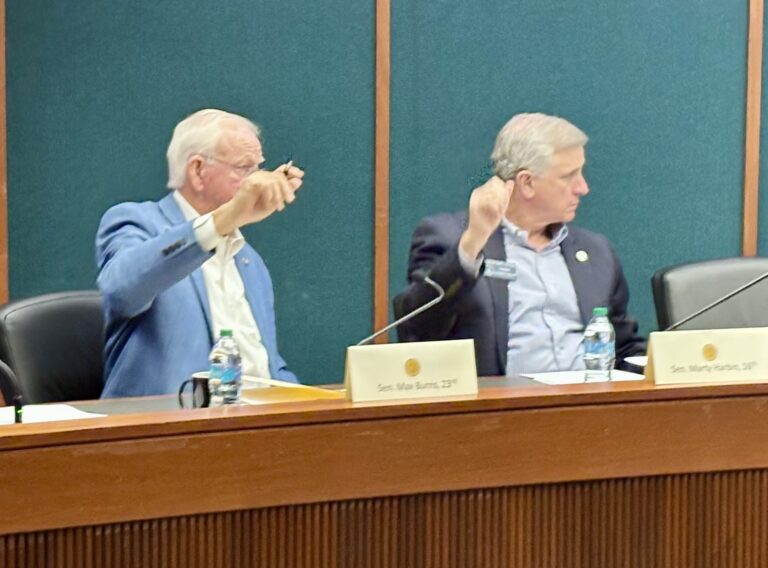
Republican Sen. Max Burns and Sen. Marty Harbin, a Tyrone Republican, cast votes at a March 26 committee meeting in favor of Burns’ paper ballots bill. (Stanley Dunlap/Georgia Recorder)
If Burns can get his bill signed into law it will mark a big win for a movement that has long contended that hand marked paper ballots are a more transparent and safer than electronic machines.
The state’s electronic Dominion Voting System was rolled out statewide in 2019, but by that time the state was already involved in a legal battle with Coalition for Good Governance and other plaintiffs who argue that hand-marking ballots is the safest way to vote.
The debate over electronic voting machines versus paper ballots later became the of focus of conspiracy theorists who blamed the Dominion’s system for Republican President Donald Trump’s loss to Joe Biden in 2020.
Over the last couple of years, a prominent pro- paper ballot movement.has been led by VoterGa, a largely pro-Trump faction that has urged people to request that state officials get rid of the electronic voting system.
Secretary of State Brad Raffensperger has defended the security of the voting machine system.