A new era for Rabun County begins as alum and two-time state champion head coach Rance Gillespie takes the reigns. Gillespie immediately reached into his bag of tricks and hired Bill Stewart, another former state championship head coach, to lead the defense.
The senior class is star-studded: Ty Truelove at QB, Reid Giles at RB, Lake Evans at RB/WR, and Noah English at RB on offense. Defensively, Giles, English, Ethan Hooper, Jakaden Shiflet, Dane Tyler, and others will shine (not all seniors). And if you’re looking for some young players who may be Rabun’s next top talent, keep an eye on Shiflet, Knox Whitworth, Jett Whitworth, and Reed Burrell.
Check out these other area high school football schedules for 2025:
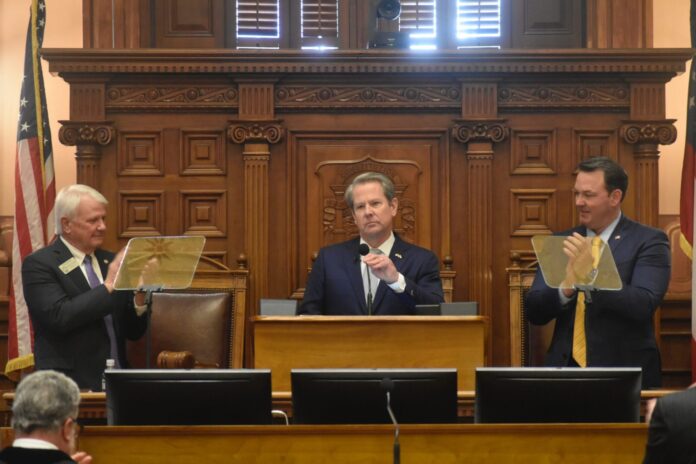
FILE PHOTO - A proposal to bump the Georgia governor's pay fizzled under the Gold Dome, as lawmakers put the brakes on the last-minute proposal to allow more time to study it. (Ross Williams/Georgia Recorder)
ATLANTA (Georgia Recorder) — House lawmakers quickly swatted down a Senate plan to give the governor and other statewide officials pay raises.
The Senate had added the salary bumps Thursday to a bill adjusting the pay of judges at higher levels in Georgia. Under the plan, Gov. Brian Kemp would have been tied with New York Gov. Kathy Hochul for the highest earning governor in the country.
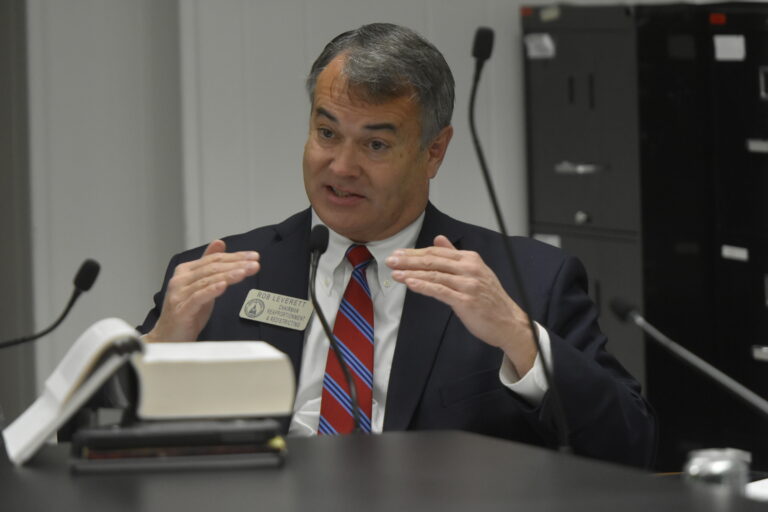
“You may have seen a little something about the amendment in the news over the last 24 hours,” the bill’s original sponsor, Elberton Republican Rep. Rob Leverett, said to his colleagues Friday.
“I think that is a discussion we as a body need to have at some point, but we shouldn’t have it as an amendment to a bill in the last two or three days of session,” Leverett said. “I believe it needs to be thought through a little more and it needs a little more study.”
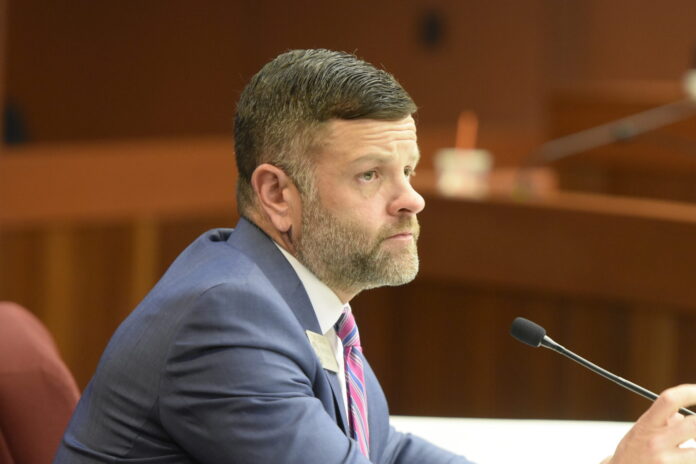
Rep. Rob Leverett (R-Elberton) (Ross Williams/Georgia Recorder)
Some senators also tried to increase lawmaker pay in another judicial pay bill focused on superior court judges.
Critics argued that the legislative pay amendment would sabotage a bill intended to create uniform statewide pay for Georgia Superior Court judges. The proposed pay raise amendment to House Bill 85 would have increased the salaries of the 236 General Assembly members from $24,341 to about $55,000.
Sen. Randal Mangham, a Stone Mountain Democrat, argued it would put Georgia lawmakers in line with the national average of $44,320 in 2024, according to the National Conference of State Legislatures.
He referenced the limited funding he receives for his staff.
“7,000 for an entire year with my budget for expenses to run the people’s business. It’s a $40 billion enterprise,” Mangham said, referring to the state budget.
Sen. John Kennedy, a Macon Republican, urged senators prior to voting to consider how passing the amendment would come across to the taxpayers.
“Colleagues, are you willing to look at your constituents in the eye and tell them you need more of their tax dollars in your pocket and out of their pocket?” Kennedy said.
The debate ended with the legislative pay amendments faltering decisively 33 to 18 before the superior court legislation passed with nearly unanimous support.
Rendering of the Northeast Georgia Inland Port (Georgia Ports Authority)
There’s been a lot of talk about how the $170 million Northeast Georgia Inland Port will impact North Georgia. But its potential effect on Habersham County still remains to be seen.
By 2026, a 104-acre tract at Gateway Industrial Centre off GA 365 and White Sulphur Road will become the bustling Inland Port terminal – also known as the Blue Ridge Connector – where semi trucks will load and unload cargo on and off a 3,000-foot train running to and from Savannah’s harbor via a 324-mile freight service rail line.
While it’s intended to reduce the amount of semi truck traffic statewide, the port is expected to have a sizable impact on roads in North Georgia, with a concentration of 18-wheelers in North Hall traveling to and from the site, as well as population growth from new development, a likely outcome.
At first, once the facility is complete, the area around the inland port could see up to 160 additional semi trucks a day. By “full buildout” in 2050, according to the Georgia Ports Authority, an estimated 400 semi trucks (one truck every two minutes) could be loading or unloading goods at the port daily. But officials with the Georgia Mountains Regional Commission said that number will be far greater.
Specifically, 800 trucks a day (400 loading and another 400 unloading).
Still, despite the projected increased volume of truck traffic at a port located about 15 miles from Habersham’s border, GDOT officials haven’t identified a need for road improvements that far north.
“I wouldn’t say there’s any Habersham County projects specifically related to the inland port,” said Justin Lott, a pre-construction engineer with GDOT. “Most of the projects, like widening, are to plan for volume in the future.”
According to Lott, it’s still unclear as to how much additional traffic could be coming through Habersham once the Northeast Georgia Inland Port is operational.
Industrial development, as well as population growth, is expected to flock to Habersham and other parts of Northeast Georgia with the port’s arrival.
To Habersham’s southwest, Hall County Administrator Zach Propes has said an estimated 9,682 new jobs “supported by port activity” already have been added in recent years.
“I don’t know any specific route,” Lott said. “I imagine most of them would be on (GA) 365 and (U.S.) 441. I have heard from some other cities that have some concerns with increases in truck traffic from the port. I don’t see it as a huge net increase because, in theory, trucks in Savannah are getting that load and delivering it here in Northeast Georgia…the trucks would likely be going to similar locations. I don’t see it as a huge increase, but there may be some.”
Lott said GDOT will continue to work closely with officials to identify potential road improvements and continue to reassess needs in the future.
“Of course, needs are constantly changing based on where (new) developments are and growth in the area,” he said. “…if development starts coming in, we’ll start looking at that area too.”
County officials respond
Habersham County Commission Vice Chairman Bruce Harkness said that while he opposes new development along the GA 365 corridor, he plans to ensure county and GDOT officials continue to address infrastructure needs in South Habersham.
“We have a dilemma,” Harkness said. “Growth is knocking, literally, at our door at the Hall County line. The reason why we don’t have so much uncontrolled growth at the southern end of the county is we don’t have water/sewer…vast, vast majorities of people who voted for me told me they want me to try to stop and restrict growth at all costs. That’s what the voters asked me to do. We have a small slice of heaven (in Habersham) and if we don’t protect it, it will be gone forever.”
“We don’t have the infrastructure for 30,000-40,000 people to come here, much less 100,000,” Harkness added. “Certainly, we do need to work with GDOT more.”
Commissioner Ty Akins said he also believes county officials should talk closer with GDOT officials in the years ahead.
“I hope to see additional dialogue with GDOT in the coming years to account for growth from the inland port,” Akins said.
CLEVELAND — Due to recent weather conditions, including periods of low humidity and high winds, White County remains under a season of high fire danger.
While no official burn ban has been issued at this time, White County Public Safety strongly discourages any outdoor burning until conditions improve. The following is a reminder as to what regulations White County follows and safe practices for outdoor burning.
What You Can Burn Without a Permit:
You do not need a permit for burning hand-piled natural vegetation (such as leaves, limbs, and pine cones) on the property where it fell.
You May Not Burn:
Trash or household garbage
Lumber or plastic
Any man-made materials
In burn barrels (burn barrels are not permitted)
For Other Types of Burns:
Burning for agriculture, land clearing, or vegetative storm debris requires notification to or a permit from the Georgia Forestry Commission (GFC).
Call 1-800-GA-TREES (428-7337) to obtain permission.
Please note: Permits are only valid for the day they are issued.
“STAR” Requirements for Outdoor Burning — The Georgia Forestry Commission recommends following these safety guidelines when burning hand-piled vegetation:
S – Space: Minimum 25 feet from woodlands, 50 feet from structures T – Time: Burn only from sunrise to sunset A – Attendance: A responsible person must remain with the fire until it is completely extinguished R – Reasonable Precautions:
Keep a continuous, pressurized water source nearby
Create a natural or man-made firebreak (bare soil, rocks, ponds, etc.)
Have tools like a shovel or rake on hand
Stay alert to weather conditions, including any Red Flag Warnings or days rated Very High or Extreme fire danger
Important Reminder — Outdoor burning is only permitted for all-natural vegetation. Materials must be burned on the property where they originated.
White County Public Safety urges residents to use extreme caution. Northeast Georgia has been under a period of high fire danger, and while conditions improve, it is critical to take precautions and follow all outdoor burning regulations.
White County Public Information Officer Bryce Barrett warns, “One spark can quickly turn into a dangerous wildfire if proper safety measures are not followed.”
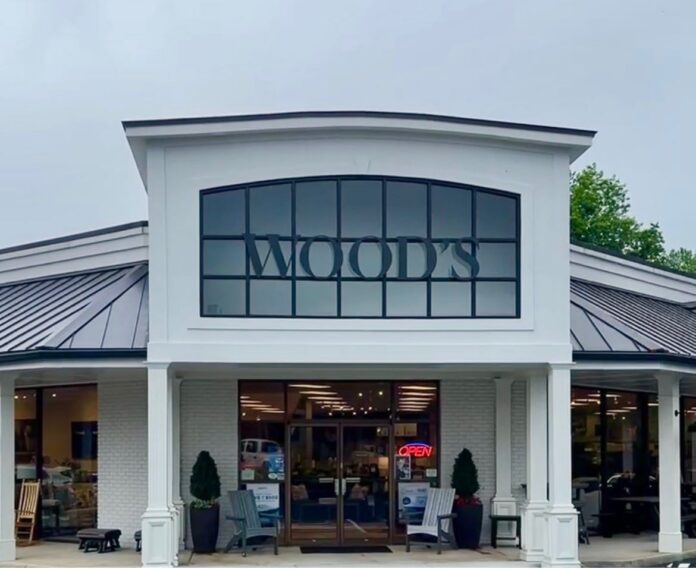
Wood’s Mercantile, a Clarkesville mainstay in home furnishings, announced on March 28 that it will expand with a second location in Cleveland. The new store will open in the summer of 2025 at the former Badcock Furniture site at 735 Helen Highway.
The building is currently being remodeled to mirror the look of the Clarkesville location.
The Cleveland location will feature a 4,000-square-foot La-Z-Boy Comfort Studio, where customers can explore various sofas, sectionals, recliners, and more. The store will also offer a selection of trusted brands, including Amish-crafted bedroom and dining sets, mattresses, and power-lift recliners.
“We’re thrilled to expand our presence to Cleveland and bring our dedication to quality and comfort to a new community,” says Owner Kevin Wood.
Wood says the new Cleveland location will offer the same high standards and a knowledgeable and friendly team ready to help customers create their ideal living spaces.
“This new location will allow us to better serve our customers with an extended selection,” he adds, “ensuring everyone can find the perfect pieces to bring comfort home.”
A Grand Opening event is being planned for the Cleveland community.
ATLANTA (Georgia Recorder) — A proposal to protect access to in-vitro fertilization has been sent to the governor as Georgia lawmakers are proposing a similar measure to protect the right to contraception.
Bipartisan calls to shore up access to IVF began in the wake of an Alabama Supreme Court ruling last year that declared frozen embryos children. The ruling temporarily closed clinics there and created uncertainty nationally.
Georgia’s bill, House Bill 428, glided through the Legislature thanks to support from the state’s most powerful Republicans, including House Speaker Jon Burns, who made the bill one of his priorities for the year.
“We’re one step closer to codifying access to IVF and ensuring that every family in our state facing infertility will never have a question about their access to this life-changing treatment,” Burns told reporters Friday.
The House finalized the bill Friday after the Senate tweaked it this week. Both chambers overwhelmingly passed the measure, and Gov. Brian Kemp has said he supports adding protection for the fertilization treatment.
The bill, sponsored by Statesboro Republican state Rep. Lehman Franklin, defines IVF in state code and says a person cannot be prevented from obtaining the treatment.
Franklin has openly shared his personal story as he has shepherded the bill through the legislative process. He and his wife Lorie struggled to build their family but are now expecting their first child because of IVF.
The bill’s final passage also happened days after House lawmakers held a more than two-hour hearing onHouse Bill 441, which would expand Georgia’s law to completely ban abortion and charge people with murder for terminating a pregnancy.
Several doctors who spoke at the hearing warned lawmakers that the proposal would end IVF treatment in Georgia.
When asked about the hearing and that bill’s prospects Friday, Burns told reporters that there’s “nothing that we can’t talk about in the House.”
“We’ll continue conversations about a wide range of subjects over the remainder of this session and the years to come,” Burns said. “Like all Georgians and like all individuals, we don’t necessarily agree 100% on everything, but I think we’ve worked towards a common good and a common goal, and that’s to make sure we ensure and protect life in Georgia.”
New proposal would protect access to contraception
A new House bill filed this week mirrors the IVF bill and extends protections to contraception.
Rep. Sharon Cooper, a Marietta Republican who chairs the House Public and Community Health Committee, said Friday that she filed House Bill 872 because she thought contraception was being left out of the broader conversation about reproductive rights. She said she sees it as a proactive measure.
Contraceptives are commonly used by girls and women throughout their lifetime and for a range of purposes, whether it’s for acne, managing pain, spacing out pregnancies or other reasons.
“They play a major role in a woman’s life,” Cooper said.
Cooper’s bill was filed Thursday with more than a dozen signatures of Republican women lawmakers, including Speaker Pro Tem Jan Jones. With the last day of the 2025 legislative session set for next Friday, rushing it through this year would be a tall order, but it will remain in play for next year.
Jones, a Milton Republican, said the bill is more about addressing the perception that access to contraception could be in jeopardy.
“This certainly makes it clear that contraception is not up for grabs,” Jones said. “It’s very important to women all over Georgia, and we stand with them, and we are making it clear, whether it passes this year or next year, that the right to contraception is protected and honored in Georgia.”
Democratic lawmakers and advocates began raising alarm bells about access to contraception after the U.S. Supreme Court overturned the constitutional right to an abortion.
At the time, Associate Justice Clarence Thomas wrote a concurring opinion that the justices should reconsider all the precedents that rely on the substantive due process legal reasoning that kept abortion legal nationwide for nearly half a century. He specifically cited the 1965 Griswold v. Connecticut ruling that recognized married couples’ right to use contraception.
In Georgia, Democrats filed bills last year attempting to protect access to contraception and IVF in the wake of the Alabama ruling.
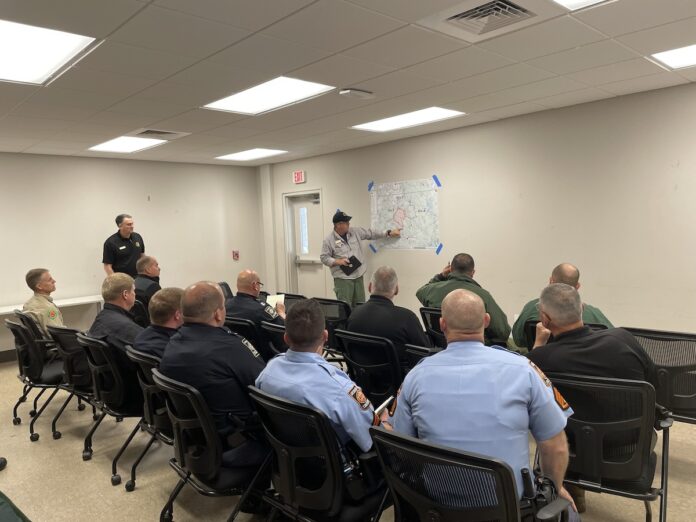
The Southern Area Gold Complex Incident Management Team held a cooperators meeting Friday morning with Rabun County law enforcement, emergency responders, and community leaders to discuss the Big Ridge Fire. The team assumed management of the Big Ridge Fire on March 28, 2025. (U.S. Forest Service - Chattahoochee-Oconee National Forests/Facebook)
The Big Ridge Fire in Rabun County has now consumed approximately 2,000 acres northeast of Clayton. Forest Service officials will update the community on the wildfire’s status during a virtual public meeting on Saturday, March 29.
During the meeting, members of the public can hear directly from the fire managers and local officials and ask questions.
This meeting will be recorded and available to watch later for those unable to attend.
For updated information on the Big Ridge Fire and closures, visit the Chattahoochee-Oconee National Forest Facebook page or the government’s wildfire incident website.
Public health workers manage a COVID-19 vaccination event in Cochran, Ga. on Jan. 25, 2021. (Credit: Grant Blankenship/GPB News)
The Georgia Department of Public Health will face some cuts to its available funding, as the federal Department of Health and Human Services confirmed March 26 that it was ending billions in Covid-era grants.
On March 27, the HHS, run by Secretary Robert F. Kennedy Jr., also announced a total restructuring of the department, which includes the dismissal of around 20,000 current employees. HHS oversees the Centers for Disease Control and Prevention and Centers for Medicare and Medicaid. Thursday’s announcement indicates that other divisions under the agency’s purview, including the Health Resources and Services Administration (HRSA) and Substance Abuse and Mental Health Services Administration (SAMHSA), will be reorganized into a unified department.
The grants canceled Wednesday were issued during the pandemic to state and community health departments were funneled through the Atlanta-based CDC and SAMHSA.
There’s been no published list of what grants are getting cut, but there is evidence that since the end of the public health emergency, these grants were being used to support work outside of Covid-19 testing and surveillance.
For example, the Georgia Department of Public Health continues to receive money from the Epidemiology and Laboratory Capacity Program, which started in 2020 as a funding mechanism to support flexibility in public health’s response to emerging infectious diseases. With that money, Georgia was able to develop its Wastewater Surveillance System and Advanced Molecular Detection program, which is meant to improve the identification and response to infectious diseases like respiratory viruses, foodborne illnesses, and diseases that spread from animals, among others.
The agency was granted $5 million in July 2024 and $604,000 in December under the ELC program.
In anticipation of cuts from the federal government, the Georgia Department of Public Health had already made plans to tighten the belt around its budget.
The state agency, which oversees local public health departments in every county, has been taking multiple measures to ensure a “cautious approach to spending” since early February, according to communications between Department Commissioner Kathleen Toomey, Deputy Commissioner Chris Rustin and among other staff, attained by GPB through open records.
They also questioned whether additional efforts to limit spending could include a pause on filling new positions or funding new programs and some moves from in-person to virtual programming.
GPB reached out to DPH for comment and clarity on these measures but did not receive a response on specific decisions to limit spending. Instead, on Thursday, DPH spokesperson Nancy Nydam said the agency is “still analyzing the impact of the federal funding cuts.”
Dr. Kathleen Toomey, the commissioner of the Department of Public Health. (Credit: Riley Bunch/GPB News)
District Health Directors were briefed on budgetary measures in a virtual meeting on Feb. 4, 2025 hosted by Toomey. Meeting notes indicate concerns over the unprecedented fast pace of the current administration, including moves to define and subsequently defund programs considered to be under Diversity, Equity and Inclusion initiatives.
“They’re having to make priority decisions, which, of course, as leaders, we always have to do that,” said Nandi Marshall, president-elect of the American Public Health Association. “However, when your major source of funding may be cut, it’s like, ‘What do we do?’ Like, there’s an entire state of people that we need to provide services to and to protect.”
The Georgia Department of Public Health receives about 50% of its budget from the federal government. Marshall said that funding is vital for programs like WIC — the Special Supplemental Nutrition Program for Women, Infants and Children. Over 200,000 low-income people in Georgia use WIC to help feed their children and for nutrition and breastfeeding support.
There’s been no indication that WIC will get cut, but federal congressional budget proposals have indicated major cuts to SNAP, the Supplemental Nutrition Assistant Program, and Medicaid. Millions of low-income adults, kids, and people with disabilities rely on benefits from all three programs to make ends meet. And advocacy organizations warn that since many enrolled in WIC are screened for eligibility through applications to the other two programs, or vice versa, there could be ripple effects in enrollment.
Marshall said she expects that even with cuts to other programs, there could be cuts to staff, which would make it harder for services to be delivered across the board. Many local public health departments, especially in rural areas, are already short-staffed.
“Whether it’s at the federal or state level, loss of funding is going to equate to losing positions,” Marshall said. “We have figured out how to make things happen with less resources. But we do so much better when we have more resources.”
Figuring out how to move forward through planning between local public health workers, scientists, academics and policymakers was made harder with the cancellation of the Georgia Public Health Association conference, she said
“Not being able to have a conference this year was a really big blow,” Marshall said. “I don’t have a planned opportunity where I can sit with other folks on Board of Healths from across the state and ask questions and hear about what’s going on.”
Also put on pause because of travel restrictions is the Immunize Georgia conference, hosted by the Georgia Chapter of the American Academy of Pediatrics. Coming at the tail of an extremely active flu season, that gathering would have given immunologists and practitioners a chance to talk about the latest trends in infectious diseases and how to improve prevention.
Meanwhile the Georgia Department of Behavioral Health and Developmental Disabilities confirmed it received notification of cuts to SAMHSA funding and is currently examining what impacts they may have across the services the agency offers.
What cuts could look like at local public health outposts
Already, state funding for the Georgia Department of Public Health trails behind its sibling agencies, the Department of Community Health, the Department of Behavioral Health and Developmental Disabilities, and the Department of Human Services.
DPH is slated to get around $435 million from Governor Brian Kemp’s budget in the upcoming fiscal year, a slight increase from the allocation for the current fiscal year. Most of that increase is due to the expansion of a home visiting program for new moms.
In comparison, DCH, the agency that oversees Medicaid programs for adults and kids, has about $5 billion in allocated funds, while DHS and DBHDD have north of $1 billion.
“And one thing that I would really emphasize about Department of Public Health, is it serves all 11 million Georgians,” said Leah Chan, director of health justice at the Georgia Budget and Policy Institute.
For example, DPH oversees restaurant inspections, issues safety permits to tattoo and beauty parlors, and investigates trends in deaths from drownings, overdoses, and suicides. Day to day, families and individuals can go to public health departments for services ranging from family planning to education on sexually transmitted diseases.
“There’s so many ways in which it really is providing a very unique set of services and functions that serve the entire state,” Chan said. “We don’t notice it until we need it, but it’s always operating there in the background.”
Having robust and consistent investments in public health is necessary to mitigate disaster, too, according to the latest recommendations from Trust for America’s Health, a nonprofit public health policy organization.
In the organization’s “Ready or Not 2025” report, Georgia’s public health system ranked among states with a high level of capability to respond to emergencies. Think of the ongoing measles outbreak, and highly pathogenic avian influenza, but also the opioid crisis, or heat waves, wildfires, hurricanes and other natural disasters.
Because of that slight increase to the Department of Public Health’s budget from the state, as well as success in other metrics, like the state’s plan for lab surges and participation in different accreditation programs, Matt McKillop, senior health policy analyst at Trust for America’s Health, said for now, Georgia is prepared.
“What we really want to make sure is that those investments aren’t being eroded over time,” McKillop said.
Particularly through funding cuts made to the CDC.
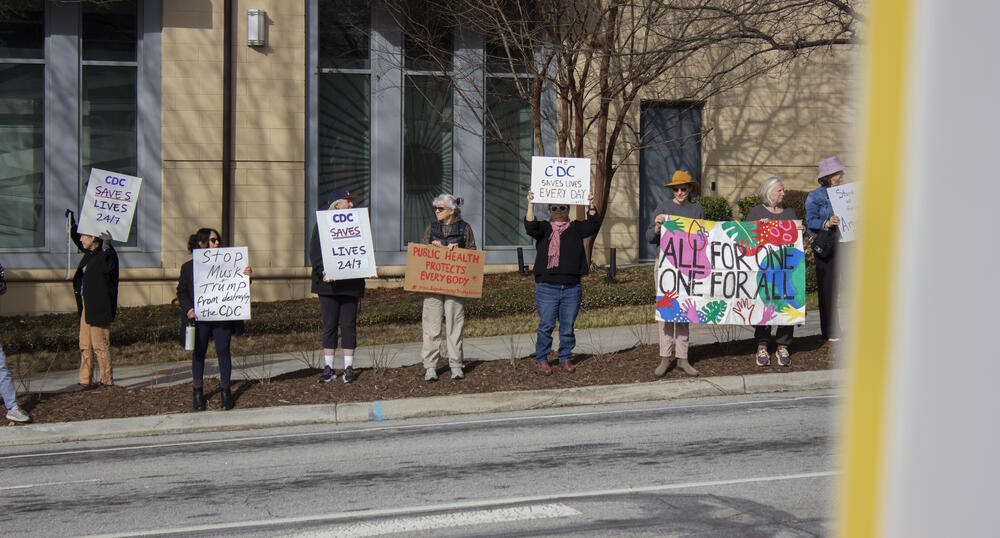
A demonstration at the Atlanta-based Centers for Disease Control and Prevention headquarters on Feb. 18, 2025, saw retired public health workers and others join in supporting current CDC employees as they left work to go home. Thousands have been terminated from agencies under the Department of Health and Human Services in recent days — a move that could threaten disease response. (Credit: Sofi Gratas/GPB News)
“It’s really drawing money away from state and local agencies who then either have to make up that funding on their own, which is often not going to be realistic given other state and local budget priorities and constraints, or they’ll have to make hard decisions about staff,” McKillop said.
Plus, Georgia does have some improvements to make. According to the Trust for America’s Health report, the state’s avoidable mortality rate, the average number of deaths in adults in kids caused by treatable or preventable conditions, is higher than the national average.
The report suggests that it’s also an indicator of gaps in health care access to treat chronic diseases.
McKillop warns that any cuts to spending on prevention, be it through programs to build up technology, lab capacities and who’s available to help on the ground, could cause a backslide.
“You spend millions to avoid spending billions,” McKillop said. “It’s worth engaging in those proactive investments to avoid being in a more reactive posture.”
In the Georgia Department of Public Health’s own strategic plan, which outlines goals through 2026, the agency recognizes its budget constraints. But it also proposes lowering costs for health care services to address maternal mortality, low immunization rates and deaths from drug overdoses. The plan indicates an expansion to its HIV prevention and treatment initiatives. At this point, it’s unclear what the agency will be able to accomplish on its list.
This article comes to Now Habersham in partnership with GPB News
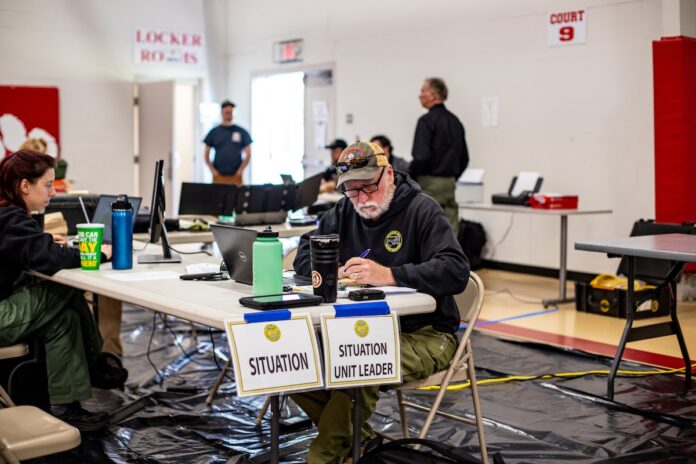
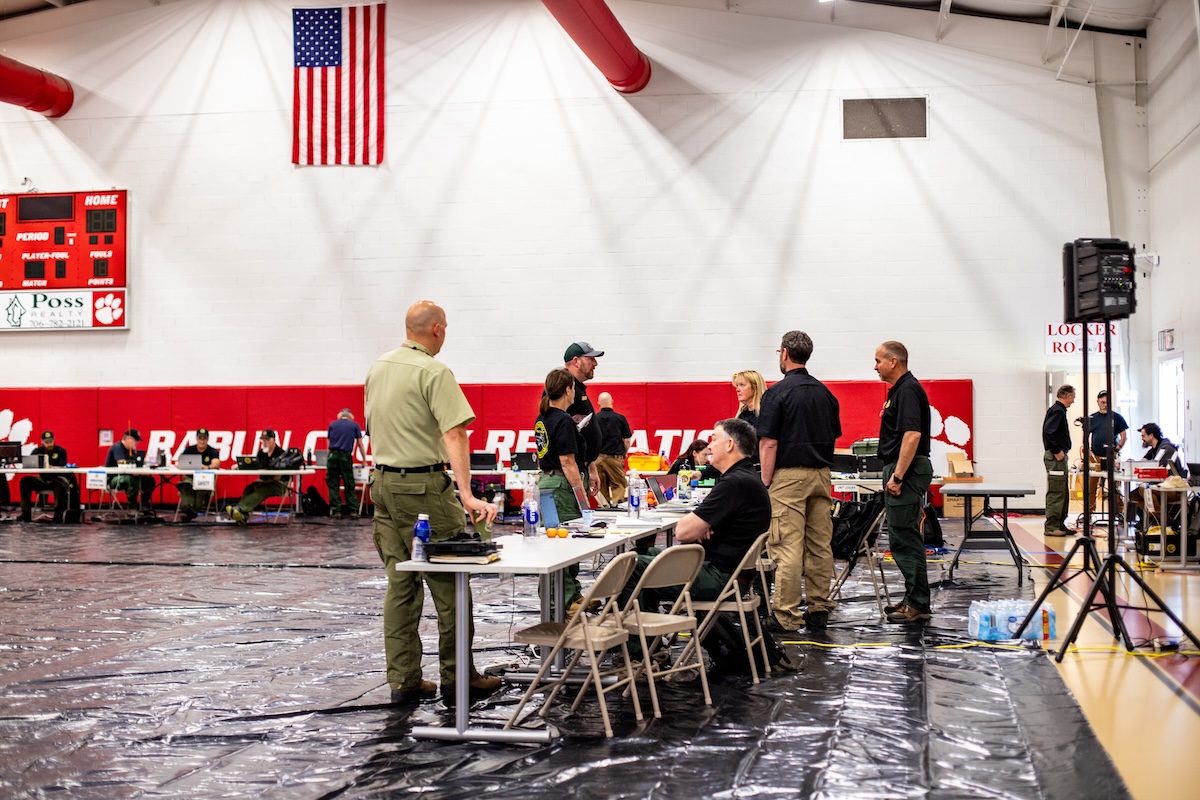
U.S. Forest Service wildland firefighters and local public safety gather at the Big Ridge Fire Command Center in Rabun County, Georgia, on March 28, 2025. (Daniel Purcell/NowHabersham.com)
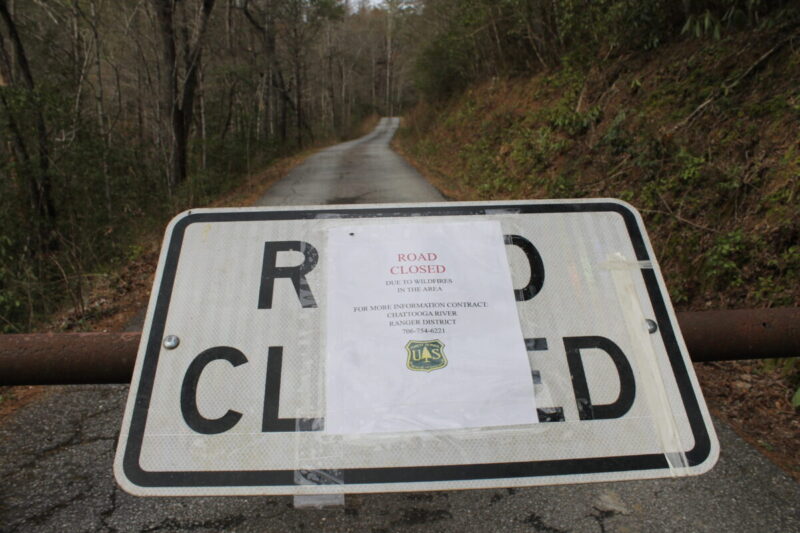
The U.S. Forest Service has closed public access to the Chattahoochee-Oconee National Forest northeast of Clayton, where the Big Ridge Fire is burning. The closure order is effective through April 30. It prohibits entry into the area to minimize public health and safety risks and to facilitate ongoing wildland firefighting operations.
The Big Ridge Fire began March 22 in the Sarah’s Creek area and has now consumed nearly 2,000 acres. Five wildland firefighting crews are actively working to hold containment lines. They’re supported by four engines, a bulldozer, a helicopter, and a plane for aerial suppression and surveillance.
What’s closed?
Roads, trails, and recreation facilities within the Chattahoochee-Oconee National Forest northeast of Clayton close in Rabun County as crews work to contain wildfire (Brian Wellmeier/Now Habersham)
The closure, announced Friday, encompasses all National Forest System lands within the following perimeter: east of US 23 / US 441, north of Warwoman Road, west of Hale Ridge Road (FSR 7), and south of the Georgia state line. This area includes several recreation facilities, trails, and roads.
The following areas are closed through April 30 or until further notice:
Recreation Facilities & Areas
Darnell Creek Shooting Range – Closed to all visitors and activities
Sarah’s Creek Campground – Closed to all visitors and activities
Warwoman WMA – Closed to all visitors and activities
Trails
Bartram Trail (FST 164) – Closed to all types of traffic from Warwoman Dell to Hale Ridge Road (FSR 7) and closed to all visitors
Bartram Trail Connector (Beegum Gap to Bartram Trail) – Closed to all visitors and activities
Becky Branch Trail (FST 65)– Closed to all visitors and activities
Courthouse Gap (FST 47) – Closed to all visitors and activities
Darnell Creek Horse Trail (FST 61) – Closed to all traffic and activities
Pinnacle Knob Trail (FST 58) – Closed to all visitors and activities
Rabun Bald Trail (FST 211) – Closed to all traffic and activities
Roads
Chintilly Road (FSR 156A) – Closed to all types of traffic and visitors
Dan Gap Road (FSR 155E) – Closed to all types of traffic and visitors
Darnell Creek Road (FSR 150) – Closed to all types of traffic and visitors
Finney Creek Road (FSR 153) – Closed to all types of traffic and visitors
Hale Ridge Road (FSR 7) – Closed to all types of traffic and visitors from the intersection with Tottery Pole Road (FSR 86C) to the north to the USFS property line
Rabun Bald Road (FSR 413) – Closed to all visitors and all forms of traffic
Sarah’s Creek Road (FSR 156) – Closed to all traffic and visitors
Tuckaluge Creek Road (FSR 153) – Closed to all traffic and visitors
Walnut Fork Road (FSR 155) – Closed to all traffic and visitors
Violation penalties
The closures do not apply to private property. Authorized individuals such as law enforcement and public safety officials may still access the area. Unauthorized members of the public entering or occupying the closed area could face fines or imprisonment.
Forest Supervisor Judy Toppins signed the order on March 27. She said the closure would be lifted sooner than April 30 if Forest Service officials deemed the area safe.
Public information meeting March 29
Big Ridge Fire Command Center (Daniel Purcell/NowHabersham.com)
The Forest Service set up a Big Ridge Fire Command Center at the Rabun County Recreation Department off US 441/GA 15. They will host a virtual public meeting on Google Meet from noon until 1 p.m. on Saturday, March 29.
During the meeting, members of the public can hear directly from the fire managers and local officials about the current status of the fire. They will also have an opportunity to ask questions.
To join the meeting online, go to https://meet.google.com/qcj-ukgz-mcf or dial 440-482-1399 and enter PIN number 359 161 763#to be connected. This meeting will be recorded and available for those unable to attend to watch later.
For updated information on the Big Ridge Fire and closures, visit the Chattahoochee-Oconee National Forest Facebook page or the government’s wildfire incident website.
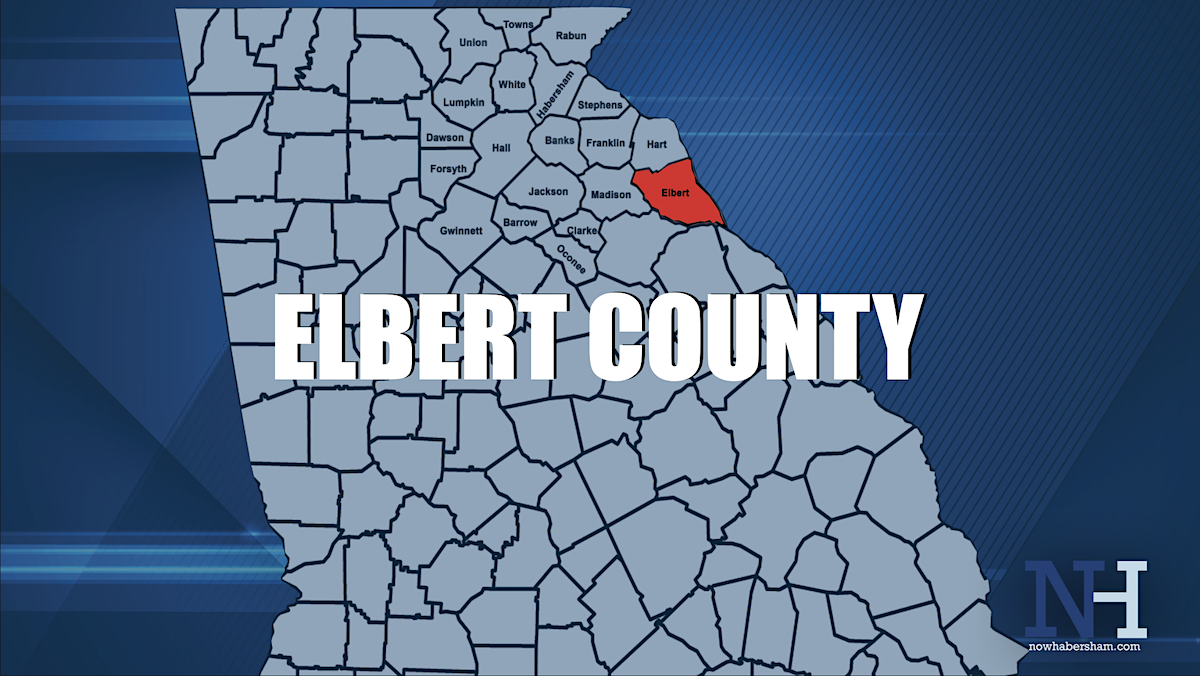
A multi-agency search effort led to the arrest of a man accused of using a firearm to threaten a woman and her child following a vehicle collision on Jones Ferry Road in Elbert County on Thursday, March 27.
According to the Elbert County Sheriff’s Office, deputies responded to reports of a two-vehicle accident on Jones Ferry Road. Witnesses reported that one driver exited his vehicle and approached the other driver with a firearm.
Upon arrival, deputies found a heavily damaged small car in a roadside ditch, but the driver had already fled the scene. Shortly after, according to police, a passerby reported seeing a black SUV with extensive damage driving down Jones Ferry Road with a wheel turned sideways.
Mother and child found hiding
As deputies searched for the missing driver, evidence led them farther down the road, where they discovered the second vehicle hidden in a clear-cut area. The driver of this vehicle was also missing. K-9 units from Hart County and Wilkes County Sheriff’s Offices and drone operators from Elbert County EMA were deployed to aid in the search. A Georgia State Patrol helicopter also assisted.
During the investigation, authorities later identified Joshua Sewell as a potential suspect and learned he may have been traveling to Elbert County to allegedly harm another individual.
Authorities say a Wilkes County K-9 unit ultimately located the female driver of the black SUV and her one-year-old child hiding in a wooded area. Police determined that Sewell had allegedly intentionally rammed her vehicle off the road, then shattered her driver’s side window with a shotgun while making alleged threats. The victim managed to escape with her child and hid until Sewell fled.
Shirtless suspect seeking help
As the search for Sewell intensified, according to police, dispatchers began receiving reports of a shirtless white male seeking help from residents on Grady Cleveland Road. Authorities say home security footage confirmed the suspect’s identity, as a K-9 unit from Hart County tracked Sewell as he allegedly attempted to flee through multiple roads and across Highway 72.
According to police, the pursuit ended when he was found near a creek, where a homeowner engaged him in conversation, allowing authorities to take him into custody without incident.
Sewell faces multiple charges, including two counts of aggravated assault, two counts of possession of a firearm during the commission of a crime, misdemeanor pointing or aiming a gun at another, reckless conduct, obstruction, criminal trespass and hit and run. Additional charges may be filed as the investigation continues.
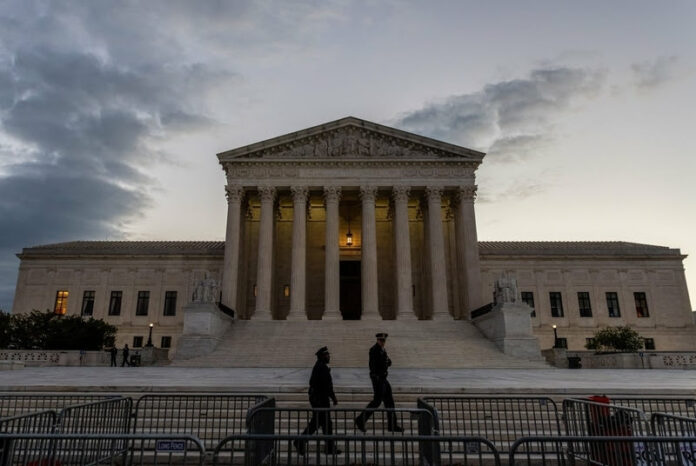
The U.S. Supreme Court building. (Ariana Figueroa/States Newsroom)
WASHINGTON (States Newsroom) — The Trump administration submitted an emergency appeal to the U.S. Supreme Court on Friday in an effort to resume the rapid deportations of Venezuelans accused of gang ties under a wartime law that a lower court blocked.
Acting U.S. Solicitor General Sarah Harris argued in a brief to the Supreme Court that a federal judge’s temporary restraining order this month, and an appeals court ruling Wednesday upholding it, wrongly denied President Donald Trump the authority to make decisions about national security operations, including the removal of Venezuelan nationals the administration says are subject to the Alien Enemies Act of 1798.
“The district court’s orders have rebuffed the President’s judgments as to how to protect the Nation against foreign terrorist organizations and risk debilitating effects for delicate foreign negotiations,” Harris wrote in her request to the court.
The Alien Enemies Act had only been invoked three times, during the War of 1812, World War I and World War II.
The Trump administration has tried to use it in a novel way, when the nation is not officially at war. The administration designated the Tren de Aragua – a gang that originated in Venezuela – as a foreign terrorist group, and argued that any Venezuelan nationals aged 14 and older with suspected ties to the gang are subject to the proclamation.
U.S. District Judge James E. Boasberg placed a temporary restraining order on the Trump administration’s use of the law this month, and the U.S. Court of Appeals for the District of Columbia Circuit upheld the order this week. The administration asked the Supreme Court to lift the order.
“As long as the orders remain in force, the United States is unable to rely on the Proclamation to remove dangerous affiliates with a foreign terrorist organization—even if the United States receives indications that particular (Tren de Aragua) members are about to take destabilizing or infiltrating actions,” Harris said Friday.
Extending restraining order
Boasberg’s temporary restraining order placed on the use of the Alien Enemies Act is set to expire Saturday. The American Civil Liberties Union, which brought the suit, requested that order be extended for an additional two weeks.
The ACLU also plans to request Boasberg issue a preliminary injunction, which would block the administration from deportations under the act until the lawsuit is complete. A hearing is set for April 8.
Boasberg has rejected the Trump administration’s move to lift his restraining order, on the grounds that those subject to the Alien Enemies Act should have due process to challenge those accusations.
At the D.C. Circuit this week, Department of Justice attorneys for the Trump administration argued that those subject to the proclamation do not need to be notified they are being removed under the Alien Enemies Act. The Trump administration also argued that those who fall under the Alien Enemies Act can bring a challenge of their detention under a habeas corpus claim.
Defied verbal order
The White House quietly implemented the act on March 15 and a verbal restraining order given by Boasberg that day to block it went into effect hours later.
In that order, Boasberg barred the Trump administration from applying the act but three deportation planes landed in El Salvador after the order was issued. The Trump administration has argued that his verbal order was not enforceable.
Boasberg also ordered that anyone subject to the Alien Enemies Act be returned to the U.S., but federal immigration agents took more than 250 men aboard the three flights to a notorious prison in El Salvador.
Boasberg has vowed to determine if the Trump administration violated his restraining order in sending the deportation planes to El Salvador, but Attorney General Pam Bondi invoked the “state secrets privilege” to refuse to answer detailed questions about the flights.
Friday’s emergency request is one of several immigration-related appeals the Trump administration has made to the high court, such as the request to lift several nationwide injunctions placed on the president’s executive order that ends the constitutional right of birthright citizenship.
Republican Rep. Tim Fleming of Covington said he decided to remove a new election night ballot counting rule after local election supervisors testified Wednesday that a tight Election Day counting deadline would place unfair burdens on election staffers. (Ross Williams/Georgia Recorder)
ATLANTA (Georgia Recorder) — A Georgia GOP-controlled Senate panel Thursday greenlighted a revised version of a wide-ranging bill packed with controversial provisions that no longer include plans to hand voter challenge complaints to state election officials and enforce new ballot counting methods.
House Bill 397, which still contains several controversial rule changes, passed the Senate Ethics Committee Thursday night with four Democratic senators voting against it.
The bill has been criticized for limiting voters’ ability to drop off absentee ballots on the final weekend before Election Day and other proposed changes to election law.
The bill’s sponsor, Covington Republican Rep. Tim Fleming, said he also decided to remove a new election night ballot counting rule after local election supervisors testified Wednesday that a tight Election Day counting deadline would place unfair burdens on election staffers and present chain of custody challenges.
The bill still aims to ban the state from participating in third-party voter list-sharing databases like the Electronic Registration Information Center, known as ERIC. Georgia secretary of state officials are asking legislators to maintain what they say has been a successful partnership that allows Georgia to share updated voter rolls with 24 other states.
Under HB 397, the Georgia elections board would evaluate the procedures and policies for withdrawing from ERIC and provide recommendations to the legislative committees.
Fleming’s updated bill would delay the state’s transition from the multi-state voter database. It now proposes July 1, 2027 as the implementation date for Georgia to transition to another system. It allows for additional time to find a new way during legislative sessions in 2026 and 2027 and following next year’s general election, Fleming said.
“If there is a new secretary of state, it gives them time to work with this legislative body to implement what we have asked them to do,” Fleming said.
The revised bill would still give the controversial State Election Board new rulemaking authority and independence. However, it no longer would hand appeals to voter eligibility challenges to the board. The appeals are currently resolved in Superior Courts.
Sen. Derrick Mallow, a Savannah Democrat, questioned whether the election board could take over election rulemaking powers that rightfully reside with the General Assembly.
Ethics committee Chairman Sam Watson, a Moultrie Republican, credited Fleming and HB 397’s co-sponsor, Rep. Victor Anderson, for incorporating some key recommendations into the election bill.
“They listened to a lot of concerns that we heard last night for two hours, and they took those concerns back, and now they’ve got a good bill that I think we can move forward with,” Watson said.