Home Blog Page 521

Consular Corps visits UNG to explore global initiatives

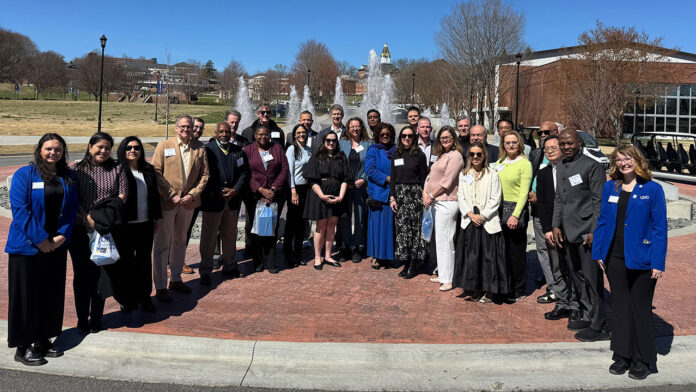
Consular Corps visit UNG in March 2025. (University of North Georgia)

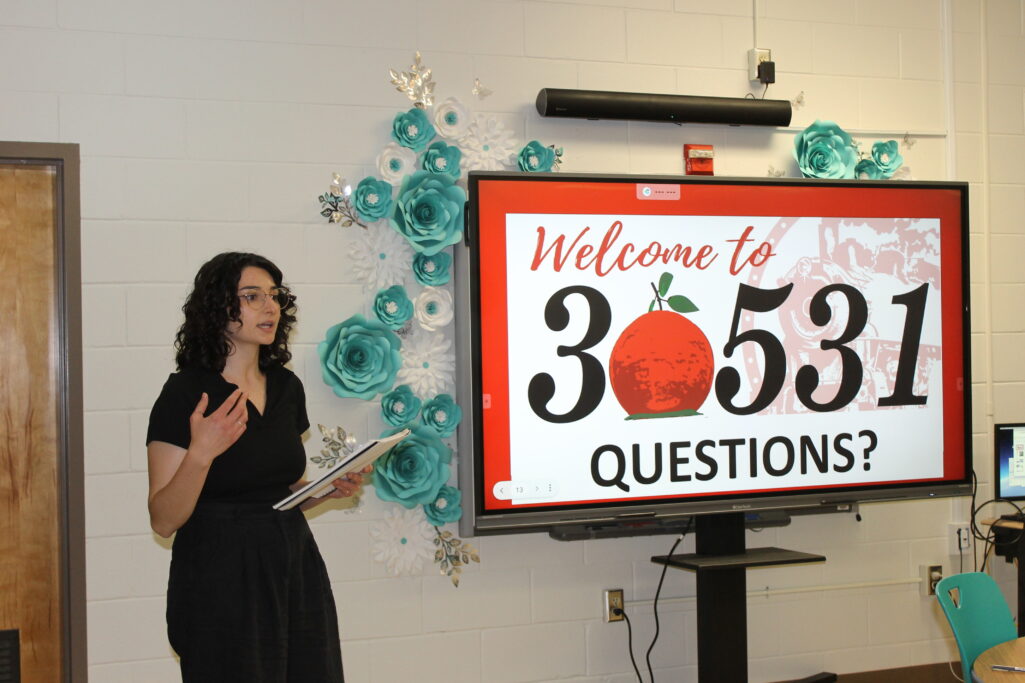
DHALONEGA, Ga. — Members of the Georgia Consular Corps visited the University of North Georgia (UNG) on March 18 to tour the university’s global initiatives and military and cyber programs. The visit, hosted by the Georgia Department of Economic Development, showcased UNG’s commitment to international education and workforce development.

The group met with UNG President Michael Shannon, retired Col. Bryan Kirk, associate vice president and chief of staff of the Cadet Leadership Academy, and retired Lt. Gen. Jamie Jarrard, co-champion of UNG’s national security big bet and part-time professor of practice.

“We were thrilled to host representatives from countries around the world,” Shannon said. “This is a pivotal time in history, and we see great opportunities for collaboration to prepare our students for global challenges while supporting these countries. We look forward to the conversations that will continue to develop from this meeting.”

The Georgia Consular Corps, headquartered in Atlanta, consists of consular offices and trade representatives from 70 nations. The organization fosters economic, commercial, cultural, and scientific relations between Georgia and those countries.

UNG has students from more than 40 countries studying at the university and approximately 300 students studying abroad in over 30 countries.

Since 1986, the Georgia Department of Economic Development has organized the annual International VIP Tour, introducing members of the Georgia Consular Corps to different regions of the state. The tour, hosted by the International Relations division, highlights Georgia’s collaborative, business-friendly environment, top universities, cultural attractions, and engaged citizens.

The 2025 tour included stops in Dahlonega, Dawsonville, Cleveland, Gainesville, and Toccoa. The group also visited Tallulah Falls School in Habersham.

Shop with a Hero Car & Bike Show April 5 for Habersham County Sheriff’s Office

Get ready to rev your engines and support a fantastic cause!

The Habersham County Sheriff’s Office, in partnership with presenting sponsors Auto Metal Direct, SERVPRO, and WCHM Radio 94.3FM, is thrilled to announce its inaugural “Shop with a Hero” Car & Bike Show. This family-friendly event will take place at the Habersham County Fairgrounds near Clarkesville, all in support of the Sheriff’s Office’s beloved “Shop with a Hero” program.

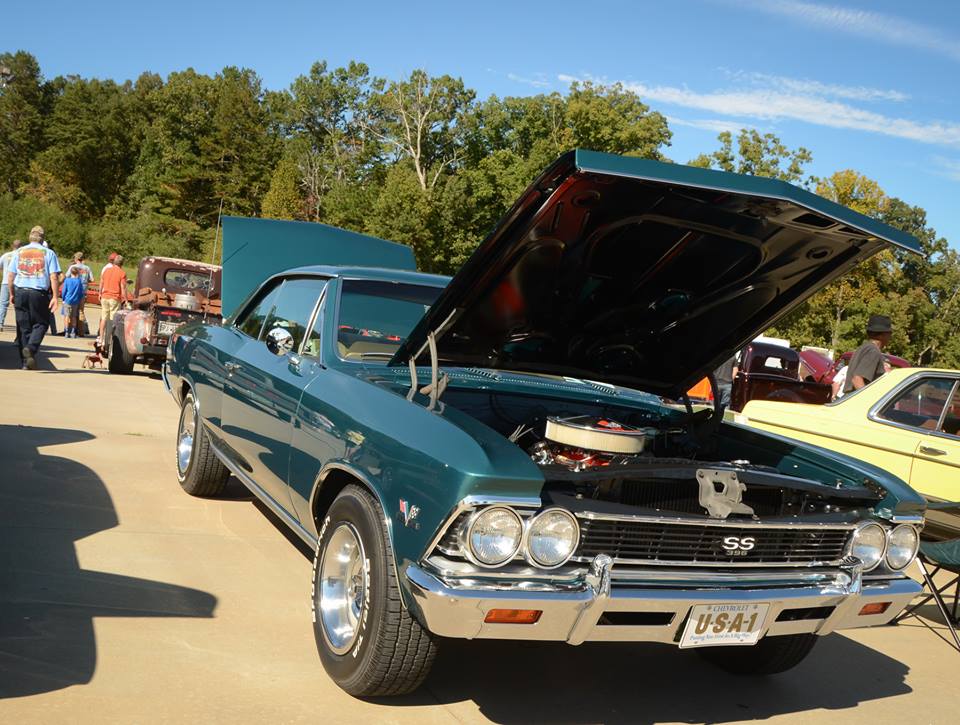
On Saturday, April 5, at the Habersham County Fairgrounds, located at 4235 Toccoa Hwy, Clarkesville, GA, will transform into a showcase of automotive excellence, welcoming enthusiasts of all makes and models. Whether you’re a classic car aficionado, a muscle car maniac, a motorcycle maven, or even a tractor titan, your vehicle is invited to participate.

Auto Metal Direct‘s Marketing Direct Jason Chandler acknowledged, “It is great to support the Habersham County Sheriff’s Office for this worthy cause to help children have a great Christmas.”

The program is meant to bring the community together for a fun and impactful event which will fund the “Shop with a Hero” program, a vital part of the holiday season for local children. This heartwarming program provides underprivileged children with the opportunity to experience the magic of Christmas by shopping for gifts with local law enforcement officers, firefighters, and other community heroes.

Vehicle registration will require a minimum $25 donation, with all proceeds directly benefiting the “Shop with a Hero” program.

This program provides underprivileged children in Habersham County with the opportunity to shop for Christmas gifts alongside local law enforcement officers and other community heroes.

Spectators are invited to attend the event free of charge, though donations to the “Shop with a Hero” program are warmly encouraged. In addition to the stunning display of vehicles, the event will feature a lively atmosphere with food vendors, local merchants, music provided by a live DJ, and exciting awards for participating vehicles.

Cole Cleiman, owner of WCHM Radio and sponsor of the event explained, “This is much more than a car show! This will be a great opportunity for the community to join forces with the Habersham County Sheriff’s office for a wonderful cause.”

Cleiman said that WCHM Radio is honored to be involved with this event to help support the children and families of this community. “We’re looking forward to seeing everyone at the Habersham Fairgrounds on Saturday,” Cleiman added.

The “Shop with a Hero” Car & Bike Show promises to be a memorable day for the entire family, combining a love for automobiles with a heartfelt mission. So, mark your calendars and join the Habersham County Sheriff’s Office for a day of fun, fellowship, and giving back!

Some Demorest residents may experience water outage on Wednesday

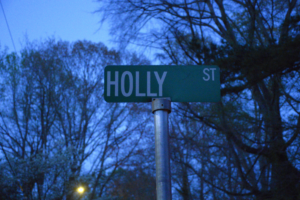
A water valve repair in Demorest at Holly Street and Pine Street will shut water off to several residents beginning at 9 a.m. on Wednesday, April 2. (Jerry Neace/NowHabersham.com)

The city of Demorest has issued an alert to residents that they may experience little to no water beginning at 9 a.m. Wednesday, April 2.

The streets that will be affected by the water outage are Holly Street, Cedar Avenue, Blue Ridge Avenue, Indiana Blvd, Porter Street, and Tennessee Street.

(Jerry Neace/NowHabersham.com)

According to City Manager Mark Musselwhite, Holly Street will be reduced to one lane while work crews repair a leaking water valve at the intersection of Holly and Pine Streets.

The repairs will take approximately four hours to complete. A boil water advisory will be issued for the affected areas.

Wisconsin voters elect Susan Crawford in rebuke of Trump, Musk

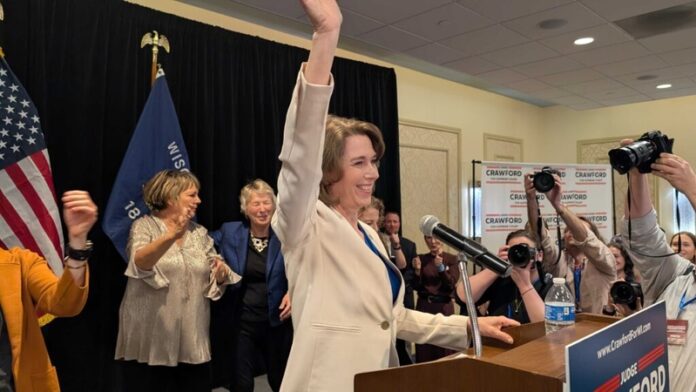
Dane County Judge Susan Crawford thanks supporters after winning the race Tuesday for the Wisconsin Supreme Court. (Baylor Spears/Wisconsin Examiner)

(Wisconsin Examiner) — Dane County Judge Susan Crawford was elected to the Wisconsin Supreme Court Tuesday, solidifying liberal control of the body until 2028 and marking a sharp rebuke by the state’s voters of the policies of President Donald Trump and the financial might of his most prominent adviser, Elon Musk.

Crawford rode massive turnout in Dane and Milwaukee counties and outperformed Kamala Harris’ effort last year in a number of other parts of the state to defeat her opponent, Waukesha County Judge Brad Schimel by about 11 points.

The former chief legal counsel for Democratic Gov. Jim Doyle who represented liberal groups such as Planned Parenthood and the Madison teacher’s union as a private practice attorney said during the campaign that she would look out for the rights of all Wisconsinites on the Supreme Court while repeatedly criticizing Schimel for his eagerness to show his support for Trump, his record as attorney general and the outside assistance his campaign got from Musk.

Crawford’s victory marks the third straight Supreme Court election for Wisconsin’s liberals and maintains the 4-3 liberal majority that has been in place since Justice Janet Protasiewicz was elected in 2023. Crawford will replace retiring Justice Ann Walsh Bradley.

Since gaining control of the Court, the new liberal majority has ruled that the state’s previous legislative maps were unconstitutional, ending the partisan gerrymander that had locked in Republican control of the Legislature for more than a decade, and accepted cases that will decide the rights of Wisconsinites to have an abortion. The Court is also likely to consider a challenge to Wisconsin’s 2011 law stripping most union rights from public employees within the next year or two.

“I’m here tonight because I’ve spent my life fighting to do what’s right,” Crawford said after the race was called for her. “That’s why I got into this race, to protect the fundamental rights and freedoms of all.”

Schimel said he got into the race because he was opposed to the “partisanship” of the liberal controlled Court but his effort to nationalize the race and show his support for Trump proved unsuccessful against a backlash to the second Trump term and voters’ distrust of Musk, who offered cash incentives for people who got out the vote for Schimel.

Tuesday’s election was the first statewide race in the country since Trump won the presidency last fall. Trump narrowly won Wisconsin and in counties across the state, Schimel failed to match the president’s vote total. In La Crosse County, Crawford performed 11 points better than Harris did last year and Schimel didn’t even match Trump’s vote share in his home of Waukesha County.

Schimel ran nearly even with former Supreme Court Justice Dan Kelly, who lost to Protasiewicz in the 2023 race. Wisconsin’s conservatives have now lost the past three Supreme Court elections by double digits.

The 2025 Wisconsin Supreme Court race set the record for the most expensive judicial campaign in U.S. history, topping the $100 million mark. While Crawford received support from liberal billionaires including George Soros and Illinois Gov. J.B. Pritzker, Musk dwarfed all other contributors, dumping more than $20 million into the race.

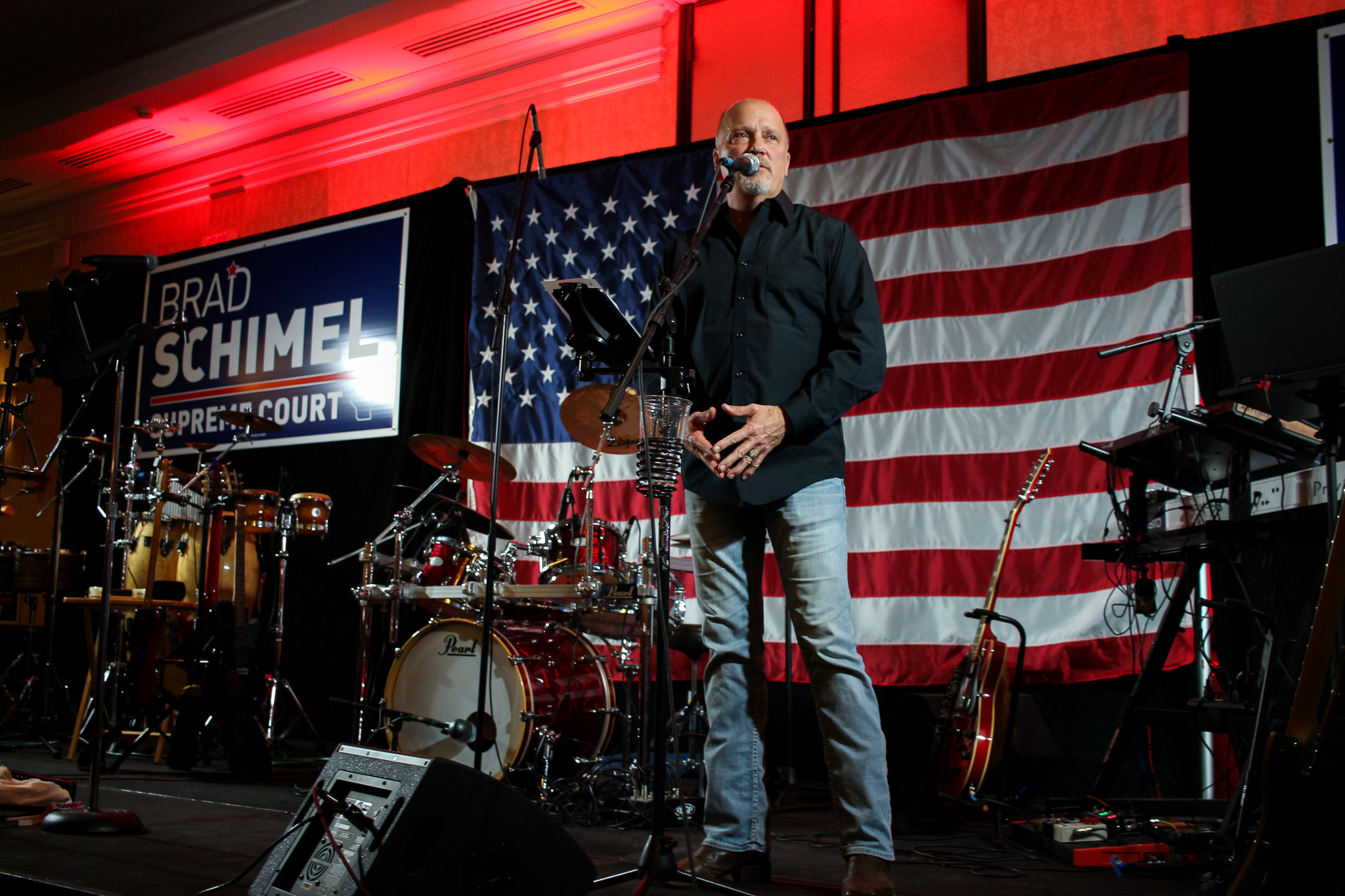
Waukesha County Judge Brad Schimel delivers his concession speech in the Wisconsin Supreme Court race. (Henry Redman/Wisconsin Examiner)

Musk’s money helped blanket the state’s airwaves with attack ads against Crawford’s record as a judge, often criticizing sentences she gave to people convicted of sexual violence. A Musk-associated PAC also hired people to knock on thousands of doors in an effort to turn out Trump’s base of Wisconsin voters, who have often sat out non-presidential elections. America PAC, a political action committee associated with Musk, paid door knockers $25 an hour, offered voters cash if they filled out a petition against “activist judges” and gave two people $1 million checks at a rally on Sunday.

“But I’ve got to tell you, as a little girl growing up in Chippewa Falls, I never could have imagined that I’d be taking on the richest man in the world  for justice in Wisconsin,” Crawford said. “And we won.”

In a concession speech delivered shortly before 9:30 p.m., Schimel told supporters they “didn’t leave anything on the field,” and when a few began to complain said “no, we’ve gotta accept this.”

“The numbers aren’t going to turn around. Too bad. We’re not going to pull this off,” he said. “So thank you guys. From the bottom of my heart. God bless you. God bless the state of Wisconsin. God bless America. You will rise again. We’ll get up to fight another day, it just wasn’t our day.”

The Democratic Party of Wisconsin, harnessing voters’ alarm at the actions Musk has been leading from his federal DOGE office to cut government programs and fire thousands of public employees, held People v. Musk town halls across the state where residents said they were worried about the effect those cuts would have on services they rely on like Medicaid, Social Security, veteran’s benefits and education funding.

Gov. Tony Evers said that Wisconsin “felt the weight of America” in this election, which proved Wisconsinites “will not be bought.”

“This election was about the resilience of the Wisconsin and American values that define and unite us,” Evers said. “This election was about doing what’s best for our kids, protecting constitutional checks and balances, reaffirming our faith in the courts and the judiciary, and defending against attacks on the basic rights, freedoms, and institutions we hold dear. But above all, this election was as much about who Wisconsinites believe we can be as it was about the country we believe we must be.”

Democrats and Crawford accused Musk of trying to buy a seat on the state Supreme Court, partially to influence a lawsuit his company, Tesla, has filed challenging a Wisconsin law that prohibits car manufacturers from selling directly to consumers. Musk said he was focused on the race because the Court could decide the constitutionality of the state’s congressional maps, which currently favor Republicans and help the party hold a narrow majority in the U.S. House of Representatives.

At the victory party, Democratic Party of Wisconsin Chair Ben Wikler compared the effort against Musk and Trump to Gov. Robert “Fighting Bob” La Follette’s fight against the oligarchs of the early 20th century, adding that Republicans’ association with Musk will be an “anchor.”

“I think what Susan Crawford did by making clear that Elon Musk was the real opponent in this race, what voters did by responding to Elon Musk, it made clear that Elon Musk is politically toxic, and he is a massive anchor that will drag Republicans from the bottom of the ocean,” he said. “And that’s a message that I hope Republicans in Washington hear as fast as possible. Not only will they lose, but they will deserve to lose resoundingly and they will be swept out of power in a wave of outrage across the nation.”

On the campaign trail, Crawford sought to tie Schimel to Musk — she called her opponent “Elon Schimel” at the only debate between the two candidates — while portraying herself as the less partisan candidate. Throughout the nominally non-partisan race, both candidates lobbed accusations of extreme political views at the other.

With Crawford’s victory and the retention of the Court’s liberal majority, the body is expected to rule on cases that ask if Wisconsin’s Constitution grants women the right to access an abortion, the legality of the Republican-authored law that restricts the collective bargaining rights of most public employees, how Wisconsin’s industries should be regulated for pollution and the legality of the state’s congressional maps.

Heather Williams, a spokesperson for the Democratic Legislative Campaign Committee, said in a statement that Democrats were offering a better vision for the country than the one promised by Schimel, Trump and Musk.

“Despite Republicans’ best efforts to buy this seat, Wisconsin voters showed up for their values and future,” Williams said. “While Trump dismantles programs that taxpayers have earned, support, and are counting on, voters across the country are turning to state Democrats who are delivering on promises to lower costs and expand opportunities.”

Cornelia stakeholders discuss solutions to affordable housing

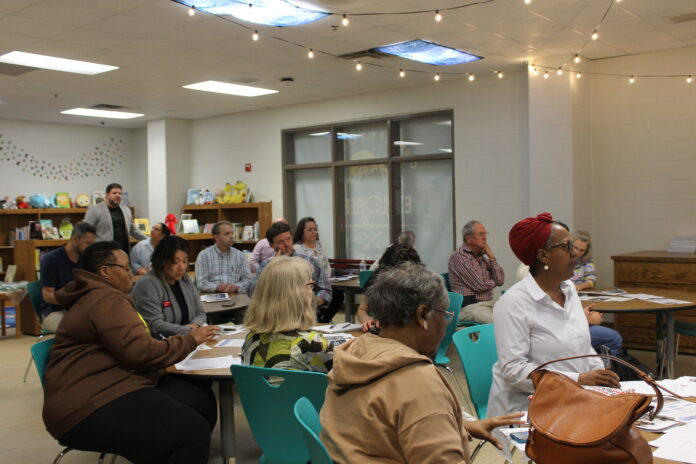
Stakeholders and residents attend a town hall over housing in Cornelia Monday, March 31 (Brian Wellmeier/Now Habersham)

The city of Cornelia hosted a town hall meeting to open a community-wide dialogue on housing at Cornelia Elementary School Monday, March 31.

During the meeting, led by Cornelia’s Community and Economic Development Director Jessie Owensby, about two-dozen local stakeholders and residents delved into dynamics of development and housing needs within the city, which has a median income of around $58,000 and a diverse blend of populace.

Home to at least 50% of the top 10 industries in Habersham, Cornelia is the largest of seven cities in the county with a population of just over 5,000, according to the U.S. Census. In comparison, nearly 10,000 people reside just 20 miles northeast in Toccoa.
Current statistics indicate Cornelia is about 50% white, 40% Hispanic and 7-8% African-American in its demographic makeup.

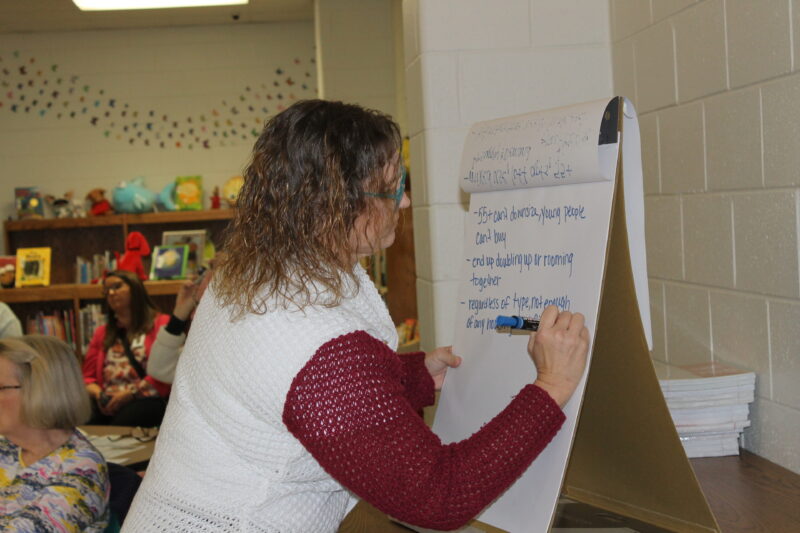
Community and Economic Development Director Jessie Owensby writes down feedback discussed during a town hall Monday, March 31 (Brian Wellmeier/Now Habersham)

“We need to figure out how we can provide housing that is nice, up to standard, available, attainable and affordable for our residents who need it,” Owensby said at the start of the town hall, pointing to 1,300 square-foot “starter” home units in Sugar Creek that recently went for over $300,000.

In Magnolia Villas, Owensby said, regular (3,000-square-foot) single-family homes have consistently sold for $400,000.

“Starter homes no longer exist,” Owensby said. “So, a lot of what this (program) is trying to do is gauge whether or not we need starter homes, or things like that.”

GICH team

The list of stakeholders involved in the discussions all consist of what’s referred to as the GICH (or Georgia Initiative for Community Housing) team.

In partnership with the University of Georgia and the state’s Department of Community Affairs, the team will provide input and feedback that will later be analyzed and used to draft a long-term plan for Cornelia’s Commission in deciding the future of development proposed throughout the city, according to Owensby.

With a lack of affordable housing gripping Cornelia as well as much of the U.S., the dialogue comes at a pivotal juncture for the future of the city, which, like other municipalities, must navigate such challenges in the years ahead.

To accommodate a growing workforce, Owensby introduced the concepts of infill (new construction on existing dilapidated properties) and redevelopment (remodeling existing homes in despair) as housing opportunities.

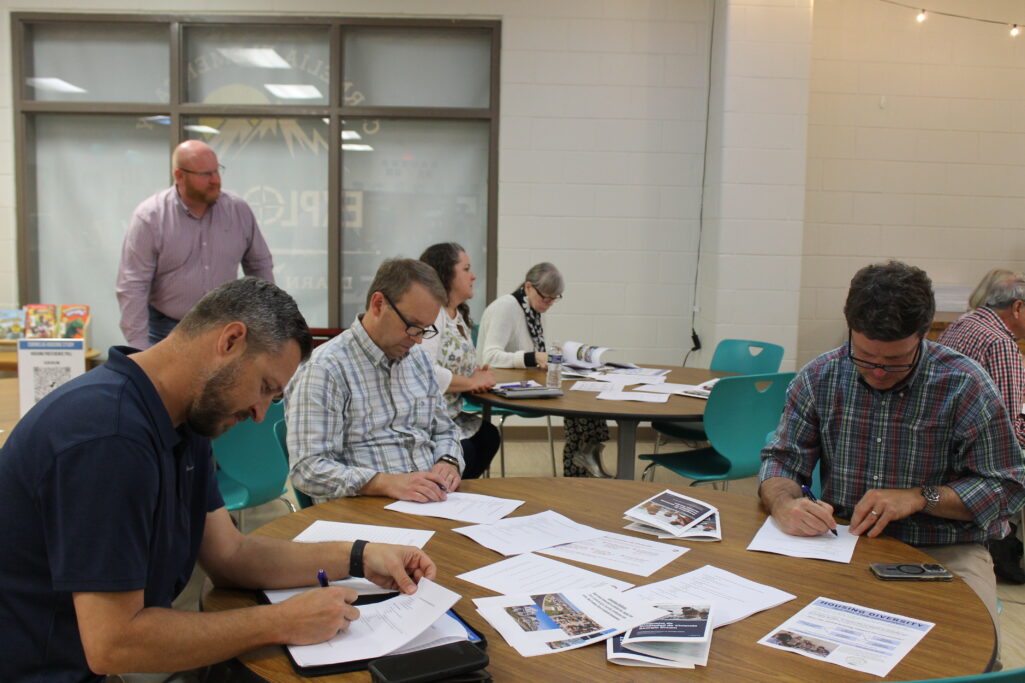
GICH team members, residents and community stakeholders fill out surveys on housing in Cornelia Monday, March 31 (Brian Wellmeier/Now Habersham)

Types of housing

With industry, population growth and development headed to Habersham in the coming years, a variety of housing types were presented to the GICH team. Owensby and city officials believe these options, if moderately priced, could possibly curb a potential affordable housing crisis down the road.

Conventional subdivision: Single-family homes built on individual lots totaling no more than 1 acre.

Compact subdivision: Single-family homes built on compact lots – less than .25 acres.

Cottage court: A cluster of small, individual homes on small-sized lots – often arranged around a shared courtyard of common area.

Multiplex: A multi-unit building between 2-4 units within one building on one lot.
Small-scale multi-family (up to 20 units): The buildings contain multiple units, often in a single structure or a few smaller buildings between one and two stories.

Accessory dwelling units: Small, secondary homes built on the same lot as a primary single-family home – often used for rental or multi-generational living.

Mixed use: A building design (typically two to four stories) with commercial spaces on the ground floor, such as retail or office space, and residential units above.

Townhomes: Single-family homes that share one or two walls with adjacent units – typically ranging from two to three stories – each home with its own entrance and a small yard.

Midrise apartments: A large multi-family building with two to five stories of residential units, typically wrapped around a parking garage.

Feedback

(Brian Wellmeier/Now Habersham)

During an open forum segment of the town hall, without favoring one specific housing option in particular, the GICH team and stakeholders described their preferred vision of the city’s future.

Larry Phillips, a retired residential builder who lives beyond Cornelia city limits, expressed a desire to see more senior-oriented communities. However, with markets driven by supply and demand, efforts to bring affordable (or income-based) housing to the area would likely come through certain government-led initiatives.

“And when you start bringing people in, there’s infrastructure (needs) you have to think about,” he said.

Community Planning Lead at the Georgia Conservancy Michaela Master, who will review much of the information collected during the town hall, said she spoke with residents about city demographics and a desire to see housing available for all groups.

“We talked about the difficulties – where, if certain groups weren’t able to find housing where they needed, how that could then trickle down and affect other groups,” Master said. “We also talked about the issue of 55-and-older communities not being able to downsize. And on the other side of the age range, younger folks not being able to rent affordably or find affordable housing to purchase.”

She added: “There’s a need for varied housing. I don’t think every person here is going to want the same thing. We all are in different places of life, and we need something for everyone.”

Matt Hill, owner of the Axe Armory in Cornelia, said the dialogue among his group centered on “preservation,” or “taking what’s existing and giving it a facelift.”

“Maybe, not make drastic changes, but make it a little more eye-appealing,” he said. “Also, green space is an important thing. Maybe have some parks and outdoor activities for all the family, not just children. Maybe have a greenway or a nice walkway.”

Brad Trotter, an engineer who said he favored a “variety” of housing options, also touched on issues of affordable housing, describing the problem as wage-driven.

“The cost has to be right, or it just won’t work,” he said. “If you look at what young people are making in this area at the entry-level, and then they have to afford this housing, I think there’s pent-up demand…the only way to get the cost down for people in this market is to increase the supply. You can’t really force salaries up in this area.”

Moving forward

Future town halls, as part of a three-year program to assess housing, are expected to come later this year, Owensby said.

Master will compile and analyze feedback gathered from each of the town hall meetings. That data inevitably could be utilized to develop a potential guide for city development in the next three years.

Georgia Conservancy Michaela Master (Brian Wellmeier/Now Habersham)

“(Georgia Conservancy) will be doing the actual assessment for this project,” Master said. “(That includes) data crunching, data gathering, conducting interviewing, synthesizing and communicating findings and translating that … Ideally, by the end of this, we’ll have some sort of toolkit for short and long-term actions to implement in the city.”

The next town hall meeting will take place from 6 p.m.-7:30 p.m. on Monday, April 21, at Shady Grove Baptist Church.

Republicans sweep in Florida’s two congressional special elections

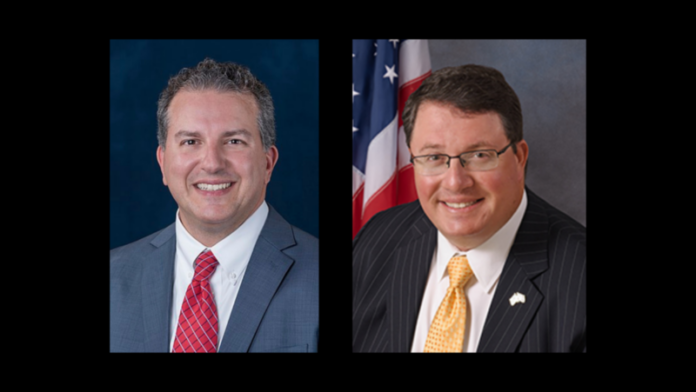
Left: Jimmy Patronis, former Florida Chief Financial Officer (Photo via Florida Department of Financial Services Website) Right: Former Republican State Sen. Randy Fine (Photo via Florida House of Representatives website)

(Florida Phoenix) — Republicans are celebrating in Florida and Washington, D.C., after two more of their ranks are going to Congress to pad the Republicans’ narrow lead over Democrats in the U.S. House of Representatives.

In the Congressional District 6 race in Northeast Florida, former state Sen. Randy Fine from Brevard County has defeated Democrat Josh Weil, an Orlando school teacher. Some polls showed Weil running competitively in the district, which went for Republican Mike Waltz over his Democratic opponent by 37 points in November.

With 95% of the votes counted, Fine led Weil with 56.5% to 44.5%.

In the District 1 race in Florida’s Panhandle, former Florida Chief Financial Officer Jimmy Patronis has defeated gun safety activist Democrat Gay Valimont, 56.1% to 42.8%. That was with 89% of the votes cast in the district.

Florida’s 6th District encompasses Flagler, Lake, Marion, Putnam, St. Johns, and Volusia counties. Neither Fine nor Weil live in the district.

Waltz served there for the past six years. Florida Gov. Ron DeSantis represented the area from 2012-2018.

Undoubtedly, Trump’s endorsement benefitted Fine, although DeSantis said earlier on Tuesday that the president got “bad advice” to endorse him.

“I think the Republican will win, but he will underperform because a lot of Republicans aren’t going to be willing to go out and vote for him,” DeSantis told conservative talk-show host Dana Loesch.

“I mean, you had him on your show, he was fighting for an amnesty bill in the Florida Legislature, he was attacking me for wanting strong immigration legislation. And so when voters see that, it’s like, you know what? Why would I want to vote for you if you’re just going to stab us in the back?”

The two had been close allies until the fall of 2023, when Fine blamed the governor for his handling of Jewish concerns following the Hamas attack on Israel and came out to endorse Trump for president.

Although most Democrats knew it would be a miracle to upset a Republican in the district, the huge fundraising advantage that Weil enjoyed (approximately $10 million for Weil to $2 million for Fine) had given them hopes that they could substantially reduce the margin of defeat.

‘There you go again”

“As Ronald Reagan said, ‘there you go again,’’ said Florida political strategist Barry Edwards. “This is another example of the Democrats overpromising and underdelivering, which is going to have an immediate effect of disillusioning the many donors and volunteers who helped on these races that thought that they were competitive, but they weren’t. And shame on the Democratic leadership, because they knew better.”

Democratic National Committee Chair Ken Martin made a trip to District 6 over the weekend on behalf of the Weil campaign.

Weil released a statement shortly after the polls closed.

“The numbers didn’t add up in our favor today,” he said.

“We shouldn’t be disappointed however; this race was closer than anyone ever imagined. In a district won by Mike Walz by 32 points, we closed that gap by a historic margin. An incredible gain. This progress is because of our grassroots supporters across the country and the voters in this district — Democrats, Republicans, and Independents — who believe in a brighter and kinder future.

“This result is also a warning sign to Donald Trump, Randy Fine, and the unelected oligarchs taking apart the government. Should they continue to steal people’s hard-earned money and benefits like Social Security and Medicare, defund education, focus more on culture wars than lowering costs: the backlash is only beginning.”

The bigger surprise of the night was in Florida’s 1st District, in far Northwestern Florida, encompassing  Escambia, Okaloosa, Santa Rosa, and parts of Walton County. Valimont raised $6.3 million from Jan. 9 through March 12, compared to Patronis, who raised $1.1 million.

At 9 p.m., Eastern time Valimont was training by 15 points —  17 points closer than 2024 and the closest congressional margin in CD 1 history, according to Florida Democratic Party Chair Nikki Fried. In addition, Valimont is the first Democratic candidate in modern history to win Escambia County.

“Florida Democrats just put the Republican Party on notice,” Fried said. “Tonight’s results represent a historic overperformance for Democrats and show that voters are already rejecting Trump’s extreme agenda.

Patronis had been considering a run for governor before Trump came out and endorsed him almost immediately after the seat became vacant following Trump’s selecting Matt Gaetz to leave the district to serve as his attorney general. (Gaetz ended up withdrawing from consideration for the position).

Patronis won the Republican primary election for CD-1 in late January, defeating nine opponents.

“That’s just an example of Donald Trump being more strategic than people give him credit for,” Edwards said, noting that Trump endorsed Patronis immediately after the District 1 seat became vacant.

“He wanted to have the field cleared for Byron Donalds, so he calls up Jimmy Patronis, who had told people he wasn’t going to run for Congress, and he endorses him. Four months later, Patronis is the congressman, which opens up the CFO seat for his buddy Joe Gruters and the governor’s seat for Byron Donalds.”

Gruters, a Sarasota-based state Senator, has already announced his candidacy for chief financial officer in 2026 and has been endorsed by Trump for that seat. Florida Gov. Ron DeSantis isn’t expected to announce a successor to Patronis for the CFO spot until sometime after the Florida legislative session ends in May. He is not expected to name Gruters, who endorsed Trump over DeSantis for president in 2023.

Proposed Habersham budget inline with 2025 budget

The Habersham County Commission and senior staff will be making adjustments and cuts to the 2026 budget over the next two months. (Jerry Neace/NowHabersham.com)

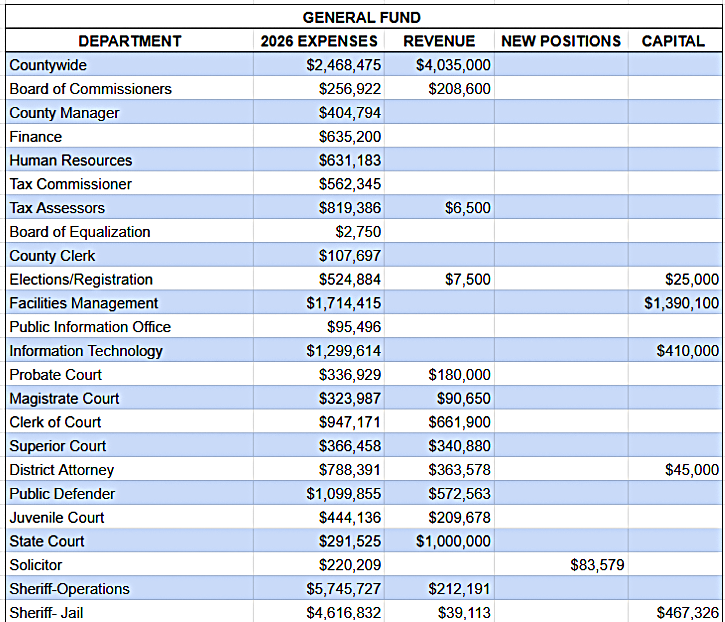
The Habersham County budget review meetings have come and gone and it appears that no new spending maybe on the horizon. A total for the Habersham general fund requests are approximately 0.6% lower than 2025.

Interim County Manager Tim Sims pointed out that the 2026 budget is inline with the 2025 budget. The original numbers reported were inaccurate due to the way the Georgia Finance Officers Association (GFOA) requires budget documents to be reported.

The county’s budget document available online, the FY2025 Budget Guide Book, states that, on pages 36 and 37, the 2025 budget was $36,599,399. The true budget for 2025 was $39,171,485, according to Sims. The lower amount had removed over $2.5 million in transfers out due to reporting requirements.

The $2.3 million additional spending was reported inaccurately due to that budget document reporting requirement.

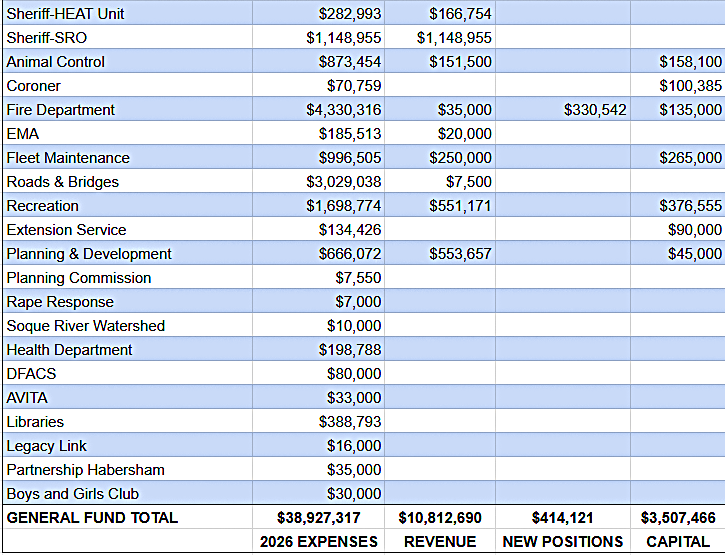
As it stands, the general fund operating budget for fiscal year 2026 is projected to be $38,927,317—a decrease of 0.62% or $244,168 less than the previous year’s budget. That figure does not include additional spending for more personnel or capital improvements.

Interim Finance Director Kiani Holden revealed that no cuts had been made to the budget requests prior to their presentations, allowing the Commission to view the requests in their entirety and unaltered.

The Habersham County Commission, interim County Manager, and Finance Department will have a busy few months ahead as they begin the difficult process of reviewing and adjusting the county’s budget for the upcoming fiscal year.

Last year, the county budgeted $22,165,414 in property tax collections for its general fund. However, county officials will not have access to the updated tax digest until late May or early June, which will provide a clearer picture of property tax collections. The impact of HB 581, a bill that could potentially affect property taxes, remains uncertain at this time.

In a related matter, the Commission opted into HB 581 due to the county’s existing property valuation freeze for homestead-exempt properties. This freeze is considered more beneficial than the statewide floating homestead exemption offered by the legislation, which caps property valuation increases at the inflationary rate of the previous year.

During the budget review meetings, Commissioners Bruce Harkness and Kelly Woodall raised concerns over several budget requests, particularly those from the Roads and Bridges and Recreation departments. The pair also questioned the number of employees needed in certain departments and the growing number of take-home vehicles in the county’s fleet, both of which will be closely examined in the coming months.

The total budget numbers for the county have not been tallied at this time. However, last year, the county had a total budget including the general fund of $80,896,198.

Budget hearings will be scheduled for June, at which time a revised budget will be presented to the Commission and the public for further review and comment. At that point, the staff will have received direction from the Commission on which priorities to focus on and which cuts, if any, need to be made to balance the budget.

The article has been updated to reflect that there is no additional spending requested for the Habersham County FY 2026 budget. Interim Habersham County Manager Tim Sims contributed to the clarification. 

Supporters of ‘religious liberty’ bill renew push for passage as 2025 Georgia Legislature nears end

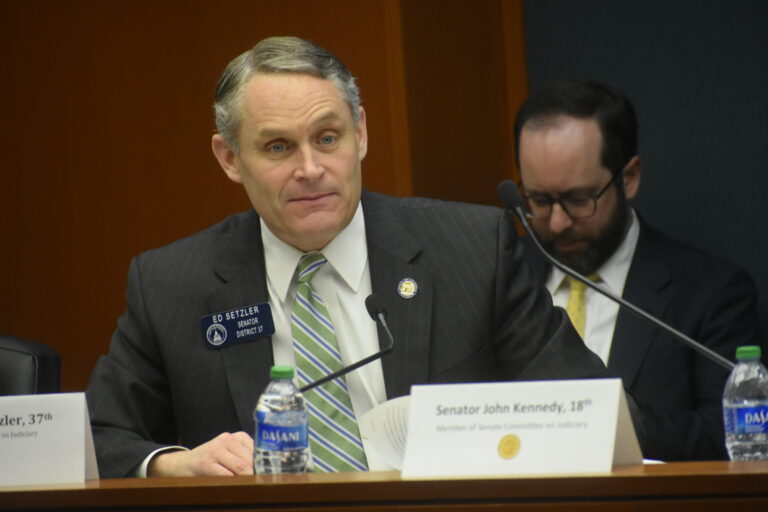
Sen. Ed Setzler pitches his RFRA bill at an April 1 press conference. (Ross Williams/Georgia Recorder)

ATLANTA (Georgia Recorder) — With the 2025 legislative session set to expire at the end of the week, supporters of a controversial “religious freedom” bill gathered in the Capitol to call for its final passage.

Acworth Republican Sen. Ed Setzler’s Senate Bill 36, also known as the ​​Georgia Religious Freedom Restoration Act, or RFRA, has passed the Senate and a House committee. Passage through the full House would send it to Gov. Brian Kemp’s desk.

“Every Georgian should be free to exercise their faith without unfair federal, state, and local government intrusion,” Setzler said. “Senate Bill 36, the Religious Freedom Restoration Act, protects ordinary people from unfair state and local government intrusion by exactly mirroring the language from the federal RFRA law that protects people from unfair federal government intrusion.”

Sen. Ed Setzler (Ross Williams/Georgia Recorder)

Setzler said 39 states have RFRA laws on the books and characterizes his bill as a way to protect religious liberties at the state and local level the same way the First Amendment protects them at the federal level. He gave the example of a Native American boy whose school tried to make him cut his long braided hair that was part of his religious and cultural heritage. Setzler said the boy’s family won a lawsuit under their state’s RFRA law.

Opponents say without statewide civil rights protections, a RFRA law would allow religious Georgians to discriminate against LGBTQ people or members of religious minorities.

“Cloaked in religion, Georgians can deny thousands of people the ability to live the American dream,” said Atlanta Democratic Sen. RaShaun Kemp, who is gay, in a statement. “The truth is, these bills aren’t helping Georgians. That is why we fight them. Because we know bills like this don’t do anything but drive a wedge between neighbors and harm minorities.”

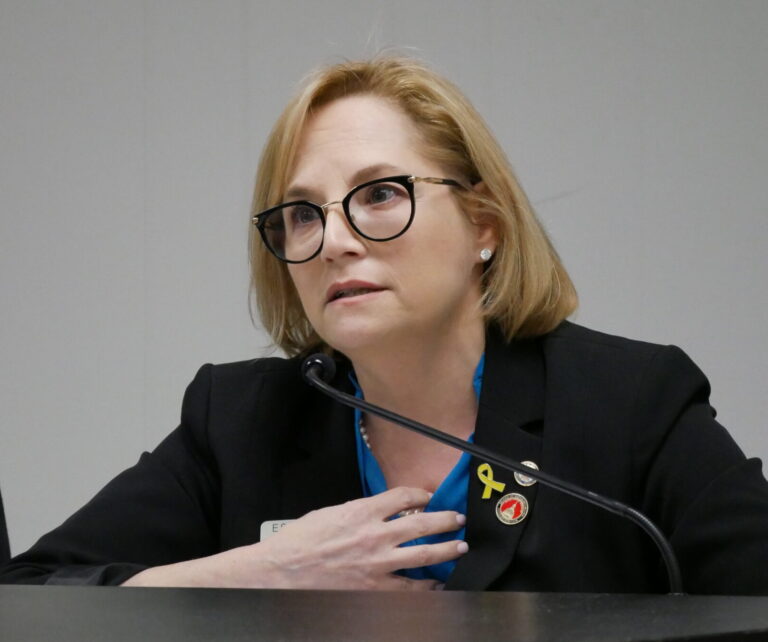
Rep. Esther Panitch (Jill Nolin/Georgia Recorder)

Rep. Esther Panitch, a Sandy Springs Democrat and the state’s only currently serving Jewish state legislator took issue with Setzler when he said the bill would mostly protect minority religions rather than evangelical Christianity.

“That’s a lie,” she said. “Every time I try to stand up for asking for religious liberty for Jews and how it would be affected by a state RFRA, they essentially say that my religious liberties don’t matter.”

“For example, in Judaism, life does not begin at conception,” she said. “Just look at Israel. (Abortion) is legal, and it’s accessible in the Jewish state, but if I need one, I can’t get one. And so, in this state, my religious liberties are being degraded in favor of a Christian majority.”

Panitch pointed to Indiana, where the state court of appeals ruled last year that the right to an abortion can be protected under that state’s RFRA law.

“RFRA is now being used in Indiana to create religious exemptions for Jewish women, so on some level, if it passes no matter my objections, I’m going to really enjoy when RFRA gets used to invalidate the heartbeat bill.”

Panitch was referencing Georgia’s abortion law, sponsored by Setzler in 2019 when he was in the state House.

Panitch said she had asked House leadership not to let the bill come to the floor, but influential conservatives are putting pressure on the House to move forward on RFRA.

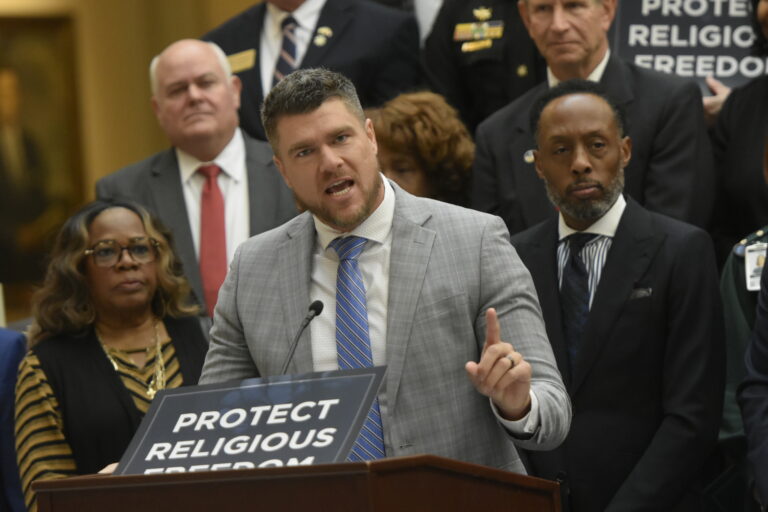
Cole Muzio (Ross Williams/Georgia Recorder)

Cole Muzio, head of the evangelical Frontline lobbying firm, gave lawmakers a not-so-subtle message at Setzler’s rally.

“As we look ahead to next year, whether it’s primary season or general election season, we have long memories and we have expectations, and we expect this to be done now,” he said.

Similar bills have fallen short in the Georgia Legislature in recent years, but Setzler said he is confident the House will vote on and pass SB 36 this year.

“I would welcome a large bipartisan vote, but I know we’ve got the votes on the floor of the House to do this; it’s just a matter of making the decision that we need to do it this year,” he said. “I thank the leadership that’s deliberating on this carefully; they’re friends of mine, and they believe in this deeply. It’s a matter of timing. I think it’s important to recognize that timing, respectfully, is now.”

U.S. Senate GOP aims for budget resolution vote this week

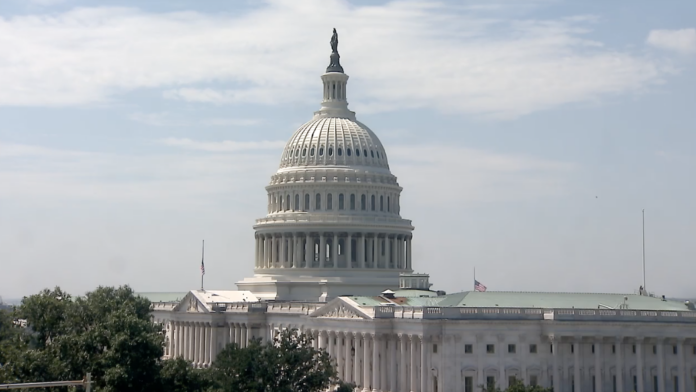
(U.S. Senate livestream image)

WASHINGTON (States Newsroom) — U.S. Senate Republicans hope to approve a budget resolution this week that would clear the way for Congress to enact an extension of expiring tax law as well as sweeping cuts to federal spending later this year.

Senate Majority Leader John Thune, R-S.D., said Tuesday the chamber will likely vote on the House-passed budget resolution later this week, after completing the vote-a-rama, where lawmakers vote on dozens of amendments, typically into the early morning hours.

“Republicans continue to have very productive conversations on how to achieve our agenda and working with President Trump on making sure that we are rebuilding our military, unleashing American energy dominance, making sure there isn’t a four-and-a-half trillion tax increase on the American people at the end of this year and obviously securing our border,” Thune said.

The House and Senate must vote to adopt the same budget resolution with matching instructions before they can use the complicated reconciliation process to move legislation through Congress on their own. The process allows the majority party to avoid the Senate filibuster that requires 60 votes for most legislation.

One ‘big, beautiful bill’

GOP lawmakers in the two chambers have been at odds for months over whether to move their core legislative goals in two bills or one package.

The Senate approved a budget resolution in mid-February that would have addressed the issue in two bills, before the House voted later that month to move forward with a different budget resolution.

The final, adopted budget resolution would set up Republicans to hold floor votes on one “big, beautiful bill,” as President Donald Trump has described it, later this year, if GOP leaders can keep nearly all of their members on board with the final product.

Republicans hold unified control of Congress and the White House, but voters didn’t give the party especially wide margins.

The GOP holds 218 seats in the 435-member House amid absences. That will soon rise to 220 with the election Tuesday of two Republicans in special elections in Florida. Republicans hold 53 seats in the Senate.

Any changes to tax law, energy policy or spending cuts will need support from nearly every GOP lawmaker in Congress, including centrists, who barely won election in swing districts, and far-right members, who are more likely to lose to a primary challenger claiming they’re not conservative enough.

The House-passed resolution includes reconciliation instructions that would allow Congress later this year to extend the 2017 tax cuts and a range of other GOP policy priorities that could not survive the 60-vote threshold.

Democratic amendments

Senate Minority Leader Chuck Schumer, D-N.Y., said Tuesday that Democrats plan to put up amendments during budget debate that will showcase how the eventual bill could impact Americans.

“We have had many good discussions, including today. And you are going to find us focused relentlessly on what … Donald Trump, Elon Musk and the Republican Senate and House are doing to the American people,” Schumer said. “They’re taking away benefits that they desperately need.”

The Senate adopted just two amendments during its last vote-a-rama in February, one from Alaska Republican Sen. Dan Sullivan and one from Utah Republican Sen. Mike Lee.

Democrats put forward numerous amendments but were unable to get any adopted.

Dem states sue Trump administration over sudden cancellation of $11B in health funds

(Georgia Recorder) — A coalition of Democratic state officials sued the Trump administration Tuesday over plans to cut more than $11 billion in grants by the Department of Health and Human Services, on the same day thousands of HHS workers reportedly found they’d been swept up in a mass layoff.

In Washington, the Republican chairman and top Democrat on the Senate Health, Education, Labor and Pensions Committee wrote HHS Secretary Robert F. Kennedy Jr. asking him to appear before the panel and discuss his plans for the massive agency.

The federal suit, signed by 22 attorneys general and two Democratic governors, alleges Kennedy revoked, without warning, billions in grant funding appropriated by Congress during the COVID-19 pandemic, starting last week. That led to states scrambling to adjust plans for vaccination efforts, infectious disease prevention, mental health programs and more.

The sudden and chaotic rollout of the grant cuts foreshadowed a scene at HHS offices, including at big campuses in Maryland, on Tuesday morning. Termination notices to laid-off workers were reportedlyemailed early Tuesday, but many workers did not see them before arriving at the office and finding out they’d lost their jobs when their key cards did not work.

Few specifics

Both the mass layoffs and the grant funding cuts challenged in the lawsuit stem from Kennedy’s March 27 announcement that the department would be “realigning,” by shuttering several offices and cutting 10,000 workers.

It was unclear Tuesday exactly what offices or employees were affected.

An HHS spokesperson responded to a request for comment by referring States Newsroom to Kennedy’s announcement, a press release and an accompanying fact sheet from March 27.

None provided a detailed breakdown but laid out plans to eliminate 3,500 full-time positions at the Food and Drug Administration, 2,400 employees at the Centers for Disease Control and Prevention, 1,200 staff at the National Institutes of Health and 300 workers at the Centers for Medicare and Medicaid Services.

The spokesperson did not respond to a follow-up inquiry requesting more details of the positions eliminated and other clarifications.

Efficiency doubted

In a written statement, Andrés Arguello, a policy fellow at Groundwork Collective, a think tank focused on economic equity, said the cuts would have “the exact opposite” effect of the administration’s stated goal of government efficiency.

“Gutting 10,000 public servants means higher costs, longer wait times, and fewer services for families already struggling with the rising cost of living,” Arguello, an HHS deputy secretary under former President Joe Biden, wrote. “Entire offices that support child care, energy assistance, and mental health treatment are being dismantled, leaving working families with fewer options and bigger bills. This isn’t streamlining—it’s abandonment, and the price will be paid by the sick, the vulnerable, and the poor.”

The lack of communication led to confusion among advocates and state and local health workers about the impacts of the staff cuts and cast doubt about the administration’s goals, speakers on a Tuesday press call said.

“There are so many more questions than answers right now,” Sharon Gilmartin, the executive director of Safe States Alliance, an anti-violence advocacy group, said. “They clearly are eliminating whole divisions and branches, which doesn’t speak to bureaucratic streamlining. It speaks to moving forward an agenda, which has not been elucidated for the public health community, it’s not been elucidated for the public.”

While specific consequences of the cuts were not yet known, Gilmartin and others said they would be felt at the state and local level.

“I think what we do know is that … when we’re cutting these positions at the federal level, we are cutting work in states and communities,” Gilmartin said.

Pain in the states

The lawsuit from Democratic officials is full of details about the impacts of the loss of federal funding on state programs.

The suit was brought in Rhode Island federal court by the attorneys general of Colorado, Rhode Island, California, Minnesota, Washington, Arizona, Connecticut, Delaware, the District of Columbia, Hawaii, Illinois, Maine, Maryland, Massachusetts, Michigan, Nevada, New Jersey, New Mexico, New York, North Carolina, Oregon and Wisconsin and Govs. Andy Beshear of Kentucky and Josh Shapiro of Pennsylvania.

HHS revoked “more than half a billion dollars” of grants from Pennsylvania, the Democratic officials said, affecting more than 150 state employees and contracted staff. The grants funded work “to respond to and mitigate the spread of infectious disease across the Commonwealth” and mental health and substance abuse programs.

In Nevada, “HHS abruptly terminated at least six grants” that had funded epidemiology and lab capacity, immunization access and mental health services, according to the suit.

“These terminations led Nevada to immediately terminate 48 state employees and to order contractors working under these awards to immediately cease all activity,” the complaint reads. “The loss of funding will have substantial impacts on public health in Nevada.”

The cutoff of $13 million in unobligated grants for local communities in Minnesota will mean the shuttering of clinics to provide vaccines for COVID-19, measles, mumps, rubella, influenza and other diseases, the suit said.

“One local public health agency reported that it held 21 childhood vaccination clinics and provided approximately 1,400 vaccinations to children in 2024,” a paragraph in the complaint about Minnesota local vaccine clinics said. “It also held 87 general vaccination clinics in 2024. As a result of the termination of the … funds, it has immediately ceased all vaccination clinics for 2025.”

The grant terminations also affected state plans already in the works.

Rhode Island had received an extension from HHS for a grant with $13 million unspent, but that money was revoked last week.

“Accordingly, the state public health department developed a work plan for its immunization program that included an April 2025 vaccination clinic for seniors, provided salaries for highly trained technicians to ensure that vaccine doses are stored and refrigerated correctly to prevent waste of vaccines purchased with other tax-payer dollars, planned computer system upgrades, and covered printing costs for communications about vaccine campaigns,” the suit said.

Senators want RFK Jr. on the Hill

Democrats on Capitol Hill issued a slew of statements opposing the cuts and warning of their effects.

Republicans were more deferential to the administration, asking for patience as details of the cuts are revealed.

But the letter from the top members of the Health, Education, Labor and Pensions Committee also brought both sides together to write Kennedy asking him to testify before the committee to make those explanations plain.

“The hearing will discuss your proposed reorganization of the Department of Health and Human Services,” the letter from Louisiana Republican Bill Cassidy and Vermont independent Bernie Sanders said.

In a written statement, Cassidy said the hearing would be an opportunity for Kennedy to inform the public about the reorganization.

“The news coverage on the HHS reorg is being set by anonymous sources and opponents are setting the perceptions,” Cassidy said in a written statement. “In the confirmation process, RFK committed to coming before the committee on a quarterly basis. This will be a good opportunity for him to set the record straight and speak to the goals, structure and benefits of the proposed reorganization.”

Cornelia Rails to Trails project on hold after federal cuts

City of Cornelia (Daniel Purcel/NowHabersham.com)

A federally-funded, off-road pedestrian path planned in Cornelia has been delayed indefinitely following recent budget cuts at the national level.

As planned, following the old Tallulah Falls rail line, the Rails to Trails project would’ve spanned 50-plus miles from Cornelia to Franklin, North Carolina.

In the city, the trail would have run from the Cornelia Depot and spanned about two miles from Grant Place to the GA 365 bridge past Walmart.

The city of Cornelia had planned to use around $4.6 million in funds for the project, financed through the $550 billion Bipartisan Infrastructure Law passed by Congress in 2021. But that money has for now been gutted as the federal government continues to slash funds across the board.

“With all the cuts that have been made, it got cut out,” Cornelia City Manager Dee Anderson said. “All we’ve been told is we need to reapply.”

The DOGE, or Department of Government Efficiency, website states that an estimated $140 billion in federal cuts have been made since the department began reviewing spending in January.

While Anderson said the stripped funding is a possible result of the department’s cost-cutting measures, City Attorney Steve Campbell said the source of the cut is not entirely known.

“I wouldn’t speculate,” Campbell said.

Registration is underway for the 62nd Miss Mountain Laurel Pageant

Miss Mountain Laurel Queen 2023, Grace Ellis. (photo by Sherri Purcell)

The 62nd Miss Mountain Laurel Pageant will be held Saturday, April 26 at the Piedmont Swanson Center beginning at 8 a.m.

The Clarkesville Lions Club, a non-profit organization dedicated to serving our community, is thrilled to present the 62nd Annual Miss Mountain Laurel Pageant! This pageant is open to all interested participants.

Important Payment Information:

All entry fees, ad fees, optional fees, and other payments must be sent to the designated PayPal account: [email protected] (using the “Friends and Family” option).

We cannot accept funds sent to personal accounts.

For check payments, please send a private message for the mailing address.
Pageant Details:

Current queens may re-compete, provided they advance to the next age division.
Mandatory categories: Beauty and Off-the-Rack Spring Wear (OOC). One photogenic photo is included in the entry fee.

Age Divisions:

Baby Miss (0-11 months)
Tiny Miss (12-23 months)
Wee Miss (2-3 years)
Little Miss (4-5 years)
Petite Miss (6-7 years)
Young Miss (8-9 years)
Pre-Teen Miss (10-12 years)
Teen Miss (13-15 years)
Miss (16-18 years, High School)
College Miss (19+ years, college student, minimum 3 participants)

Fees:

Entry Fee: $75.00
Door Entry: $10.00 (children 5 and under free)

Optional Categories & Fees:

Ad Sales (program ads):
Business Card: $25.00
1/4 Page: $50.00
1/2 Page: $75.00
Full Page: $150.00
Back Cover: $200.00

Ad submissions: [email protected]
Cover Model: $20.00
People’s Choice: $1.00 per vote
Intro (Ages 2+): $10.00
Interview (Ages 2+): $10.00
Additional Photogenic Photos: $5.00 per photo

Awards:

Court: Queen, 1st, 2nd, and 3rd Alternates.
Side Awards: Prettiest Eyes, Hair, Dress, Photogenic, and Intro.
Dress Lengths: Baby Miss-Wee Miss (Short), Little Miss-Miss (Long)

Scoring:

Baby-Teen Divisions:

Personality (1-10): Smiles and personality.
Presentation (1-10): Confident walk, posture, eye contact.
Appearance (1-10): Hair, makeup, dress fit and appropriateness.
Miss Division: Personality, Presentation, Appearance, and On-Stage Question.

Makeup Guidelines:

0-3 years: No makeup.
4-9 years: Light powder, light eyeshadow, mascara, and natural lip gloss.
10+ years: Age-appropriate makeup.
Off-the-Rack (OOC) Spring Wear:

Must be off the rack.
No revealing attire (breasts, belly, or buttocks).

Scholarships (Miss and College Miss Divisions):

$1,000.00 scholarship (10+ contestants).
$500.00 scholarship (less than 10 contestants).
Must be enrolled in college to receive scholarship funds.
High school winners will receive scholarship funds upon college enrollment.
Miss and College Miss winners must participate in the May 2025 parade to receive scholarship funds.

Additional information will be provided to the winners.

Registration:

Registration Link: https://form.jotform.com/240117579369061
Payment: [email protected] (PayPal Friends and Family) or by check (PM for address).

Additional Notes:

All Division winners must stay for group photos immediately after their division is crowned.