A two-vehicle accident on GA 365 in Hall County on Wednesday left both drivers with serious injuries, according to the Georgia State Patrol (GSP).
The crash occurred at approximately 5:07 p.m. at the intersection of GA 365/Cornelia Highway and Whitehall Road.
According to GSP, a 2012 Silverado, driven by 26-year-old Tiana Wheeler of Commerce, was traveling south in the left turn lane on GA 365 and attempted to turn left onto Whitehall Road. Pedro Martinez, 56, drove a 2003 Volvo tractor-trailer north in the right lane on SR 365. Turning left, the Silverado failed to yield and was struck on the right by the tractor-trailer, troopers say.
Wheeler and Martinez were transported with serious injuries.
The northbound lanes of State Route 365 were closed for approximately an hour and a half for the investigation and subsequent crash cleanup. Charges are pending.
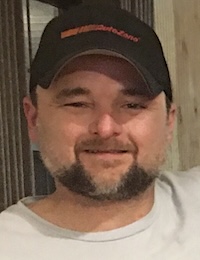
Shane Michael Pierce, age 41, of Toccoa, Georgia, entered into rest on Friday, May 16, 2025.
Shane was born March 16, 1984, in Hall County to Ricky Pierce and the late Wanda Corpening Pierce. In addition to his mother, he was preceded in death by his brother, Stephen Eugene Pierce; uncle, Kenneth Eugene Corpening; as well as all of his grandparents.
Shane was a man of the outdoors and always had his loving dog, Pepper by his side. He found peace and joy in nature, whether he was casting a line into the water, fishing or simply enjoying the fresh air and sunshine. His love for the simple pleasures in life was matched only by his love for people. He spent many years working at AutoZone. Shane had a heart for service and a personality that made others feel instantly comfortable. He never hesitated to lend a hand to those in need.
Survivors include his father and significant other, Ricky Pierce and Joann McIntyre, of Toccoa; brothers, Richard William Pierce, of Tallulah Falls; Matthew Nathan Lake, of Atlanta; aunt, Regina Lathan, of Hartwell; uncle, Johnny Pierce, of Cornelia; cousin and spouse, Carrie and Mickey Corpening, of Toccoa; and several extended relatives.
Funeral Services will be held at 11:00 a.m., Saturday, May 24, 2025, at the Whitfield Funeral Home, North Chapel. Interment will follow at Yonah Memorial Gardens.
The family will receive friends from 5:00 p.m. to 8:00 p.m., Friday, May 23, 2025 at the funeral home.
In lieu of flowers, the family respectfully requests memorials be made to Ricky Pierce c/o Whitfield Funeral Homes & Crematory, P.O. Box 1113, Cornelia, Georgia, to assist the family with final expenses.
Arrangements have been entrusted to the Whitfield Funeral Homes & Crematory, North Chapel at 245 Central Avenue, Demorest, Georgia 30535. Telephone: 706-778-1700.
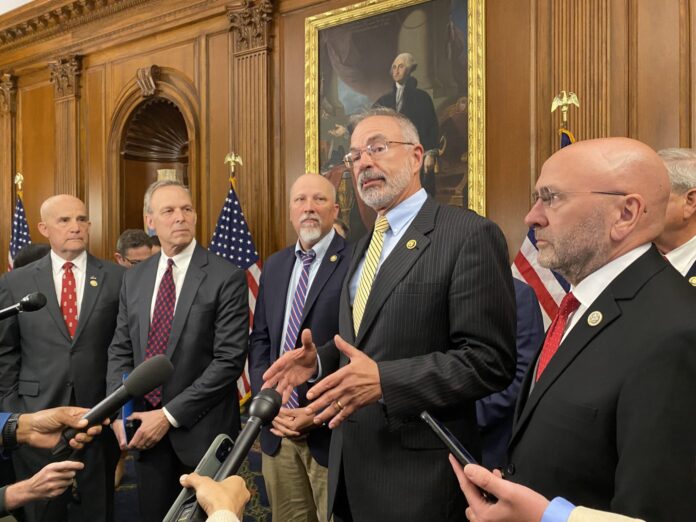
U.S. House Freedom Caucus Chair Andy Harris, R-Md., center, speaks to reporters on Wednesday, May 21, 2025 at the U.S. Capitol. From left are Republicans Keith Self of Texas, Scott Perry of Pennsylvania and Chip Roy of Texas. (Jennifer Shutt/States Newsroom)
WASHINGTON (States Newsroom) — U.S. House Republican leaders released changes to their “one big beautiful bill” late Wednesday after marathon negotiations with conservatives demanding deeper cuts to safety net programs, teeing up debate and a final vote likely sometime Thursday.
The alterations, which will have to be adopted later, moved up implementation of work requirements for Medicaid by at least a couple of years and tossed out plans to sell some public lands. The new language also tightened the timeline for clean energy tax breaks and raised the ceiling for taxpayers who deduct state and local taxes.
The package of adjustments — the manager’s amendment — was incorporated into the larger reconciliation bill, which was approved by the House Rules Committee just before 11 p.m. Eastern on an 8-4 party-line vote. Far-right holdout Rep. Chip Roy of Texas was absent.
Next, the package must pass a procedural vote on the House floor before lawmakers can debate and take a final vote.
With a razor-thin margin, House Speaker Mike Johnson can only lose a handful of members on each vote. Democrats are expected to uniformly vote “no” in the procedural and final votes.
Medicaid
Republicans moved up implementation of work requirements for Medicaid enrollees from taking effect after January 1, 2029 to no later than December 31, 2026. That could mean some states will make the changes before next year’s midterm elections.
The provision would require those who rely on the state-federal health program for lower-income Americans and some people with disabilities, who are between the ages of 19 and 65, to work, participate in community service, or attend an educational program at least 80 hours a month.
The language has numerous exceptions, including for pregnant people, parents of dependent children, people who have complex medical conditions, tribal community members, people in the foster system, people who were in the foster system who are below the age of 26 and people released from incarceration in the last 90 days, among others.
The GOP changes also would bar Medicaid from covering gender transition procedures for anyone in the program. The bill previously barred that type of treatment for anyone below the age of 18.
Clean energy tax credits
Republicans also tightened the timeline on the termination of clean energy tax credits enacted under President Joe Biden. Hardliners focused on reducing the deficit had demanded a quicker phase-out for the credits.
The new language would accelerate phase-outs for clean energy investment tax credits to 2028, up from 2031, with special carve-outs for nuclear facilities. Companies that break ground on new facilities 60 days after the bill is enacted, if passed, will not qualify for the tax credits. The same applies to any facility placed into service after 2028.
State and local taxes
A separate contingent of Republican holdouts reached a deal with Johnson to raise the SALT cap to $40,000, up from the $10,000 lid enacted under the 2017 tax law. The SALT cap — the amount of state and local taxes constituents can deduct from federal taxable income — is a top issue for Republicans who represent districts in high-tax blue states, including California, New Jersey and New York.
The amount of SALT taxpayers can deduct decreases for those making more than $500,000 annually. The SALT cap and the income cut-off will increase by 1% each year from 2027 until 2033.
Public lands sale
The amendment removed language that would have allowed the sale of public lands in Nevada and Utah.
The National Wildlife Federation credited Montana Republican Rep. Ryan Zinke with removing the provision.
“Thank you to Rep. Ryan Zinke and his colleagues who listened to their constituents and worked with House leaders to eliminate the provision from the budget reconciliation bill,” NWF Associate Vice President for Public Lands David Wilms said in a statement. “We urge all members of Congress to refrain from similar attacks on America’s public lands.”
Jessica Turner, president of the Outdoor Recreation Roundtable, wrote in a statement that “Congress avoided setting a dangerous precedent that lands can be sold anytime the U.S. Treasury needs a budget ‘pay-for’ and threatening outdoor recreation businesses and rural communities alike that need certainty, access, and long-term infrastructure.”
The Center for Biological Diversity’s Great Basin Director Patrick Donnelly wrote in a separate statement that it was “appalling that GOP leaders tried to get away with auctioning off some of our country’s most beautiful landscapes to fund tax cuts for billionaires and make developers richer. This is Gilded Age-level stuff, and I hope people remember it the next time Republicans try to pretend they care about public lands.”
A separate provision in the amendment appeared to narrow the federal authorizations energy projects could bypass by paying a $10 million fee. The section had been attacked by environmental groups as a “pay-to-play” for energy companies.
White House meeting
The changes come after Johnson, a Louisiana Republican, and far-right holdouts huddled with President Donald Trump at the White House Wednesday afternoon.
Johnson, speaking to reporters at the Capitol following the meeting, said that lawmakers had “a good discussion” and that he believes the GOP is “in a very good place.”
“I think that all of our colleagues here will really like this final product, and I think we’re going to move forward,” Johnson said.
Johnson said members of the Freedom Caucus, who previously argued the legislation doesn’t go far enough to restructure Medicaid and reduce federal spending, may end up supporting the bill, in part because Trump plans to address their other concerns through unilateral actions.
“You will see how all this is resolved. But I think we can resolve their concerns and it’ll be probably some combination of work by the president in these areas as well as here in Congress,” Johnson said. “So there may be executive orders related to some of these issues in the near future.
“And, you know, this is a commitment the president has made. He wants to go after fraud, waste and abuse.”
White House press secretary Karoline Leavitt released a written statement saying the “meeting was productive and moved the ball in the right direction.
“The President reiterated how critical it is for the country to pass the One Big Beautiful Bill as quickly as possible.”
Complex process
Republicans are using the complex reconciliation process to move the package through Congress with simple majority votes in each chamber, avoiding the Senate’s 60-vote legislative filibuster, which would otherwise require bipartisanship.
Reconciliation measures must address federal revenue, spending, or the debt limit in a way not deemed “merely incidental” by the Senate parliamentarian. That means the GOP proposals must carry some sort of price tag and cannot focus simply on changing federal policy.
Republicans are using the package to extend the 2017 tax law, increase spending on border security and defense by hundreds of billions of dollars, overhaul American energy production, restructure higher education aid and cut spending on Medicaid.
A new Congressional Budget Office analysis released late Tuesday projected the massive reconciliation package would decrease resources for low-income families over the next decade while increasing resources for top earners.
Freedom Caucus
Earlier Wednesday, members of the Freedom Caucus told reporters following a different meeting with Johnson that they believed negotiations were moving in the right direction, but were skeptical of trying to approve the entire package this week.
Maryland Republican Rep. Andy Harris, chairman of the group, said they wanted the legislation to go further in terms of addressing “waste, fraud and abuse” within Medicaid, though he declined to elaborate.
The Medicaid proposals in the version of the bill prior to the negotiated changes would cut $625 billion in federal spending during the next decade, under a CBO analysis. Democrats have warned the result would be millions of vulnerable people losing access to the health program for lower income people and some people with disabilities.
Texas Republican Rep. Chip Roy said during that same impromptu press conference that leadership and members of the Freedom Caucus had made “significant progress” toward a final agreement.
“We’re trying to deliver so that the people who are actually out there working hard can actually get the health care that they want to get, that they can get, and get it the best way possible,” Roy said. “That’s what this is all about; changing a broken system, making sure we’re saving taxpayer dollars and being able to provide a better environment for people to be able to thrive.”
Pennsylvania Republican Rep. Scott Perry, who used to chair the Freedom Caucus, said that holding a House vote before Memorial Day was a made-up timeline and that if negotiations needed to last longer, they should.
“This is a completely arbitrary deadline set by people here to force people into a corner to make bad decisions,” Perry said. “It’s more important to get this right, to get it correct, than to get it fast. We are sitting at the table to do that.”
FILE - A vial of Moderna COVID-19 vaccine rests on a table at an inoculation station in Jackson, Miss., on July 19, 2022. (AP Photo/Rogelio V. Solis, File)
WASHINGTON (AP) — The Trump administration said Tuesday it will limit approval for seasonal COVID-19 shots to seniors and others at high risk pending more data on everyone else — raising questions about whether some people who want a vaccine this fall will be able to get one.
Top officials for the Food and Drug Administration laid out new standards for updated COVID shots, saying they’d continue to use a streamlined approach to make them available to adults 65 and older as well as children and younger adults with at least one high-risk health problem.
But the FDA framework, published Tuesday in the New England Journal of Medicine, urges companies to conduct large, lengthy studies before tweaked vaccines can be approved for healthier people. It’s a stark break from the previous federal policy recommending an annual COVID shot for all Americans six months and older. In the paper and a subsequent online webcast, the FDA’s top vaccine official said more than 100 million Americans still should qualify for what he termed a booster under the new guidance.
Dr. Vinay Prasad described the new approach as a “reasonable compromise” that will allow vaccinations in high-risk groups to continue while generating new data about whether they still benefit healthier people.
“For many Americans we simply do not know the answer as to whether or not they should be getting the seventh or eighth or ninth or tenth COVID-19 booster,” said Prasad, who joined the FDA earlier this month. He previously spent more than a decade in academia, frequently criticizing the FDA’s handling of drug and vaccine approvals.
It’s unclear what the upcoming changes mean for people who may still want a fall COVID-19 shot but don’t clearly fit into one of the categories.
“Is the pharmacist going to determine if you’re in a high-risk group?” asked Dr. Paul Offit, a vaccine expert at Children’s Hospital of Philadelphia. “The only thing that can come of this will make vaccines less insurable and less available.”
The nation’s leading pediatrics group said FDA’s approach will limit options for parents and their children.
“If the vaccine were no longer available or covered by insurance, it will take the choice away from families who wish to protect their children from COVID-19, especially among families already facing barriers to care,” said Dr. Sean O’Leary of the American Academy of Pediatrics.
Provisional data from the Centers for Disease Control and Prevention shows more than 47,000 Americans died from COVID-related causes last year. The virus was the underlying cause for two-thirds of those and it was a contributing factor for the rest. Among them were 231 children whose deaths were deemed COVID-related, 134 of them where the virus was the direct cause — numbers similar to yearly pediatric deaths from the flu.
The new FDA approach is the culmination of a series of recent steps under Health Secretary Robert F. Kennedy Jr. scrutinizing the use of COVID shots and raising questions about the broader availability of vaccines. It was released two days ahead of the first meeting of FDA’s outside vaccine experts under Trump.
Last week the FDA granted full approval of Novavax’s COVID-19 vaccine but with major restrictions on who can get it — and Tuesday’s guidance mirrors those restrictions. The approval came after Trump appointees overruled FDA scientists’ earlier plans to approve the shot without restrictions.
Pfizer and Moderna, makers of the most commonly used COVID shots, each said they would continue to work with the agency.
For years, federal health officials have told most Americans to expect annual updates to COVID-19 vaccines, similar to the annual flu shot. Just like with flu vaccines, until now the FDA has approved updated COVID shots so long as they show as much immune protection as the previous year’s version.
But FDA’s new guidance appears to be the end of that approach, according to Prasad and FDA Commissioner Marty Makary, who co-authored the journal paper and joined the FDA webcast.
Prasad and Makary criticized the U.S.’s “one-size-fits-all,” contrasting it with some European countries that recommend boosters based on age, risk and other factors.
Prasad said the FDA will ask all manufacturers to do new clinical trials in healthy people ages 50 to 64, randomly assigning them to get a vaccine or a placebo and tracking outcomes with special attention to severe disease, hospitalization or death. Companies might need to repeat that requirement for future vaccine approvals if there’s a large virus mutation rather than the past year’s incremental evolution. Companies are also free to test their vaccines for approval in younger adults and children, Prasad said, adding “this is a free country.”
Since becoming the nation’s top health official in February, Kennedy has filled the FDA and other health agencies with outspoken critics of the government’s handling of COVID shots, including Makary and Prasad. Under federal procedures, the FDA releases new guidance in draft form and allows the public to comment before finalizing its plans. The publication of Tuesday’s policy in a medical journal is highly unusual and could run afoul of federal procedures, according to FDA experts.
Health experts say there are legitimate questions about how much everyone still benefits from yearly COVID vaccination or whether they should be recommended only for people at increased risk.
In June, an influential panel of advisers to the CDC is set to debate which vaccines should be recommended to which groups.
The FDA’s announcement appears to usurp that advisory panel’s job, Offit said. He added that CDC studies have made clear that booster doses do offer protection against mild to moderate illness for four to six months after the shot even in healthy people.
The tarp covers the infield at Nationals Park before the baseball game between the Washington Nationals and the Atlanta Braves was postponed because of the weather, Wednesday, May 21, 2025, in Washington. (AP Photo/Daniel Kucin Jr.)
WASHINGTON (AP) — The Atlanta Braves’ game Wednesday at the Washington Nationals was rained out and will be made up as part of a split doubleheader on Sept. 16 as the middle two games of a four-game series.
The game was called shortly before 5 p.m. There was light precipitation at the time and heavier rain was forecast for the evening.
Atlanta rookie right-hander AJ Smith-Shawver (3-2) was scheduled to start Wednesday against Nationals righty Trevor Williams (2-5).
The Nationals will have to wait to attempt to extend their season-best four-game winning streak after defeating Atlanta 5-3 in Tuesday’s series opener.
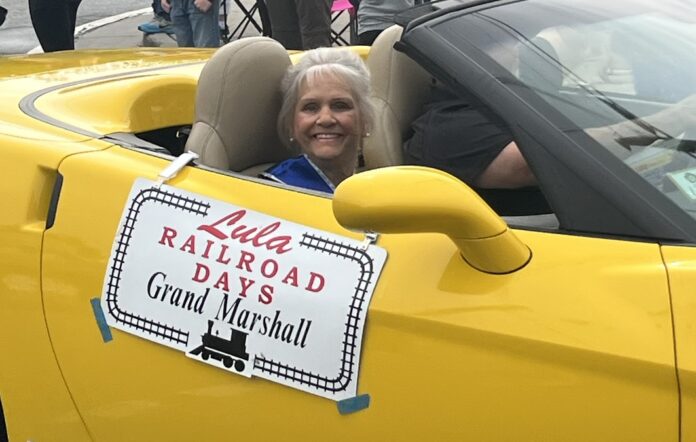
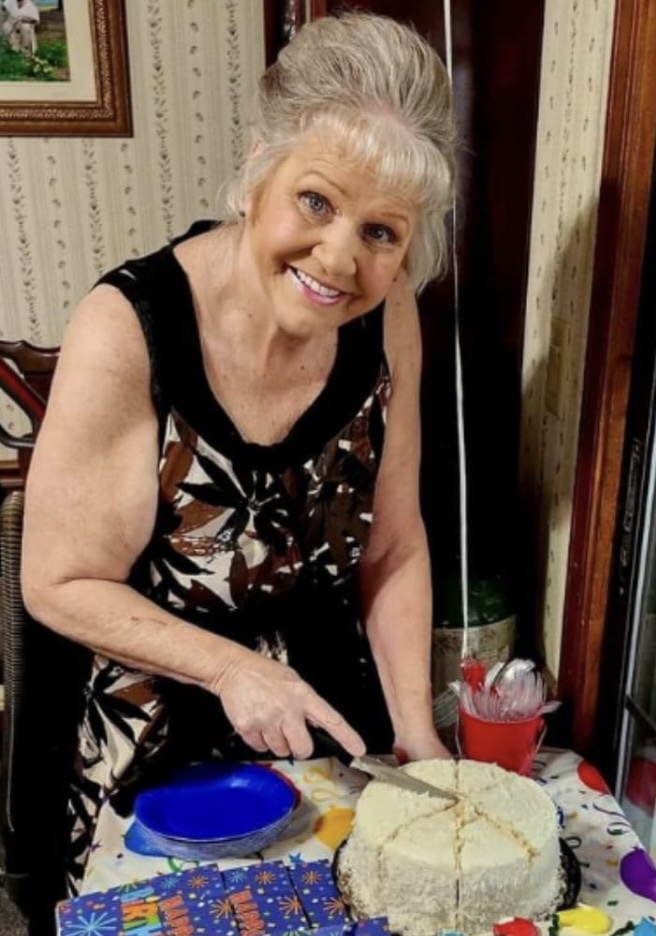
Debbie Hubbard Smith rides through Lula's Railroad Days Festival as the city's Grand Marshal (Submitted by Jim Grier)
The city of Lula’s 2025 Grand Marshal, longtime resident, social advocate and devoted Christian Debbie Hubbard Smith died unexpectedly on Tuesday, May 13. She was 68.
Debbie, known as a beacon of support in the community, is lovingly remembered by her daughter and son-in-law, Misty and Stephen Jackson of Alto; her brother, Eddie Hubbard (Patricia Lewis) of Banks County; and her grandchildren Oakley, Oxley, and Olive, who called her “Nana.”
A funeral service was held on Friday, May 16, at Airline Baptist Church. Smith was laid to rest at Living Mission Methodist Church Cemetery in Lula.
In the end, among any group, Debbie will always be remembered for a list of traits: Her radiant glow, her compassionate soul and a smile that could brighten the darkest day.
Debbie, a graduate of Lanier Technical College, worked for many years as a secretary before her retirement.
Debbie Hubbard Smith prepares to ride through Lula’s Railroad Days parade as Grand Marshal (Submitted by Jim Grier)
Debbie Hubbard Smith: An unforgettable person
Marilyn Grier, one of Debbie’s closest friends, recalled that she felt connected to Debbie even before they met. A powerful friendship forged by fate.
Before that, Grier would drive past a particular ranch house daily, always feeling curious about who lived there. One day, she found out.
In the early-2000s, Grier was standing outside the home of a man nearing the end of his life when a large “banana yellow” car pulled up. Debbie stepped out, moving quickly to assist the man – her father – out of the passenger side.
“I’d never met her, but I feel like I knew her,” Marilyn Grier said. “I believe it was just meant for us to have a relationship.”
By 2018, Marilyn Grier, a retired teacher, started the Lula Ladies. With Debbie’s addition, a close friendship quickly blossomed. It was after only just a few meetings that Debbie came to City Hall, plates of food in hand, and became a devout member. For years to come, Debbie would become fundamental in the development of Lula Ladies, an outreach group promoting business and community togetherness.
And to this day, Debbie’s smile remains unforgettable to Marilyn Grier.
“She just walked through that door with that smile,” Marilyn Grier said. “Debbie had such a positive attitude about life, never negative, and the way she made connections between people was unbelievable.”
At the end of each session, Debbie would pack leftover food for anyone in need and deliver containers to Lula Mercantile owner Dave Wilson, who remembers her feeding up to 40 homeless people at a time on any given night.
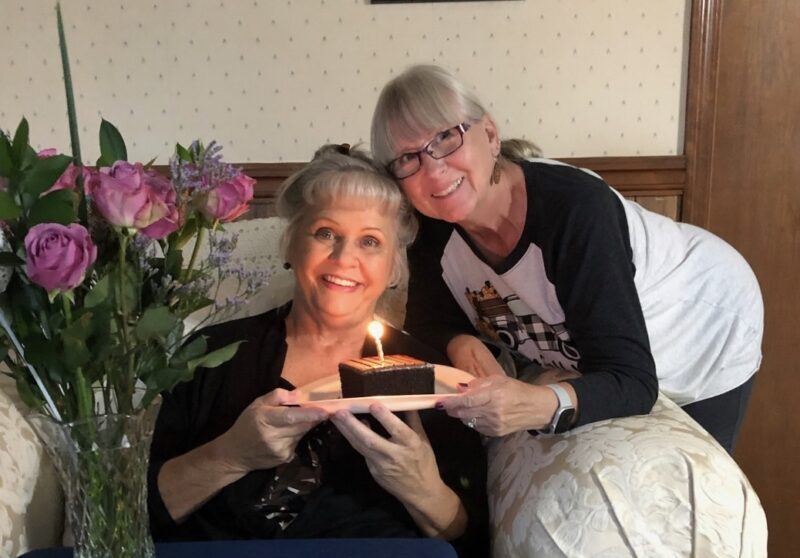
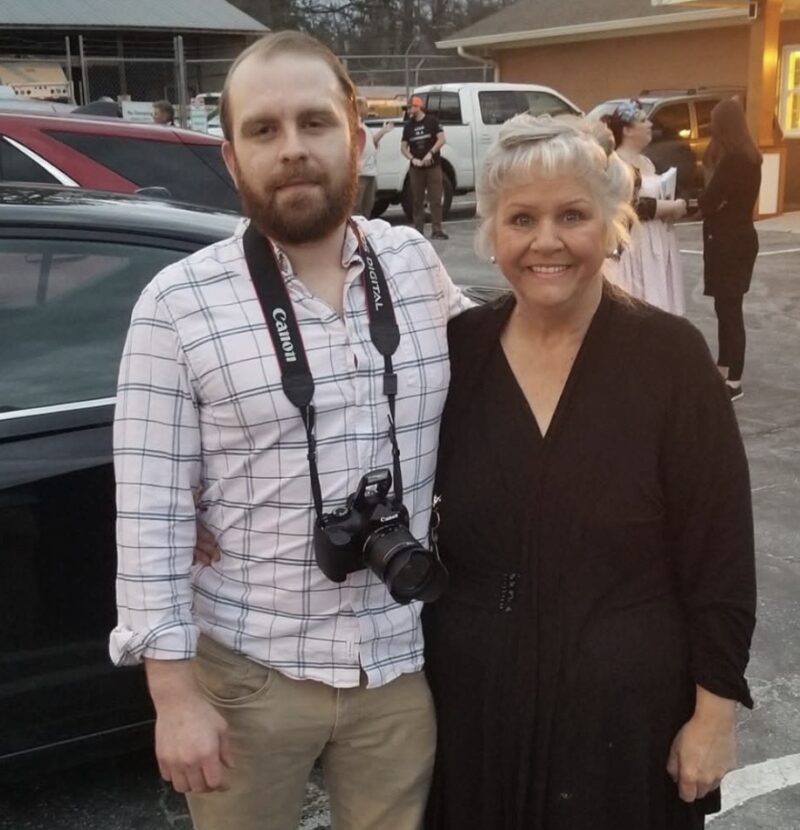
Debbie Hubbard Smith (left) poses alongside Marilyn Grier (right)
“One night, Debbie came by with more food than we had a place to store – canned goods, everything,” Wilson said. “We sat out here almost the whole night. Everybody that came by got fed. And we did that multiple times with food Debbie delivered.”
Wilson added: “If everybody could be Debbie, I couldn’t imagine how much better this world would be. That is her legacy.”
Debbie was always ready to serve. Her garage served as a makeshift food bank throughout every month of every year, and her car was often filled with donated clothes she redistributed to those in need.
“She was the car on a mission to help somebody – every single day,” Marilyn Grier said. “That was her joy.”
A legacy of faith and compassion
Former Lula Mayor Jim Grier also reflected on the profound legacy Debbie leaves behind.
“Debbie meant a lot to the community,” he said. “She drew people in. She made connections among people. She loved Jesus, and she brought his love to this community and shared it everywhere she went.”
Debbie lived her life modeled after Jesus Christ, committed to serving the poor, the sick, the suffering, the hungry and the homeless.
A member of Airline Baptist Church for 25 years, Debbie would receive calls from the church whenever someone in the community needed help – whether a widow, a senior citizen who had fallen ill or someone behind on bills.
Every time, the church called Debbie – and then she made things happen.
“Debbie was always aware of everything around her, and if there were any needs in the community,” Airline Baptist Church Executive Pastor Mike Welborn said. “She was always informing us of what was going on in the community. She just loved people. I don’t think I ever saw her not smiling.”
Debbie Hubbard Smith
One day, at a church event distributing food to those in need, Welborn recalls, Debbie left with several plates for delivery, then returned five minutes later for more.
“She’d run into a family sitting on the side of the road and gave them the food, so she came back to get more,” Welborn said. “She just loved helping people. If someone needed something, she was there. She was a kind-hearted person, and she will be missed greatly.”
As the backbone of a community, Jim Grier noted Debbie’s ability to connect needs with resources.
“People would say, ‘Debbie, I’ve got this five-pound sack of potatoes. Do you know anybody that needs some potatoes?’ And Debbie would say, ‘Well, sure, I think I could put that in a good place.’ She always knew somebody that needed a meal that week… It might have been they needed a wheelchair or medical equipment.”
“And she delivered,” Marilyn Grier agreed. “She ran a mission from her home on a daily basis.”
A follower of Christ
For the past two years, Debbie participated in Journaling with Jesus – a group that reads scripture, deepens prayer and seeks to channel messages through Jesus Christ.
Monie Bardoul, a fellow member, described Debbie’s spiritual connection with Christ.
“I watched Jesus speak so sweetly to Debbie,” she said. “There was one day that Jesus told Debbie, ‘You’re beautiful.’ I watched her just become a little girl again, and receive Jesus saying, ‘Debbie, you’re beautiful.'”
On another occasion, Bardoul said Jesus told Debbie she was worthy, sparking a profound reaction from Debbie.
“One day, as we were getting ready to leave, Debbie threw her stuff down on my kitchen island and said, ‘Oh my goodness. I’m worthy. I’m worthy. Jesus just told me I’m worthy, and I’m worthy.’ And she was absolutely transformed in that moment in knowing how worthy she was to her creator.”
“Debbie loved Jesus, and she loved serving him,” Bardoul added. “She loved telling people about him. She lived by his word that says, ‘Honor one another. Love one another. Humble yourself before one another.’ And she did that just naturally from her heart.”
A friend and a hero
As a reporter who covered Lula, I remember Debbie always smiling at the door, handing out meeting agendas to all, before every council meeting. Even after I moved on in my career, Debbie kept in touch – calling regularly just to check in. Calls that were supposed to last minutes sometimes stretched into hours.
The last time I spoke to Debbie was in late-April after she was named Grand Marshal in Lula’s Railroad Days parade. Never one to seek recognition, Debbie struggled to accept the honor. I told her it was long overdue and that she deserved it. And now, if I could go back, I’d spend more time, stretching that phone conversation longer, making sure she knew it.
Kathie Butler, a friend of Debbie’s, said it best: “Debbie was the biggest, brightest light you could ever see,” she said. “She was an amazing person. I don’t think Lula will ever be the same. Debbie was a part of everything. She’d do everything. She never wanted to take credit. She downplayed everything. I don’t know too many people like that. Debbie was a true blessing.”
Debbie was known for taking countless photos at events – always of others, rarely of herself. The pictures in her phone, no doubt, holds thousands of captured moments and memories that tell the story of a community over the course of many years.
Brian Wellmeier (left) poses for a photo as requested by Debbie Hubbard Smith (right) before a Lula City Council meeting
When I heard of Debbie’s passing, I felt the world had lost someone irreplaceable. Lula City Clerk Tangee Puckett – who, alongside fellow City Clerk Teresa Heath, had a hand in naming Debbie Grand Marshal – expressed the same sentiment as everyone else.
“I don’t even know how to put Debbie in words,” Puckett said. “She was an absolute amazing person. There will never be another Debbie Smith. She was absolutely one of a kind. She had the biggest heart. She never asked for help, but she was always willing to help anybody and everybody. She was Lula, and Lula will never be the same.”
Councilman Tony Cornett echoed the same admiration.
“Debbie was a force in Lula with a passion to care for everyone she met,” Cornett said. “She was a ‘connector’ of people. If there was a need, she found someone who could meet that need. If she ever asked you for anything, you knew she was asking for someone in need. All were willing to help if she ever asked. She was very instrumental in me and my wife Amy’s involvement with the community. It was her encouragement that led me to serve in so many ways including service on Lula City Council.”
Debbie always believed in me, as a person and a journalist, no matter what or where I went. Debbie was everywhere, all at once. If something mattered to the community, you could bet Debbie was there – either before you arrived or just after – phone in hand, ready to capture the moment. Over the years, she likely preserved thousands of those moments in her phone, each telling a story – stories she didn’t just witness, but helped shape. She never made it about herself. For Debbie, it was always about other people.
Known for the warmth, positivity and the light she brought to every person she met, Debbie had a rare gift: She touched not just individual lives, but an entire community – deeply and genuinely.
As someone who meets and interviews hundreds of people a year, I can say with certainty that I will never meet another person like Debbie Smith. And if she were here now, I can hear her smile as she’d say, “I’m alright, hun. Y’all take care of each other, and I’ll see y’all soon.”
Benjamin Lamar Gudmundson (Hall County Sheriff's Office)
A Gainesville man remains in the Hall County Jail without bond after his arrest on multiple felony charges related to the sexual exploitation of children, according to the Hall County Sheriff’s Office.
Benjamin Lamar Gudmundson, 31, was identified as the suspect following an investigation launched in February of 2025 by the Hall County Sheriff’s Office Internet Crimes Against Children (ICAC) Unit. The probe began after two cybertips from the National Center for Missing and Exploited Children (NCMEC) alerted authorities to the upload of child sexual abuse material (CSAM) to a social media platform by someone in the area.
ICAC investigators executed a search warrant at Gudmundson’s residence on Tuesday, May 20, where they seized multiple electronic devices. According to authorities, the initial forensic review uncovered 10 images depicting children under the age of 16 engaged in sexually explicit conduct.
Gudmundson has been charged with 20 felony counts of sexual exploitation of children — 10 counts for possession and 10 counts for distribution of CSAM. Investigators say additional charges may be filed pending further analysis of the electronic evidence.
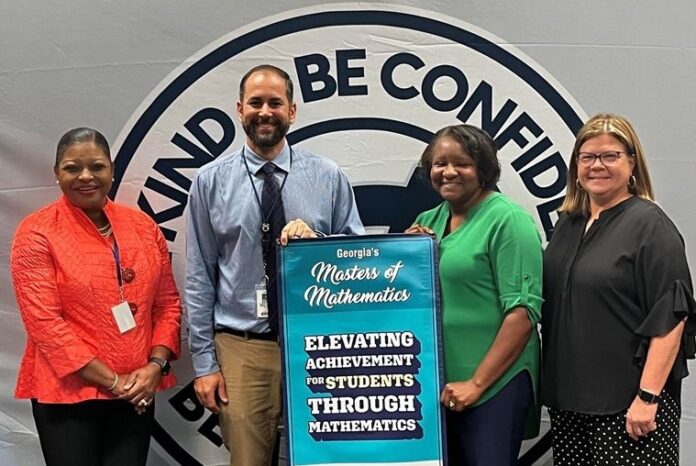
Pictured, left to right, are Dr. Stephanie Johnson of the Georgia Department of Education, 8th Grade Math and Algebra 1 instructor Jack Fullerton, White County Middle School Principal Nara Allen, and White County School Superintendent Dr. Laurie Burkett. (WRWH.com)
White County Middle School in Cleveland has been recognized for having some outstanding math students. The school received a visit on Tuesday from Dr. Stephanie Johnson, Deputy Superintendent for School and District Effectiveness, with the Georgia Department of Education.
Dr. Johnson was here to officially recognize the school for their exceptional achievement of growth in mathematics, as evidenced by their performance on the Georgia Milestones assessment. She commended the students, faculty, and staff.” This Progress Award is no small achievement. This is an award that Superintendent Woods created to celebrate our schools who are excelling in the high percentages for growth in our state, and White County Middle School blew it out of the water. ”
WCMS was one of 624 Georgia schools named “Math Leader Schools” for the school year 2024 by the Georgia Department of Education.
Jack Fullerton, 8th Grade Math and Algebra 1 instructor at the Middle School, would not take any of the credit, he said, “The students did an amazing job, I just steered the ship and gave them the tools they needed.”
Middle School Principal Nara Allen shared her excitement by saying, “I’m so proud of our students that worked really hard. I’m proud of Mr. Fullerton. He really took time to time of dig deep and think, what he could do different to support our students? And whatever he did worked!”
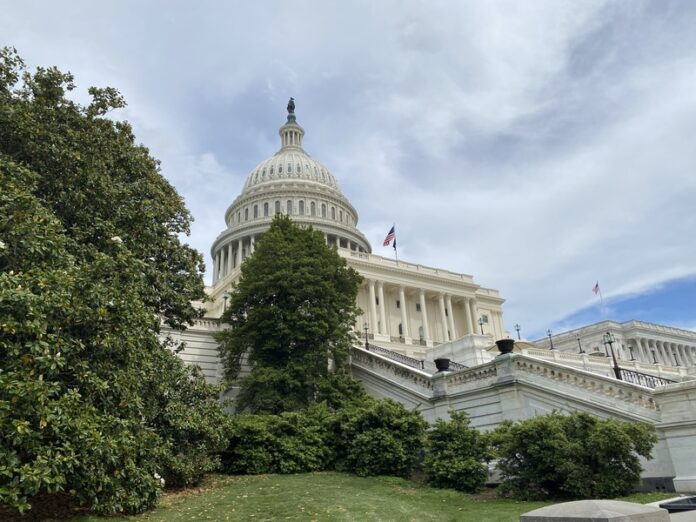
The U.S. Capitol building in Washington, D.C., on May 7, 2025. (Jennifer Shutt/States Newsroom)
WASHINGTON (States Newsroom) — As House Republicans continue to wrangle over the “one big beautiful bill,” a new analysis released late Tuesday projects the massive reconciliation package would decrease resources for low-income families over the next decade while increasing resources for top earners.
The nonpartisan Congressional Budget Office estimates that the lowest-earning households in the United States would see incomes decrease 2% in 2027, moving to a 4% loss in 2033, as a result of spending cuts to nutrition assistance and Medicaid, the health insurance program for low-income individuals and those with disabilities.
The CBO projects resources would meanwhile increase by 4% for the highest-earning Americans in 2027, moving down to a 2% increase by 2033, according to the latest analysis.
The CBO score could change as hardline conservatives press Republican leadership for increased spending cuts to federal safety net programs as a way to pay for, at least in part, the extension and expansion of 2017 tax cuts that come with a price tag of $3.8 trillion.
Rep. Brendan Boyle, ranking member on the House Committee on the Budget, said in a statement late Tuesday that “Donald Trump and House Republicans are selling out the middle class to make the ultra-rich even richer.”
“This is what Republicans are fighting for—lining the pockets of their billionaire donors while children go hungry and families get kicked off their health care,” said the Pennsylvania Democrat.
The bill as written now would slash roughly $800 billion from Medicaid and Affordable Care Act provisions, and $300 billion from the Supplemental Nutrition Assistance Program, or SNAP, according to the left-leaning Center on Budget and Policy Priorities.
Lawmakers on the House Committee on Rules — the final stop for the 1,116-page package bill before it reaches a House floor vote — have been debating the measure since 1 a.m. Eastern Wednesday, while House Speaker Mike Johnson huddled separately with far-right deficit hawks.
Far-right members of the House Freedom Caucus remained skeptical the bill could reach the House floor by Johnson’s goal of Wednesday.
The Louisiana Republican leader also faces opposition from GOP lawmakers who represent high-tax blue states who want an even higher ceiling for the amount of state and local taxes, or SALT, their constituents can deduct from federal taxable income.
Lifting the ceiling, which lawmakers already proposed boosting from $10,000 to $30,000 for married couples filing jointly, will increase the cost of the bill.
Johnson needs nearly every GOP lawmaker to support the bill once it hits the floor as House Republicans have an extremely thin 220-213 majority.
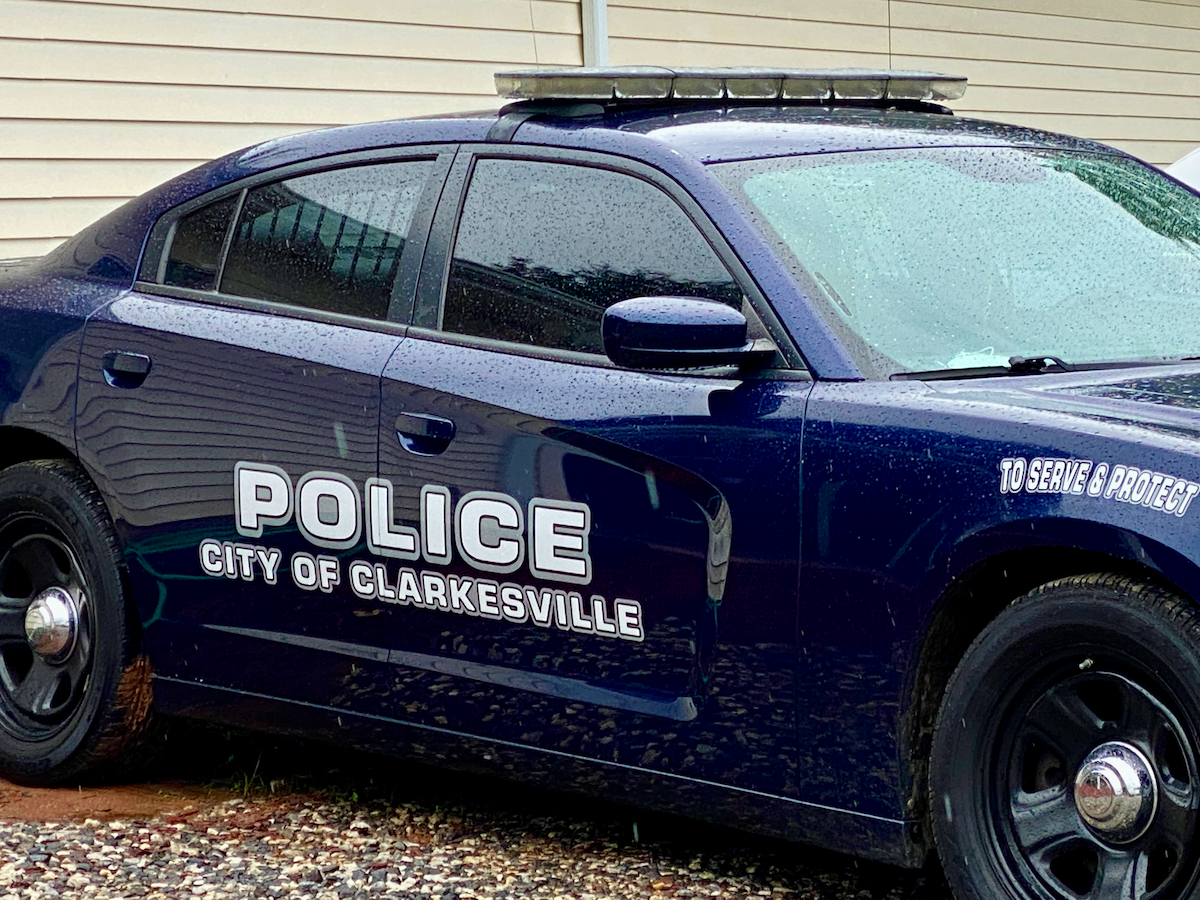
A truck stolen from a Clarkesville resident as part of an online scam has been recovered after a coordinated effort involving Clarkesville’s Police Department and other law enforcement agencies across the southeastern U.S.
The incident began in January when a local resident attempted to sell a $40,000 truck online. According to Clarkesville Police Chief Danny Clouatre, the buyer misrepresented their identity, leading to the theft.
“Somebody contacted (the seller) online, then had someone else pick the truck up for them,” Clouatre said. “That’s what they led the seller to believe. The money was put into an account, and the seller verified that, but once the vehicle was picked up, the money was taken out of the account real quick.”
Initially, the seller arranged to meet the buyer on January 16 at the Clarkesville Police Department. But the buyer – who had allegedly stolen the identity of someone from a nearby county – refused to meet at the department and instead requested a meetup at a local Walgreens, citing the need to pick up medication. Shortly after that exchange, the truck was taken.
Authorities tracked the vehicle using Flock camera pings, tracing its path until it vanished near Birmingham, Alabama.
Clarkesville Assistant Police Chief Ryan Ledford (Brian Wellmeier/NowHabersham.com)
Eventually, the stolen truck was found in Oktibbeha County, Mississippi. Law enforcement there discovered it as part of a broader investigation into a multi-state racketeering operation. Several individuals are now facing federal charges for similar crimes committed across the country.
“We were contacted by the department there, because they were looking into other thefts,” Clouatre said. “It was actually part of a racketeering situation…it’s going to be part of a much bigger case.”
Clouatre noted that while this is the first scam involving such a high dollar amount in Clarkesville, similar frauds are becoming more common nationwide.
“Know the person you’re (selling) to,” he said. “If you feel like it’s kind of suspicious, you’re not forced to make that transaction…we don’t mind running a VIN number, or if you’re doing a gun transaction, we don’t mind running a serial number on that. We’re here to keep people from being a victim. I would rather prevent a crime than have to investigate one after it happens.”
Police say the case is now being prosecuted at the federal level.
“It’s really great how a small agency like ours can work with agencies across the country to deliver justice and recover stolen property,” Assistant Police Chief Ryan Ledford said.
Clouatre urges residents who are planning to make online sales or purchases to contact the Clarkesville Police Department in advance. The department can assist in verifying details and providing a safe location for transactions, including the area in front of the police station, which is monitored by security cameras.
Alton Fry, a Franklin County man who is undergoing treatment for prostate cancer, makes too much money for Medicaid but too little to afford coverage through the marketplace. (Jill Nolin/Georgia Recorder)
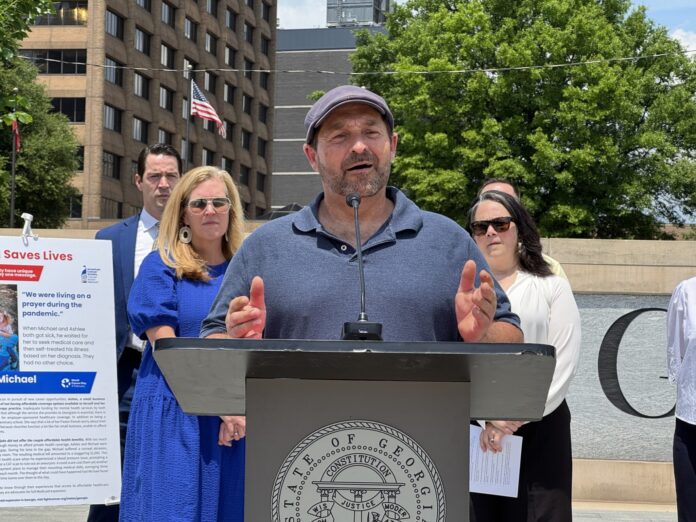
(Georgia Recorder) — Advocates are bracing for potential cuts to Georgia’s safety net programs under the GOP’s “big, beautiful bill” moving through Congress, though it remains to be seen what changes to programs like Medicaid will end up in the final version.
As is, the federal measure would cut more than $600 billion over the next decade from Medicaid, the government health insurance program for low-income Americans and people with disabilities. The savings would go toward extending President Donald Trump’s 2017 tax cuts.
The U.S. House of Representatives could vote on the bill this week, though as of late Tuesday Republicans had not yet rallied behind the current version.
Even though the bill appears to be designed to chip away at Medicaid’s expansion under the Affordable Care Act, advocates and others say states like Georgia that did not fully expand Medicaid could still feel the effects of the cuts.
In Georgia, the program covers about 2.2 million people, mostly providing health care coverage and services for children, older Georgians and people with disabilities. In recent years, the program was slightly expanded to include adults who complete 80 hours of work, job training, education or community service every month.
D’Arcy Robb, executive director of the Georgia Council on Developmental Disabilities, said Tuesday that she is not worried about funding for Medicaid-funded services that are considered mandatory, like for care in a nursing home.
But Robb said she is concerned about Medicaid services that are considered optional, such as funding for home and community based services that are designed to keep people with disabilities out of nursing homes. There are already about 8,000 people in Georgia waiting to receive those services, with state lawmakers funding 150 new waivers this year.
“We can’t afford to lose any money. We’re already scraping the bone, and we’re already seeing families that are going to extreme means to support their loved ones,” Robb said.
These waiver programs took a hit during the Great Recession, with Georgia joining all other states in scaling back services to help balance their budgets. Robb is fearing a repeat if a big cut to Medicaid makes it into the final bill.
“I’m not trying to imply that states are going to cut services to people with developmental disabilities because they want to. I don’t think anybody wants that,” Robb said.
“But the reality is the states have to balance their budgets, and history has shown us that when Medicaid takes a big cut on the national level, states have to cut somewhere. One of the places they can cut is waivers,” she said.
As proposed, the bill also includes provisions that would hurt children who are covered by Medicaid, says Callan Wells, senior health policy manager with GEEARS: Georgia Early Education Alliance for Ready Students. About 42% of Georgia children are enrolled in Medicaid.
One proposed change in the bill that has flown under the radar would scale back “retroactive coverage” from three months to one, Wells said.
“This could lead to significant medical debt, especially for families of children with disabilities,” she said. “These children often receive costly care for months before their families learn about and apply for Medicaid. Without full retroactive coverage, families may be left responsible for those early expenses. For many, this coverage is a crucial financial safeguard.”
‘I want to work’
The proposed cuts come at a time when some Georgia GOP leaders had begun to soften their staunch resistance to full Medicaid expansion, though a measure floated this year that had support from a few rural Republicans quickly fizzled.
Natalie Crawford, executive director of Georgia First, a bipartisan advocacy group, urged congressional leaders to rethink sweeping changes that would reduce federal investment in Medicaid.
Georgia First held a press conference this week with the American Cancer Society Cancer Action Network to push back against the bill’s reductions to Medicaid spending.
“These proposals could limit access to care and roll back the progress we’ve made in reducing cancer disparities,” said Fabienne Antoine-Nasser, the society’s Georgia government relations director.
Crawford said the bill would also likely worsen the state’s already high uninsured rate. Georgia is tied with Oklahoma for the second highest uninsured rate in the country.
“Fueling the momentum behind such reforms is a trap of divisive rhetoric, misinformation and fear mongering that clouds the understanding of what this program is really delivering for states and who is really benefiting from the safety net,” Crawford said.
“Despite what influential voices may try to convince you is true, Medicaid is not covering mostly able-bodied men who don’t want to work,” she said.
Instead, Crawford said the program should be there to help people like Alton Fry, a Franklin County stone mason who was diagnosed with prostate cancer last year. Fry is caught in what is known as the coverage gap, meaning he makes too much for Medicaid but too little to afford private health insurance.
Fry said he racked up about $37,000 in medical debt in just about half a year before he started receiving donations through a GoFundMe page. He said he is undergoing radiation treatment, which he says is not the most effective treatment for him but it is more affordable than surgery.
“I want to work. I don’t want to live off the government,” Fry said. “All I’m asking for is temporary help to get me over this hump in life, and it wasn’t there, and it’s not there.”
The GOP measure would impose a work requirement on Medicaid recipients starting in 2029. The 90% federal match for states that expand Medicaid, though, would remain intact.
Some far-right Republicans, including Georgia Congressman Andrew Clyde of Athens, are pushing for deeper cuts to Medicaid.
Georgia Congressman Buddy Carter, a Pooler Republican, recently defended the proposed changes to Medicaid while on the Atlanta Journal-Constitution’s Politically Georgia podcast. Carter argued the proposals would help stabilize the program for the most vulnerable.
“You shouldn’t have an able-bodied person who could be doing some type of work – it even includes volunteer work – that is on that program,” said Carter, who is a U.S. Senate candidate. “That’s not who it was intended for, and that’s not who we should be using it for. So, there are all kinds of things that we can do to find savings without kicking anyone off.”