Home Blog Page 42

TMU names court for legendary coach Colby Tilley

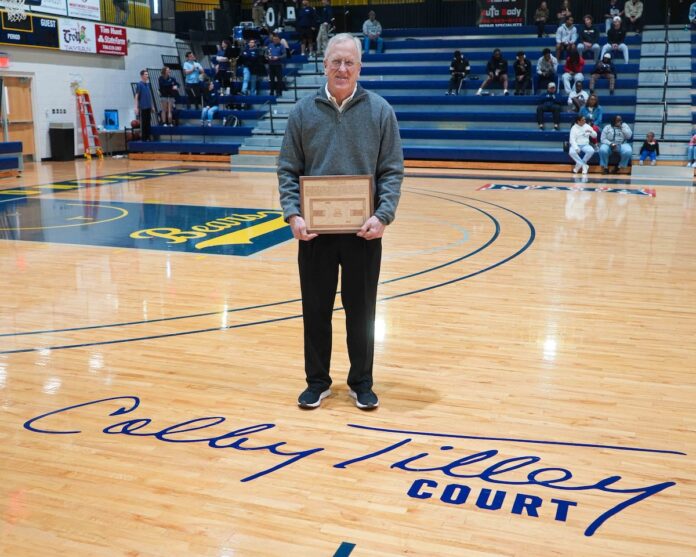
Truett McConnell University dedicated its basketball court for legendary women's basketball coach Colby Tilley. (TMU Athletics)

CLEVELAND, Ga. — Truett McConnell University Athletics dedicated Colby Tilley Court inside the Benjamin F. Brady Arena on Saturday, honoring one of the most successful coaches in program history.

The weekend celebration began Friday with a dinner attended by former players, colleagues and members of the university community. The dedication continued Saturday with an on-court ceremony held between the women’s and men’s basketball games. Tilley was joined by family, friends, former players and current members of the program for the unveiling.

Tilley launched his coaching career at Truett McConnell, leading the women’s basketball program from 1976 to 1985. He compiled a 234-46 record, an .836 winning percentage. His teams won five consecutive Georgia state championships from 1978 through 1982 and made four national tournament appearances.

The 1979-80 team posted a 36-2 record and won the NJCAA National Championship, the only national title in the university’s athletics history.

The weekend celebration began Friday with a dinner attended by former players, colleagues and members of the university community. (TMU Athletics)

Tilley was named Region 17 Coach of the Year six times and Atlanta Tip-Off Club Junior College Coach of the Year in his final season in Cleveland.

After leaving Truett McConnell, Tilley founded the women’s basketball program at Auburn University at Montgomery, where he went 218-74 in nine seasons. He later coached 17 seasons at Kennesaw State University, finishing as the program’s all-time winningest coach with 290 victories and leading the Owls through their transition from NCAA Division II to Division I.

Tilley is an inaugural member of the Truett McConnell Athletics Hall of Fame and has also been inducted into the Auburn Montgomery Hall of Fame, the Kennesaw State University Hall of Fame and the Northeast Georgia Sports Hall of Fame.

University officials said the dedication honors not only Tilley’s championship success but also his leadership and commitment to developing student-athletes. Proceeds from the court-naming campaign will go toward the TMU women’s basketball scholarship endowment.

Columbus woman dies in Russell County crash

(NowGeorgia.com)

A two-vehicle crash that occurred at approximately 4:14 p.m. Saturday, Feb. 14, has claimed the life of a Columbus, Ga., woman. Marie B. Thompson, 70, was critically injured when the 2019 Nissan Rogue she was driving collided head-on with the 2017 Dodge Journey driven by Kevin A. Parham, 40, of Prattville. Thompson was transported to Piedmont Columbus Regional – Midtown in Columbus, Ga., where she succumbed to injuries and was pronounced deceased.

Parham was also injured and transported to Piedmont Columbus Regional – Midtown for medical treatment.

The crash occurred on U.S. 80 near the 200-mile marker, approximately 14 miles west of Phenix City, in Russell County. Nothing further is available as Troopers with the Alabama Law Enforcement Agency’s (ALEA) Highway Patrol Division continue to investigate.

78-year-old driver injured after Jeep plunges down embankment on GA 197

File photo (Daniel Purcell/NowGeorgia.com)

HABERSHAM COUNTY, Ga. — A 78-year-old Habersham County man was injured Friday after his Jeep ran off GA 197 and plunged down an embankment, according to the Georgia State Patrol.

Troopers identified the driver as Charles E. Skovgaard. He received a warning for failure to maintain lane following the crash.

The wreck happened Feb. 13 near the Long Branch area. Investigators said Skovgaard was traveling southbound in a Jeep Grand Cherokee when he entered a curve and failed to maintain his lane. The SUV veered off the roadway, traveled down a steep embankment and struck a tree head-on.

The impact caused the Jeep to roll onto its left side before coming to rest against another tree.

Authorities said Skovgaard suffered apparent minor injuries in the crash.

Revisiting Abraham Lincoln: understanding his true legacy in a polarized America

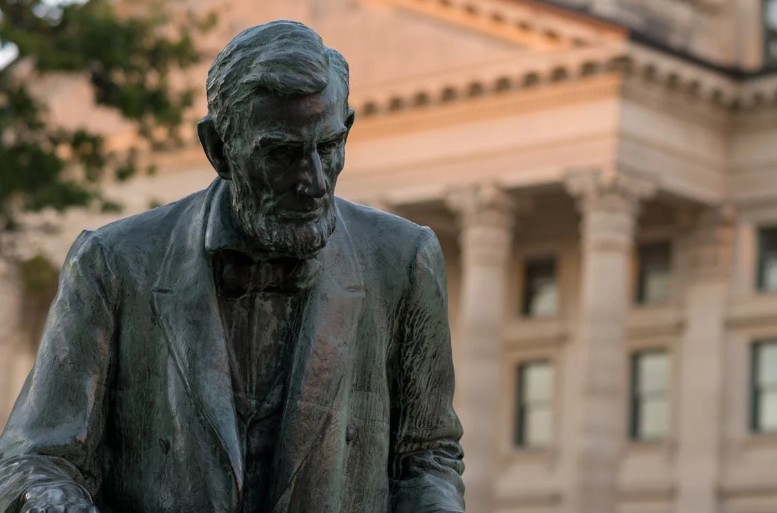
Photo by Pixabay from Pexels: https://www.pexels.com/photo/abraham-lincoln-statue-290150/

Many aspire to greatness, but for those truly committed to this pursuit, I urge them to look closely at Abraham Lincoln’s face on this President’s Day. As one of the United States’ most pivotal figures, his features resemble a weather-beaten roadmap, etched with the toll of hard physical labor and fault lines of stress. Yet, it’s his eyes that arrest attention. They hold a depth shaped by immense personal tragedy—the loss of three sons—and the crushing weight of safeguarding democracy in the Western Hemisphere. Despite his hardships, his posture—with squared shoulders and an unyielding neck—suggests he was built to carry such a burden. Lincoln’s image serves as a reminder that the cost of greatness is often self-sacrifice, a price so steep that few can afford it.

As a history teacher, I’ve often presented Lincoln as a strangely polarizing figure, both revered and reviled across political divides. However, why is a man who passed the 13th Amendment and led the nation through its most brutal civil war so divisive? I believe this stems, in part, from a lack of historical understanding about who he was and what he believed. In this piece, I aim to address two major misconceptions about Lincoln’s stance on slavery, offering a clearer view of his true legacy.

Claim #1: Lincoln Was a Moderate on Slavery

Lincoln’s political landscape was marked by sharp divisions: abolitionists who called for the complete abolition of slavery and pro-slavery advocates determined to preserve it. While high-profile abolitionists like John Brown, Frederick Douglass, and the Grimké sisters used religious arguments about the image of God in all people, these calls were often dismissed as fanaticism. On the more secular side, figures like William Lloyd Garrison and Victoria Woodhull advocated for broad radical changes and used fiery verbiage, which alienated moderates.

For many Northerners, slavery was a moral dilemma that occupied a backroom in their mind. Politically, they opposed the institution, but as long as slavery was not present in their own states, they felt they could remain content. However, this sense of distance changed after the passage of laws like the Fugitive Slave Act of 1850. This law required Northerners to return escaped slaves to their enslavers or face fines and imprisonment. It forced them into direct complicity with the system of slavery, challenging their passive stance of being anti-slavery but not actively involved in its abolition.

Photo by Wandering VirgoNurse from Pexels: https://www.pexels.com/photo/close-up-of-abraham-lincoln-statue-28864377/

Yet, even in their opposition to slavery, the extremism of some abolitionists made it hard for moderates to get involved. Lincoln, however, positioned himself as a moderate, opposing slavery’s expansion without fully embracing radical abolitionist rhetoric. His pragmatic approach allowed him to appeal to a broad audience, including those who feared the extremism of the abolitionist movement.

But was Lincoln truly a moderate? His Republican primary opponent, William Seward, was a known abolitionist, yet it was Lincoln who won the nomination. That said, Southern slave owners feared him so much that they took his name off the ballot and even threatened secession if he won the national election. Lincoln was not a moderate on slavery; he was a leader committed to opposing slavery while navigating the deeply divided nation. His weapon? Knife-sharp precision in his words.

Claim #2: Lincoln Passed the 13th Amendment to Win the War

A popular but flawed belief is that Lincoln passed the 13th Amendment to rally morale during the Civil War. Critics cite a letter Lincoln wrote to Horace Greeley in 1862, in which he stated, “If I could save the Union without freeing any slave I would do it.” Taken out of context, this quote is often used to claim that Lincoln was not truly committed to ending slavery.

However, this interpretation overlooks the wisdom Lincoln displayed in his political maneuvering. In his early years, Lincoln’s focus was on preventing the expansion of slavery, but his views evolved. By the time he issued the Emancipation Proclamation in 1863, Lincoln had made clear his commitment to ending the institution. The 13th Amendment was the next logical step, ensuring the permanent abolition of slavery in the United States.

By Abraham Lincoln – Heritage Auction Gallery. From a manuscript document of a Presidential pardon, countersigned by William H. Seward.Created in vector format by Scewing, Public Domain, https://commons.wikimedia.org/w/index.php?curid=18093253

The Myth of Lincoln’s Racial Moderacy

In the book Lies My Teacher Told Me, James Loewen devotes several chapters to how myths about Lincoln’s racial moderacy were spread by “bad actors” committed to the Lost Cause narrative. These distortions were part of a broader movement in the American South that sought to justify the Confederacy’s actions and preserve a version of history that portrayed slavery as a benign institution and portrayed Lincoln as an imperfect, racially indifferent figure. This far-right narrative has persisted through textbooks and historical accounts written by those sympathetic to the South’s cause or by those simply misled due to generations of bad history.

In the modern era, some on the political left have used these myths to justify tearing down Lincoln’s statues, arguing that his views on race were inconsistent or insufficiently radical. These critics frame Lincoln as a “compromiser” who didn’t do enough for racial justice. While Lincoln’s views on race were undoubtedly shaped by the era in which he lived, his actions speak far more broadly, and when the time was right his public rhetoric evolved to match the moral clarity of his actions.

In his Second Inaugural Address, Lincoln, no longer concerned with re-election, made his views on black equality and racial justice more explicit. He stated, “Yet if God wills that it continue until all the wealth piled by the bondsman’s two hundred and fifty years of unrequited toil shall be sunk and until every drop of blood drawn with the lash shall be paid by another drawn with the sword as was said three thousand years ago so still it must be said ‘the judgments of the Lord are true and righteous altogether.”

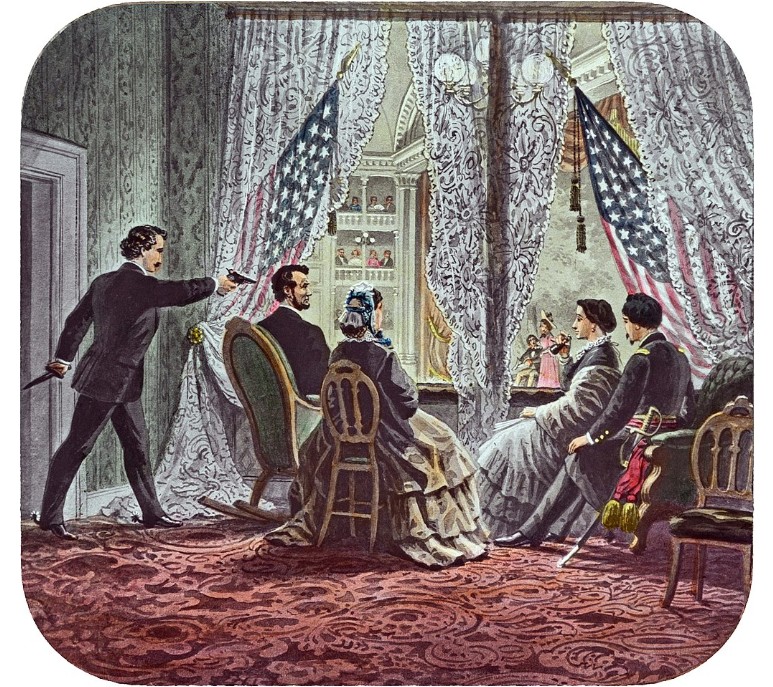
This was a deeply radical stance for the time, one that foreshadowed the profound moral reckoning America was about to face. It also contributed to his assassination, with John Wilkes Booth in the audience, enraged by Lincoln’s words.

Heritage Auctions, Public Domain, https://commons.wikimedia.org/w/index.php?curid=75787398

A Path Forward: Lincoln’s Wisdom for Today

In our polarized 21st-century America, Lincoln’s words from his second inaugural address offer a way forward: “With malice toward none, with charity for all, with firmness in the right as God gives us to see the right, let us strive on to finish the work we are in to bind up the nation’s wounds.” His call to act with “malice toward none” and “charity for all” encourages us to approach each other with empathy, even amid deep disagreements. Lincoln’s emphasis on “firmness in the right” reminds us to stay true to our moral compass, but to do so in a way that fosters reconciliation rather than division.

Ultimately, Lincoln’s vision of a “just and lasting peace” challenges us to rise above partisanship, extend kindness to those with differing views, and work toward common goals. Just as Lincoln did after the Civil War, we too can move forward, united in our pursuit of justice and healing for all Americans.

Columbus Chamber to host 2026 State of the City

Mayor to deliver State of the City (Daniel Purcell/NowGeorgia.com)

The Columbus Chamber will host the 2026 State of the City, presented by Page Scrantom this week. Mayor Skip Henderson will participate in a moderated conversation providing an update on community progress, key priorities, and vision for the future.

The State of the City provides insight into initiatives and partnerships shaping economic growth, infrastructure, public safety, and quality of life across the community. The event begins this Tuesday February 17, 2026, at 11:00 am at CSU’s Cunningham Center.

Pedestrian struck and killed in Columbus

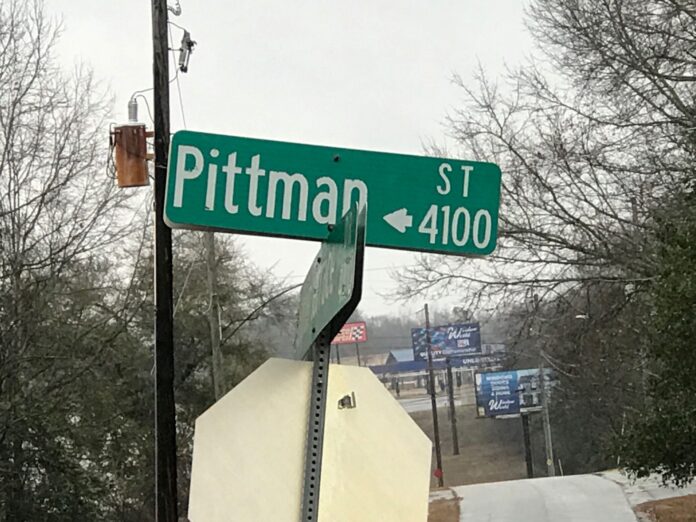
Pedestrian struck and killed at Miller Road and Pittman Street (Robbie Watson/NowGeorgia.com)

A pedestrian was struck and killed overnight in Columbus. The incident occurred at Miller Road and Pittman Street. The victim was identified as Brent Hart by Muscogee County Coroner Buddy Bryan.

The 41-year-old Hart was pronounced dead at 3:31 am and he will be sent to the crime lab for an autopsy. Charges are pending in the case according to the coroner. The Columbus Police Department is investigating the accident.

Cornelia Dunkin’ evacuated after fire report

Firefighters from Cornelia Fire Department investigate scorch marks on the exterior of the Dunkin' Sunday afternoon after a drive-through caller reported flames near the store’s sign. No injuries were reported, and the business remained open. (Daneil Purcell/NowGeorgia.com)

CORNELIA, Ga. — Emergency crews were dispatched to a reported commercial structure fire at the Dunkin’ on U.S. 441 in Cornelia just before 1 p.m. Sunday.

A caller in the drive-through reported seeing flames on the outside of the building near one of the signs. The building had already been evacuated by the time responders arrived.

Units from Cornelia Fire Department, Cornelia Police Department, and Baldwin Fire Department responded.

(Daniel Purcell/NowGeorgia.com)

When crews made entry to the scene, they found visible scorching on the corner of the structure just below the business’s trademark sign, the same area where the 911 caller reported seeing flames. Firefighters then raised a ladder to get a closer look while checking for fire extension and working to determine the source.

Investigators on scene said the burn marks appeared to be related to a possible electrical issue near the sign. Referencing the heat damage in that area, one firefighter remarked that “the double D’s were hot.”

The response briefly halted operations, but the business is expected to remain open.

Radio traffic indicated Cornelia Fire Department will continue investigating the cause later this week. No injuries were reported.

Lee County reports unusual number of fires

Lee County structure fire (Colin Scroggins/CNAW)

The Lee County Sheriff’s Office has seen an absolutely devastating number of fires recently, with five reported on February 13, 2026 and even more on February 14, 2026.

While there is not currently an active burn ban in Lee County, the sheriff’s office urges everyone to avoid lighting any fires at the moment. If you must burn something, be sure to have a firebreak and a nearby water source in case something gets outside of that break. As always, but very importantly right now, do NOT leave any fire unattended for any reason.

With dry air and conditions, fires are spreading and have the potential to get out of control quickly. If you see a brush fire or any other fire that has gotten out of control, call 9-1-1 immediately.

Closing arguments in murder trial of UGA law student Tara Baker

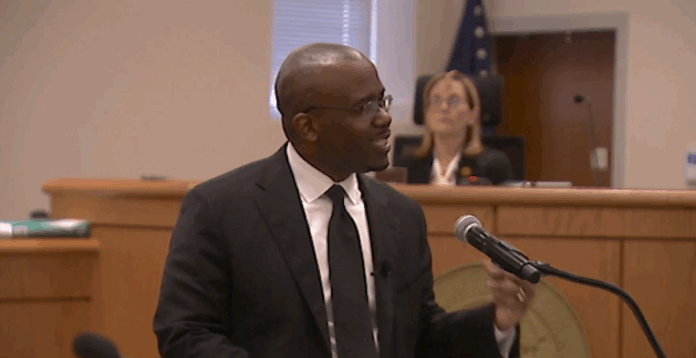
Defense attorney Ahmad Crews (ACC Unified Government via WUGA News)

(WUGA) – Friday saw closing arguments in the murder trial of Edrick Faust; the man accused of killing University of Georgia law student Tara Baker in 2001. The defense and prosecution rested their cases.

Prosecutor Kalki Yalamanchili described the nature of the crime.

“On January 19th of 200, Tara Baker was taken out of this world,” Yalamanchili said. “Her life extinguished by the defendant in this case, Edrick Lamont Faust. Mr. Faust entered Tara’s home and caught her as she was going through her morning routine. He stabbed her, brutally bashed her head, and strangled her as he forcibly raped her, sodomized her orally, and sodomized her anally.”

He said he accepted the state’s burden of proof beyond a reasonable doubt. Defense attorney Ahmad Crews asked the jury to consider what constitutes reasonable doubt, without violating their oaths as jurors.

“A reasonable doubt is based upon common sense and reason…,” Crews said. “Let me make that clear, some other people that have not been mentioned in this case, some other people in another country, aliens, animals, whatever. That is not a reasonable doubt, because that wouldn’t be based upon common sense and reason. But if you can state one reason, one reason, a reason to doubt the state’s case, your verdict must be not guilty.”

The jury will begin deliberating the case on Monday.

RELATED

Tara Baker trial halted on Day 9 after medical emergency

Here’s what you need to know for stress-free tax filing

FILE - The Internal Revenue Service 1040 tax form for 2022 is seen on April 17, 2023. (AP Photo/Jon Elswick, File)

NEW YORK (AP) — Tax season is underway and you have until April 15 to file your return with the IRS. If you want to avoid the stress of the looming deadline, start getting organized as soon as possible.

“Don’t wait until the last minute but also don’t rush,” said Tom O’Saben, director of tax content and government relations at the National Association of Tax Professionals,

Gathering all your documents, signing up for direct deposit and keeping copies of your tax returns are some of the best practices when it comes to preparing to fill out your taxes. This year, due to the Republican tax and spending bill that President Donald Trump signed over the summer, there are new deductions taxpayers should know about.

Among them are no tax on tips, no tax on overtime, deductions for car loan interest, and deductions for people who were 65 or older by Dec. 31, said Miguel Burgos, a certified public accountant and an expert for TurboTax.

The average refund last year was $3,167. This year, analysts have projected it could be $1,000 higher, thanks to changes in tax law. More than 165 million individual income tax returns were processed last year, with 94% submitted electronically.

If you find the process too confusing, there are plenty of free resources to help you get through it.

Here are some things you need to know:

Gather your documents

While the required documents might depend on your individual case, here is a general list of what everyone needs:

  • Social Security number
  • W-2 forms, if you are employed
  • 1099-G, if you are unemployed
  • 1099 forms, if you are self-employed
  • Savings and investment records
  • Any eligible deduction, such as educational expenses, medical bills, charitable donations, etc.
  • Tax credits, such as the child tax credit, retirement savings contributions credit, etc.

To find a more detailed document list, visit the IRS website.

O’Saben recommends gathering all of your documents in one place before you start your tax return and also having your documents from last year. Taxpayers can also create an identity protection PIN number with the IRS to guard against identity theft. Once you create a number, the IRS will require it to file your tax return.

Know some of the changes for this year

Change to standard deduction

The standard deduction for single taxpayers is $15,750 for this year. For married couples filing jointly, it has increased to $31,500. For heads of households, the standard deduction is $23,625.

Change to state and local taxes (SALT) deduction

The deduction cap on state and local taxes has increased from $10,000 to $40,000. The change is also known as the Working Families Tax Cut and was enacted in July 2025.

“This is a big benefit, especially for states like California, New York, and New Jersey, that have a higher state income tax,” said Keith Hall, president and CEO of the National Association for the Self-Employed and a certified CPA.

The SALT deduction is a federal tax deduction for some state and local taxes paid during the year. The total deduction had been capped at $10,000 since it started in 2018.

People who have not previously itemized their SALT deduction might want to consider it this year. To know if you should itemize your deductions, O’Saben recommends that you ask yourself the following questions: Did you pay state taxes? Did you pay property taxes? Do you have mortgage interest? Do you have charitable contributions?

Deductions for tips

What is known as “no tax on tips” is not quite accurate. This new deduction is only for qualified tips and is subject to income limitations.

“It can be cash, it can be electronic as well. But the main thing is, hey, it has to be voluntary (tips),” Burgos said.

The maximum annual deduction is capped at $2,500. The deduction phases out for taxpayers with modified adjusted gross income over $150,000, or $300,000 for joint filers. The tax deduction is also limited to specific industries where tipping is common practice. Some of the included industries are bartenders, food servers, musicians and housekeeping cleaners.

To claim the new tax break, you will need to fill out a new tax form called Schedule 1-A.

Additional Schedule 1-A deductions

Schedule 1-A is an IRS form used to claim and calculate four tax deductions originating from the tax and spending bill. They are the change in state and local tax deduction, deduction on qualified tips, and car loan and senior deductions.

Look for resources

IRS Direct File, the electronic system for filing tax returns for free, will not be offered this year. For those who make $89,000 or less per year, IRS Free File offers free guided tax preparation;you can choose from eight IRS partners, such as TaxAct and FreeTaxUSA.

Beyond companies such as TurboTax and H&R Block, taxpayers can also hire licensed professionals, such as certified public accountants. The IRS offers a directory of tax preparersacross the United States.

The IRS also funds two programs that offer free tax help: Volunteer Income Tax Assistance (VITA) and Tax Counseling for the Elderly (TCE). People who earn $69,000 or less a year, have disabilities, or are limited English speakers, qualify for the VITA program. Those who are 60 or older qualify for the TCE program. The IRS has a site for locating organizations hosting VITA and TCE clinics.

Avoid common mistakes on your tax return

Many people fear getting in trouble with the IRS if they make a mistake. Here’s how to avoid some of the most common ones:

Double-check your name on your Social Security card

When working with clients, O’Saben asks them to double-check their number and their legal name, which can change when people get married.

“If you got married last year and you now want to use your married name, that married name doesn’t exist if you haven’t filed it with Social Security,” O’Saben said.

Search for online tax statements

Many people opt out of physical mail but when you do, it can also include your tax documents.

“These documents may actually be available online because you may have chosen to have paperless contact. And because of that, you may need to go get those documents yourself,” O’Saben said.

Make sure you report all of your income

If you had a second job in 2025, you need the W-2 or 1099 form for each job.

In general, if you make a mistake or you’re missing something in your tax records, the IRS will audit you. An audit means that the IRS will ask you for more documentation.

Know about the child tax credit

Currently, the tax credit is $2,200 per child but only $1,700 is refundable. This refund is called the Additional Child Tax Credit. To claim the Additional Child Tax Credit, you must have at least $2,500 of income for the tax year.

You qualify for the full amount of the Child Tax Credit for each qualifying child if you meet all eligibility factors and your annual income is not more than $200,000 ($400,000 if filing a joint return). Parents and guardians with higher incomes may be eligible to claim a partial credit.

You can find more details about the child tax credit here.

Avoid paper checks for your tax refund

Last September, the IRS began phasing out paper tax refund checks. If you’re expecting a tax refund, the IRS recommends you sign up for direct deposit.

Avoid tax scams

Tax season is prime time for tax scams, O’Saben said. These scams can come via phone, text, email and social media. The IRS uses none of those means to contact taxpayers.

Sometimes scams are even operated by tax preparers, so it’s important to ask lots of questions. If a tax preparer says you will get a refund that is larger than what you’ve received in previous years, for example, that may be a red flag, O’Saben said.

If you can’t see what your tax preparer is working on, get a copy of the tax return and ask questions about each of the entries.

Keep copies of your tax returns

It’s always good practice to keep a record of your tax returns, just in case the IRS audits you for an item you reported years ago. O’Saben recommend keeping copies of your tax return documents five to seven years.

Collin Morikawa birdies the 18th to win Pebble Beach and end more than 2-year drought

Collin Morikawa celebrates at Pebble Beach Golf Links after winning the AT&T Pebble Beach Pro-Am golf tournament in Pebble Beach, Calif., Sunday, Feb. 15, 2026. (AP Photo/Godofredo A. Vásquez)

PEBBLE BEACH, Calif. (AP) — Collin Morikawa had gone 28 months since his last win, and he was reminded Sunday at the AT&T Pebble Beach Pro-am why it’s never easy.

He was among six players who had a share of the lead at one point in a wild and windy final round, one name getting everyone’s attention — Scottie Scheffler — who nearly pulled off the biggest comeback in the tournament’s history.

Tougher still was standing in the fairway on the par-5 18th, the cold Pacific air ripping off the ocean to his left, and having to wait some 20 minutes as Jacob Bridgeman had to figure out how to play off the beach only for his shot to go into the ocean.

He said he walked down to the ocean and back about 10 times.

“I tried to think about anything else other than golf,” Morikawa said. “Thankfully, you had the nicest backdrop you could ask for so that was very, very easy. For me, it was how do I stay loose, how do I stay warm and not just think about the shot.”

Morikawa delivered the goods when they mattered, back-to-back birdies to take the lead, and one last birdie with a 4-iron from 235 yards he had to start out over the ocean wall and let the wind bring it back to the green.

Two putts from the collar gave him a 5-under 67 and a one-shot victory over Sepp Straka and Min Woo Lee.

“Great field, great leaderboard — looking at it the entire day,” Morikawa said. “And just to be able to pull of those last two shots, it feels great.”

The two-time major champion finished at 22-under 266. He had gone 45 starts since he last won the Zozo Championship in Japan in October 2023.

He can only hope for bigger things with a new outlook on golf — play the game for the joy, not the technique — and in life. Morikawa took the occasion of such a big win to announce he and his wife are expecting their first child this spring.

“There’s so much to life, there’s so much to enjoy,” he said.

Scheffler began the final day eight shots behind and was 7 under through seven holes before the wind began whipping. He had three eagles in his round of 63, the last one a 6-iron to 30 inches on the final hole that allowed him to tie Morikawa for the lead.

“I was very aware of Scottie Scheffler’s score today. I mean, what a player,” Morikawa said.

Scheffler didn’t think it would be enough, and it wasn’t.

Moments later, Morikawa holed a 30-foot birdie putt on the 15th to take the lead. He followed with a 6-iron into 8 feet for another birdie. But a bogey on the par-3 17th — his tee shot was dangerously close to the ocean left of the green — and Lee finishing birdie-birdie for a 65, created another tie.

For all the drama, it was particularly tense on the par-5 18th as Morikawa waited. And waited. It was 20 minutes from hitting his tee shot to hitting his 4-iron, a wait made longer considering what was at stake.

“I was able to pull off a great 4-iron,” he said. “And man, I need a drink.”

Akshay Bhatia, the 54-hole leader by two shots, made only two birdies over his last 29 holes. He fell out of the lead after four holes and never caught up, closing with a 72 to finish three back.

Scheffler was 10 shots behind after the first day when he shot 72. He was 13 shots back at one point on Friday. He still managed to be a major threat. He wound up in a tie for fourth with Tommy Fleetwood (66), extending his streak to 18 PGA Tour starts in the top 10.

“I had to do something special to give myself a chance,” Scheffler said. “The back nine, I felt like I had to get to 21 or 22 (under). I played a bit more aggressive than I normally am. It was a fun day overall. These are the weeks I’m proud of. I felt like I was battling to give myself a chance.”

Among his regrets was a wedge to a back pin on the 15th that was a foot away from spinning back to close range. It hopped hard over the green. He chipped to 6 feet and missed the par putt.

Morikawa charged his way into the mix with a 62 on Saturday to get within two shots of Bhatia, and he did enough right to stay close — six players had a share of the lead at some point during the final round — until delivering the goods at the end.

The Cal alum won for the seventh time on the PGA Tour since turning pro a week before the 2019 U.S. Open at Pebble Beach. Winning at Pebble moves him to No. 5 in the world.

How to burn bright without burning out

The Burning Bush still grows in the courtyard of St. Catherine's Monastery at the base of Mount Sinai, under the watchful daily care of the monks. This is the place where, in the Book of Exodus, the Bible says Moses encountered God. The bush was on fire, but was not consumed by fire. (Friends of Mount Sinai Monastery/Facebook)

A story in the Bible that helps me stay sane when I need all the help I can get is the story of the burning bush. After Moses has killed an Egyptian man and run away into the wilderness, God finds him and speaks to him and puts a claim on his life. God gives Moses a mission to go back to Egypt and set God’s people free, and he does so through a bush that was on fire, but did not burn up (Ex. 3:2). In the words of the King James, it was alight, but “not consumed.”

I think about this image often, not just as a pastor, but also as a father, a husband, an only child trying to take care of my only parent, a friend, and a person of faith. What do I need to keep the fire burning brightly without burning up or burning out? How can I be a light without being consumed? As I once heard another pastor say, “We’re called to be living witnesses, not burnt offerings,” but that’s easier said than done.

Ways to avoid becoming a ‘burnt offering’

Step 1

I don’t carry the light; the light carries me. I’m not drawing on myself to keep the fires burning. I’m drawing on God.

My first step to staying alight without being consumed is to remember that rest is God’s work, too. A wood stove will keep burning for several hours through the night if you set the vents right. The campfire next to which you fall asleep can still be hot enough when you wake up to start a fire for breakfast without needing a new match. So too, God’s fire in our lives will keep burning when we need rest. It is trustworthy. It has a life of its own beyond our limitations. It can hold the gaps that emerge when we feel like we’re stretched too thin.

Step 2

My second step to staying alight without being consumed is to remember that rest is an active verb. It’s like kids in the swimming pool learning how to float instead of thrashing around in a panic or treading water to the point of exhaustion. You still have to breathe in deep enough to keep from sinking, but taking a deeper breath lets the water do the lifting while your arms and legs relax. That’s what it feels like to step away from my phone and go outside or to stop doing chores so I can play with my kids. I’m taking a moment to let God do the lifting. I’m taking a moment to let God be God.

This colorful tapestry displayed in a church in Chicago depicts the burning bush the Bible speaks of in the Book of Exodus. (Photo by John Harrison)

Zoning out and scrolling our feeds is not the same kind of rest. The corporate attitude of Netflix, for example, is that their biggest competitor is sleep. There’s nothing bad in itself about watching TV or being online, but by itself, it’s not the rest we need to keep our fires burning. If that’s all the rest we have, we’re simply being consumed in a different way.

Step 3

My third step to staying alight without being consumed is to remember that I don’t carry the light; the light carries me. I’m not drawing on myself to keep the fires burning. I’m drawing on God. That is what makes someone a burning bush, or a living witness. It’s what opens the door of a house to a stranger or makes room at a table for one more. When we draw on God as fuel for the fire and keep enough breath in our lungs to let him do the lifting, it gives more than it takes. It leaves us better than it finds us. It keeps us burning brighter and brighter without burning up and without burning out, and it turns the life we share into holy ground.

_____

Rev. John Harrison is the pastor of Nacoochee Presbyterian Church in Sautee Nacoochee. Born and raised in Georgia, he went to seminary in Texas and served for 8 years as a pastor in Missouri before moving back home. He is married with two daughters and enjoys coffee, movies and spending time outdoors.

To read more of his work, click here.