Home Blog Page 415

Rustic Cabin Bar and Grill gets ‘decked’ out for opening in July

Rustic Cabin Bar and Grill co-owner Carlos Hernandez outlined plans for a new open deck for outdoor seating. (Chaz Mullis/NowHabersham.com)

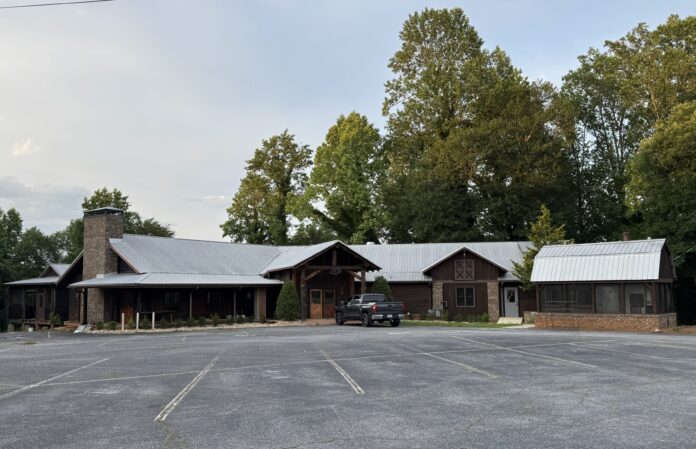
At the Clarkesville Planning Commission meeting on Tuesday, June 10, Rustic Cabin Bar and Grill co-owner Carlos Hernandez outlined plans for a new open deck for outdoor seating. The upcoming restaurant, located at 515 Grant Street in Clarkesville, was the location of Hawg Wild BBQ.

The deck will be located on the back left side of the restaurant facing the Soque Greenway Trail. An ADA ramp will be constructed on the left side of the establishment for easier access. Patrons will be able to dine on this deck when conditions are acceptable.

The city planning commission approved the alteration unanimously.

Rustic Cabin is set to open in July. The restaurant will offer a full bar, with the bar area separate from the general dining space to maintain the family-friendly environment. The menu will feature a variety of options, including bar food, steaks, burgers, wings, sandwiches, pastas, vegetarian choices and specialty hors d’oeuvres.

Hernandez currently co-owns Chicago’s Pizza in Demorest with his brother, Rudy. The Hernandez brothers expect the new establishment to create between 25 to 30 new jobs.

Rustic Cabin Bar and Grill closer to opening in Clarkesville

Charlton County, ICE contract to expand processing center moves forward

FILE PHOTO — Georgia Congressman Buddy Carter, a Pooler Republican, said he helped broker the contract between Charlton County and the federal government. (Ross Williams/Georgia Recorder)

(Georgia Recorder) — Georgia’s Charlton County is set to become home to the largest immigrant detention facility in the United States following an agreement between county officials and the federal Department of Homeland Security.

Under a $47 million contract reached Friday by county and federal government officials, the D. Ray James Correctional Facility in Folkston, 45 miles southwest of Brunswick, will be merged with an immigrant processing center in the city that is operated by U.S. Immigration and Customs Enforcement (ICE).

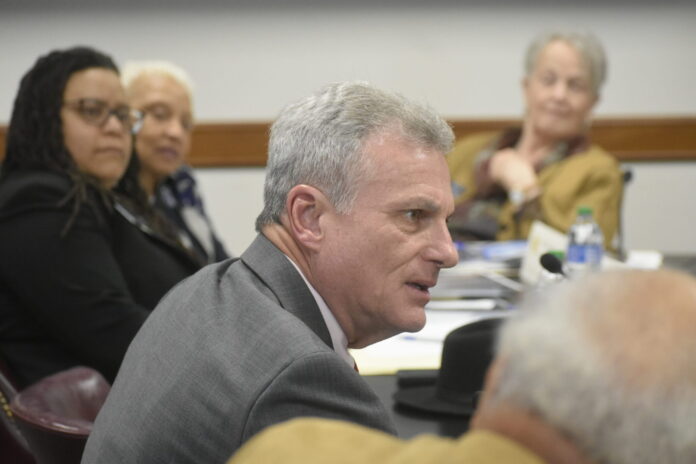
Coastal Georgia Congressman Earl “Buddy” Carter, who said he helped broker the contract, praised the deal.

The expansion will add “roughly 400 jobs and economic growth to the First Congressional District,” Carter said in a press release.

Continued Carter, who last month announced his candidacy for the U.S. Senate seat held by Democrat Jon Ossoff: “I’m proud to have worked with Charlton County to get the D. Ray James Correctional Facility expansion over the finish line, which will bring jobs and economic growth to our region, and I will continue to support our brave ICE agents as they seek to restore law and order.”

Folkston, a city of about 4,500 people, will also receive approximately $600,000 a year in revenue from water and sewer services to the facility, the congressman said.

The Folkston processing center currently holds just over 1,100 beds. Its merger with the correctional facility will bring the center’s total capacity to nearly 3,000 beds.

In a June 5 press release from the county’s Board of Commissioners, County Administrator Glenn Hull said the county does not manage the correctional facility and would not do so following the merger.

“This expansion would increase capacity and enhance federal operations already in place,” Hull wrote in the press release. “Charlton County’s role remains strictly administrative and supportive.”

Both facilities are owned and managed by The Geo Group, a private prison corporation. The Geo Group contributed $7,500 to Carter’s campaign in 2024 through PACs, $5,000 of which was donated directly to Buddy PAC — Carter’s Leadership PAC.

Yarbrough welcomed as acting president of TMU

The TMU Board of Trustees appointed Dr. John Yarbrough as the school’s acting president after placing Dr. Emir Caner on administrative leave. (Photo from Truett McConnell University)

Dr. John O. Yarbrough was named acting president of Truett McConnell University on June 6 following the placement of President Emir Caner on administrative leave amid a campus-wide investigation into sexual abuse allegations.

TMU welcomed Yarbrough via it’s Facebook page. “A distinguished alumnus, dedicated professor, and respected leader within the Georgia Baptist community, Dr. Yarbrough brings deep experience and a strong commitment to lead the university,” the school wrote.

Yarbrough’s relationship with the university spans more than five decades. A graduate of the Class of 1969, he returned to serve on the Board of Trustees from 2007 to 2011, including a term as chairman between 2008 and 2009. From 2013 until 2019, he contributed as Director of Alumni and Public Policy and as an associate professor of Christian studies.

Before rejoining TMU, Yarbrough served as president of the Georgia Baptist Convention from 1994 to 1996. He served 15 congregations as interim pastor and a maintains a  mission to champion religious liberty, biblical truth, and the role of the local church.

Yarbrough has taught or preached in major conferences in 48 states, 7 seminaries, 6 colleges, and 7 countries. He lives in Cleveland with his wife, Diana. The couple has two grown married children and four grandchildren.

During preliminary protests, alumni called for transparency and accountability in TMU’s handling of the abuse claims. The Board has requested ongoing prayers from the community as the third-party investigation begins.


Cleveland City Council adopts new charter

Cleveland City Administrator Kevin Harris explains the new city charter during the city council meeting on Monday, June 9, 2025. (Dean Dyer/WRWH.com)

The City of Cleveland has a new organizational charter that was recently approved by the Georgia General Assembly and signed by Governor Brian Kemp.

The city council approved a new charter back in January and sent it to Atlanta for required state approval. Now that that has been done, the council must formally adopt the reorganization plan that will take effect July 1, 2025.

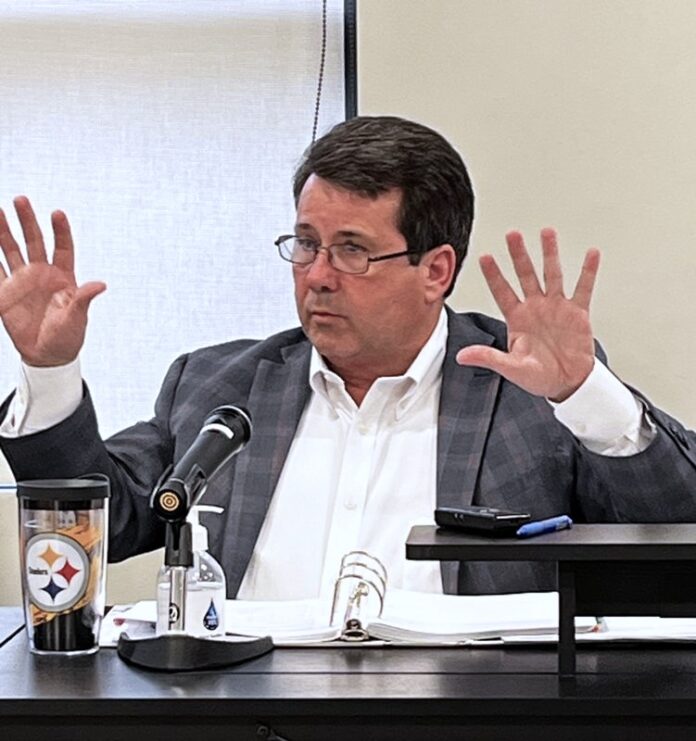
City Administrator Kevin Harris told the council during their meeting Monday that the new charter doesn’t change the form of government or the structure. Harris did say there were some changes of note, like council members will no longer represent wards but will serve districts with elections conducted as in the past, with the mayor and council members serving four-year terms.

The mayor and council will continue setting the direction of the city, with departments reporting to the city manager, non-departments reporting through the city clerk to the city council.

The new charter, according to Harris, changes the title of City Administrator to City Manager.

The council formally adopted the new charter by a unanimous vote.

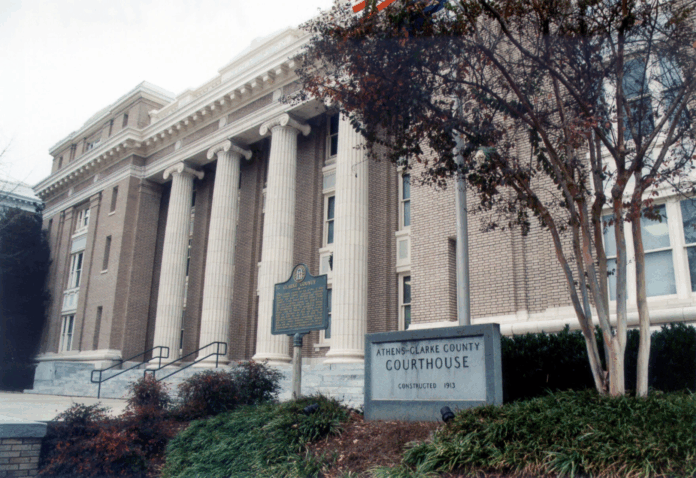
Athens-Clarke County Courthouse open for business

FILE PHOTO - Athens-Clarke County Courthouse (WUGA)

After months without elevator service, the Athens-Clarke County Courthouse is once again open for business.

The ACC courthouse has been without working elevators for the public since November 2024. Lisa Lott is Chief Judge of the Superior Court of the Western Judicial Circuit.

“We have been given approval by the state inspector, we passed inspection.”

She says the lack of elevator service was more than just an inconvenience.

“What the law requires in Georgia is that every court hearing with very, very few exceptions, are open to the public,” according to Lott. “And in order to be open to the public, you have to be able to have the public enter and exit your courtroom. If you don’t have a properly working elevator, that’s not possible.”

Lott says the facility is undergoing several other improvements to create a better environment while they wait for a new courthouse to be built.

“We hired a company, and they clean out all of the duct work in the building. We’re doing a lot of painting, we’re replacing carpeting. We have a brand-new AV system in the courtrooms. We are power washing the outside of the building. We also hired a reallocation company that has sat down with all the courts to talk about the space that we are all in and what we need in the future.

Lott says court proceedings have taken place in a variety of locations during that time, including the Classic Center, City Hall, Oconee County, and more. She says the second elevator should be approved soon.

This article comes to Now Habersham in partnership with WUGA

Chourio, Bauers hit home runs to lead Brewers past Braves 4-1

Milwaukee Brewers' Jackson Chourio watches after hitting a two-run home run during the third inning of a baseball game against the Atlanta Braves, Tuesday, June 10, 2025, in Milwaukee. (AP Photo/Aaron Gash)

MILWAUKEE (AP) — Jackson Chourio and Jake Bauers hit home runs, Quinn Priester struck out seven in six strong innings and the Milwaukee Brewers defeated the Atlanta Braves 4-1 on Tuesday night.

Chourio put the Brewers on the board with a 409-foot, two-run homer in the third off Grant Holmes (3-5).

The Braves got a run in the fifth on Ronald Acuña Jr.’s single, his third consecutive hit of the game.

Milwaukee extended its lead to 3-1 in the sixth on Bauers’ leadoff home run, a 410-foot shot to straightaway center. The Brewers added another in the seventh when William Contreras drew a bases-loaded walk.

Priester (4-2) gave up seven hits and one run. His seven strikeouts were one off a season high, and he didn’t walk a batter in a 96-pitch outing.

Trevor Megill pitched the ninth for his 13th save in 15 tries.

Holmes, who made his first major league start at American Family Field last season after pitching 10 seasons in the minors, gave up five hits and three runs in 5 1/3 innings while striking out a career high-tying nine.

The Brewers played without Christian Yelich, who got the night off after going 1 for 4 with three strikeouts in Monday’s series opener.

Key moment

After Nick Allen’s double and Acuña’s RBI single to start the fifth, Priester got Austin Riley to ground into a double play before Matt Olson popped out to Brewers third baseman Caleb Durbin, who crashed into the tarp along the left-field foul line.

Key stat

The Brewers had scored just one run in their previous two games and had two extra-base hits in their first 38 innings on their current homestand before Chourio’s homer and Contreras’ double in consecutive at-bats in the second.

Up next

RHP Spencer Schwellenbach (4-4, 3.24 ERA) starts for Atlanta and RHP Chad Patrick (3-5, 2.84) takes the mound for Milwaukee for Wednesday’s series finale.

Southern Baptist delegates at national meeting overwhelmingly call for banning same-sex marriage

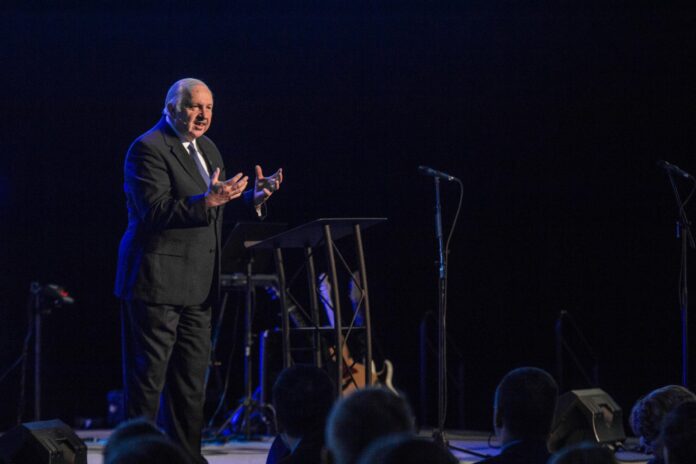
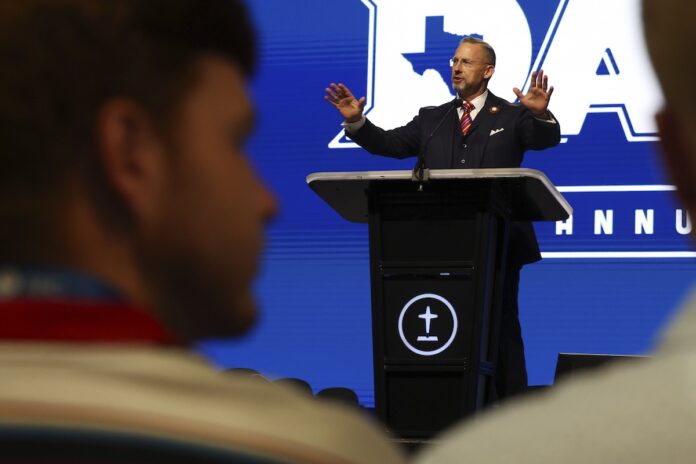
Southern Baptist Convention President Clint Pressley gives the President's Address during the 2025 SBC Annual Meeting, Tuesday, June 10, 2025, in Dallas. (AP Photo/Richard W. Rodriguez)

DALLAS (AP) — Southern Baptist delegates at their national meeting overwhelmingly endorsed a ban on same-sex marriage — including a call for a reversal of the U.S. Supreme Court’s 10-year-old precedent legalizing it nationwide.

They also called for legislators to curtail sports betting and to support policies that promote childbearing.

The votes Tuesday came at the gathering of more than 10,000 church representatives at the annual meeting of the nation’s largest Protestant denomination.

The wide-ranging resolution doesn’t use the word “ban,” but it left no room for legal same-sex marriage in calling for the “overturning of laws and court rulings, including Obergefell v. Hodges, that defy God’s design for marriage and family.” Further, the resolution affirmatively calls “for laws that affirm marriage between one man and one women.”

A reversal of the Supreme Court’s 2015 Obergefell decision wouldn’t in and of itself amount to a nationwide ban. At the time of that ruling, 36 states had already legalized same-sex marriage, and support remains strong in many areas.

However, if the convention got its wish, not only would Obergefell be overturned, but so would every law and court ruling that affirmed same-sex marriage.

There was no debate on the marriage resolution. That in itself is not surprising in the solidly conservative denomination, which has long defined marriage as between one man and one woman. However, it marks an especially assertive step in its call for the reversal of a decade-old Supreme Court ruling, as well as any other legal pillars to same-sex marriage in law and court precedent.

Gender identity, fertility and other issues

The marriage issue was incorporated into a much larger resolution on marriage and family — one that calls for civil law to be based on what the convention says is the divinely created order as stated in the Bible.

The resolution says legislators have a duty to “pass laws that reflect the truth of creation and natural law — about marriage, sex, human life, and family” and to oppose laws contradicting “what God has made plain through nature and Scripture.”

The same resolution calls for recognizing “the biological reality of male and female” and opposes “any law or policy that compels people to speak falsehoods about sex and gender.”

It urges Christians to “embrace marriage and childbearing” and to see children “as blessings rather than burdens.”

But it also frames that issue as one of public policy. It calls for “for renewed moral clarity in public discourse regarding the crisis of declining fertility and for policies that support the bearing and raising of children within intact, married families.”

It laments that modern culture is “pursuing willful childlessness which contributes to a declining fertility rate,” echoing a growing subject of discourse on the religious and political right.

The pornography resolution, which had no debate, calls such material destructive, addictive and exploitive and says governments have the power to ban it.

The sports betting resolution draws on Southern Baptists’ historic opposition to gambling. It called sports betting “harmful and predatory.” One pastor urged an amendment to distinguish between low-stakes, recreational gambling and predatory, addictive gambling activities. But his proposed amendment failed.

Whistleblower’s death casts pall on Dallas meeting

The two-day annual meeting began Tuesday morning with praise sessions and optimistic reports about growing numbers of baptisms. But casting a pall over the gathering is the recent death of one of the most high-profile whistleblowers in the Southern Baptists’ scandal of sexual abuse.

Jennifer Lyell, a onetime denominational publishing executive who went public in 2019 with allegations that she had been sexually abused by a seminary professor while a student, died Saturday at 47. She “suffered catastrophic strokes,” a friend and fellow advocate, Rachael Denhollander, posted Sunday on X.

Friends reported that the backlash Lyell received after going public with her report took a devastating toll on her.

Several abuse survivors and advocates for reform, who previously had a prominent presence in recent SBC meetings, are skipping this year’s gathering, citing lack of progress by the convention.

Two people sought to fill that void, standing vigil outside of the meeting at the Kay Bailey Hutchison Convention Center Dallas as attendees walked by. The pair held up signs with photos of Lyell and of Gareld Duane Rollins, who died earlier this spring and who was among those who accused longtime SBC power broker Paul Pressler of sexual abuse.

“It’s not a healthy thing for them (survivors) to be here,” said Johnna Harris, host of a podcast on abuse in evangelical ministries. “I felt like it was important for someone to show up. I want people to know there are people who care.”

Past attempts at reforms in the SBC

The SBC Executive Committee, in a 2022 apology, acknowledged “its failure to adequately listen, protect, and care for Jennifer Lyell when she came forward to share her story.” It also acknowledged the denomination’s official news agency had not accurately reported the situation as “sexual abuse by a trusted minister in a position of power at a Southern Baptist seminary.”

SBC officials issued statements this week lamenting Lyell’s death, but her fellow advocates have denounced what they say is a failure to implement reforms.

The SBC’s 2022 meeting voted overwhelmingly to create a way to track pastors and other church workers credibly accused of sex abuse. That came shortly after the release of a blockbuster report by an outside consultant, which said Southern Baptist leaders mishandled abuse cases and stonewalled victims for years.

But the denomination’s Executive Committee president, Jeff Iorg, said earlier this year that creating a database is not a focus and that the committee instead plans to refer churches to existing databases of sex offenders and focus on education about abuse prevention. The committee administers the denomination’s day-to-day business.

Advocates for reform don’t see those approaches as adequate.

It is the latest instance of “officials trailing out hollow words, impotent task forces and phony dog-and-pony shows of reform,” abuse survivor and longtime advocate Christa Brown wrote on Baptist News Global, which is not SBC-affiliated.

In a related action, the Executive Committee will also be seeking $3 million in convention funding for ongoing legal expenses related to abuse cases.

What else is on the agenda?

As of late Tuesday afternoon, attendance was at 10,541 church representatives (known as messengers). That is less than a quarter of the total that thronged the SBC’s annual meeting 40 years ago this month in a Dallas showdown that marked the height of battles over control of the convention, ultimately won by the more conservative-fundamentalist side led by Pressler and his allies.

Messengers will also debate whether to institute a constitutional ban on churches with women pastors and to abolish its public-policy arm, the Ethics and Religious Liberty Commission — which is staunchly conservative, but according to critics, not enough so.

Brent Leatherwood, president of the ERLC, said Tuesday he would address the “turbulence” during his scheduled remarks Wednesday but was confident in the messengers’ support.

Five questions and answers about reconciliation in the U.S. Senate

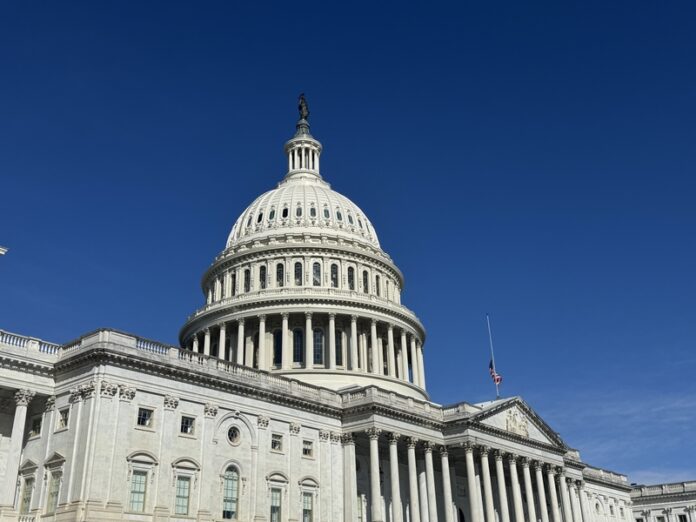
The U.S. Capitol pictured on March 25, 2025, in Washington, D.C. (Shauneen Miranda/States Newsroom)

WASHINGTON (States Newsroom) — Republicans in the U.S. Senate will spend the next couple weeks defending the party’s “big beautiful bill” against Democratic criticisms and attempting to pass a final version that can win 51 votes.

Reconciliation, the name for the process under which the massive bill is being considered, comes with a lot of rules in the Senate, including that every proposal in the bill addresses federal revenue, spending, or the debt limit. And language addressing the first two cannot be deemed “merely incidental,” or it gets kicked to the curb.

Reconciliation is also favorable for the party in power, in this case Republicans, since the bill is not subject to the legislative filibuster. That means the GOP will need no more than a simple majority for passage.

As you watch and read about Senate action during the coming weeks, here are the answers to five questions about reconciliation and other ways in which Congress sets a budget and allocates taxpayer money:

Q: Where does reconciliation fit in with everything else that’s happening, like the president’s budget request, the budget resolution Congress approved earlier this year, the appropriations bills and rescissions?

A: Yeah, they really don’t make this easy.

The president’s budget request is a proposal that serves as the starting point for lawmakers’ work on a variety of fronts, including the annual appropriations bills. Nothing in the president’s budget request becomes real unless Congress takes action.

Congress’ budget resolution is separate from that request. It is a tax and spending blueprint that lawmakers are supposed to use to plan the country’s financial future for the next decade.

It is not a bill and cannot become law, but when the House and Senate adopt a budget resolution with reconciliation instructions it unlocks the process Republicans are now using to pass their big beautiful bill — reconciliation.

Reconciliation bills move through Congress similar to how a regular bill becomes a law. However, in the Senate, the political party using the process must defend its work to the parliamentarian, who ensures the legislation complies with the Byrd rule, which is actually a law.

In a process separate from this are the dozen annual appropriations bills, which is how Congress, with its power of the purse, funds the departments, agencies and programs that most people picture when they think about the federal government.

Those bills account for about one-third of federal spending. The other two-thirds comes from mandatory programs like Medicare, Medicaid and Social Security that lawmakers designed to run outside of the annual appropriations process.

Congress is supposed to approve the appropriations bills by the start of the fiscal year on Oct. 1, but lawmakers rarely complete the work before their deadline and typically have to use a stopgap spending bill to give themselves more time to negotiate full-year government funding bills.

This is why there could still be a partial government shutdown later this year, even though Congress has already adopted a budget resolution and will likely pass a budget reconciliation package in the months ahead.

Yet another process related to government spending is a rescissions request, which Trump sent to Capitol Hill earlier this month. It asks lawmakers to claw back funding approved in an earlier appropriations bill.

Just making the request allows the White House budget office to freeze funding for 45 days while the House and Senate debate the proposal. Senate approval of a rescissions bill is not subject to the chamber’s 60-vote legislative filibuster, so Democratic opposition won’t stop it from becoming a reality if the vast majority of GOP senators vote to cut the previously approved spending.

Q: What are the rules for budget reconciliation bills?

A: Again, remember that in general, this type of legislation must address revenue, spending, or the debt limit. Neither political party can use the process to change policies unless they have a significant impact on federal coffers.

For example, Democrats had to remove a provision that would have raised the federal minimum wage from a reconciliation bill they passed during the Biden administration because the parliamentarian ruled it was “merely incidental.”

Q: Why didn’t the bill have to go through all these extra steps in the House?

A: Congress established the reconciliation process in a 1974 budget act and passed its first reconciliation bill in 1980. But it wasn’t until 1985 and 1986 that the Senate put extra guardrails in place.

The Byrd rule got its name from West Virginia Democratic Sen. Robert C. Byrd, who argued that the reconciliation process needed to be more focused on budgetary issues. The Byrd rule evolved a bit over the years before being made a statue in 1990.

The Byrd rule requires each provision to change revenue or spending in a way not deemed “merely incidental.” Also, committees that receive reconciliation instructions in the budget resolution can only write bills within their jurisdiction and those committees must work within their reconciliation instructions’ fiscal targets.

In addition, proposals cannot increase the deficit outside the 10-year budget window and the package cannot change Social Security.

Q: What is a vote-a-rama?

A: Senate floor debate on a reconciliation package is much different than in the House, where GOP leaders were able to block any amendment debate.

The Senate is required to hold floor votes on reconciliation amendments and this usually leads to a vote-a-rama, where lawmakers debate dozens of amendments overnight and sometimes well after sunrise.

Democrats are likely to focus their amendments on proposals in the reconciliation bill that at least four GOP senators do not support, since that’s the minimum number Democrats would need for any of their amendments to be adopted. Republicans control the chamber with 53 votes and a tie-breaking vote from Vice President J.D. Vance.

GOP senators are likely to call for votes on their own amendments, though typically leaders try to work out many of the final details before the bill comes to the floor, to avoid potentially divisive votes.

Q: How often does Congress use this process to approve legislation?

A: Congress has approved 27 reconciliation bills since 1980, with 23 of those becoming law. Former President Bill Clinton vetoed three and former President Barack Obama vetoed one, according to a report from the nonpartisan Congressional Research Service.

During the last decade, Congress approved three reconciliation bills — Republicans’ 2017 tax law; a $1.9 trillion coronavirus relief package Democrats passed in 2021; and Democrats’ signature climate change, health care and tax package, known as the Inflation Reduction Act, in 2022.

If you’re interested in reading more about budget reconciliation, here is another explainer from earlier this year.

Judge disqualifies Democrat Daniel Blackman from Georgia Public Service Commission primary

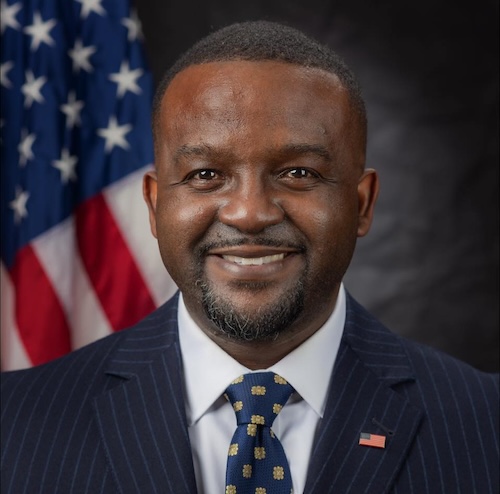
Daniel Blackman has been disqualified from running in the Democratic PSC primary.

ATLANTA (AP) — Votes won’t count for Democrat Daniel Blackman in the June 17 primary election for Georgia Public Service Commission after a judge ruled Tuesday that Blackman hadn’t proved that he had lived in Fulton County for the required year before the general election in November.

Fulton County Superior Court Judge Ural Glanville issued an earlier temporary order that kept Blackman on the ballot after Secretary of State Brad Raffensperger had disqualified him. But after a hearing on Tuesday, Glanville ruled from the bench that Raffensperger’s ruling had been correct.

Blackman can appeal, but if he loses, any votes cast for him will not be counted in the District 3 Democratic primary for the utility regulator. Three other Democrats — Peter Hubbard, Robert Jones and Keisha Waites — are also seeking their party’s nomination to oppose Republican Fitz Johnson in November.

In Public Service Commission elections, voters statewide choose each of the five commissioners. But the commissioners themselves must live in particular districts. District 3 includes Fulton, DeKalb and Clayton counties.

Blackman says he moved from Forsyth County to a southwest Atlanta apartment in October 2024, while his wife and children remained in the northern Atlanta suburb. But Glanville, ruling from the bench, said Blackman didn’t do enough to prove he had truly moved, noting he didn’t transfer his voter registration to Fulton County until April.

“The court is of the opinion that the secretary’s decision did, in fact, properly apply Georgia law,” Glanville said during an online hearing. “The final decision properly considered the petitioners failure to update his voter registration until April of 2025.”

Glanville said he hoped to enter a written order as soon as Wednesday. Blackman could appeal after that. A lawyer for Blackman did not immediately respond to a request for a statement after the hearing.

Signs warning voters that Blackman has been disqualified will be posted in polling places as soon as Glanville makes a written order, said Robert Sinners, a spokesperson for Raffensperger.

Turnout in the election is likely to be very low, but thousands of votes for Blackman could still be discarded. Through Monday, more than 25,000 people had voted in the Democratic primary. Early voting ends Friday, with Election Day on June 17.

Blackman lost a 2020 race for the commission and was appointed by President Joe Biden as southern region administrator for the Environmental Protection Agency.

A Republican primary will also be decided June 17, with Lee Muns of Harlem challenging incumbent Commissioner Tim Echols of Hoschton. Echols has been on the Public Service Commission since 2011. The winner will face Democrat Alicia Johnson in November.

All five commissioners are currently Republicans.

Heated budget battle in Baldwin as taxpayers demand answers, change

Baldwin City Councilwoman Alice Venter defends take-home vehicles during Monday's city council meeting. (Chaz Mullis/NowHabersham.com)

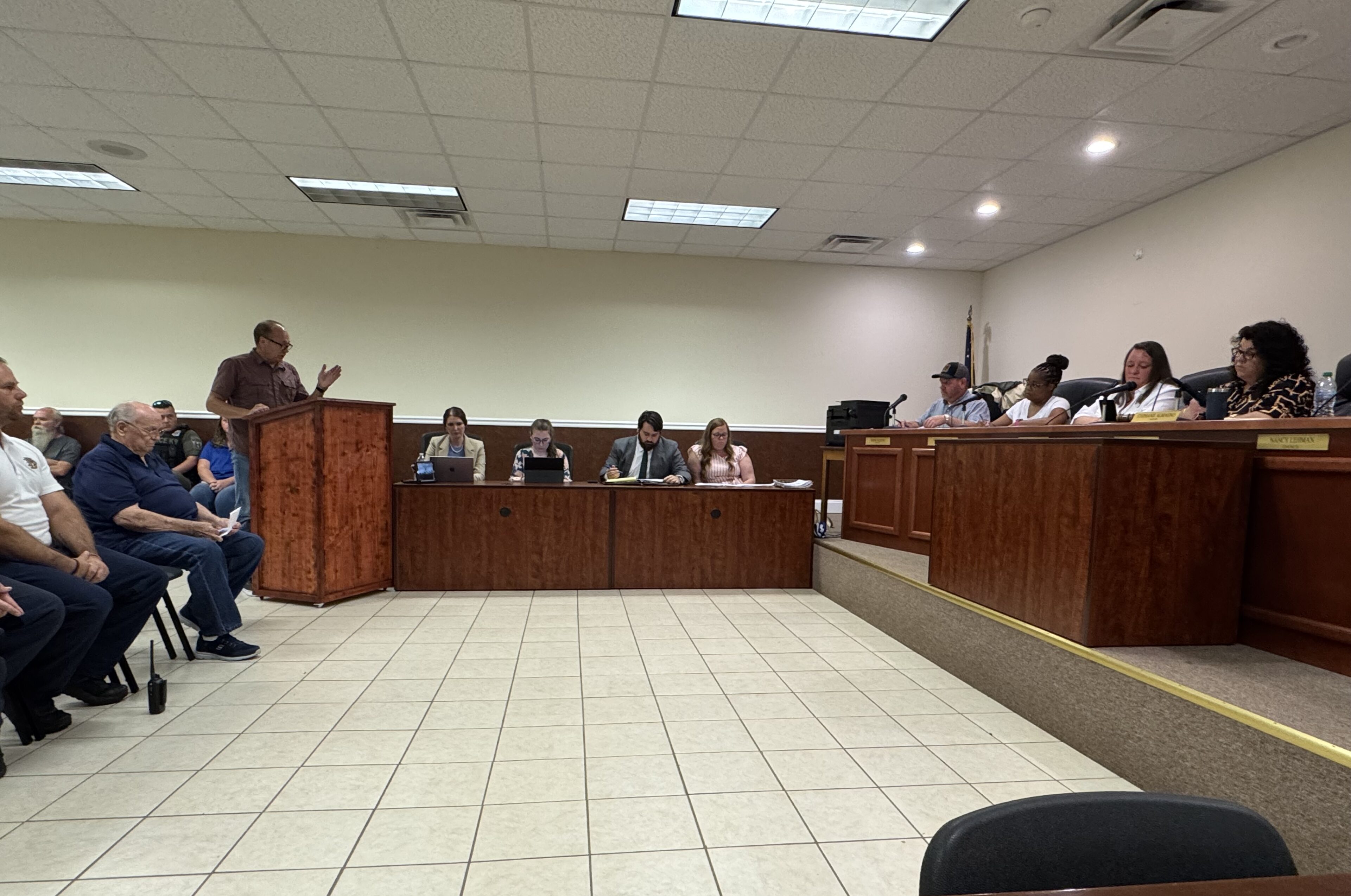
Around 40 people crowded into the Baldwin Municipal Courtroom Monday night to voice their opinions about the city’s proposed budget for the upcoming fiscal year. Several voiced concerns about how the city is allocating public funds, including former Baldwin mayor Joe Elam.

“The mayor’s proposed budget is not balanced, which makes it technically non-compliant with state law,” Elam said.

The former mayor stated that the proposed budget reflects a general fund deficit of nearly $435,000. That would be offset by a proposed 57% property tax increase. Pointing to tax increases in 2024 and 2023, Elam asked, “When does all this end, I wonder?”

Elam also asserted that the proposed Fiscal Year 2026 budget is not based on the city’s financial position because there were no statements of fund balances.

“Where’s the $2,649,587 of unassigned fund balancing from the FY2023 audit?” Elam asked. “Why is one of our employees alone costing the city taxpayers $168,569.07 a year?”

Former Baldwin Mayor Joe Elam speaks to the city council. (Chaz Mullis/NowHabersham.com)

Former Baldwin mayoral candidate Tom Whitney also voiced his concerns, noting that Baldwin does not yet have its financial audit for FY2024.

“So, the budget being voted on here at the end of the month and the tax increase that we’re all going to share is being built in financials that are more than a year out of date. That’s not just frustrating, I’ll be honest, that’s reckless,” Whitney said.

He also addressed what he referred to as “the elephant in the room.”

“What happened to the $2.6 million in unassigned fund balance that was sitting there at the end of fiscal year 2023?” Whitney asked. “We’ve asked for transparency. We’ve been told records don’t exist. But if that money is gone, the citizens of Baldwin deserve to know exactly when and how, and we deserve to see the breakdown now. Not months from now, not when the audit is done, now,” Whitney demanded to applause from the crowd.

Almagno answers

Baldwin Mayor Stephanie Almagno addressed Elam’s and Whitney’s concerns, saying the unassigned fund balancing was a combination of the fund balance for 2022, 2023, American Rescue Plan Act funds, and the balancing mechanism for fiscal years 2024 and 2025.

“We haven’t stolen the money. It has been appropriated responsibly, contrary to what you have to say,” Almagno said.

She also placed partial responsibility for the negative reception to the budget plan on Elam, saying that his enforced tax cuts in 2022 forced a higher millage in 2023.

“You can grandstand all you want,” Almagno said. “You were part of this. We wanted to build a city that was better than what it was in 2020.”

WATCH June 9, 2025, Baldwin City Council meeting

More heated exchanges

Mayor Almagno’s assurances did little to ease concerns in the room. Chandler Heights resident Cindy Lifsey called the council’s proposed budget “immoral.” She said she paid $1,425 in city taxes last year – four times the amount she paid while living in the Atlanta suburb of Johns Creek.

“I don’t understand why a city as small as this needs a 4-plus-million budget. It makes no sense to me,” Lifsey said.

Lifsey questioned budget line items for administrative office supplies—$17,000—and uniforms—$2,500. “It’s all the things that nobody pays attention to,” she said, calling for increased scrutiny of Baldwin’s finances.

“I’m upset to say the least because I’m looking at another several hundred dollar tax increase coming up if ya’ll go forward with what you’re planning to do. I can only imagine what other people are feeling that are on fixed incomes and have big parcels of land they’re having to pay taxes on,” she said.

Later, Lifsey drew a heated response from Councilwoman Alice Venter when she questioned the need for employees to have take-home vehicles.

“[Public Works employees] get up in the middle of the night from their home and come out and get into holes full of water in 20-degree weather. Ma’am, you don’t know what you’re talking about, all due respect,” shouted Venter.

Regaining her composure, Venter clarified for another audience member that property taxes pay for gas and maintenance on the vehicles. The city uses Special Local Option Sales tax dollars to purchase the vehicles.

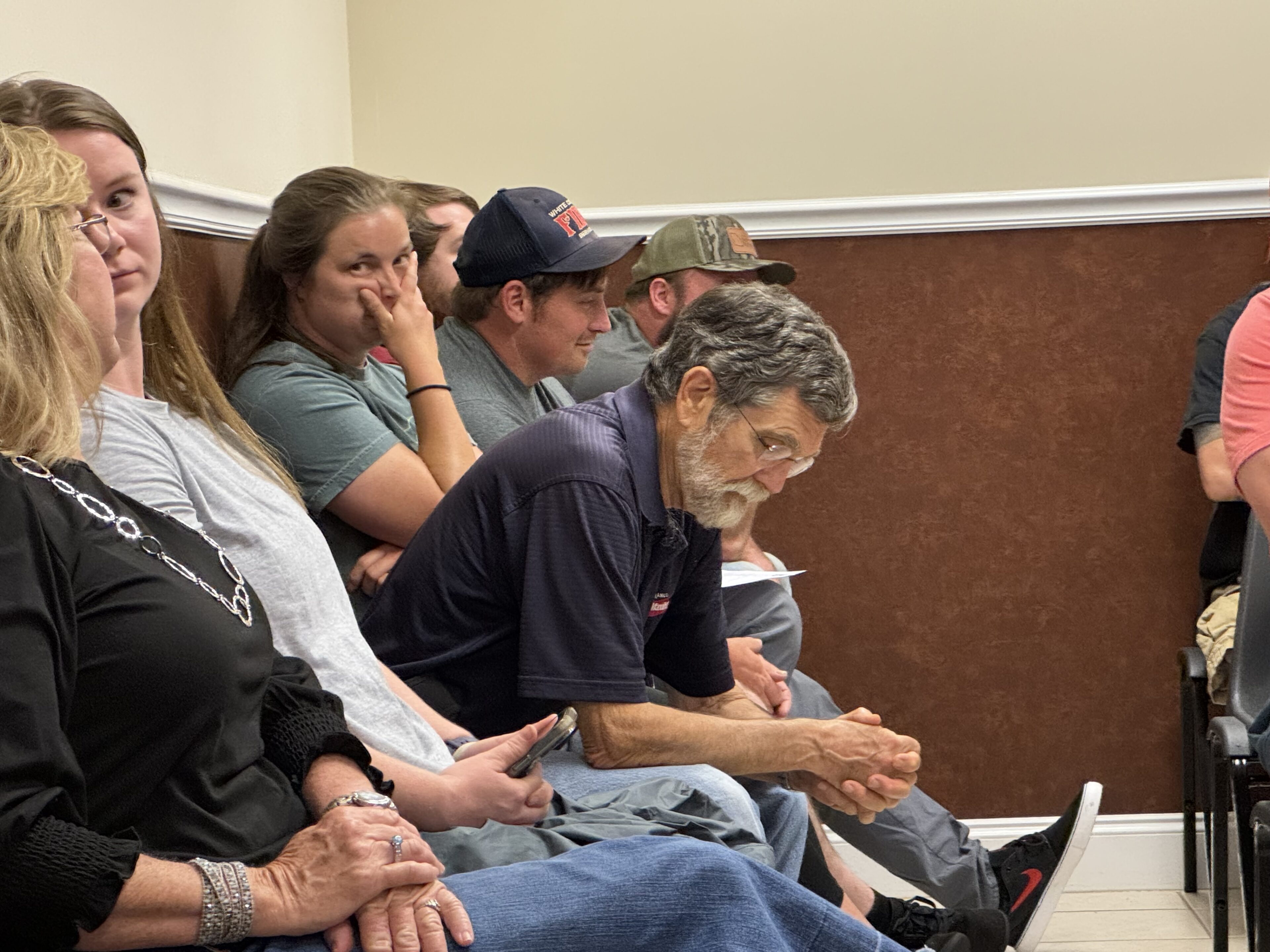
Disgruntled citizens watch Baldwin’s city council meeting. (Chaz Mullis/NowHabersham.com)

Gaveling out and asking for change

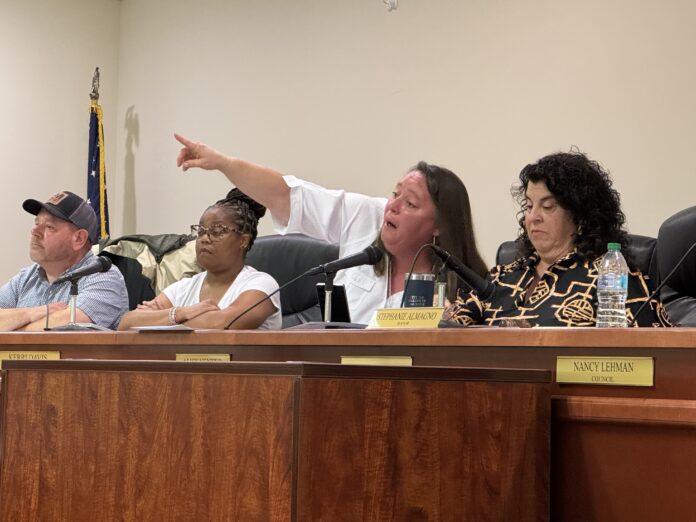
The most vocal negative reception from the crowd came after Mayor Almagno defended the pay raise for Baldwin’s Chief Administrative Officer, Emily Woodmaster, who also serves as the city’s human resources director and finance director.

“You should be thanking her for doing three jobs,” Almagno said, which was met with loud groans from the audience.

Almagno later stated, “Our job is to prepare for the future, which previous councils didn’t do.”

As debate continued and tensions rose, Almagno asked the council for a motion to adjourn. She gaveled out the hour-and-a-half-long meeting on unanimous consent.

During remarks earlier in the meeting, Elam and Whitney urged the city council to reconsider the proposed spending plan before adopting it. Said Whitney, “We need leadership. We need a plan. We need it now, before you vote.”

The Baldwin City Council must adopt a new budget by the end of June. To view the proposed budget, visit the city’s website.

Baldwin Council reappoints Venter for mayor pro tem

(NowHabersham.com)

During the city’s council meeting on June 9, Councilwoman Alice Venter was unanimously approved to maintain her position as Baldwin’s mayor pro tempore for fiscal year 2026. This marks Venter’s 5th year in the position.

The council also unanimously approved all other proposed appointments. These included The Samuels Firm for the position of City Attorney, the firm Morris & Waters for City Auditor, Erin Gathercoal for City Clerk, Fletcher Holliday of Engineering Management, Inc. for City Engineer, Robert Sneed for City Judge, and Teresa DiPonzio of The Samuels Firm for City Solicitor.

After consideration from last month’s budget town hall, the city council approved a revised meeting calendar for the rest of the year. Starting in July, council meetings and work sessions are proposed to be scheduled on the first Tuesday of the month. Work sessions will begin at 6:30 p.m. with council meetings set to follow.

Upcoming Baldwin events

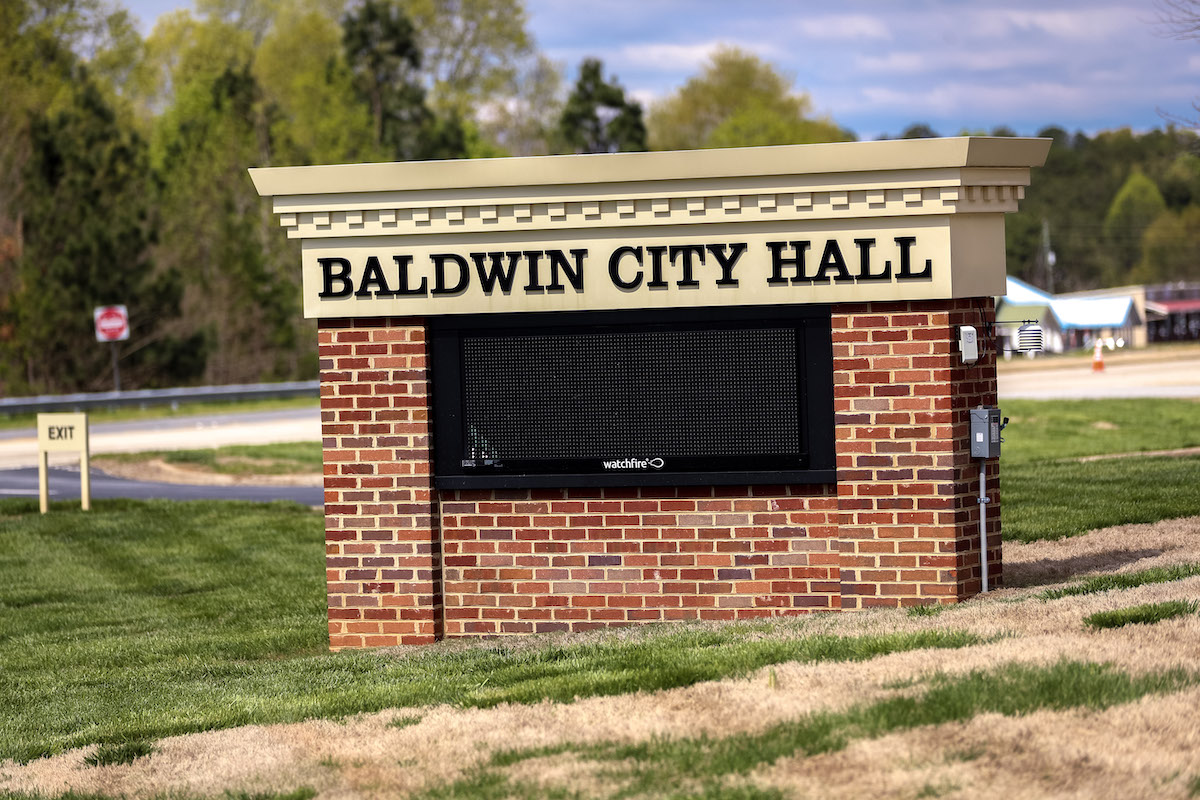
The first meeting for the 2025 City of Baldwin Comprehensive Plan will take place June 11 at 5:30 pm at Baldwin City Hall. All Baldwin residents, business owners, and stakeholders are invited to provide feedback for the city’s next 5-year plan and join the committee if interested. Those interested are encouraged to contact [email protected] for more information or to RSVP.

The Banks County Library On the Go will be set up at the TAP Yard at 110 Airport Road from 11 a.m. – 12 p.m. every Friday through the end of July. All residents are welcome to check out or return books. Additionally, those visiting the mobile library with children can receive food bags courtesy of the Food Bank of Northeast Georgia.

The 3rd Annual Baldwin Water War is on Saturday, June 14 from 2:30 p.m. – 4:30 p.m. at Mitchell Gailey Park. Visitors are encouraged to bring water guns and a towel.

Theron’s Theater will be offering a free screening of “Wonka” at the TAP Yard on June 27 at 8:30 p.m. Attendees are asked to bring a chair or blanket. Concessions will be available with all proceeds going to Shop with a Hero.

RELATED:

Heated budget battle in Baldwin as taxpayers demand answers, change

Cleveland City Council approves $8.1 million budget

FILE PHOTO - Cleveland City County (Dean Dyer/WRWH.com)

The Cleveland City Council has approved a total FY 2025-2026 budget of $8,164,601, which includes general fund and enterprise funds. The approval came Monday night following a final budget hearing.

The new budget general fund revenue, from property taxes, sales tax, franchise tax, premium, and financial tax receipts, is projected to be $5,029,426. That is an increase of 4.83 percent over last year’s budget.

“This prioritizes our most important resource in city government. It acknowledges the retention issues we have,” said City Administrator Kevin Harris.

Harris said the budget provides a salary adjustment for full-time employees and ensures all of Cleveland’s current obligations are met.

“It focuses on resilience, and it does add one additional position to the fire department,” Harris said.

Cleveland Mayor Josh Turner said, after the meeting, the council has provided input in developing the budget from the beginning, working with the staff, and recognized the need for a pay increase for all full-time employees.

“We recognize all of their hard work and all that they do for us, and certainly the cost of living has gone up over the last year, and we want to try to keep on par with that,” said Turner.