Home Blog Page 414

U.S. Senate GOP tries to ease the pain for states in sharing costs of SNAP benefits

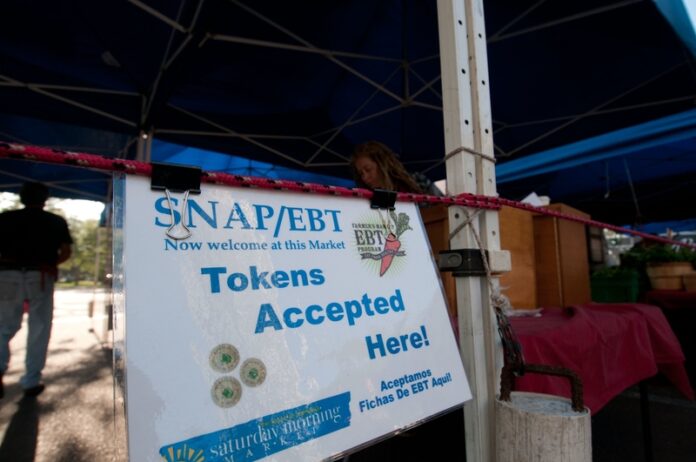
At a farm market in St. Petersburg, Florida, SNAP recipients were able to use their Electronic Benefits Transfer cards for food. (Lance Cheung/USDA).

WASHINGTON (States Newsroom) — U.S. Senate Republicans will propose more moderate changes to the major federal food assistance program than their House counterparts, Senate Agriculture Chairman John Boozman said Wednesday, detailing a provision in a giant tax and spending cut bill that would penalize states less harshly than the House GOP version.

The Agriculture section of the Senate’s budget reconciliation bill, like the House version that passed last month 215-214, would create the possibility that states for the first time would shoulder some of the cost of Supplemental Nutrition Assistance Program, or SNAP, benefits starting in 2028.

But unlike the House version, the Senate’s language would allow states an opportunity to avoid paying anything if they hit an efficiency benchmark, Boozman, an Arkansas Republican, told reporters at the Capitol.

The highest share states would be responsible for would be 15% under the Senate’s proposal, down from 25% in the House version.

Boozman said Senate Republicans sought to temper the House proposal, which would impose a minimum 5% cost-share on all states, with most states paying for 25% of the benefits.

The House approach would saddle states with at least around $5 billion per year for the program that provides about $100 billion per year in benefits, but the actual costs to states would likely be much higher.

“A lot of people were concerned about the significant bill to the states with the 5% cost-share,” Boozman said. “So this was an effort that’s the best of both worlds in the sense that it allows the states, through efficiencies, to make it such that they don’t have to worry about that, but we still recoup the money.”

In practice, the House plan would likely impose closer to $14 billion per year in new costs to states because most would not qualify for the lowest cost-share, according to an analysis from the nonpartisan Congressional Budget Office that also projected that more than 3 million people would lose benefits under the House plan.

The changes to SNAP are part of Republicans’ “big, beautiful bill” that would also extend the 2017 law that provided individual and corporate tax cuts, bolster federal spending on border security and defense, overhaul and cut portions of the Medicaid health care program, and much more.

GOP leaders are moving the package through the complex reconciliation process, which has strict rules in the Senate and will likely include a marathon amendment voting session later this month, known as a vote-a-rama.

Lower savings

The federal government currently pays for all costs of SNAP benefits. House Republicans argued that left states without an incentive to reduce errors in payments and proposed the requirement that states share some of the cost in proportion to their error rates in administering SNAP benefits.

The Senate would also peg a state’s cost-share to its error rate, but would make states’ costs lower across the board.

States with error rates at 5% or lower would continue to not pay anything for their SNAP benefits, and states with error rates from 10% or higher would pay for 15% of benefits. The Senate bill would also create two intermediate levels, Boozman said.

The national error rate in 2023, the most recent year for which data is available, was 11.7%, according to the U.S. Department of Agriculture. More than two dozen states had error rates of 10% or more.

The Senate’s proposed changes to the cost-share would result in a lower federal savings than the House version, Boozman said. His version would save about “$52 or $53 billion,” about $20 billion less than the House version, he said. It’s not clear where those savings might occur instead.

The Senate would also exclude a provision of the House bill that would have changed the cost-share of administering SNAP. States currently pay for 25% of administrative costs, with the federal government picking up the rest of the bill. The House bill would change that rate to 50% each.

A smaller tweak on the Senate side would require single parents of children younger than 10 to meet work requirements. The House bill would set that age at 7 years old. No age limit currently exists.

Reconciliation

The differences between House and Senate Republicans are among several issues the chambers will negotiate in the coming weeks as Republicans seek to pass the massive legislative package through the procedure known as budget reconciliation.

The process involves several committees writing bills that the Senate Budget Committee then packages together before sending it to the floor.

Full language of the Senate Agriculture Committee’s instructions would be published late Wednesday, Boozman said.

The reconciliation process allows Senate Republicans to skirt the chamber’s usual 60-vote threshold for legislation.

But with razor-thin majorities in each chamber — and a host of policy disagreements among Republicans — GOP leaders face a delicate task in crafting a bill that can pass both chambers.
Emory virologist: Pet cats are at risk of bird flu and could transmit to humans

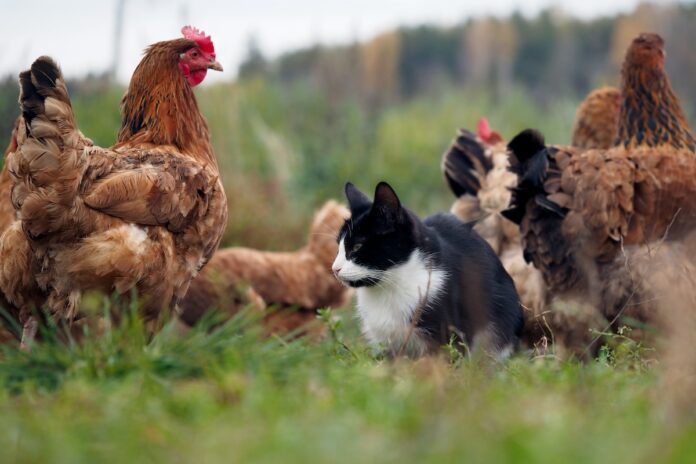
According to the American Veterinary Medical Association (AVMA), since the U.S. outbreak of avian influenza A (H5N1) in dairy cattle began in March 2024, dozens of cats have contracted the virus. This includes barn and feral cats, indoor cats, and big cats in zoos and the wild.

H5N1 “bird flu” is currently being seen in migratory birds, dairy cows, chickens, and even cats across the U.S. The last confirmed cases in Georgia were in January in commercial and backyard poultry flocks.

As the virus continues to spread through animals across the country, the federal government has canceled its contract with Moderna to develop an mRNA vaccine.

Seema Lakdawala, a virologist with the Emory University School of Medicine who focuses on influenza transmission and pandemic preparedness, said scientists need a multi-pronged approach that includes vaccines.

“We should be thinking about all sorts of vaccine modalities for domestic wildlife to protect our cows, to protect out dairy farmers, to protect poultry workers, to protect veterinarians, to protect chickens,” she said. “Then that’ll inevitably protect human health, right?”

There are new herds and new outbreaks happening constantly, she said.

“As the birds start moving again in the fall and winter, we’re going to definitely see upticks in [H5N1] cases,” Lakdawala said. “So, there is still continued concern and continued spillover into, you know, an exposure to both humans and other domestic wildlife.”

Feline infection

That includes cats.

“Cats are very sensitive to H5N1,” she said. “They are there presenting with neurological symptoms. Many of them are dying.”

Big cats in sanctuaries contract the virus when fed raw meat and drink raw milk.

Pet owners of domestic, outdoor cats that hunt birds should know about the high levels of H5N1 in the migratory bird flyway patterns right now, Lakdawala said.

“If your cat goes outside and grabs a dead bird, it could get H5N1,” she said.

People are much closer to their pets, even compared to how much humans interact with dairy cattle and come into contact with milk that has a lot of H5N1.

“We always like to take care of our pets and we snuggle them and we take care of them and they’re in close proximity to us, and so the potential spillover from a pet cat to a human is potentially quite high,” Lakdawala said.

Guarding against bird flu

Lakdawala said one way Georgians can protect themselves from bird flu is to not consume raw milk or raw meat. The American Veterinary Medical Association offers these and other helpful tips:

  • Keep cats indoors to prevent exposure to birds and other wildlife.
  • Avoid contact with sick or dead birds and other wildlife yourself.
  • Keep cats away from livestock, poultry, and their environments, especially in areas with known H5N1 outbreaks.
  • Thoroughly wash your hands after handling your cat and after any encounters with poultry, livestock, or wild birds and other animals.
  • Change your clothes and shoes, and thoroughly wash any exposed skin, after interacting with sick or dead animals that may harbor the H5N1 virus, and before interacting with your cat.
  • If you feed birds or walk near bird feeders or other places birds (including poultry) gather, change your shoes or disinfect their soles before entering your house.
  • Immediately contact your veterinarian if you notice signs of H5N1 or think your cat might have been exposed to the virus.

This article comes to Now Habersham in partnership with GPB News

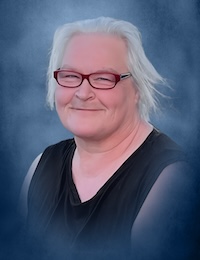
Vickey “Louise” Dalton

Vickey “Louise” Dalton, age 62, of Gainesville, passed away on Tuesday, June 10, 2025.

Born on November 27, 1962, in Demorest, she was a daughter of the late George Otis Dalton and Patricia Ann Crocker Gibson. Louise was employed with Fieldale Farms Corp. for 40 years and was also a caregiver. She was full of laughter and loved to travel in her spare time. Louise was a member of The Rock of Christ Church in Cleveland.

In addition to her parents, she was preceded in death by a sister, Joyce Standridge and brother, Otis Parr.

Survivors include sister and brother-in-law, Marilyn Canington (Donald); brother and sister-in-law, Richard Dalton (Mildred); many nieces, nephews, aunts, uncles, cousins, other relatives and friends.

Funeral services are 2 pm on Saturday, June 14, 2025, in the Chapel of McGahee-Griffin & McEntire, with Rev. Kenneth Taylor, Rev. Scott Fendley, and Rev. Jonathan Arrowood officiating. Interment will follow in Level Grove Cemetery with Rev. Ronnie Pendley officiating.

The family will receive friends from 6-8 pm on Friday, June 13, 2025, and from 12 noon until the service hour on Saturday, at the funeral home.

An online guest register is available and may be viewed at www.mcgaheegriffinandmcentire.com.

McGahee-Griffin & McEntire Funeral Home of Cornelia, Georgia (706/778-8668) is in charge of arrangements.

Former Hall County prosecutor named new Athens-Clarke Municipal Court Judge

A seasoned Hall County prosecutor is stepping into a new judicial role in Athens-Clarke County. The Athens-Clarke County Unified Government Mayor and Commission appointed Stephanie Thompson as the next Municipal Court Judge and Administrative Hearing Officer.

Thompson brings a decade of experience from the Hall County Solicitor General’s Office, where she rose from Assistant to Interim Solicitor General. The office prosecutes a wide range of misdemeanor offenses, including DUI, domestic violence, and drug possession, experience that Athens-Clarke officials say will serve her well in the county’s busiest court.

She also served as a prosecutor for Hall County’s Mental Health Court and Family Treatment Court and was named Hall County’s Employee of the Year in 2021.

“Given her past work and exemplary praise from former colleagues, it is clear that Stephanie Thompson will handle the complexity and high volume of activity in Municipal Court very well,” said Athens-Clarke County Mayor Kelly Girtz. “We are fortunate to have her join our strong local judiciary.”

“I am truly honored to be entrusted with the responsibility of serving as the next Municipal Court Judge of Athens-Clarke County,” said Thompson. “I accept this responsibility with humility, a deep respect for the law, and a commitment to the people that I will serve. My goal is to foster an environment that reflects the highest standards of public service and earns the trust of our community every day.”

Outside the courtroom, Thompson has chaired the Hall County Domestic Violence Task Force and serves on the board of the Children’s Center for Hope and Healing. She holds a law degree from John Marshall Law School and a bachelor’s degree in political science from Georgia State University.

Thompson will succeed Interim Municipal Court Judge Jim Davis, who has held the position since the resignation of Judge Marcy Jolles in March.

Suspect still at large after officer-involved shooting in Habersham County

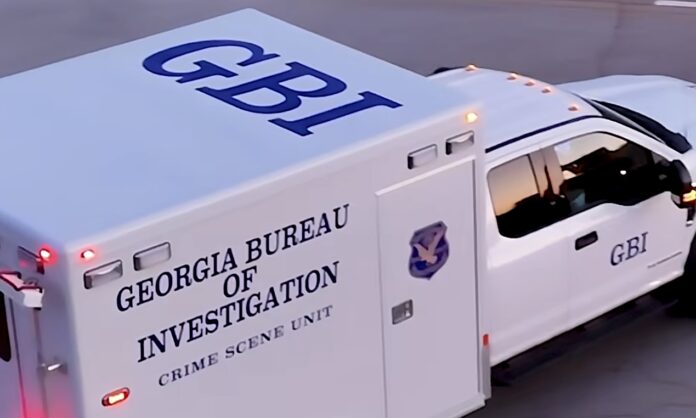
A GBI Crime Scene Unit arrives in Habersham County in response to the incident on Wednesday morning, June 11, 2025. (NowHabersham.com)

The Georgia Bureau of Investigation (GBI) is investigating an officer-involved shooting that occurred early Wednesday morning, June 11, in Habersham County. One deputy was injured, and a suspect remains on the run.

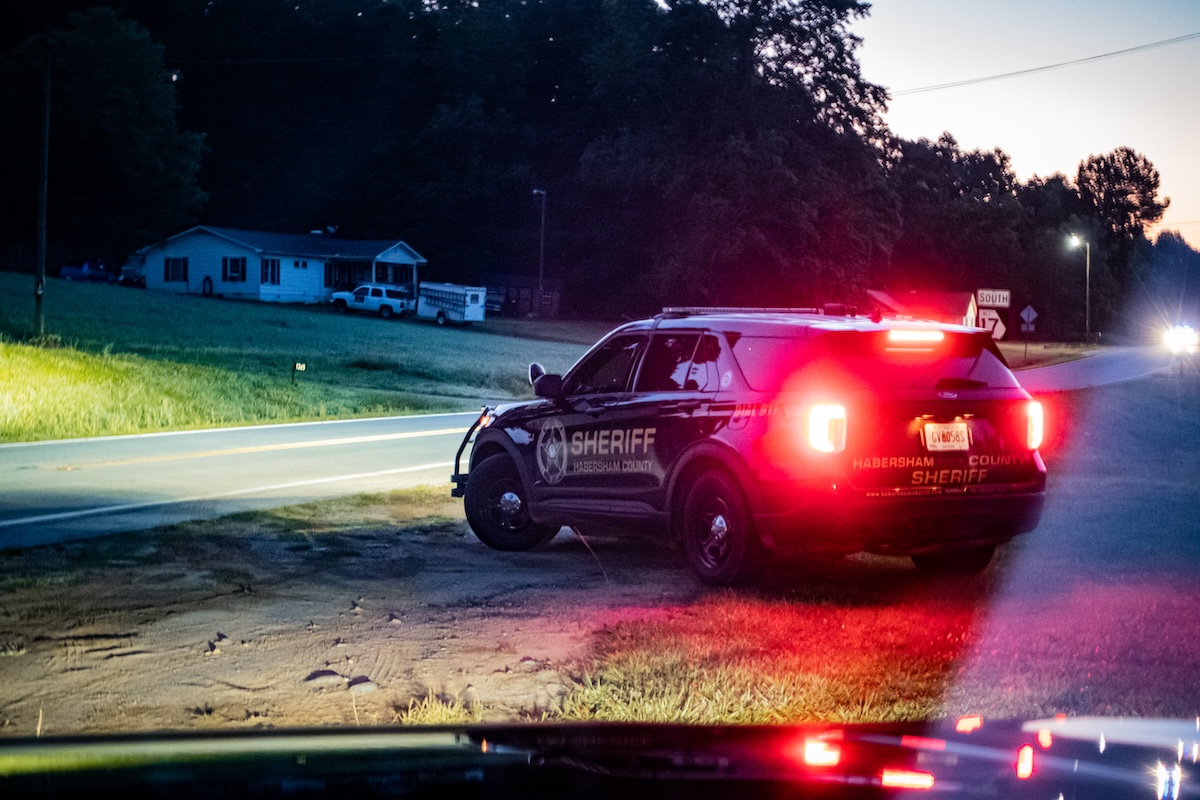
According to the GBI, the incident happened around 3:30 a.m. after a Habersham County deputy attempted to stop a truck pulling a trailer with two flat tires near Juniper Trail in Toccoa. As the deputy stepped out of his patrol vehicle, the driver of the truck, identified as 34-year-old Jonathan William Harris of Sautee, allegedly rammed the patrol car. The impact knocked the deputy to the ground.

(Daniel Purcell/NowHabersham.com)

The deputy fired his weapon as Harris fled the scene on foot. His condition is unknown. The deputy sustained minor injuries and was treated at the scene by Habersham County Emergency Services.

Harris is wanted on multiple charges, including aggravated assault on a law enforcement officer, fleeing, firearm possession during a crime, obstruction, and theft by receiving stolen property. Authorities say the truck and trailer were previously reported stolen in Hall County. Harris also has outstanding warrants from an unrelated case.

A passenger in the truck, 44-year-old Antone Cortez Hall of Gainesville, was arrested at the scene. He faces charges of theft by receiving stolen property, obstruction, and possession of a firearm by a convicted felon. Hall is being held at the Habersham County Detention Center.

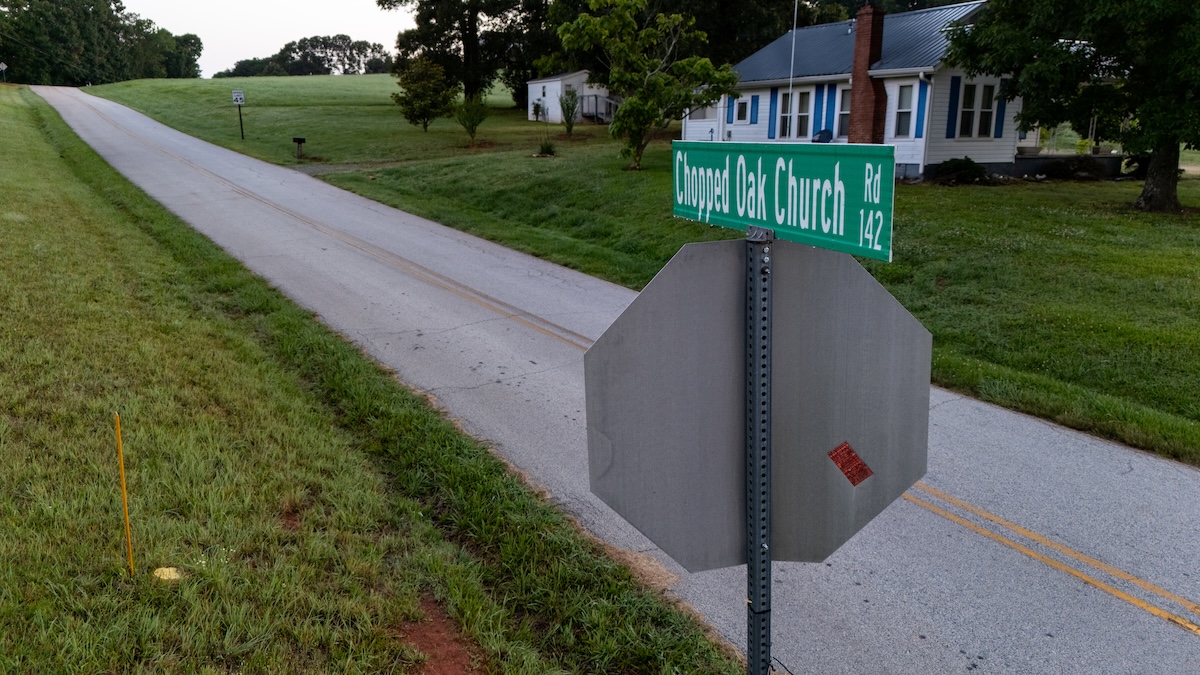
(Daniel Purcell/NowHabersham.com)

The search for Harris continues in the area off Talmadge Drive between Hollywood and Toccoa. Law enforcement describes him as a white male with dark hair, wearing brown pants and a black shirt. He is believed to still be on foot. Authorities urge the public not to approach him and to call 911 if he is seen.

Multiple agencies are assisting in the manhunt, including the GBI, Georgia State Patrol, and officers from nearby cities. Drones, K-9 units, and a GSP helicopter have been deployed in the search.

The GBI’s role is limited to investigating the use of force. Once their investigation is complete, the case will be handed over to the Mountain Judicial Circuit District Attorney’s Office for review.

Gainesville man killed in crash on GA 365 at White Sulphur Road

fatal accident

A Gainesville man died Tuesday night in a two-vehicle crash on GA 365 in Hall County.

According to the Hall County Sheriff’s Office, 60-year-old Richard Dean Short was killed when his vehicle collided with another around 9:30 p.m. at the intersection of GA 365 and White Sulphur Road. Investigators say Short was attempting to turn left from the northbound lanes of GA 365 onto White Sulphur Road when he pulled into the path of a southbound vehicle on the highway.

Short died at the scene. Four people in the other vehicle reported minor injuries and were evaluated by Hall County emergency medical personnel.

The crash caused traffic delays in the area for approximately 90 minutes while the sheriff’s Accident Investigation Unit conducted its investigation.

Man arrested for drugs and guns in White County

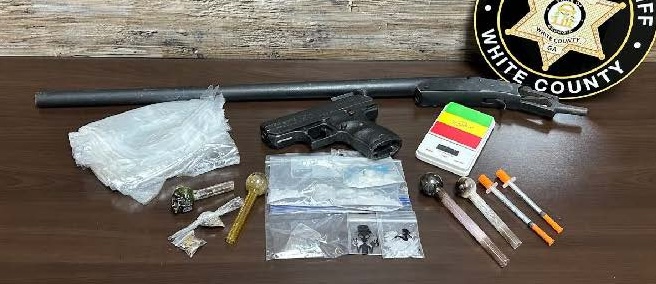
(White County Sheriff's Office/Facebook)

A Cleveland man is facing a string of drug and firearm charges after a bust by the White County Sheriff’s Office earlier this month.

According to a press release issued by the Sheriff’s Office, authorities executed a search warrant on June 3 at the residence of Richard Lee, 56, of Young Drive in Cleveland, Georgia.

The warrant followed an investigation sparked by tips alleging Lee was involved in trafficking and distributing methamphetamine in the White County area.

During the search, investigators seized over an ounce of methamphetamine, along with materials consistent with drug distribution, such as packaging supplies and various drug-related objects. Additionally, two firearms were discovered at the residence.

Lee, a convicted felon, was arrested and faces multiple charges, including trafficking methamphetamine, possession of methamphetamine with intent to distribute, possession of drug related objects, possession of a firearm by a convicted felon (two counts), and possession of a firearm during the commission of a felony (two counts).

Less than 1% of Northeast Georgians have voted in PSC primary

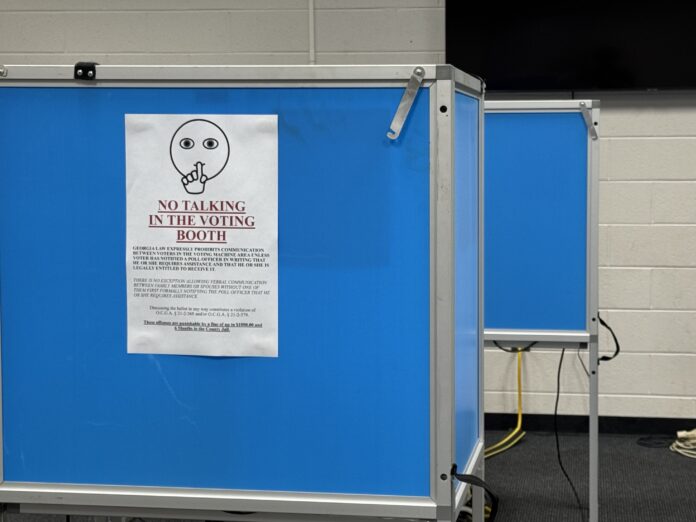
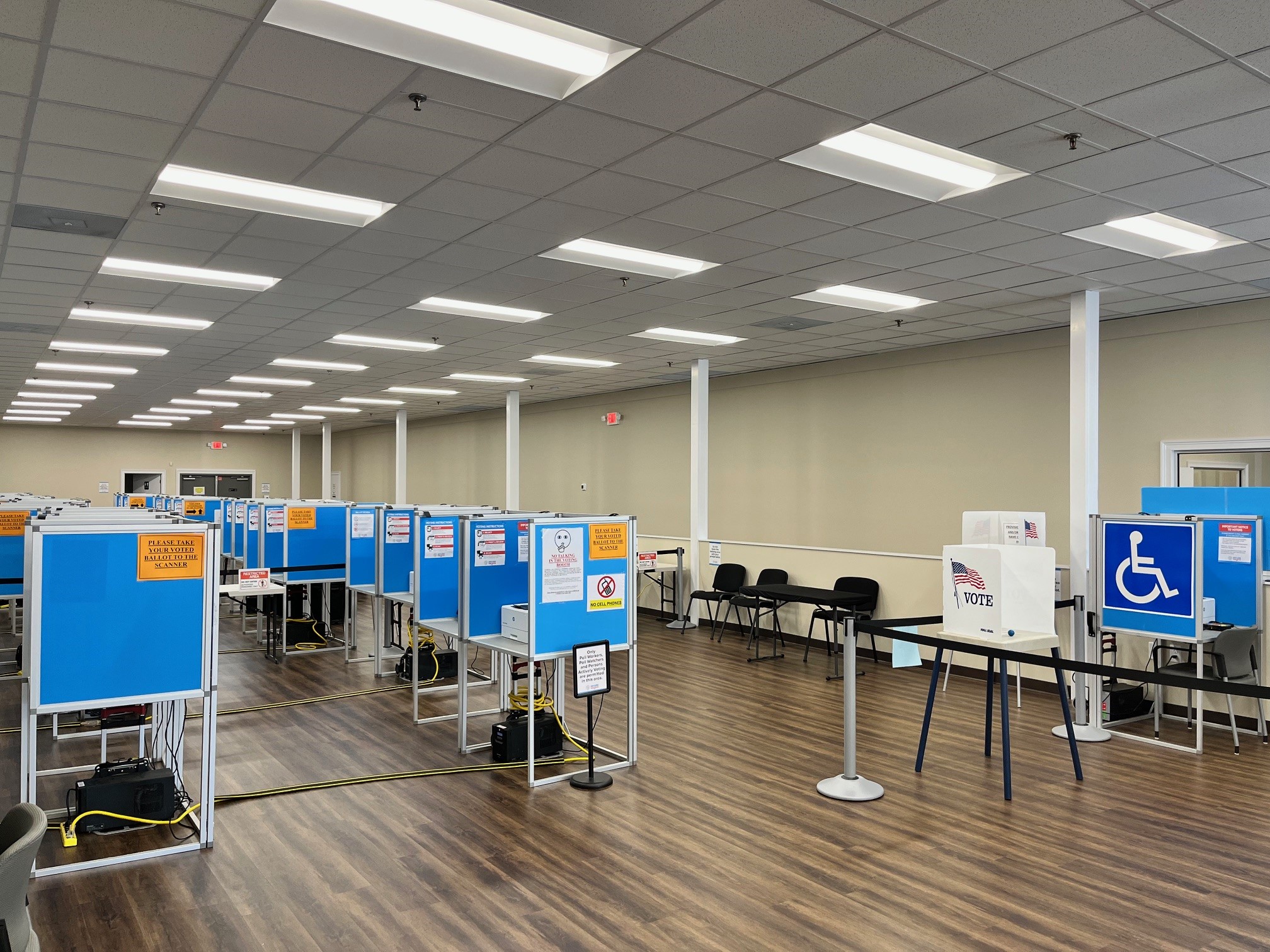
For most counties in the state, early voter turnout for the Georgia Public Service Commission race has been extremely low. (Chaz Mullis/NowHabersham.com)

Advance voting for the Georgia Public Service Commission primary is underway. For most counties in the state, voter turnout has been extremely low.

At the Habersham North Precinct inside the Ruby Fulbright Aquatic Center in Clarkesville, the smell of chlorine and the drone of the building’s AC units were all that filled the voting booths at noon on Wednesday. Several poll workers sat patiently by waiting for voters.

“Most people come in and say, ‘what are we voting for? I had no idea,'” said Amy Espinosa, a poll worker at the aquatic center.

What are we voting on?

What many Georgians may not realize is this primary election’s potential to create significant financial consequences for their homes and businesses. The PSC regulates the state’s telecommunications, gas, and electric utilities. The Commission has exclusive power to decide what are “fair and reasonable rates” for these services.

According to the PSC website, the panel “must balance Georgia citizens’ need for reliable services and reasonable rates with the need for utilities to earn a reasonable return on investment.”

Habersham County Elections Office in Cornelia, Ga. (Photo submitted)

The Election Data Hub on the Georgia Secretary of State’s website shows that, as of June 11, there had been 1,261 votes cast in the PSC election across Habersham, White, Hall, Banks, Stephens, and Lumpkin counties. This means that half of one percent of all active voters in these counties have voted in the PSC primary.

Only 48,058 eligible voters have cast ballots statewide— a 0.6% voter turnout.

Washington County currently has the highest turnout in the state with 1,669 votes cast.

First time voting for PSC in years

For the past two election cycles, PSC elections were canceled due to an ongoing voting rights lawsuit challenging the election process itself.

As a result, three commissioners have remained in their positions and continued to vote on important matters without facing the electorate as originally scheduled. This year, two of those commissioners, Republicans Tim Echols and Fitz Johnson, are on the ballot.

Candidates must reside in the districts in which they’re running. However, they are elected at large, meaning all eligible registered voters in the state may vote on them.

This year’s races include candidates in District 2, which spans parts of East Georgia, including Augusta and Savannah, and District 3, which covers the three Atlanta-area counties of Clayton, DeKalb, and Fulton.

Since this is a primary, voters must declare which party primary they are voting in.

The only primary choice in District 2 is on the Republican side, where incumbent Tim Echols faces challenger Lee Muns. The winner of the District 2 GOP primary will face Democrat Alicia Johnson in November.

In District 3, the choice is on the Democratic side among Peter Hubbard, Robert Jones, and Keisha Sean Waites. They’re vying for a chance to challenge incumbent Republican Fitz Johnson in the fall.

A fourth declared Democratic candidate for District 3, Daniel Blackman, was disqualified from the race for failing to meet residency requirements.

CDC supporters continue to rally for public health months after mass layoffs began

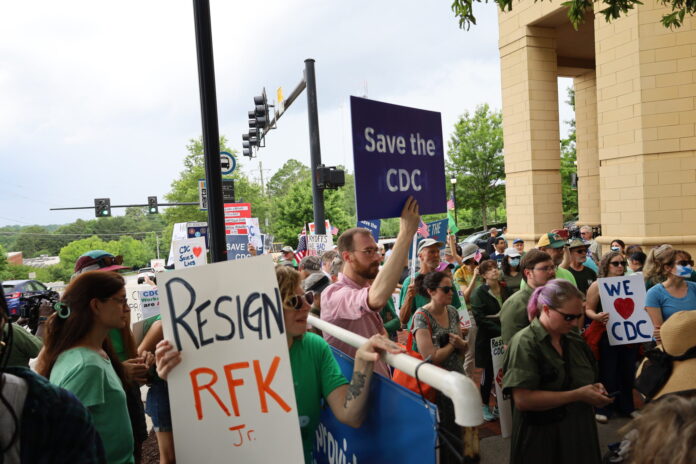
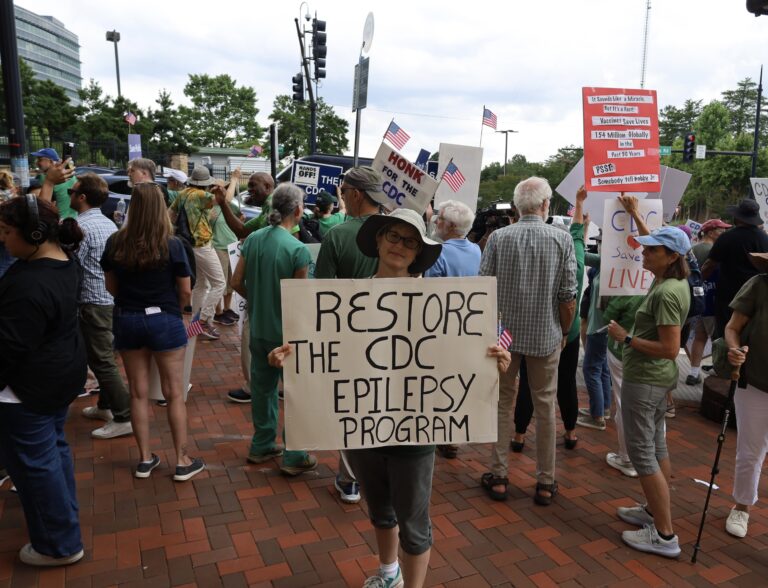
Supporters of the CDC participate in a rally outside the center in Atlanta Tuesday. (Amber Roldan/Georgia Recorder)

(Georgia Recorder) — Every Tuesday afternoon since mid-February, the busy intersection outside the Centers for Disease Control and Prevention becomes loud and crowded as allies show their support for the center and its remaining employees.

The rallies emerged after the first round of mass layoffs under the Trump administration and its campaign to shrink the size of the federal government, which has led to a large number of fired employees, funding cuts, and the elimination of CDC programs.

Every week, retired CDC employees and people who have lost their jobs take to the streets to express their disappointment and share their collective fear for the future of the CDC. This week, about 20 current CDC workers used their paid time-off to join them.

By walking out of their offices, the group was able to share a moment of solidarity with the crowd. A few of these employees stepped up to the megaphone, saying they were scared to speak out. Most of these employees remained masked.

Supporters of the CDC participate in a rally outside the center in Atlanta Tuesday. (Amber Roldan/Georgia Recorder)

Tony Fiore, one of the many CDC alums in attendance this week, has been at almost every Tuesday rally. Fiore is part of a group of former CDC staffers who help organize the weekly rallies to show their support for their friends still working at the center.

“We thought we’d come out here every Tuesday and show some support, show some love to them, because they’re just getting hammered from all sides,” Fiore said. “They’re getting letters every week telling them they’re worthless government employees.”

Tuesday’s rally came only a day after Health Secretary Robert F. Kennedy Jr. removed each existing member of the Advisory Committee on Immunization Practices. This committee advises the CDC on who should receive vaccinations and when. His executive removal came with a pledge to replace the committee with new members of his choosing.

Numerous signs, including one from Fiore, expressed dismay over this decision.

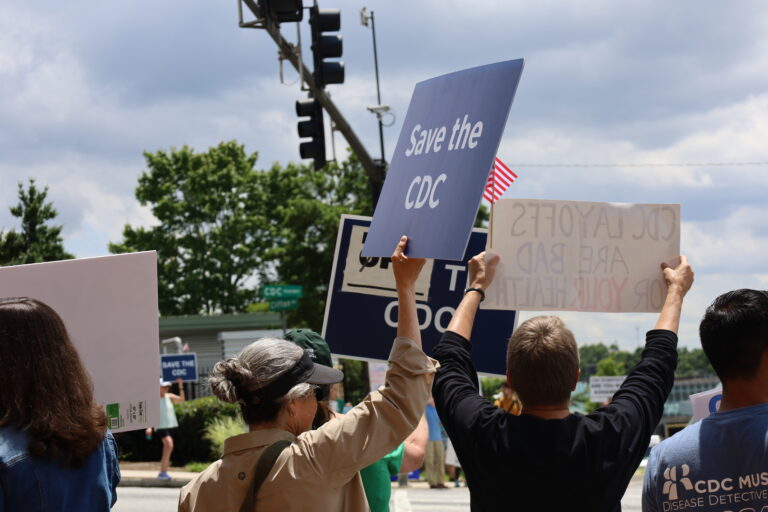
Supporters gathered around three corners of the busy intersection outside the center holding signs high as cars, including some with CDC employees on board, passed. The signs elicited honks, smiles and thumbs up from many drivers.

Recently fired former CDC employee Rosemarie Kobau attended Tuesday’s rally with a sign pleading for the restoration of the CDC’s epilepsy program. After 25 years as a part of the program and 13 years as its team lead, Kobau did not expect to be spending her Tuesdays unemployed and begging for the continuation of epilepsy programming.

Kobau’s team previously worked to promote epilepsy prevention through prenatal care, disorder management and innovative intervention.

“We were supporting many programs and communities across the country and in partnership with large national organizations like the Epilepsy Foundation and the American Epilepsy Society,” Kobau said. “Now all of that work has been stopped.”

As the rally cranked up Tuesday, CDC supporters gathered in a tight clump outside of a nearby CVS where event organizers set up a stepstool and megaphone. Former and current CDC staffers recited their oath of office and then extended an open invitation for anyone to speak.

Recently fired former CDC employee, Rosemarie Kobau, attended Tuesday’s rally with a sign pleading for the restoration of the CDC’s epilepsy program. (Amber Roldan/Georgia Recorder)

This invitation attracted both planned and impromptu speakers.

Kathleen Collomb, a retired CDC employee from the Office on Smoking and Health, said she did not plan on speaking. However, after listening to the testimonies of other speakers, she felt moved to voice her concerns.

From behind the megaphone, Collomb told the crowd that when Kennedy was asked about the number one preventable death in America, his answer was smoking. But even so, the Office on Smoking and Health was one of the many eliminated CDC programs.

“What did this man and DOGE do? They RIFed them and they vaporized the Office on Smoking and Health,” Collomb said, referring to a reduction in force.

The crowd responded with a cacophony of “boos.”

Before leaving the megaphone, Collomb asked a final question: “How in heaven’s name does that Make America Healthy Again?”

State Rep. Saira Draper, an Atlanta Democrat, joined a long list of passionate voices at Tuesday’s rally. Her message was delivered through rain as a storm moved in. Attendees opened umbrellas and put on ponchos as Draper spoke about her gratitude and support for CDC employees. She also criticized Gov. Brian Kemp for staying silent as hundreds of jobs continue to be lost in Atlanta.

“If there is something I have learned from my time at the Georgia Capitol, it is that there is no change without demand,” Draper said to the crowd. “I know sometimes it can seem like you are yelling into the void. I know that, but let me assure you, you are not. We are listening and we stand with you.”

Georgia lawmakers launch statewide review of election procedures ahead of 2026

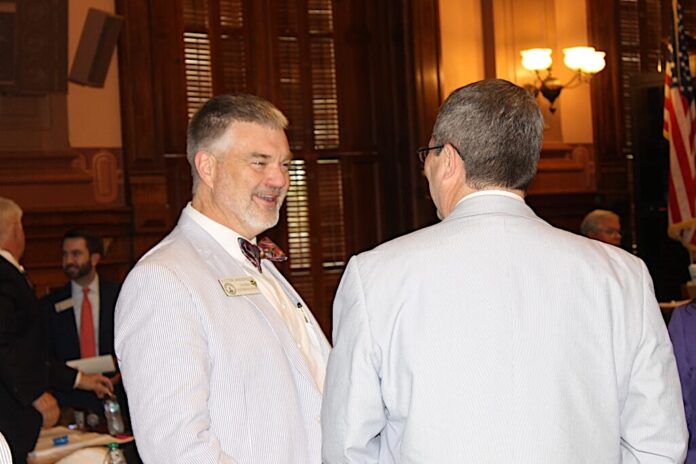
Rep. Victor Anderson, R-Cornelia, speaks to colleagues in the House Chamber Friday, April 4, 2025. (Brian Wellmeier/NowHabersham.com)

ATLANTA — State leaders are launching a new effort to review how elections are run in Georgia, with the goal of ensuring secure, transparent, and efficient voting ahead of the 2026 election cycle.

State Rep. Victor Anderson (R-Cornelia), vice chairman of the House Blue-Ribbon Study Committee on Election Procedures, announced the committee’s 2025 meeting schedule this week. The bipartisan panel will travel across Georgia starting this summer to hear from election officials, experts, and the public.

“As we announce these meetings, I want to emphasize our commitment to upholding the integrity of Georgia’s elections,” said Anderson. “We’re taking a close look at how elections are administered at both the state and local levels. Our mission is to make smart, common-sense recommendations that build public trust ahead of next November’s elections.”

House Speaker Jon Burns (R-Newington) praised the committee’s work, pointing to past efforts to tighten election security — including adding watermarks to paper ballots, requiring ID for absentee voting, and securing ballot drop boxes.

The committee will examine Georgia’s current election laws and procedures, evaluate how they are implemented by local officials, and determine what legislative changes may be needed. The group will issue a final report with recommendations before the 2026 legislative session.

The committee’s public meetings will be livestreamed and are open to all. The dates and cities for the 2025 meetings are:

  • Tuesday, July 15 – Atlanta
  • Friday, August 8 – Rockmart
  • Thursday, August 28 – Cornelia/Gainesville
  • Thursday, September 18 – Savannah
  • Thursday, October 2 – Covington
  • Thursday, October 16 – Americus

Exact times and venues will be announced ahead of each meeting.

The study committee is chaired by Rep. Tim Fleming (R-Covington) and includes Representatives Martin Momtahan, Trey Kelley, Rob Leverett, Jan Jones, and Saira Draper.

Anderson, who represents Rabun County and much of Habersham County, has served in the House since 2020 and chairs the House Governmental Affairs Committee.

Rustic Cabin Bar and Grill gets ‘decked’ out for opening in July

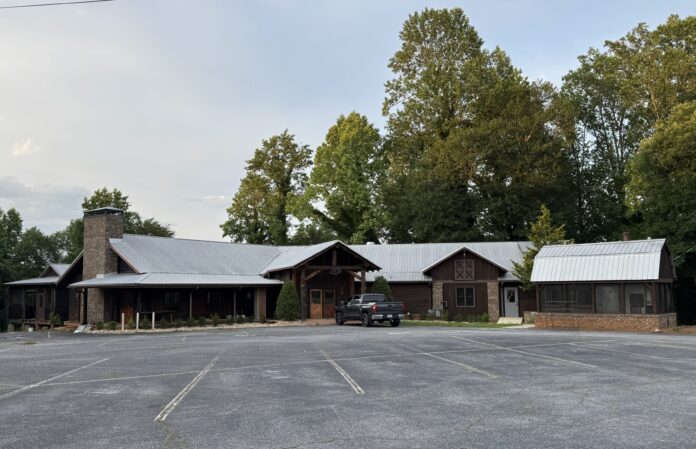
Rustic Cabin Bar and Grill co-owner Carlos Hernandez outlined plans for a new open deck for outdoor seating. (Chaz Mullis/NowHabersham.com)

At the Clarkesville Planning Commission meeting on Tuesday, June 10, Rustic Cabin Bar and Grill co-owner Carlos Hernandez outlined plans for a new open deck for outdoor seating. The upcoming restaurant, located at 515 Grant Street in Clarkesville, was the location of Hawg Wild BBQ.

The deck will be located on the back left side of the restaurant facing the Soque Greenway Trail. An ADA ramp will be constructed on the left side of the establishment for easier access. Patrons will be able to dine on this deck when conditions are acceptable.

The city planning commission approved the alteration unanimously.

Rustic Cabin is set to open in July. The restaurant will offer a full bar, with the bar area separate from the general dining space to maintain the family-friendly environment. The menu will feature a variety of options, including bar food, steaks, burgers, wings, sandwiches, pastas, vegetarian choices and specialty hors d’oeuvres.

Hernandez currently co-owns Chicago’s Pizza in Demorest with his brother, Rudy. The Hernandez brothers expect the new establishment to create between 25 to 30 new jobs.

Rustic Cabin Bar and Grill closer to opening in Clarkesville

Charlton County, ICE contract to expand processing center moves forward

FILE PHOTO — Georgia Congressman Buddy Carter, a Pooler Republican, said he helped broker the contract between Charlton County and the federal government. (Ross Williams/Georgia Recorder)

(Georgia Recorder) — Georgia’s Charlton County is set to become home to the largest immigrant detention facility in the United States following an agreement between county officials and the federal Department of Homeland Security.

Under a $47 million contract reached Friday by county and federal government officials, the D. Ray James Correctional Facility in Folkston, 45 miles southwest of Brunswick, will be merged with an immigrant processing center in the city that is operated by U.S. Immigration and Customs Enforcement (ICE).

Coastal Georgia Congressman Earl “Buddy” Carter, who said he helped broker the contract, praised the deal.

The expansion will add “roughly 400 jobs and economic growth to the First Congressional District,” Carter said in a press release.

Continued Carter, who last month announced his candidacy for the U.S. Senate seat held by Democrat Jon Ossoff: “I’m proud to have worked with Charlton County to get the D. Ray James Correctional Facility expansion over the finish line, which will bring jobs and economic growth to our region, and I will continue to support our brave ICE agents as they seek to restore law and order.”

Folkston, a city of about 4,500 people, will also receive approximately $600,000 a year in revenue from water and sewer services to the facility, the congressman said.

The Folkston processing center currently holds just over 1,100 beds. Its merger with the correctional facility will bring the center’s total capacity to nearly 3,000 beds.

In a June 5 press release from the county’s Board of Commissioners, County Administrator Glenn Hull said the county does not manage the correctional facility and would not do so following the merger.

“This expansion would increase capacity and enhance federal operations already in place,” Hull wrote in the press release. “Charlton County’s role remains strictly administrative and supportive.”

Both facilities are owned and managed by The Geo Group, a private prison corporation. The Geo Group contributed $7,500 to Carter’s campaign in 2024 through PACs, $5,000 of which was donated directly to Buddy PAC — Carter’s Leadership PAC.