Home Blog Page 413

Athens-Clarke County Police to conduct vehicle checkpoints June 13

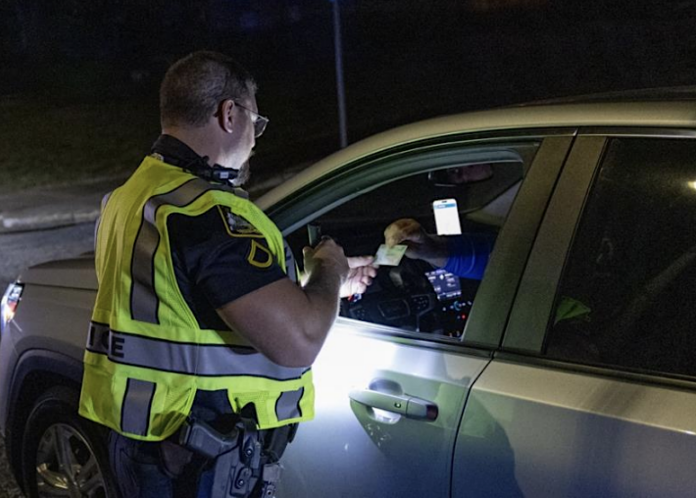
Officers with ACCPD conducted multiple vehicle checkpoints Friday, Oct. 18. (Athens-Clarke County Police Department)

The Athens-Clarke County Police Department (ACCPD) will conduct vehicle checkpoints on Friday, June 13, from 8 p.m. to midnight.

The department says these checkpoints are part of its ongoing efforts to improve road safety by encouraging drivers to slow down, stay alert, and avoid impaired driving.

For officer safety, the exact locations of the checkpoints will not be released in advance.

During the operation, officers will distribute educational flyers with local traffic statistics and information on why ACCPD conducts checkpoints. After the event, the department will share details about the operation through a media release and social media.

U.S. House votes to yank billions for NPR, PBS and foreign aid programs

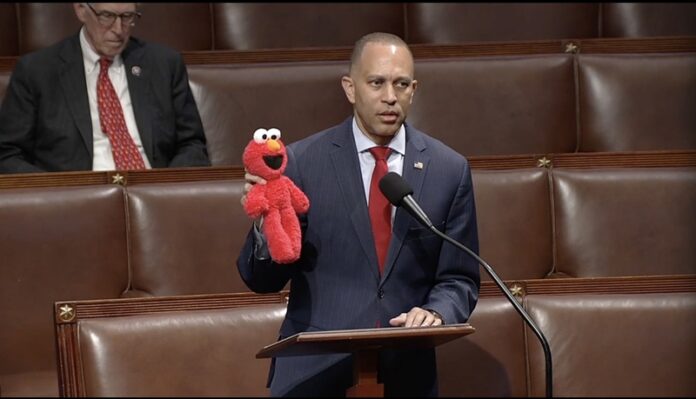
U.S. House Minority Leader Hakeem Jeffries, D-N.Y., holds up an Elmo toy while the chamber debates a bill that would eliminate previously approved funding for the Corporation for Public Broadcasting, which provides grants to public radio and television stations, including the Public Broadcasting Service, or PBS, which airs "Sesame Street." (Screenshot taken from House Clerk website livestream.)

WASHINGTON (States Newsroom) — The U.S. House narrowly passed legislation Thursday that would revoke $9.4 billion in previously approved funding for public media, including National Public Radio and the Public Broadcasting Service, as well as foreign aid, though the bill’s future in the Senate amid a strict timeline is uncertain.

The 214-212 mostly party-line vote marks just the third time in several decades the House has approved a bill to claw back funding that lawmakers formerly agreed to spend. President Donald Trump sent the rescissions request that led to the House bill to the Republican-controlled Congress earlier this month.

Republican Reps. Mark Amodei of Nevada, Brian Fitzpatrick of Pennsylvania, Nicole Malliotakis of New York and Mike Turner of Ohio voted against approving the bill along with all of the chamber’s Democrats.

Nebraska Rep. Don Bacon and New York Rep. Nick LaLota, both Republicans, switched from opposing to supporting the bill after Speaker Mike Johnson spoke with them on the floor as the vote was held open.

House Majority Leader Steve Scalise, R-La., contended during floor debate that pulling back the funding is the right place to start, but said the GOP will seek to do much more in the months and years ahead.

Scalise said PBS and NPR should have to compete against other media organizations without grant funding from the federal government.

“There is still going to be a plethora of options for the American people,” Scalise said. “But if they’re paying their hard-earned dollars to go get content, why should your tax dollars only go to one thing that the other side wants to promote? Let everybody go compete on a fair basis.”

Maine Democratic Rep. Chellie Pingree said every state in the country would feel the impact of eliminating funding for the Corporation for Public Broadcasting.

“I rise today in strong opposition to the reckless attack on public media contained within this rescissions bill and millions of Americans who rely on and treasure their local public television and radio stations,” Pingree said.

Efforts to defund CPB, she said, were the result of Trump’s “agenda against the free press and his authoritarian desire to control the media.”

Public media would lose $1.1 billion

The seven-page bill would rescind all funding that Congress approved for the Corporation for Public Broadcasting for fiscal years 2026 and 2027, a total of $1.1 billion.

CPB, which provides grants to public radio and television stations throughout the country, is one of the few programs that receives an advanced appropriation. So the funding elimination envisioned in the House bill would take effect starting on Oct. 1.

The legislation revokes more than $8 billion from several foreign aid programs run by the U.S. State Department or the U.S. Agency for International Development.

Florida Republican Rep. Mario Díaz-Balart, chairman of the State-Foreign Operations Appropriations subcommittee, said during an interview Wednesday there were extensive talks between GOP lawmakers and the Office of Management and Budget before the Trump administration officially submitted this rescissions request.

But Díaz-Balart cautioned there would need to be substantial pre-negotiations ahead of any future rescissions requests for programs within his annual funding bill.

“This rescission package — which I’ve had communication with OMB on — if this passes, we can move forward,” he said. “Now, if you’re talking about a potential for future additional rescissions, that could potentially create a problem and tie the president’s hands when it comes to dealing with adversaries or helping allies.”

Díaz-Balart said that OMB officials hoping to make any additional rescissions requests on foreign aid would need to engage in “a level of coordination that is so detailed, so intense to make sure that nothing comes forward that could potentially hurt the president’s ability to really do the America First agenda internationally.”

Florida Democratic Rep. Lois Frankel, ranking member on the State-Foreign Operations spending panel, said during floor debate Thursday the bill was an attack on American values and posed a threat to national security.

“It’s not charity, it’s strategy,” Frankel said of foreign aid. “Don’t take my word for it, military leaders from both parties have warned us for years — if we fail to lead with soft power, we’ll end up paying in blood, bombs and more boots on the ground.”

“Cutting foreign assistance will deepen desperation, fuel extremism, push fragile societies toward collapse and when that happens we all pay the price,” she added. “Refugee crises surge, diseases spread, trade routes shut down, our troops and diplomats face greater danger and our homeland security is weakened.”

First of many requests

The House vote took place just one week after the Trump administration sent lawmakers the rescissions request, the first of many proposals the White House budget office plans to submit.

The $9.4 billion cancellation proposal represents a small fraction of the roughly $6.8 trillion the federal government spends each year.

The recommendation said some of the foreign aid should be cancelled because it supported “programs that are antithetical to American interests and worsen the lives of women and children, like ‘family planning’ and ‘reproductive health,’ LGBTQI+ activities, and ‘equity’ programs.”

The rescissions request allows the Office of Management and Budget to legally freeze funding on the programs listed for 45 days while lawmakers decide whether to approve the recommendation as is, amend it, or ignore it.

The House and Senate must agree to approve the same rescissions bill before mid-July for the changes to take effect. Failure to reach a bicameral agreement before then would require the Trump administration to spend the funding and block the president from requesting the same cancellation for the rest of his term.

Rescissions requests are rare since Congress typically negotiates spending levels on thousands of federal programs in the dozen annual spending bills that are then signed by the president.

The first Trump administration proposed rescissions in 2018, but the bill never made it through the Senate.

The last time Congress actually approved rescinding funding was in 1992 during the George H.W. Bush administration, according to a report from the nonpartisan Congressional Research Service.

More action in the Senate

The Senate will need to take up the bill before mid-July if it wants to approve any of the spending cuts, though several GOP senators told States Newsroom during brief interviews Wednesday ahead of the House vote they may amend the package, which would require it to go back to the House for final approval before the 45-day clock runs out.

Rescissions bills come with a vote-a-rama in the Senate, giving Republicans and Democrats the chance to call up as many amendments as they want for a floor vote. The GOP holds a 53-member majority, so four or more Republicans opposing any element of the bill would likely lead to its removal.

Senate Appropriations Chairwoman Susan Collins, R-Maine, said she will give the rescissions bill “careful consideration.”

In a statement released earlier this month just after the White House sent the request to lawmakers, Collins wrote the committee would “carefully review the rescissions package and examine the potential consequences of these rescissions on global health, national security, emergency communications in rural communities, and public radio and television stations.”

South Carolina Republican Sen. Lindsey Graham, chairman of the State-Foreign Operations Appropriations subcommittee, said he’s mostly supportive of the rescissions request, though he didn’t rule out offering an amendment to restore full funding for the U.S. President’s Emergency Plan for AIDS Relief, often called PEPFAR.

“I think I’ll be okay with most of it. I’m concerned about PEPFAR. I’ll have to look at that,” Graham said.

West Virginia Sen. Shelley Moore Capito, chairwoman of the spending panel that oversees the Corporation for Public Broadcasting, said she’s planning to evaluate the bill once it arrives.

“We’ve got all these other things I’m thinking about. I haven’t even focused on it,” Capito said, referring to ongoing negotiations over the party’s “big, beautiful bill.”

Alaska Republican Sen. Lisa Murkowski, a senior member of the Appropriations Committee, said she’s going to “try to” ensure the Corporation for Public Broadcasting keeps its funding.

“I’m a supporter of the Corporation for Public Broadcasting. It’s a lifeline for many of my small, rural communities,” Murkowski said

Kansas Republican Sen. Jerry Moran, a senior appropriator, said he’s “trying to figure out a strategy of how to deal with” both the foreign aid and the Corporation for Public Broadcasting provisions once the bill comes over from the House.

“I’m looking at both of them to see what the right outcome should be.”

‘The risk of living in a news desert’

Both PBS and NPR released statements following the House vote, pledging to do their best to keep their funding intact.

Katherine Maher, NPR president and CEO, wrote in a statement the Corporation for Public Broadcasting is essential to the organization.

“Americans who rely on local, independent stations serving communities across America, especially in rural and underserved regions, will suffer the immediate consequences of this vote,” Maher wrote. “If rescission passes and local stations go dark, millions of Americans will no longer have access to locally owned, independent, nonprofit media and will bear the risk of living in a news desert, missing their emergency alerts, and hearing silence where classical, jazz and local artists currently play.”

Paula Kerger, president and CEO at PBS, wrote in a separate statement the “fight to protect public media does not end with this vote, and we will continue to make the case for our essential service in the days and weeks to come.

“If these cuts are finalized by the Senate, it will have a devastating impact on PBS and local member stations, particularly smaller and rural stations that rely on federal funding for a larger portion of their budgets. Without PBS and local member stations, Americans will lose unique local programming and emergency services in times of crisis.”

Som Amphaychith

Som Amphaychith, age 74, of Demorest, Georgia, passed away on Tuesday, June 10, 2025.

Funeral Services will be held at 1:00 p.m., Thursday, June 12, 2025, at the Whitfield Funeral Home, South Chapel.

Arrangements have been entrusted to the Whitfield Funeral Homes & Crematory, South Chapel at 1370 Industrial Boulevard, Baldwin, Georgia 30511. Telephone: 706-778-7123.

Donna Farmer Traylor

Donna Farmer Traylor, age 60, of Demorest, Georgia, won her battle and gained her heavenly wings on Tuesday, June 10, 2025.

Mrs. Traylor was born on April 14, 1965, in Gwinnett County, Georgia. Donna was preceded in death by her father and step-mother, Harris and Carol Farmer; step-father, Coy Cornett; and sister, Janet Leigh Smith. Donna was a proud and loving mother to her daughters, whom she raised with strength, warmth, and unwavering support. She found immense joy in watching them grow and was endlessly proud of the women they became. Her role as “Meme” to her treasured grandson brought her deep happiness; the bond they shared was filled with laughter, learning, and love. Together, they explored one of Donna’s great passions, bird watching, and she took time to teach him about the different kinds of birds. Donna had a talent for growing vegetables in her garden and took pride in preserving the fruits of her labor through canning. Alongside her husband Brad, Donna was also an avid bowler. Their shared love of the sport brought them to Clarkesville Lanes, where Donna built lasting friendships that meant so much to her.

Survivors include her loving husband, Brad Traylor, of Demorest; daughter and son-in-law, Katie and Joey Watkins, of Cleveland; Heather and Josh Hunter, of Cleveland; grandson, Memphis Hunter; mother, Janet Cornett, of Kentucky; brothers, Harris E. “Gene” Farmer, of Cleveland; Coy Cornett, Jr., of Jefferson; sisters and brothers-in-law, Carolyn and Mitchell Coleman, of Alabama; Tina and Ricky Waycaster, of Clarkesville; June and Dale Allen, of Clarkesville; best friend of 30 years, Carmen Best, of Loganville; father of her children, Harold Hook, Jr., of Mt. Airy; and numerous nieces and nephews as well.

Memorial Services to celebrate Donna’s life will be held at 4:00 p.m., Friday, June 20, 2025, at the Whitfield Funeral Home, North Chapel, with Rev. Grady Walden officiating.

The family will receive friends from 2:00 p.m. to 3:45 p.m., Friday, June 20, 2025, at the funeral home prior to the service.

In lieu of flowers, memorials may be made to Colorectal Cancer Alliance, 1025 Vermont Avenue, NC, Suite 1066, Washington D.C., 20005 or online at colorectalcancer.org/get-involved/give/donate-now.

Arrangements have been entrusted to the Whitfield Funeral Home, North Chapel at 245 Central Avenue, Demorest, Georgia 30535. Telephone: 706-778-1700.

State leaders warn of crackdown if ‘No Kings’ protests take a turn toward violence

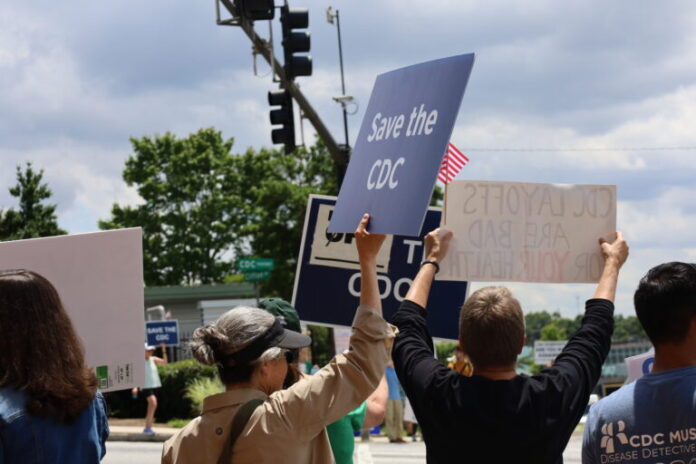
Supporters protest recent firings and budget cuts at the Centers for Disease Control and Prevention in Atlanta on Tuesday, June 10, 2025. More rallies like this one are planned across Georgia and the nation on June 14 to protest against President Donald Trump and his policies. (Amber Roldan/States Newsroom)

(Georgia Recorder) — This weekend, a large crowd is expected in Washington, D.C., for a national military parade, while thousands more nationwide plan to rally in protest of the Trump administration.

Over 1,800 demonstrations are scheduled Saturday as part of the “No Kings” events. More than two dozen protests are planned in Georgia, from Dalton to Valdosta, according to organizers.

Georgia leaders say they are prepared to respond if weekend protests turn violent.

“My office remains in close contact with state and local law enforcement and stands ready to take whatever appropriate action is needed to safeguard our communities from crime and violence while also respecting the constitutional right to peaceful assembly,” Gov. Brian Kemp said in a statement on social media. “My support for public safety officers and the rule of law is unwavering, and any violence against those who protect and serve will be met with quick and heavy accountability.”

Tensions running high

Tensions are high across the country as photos and footage from Los Angeles depict smoldering vehicles and clashes between protesters and police – fallout from protests over tactics used in raids by U.S. Immigration and Customs Enforcement.

The situation in California intensified after President Donald Trump deployed National Guard troops and U.S. Marines to Los Angeles against the wishes of California Gov. Gavin Newsom and LA Mayor Karen Bass, who said local law enforcement was sufficient to keep the peace. The last time a president called up the National Guard to a state without the approval of its governor was in 1965 when President Lyndon Johnson deployed troops to protect civil rights activists against the wishes of segregationist Alabama Gov. George Wallace.

The second Trump presidency has already seen numerous protests in Georgia over immigration, federal spending cuts and other actions by the administration. One of them turned violent Tuesday night when immigration protesters allegedly threw fireworks and rocks at police officers and their cars. No officers were seriously hurt, but at least six people were arrested, according to multiple news outlets.

Carr issues stern warning

Kemp previously called in the National Guard over heated protests, including in 2020 when protests over the deaths of George Floyd and other Black Americans turned violent and in 2023 after protests over the Atlanta police public safety training facility known as “Cop City” led to burning cop cars.

Georgia Attorney General Chris Carr, who is running for governor in 2026, issued a stern warning via a press release Wednesday:

“All Americans have the right to peacefully protest. No American has the right to destroy property, loot businesses, or attack law enforcement officers. It’s very simple. Protesters use words. Rioters use violence. There is no gray area. In Georgia, if you engage in violence for the purpose of changing public policy, you can be charged with Domestic Terrorism. The penalty for Domestic Terrorism is 5-35 years in jail.”

Many protesters say it’s the tactics used by the Trump administration and ICE that should be illegal.

“I grew up in a sundown town up north, so them being able to come in and violate that sanctity of homes, schools, businesses, it triggers something in me, and it makes me so uncomfortable with what’s going on,” Melissa Steach, a member of the Union of Southern Service Workers who works at Waffle House, said at a peaceful protest outside ICE headquarters Monday.

“It needs to stop,” she added. “We’re going to keep protesting until the raids stop. These people do so much for us, and I’m gonna keep standing with our brothers and sisters.”

Protests planned in Georgia

More than 100 pro-democracy advocacy groups have signed on in support of the No Kings protests. Here’s where some of the Georgia protests will be:

  • Albany: 10 a.m. to noon, address is private, sign up for details
  • Athens: 5 to 7 p.m., College Square
  • Atlanta: 10 a.m. to noon, Liberty Plaza near the Georgia State Capitol
  • Atlanta: 1 to 4 p.m., Atlantic Station Bridge/Overpass
  • Columbus: 9 to 11 a.m., in front of the RiverCenter in Uptown Columbus
  • Douglas: noon to 2 p.m., Trojan Lane Intersection
  • Douglasville: noon to 2 p.m., address is private, sign up for details
  • Fayetteville: 3 to 4:30 p.m., Old Fayette County Courthouse
  • Forsyth County: 1 to 2 p.m., address is private, sign up for details
  • Gainesville: 3 to 4 p.m., Gainesville Square
  • Gwinnett County: 2 to 4 p.m., Suwanee, address is private, sign up for details
  • Hiram/Dallas: 3:30 to 5:30 p.m., Hwy. 92 and Jimmy Lee Smith Hwy., Hiram
  • Macon: 10 a.m. to noon, Poplar Street Median between 2nd and 3rd Streets
  • Marietta: 2 to 3:30 p.m., intersection of Johnson Ferry and Roswell Road, East Cobb
  • McDonough: 12:30 to 2 p.m., McDonough City Hall
  • Newnan: 10 a.m. to noon, South Court Square
  • Savannah: 11:30 a.m. to 12:30 p.m., Thomas Square Park
  • St. Mary’s: 3 to 6 p.m., St. Mary’s Waterfront Pavilion
  • Summerville: 10 a.m. to 4 p.m., courthouse
  • Tucker: 11 a.m. to 1:30 p.m., Northlake Festival Shopping Center, Tucker
  • Valdosta: 2 to 3 p.m., address is private, sign up for details
  • Warner Robins: 12 to 2 p.m., Perkins Park
  • Woodstock: 2 to 4 p.m., address is private, sign up for details.

Organizers call for peaceful protests

Organizers said a core principle behind all No Kings events is a commitment to nonviolence.

“We expect all participants to seek to de-escalate any potential confrontation with those who disagree with our values and to act lawfully at these events,” according to the website. “Weapons of any kind, including those legally permitted, should not be brought to events.”

There won’t be a No Kings event in Washington, D.C., where the military parade and festivities are estimated to cost between $25 million and $45 million.

For more information on planned protests in Georgia and nationwide, visit the No Kings website.

Georgia Recorder reporter Maya Homan and Now Habersham contributed to this report. 

NWS confirms tornado in Elbert County, straight line winds in Dawson, Hall and Banks

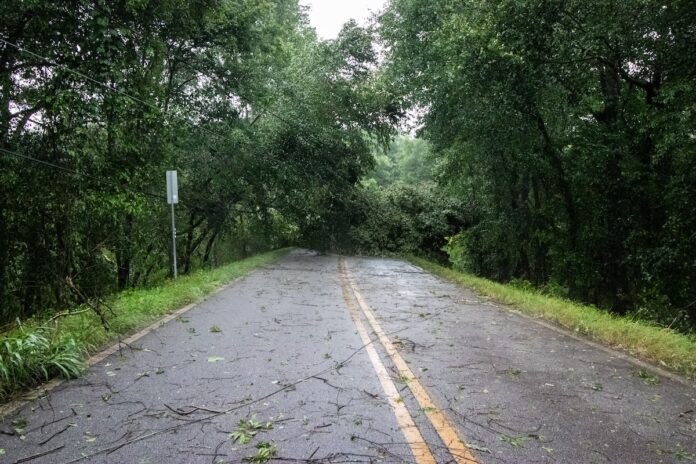
Tree blocks Alto-Mud Cree Road in south Habersham County after the storm. (Daniel Purcell/NowHabersham.com)

The severe weather of last week resulted in several storm surveys across the region.

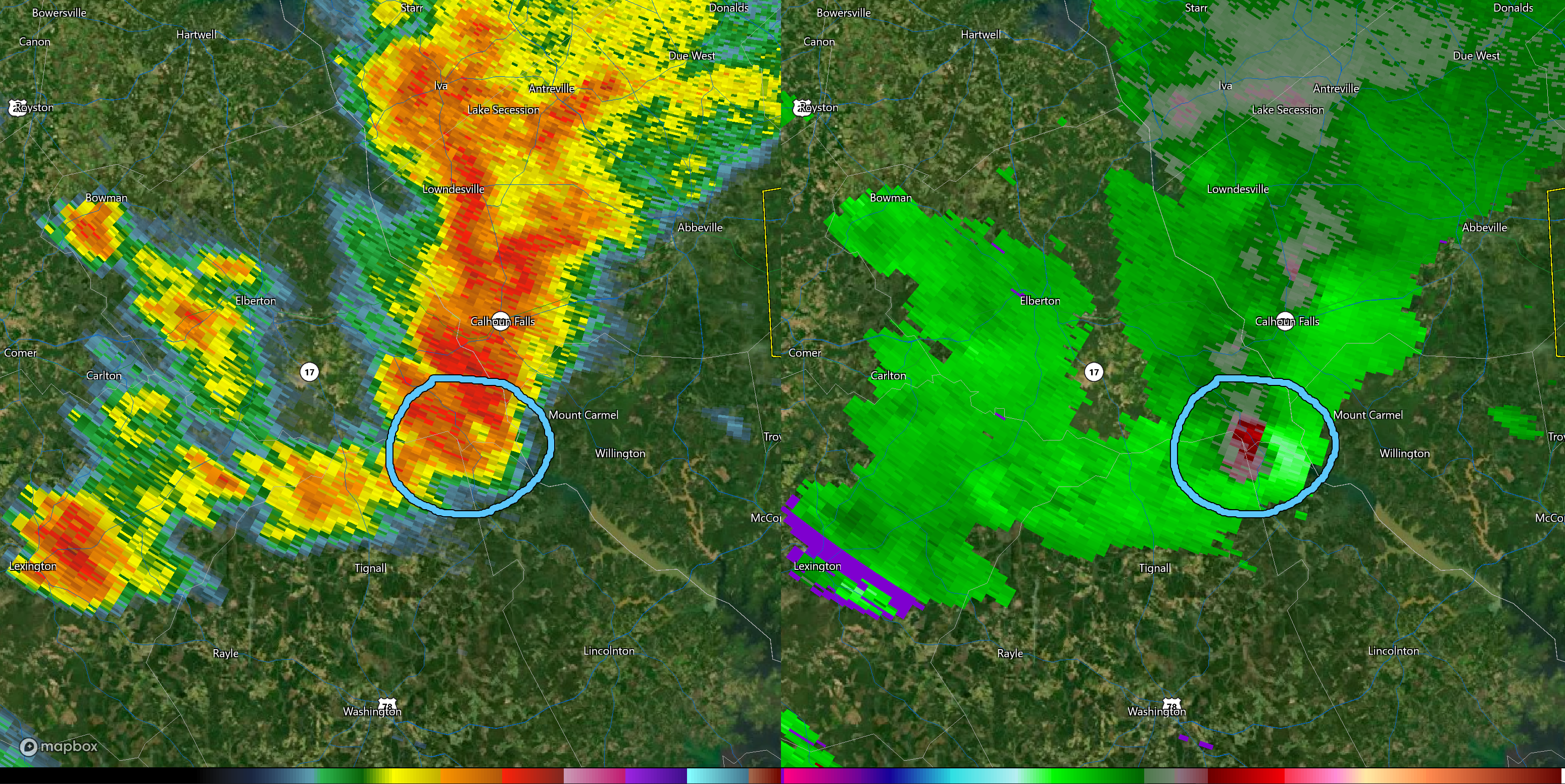
The NWS in Greenville confirmed an EF-1 tornado touched down in Bobby Brown State Park on Monday evening. The tornado touched down at 7:01PM and reached a maximum intensity of 105MPH, downing dozens of trees through the state park and also damaging some pavilions. Additional damage was noted across the SC line in McCormick County. The total path length is unknown due to lack of roads on the SC side, but the tornado traveled at least 0.96 miles and was 200 yards wide at its widest point.

Radar view of the Elbert County Tornado

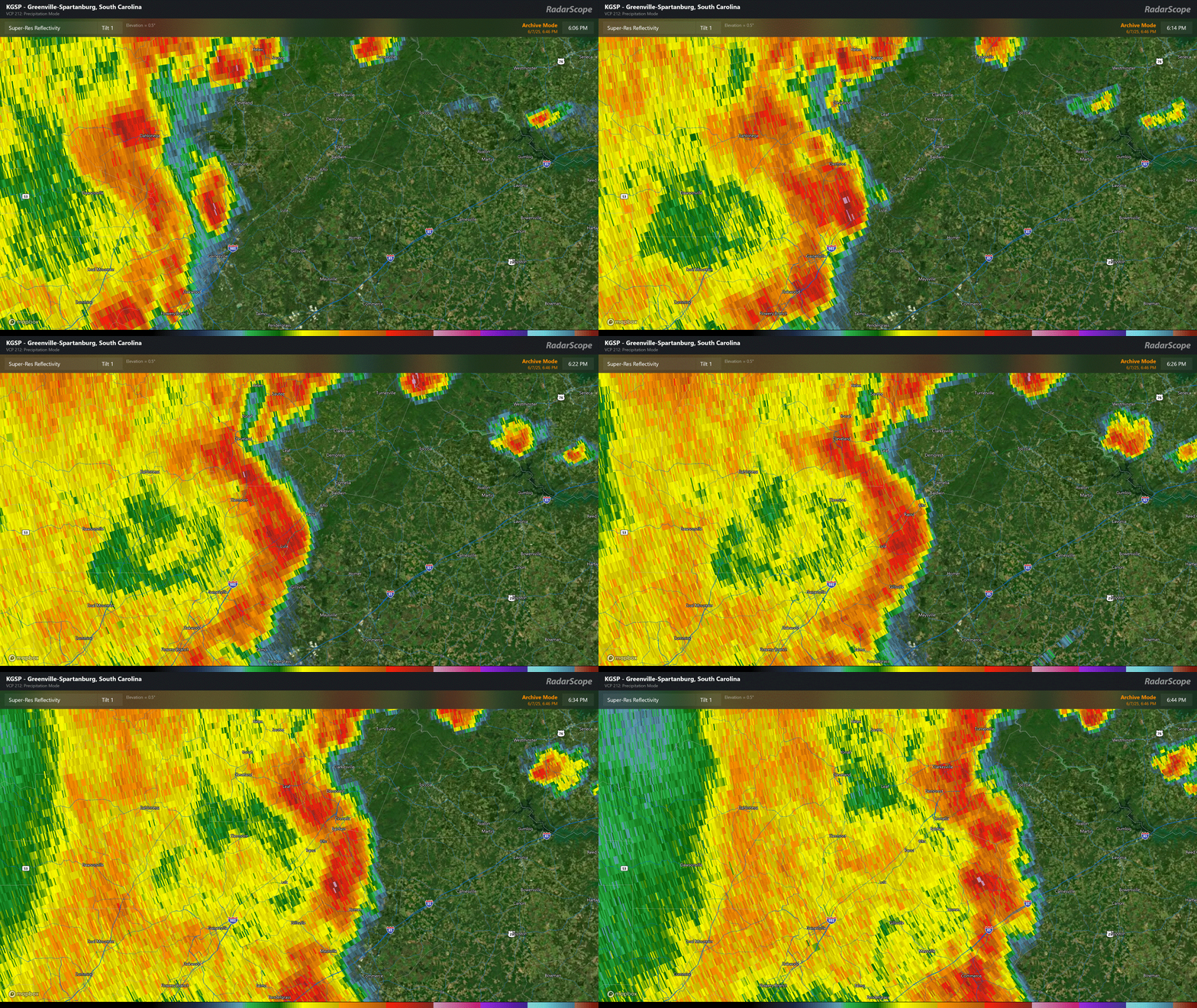
The NWS in Peachtree City confirmed an area of strong straight line winds that stretched from Dawson County into Hall and Banks Counties. A line of strong storms crossed the region Saturday evening, and widespread damage occurred in many locations. One particularly strong segment of the line produced the damage that was surveyed. Maximum estimated winds of 95MPH occurred along this line. The highest official reading came from a station in Dawson County at the Crystal Falls Lake Golf Course where a station reported a gust of 89.5MPH.

The strongest area of winds likely occurred in Dawson County along Indian Cove Drive and Longview Drive and Indian Cove Drive where numerous trees were snapped, including 2 that damaged homes.

Nearby parts of War Hill Park Road near the North Georgia Premium Outlets on GA400 sustained heavy damage with numerous trees down.

The line continued east-northeast into Hall and Banks Counties. No official survey was done, but radar and damage reports suggest this line continued to produce occasional gusts of up to 80MPH before it eventually weakened as it moved across Northern Stephens and Southern Habersham County. This line was responsible for the fatality that occurred in Banks County, as well as the damage that occurred locally along the Mud Creek Road area.

The bowing segment responsible for widespread damage from Dawson County into Banks County.

Tanks, choppers descend on D.C. in prep for Army anniversary parade, Trump birthday

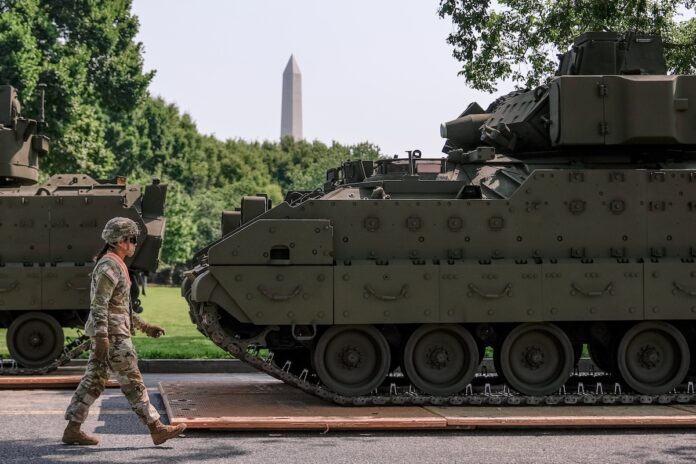
A U.S. Army soldier walks past a Bradley fighting vehicle staged in West Potomac Park ahead of an upcoming military parade commemorating the Army's 250th anniversary and coinciding with Donald Trump's 79th birthday, Wednesday, June 11, 2025, in Washington. (AP Photo/Julia Demaree Nikhinson)

WASHINGTON (States Newsroom) — More than 100 heavy-duty military vehicles and weapons systems will parade down Constitution Avenue in the nation’s capital Saturday, just days after President Donald Trump ordered troops to Los Angeles to quell mostly nonviolent protests against deportations.

The display, on the date of the U.S. Army’s 250th anniversary and Trump’s 79th birthday, will feature roughly 6,700 soldiers from every division, 150 vehicles, 50 aircraft, 34 horses, two mules and one dog, at a price tag in the tens of millions of dollars, according to the Army.

The evening parade of Army vehicles and aircraft flyovers — plans for which came to light in early May — will occur as protests against the administration’s immigration raids spread through major U.S. cities.

Trump ordered 2,000 California National Guard troops to Los Angeles Sunday after demonstrations opposing Immigration and Customs Enforcement arrests erupted Friday, some turning violent over the weekend in downtown LA, a suburb and a portion of a freeway.

Trump ordered another 2,000 National Guard troops and 700 Marines to LA Monday, despite numerous reports that protests remained peaceful.

Saturday’s parade in D.C. has drawn criticism for the cost and optics, as Republicans on Capitol Hill seek ways to cut safety net programs, and as Trump deployed troops to LA, defying the state’s Democratic Gov. Gavin Newsom.

Trump told reporters Tuesday in the Oval Office that any protests at the Army parade “will be met with very heavy force.”

When pressed Wednesday by a reporter following up on Trump’s comment, White House press secretary Karoline Leavitt said, “Of course the president supports peaceful protest. What a stupid question.”

Mass “No Kings” protests organized by a coalition of liberal national groups and labor unions are planned across the United States Saturday, but deliberately not in D.C. Some actions from separate organizations are expected to crop up in the nation’s capital, though details are sparse.

Army equipment stored in Maryland

Tanks and fighting vehicles were transported into the District of Columbia Tuesday night on flatbed trucks, as shown in video circulating online. The equipment rolled in over the weekend by rail from Texas and had been staged at the CSX rail yard in Jessup, Maryland, according to the Army.

A festival to celebrate the Army’s founding in 1775 has been in the works for more than a year and will feature a wreath-laying at Arlington National Cemetery as well as a fitness competition, military equipment exhibits, food trucks and appearances by professional NFL players on the National Mall.

But details of a parade only emerged in April and were confirmed in early May by The Associated Press.

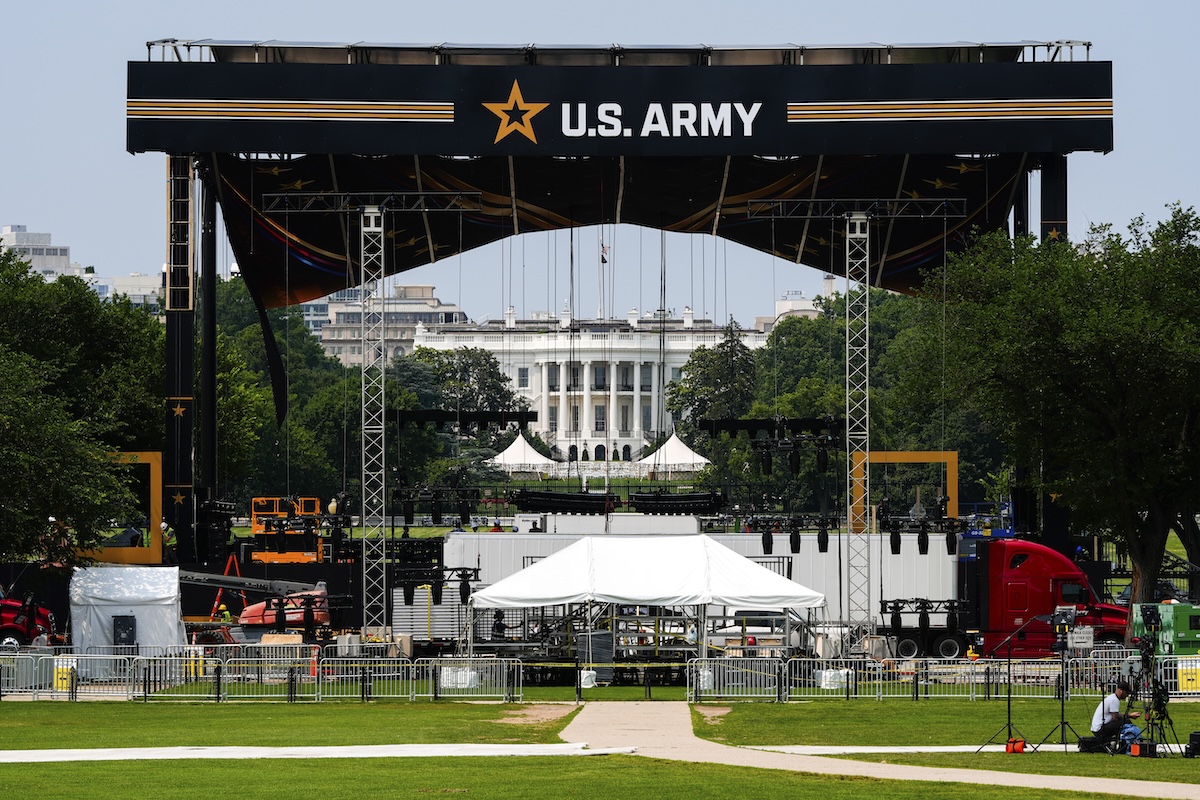
The White House is seen beyond a stage ahead of an upcoming military parade commemorating the Army’s 250th anniversary and coinciding with Donald Trump’s 79th birthday, Wednesday, June 11, 2025, in Washington (AP Photo/Julia Demaree Nikhinson)

According to a March 31 application obtained by WTOP News, America250.org applied for a permit for the parade along the National Mall, as well as nighttime fireworks and concert “featuring well known performers, likely from the country music world.”

press release for the event from America250, described as the “nonprofit supporting organization to the U.S. Semiquincentennial Commission,” celebrates Trump and his role. “Under President Trump’s leadership, the U.S. Army has been restored to strength and readiness,” it says. “His America First agenda has delivered historic pay raises for service members, rebuilt military stockpiles, invested in cutting-edge technologies, and ensured our soldiers have the tools and support they need to win on any battlefield.” The pay raises were part of last year’s defense policy bill, before Trump’s presidency.

The festival and the parade will cost an estimated $25 million to $45 million, according to Army spokesperson Heather Hagan, though the price tag for the parade alone was not specified. The Army did not respond to a question about where the funds originated.

It is not the first time Trump has wanted a military parade. He had planned one in the nation’s capital in 2018 but it was called off due to the cost, NBC reported at the time.

Big crowds and lots of fencing

Matt McCool, of the U.S. Secret Service Washington field office, said for this parade, officials are expecting an “enormous turnout.” The agency is leading local, state and federal law enforcement during the National Special Security Event, the sixth for D.C. this year. They are nationally or internationally significant events expected to be attended by high-level officials and large numbers of people.

Just over 18 miles of anti-scale fencing and 17 miles of “bike rack”-style fencing has been erected as a security perimeter surrounding the parade route. Members of the public wishing to see the parade will have to pass through one of the 175 metal detectors at three security checkpoints.

McCool, special agent in charge of the Washington office, said the Secret Service has been planning security since April 22, “which is shorter than normal,” and that the agency is prepared for protests.

“We are paying attention obviously to what is happening (in Los Angeles) and we’ll be ready for that if it were to occur here,” McCool said Monday during a press conference.

Troops bunking in federal office buildings

The parade will include troops from the National Guard and Army Reserve, Special Operations Command, United States Military Academy and Reserve Officer Training Corps, and it will feature period uniforms and equipment reflecting the Revolutionary War to the modern forces.

Young enlistees sent to Washington to march in the parade toured the D.C. sites near the U.S. Capitol Wednesday.

Not every state sent Guard members. But the New York National Guard will participate, and will house roughly 460 New York and Massachusetts National Guard soldiers in an empty Department of Agriculture office building and an unused General Services Administration warehouse until June 15, according to a press release.

The troops were bused to Washington on Wednesday, and the trip cost — including meals ready-to-eat for breakfast and lunch, a hot dinner and a $69 per diem — will be covered by the Army.

Golden Knights to give Trump a gift

Flyovers will also occur during the parade featuring AH-64 Apaches, UH-60 Blackhawks and CH-47 Chinooks.

The Army Golden Knights parachute team is expected to land on the White House South Lawn and present Trump with a folded flag, according to media reports. Trump is expected to deliver remarks, according to the America250 organization. The White House did not respond to questions about the day’s timeline.

Among the vehicles and equipment rolling down Constitution Avenue between 15th and 23th streets will be Abrams tanks, first used in 1991 for Operation Desert Storm; High Mobility Artillery Rocket Systems, or HIMARS, used to launch multiple rockets at precise aim from far distances; and 9,500-pound titanium M777 lightweight Howitzers that fire 105-pound shells up to 24 miles and are currently in use on Ukraine’s battlefields.

The Army Corps of Engineers released footage of 18-by-16-foot metal plates installed on D.C. streets to reinforce the roads prior to the massive vehicles driving over them.

D.C. Mayor Muriel Bowser said in early June that she “remains concerned” about damage to the city’s streets.

“But I gotta think that the Army is among the most qualified logistics moving agencies in the world. They have moved equipment in more precarious situations, so we’re relying on their expertise. But what I can tell D.C. residents is that we will try to keep our road network usable, and if we have to fix something we will seek reimbursement from the Feds,” Bowser told reporters at a June 3 press conference.

U.S. Senate GOP tries to ease the pain for states in sharing costs of SNAP benefits

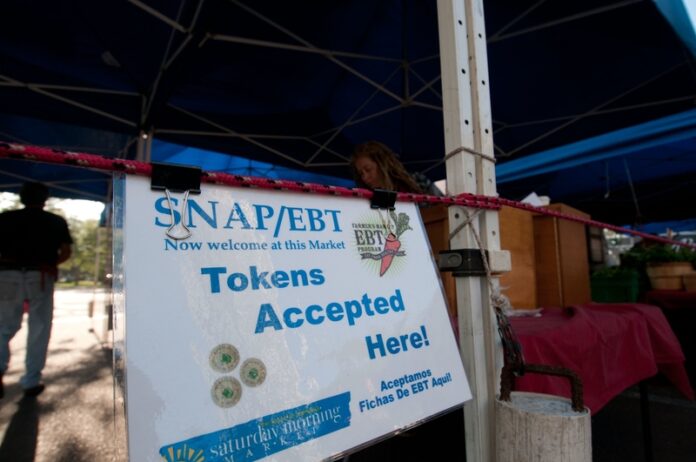
At a farm market in St. Petersburg, Florida, SNAP recipients were able to use their Electronic Benefits Transfer cards for food. (Lance Cheung/USDA).

WASHINGTON (States Newsroom) — U.S. Senate Republicans will propose more moderate changes to the major federal food assistance program than their House counterparts, Senate Agriculture Chairman John Boozman said Wednesday, detailing a provision in a giant tax and spending cut bill that would penalize states less harshly than the House GOP version.

The Agriculture section of the Senate’s budget reconciliation bill, like the House version that passed last month 215-214, would create the possibility that states for the first time would shoulder some of the cost of Supplemental Nutrition Assistance Program, or SNAP, benefits starting in 2028.

But unlike the House version, the Senate’s language would allow states an opportunity to avoid paying anything if they hit an efficiency benchmark, Boozman, an Arkansas Republican, told reporters at the Capitol.

The highest share states would be responsible for would be 15% under the Senate’s proposal, down from 25% in the House version.

Boozman said Senate Republicans sought to temper the House proposal, which would impose a minimum 5% cost-share on all states, with most states paying for 25% of the benefits.

The House approach would saddle states with at least around $5 billion per year for the program that provides about $100 billion per year in benefits, but the actual costs to states would likely be much higher.

“A lot of people were concerned about the significant bill to the states with the 5% cost-share,” Boozman said. “So this was an effort that’s the best of both worlds in the sense that it allows the states, through efficiencies, to make it such that they don’t have to worry about that, but we still recoup the money.”

In practice, the House plan would likely impose closer to $14 billion per year in new costs to states because most would not qualify for the lowest cost-share, according to an analysis from the nonpartisan Congressional Budget Office that also projected that more than 3 million people would lose benefits under the House plan.

The changes to SNAP are part of Republicans’ “big, beautiful bill” that would also extend the 2017 law that provided individual and corporate tax cuts, bolster federal spending on border security and defense, overhaul and cut portions of the Medicaid health care program, and much more.

GOP leaders are moving the package through the complex reconciliation process, which has strict rules in the Senate and will likely include a marathon amendment voting session later this month, known as a vote-a-rama.

Lower savings

The federal government currently pays for all costs of SNAP benefits. House Republicans argued that left states without an incentive to reduce errors in payments and proposed the requirement that states share some of the cost in proportion to their error rates in administering SNAP benefits.

The Senate would also peg a state’s cost-share to its error rate, but would make states’ costs lower across the board.

States with error rates at 5% or lower would continue to not pay anything for their SNAP benefits, and states with error rates from 10% or higher would pay for 15% of benefits. The Senate bill would also create two intermediate levels, Boozman said.

The national error rate in 2023, the most recent year for which data is available, was 11.7%, according to the U.S. Department of Agriculture. More than two dozen states had error rates of 10% or more.

The Senate’s proposed changes to the cost-share would result in a lower federal savings than the House version, Boozman said. His version would save about “$52 or $53 billion,” about $20 billion less than the House version, he said. It’s not clear where those savings might occur instead.

The Senate would also exclude a provision of the House bill that would have changed the cost-share of administering SNAP. States currently pay for 25% of administrative costs, with the federal government picking up the rest of the bill. The House bill would change that rate to 50% each.

A smaller tweak on the Senate side would require single parents of children younger than 10 to meet work requirements. The House bill would set that age at 7 years old. No age limit currently exists.

Reconciliation

The differences between House and Senate Republicans are among several issues the chambers will negotiate in the coming weeks as Republicans seek to pass the massive legislative package through the procedure known as budget reconciliation.

The process involves several committees writing bills that the Senate Budget Committee then packages together before sending it to the floor.

Full language of the Senate Agriculture Committee’s instructions would be published late Wednesday, Boozman said.

The reconciliation process allows Senate Republicans to skirt the chamber’s usual 60-vote threshold for legislation.

But with razor-thin majorities in each chamber — and a host of policy disagreements among Republicans — GOP leaders face a delicate task in crafting a bill that can pass both chambers.

Emory virologist: Pet cats are at risk of bird flu and could transmit to humans

According to the American Veterinary Medical Association (AVMA), since the U.S. outbreak of avian influenza A (H5N1) in dairy cattle began in March 2024, dozens of cats have contracted the virus. This includes barn and feral cats, indoor cats, and big cats in zoos and the wild.

H5N1 “bird flu” is currently being seen in migratory birds, dairy cows, chickens, and even cats across the U.S. The last confirmed cases in Georgia were in January in commercial and backyard poultry flocks.

As the virus continues to spread through animals across the country, the federal government has canceled its contract with Moderna to develop an mRNA vaccine.

Seema Lakdawala, a virologist with the Emory University School of Medicine who focuses on influenza transmission and pandemic preparedness, said scientists need a multi-pronged approach that includes vaccines.

“We should be thinking about all sorts of vaccine modalities for domestic wildlife to protect our cows, to protect out dairy farmers, to protect poultry workers, to protect veterinarians, to protect chickens,” she said. “Then that’ll inevitably protect human health, right?”

There are new herds and new outbreaks happening constantly, she said.

“As the birds start moving again in the fall and winter, we’re going to definitely see upticks in [H5N1] cases,” Lakdawala said. “So, there is still continued concern and continued spillover into, you know, an exposure to both humans and other domestic wildlife.”

Feline infection

That includes cats.

“Cats are very sensitive to H5N1,” she said. “They are there presenting with neurological symptoms. Many of them are dying.”

Big cats in sanctuaries contract the virus when fed raw meat and drink raw milk.

Pet owners of domestic, outdoor cats that hunt birds should know about the high levels of H5N1 in the migratory bird flyway patterns right now, Lakdawala said.

“If your cat goes outside and grabs a dead bird, it could get H5N1,” she said.

People are much closer to their pets, even compared to how much humans interact with dairy cattle and come into contact with milk that has a lot of H5N1.

“We always like to take care of our pets and we snuggle them and we take care of them and they’re in close proximity to us, and so the potential spillover from a pet cat to a human is potentially quite high,” Lakdawala said.

Guarding against bird flu

Lakdawala said one way Georgians can protect themselves from bird flu is to not consume raw milk or raw meat. The American Veterinary Medical Association offers these and other helpful tips:

  • Keep cats indoors to prevent exposure to birds and other wildlife.
  • Avoid contact with sick or dead birds and other wildlife yourself.
  • Keep cats away from livestock, poultry, and their environments, especially in areas with known H5N1 outbreaks.
  • Thoroughly wash your hands after handling your cat and after any encounters with poultry, livestock, or wild birds and other animals.
  • Change your clothes and shoes, and thoroughly wash any exposed skin, after interacting with sick or dead animals that may harbor the H5N1 virus, and before interacting with your cat.
  • If you feed birds or walk near bird feeders or other places birds (including poultry) gather, change your shoes or disinfect their soles before entering your house.
  • Immediately contact your veterinarian if you notice signs of H5N1 or think your cat might have been exposed to the virus.

This article comes to Now Habersham in partnership with GPB News

Vickey “Louise” Dalton

Vickey “Louise” Dalton, age 62, of Gainesville, passed away on Tuesday, June 10, 2025.

Born on November 27, 1962, in Demorest, she was a daughter of the late George Otis Dalton and Patricia Ann Crocker Gibson. Louise was employed with Fieldale Farms Corp. for 40 years and was also a caregiver. She was full of laughter and loved to travel in her spare time. Louise was a member of The Rock of Christ Church in Cleveland.

In addition to her parents, she was preceded in death by a sister, Joyce Standridge and brother, Otis Parr.

Survivors include sister and brother-in-law, Marilyn Canington (Donald); brother and sister-in-law, Richard Dalton (Mildred); many nieces, nephews, aunts, uncles, cousins, other relatives and friends.

Funeral services are 2 pm on Saturday, June 14, 2025, in the Chapel of McGahee-Griffin & McEntire, with Rev. Kenneth Taylor, Rev. Scott Fendley, and Rev. Jonathan Arrowood officiating. Interment will follow in Level Grove Cemetery with Rev. Ronnie Pendley officiating.

The family will receive friends from 6-8 pm on Friday, June 13, 2025, and from 12 noon until the service hour on Saturday, at the funeral home.

An online guest register is available and may be viewed at www.mcgaheegriffinandmcentire.com.

McGahee-Griffin & McEntire Funeral Home of Cornelia, Georgia (706/778-8668) is in charge of arrangements.

Former Hall County prosecutor named new Athens-Clarke Municipal Court Judge

A seasoned Hall County prosecutor is stepping into a new judicial role in Athens-Clarke County. The Athens-Clarke County Unified Government Mayor and Commission appointed Stephanie Thompson as the next Municipal Court Judge and Administrative Hearing Officer.

Thompson brings a decade of experience from the Hall County Solicitor General’s Office, where she rose from Assistant to Interim Solicitor General. The office prosecutes a wide range of misdemeanor offenses, including DUI, domestic violence, and drug possession, experience that Athens-Clarke officials say will serve her well in the county’s busiest court.

She also served as a prosecutor for Hall County’s Mental Health Court and Family Treatment Court and was named Hall County’s Employee of the Year in 2021.

“Given her past work and exemplary praise from former colleagues, it is clear that Stephanie Thompson will handle the complexity and high volume of activity in Municipal Court very well,” said Athens-Clarke County Mayor Kelly Girtz. “We are fortunate to have her join our strong local judiciary.”

“I am truly honored to be entrusted with the responsibility of serving as the next Municipal Court Judge of Athens-Clarke County,” said Thompson. “I accept this responsibility with humility, a deep respect for the law, and a commitment to the people that I will serve. My goal is to foster an environment that reflects the highest standards of public service and earns the trust of our community every day.”

Outside the courtroom, Thompson has chaired the Hall County Domestic Violence Task Force and serves on the board of the Children’s Center for Hope and Healing. She holds a law degree from John Marshall Law School and a bachelor’s degree in political science from Georgia State University.

Thompson will succeed Interim Municipal Court Judge Jim Davis, who has held the position since the resignation of Judge Marcy Jolles in March.

Suspect still at large after officer-involved shooting in Habersham County

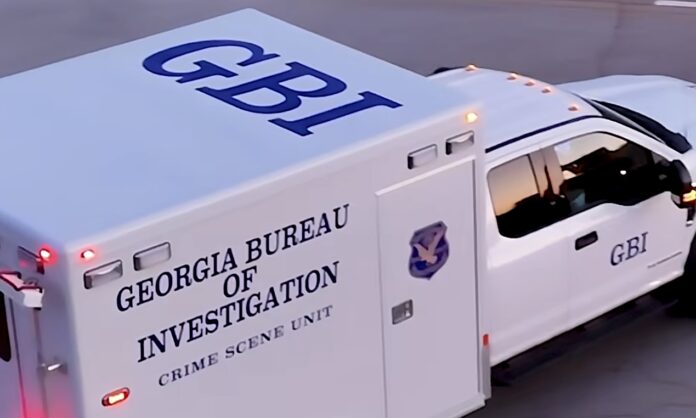
A GBI Crime Scene Unit arrives in Habersham County in response to the incident on Wednesday morning, June 11, 2025. (NowHabersham.com)

The Georgia Bureau of Investigation (GBI) is investigating an officer-involved shooting that occurred early Wednesday morning, June 11, in Habersham County. One deputy was injured, and a suspect remains on the run.

According to the GBI, the incident happened around 3:30 a.m. after a Habersham County deputy attempted to stop a truck pulling a trailer with two flat tires near Juniper Trail in Toccoa. As the deputy stepped out of his patrol vehicle, the driver of the truck, identified as 34-year-old Jonathan William Harris of Sautee, allegedly rammed the patrol car. The impact knocked the deputy to the ground.

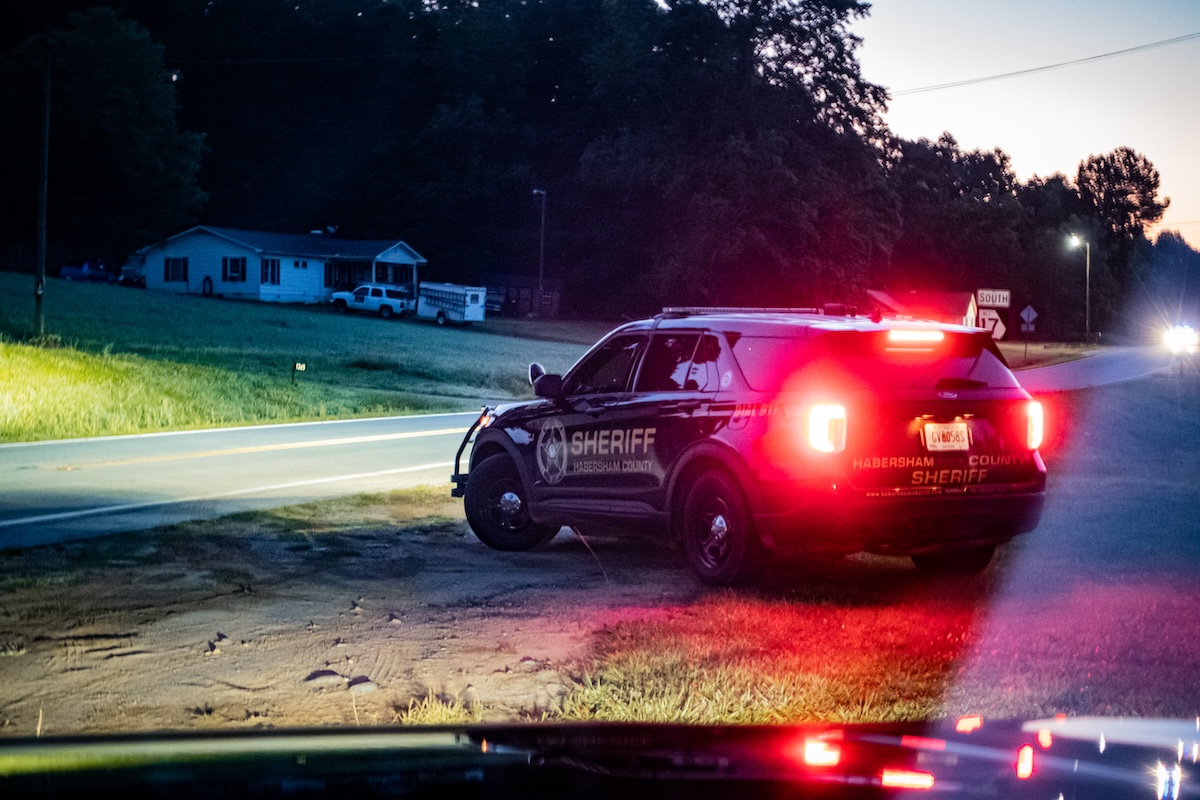
(Daniel Purcell/NowHabersham.com)

The deputy fired his weapon as Harris fled the scene on foot. His condition is unknown. The deputy sustained minor injuries and was treated at the scene by Habersham County Emergency Services.

Harris is wanted on multiple charges, including aggravated assault on a law enforcement officer, fleeing, firearm possession during a crime, obstruction, and theft by receiving stolen property. Authorities say the truck and trailer were previously reported stolen in Hall County. Harris also has outstanding warrants from an unrelated case.

A passenger in the truck, 44-year-old Antone Cortez Hall of Gainesville, was arrested at the scene. He faces charges of theft by receiving stolen property, obstruction, and possession of a firearm by a convicted felon. Hall is being held at the Habersham County Detention Center.

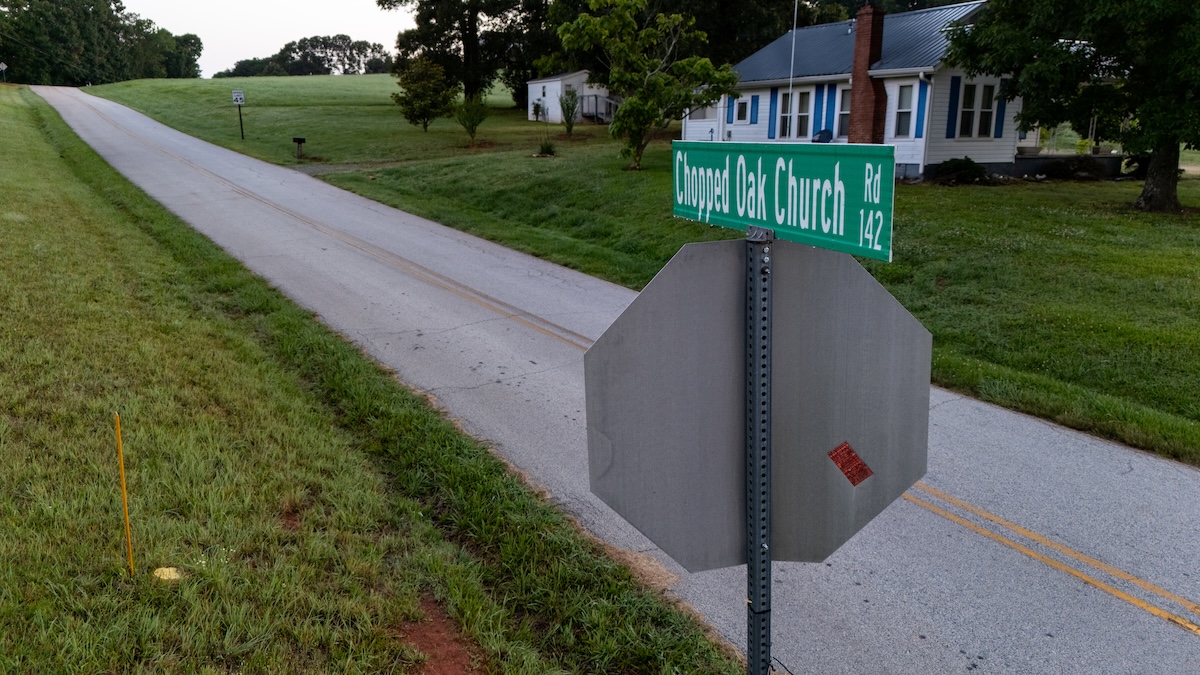
(Daniel Purcell/NowHabersham.com)

The search for Harris continues in the area off Talmadge Drive between Hollywood and Toccoa. Law enforcement describes him as a white male with dark hair, wearing brown pants and a black shirt. He is believed to still be on foot. Authorities urge the public not to approach him and to call 911 if he is seen.

Multiple agencies are assisting in the manhunt, including the GBI, Georgia State Patrol, and officers from nearby cities. Drones, K-9 units, and a GSP helicopter have been deployed in the search.

The GBI’s role is limited to investigating the use of force. Once their investigation is complete, the case will be handed over to the Mountain Judicial Circuit District Attorney’s Office for review.